
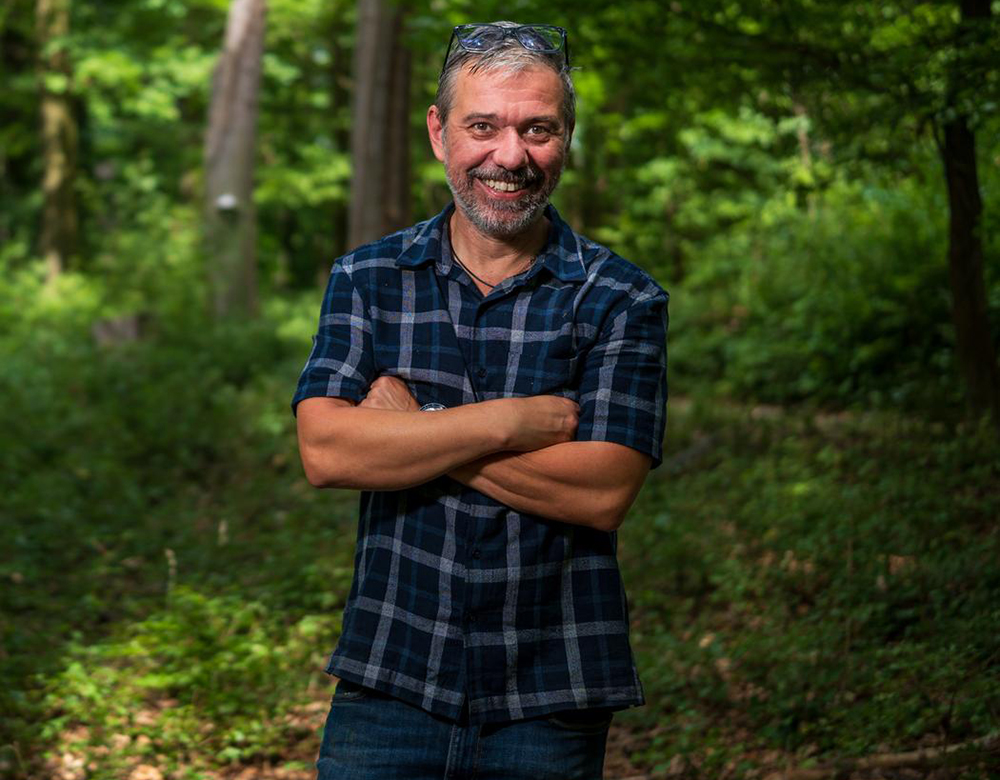
Daniel Kreissl
Your work begins with nature and landscape, but often moves toward something surreal and unsettling. What first led you to explore this hidden side of the natural world?
I grew up in a painter’s environment; my parents took me to exhibitions, studios and galleries from an early age. I soon developed a love for visual art, and I was particularly drawn to surrealist works — its associative freedom and dreamlike imagination strongly shaped my sense of visual metaphor.
Later, while working in landscape photography, I was surprised to discover that structures and motifs that once seemed utterly surreal in paintings actually occur commonly in nature and the landscape. This discovery marked a shift for me: I began to perceive the landscape as a source of hidden shapes, symmetries and archetypal images that can be emphasised and transformed through composition, light and photographic techniques.
This experience links my earlier upbringing in an artistic environment with my current photographic approach — combining inspiration from painting with an interest in “found” structures in nature.
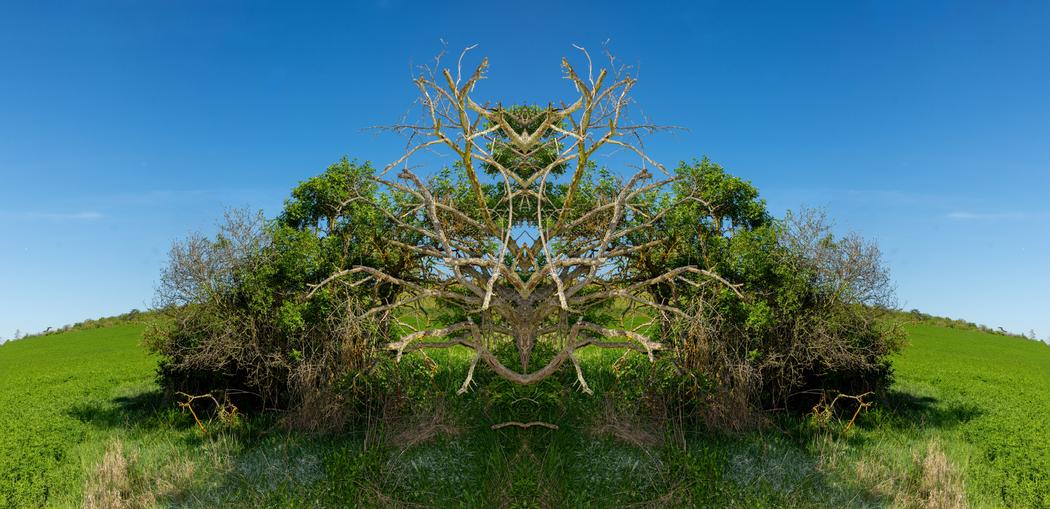 Daniel Kreissl | Vogelscheuche | 2025
Symmetry plays a central role in your compositions. What does symmetry allow you to reveal that a traditional landscape photograph might conceal?
Although it may not seem so at first glance, symmetry is a fundamental principle of nature. Almost all animals display bilateral — axial — symmetry; exceptions include, for example, starfish, which have radial (point) symmetry, as do many flowers. Symmetrical arrangements are also found in the socalled inanimate world: in snowflakes or in the structure of minerals.
In other words: symmetry is embedded at the centre of the world we know. It is therefore not surprising that when a person sees something axially symmetrical — a shape that in some degree resembles their own bodily configuration, suggesting eyes or a mouth — the notion of a being, “someone else,” readily arises. This phenomenon has deep psychological and evolutionary roots: human perception is sensitive to forms that resemble a face or a figure, because recognising other individuals was crucial for survival.
In an artistic context, symmetry can act as a trigger for associations — it opens the space for anthropomorphic interpretations, archetypal images and imaginary figures. These “spiritual” figurations arise on the border between perception and imagination: symmetry offers us fragments that the brain completes, and thus certain entities are born in our minds — hybrids between a natural object and a living being.
In my photographs I work precisely with this power of symmetry: I use it so that new, unpredictable shifts of meaning can appear in the viewer’s perception — from the familiar to the unsettling, from idyll to enigma.
Many of your images transform trees, branches, and roots into almost face-like or creature-like forms. Do you search for these figures intentionally, or do they appear during the editing process?
Some people search for “geocaches” in the landscape, others collect Pokémon; I search for what is hidden outdoors. Unlike those games, I play my game with reality itself: I seek moments when the environment reveals unexpected shapes, structures and hints that often escape the ordinary eye.
I prefer to photograph shortly after sunset. It is a fleeting moment between day and night, when the sky is still visible while darkness creeps across the land — a situation that often reminds me of the atmosphere in Magritte’s paintings. I find this interplay of light and shadow to be the most magical aspect of the day. As you walk through the darkened landscape, your imagination expands and mysterious creatures seem to emerge from the dark corners.
I believe this is an archetypal experience: nature is not only beautiful and harmonious, but also mysterious and potentially dangerous. In my photographs, I aim to capture this duality — to show how idyllic scenes can suddenly transform into something unexpected, how surface illusions dissolve and reveal layers of hidden meaning. Through composition, extended exposure and targeted lighting, I open a space for associations: what was once taken as familiar can become the trigger for a new, often unsettling perception.
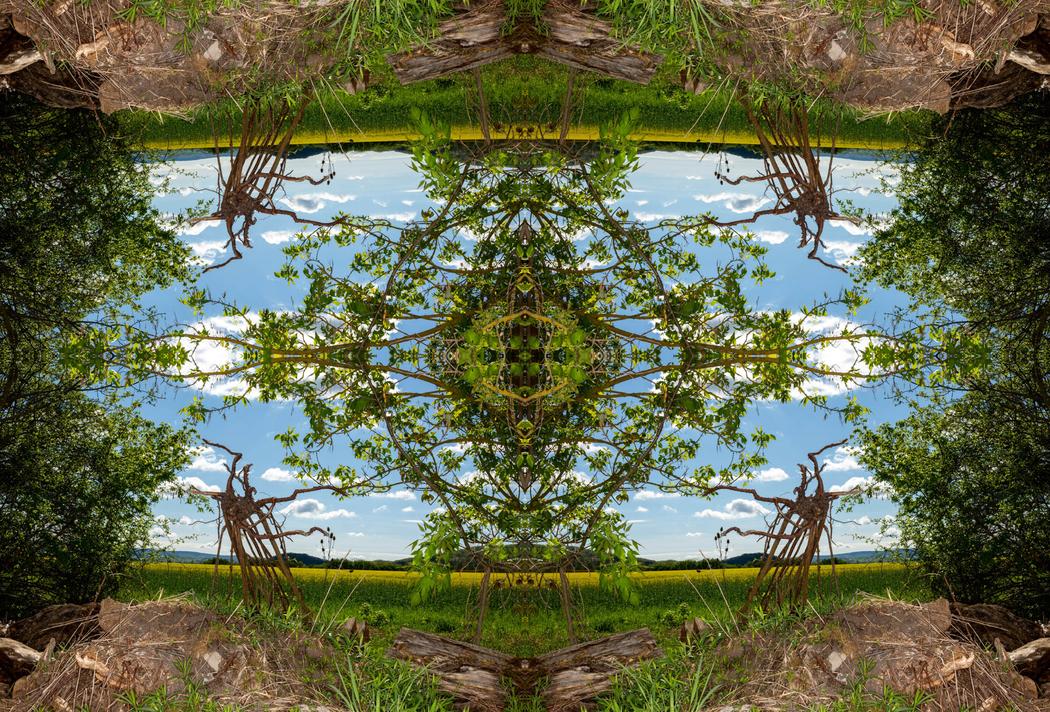 Daniel Kreissl | Meer | 2025
You mention surrealist influences introduced to you by your father. How has his artistic presence shaped the way you see and construct images?
My father was my first gateway into the world of image-making. It was not only about admiring finished paintings, but also about an approach to the image as a field of possibilities — a place where ordinary things can be transformed into the marvellous, and where chance becomes a creative element.
This influence is reflected directly in my photography. When I compose a shot, I do not seek merely documentary fidelity but rather situations that allow the “unexpected” to arise. My Surrealist roots therefore lead me to construct images as spaces for associations: I leave ample room for chance, for the “mistake” that often reveals the wondrous.
In your recent works, you explore demons, mysticism, and the invisible. What does the “demonic” mean to you in the context of nature?
In my work, the demonic manifests itself primarily as an aesthetic and psychological element. I do not aim to perform magic or summon demons. Rather, I am interested in the subtle tensions and ambivalences that the perception of nature can provoke: moments when familiar shapes and structures suddenly transform into something indeterminate, subconscious or archetypal.
Do you see your images as discoveries of something already hidden in nature, or as new realities created through your artistic intervention?
I photograph symmetry almost blindfolded — I primarily seek out intuitively interesting structures in the landscape and complete them by deliberately illuminating selected parts with external light sources. I consciously introduce an element of chance into the process. I remember how I first began creating symmetries digitally around 2019. I used photographs I had not originally intended for that purpose, and suddenly shapes resembling demonic or anthropomorphic figures began to appear in them. The moment was powerful — I must admit it frightened me for a while, yet at the same time, it fascinated me so much that I could not stop. I worked long into the night, captivated by what was emerging beneath my hands. It is precisely the clash between planned intervention and unexpected discovery that I consider essential.
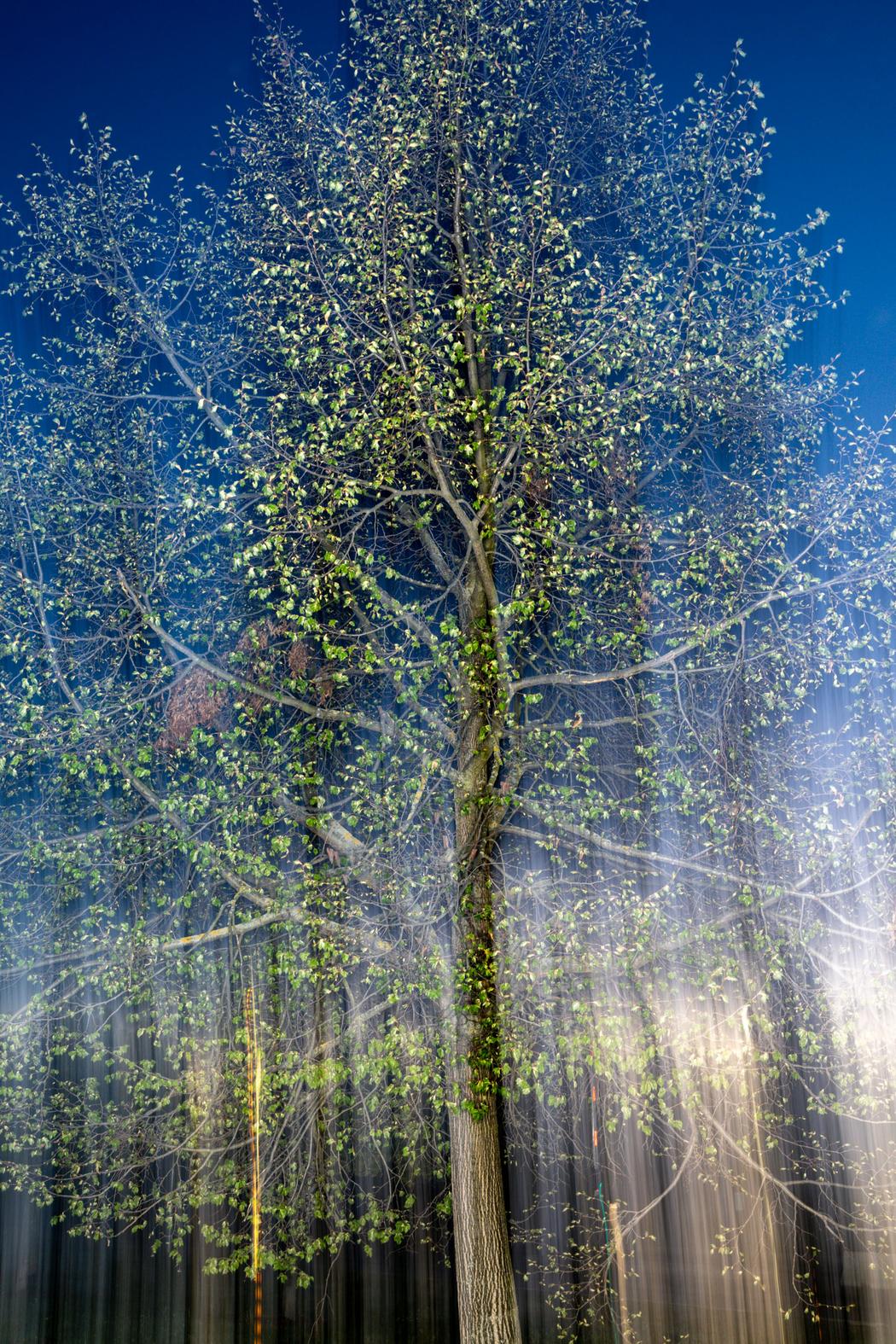 Daniel Kreissl | Frühling | 2026
Your work suggests that the ordinary world contains mysterious or even unsettling presences. What do you hope viewers begin to notice after encountering your images?
My work does not aim to suggest anything in particular — mysterious and disquieting presences exist in the world, as everyone knows. Everyone has encountered something mysterious at some point, and everyone is afraid of something. I do not know if I want viewers to perceive something specific; I merely show images and offer my interpretation of reality.
That something uncanny sometimes emerges from my work surprises me in itself — it was not my original intention. On the contrary: my original aim was primarily to create something beautiful. Perhaps, then, I would like viewers to take away this exact impression from the exhibition: a sense of the “beautifully uncanny.”