
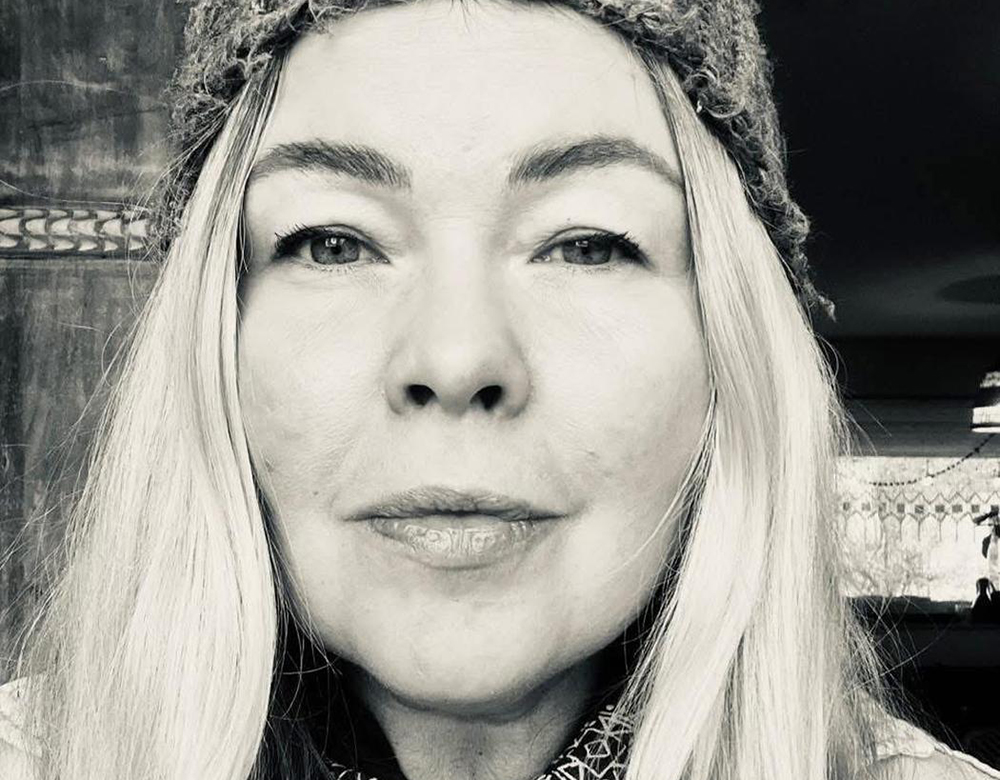
Dominika Luszcz
How did your studies at Columbia College Chicago influence your artistic development and the way you approach figurative painting today?
Immigrating from Poland to the United States gave me a profound sense of freedom. Coming from a structured post-communist society, I was struck by the openness and informality of American culture. That contrast shaped my identity and encouraged me to question boundaries, embrace experimentation, and develop a more independent artistic voice. At Columbia College Chicago, I found the freedom to explore figurative painting beyond traditional representation, using the figure to express emotion, resilience, identity, and the experience of living between two cultures.
You have lived and worked in Kazanów, Poland, since 2016. How has the slower rhythm of rural life affected your creative process, visual language, and choice of subjects?
Moving to the countryside transformed both my life and my artistic practice. For the first time, I developed a direct relationship with the land—I worked the soil, planted my own garden, and experienced the changing seasons in a deeply physical way. Living in rural Poland also reconnected me with traditions that have endured for generations, including the quiet presence of pre-Christian folk rituals still observed by older members of the community.
These experiences reshaped my visual language. Flowers, plants, and other natural forms began to appear in my paintings, not simply as decorative elements, but as symbols of fragility, resilience, growth, and renewal. My colour palette also shifted, becoming more grounded in earthy tones that reflect the central role of the land in everyday life and in my own creative process.The slower rhythm of rural life taught me to observe more closely, and that sense of stillness continues to shape the emotional atmosphere of my work.
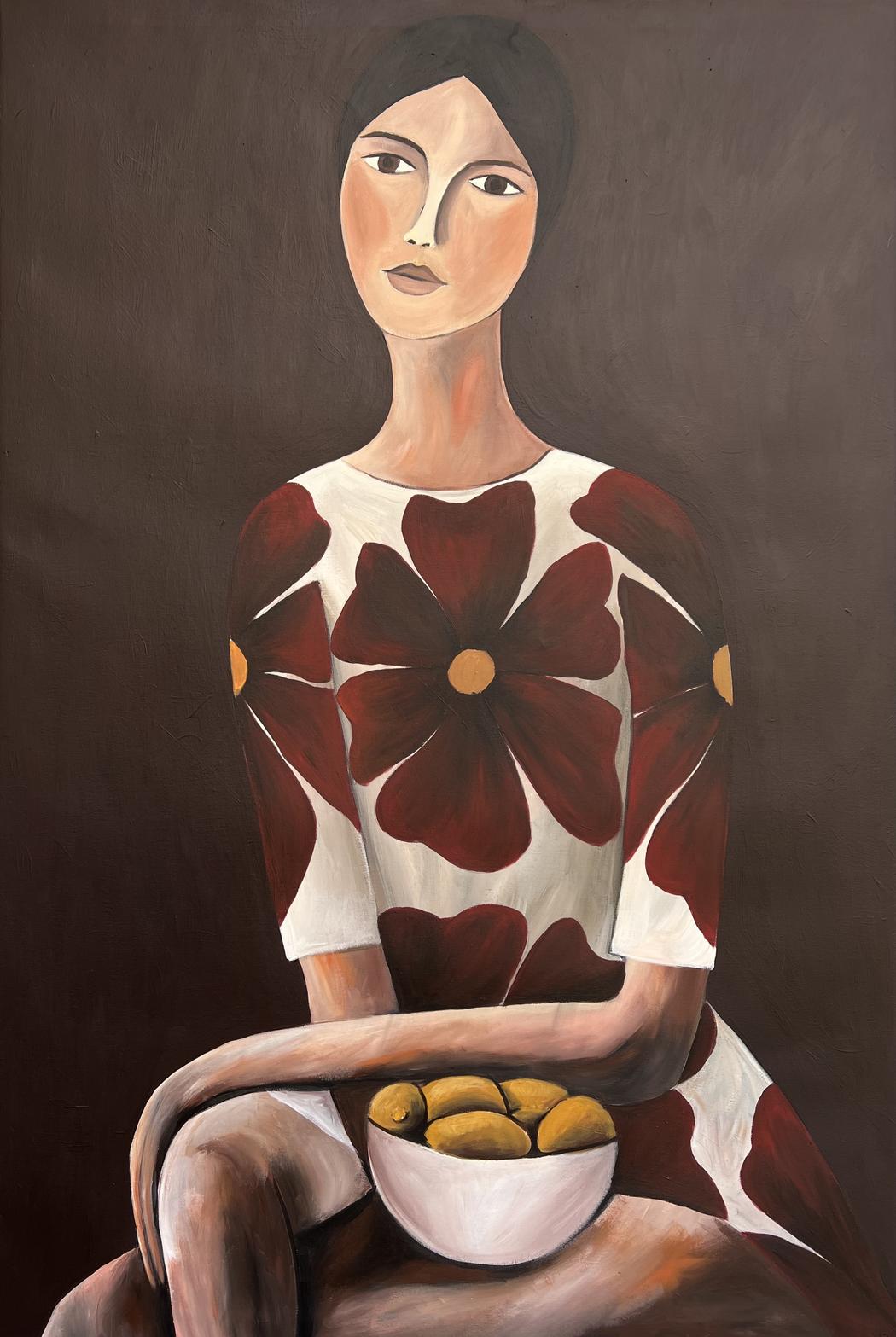 Dominika Luszcz | Floral Solace | 2025
Your figures are not portraits of particular individuals but universal emotional presences. How do you develop their appearance, posture, and psychological character?
My background in photography has shaped the way I approach the figure. Spending years photographing people taught me to observe gesture, posture, and the quiet language of the body. Those experiences continue to inform the way I construct my painted figures.
The figures in my paintings are not portraits of specific individuals but emotional presences. Their eyes are intentionally designed to follow the viewer wherever they stand in the room, creating a direct and often intimate encounter. There is a reason I distort their bodies. I elongate their necks, twist their torsos, and sometimes place them in positions that appear physically uncomfortable or even painful. These distortions are intentional—they allow me to convey emotions that cannot be expressed through a naturalistic body alone. By moving beyond physical resemblance, I invite viewers to engage with the psychological and emotional reality of the work rather than the identity of the person depicted. In this way, the figures become universal rather than personal, allowing each viewer to bring their own experiences and emotions to the encounter.
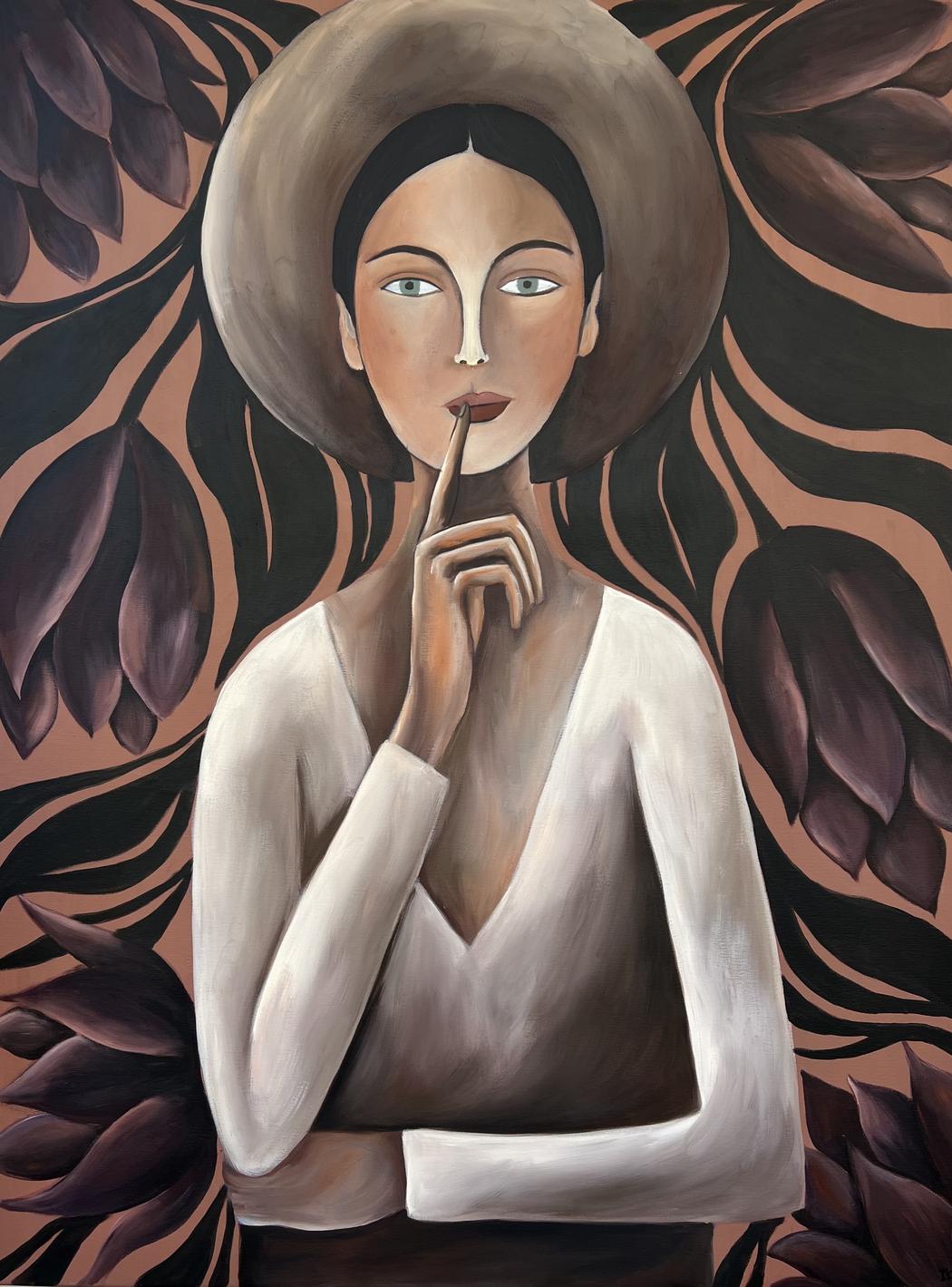 Dominika Luszcz | Stillness In Bloom | 2026
What draws you to elongated proportions and subtle anatomical distortions, and how do these formal choices help you communicate an internal rather than external reality?
The elongated proportions in my paintings come from several different influences. The simplified, vertical forms of traditional folk carved wooden sculptures have long inspired me, but the extreme thinness of my figures also has a more personal origin. For many years, I struggled with my own body image and weight. The elongated figures became a way of expressing that experience—not as literal self-portraits, but as emotional reflections of vulnerability, resilience, and the search for identity.
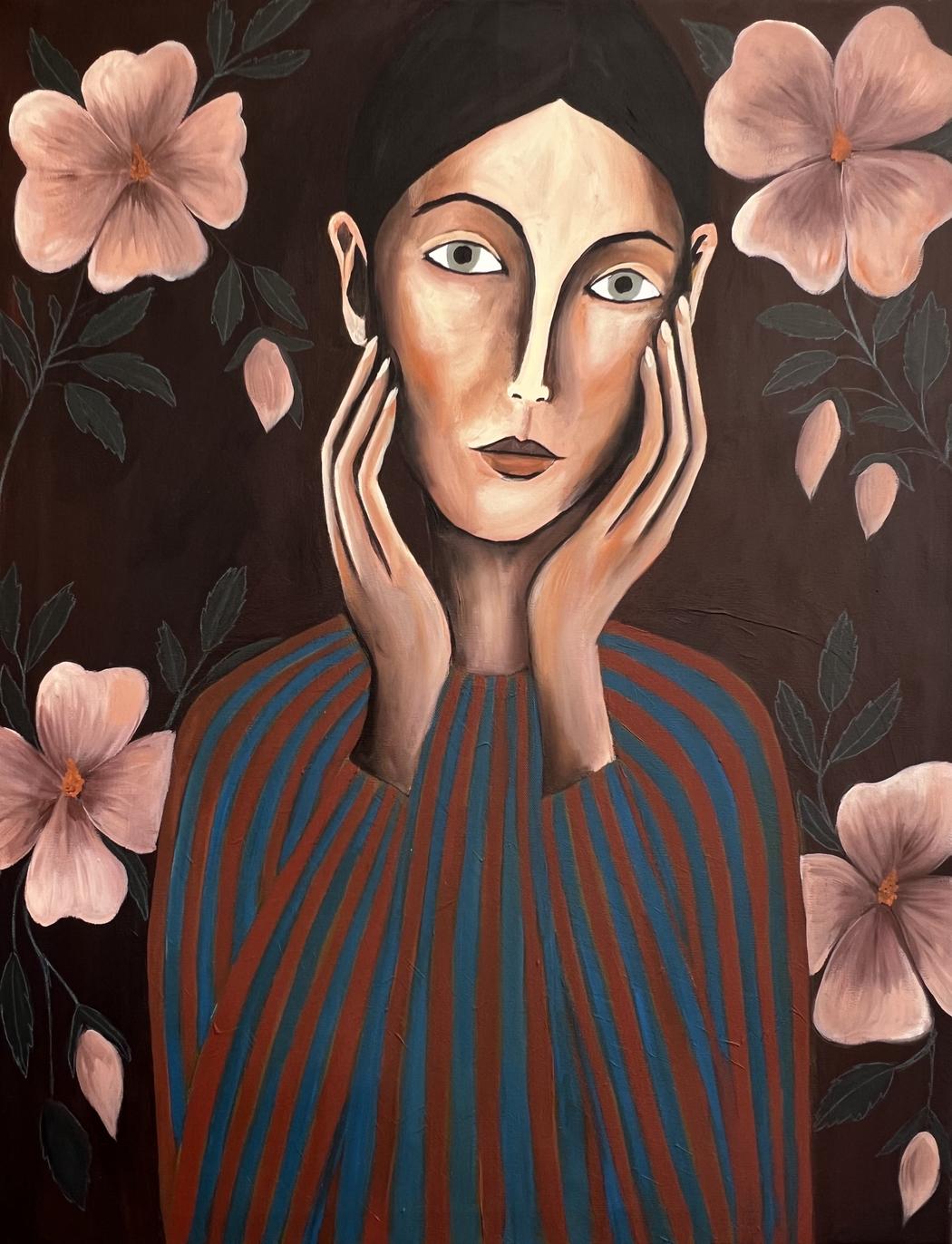 Dominika Luszcz | Within | 2025
Stillness is a recurring theme in your work. What does stillness mean to you, and why do you consider it an active psychological state rather than an absence of action?
I believe that in stillness everything happenes. I am drawn to moments when a person appears calm and motionless, yet internally everything is unfolding—memories, emotions, doubts, hopes, and quiet transformations. Those invisible moments interest me far more than action.
For me, stillness is an active psychological state. It is where we process change, heal, endure, and come to understand ourselves. Perhaps this understanding comes from my own life. As a child, immigrating from Poland to the United States required resilience and constant adaptation. Later, returning to rural Poland taught me a different kind of stillness through nature, gardening, and the slow rhythm of life.
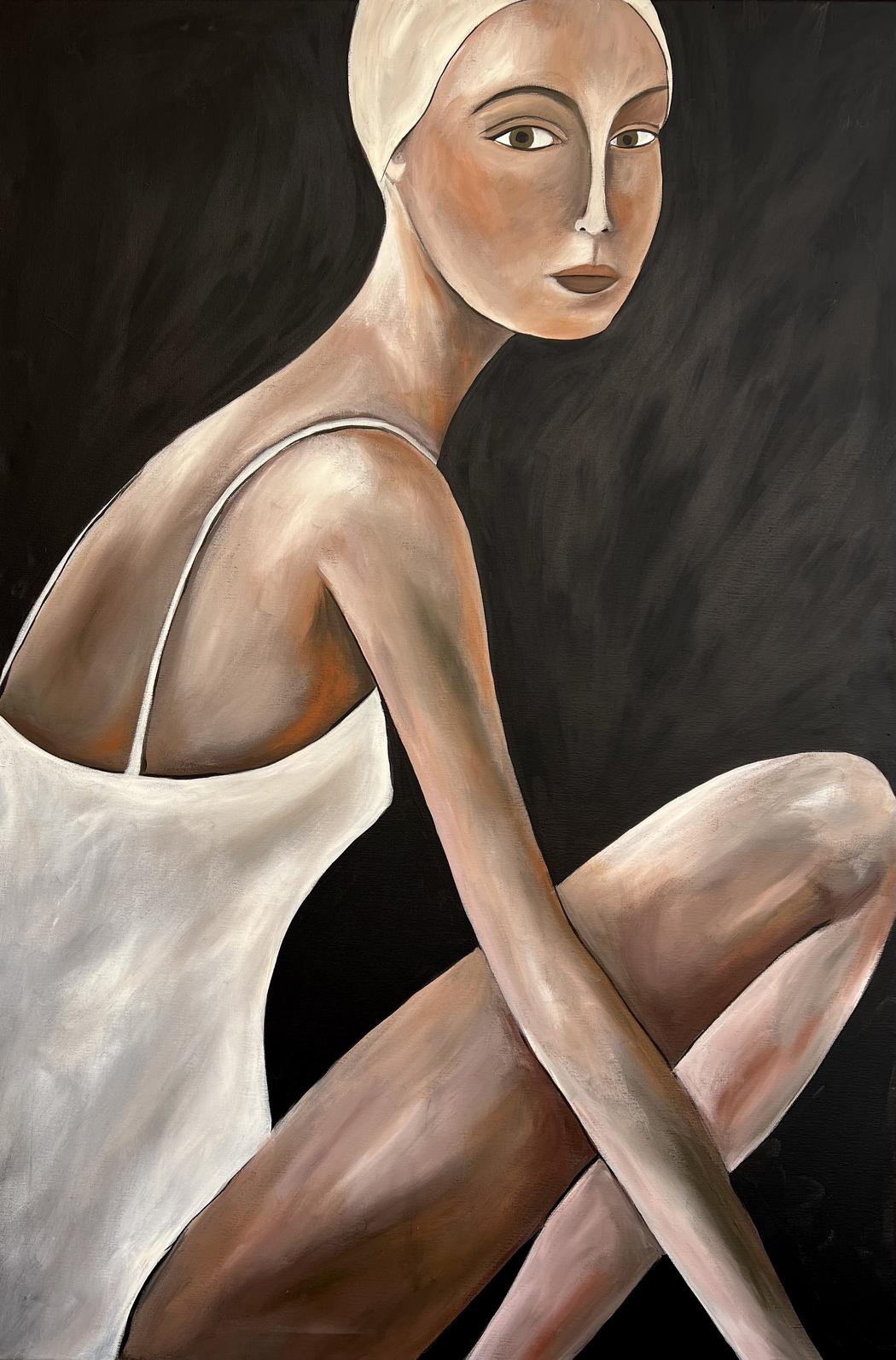 Dominika Luszcz | Pause | 2026
How does a painting usually begin for you – with a particular emotion, a visual image, a colour relationship, or an intuitive response to the canvas?
A painting can begin in many different ways. Sometimes it starts with a thought or an emotion, other times with a piece of fabric whose texture, pattern, or color sparks an idea. Often, it begins with simply observing people. I am fascinated by quiet, everyday moments and the subtle ways we communicate through posture, gesture, and presence. I often paint women because they allow me to explore themes of identity, vulnerability, resilience, and human connection. Hands are equally important in my work. They carry emotion, memory, and intention, often expressing what a face cannot. A slight gesture or the way a hand rests can reveal an entire psychological state. As I begin painting, these observations become less about the individual and more about creating an emotional presence. I don’t set out to tell a specific story; instead, I allow the painting to develop intuitively until the figure embodies the feeling I am searching for.
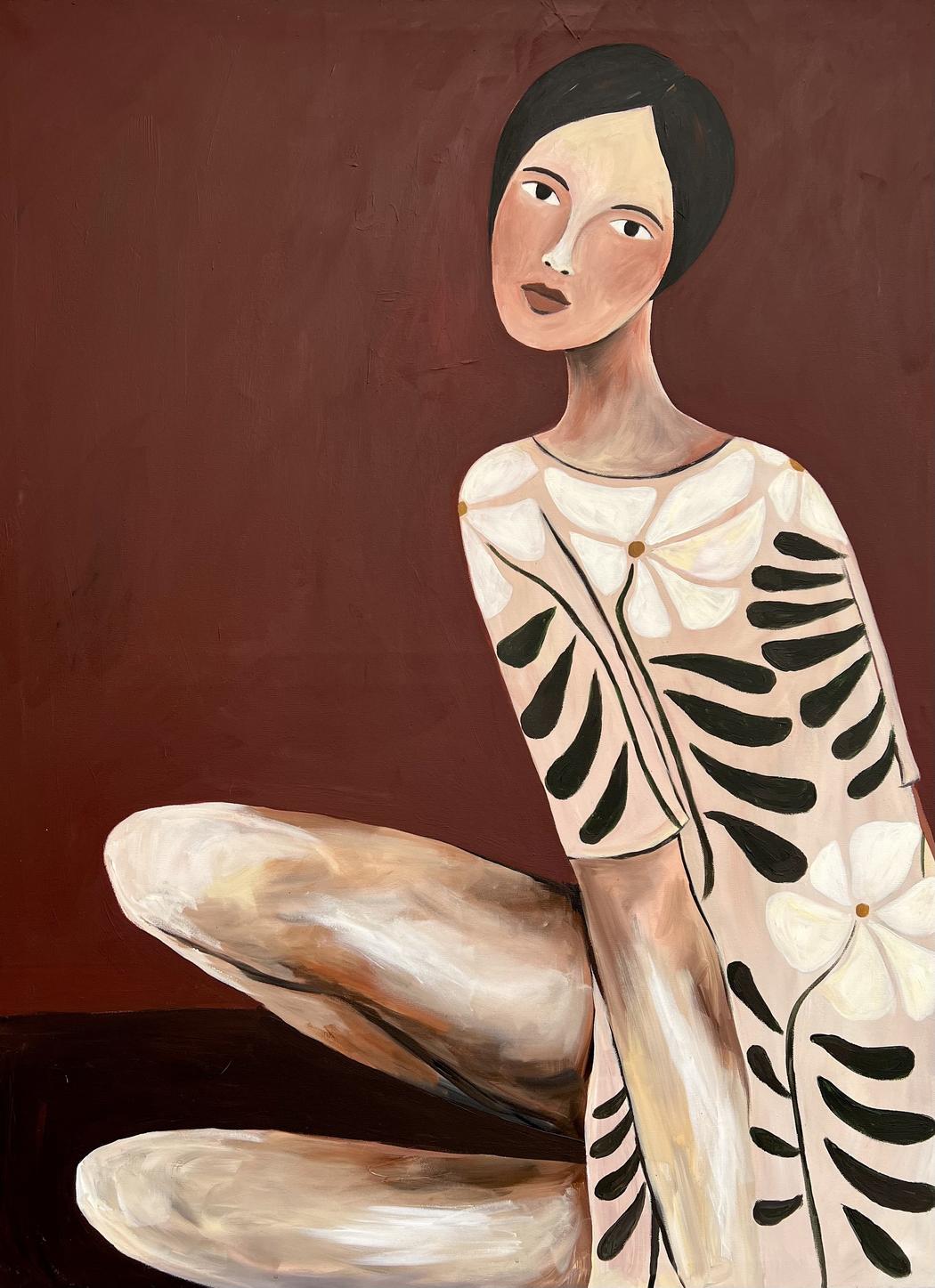 Dominika Luszcz | Poise | 2025
What would you like viewers to experience during the first moments of encountering your work, and do their interpretations ever change the way you see your own paintings?
Painting is my meditation. I hope standing in front of my paintings becomes a meditation for the viewer as well. I hope viewers slow down. My paintings are not meant to reveal themselves all at once. I want the first encounter to be quiet—to create a pause where the viewer is drawn into the emotional presence of the figure rather than a specific story. More than anything, I hope the work evokes a feeling that is difficult to explain—a moment of recognition, a memory, or even goosebumps. I want viewers to reconnect with something they may have forgotten or never found the words to express. If a painting stirs an emotion that feels deeply personal, then it has fulfilled its purpose.