
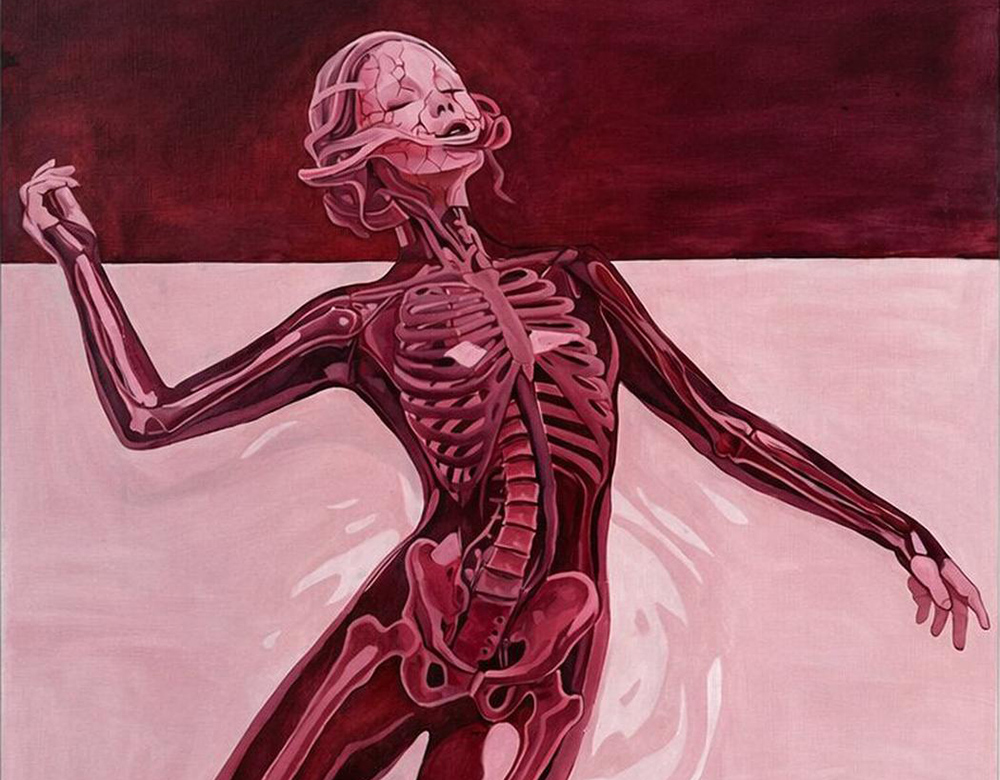
Genie Fyd
You were born in a remote northern town. How did the atmosphere of this place – its climate, isolation, light, and surrounding landscape—influence your visual perception?
There was almost no light and a constant sense of loneliness as I walked to and from school through the snowdrifts. In winter, it would get dark at three in the afternoon, and you would simply sit there in the darkness. I think that is where the red comes from—I always longed for something intensely vivid and alive. The isolation also played its part: when there is nothing to look at outside, you begin to look inward.
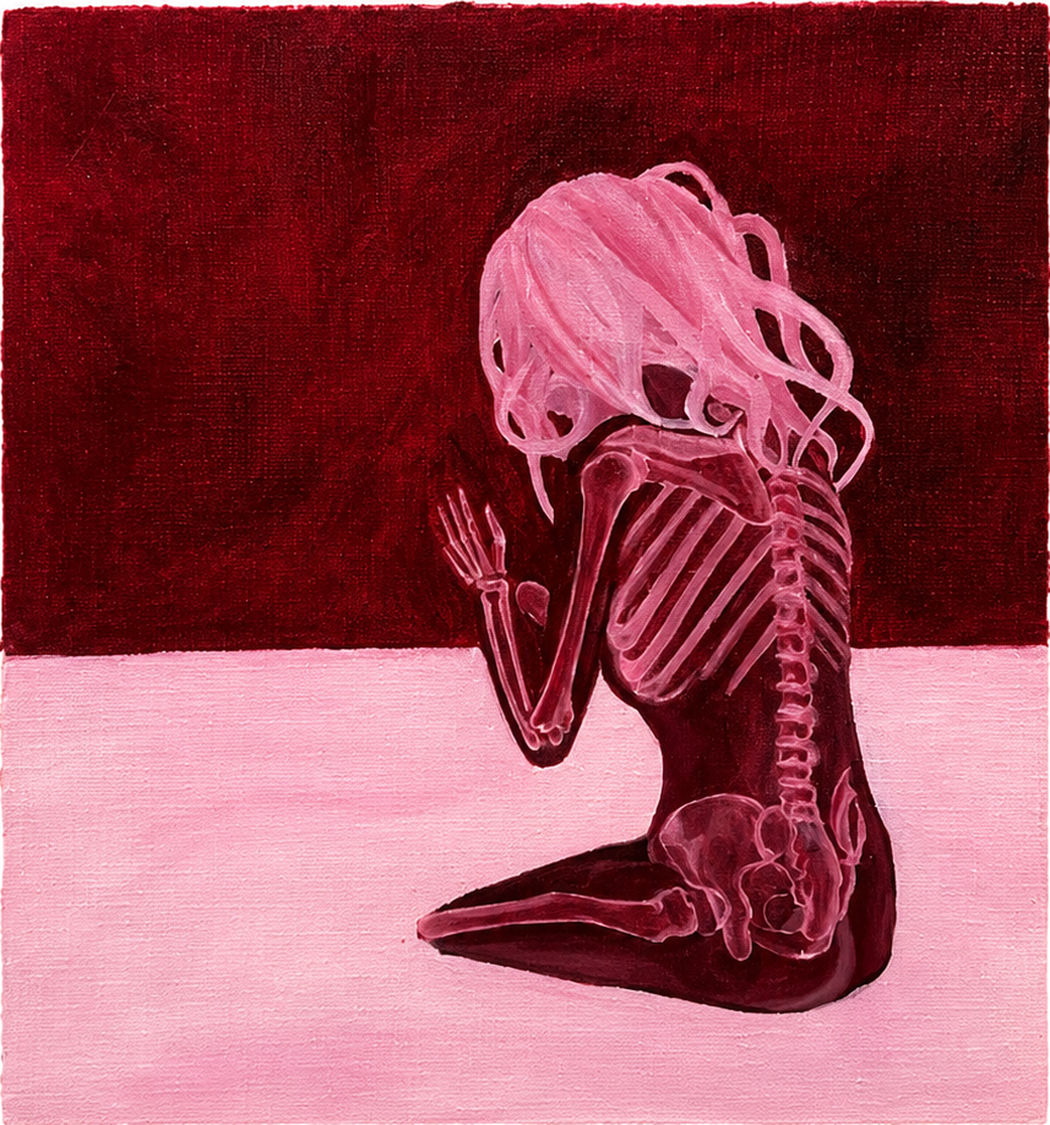 Genie Fyd | Knees
Drawing became a language for what could not be expressed in words. Do you remember the moment when you first felt that an image could convey an inner state more precisely than speech?
There was no single defining moment. As a child, I simply had no one to talk to, and drawing was the only place where I could express something without having to explain it. Words always require translation. Drawing does not. It allowed me to escape for a while.
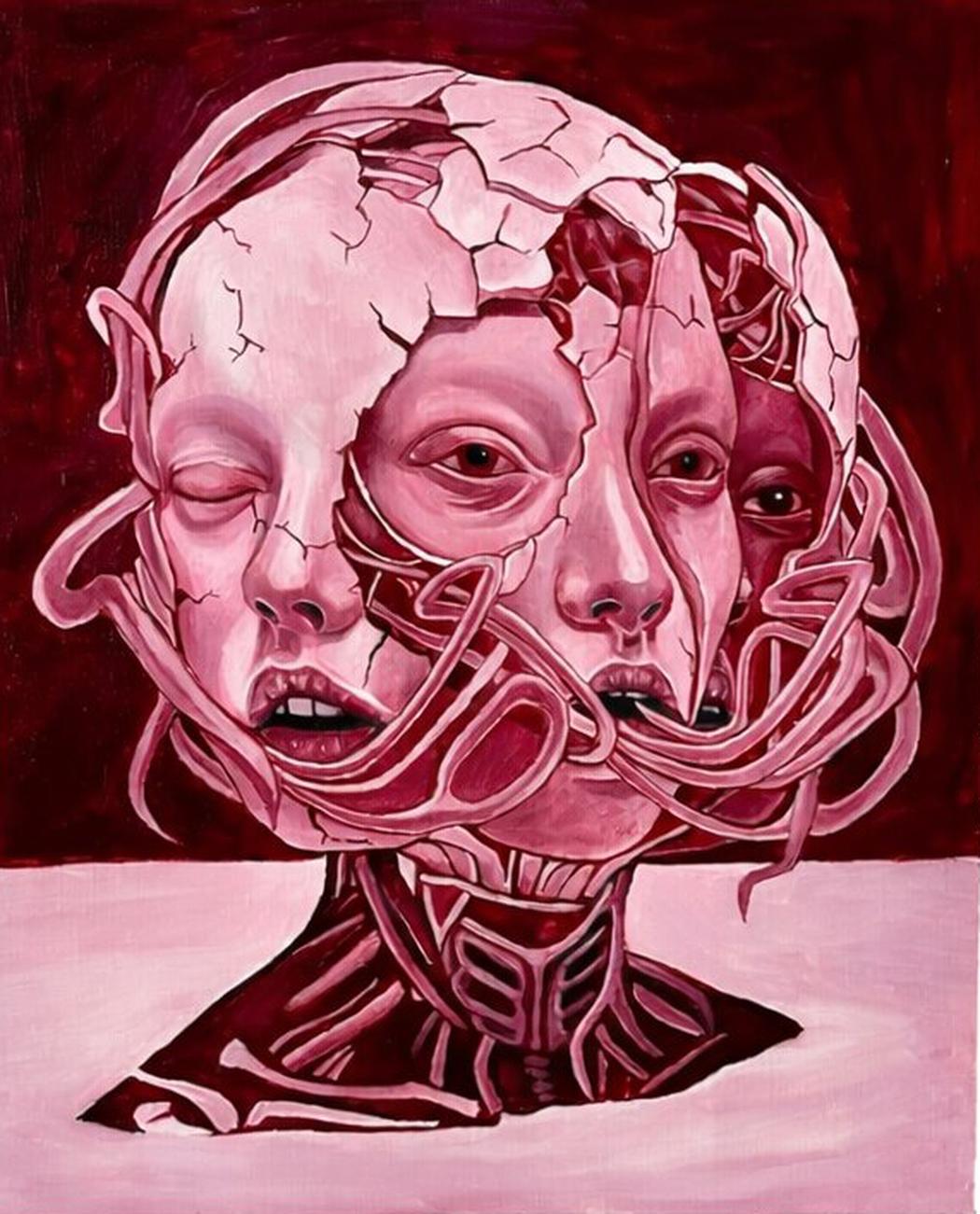 Genie Fyd | Fragmentation
You worked in a technical field for several years. What prompted you to ultimately choose painting and begin a full-time artistic practice?
There was no sudden turning point. At some point, I simply realized that my need to express my feelings and emotions was growing stronger every year. Without drawing, those emotions came out through emotional instability and depressive states. I was good at technical work, but it took something important away from me—my sense of self. Painting restored the feeling that I actually existed.
In your works, the human body is presented as a system of disconnected, displaced, yet simultaneously interconnected elements. Why did anatomy become your primary visual language for exploring inner fragmentation?
Because the body, without unnecessary clothing or accessories, is emotionally honest. When I could not explain what was happening inside me, my body already knew. Ribs, loops, and the spine are not images created merely for aesthetic effect. They are quite literally what borderline personality disorder feels like from within. The boundary between oneself and another person becomes blurred; something inside does not fit and is constantly spilling outward. Anatomy became an effective way to communicate these states visually.
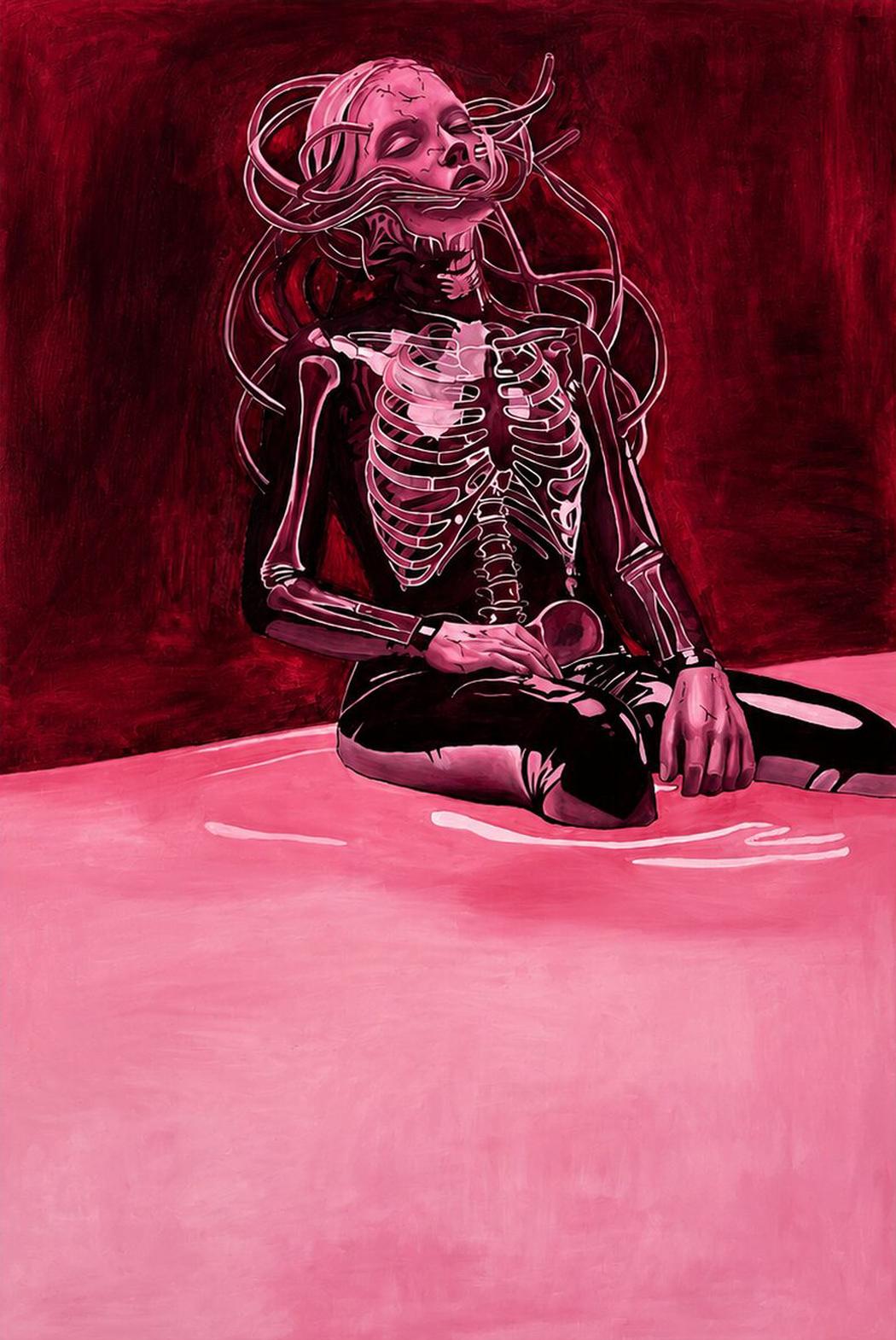 Genie Fyd | Overflow
The series is dominated by shades of red, burgundy, and pink. What does this palette represent for you: corporeality, vulnerability, anxiety, vital energy, or something else?
These colours emerged on their own—I did not choose them deliberately. Red, burgundy, and pink are the colours of what lies inside the body: blood, muscles, living tissue. I think that when you paint inner states, organic imagery arises naturally. And this is exactly what those states look like—warm, alive, and slightly frightening when viewed up close.
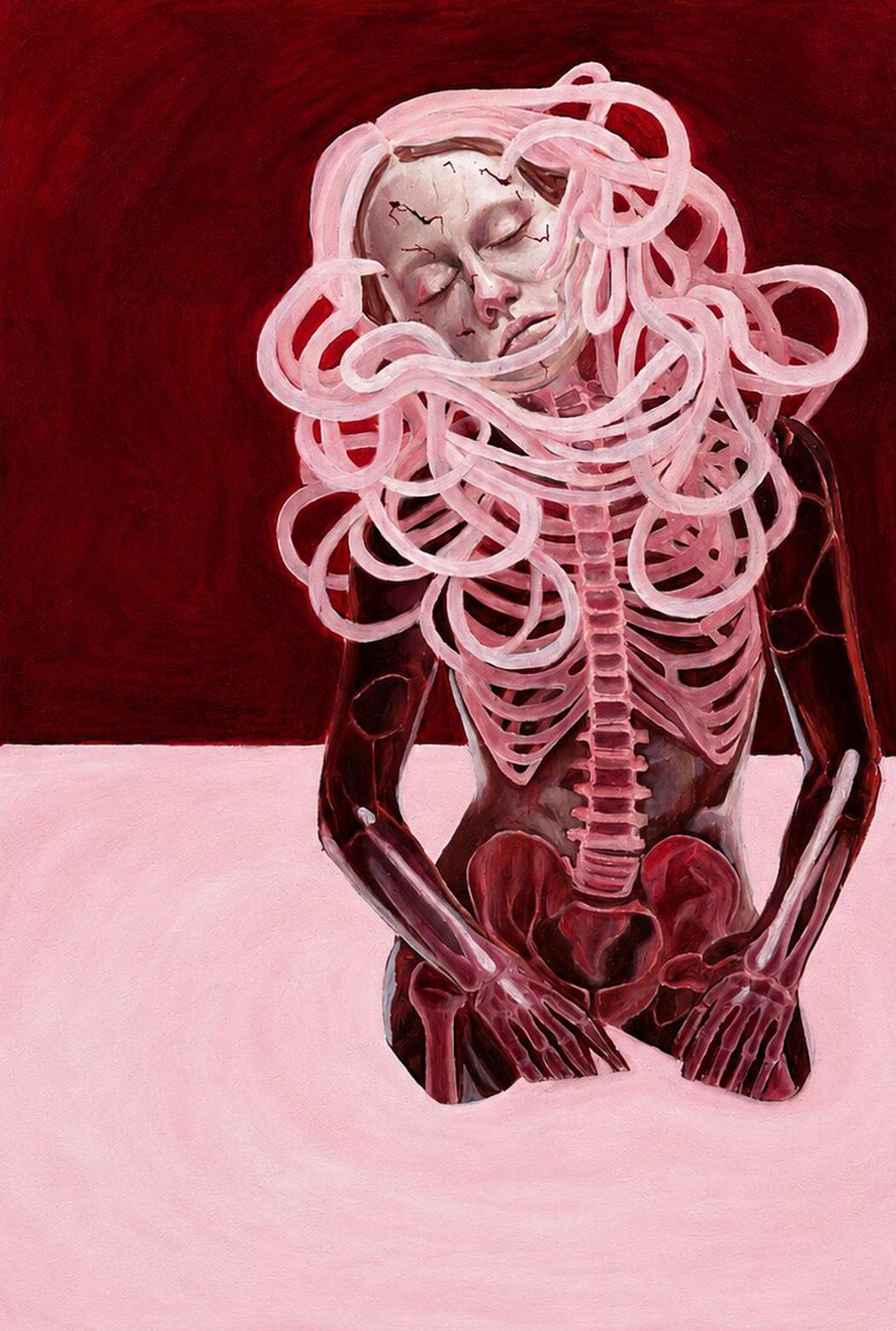 Genie Fyd | Loops
How do the titles of your works—Bare, Fragmentation, Loops, Manifestation, and Overflow—emerge? Do they appear before you begin painting, or do they result from reflecting on an image that has already been created?
Always afterwards. I cannot name something that does not yet exist. I look at the finished work until I understand what exactly has happened within it—and then the word appears.
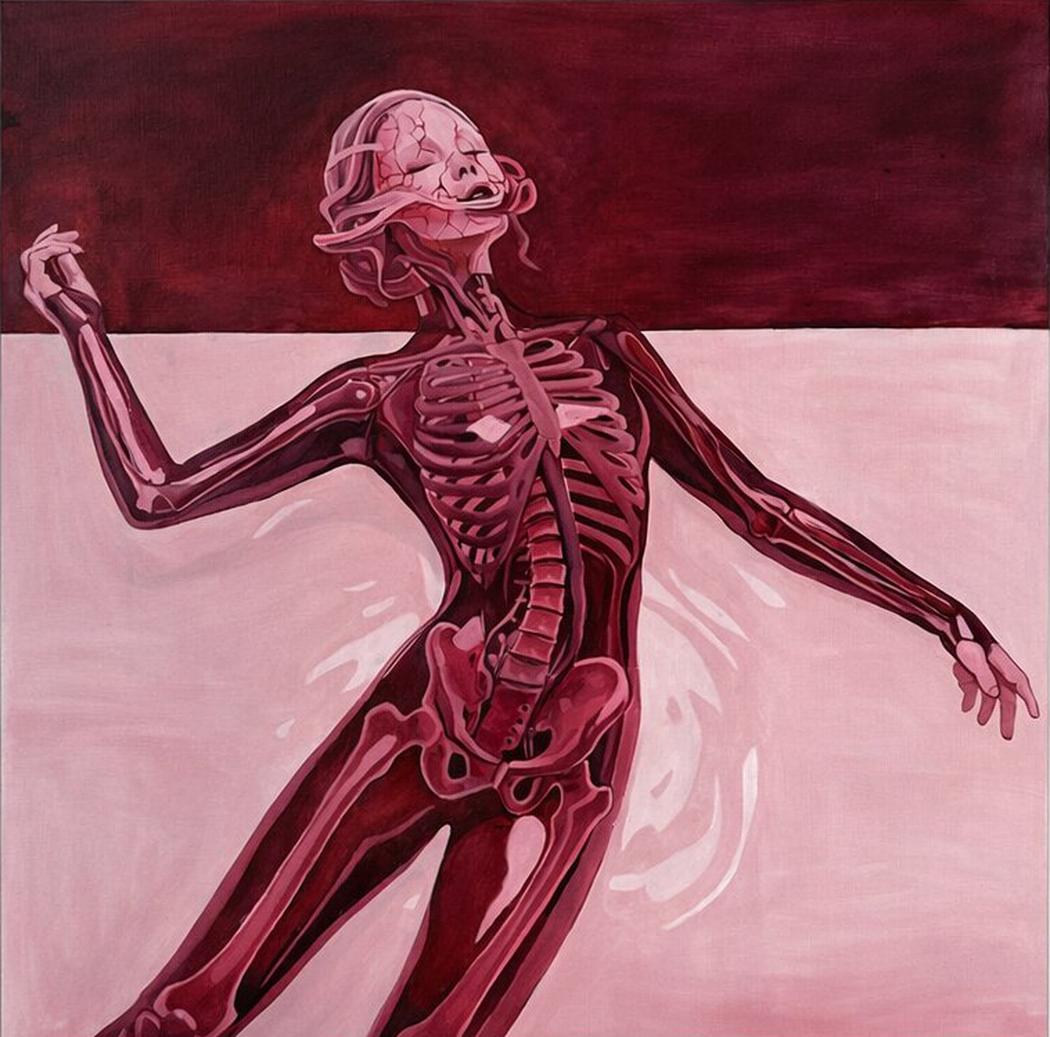 Genie Fyd | Manifestation
Since 2024, you have focused on your artistic practice. How has your understanding of your own art changed during this time, and which themes or artistic concerns would you like to develop further?
I used to think that the viewer should understand everything immediately, so I tried to create paintings with simpler and more accessible meanings. Now I understand that my task is not to explain, but to create a space in which a person can encounter something of their own. If that happens, then the work has succeeded. In the future, I would like to explore materials more deeply—perhaps introducing acrylic glass or something else that extends beyond the canvas and enters physical space.