
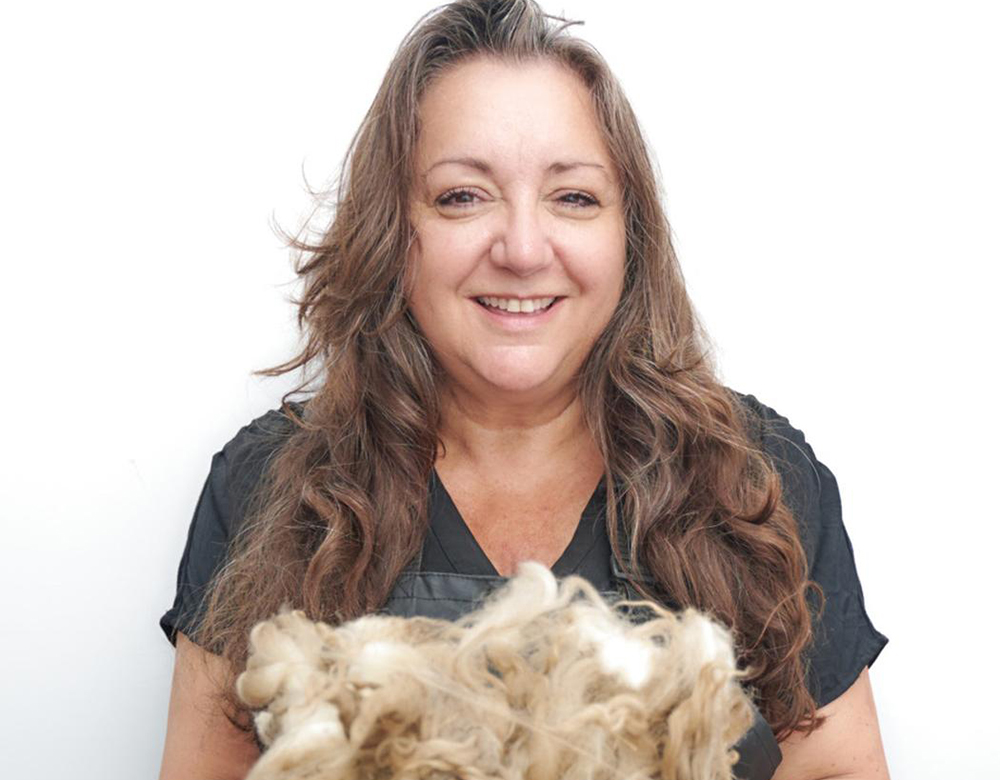
Gina Senko
How did your journey into textile art and felt-making begin?
My felt-making journey began with the intention of creating a pair of slippers for a hospitalized friend and a futile search for attractive oven mitts. From the moment I started making them, I was obsessed with the creative potential of wool. I began to see the objects around me as either wool-working tools or as large sculptures, wondering how they could best be translated in wool without requiring armature. As I developed my felting skills and confidence, my focus shifted from creating functional pieces to more open-ended self-expression and story-telling.
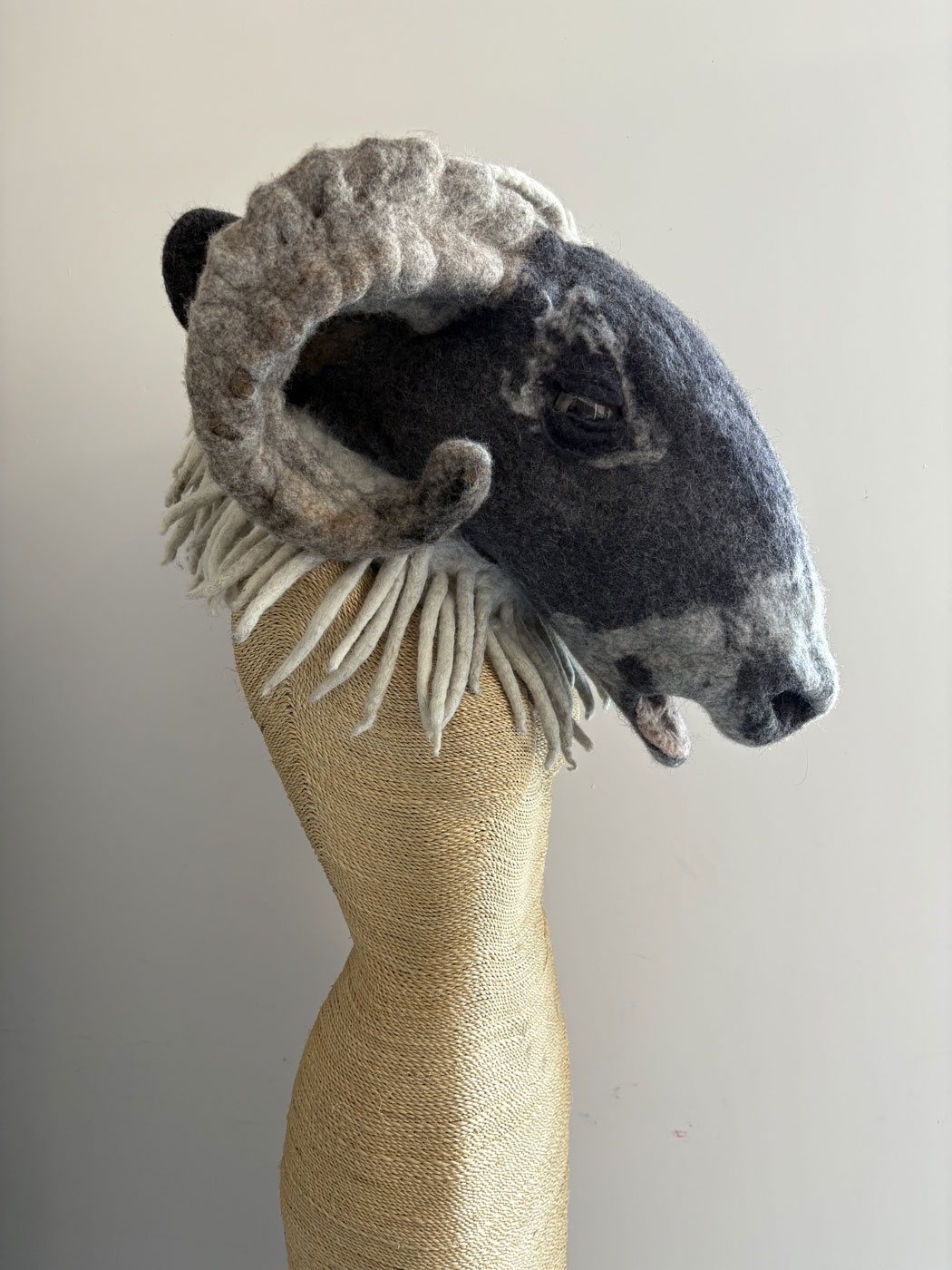 Photo: Antonio Cabrera
What first drew you to natural fibers and sustainable materials?
‘Natural fibres’ like wool have a large human handprint on them from millennia of selected breeding for desirable characteristics, such as non-shedding sheep. Now, however, wool has gradually been devalued, overlooked and replaced with synthetic fibres. There is a great deal of wasted sheared wool and I see that as an opportunity to appreciate and renew our relationship with wool.
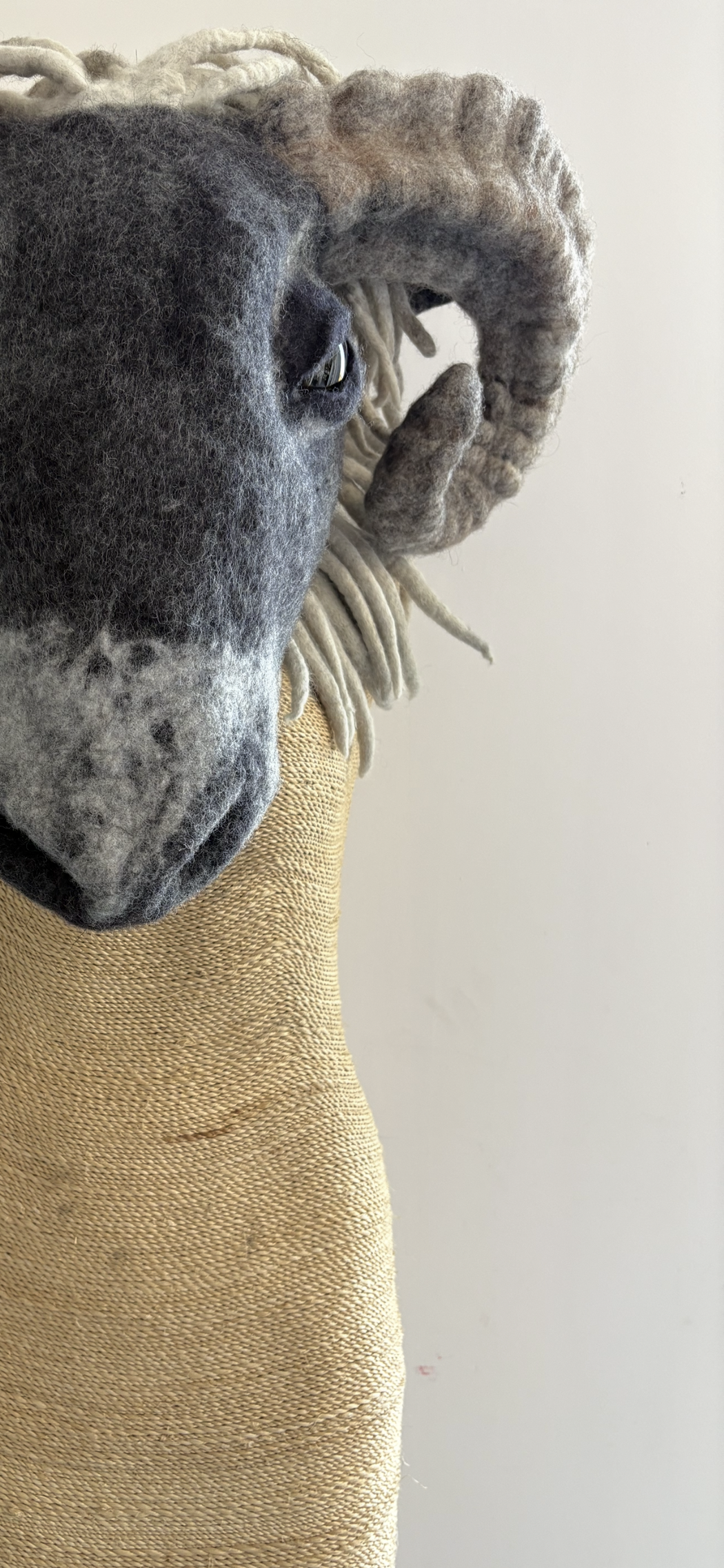 Photo: Antonio Cabrera
Your background is in environmental assessment. How does this education influence your artistic practice?
I have a degree in environmental studies/geography and a masters in environmental impact assessment. Firstly, this education gave me the tools to consider materials with their life cycle in mind. Secondly, it made me conscious of how we have engineered our environments, including other species, and also how our environments have shaped us. Creatively we can shape or alter the wool, and the resulting fibre art can, in turn, influence us. There is an unspoken reciprocity.
Why did wool become such an important material for you?
It is the innate qualities of wool that inspire my passion. Not unlike clay, the possibilities to create are limitless.
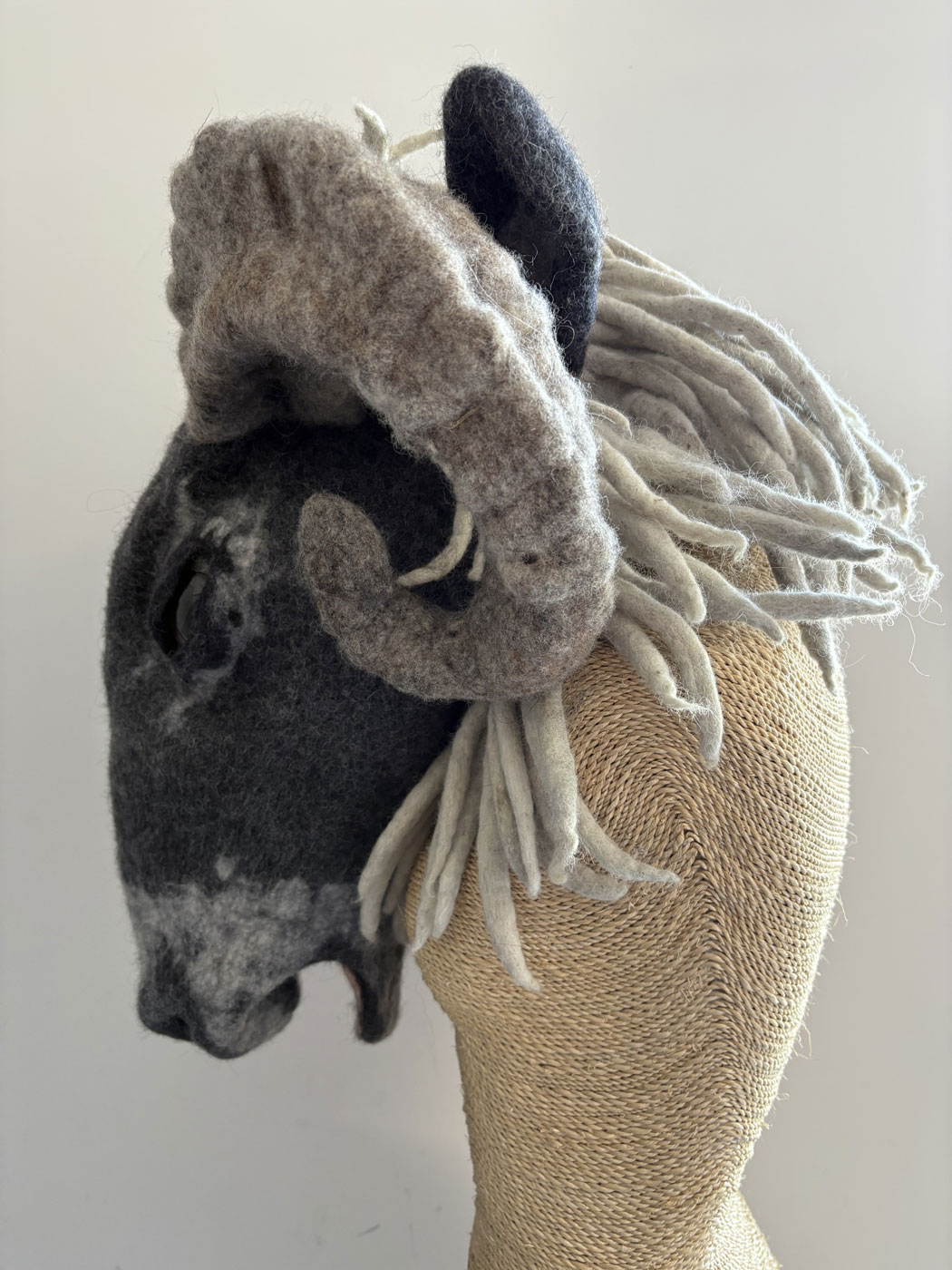 Photo: Antonio Cabrera
Your work often refers to the natural world and the animal kingdom. What inspires you most in animals?
From a biological, evolutionary and aesthetic perspective, the natural world and its inhabitants are a constant source of wonder and fascination for me.
What was the idea behind this ram head sculpture?
The ram’s head is personal piece. It is an hommage to the late Elwood Quinn, an influential person in Montreal’s agricultural/educational scene. He provided me with the wool and fun conversation so my goal was to create a strong but unconventional sculpture in his honour.
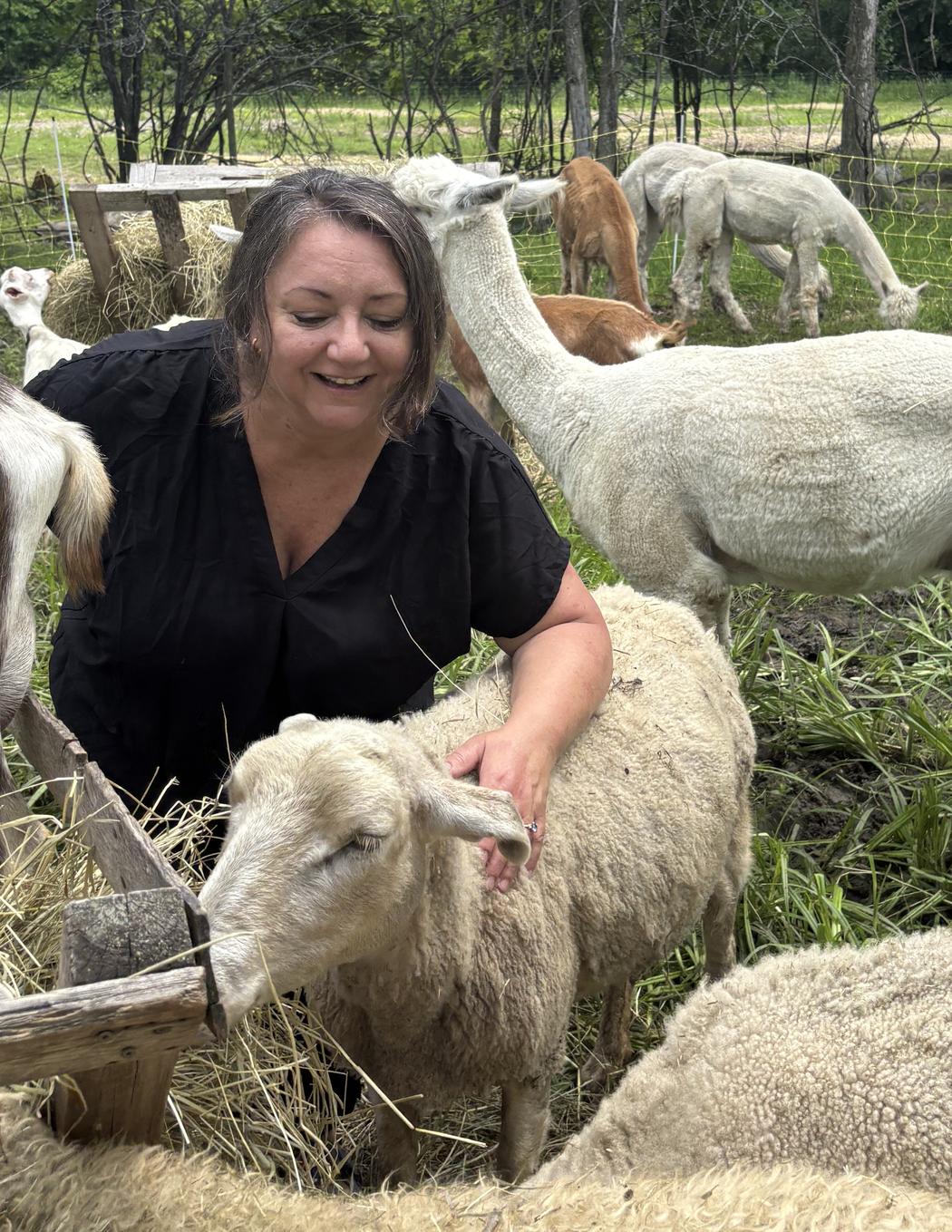 Photo: Antonio Cabrera, Location: Pace Farm, Quebec
You studied in France with masters in the field. What was the most valuable lesson from that experience?
I took felting classes at Feutre Formation France with Gladys Paulus. She is a felting genius who shared her experiences in making various animal features. It gave me the tools and confidence to try new ideas.