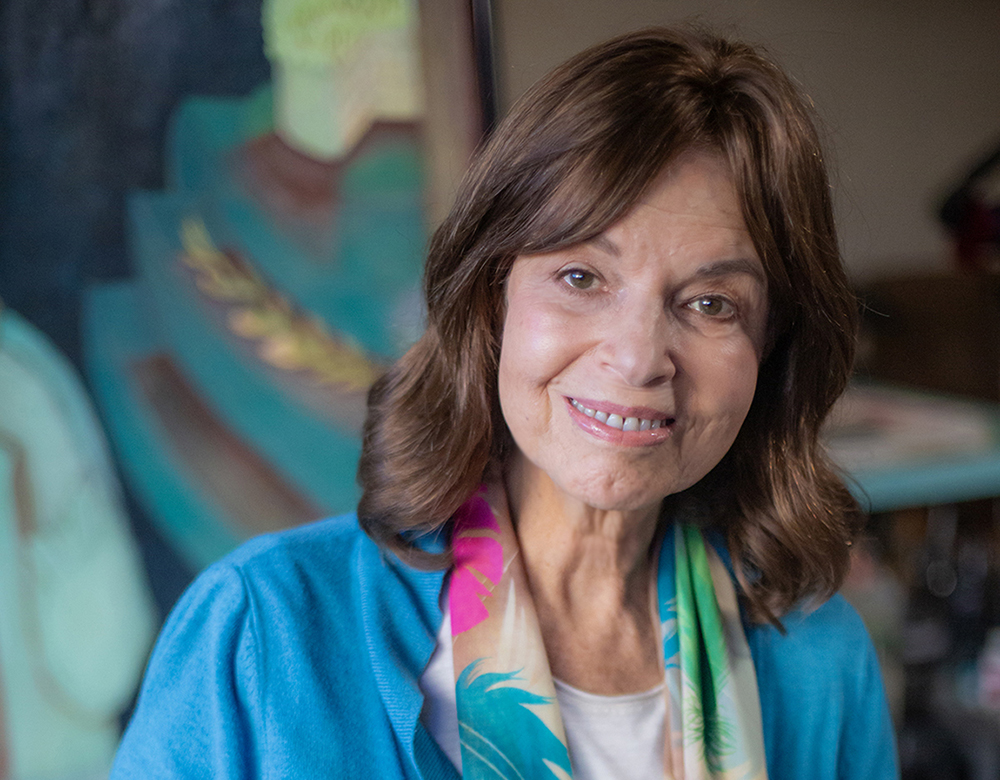
Fiona YEH
Could you tell us a little about your journey as an artist and how you first began painting?
Art has always been a way for me to explore life and understand myself. I began painting out of curiosity—curiosity about emotions, imagination, and the invisible connections that exist between people and the world around them.
Over time, painting became more than a creative practice. It became a way of observing, learning, and reflecting on my experiences. I see myself as a traveler on Earth, and art allows me to transform what I discover along the journey into a visual language that can be shared with others.
Your paintings often feel like they exist between reality and dream. How important is this dreamlike atmosphere in your work?
The dreamlike atmosphere is an important part of my work because I am interested in what exists beyond the visible world. Emotions, memories, intuition, and imagination often reveal truths that cannot be fully explained through logic.
By creating spaces between reality and dream, I hope to invite viewers into a quieter place where they can connect with their own experiences, emotions, and inner landscapes.
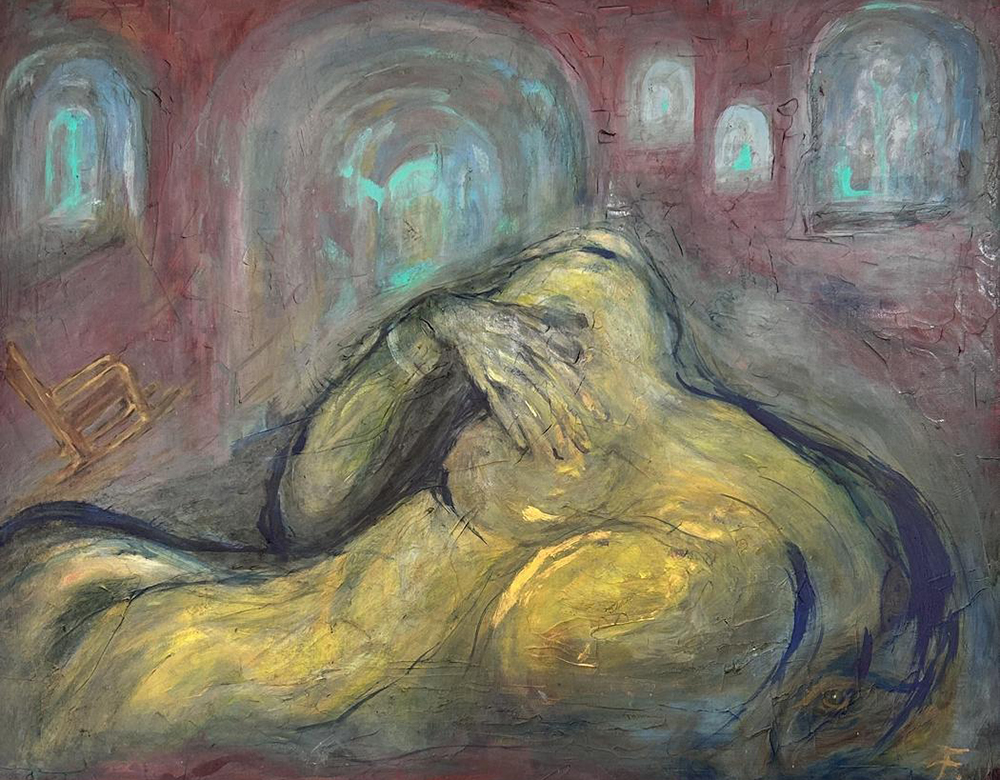
 Fiona YEH | Woman-8
The gaze of the lion feels very direct and almost human. What do you want the viewer to feel when meeting this gaze?
The lion in my work is never just a lion.
It is a mirror.
When viewers meet its gaze, I hope they feel a moment of recognition—as if they are looking at a part of themselves. Strength and vulnerability can exist together. Courage is not the absence of fear, but the decision to keep moving forward despite it.
The lion’s eyes carry silence, memory, resilience, and emotion. They do not judge or demand; they simply exist and invite reflection.
For me, Leonoir is about the hidden strength within every individual. Through this gaze, I hope viewers feel seen, understood, and perhaps reminded of the strength they may have forgotten they possess.
 Fiona YEH | Teasing the King-6
Was there a particular experience or period in your life that helped you understand your artistic voice more clearly?
I do not think my artistic voice emerged from a single moment. It developed gradually through living, observing, questioning, and experiencing the world.
As I continued to create, I became less interested in describing appearances and more interested in exploring what lies beneath them—human emotions, inner landscapes, and the invisible connections that shape our lives.
This journey eventually led me toward the symbolic language of lions, women, dreamlike spaces, and Leonoir.
Do you usually plan your compositions in advance, or do they develop naturally while you paint?
I usually begin with a feeling, a question, or a symbolic image. While I may have an initial direction, I leave space for intuition and discovery throughout the process.
For me, painting is less about executing a plan and more about having a conversation with the work itself. Some of the most meaningful elements often emerge unexpectedly.
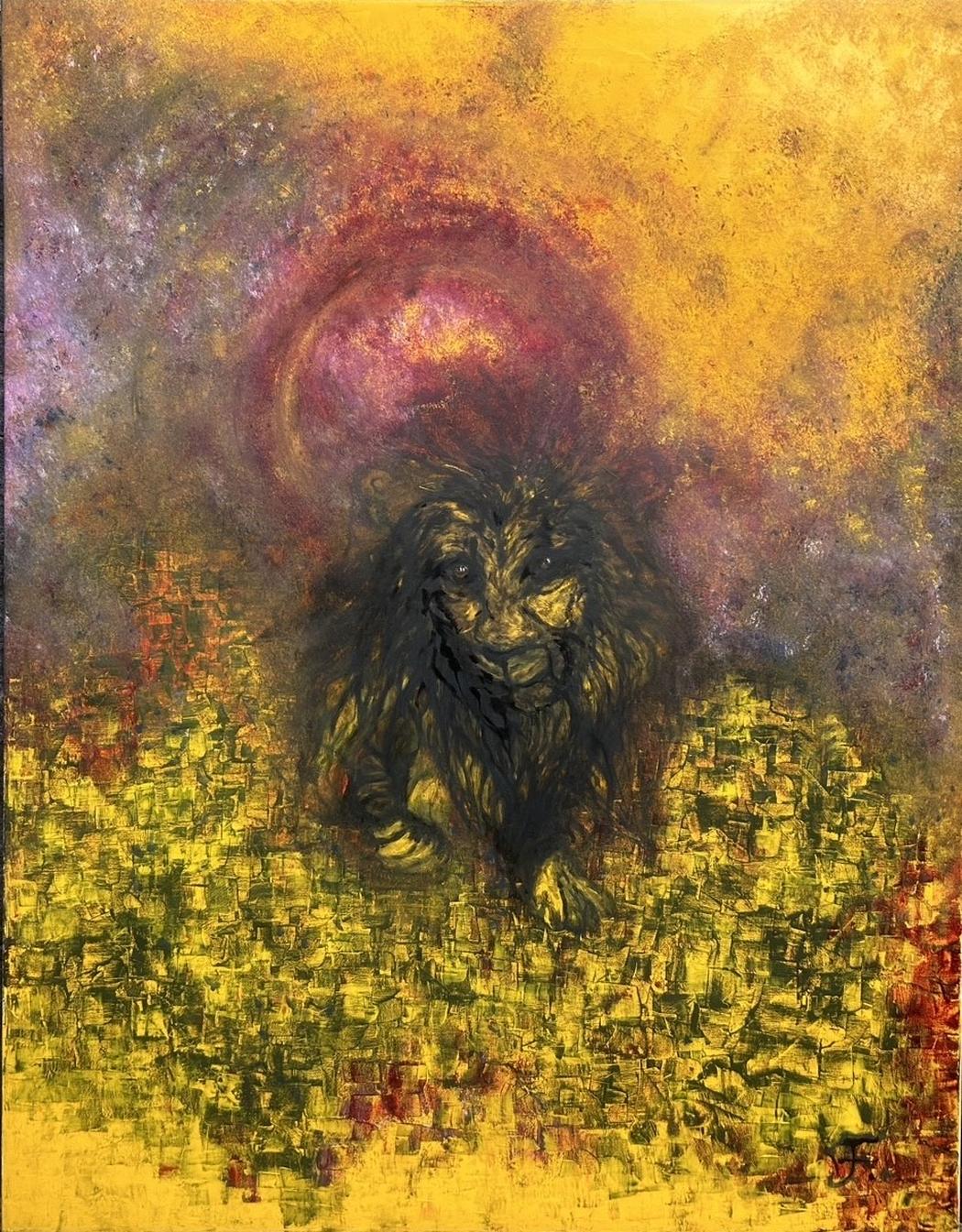 Fiona YEH | Lion-40
What does healing mean to you as an artist, and how does it appear in your visual language?
For me, healing is not about fixing something that is broken. It is about becoming more aware, more connected, and more compassionate toward ourselves and others.
In my work, healing appears through stillness, reflection, and connection. It can be found in the gaze of a lion, the presence of a woman, or the quiet simplicity of Leonoir. These elements invite viewers to slow down, look deeper, and reconnect with what truly matters.
What do you hope people remember after seeing your artworks?
More than remembering a specific image, I hope people leave with a feeling.
A feeling of connection.
A feeling of curiosity.
A feeling of hope.
If my work can encourage someone to see life from a different perspective, to connect more deeply with themselves or others, or to bring a little more kindness into the world, then it has fulfilled its purpose.
At the end of June the artist’s work was also featured on a Times Square billboard in New York, expanding the project beyond the magazine format and bringing it into a public urban space.