
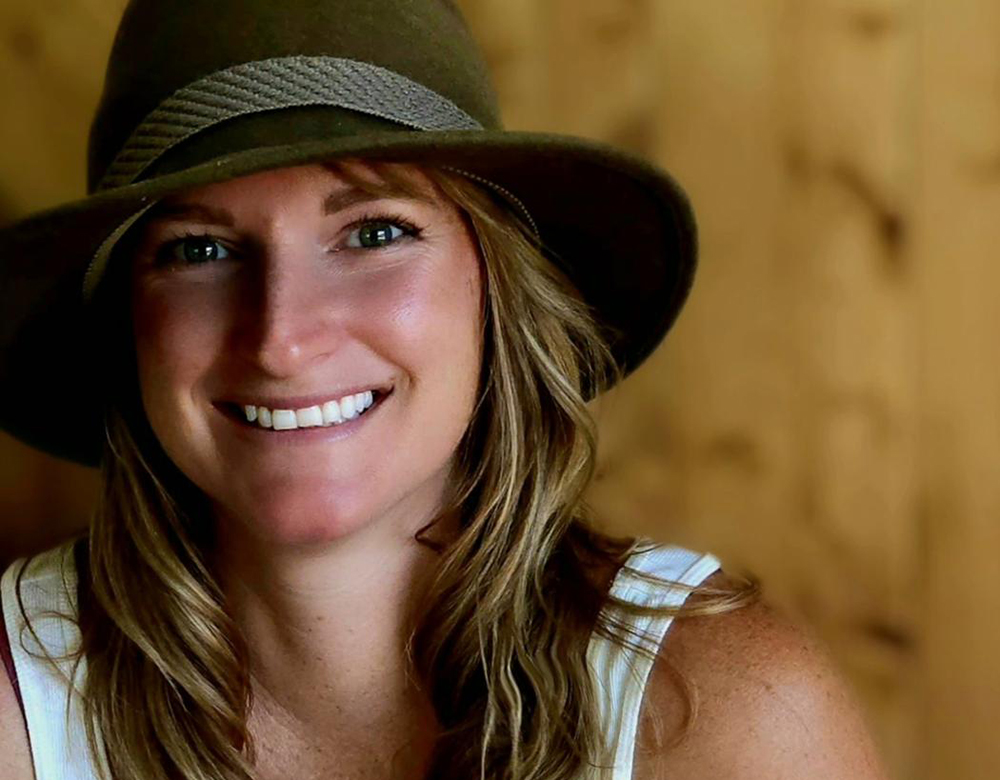
Krista McAllister
How did your studies in Art History and Fine Arts influence the way you approach your work today?
Although I have always loved art, I did not fully understand its historical context until college. I became fascinated by how the single field of Art History encompasses a vast array of societal, political, philosophical, and anthropological research. Beyond studying artistic techniques, I learned to view the world through the eyes of the artists, feeling transported back in time. This realization inspired me to create art not merely for beauty or entertainment, but as a visual pathway to my own lived experience. Today, I paint a visual diary with the hopes of defining our current culture and enlightening viewers to contemporary societal challenges.
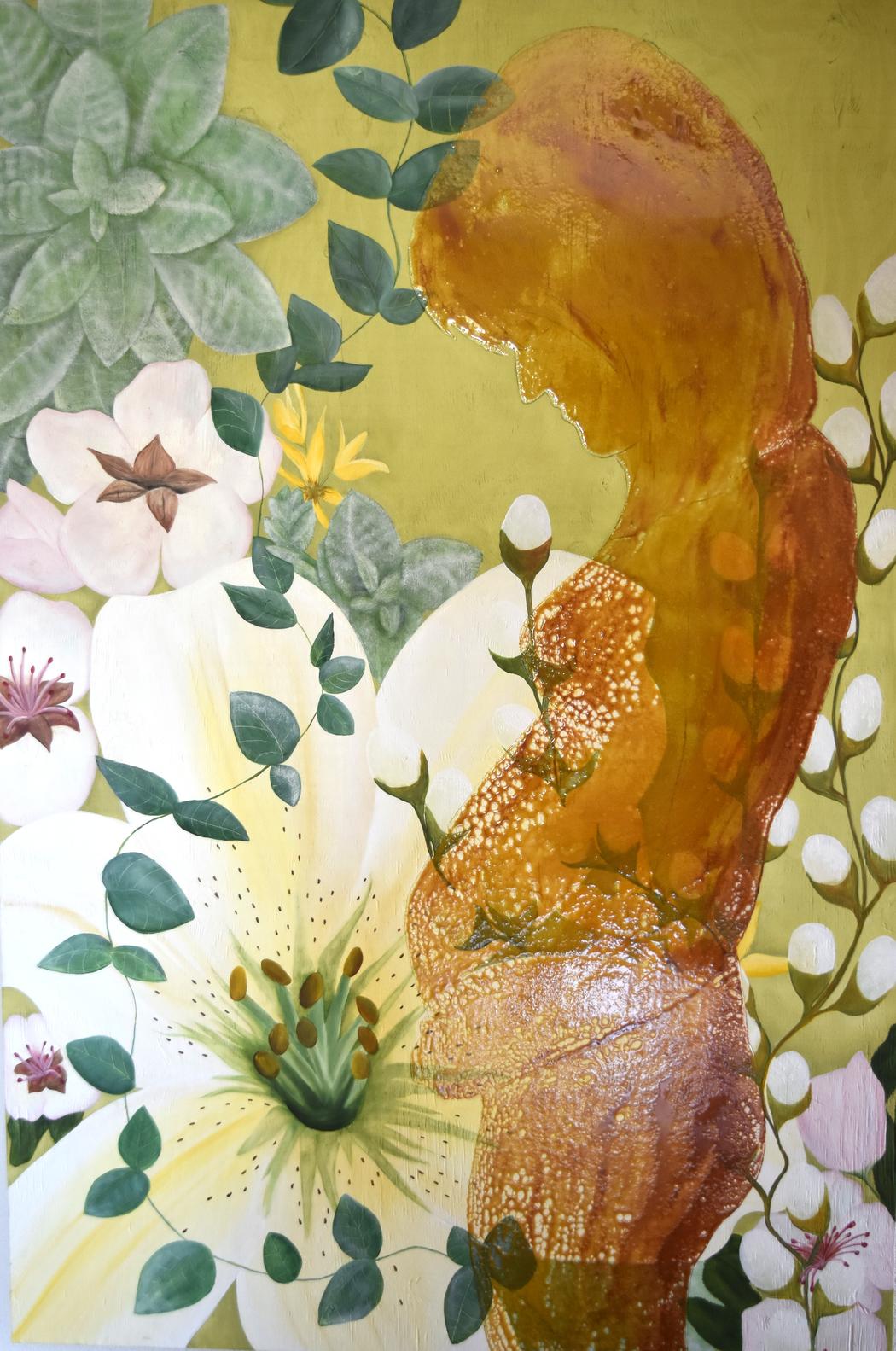 Krista McAllister | Motherhood | 2026
Your practice combines oil painting, wood carving, and epoxy resin. What attracts you to working with mixed media? What inspired you to create the Motherhood series?
My desire to create mixed media art stems from the sensory joy of touch. As an artist, I love getting my hands messy with paint, epoxy, and wood shavings. I create not only to establish a theoretical and conceptual voice, but to experience the pure joy and peace the process brings. After exploring acrylics, charcoal, clay, and woodcarving, I transitioned to oil painting and epoxy—mediums that demand both physical intensity and thoughtful control. By combining wood, epoxy, and oil paint, I build a physical framework for my personal narrative. In my Motherhood series, for instance, the wood represents natural life at its core, while the painted flowers symbolize the expansive emotion and beauty of a mother’s experience. The figures themselves are cast in the final layer of epoxy resin—the most highly manufactured element. Ultimately, the medium defines the story as deeply as the image itself.
In this series, flowers carry many emotional meanings. How do you choose which flowers or plants to include in each work?
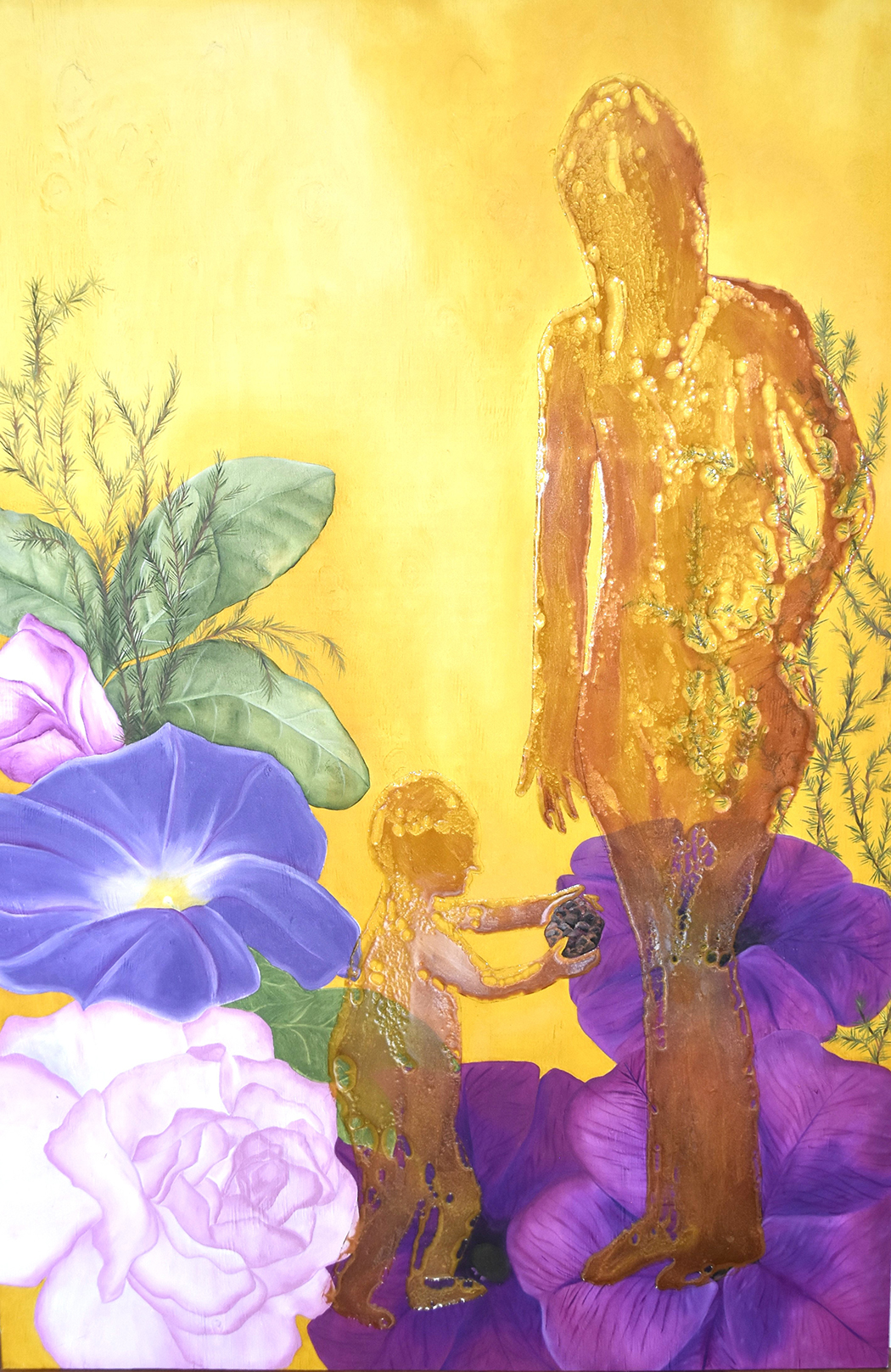
To link a flower to each emotional milestone, I referenced The Complete Language of Flowers by S. Theresa Dietz. Her comprehensive guide allowed me to directly correlate specific symbols with unique moments throughout motherhood. In Motherhood 1, the white lily represents purity and devotion, while the forsythia portrays anticipation and the salix denotes recovery from illness and receiving a blessing. In Motherhood 2, goat’s rue evokes physical nourishment—as nursing mothers sometimes use it as an herbal supplement—while purple rue represents the ‘first emotions of love.’ Additionally, the rose traditionally embodies love, whereas freesia and musk mallow capture innocence and immaturity. In Motherhood 3, morning glory portrays resilience alongside ‘extinguished hopes,’ neighboring the petunia, which indicates resentment. Finally, in Motherhood 4, Dietz categorizes cedar as a symbol of strength, birch as adaptability, grace, and renewal, wood sorrel as maternal tenderness, and bluebonnet as forgiveness, self-sacrifice, and survival. These paintings have an array of symbols to uncover, each object and placement with its own meaning. They are obvious and obscure at the same time, puzzling the viewer to foster deeper engagement.
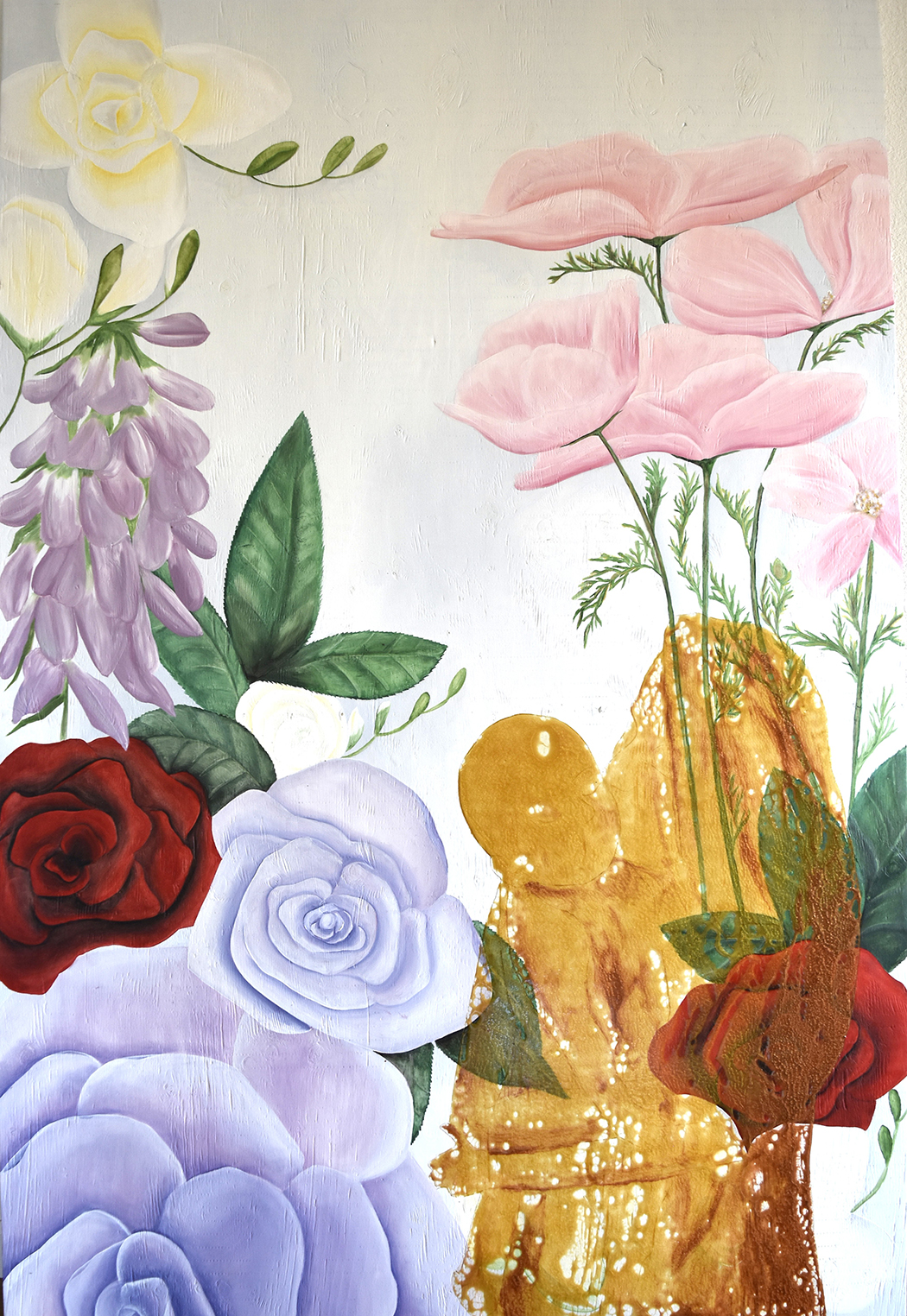 Krista McAllister | Motherhood | 2026
The epoxy-resin figures have a very strong presence in the paintings. What do they represent for you?
The figures represent the evolving bond between mother and child throughout each phase of their relationship. Motherhood 1 introduces a pregnant woman, which transitions into a mother with her newborn in Motherhood 2. In Motherhood 3, the focus shifts to a mother and her toddler, before concluding with a mother and a young child in Motherhood 4. Each stage captures a familiar, intimate interaction between them. Consequently, these figures serve as a continuous visual anchor across all four paintings, guiding the viewer seamlessly through the journey.
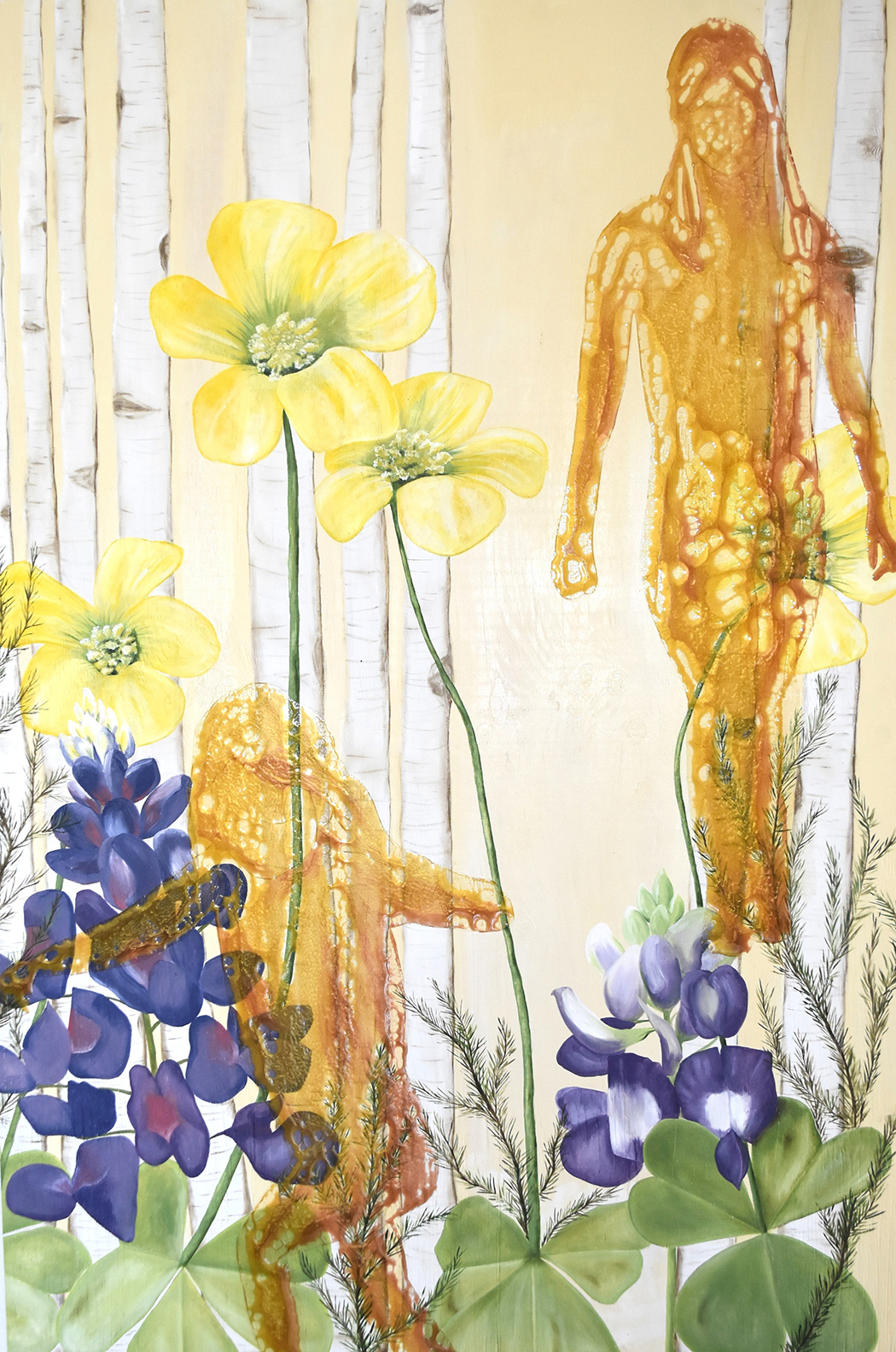 Krista McAllister | Motherhood | 2026
Your statement speaks about societal pressure, family judgment, and self-doubt. How do these themes shape the visual language of the series?
Societal pressure, family judgment, and self-doubt served as the foundational inspirations for the Motherhood series. By utilizing the symbolic nature of flowers, I leave a trail of clues for the viewer as an insight into my own personal experience. While the healthy, vibrant blossoms represent the beauty of motherhood, they simultaneously mask deeper emotional struggles. Within these intense fields of emotion reside the epoxy figures—incomplete, vulnerable shapes being actively consumed and altered by the world around them. Ultimately, the series portrays an exquisite beauty entangled with underlying conflict, a universal struggle that resonates deeply whether the viewer is a parent or not.
 Krista McAllister | Motherhood | 2026
Your work challenges viewers to question their own place within the story of motherhood. What kind of response do you hope to evoke?
Ultimately, I hope to evoke a deep curiosity regarding one’s own role within the collective journey of motherhood. Whether you are a parent, grandparent, friend, pediatrician, or teacher, everyone plays a part in a narrative that extends far beyond my personal story. To the mothers and parents navigating this path: you are my priority. If my work can seamlessly validate your insecurities while leaving you with a sense of hope and positive affirmation, then I have succeeded. To society as a whole, the onlookers inadvertently challenging a family dynamic, proceed with cation: subtle comments, quiet sighs, and judging eyes can quickly create an inhospitable environment for a mother and child. Without community support, mounting societal pressures and relentless self-doubt leave women struggling to fulfill a fragmented version of the maternal role they are so wholeheartedly trying to embrace.