
Marianna Dervos
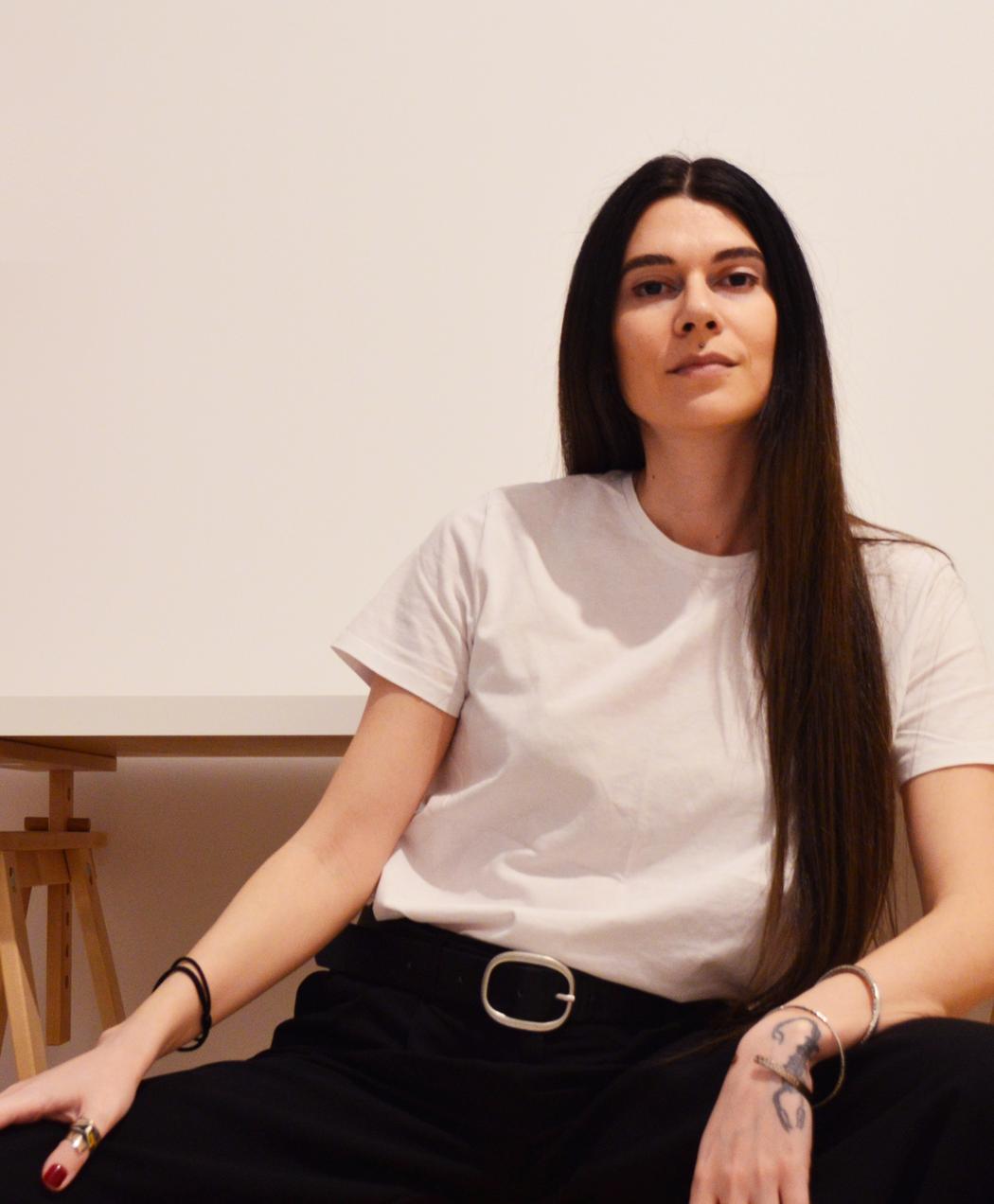
Your series “I mostly love you when you’re seeing red” explores the blurred line between victim and perpetrator. What initially inspired you to investigate this duality?
I’ve always been interested in how people adapt under pressure, and how survival can change behavior in ways we don’t really expect. We tend to think there are limits we would never cross, but those ideas shift once you’re actually inside a difficult situation. In abusive or toxic relationships, harm can slowly become normalized. People might start to rationalize it, or feel like it’s something they can’t really escape. And under pressure, especially when it becomes about survival, roles can shift in complicated ways. A victim isn’t a fixed identity. Sometimes reacting to violence can create new forms of violence, which makes responsibility harder to define. That uncertainty is what I keep coming back to, rather than trying to resolve it.
The use of a single red element against black-and-white compositions is very striking. What does the color red symbolize for you in this context?
Red is a color that carries contradictions. It can suggest danger, anger, or violence, but also intensity, desire, and life. Across different cultures it has been linked to both protection and good fortune, which adds to its complexity. In this series, I wanted it to stay ambiguous – something visceral and difficult to ignore. It can feel threatening, but also strangely alive or even attractive depending on how it’s perceived. That tension matters to me, because it reflects the emotional space I’m working in.
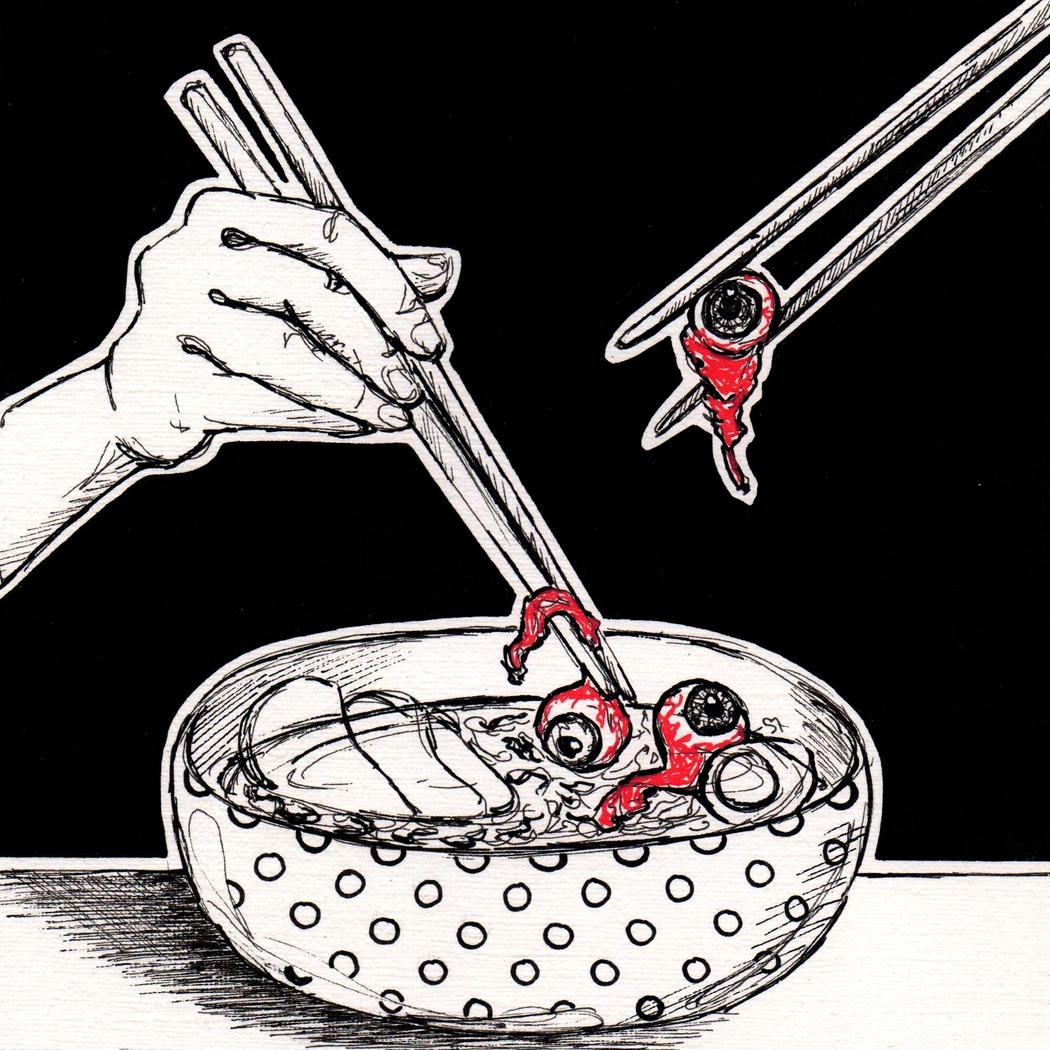 Marianna Dervos | Seeing red | 2026
Your works combine delicate linework with disturbing, sometimes grotesque imagery. How do you balance beauty and discomfort in your practice?
It’s not really a balance I try to maintain, more like a constant tension in the process. I’m not interested in shock for its own sake, but I’m equally uninterested in works that are purely decorative or easy to consume. Neither of those feels enough on their own. What I’m more drawn to is the space in between, where something might first appear delicate, but carries something slightly uneasy underneath. That contrast allows the work to operate on more than one level. But I don’t approach it as a fixed formula. Each work leans differently, but I aim for an overall consistency. What matters to me is that the work holds attention beyond the first glance – creating a subtle sense of unease that invites a closer look, without forcing a single interpretation.
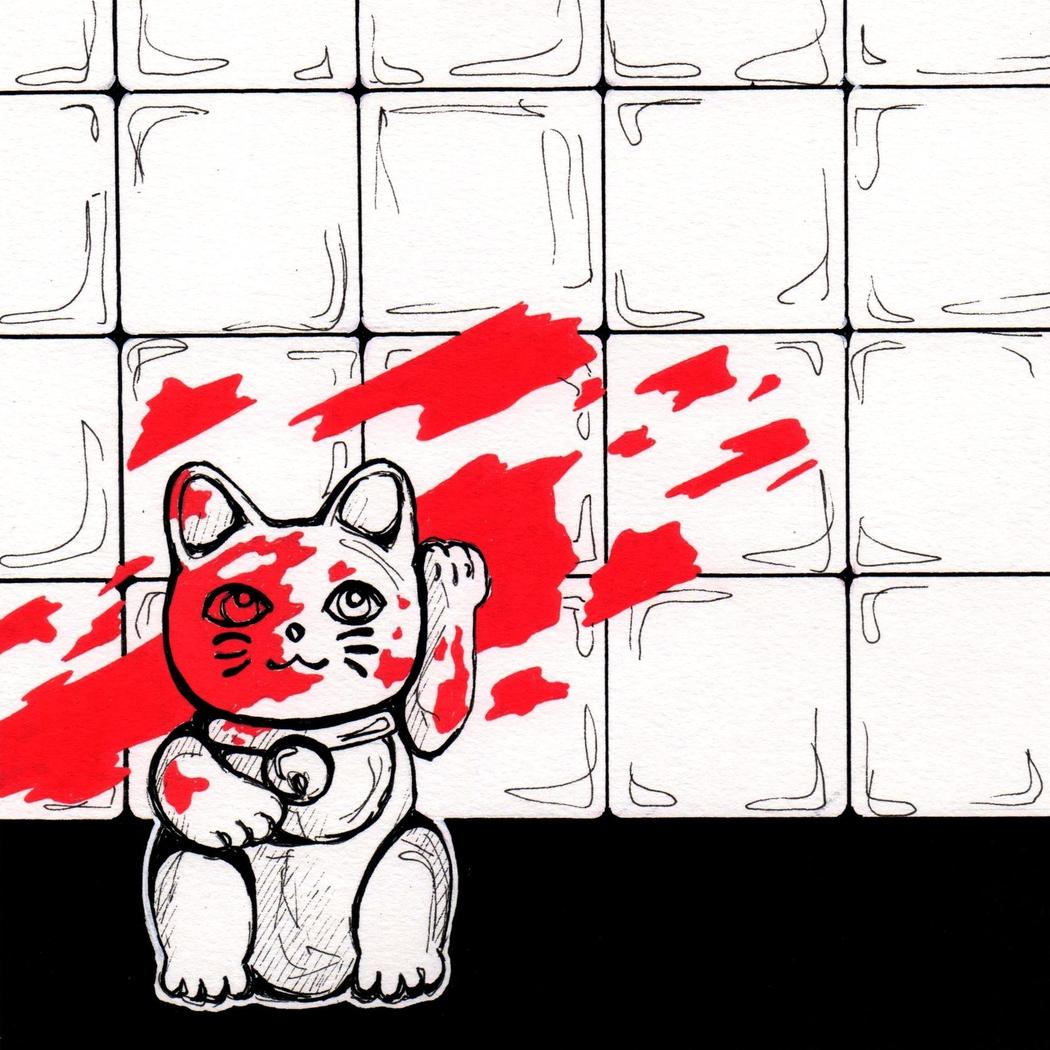 Marianna Dervos | Seeing red | 2026
There are strong references to Japanese culture and noir graphic novels. Which specific influences shaped this series the most?
I’ve been drawn to aspects of Japanese visual and cultural history, particularly where aesthetics intersect with themes of discipline, control, and violence. I don’t approach these as fixed ideas, but rather as references that resonate with the themes I explore. Practices like shibari, for example, carry a complex history – moving between restraint and, in contemporary contexts, intimacy and trust. That kind of duality is something I find compelling. Similarly, elements such as the visual language surrounding the samurai, especially the katana, carry strong symbolic weight. I’m interested in how they can suggest both precision and harm at the same time. Alongside that, films and graphic novels have had a big impact. Works like Sin City by Frank Miller, Kill Bill by Quentin Tarantino, as well as anime such as Elfen Lied, which engage with questions around trauma, violence, and transformation, have influenced both the visual language of the work and the way I think about these themes.
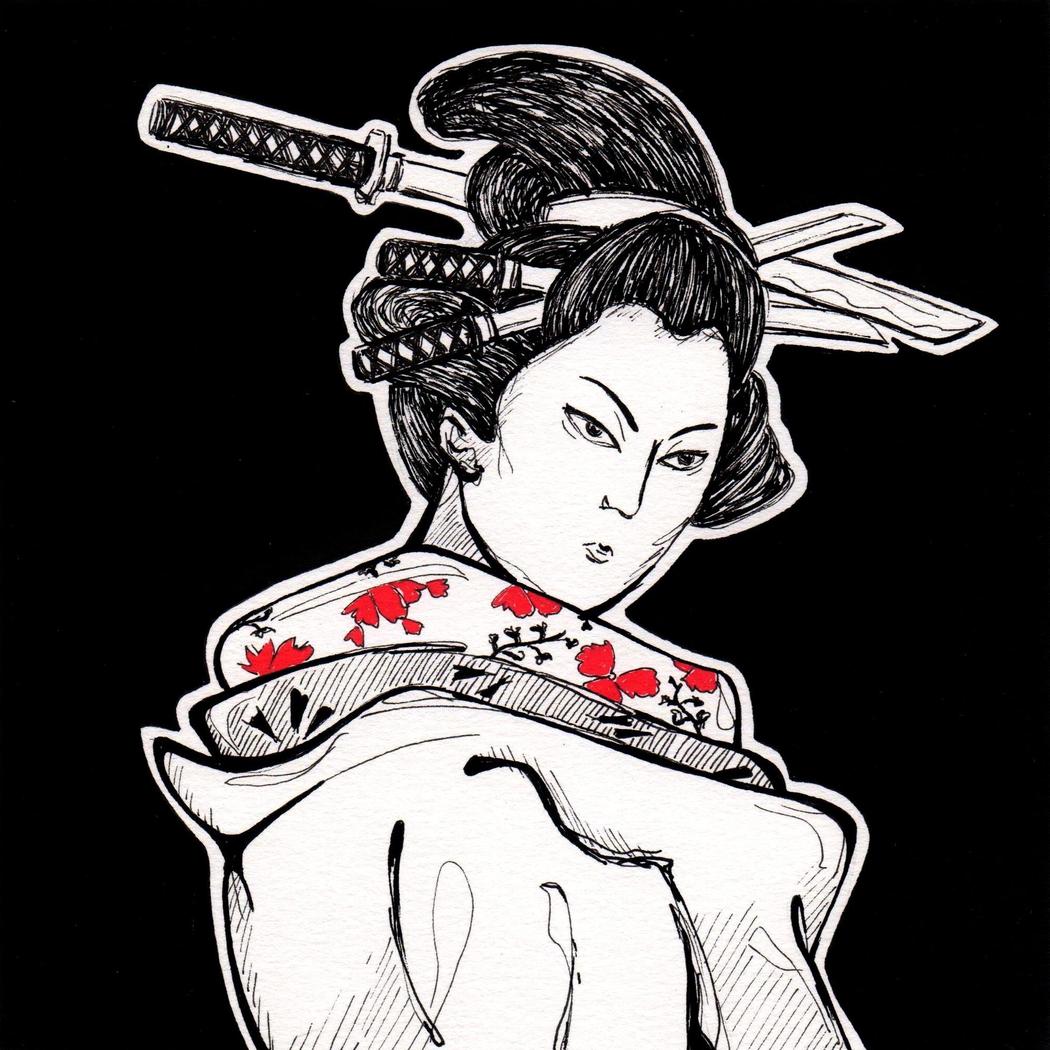 Marianna Dervos | Seeing red | 2026
Many of your images depict violence in a stylized, almost ritualistic way. Do you see these scenes as metaphorical, psychological, or narrative?
It operates on all three levels. There is a symbolic dimension that supports the narrative, while also allowing for a more psychological reading. Elements like the maneki-neko, the dragon, or the Hannya mask each carry different meanings in that context. The series as a whole leans towards a more introspective, and at times cynical, perspective. However, I’m not interested in romanticizing violence for its own sake. Instead, I try to create a tension between unsettling and visually seductive elements. That contrast reflects something I recognize in general – how discomfort or danger can coexist with attraction, and how easily these signs can be misread or ignored.
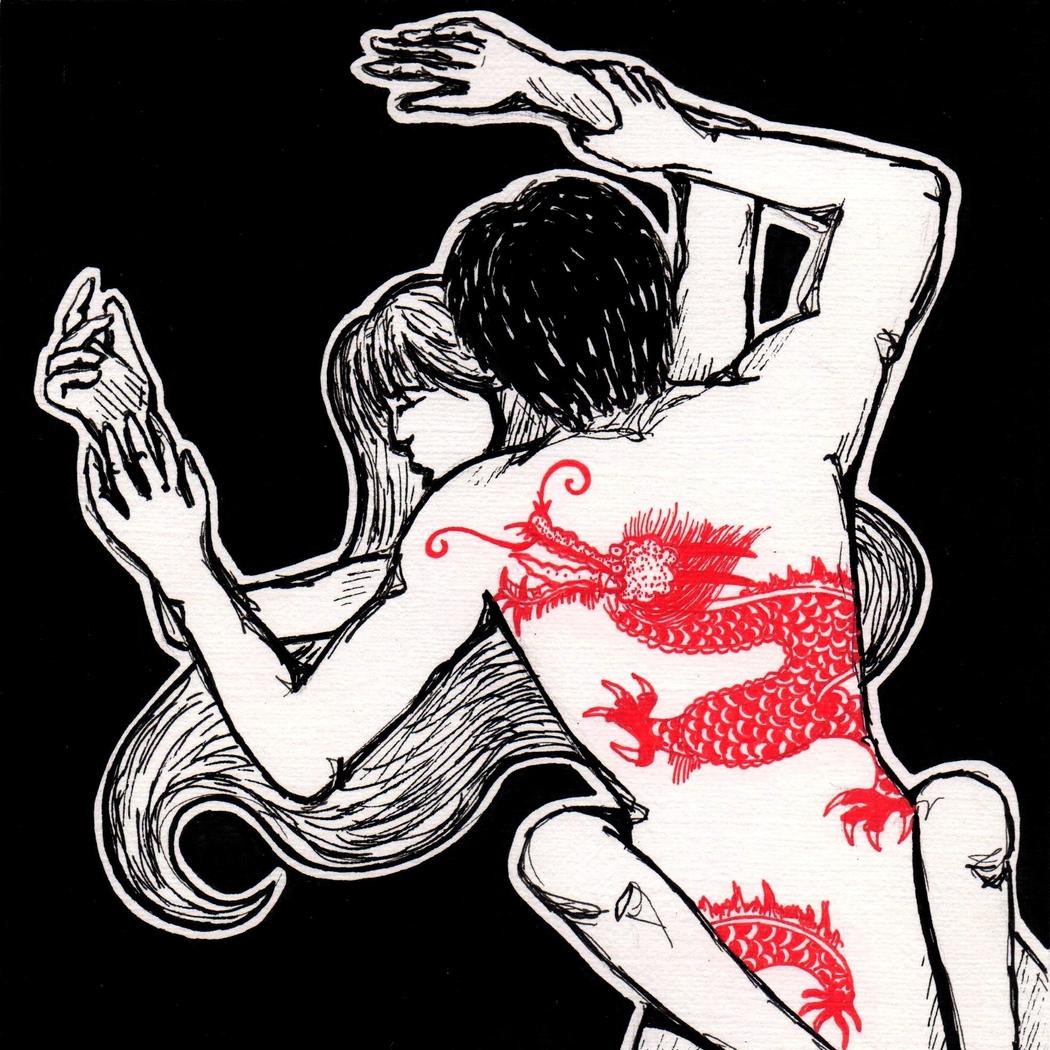 Marianna Dervos | Seeing red | 2026
As both a visual artist and a writer, how does your literary practice influence your visual storytelling?
Writing has been a way for me to process thoughts I don’t always express directly otherwise. Over time, I realized it’s not separate from my visual practice – they feed into each other quite naturally. Writing feels more direct because of language, but also more limited in a way. Visual work gives me more space to be open, and sometimes more direct in a different sense. I can push ideas further without having to explain everything. The same concerns show up in both practices, just in different forms. They constantly inform each other. Writers like Natsuo Kirino, especially in books like Out and Grotesque, have influenced me a lot. It’s less about narrative structure and more about how she deals with violence, gender, and pressure in a very direct, often uncomfortable way.
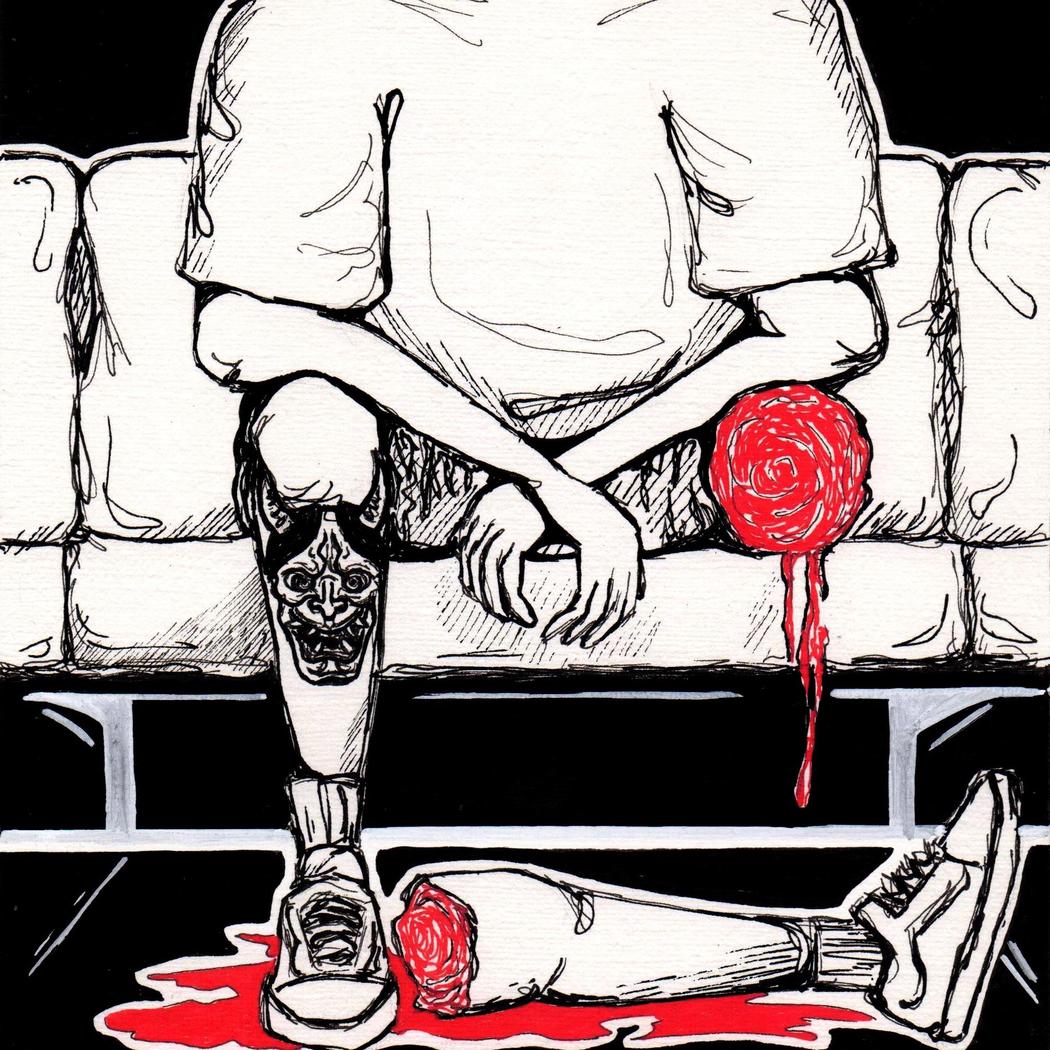 Marianna Dervos | Seeing red | 2026
When viewers engage with your work, what kind of emotional or intellectual response do you hope to provoke?
What matters most to me is that the work creates some kind of response. It doesn’t need to be positive. In fact, I think it’s far more interesting when it isn’t always comfortable. Otherwise, art can easily become something decorative, which is fine, but not what I want to do. I want the viewer to stop for a moment and stay with something that doesn’t make sense immediately. There’s often a tension in the work between attraction and discomfort, and I’m interested in that space. Since I engage with aspects of human nature, including its capacity for cruelty, I’m interested in making the viewer reflect on issues that can be difficult to confront – forms of violence, social indifference, or the ways in which trauma is suppressed rather than processed. At the same time, I try to leave enough space for personal interpretation. I don’t want to close that down with answers. I want it to stay open enough for the viewer to find their own position inside it.
Leave a Reply
You must be logged in to post a comment.