Yiyi Song
Yiyi Song: Between Terrain and Body
by Anna Gvozdeva
Yiyi Song’s ceramic practice occupies a precise and compelling threshold — between the geological and the biological, between object and organism, between ruin and resilience. Across six recent works, the London-based artist deploys hand-built clay not as a neutral medium but as a body in its own right: one that registers pressure, movement and time with uncommon directness. Graduating from Central Saint Martins, Song has arrived at a formal language that feels neither inherited nor derivative, but genuinely worked out from within the material itself.
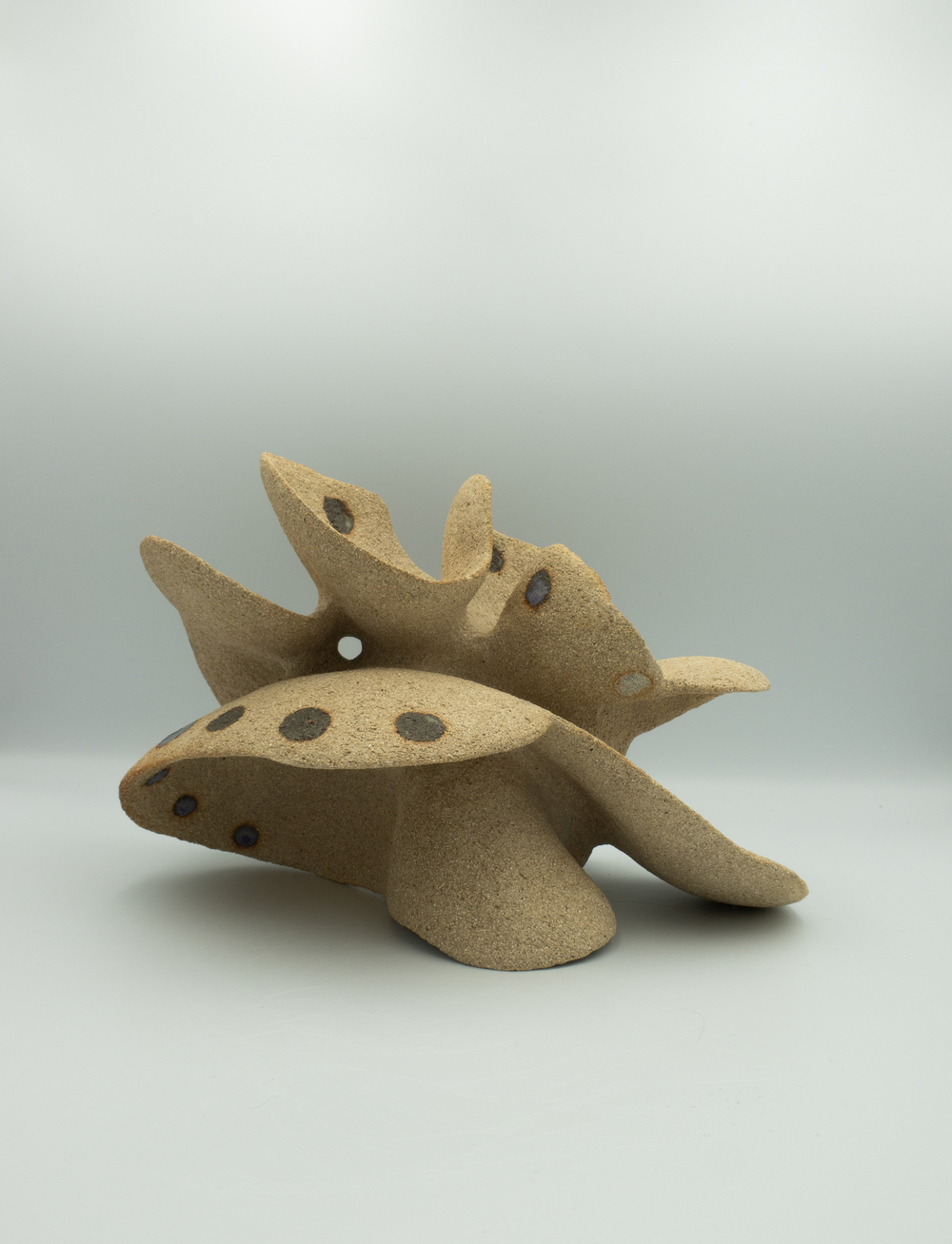 Yiyi Song | Folded Ground | 2026
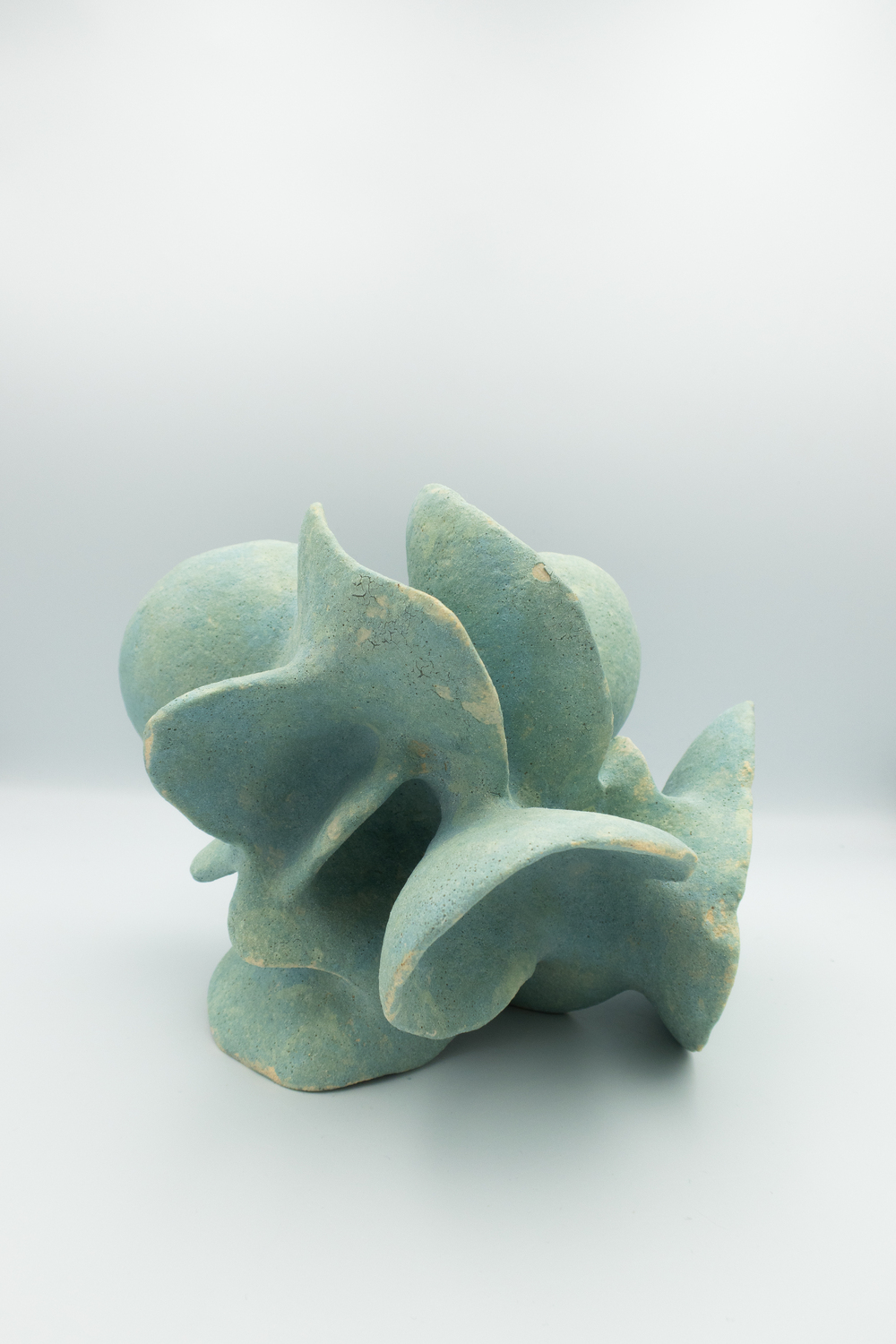
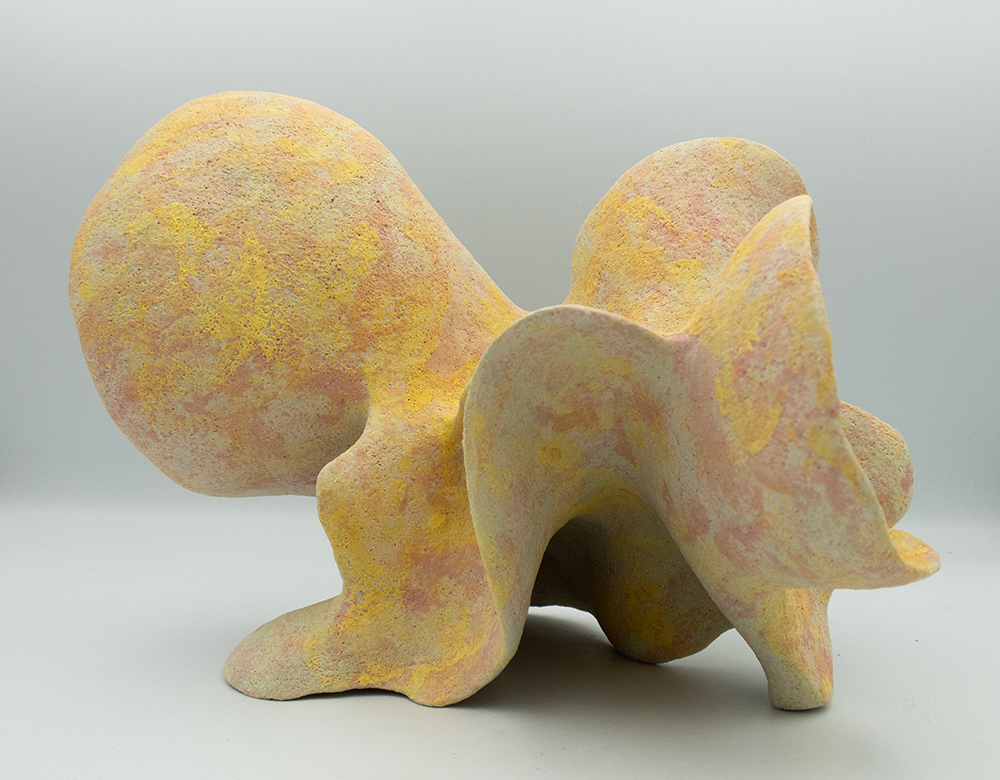
The most immediately striking quality of Song’s work is her command of surface as a conceptual register. Where the celadon-glazed A Fold in the Tide presents layered, shell-like planes with a liquid depth reminiscent of aged verdigris, Folded Ground (2026) operates in total chromatic withdrawal — raw, sandy stoneware whose only interruptions are small dark circles embedded across its ridged surface, like fossilised eyes or erosion marks. The contrast is not incidental: each palette generates a different phenomenological relationship with the viewer. The dusty yellow and blush tones of Sunken Bloom invite a haptic intimacy that is almost flesh-like in character, while the dark, richly glazed totem of Vessels of Becoming — surrounded by a dispersed field of smaller satellite forms — carries a different weight altogether: archival, familial, ceremonial.
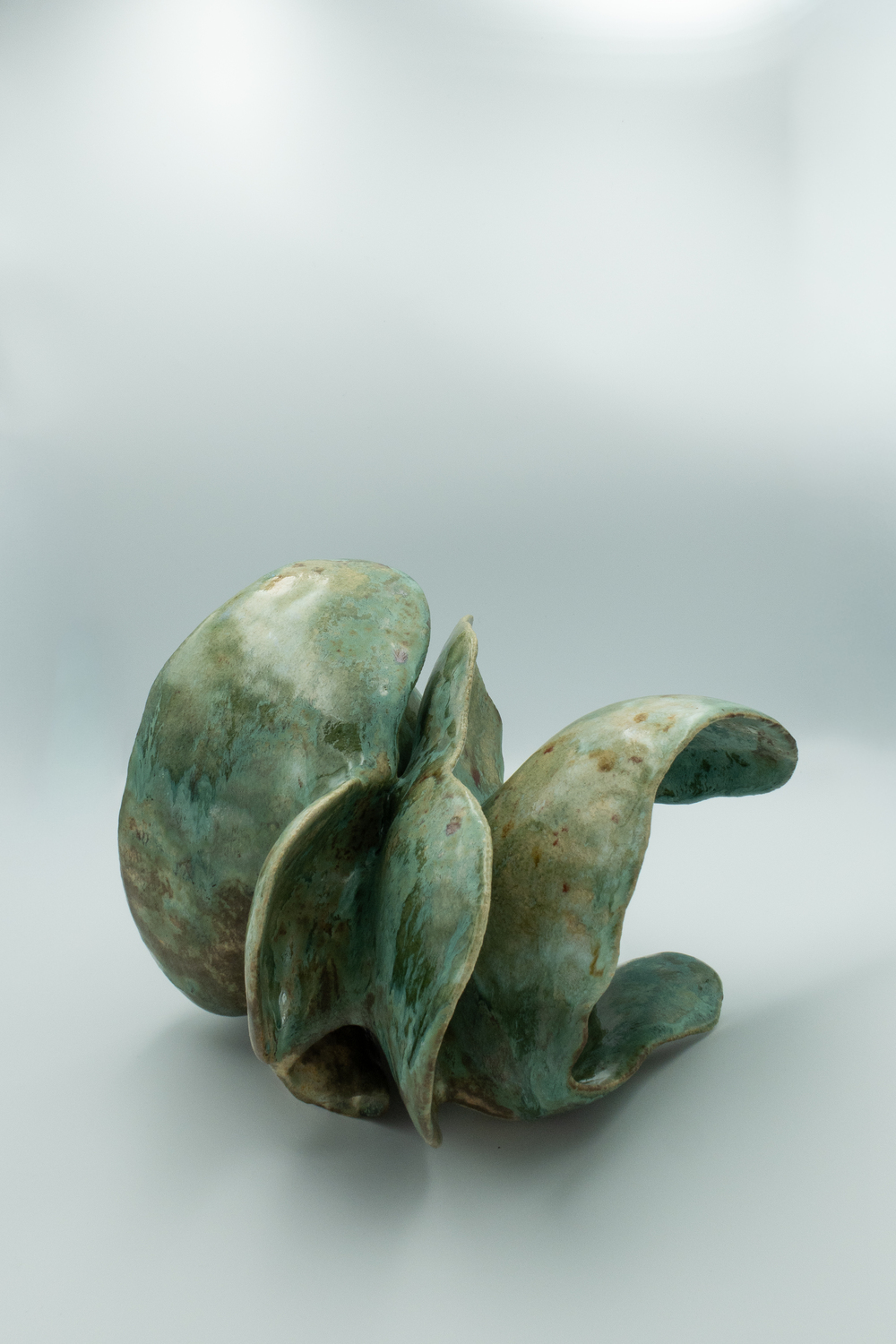 Yiyi Song | A Fold in the Tide | 2025
The folding and extrusion that define Song’s formal vocabulary are deployed with considerable intelligence. Rather than imposing a resolved silhouette, she allows her forms to remain structurally ambiguous — readable simultaneously as terrain, bodily fragment, and botanical specimen. Green Terrain is exemplary in this regard: compact yet radiating, its upturned planes suggest both tectonic uplift and the opening of a flower or a fist. The negative spaces Song carves through her forms are as active as the material itself, creating internal shadows and passages that pull the eye inward and refuse any single reading.
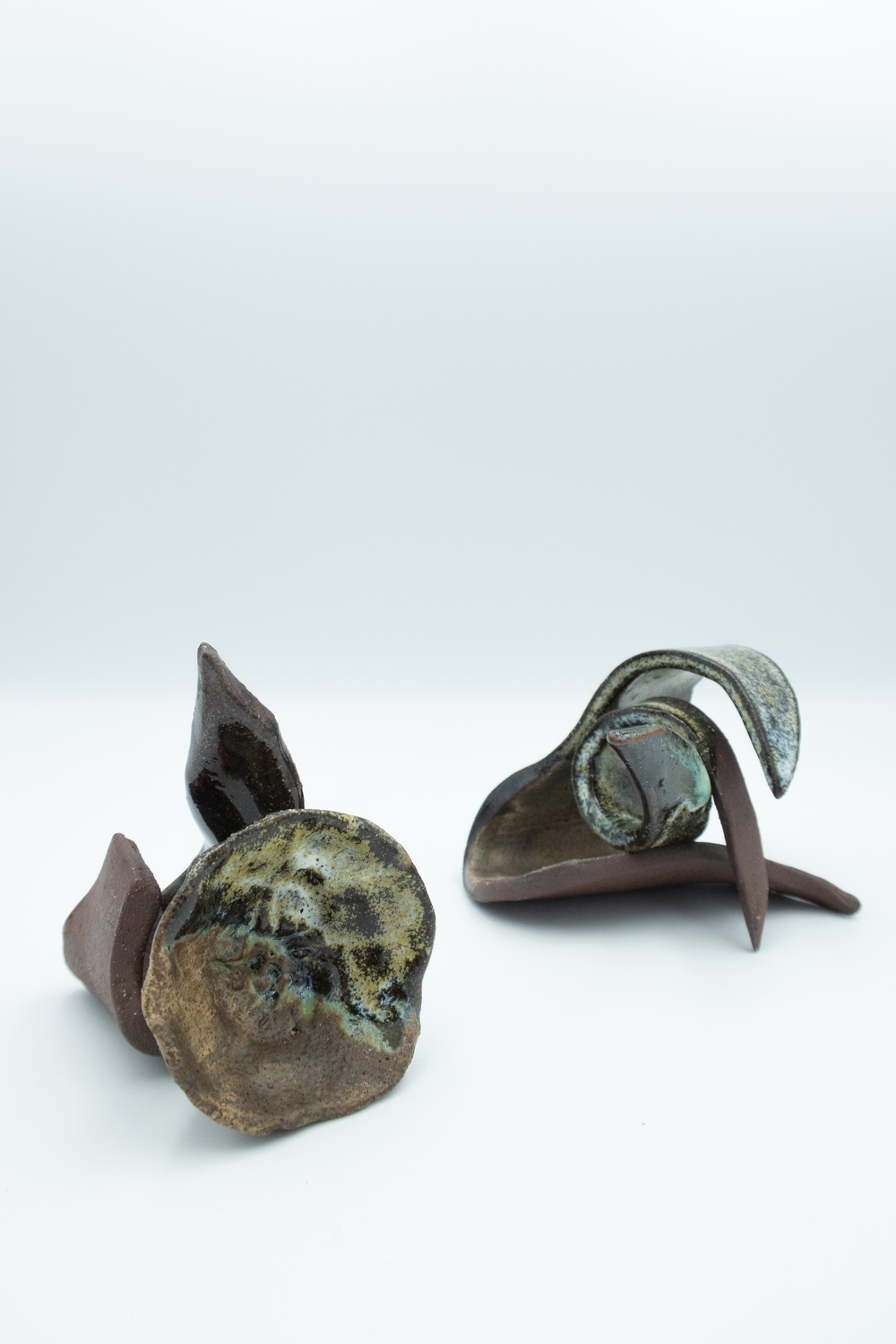
Yiyi Song | Lines of Departure
Lines of Departure represents a formal departure in scale and mood. Two small, dark stoneware pieces — horizontal, low, and spare — carry a compressed energy that the larger works do not. Their partial teal-green glaze sits against a raw brown body like an afterthought or a scar. They resist the viewer’s desire for legibility more aggressively than the surrounding works, and this restraint is effective. If the larger sculptures make their themes accessible through expansive form, Lines of Departure withholds, leaving the question of what has departed — and from where — genuinely open.
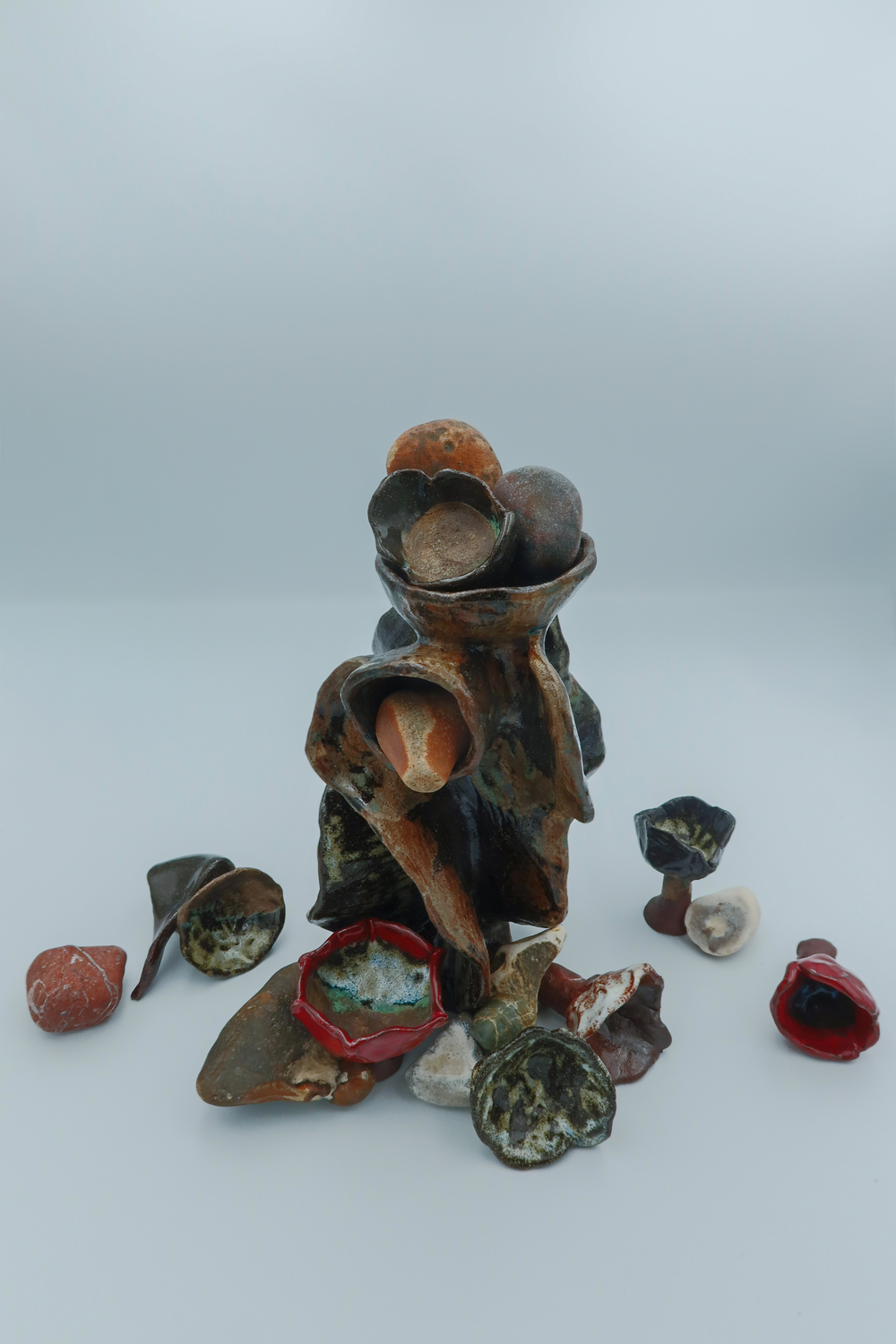
Yiyi Song | Vessels of Becoming
The ambition of Vessels of Becoming is the most conceptually visible of the group. A central form attended by scattered satellites in varying colours and scales, the composition reads as dispersal — perhaps migration, seed-fall, or the aftermath of rupture — and here Song’s stated concerns with unstable ground and the relation between a body and its context are most literally enacted. The piece carries real visual authority in its chromatic richness: deep greens, rust reds, dark oxides and flashes of crimson. Yet it is the quieter, more autonomous works that ultimately demonstrate the deeper formal confidence, precisely because they ask the material to carry meaning without narrative scaffolding.
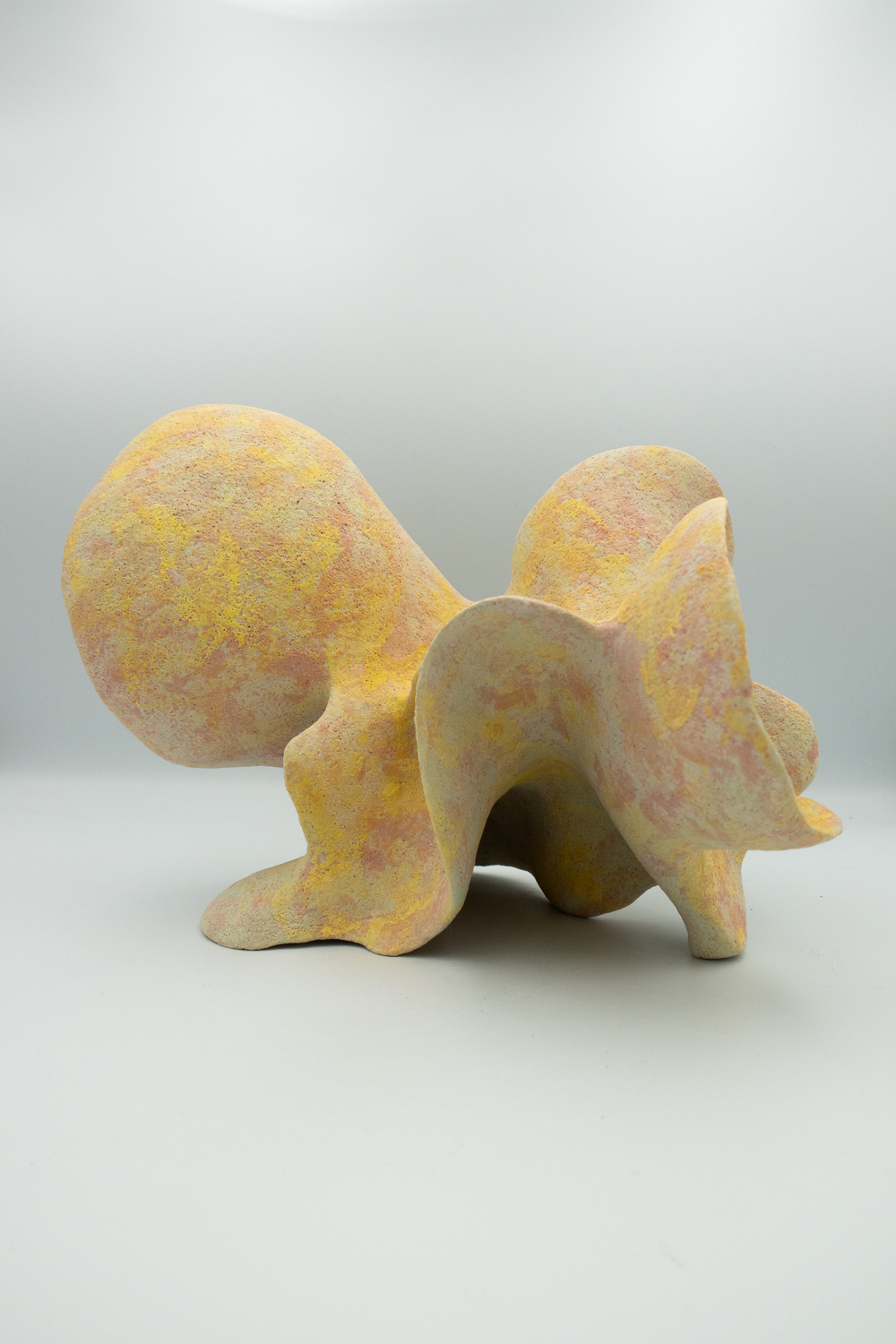
Yiyi Song | Sunken Bloom | 2026
Song is an artist working at full stretch with her material. Her practice resists the familiar binaries of natural and artificial, whole and broken, settled and in transit — and the resulting works hold tension without resolving it. In ceramics, where the temptation toward surface virtuosity or resolved prettiness is constant, that refusal is harder than it looks. What emerges across these six works is a sustained inquiry into what it means for matter to endure: not intact, but still open.