
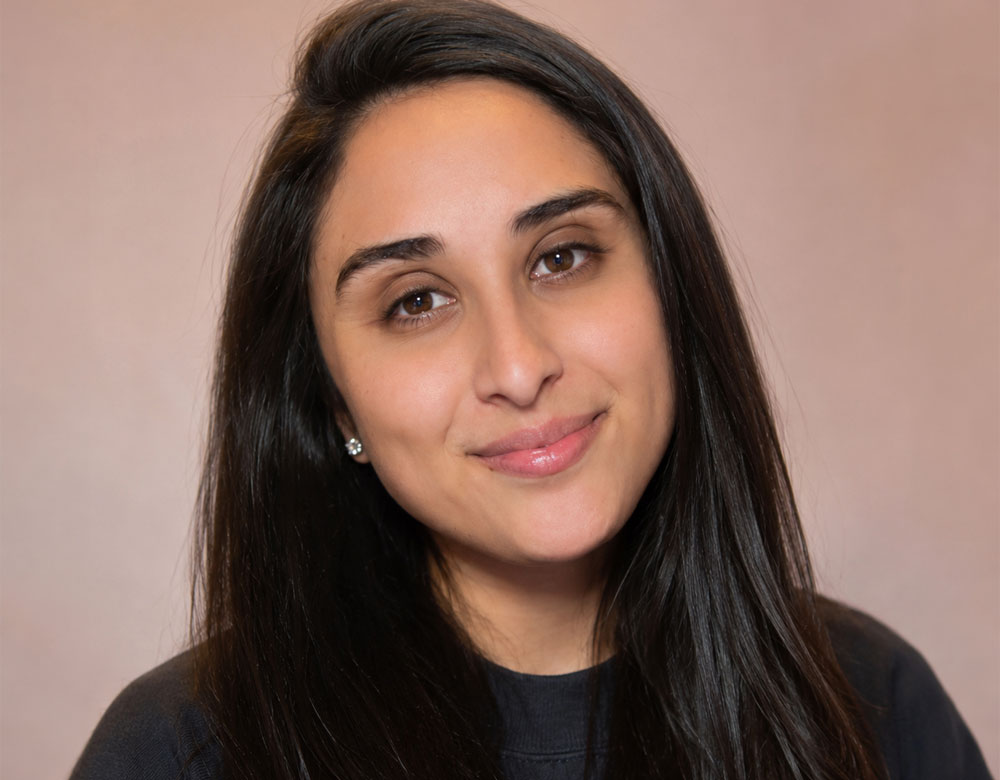
Bree Mercado
Your work often explores the feeling of being both visible and unseen. How does this tension shape the way you approach portraiture?
Portraiture, for me, is less about capturing a physical likeness and more about capturing emotional truth. I’m interested in the tension between what is revealed and what is hidden — the parts of ourselves we allow others to see versus the parts we protect. Many of my portraits exist in that in-between space. The figures may be looking directly at the viewer while simultaneously obscuring themselves through gesture, texture, or fragmentation. That contradiction reflects my own experiences navigating identity, belonging, and visibility within different communities and environments.
Many of your figures appear fragmented, partially obscured, or emotionally guarded. What role does concealment play in your visual language?
Concealment plays a significant role in my work because I see it as both protection and resistance. Fragmentation and obscuring the body or face can symbolize emotional barriers, internal conflict, or the ways people adapt themselves to survive socially and emotionally. At the same time, concealment creates space for ambiguity and reflection. I want viewers to feel invited into the work rather than told exactly what to think. The hidden elements mirror the complexity of identity — especially for people who exist between cultures, expectations, or versions of themselves.
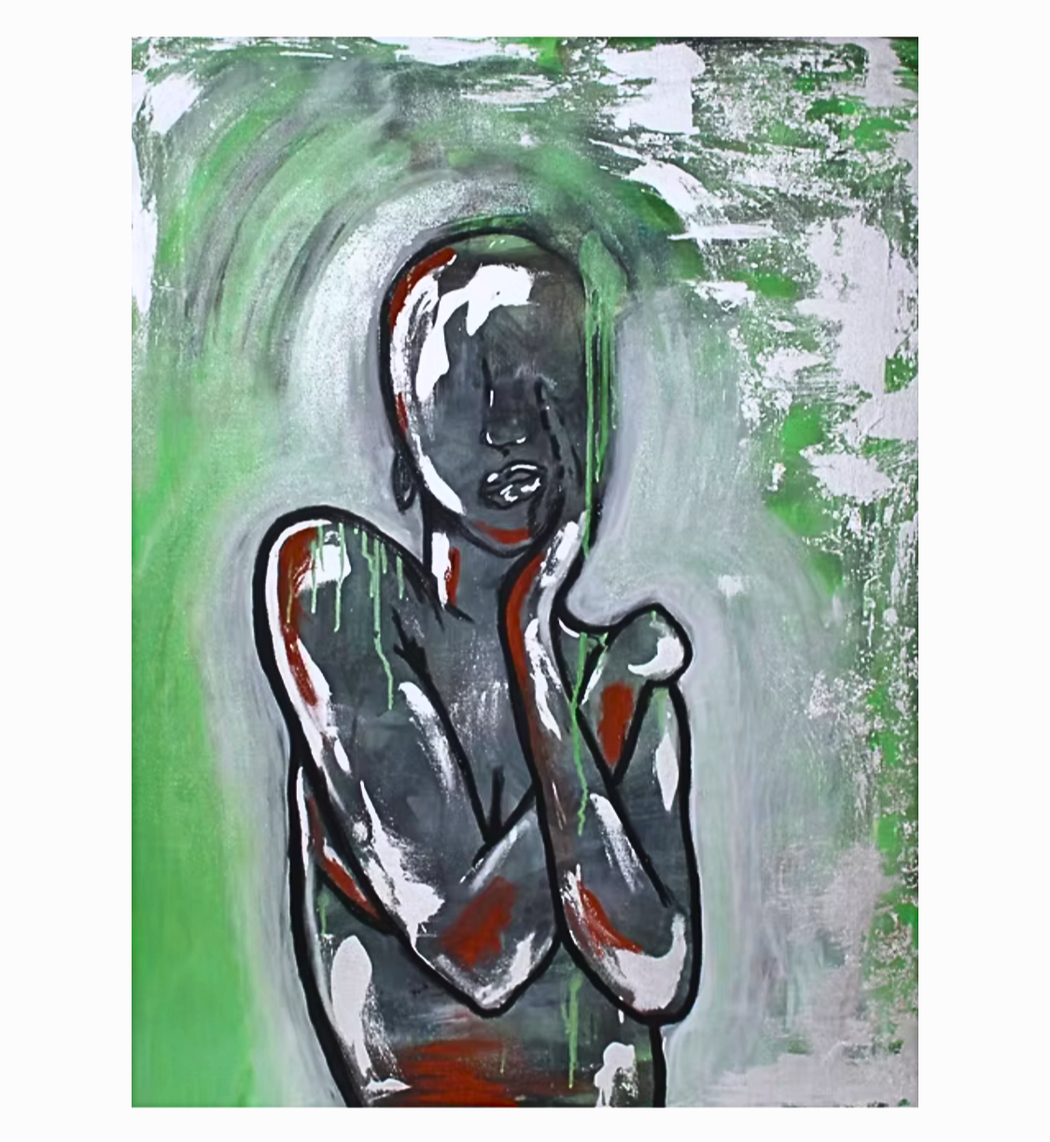 Bree Mercado | I’M Shy | 2022
In works such as Refraction and Retraction, the face and body seem interrupted by sharp lines and layered textures. What does this visual fragmentation represent for you?
The fragmentation in those works represents the experience of being pulled between internal and external identities. Sharp lines and layered textures mimic emotional interruption — moments where memory, expectation, anxiety, culture, or perception distort how we see ourselves. I often think about identity as something fluid rather than fixed. Fragmentation becomes a way to visually express that instability while also revealing resilience. Even when the figure feels fractured, it still exists, adapts, and takes up space.
Color feels very emotionally charged in your paintings – from deep reds and pinks to greens, greys, and metallic tones. How do you choose your palette for each work?
Color is deeply intuitive in my process. I usually choose palettes based on emotional atmosphere rather than realism. Reds and pinks often represent vulnerability, intimacy, intensity, or emotional exposure, while greys and muted tones can suggest isolation, numbness, or uncertainty. Greens can symbolize growth, healing, or tension depending on how they’re used. Metallic elements introduce reflection and shifting perception — they change depending on light and perspective, which mirrors the themes of identity and transformation present in my work. I think of color as another emotional layer within the painting.
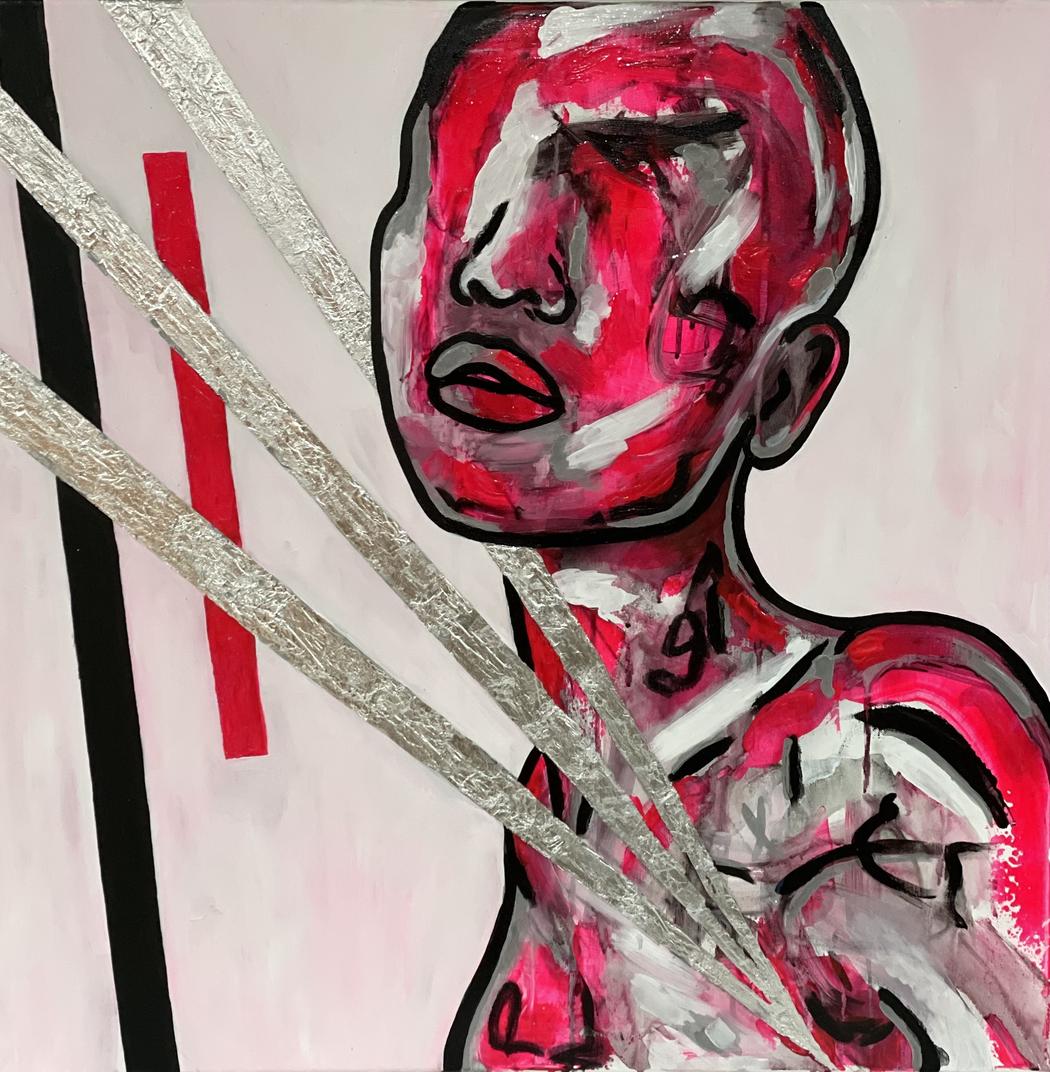 Bree Mercado | Refraction | 2022
Your artist statement mentions the experience of existing between cultures and communities. How has your multicultural background influenced your artistic practice?
My multicultural background has deeply shaped the way I understand identity and belonging. Growing up between different cultural experiences often created moments where I felt connected to multiple spaces while also not fully fitting into any single one. That tension appears throughout my work. I’m interested in the layered nature of identity — how culture, gender, community, and lived experience intersect and influence how we move through the world. My work often reflects the emotional complexity of navigating visibility, acceptance, and self-definition within those overlapping spaces.
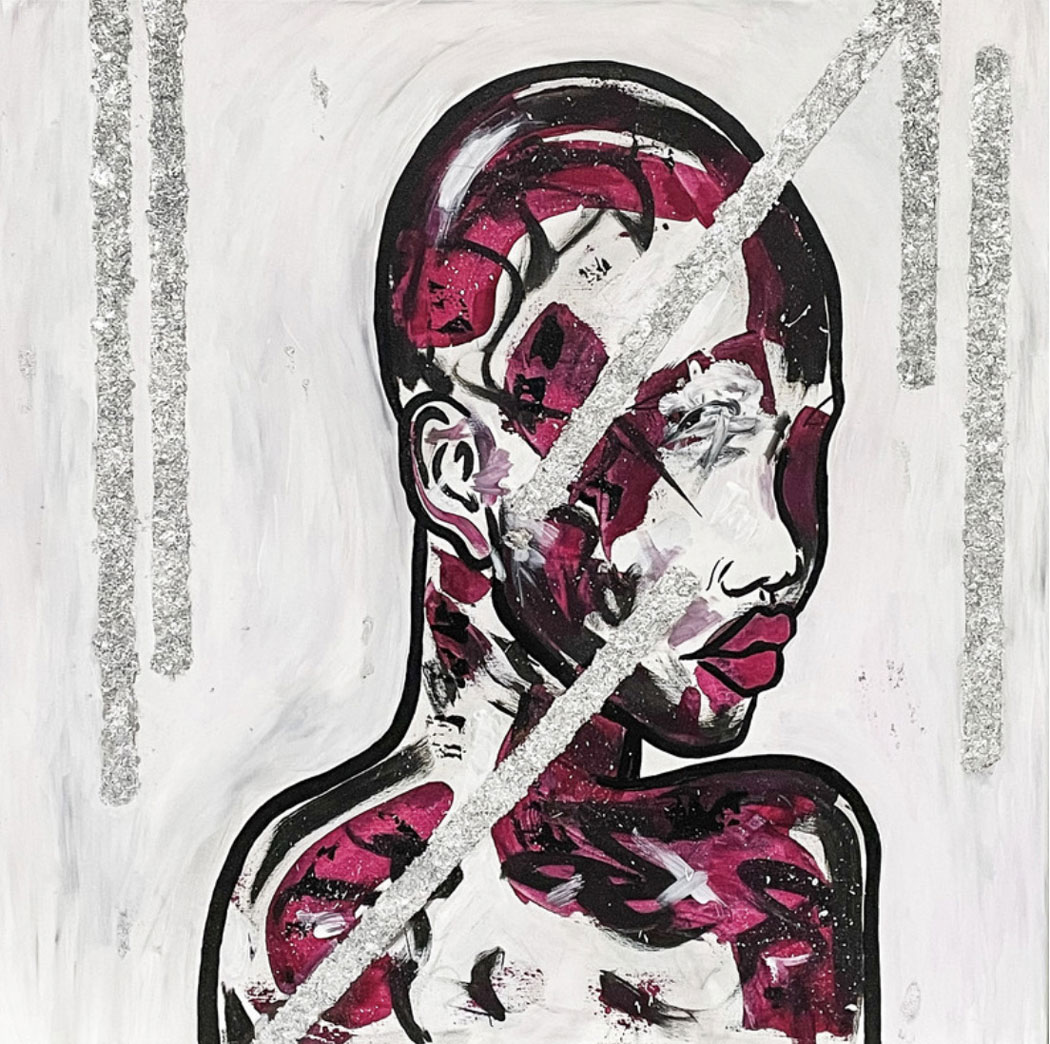 Bree Mercado | Retraction | 2022
Mental health and emotional vulnerability appear throughout your practice. How do you balance personal storytelling with creating space for viewers to find their own reflections?
I try to approach vulnerability with openness rather than explanation. While many of the emotions in my work come from personal experiences, I intentionally leave room for interpretation so viewers can bring their own experiences into the piece. I’m less interested in creating a direct narrative and more interested in creating emotional resonance. When someone connects to a work through their own memories, struggles, or healing, the painting becomes larger than my individual story. That shared reflection is important to me. While at the same time I find personal storytelling creates a safe space to share their story. I find this important in order to broaden our perspectives of the world and grow our empathy for others.
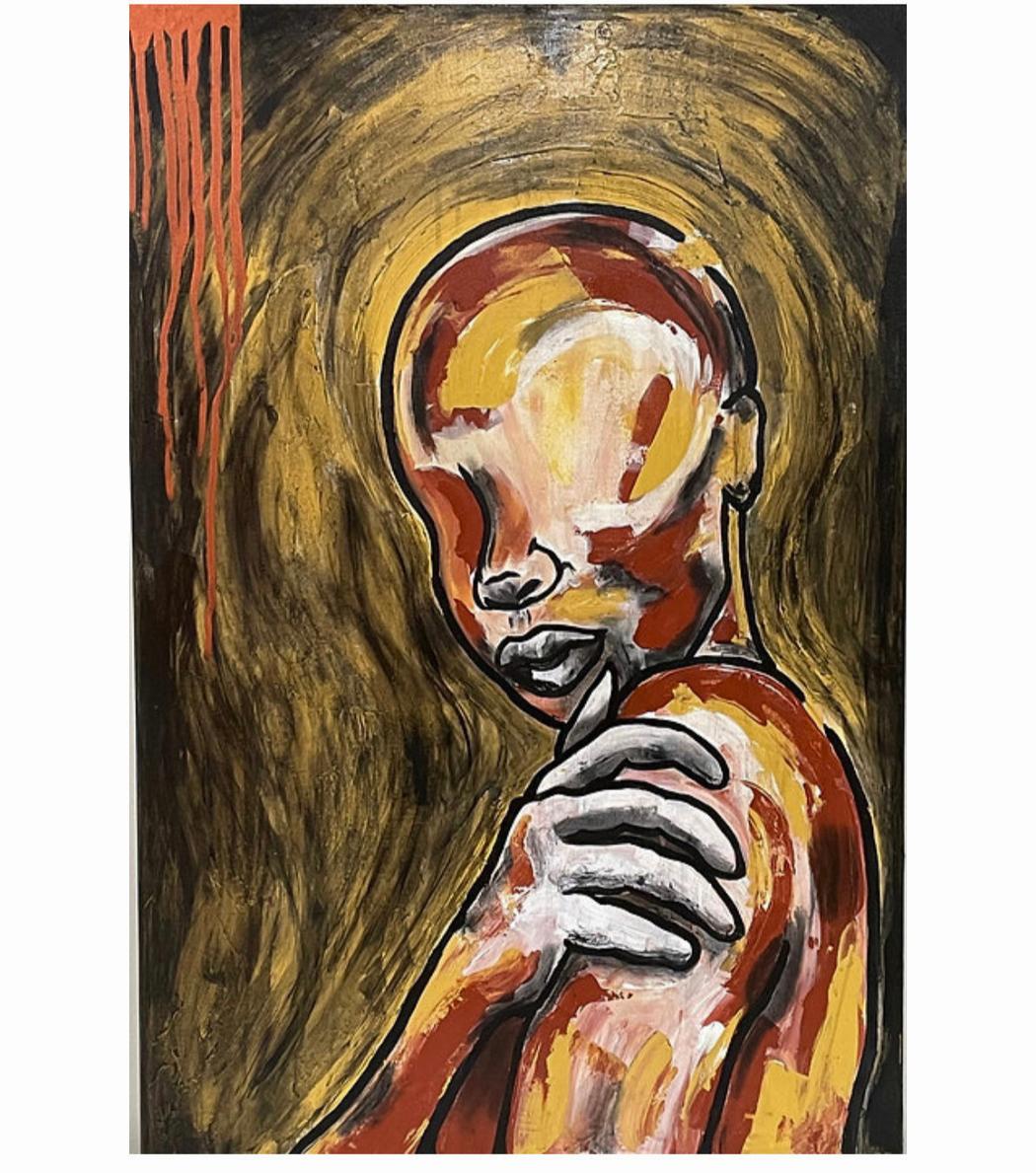 Bree Mercado | Protect Yourself | 2022
Transformation is an important theme in your work. Do you see transformation as healing, survival, resistance, or something more complex?
I see transformation as all of those things simultaneously. Transformation can be healing, but it can also come from survival, grief, resistance, or necessity. I don’t think growth is always graceful or linear. Sometimes transformation happens through rupture, discomfort, or rebuilding. In my work, transformation often exists in the tension between breaking apart and becoming. I’m interested in how people continue to evolve while carrying memory, vulnerability, and resilience with them.
Leave a Reply
You must be logged in to post a comment.