
Róbert András Czirok
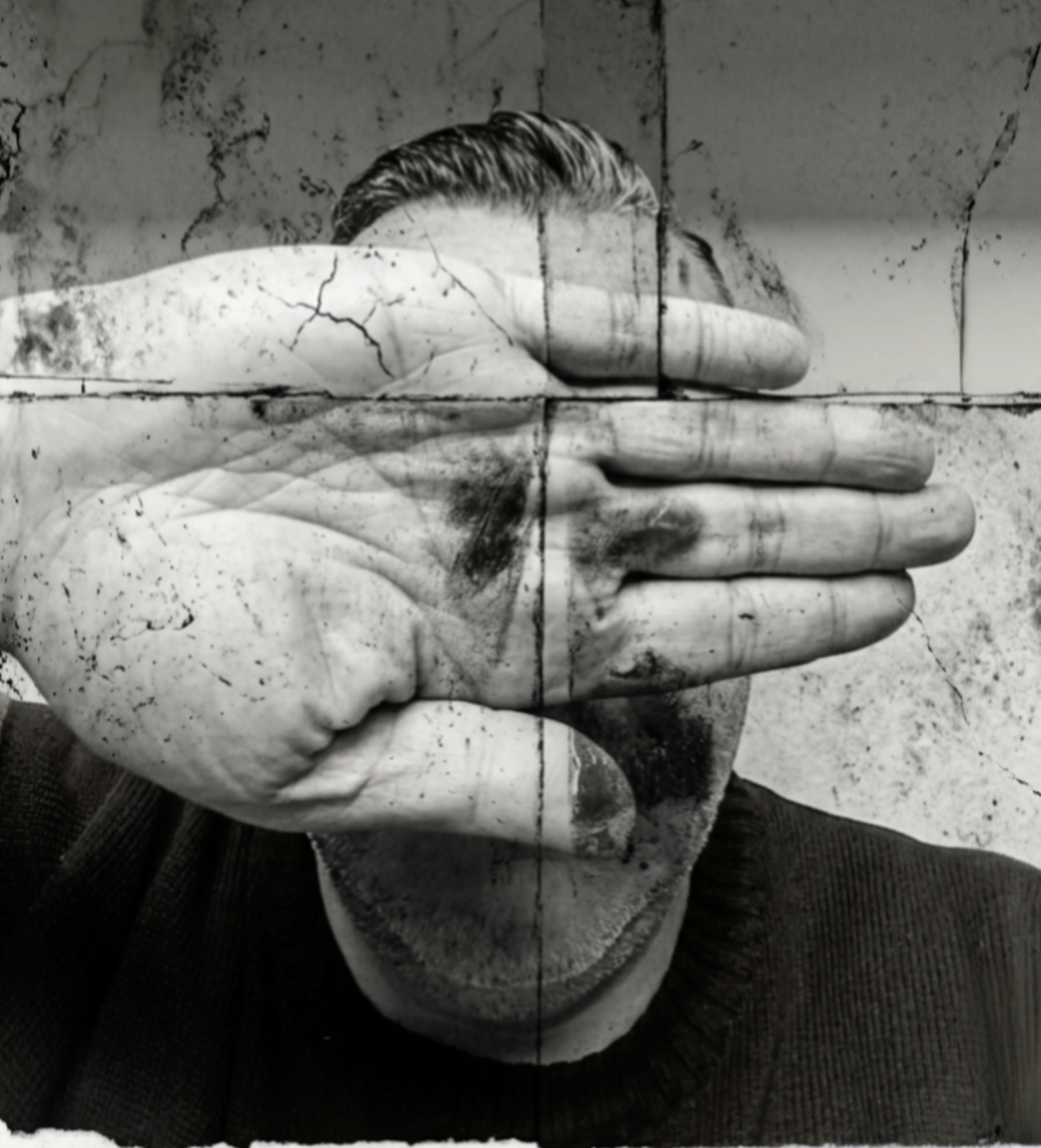
Your ARC.OK?! project focuses on human identity and the power of the gaze. What first led you to explore the face as a central subject in your work?
I chose the face because I deeply believe that every story begins with a face, and often, that is where it ends too. A look, a half-smile, or even a smudged pair of eyes can tell us so much more than we think. With the ARC.OK?! project, (…in his exhibition titled ARC.OK?! or fACE.OK?! -a bilingual pun on ‘Faces’ and ‘Are they OK?’)- I wanted to push the boundaries of contemporary portraiture in today’s age of digital noise and impersonal social interactions. There is a very intense tension between our individual identity and our social “mask-wearing.” What led me to this topic was a question I asked myself: what is left of our faces when we completely strip away the pressure to conform, the filters, and our everyday roles? Is everything really “OK” with what we show to the outside world? These were the questions that launched this series.
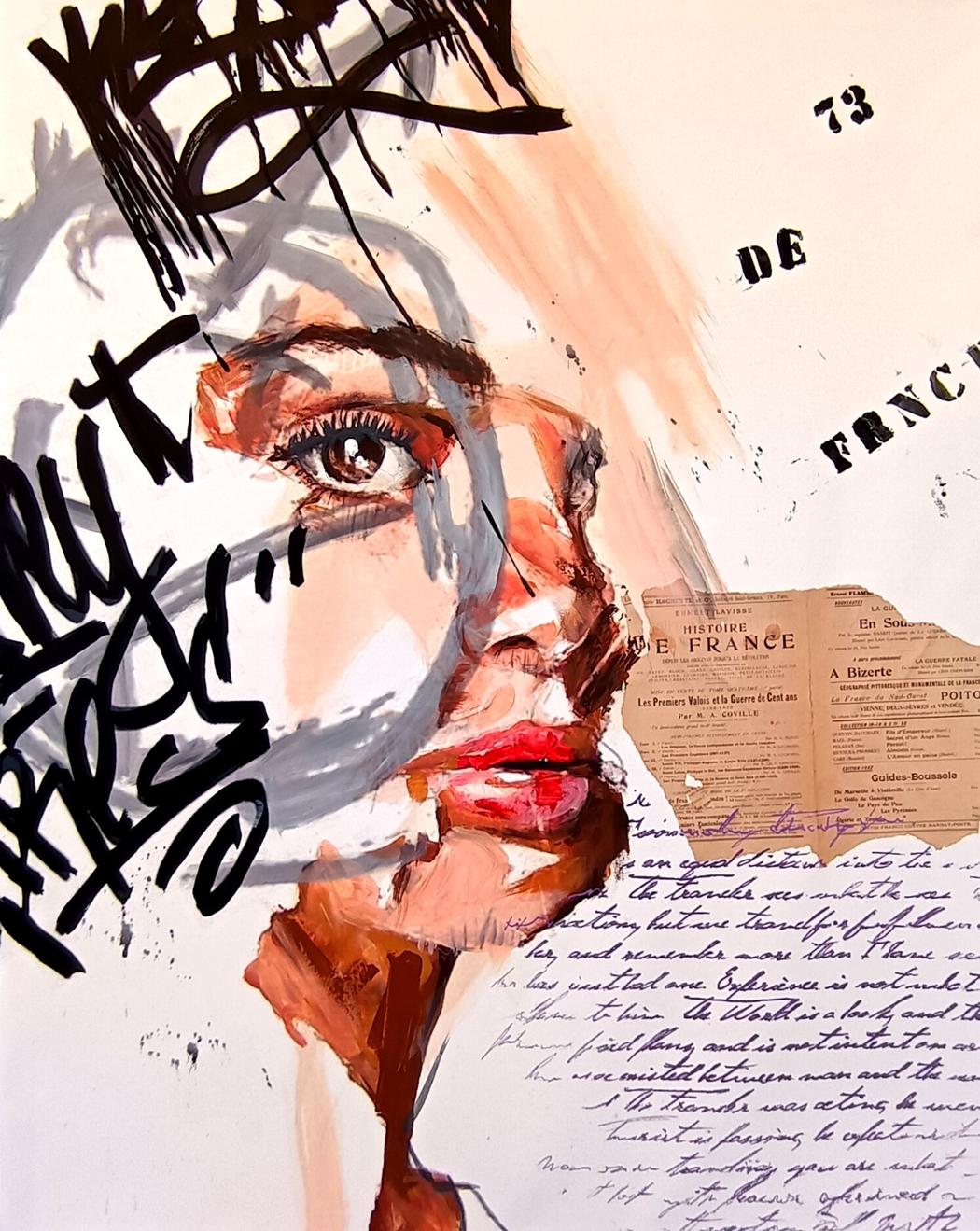 Róbert András Czirok | A Francia | 2024
Many of your portraits appear fragmented, layered, and emotionally intense. Do you see these faces as portraits of specific people, or rather as psychological states?
These are definitely not portraits in the traditional sense. For me, faces are not representations of characters; rather, they are imprints, mind maps, layers, and psychological states or fleeting moments. When I give pieces titles like “Francia” (The French), “Remény” (Hope), or “Talány” (Riddle), I am talking about emotions that vanish in everyday life. Yet, if the viewer stands attentively in front of the canvas, these states seep back out to them. Through gestures, distortions, and textures, I look for the exact point where the face ceases to be a mere aesthetic object and transforms into a raw, honest channel of communication—a psychological imprint of sorts.
Your background as a tattoo artist and graphic designer is very present in your paintings. How have these practices shaped your visual language?
These practices have become fully integrated into my hands and my way of seeing; they directly define the mixed media technique I use. My background in graphics and tattooing brings a definitive linework, the use of ink, and a bold handling of contrasts, which then meet more painterly materials like acrylic or collage. Tattooing and design taught me disciplined, precise form-making. On the canvas, however, I am free to use this knowledge to deconstruct and layer the faces. The structured nature of commercial graphics and the raw, direct visuality of tattooing thus blend into a completely unique, contemporary texture in my paintings.
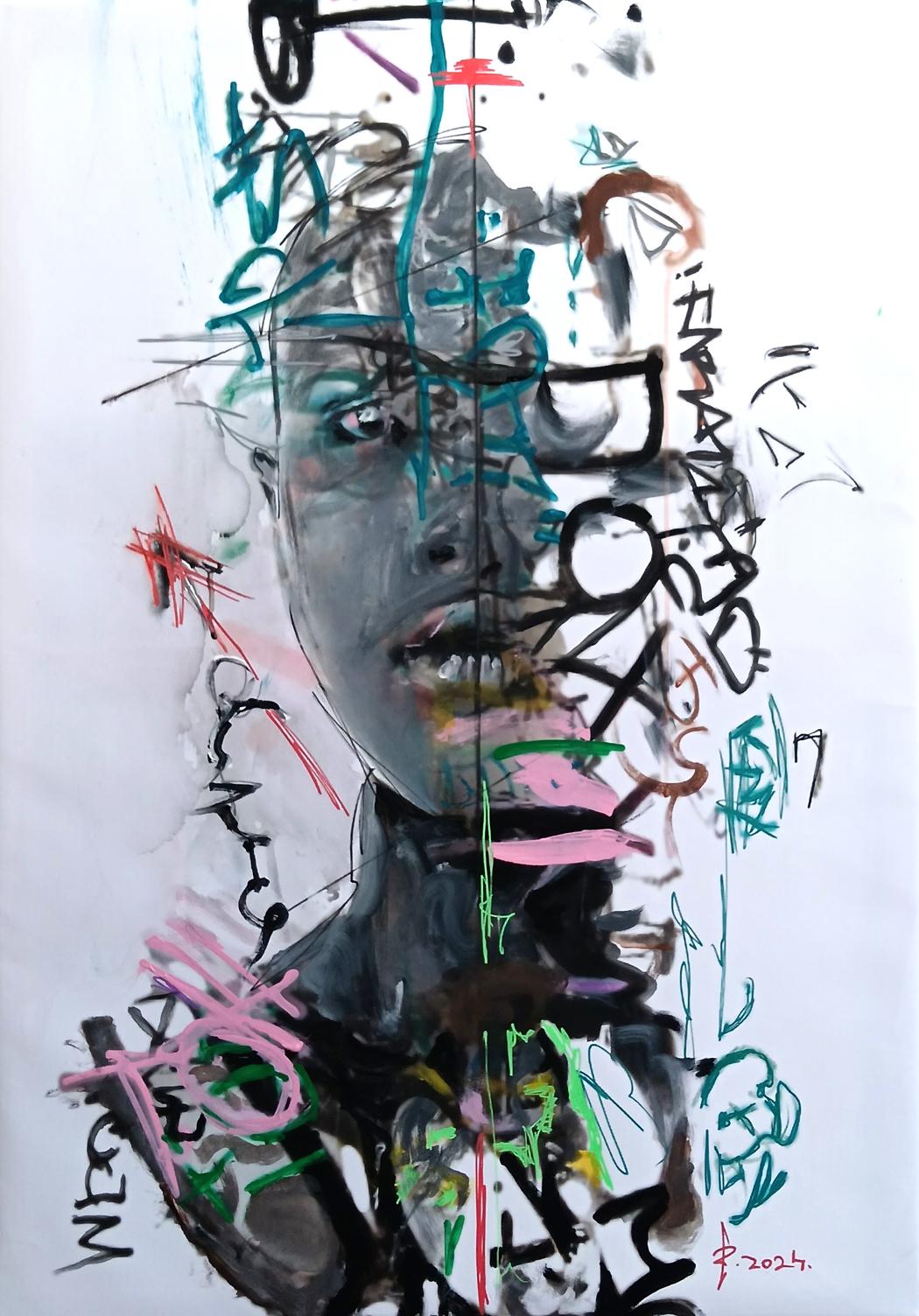 Róbert András Czirok | A Nő Háromszor | 2024
Graffiti-like marks, handwritten text, and expressive lines often appear in your works. What role does text play in your compositions?
For me, texts, archival lettering, handwriting, and graffiti are essential tools for “dialogue.” The ARC.OK?! exhibition is a kind of dialogue between the past and the present, old book pages and modern acrylic paint, tradition and urban noise. The letters and scribbles are not just decorative elements; they create context and bring into the paintings the digital and urban background noise we all live in. These visual fragments help the images ask questions of the viewer—sometimes awkwardly, sometimes cheekily, sometimes deeply—urging visitors not just to look at the shapes, but to actively interact with them.
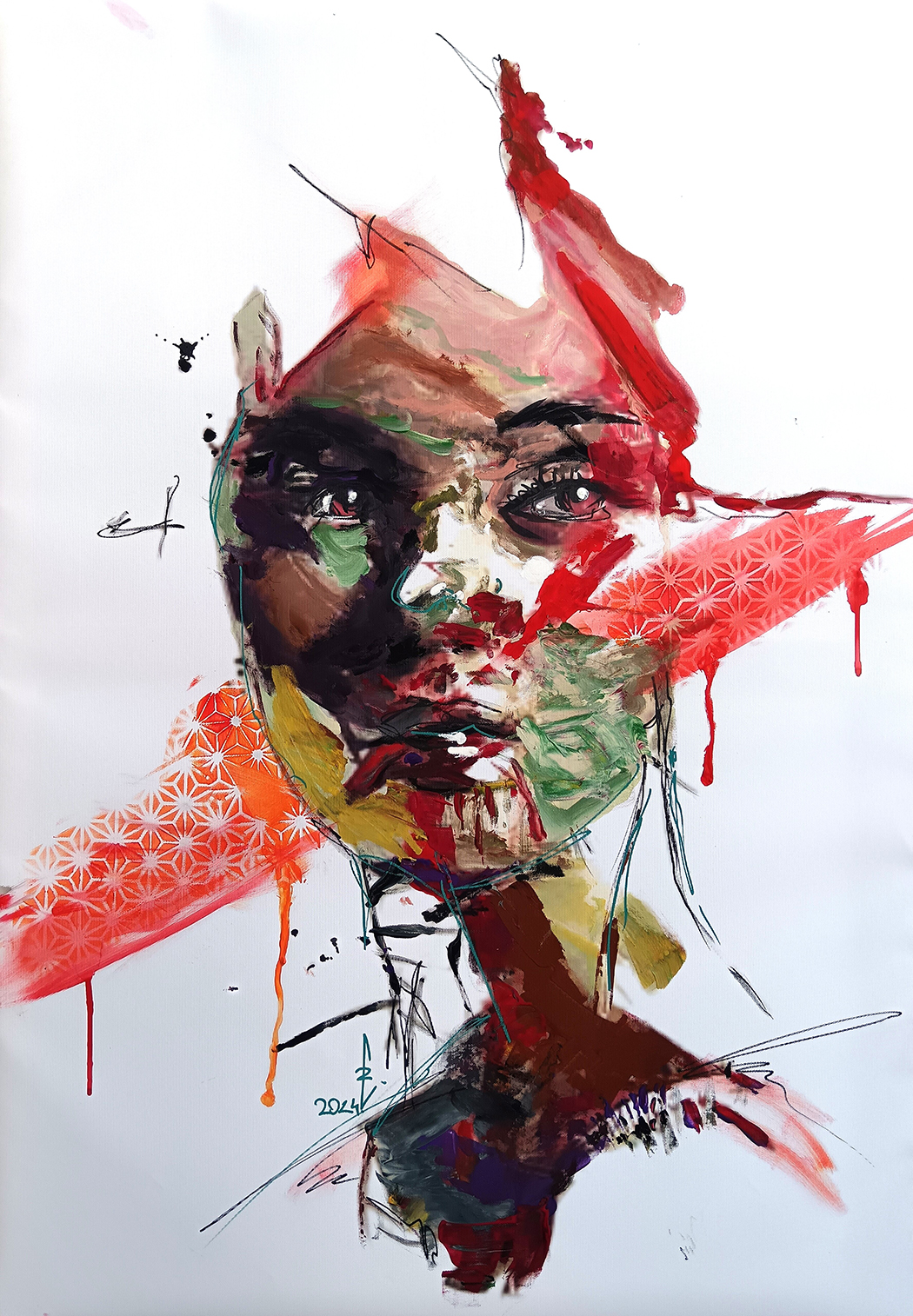 Róbert András Czirok | A Nő Háromszor | 2024
Your paintings often balance beauty and disturbance, control and chaos. How do you build this tension on the canvas?
If someone looks at one of my paintings and asks, “What is that smudged stuff above the eye?”, my answer is always: yes, chaos is part of my life, so it is naturally part of my paintings too. I build this tension by juxtaposing intact and ruined surfaces. Control is represented by deliberately structured anatomical foundations and clean tones, while confusion and chaos are introduced through the unpredictability of acrylic spray, drips, scribbles, and collages. I am most fascinated by the point where classical beauty begins to break down but just barely holds its structure—this is what gives the works their true, tense vitality.
Your wine paintings are deeply connected to the Szekszárd wine region. How important is local identity in your artistic practice?
It is extremely important; local identity and regional collaborations fundamentally define my experimental projects. Although I examine red wine or coffee as organic pigments within a global context, my roots and raw materials are tied to Szekszárd by a thousand threads. For instance, my coffee portraits (the Zaccart series) were made possible thanks to Sándor Tóth, a multiple-time barista champion, and the expertise of A Kávé Háza (The House of Coffee) in Szekszárd. They provide me with a special raw material rich in extracts, sourced from Sanyi’s own plantation in Costa Rica, from which he roasts a specific blend exclusively for my paintings. When I paint with wine or coffee, the flavor and spirit of Szekszárd seep into the images. Just as in Szekszárd winemaking, it is the respect for the land, the climate, and local characters that gives my art its true depth.
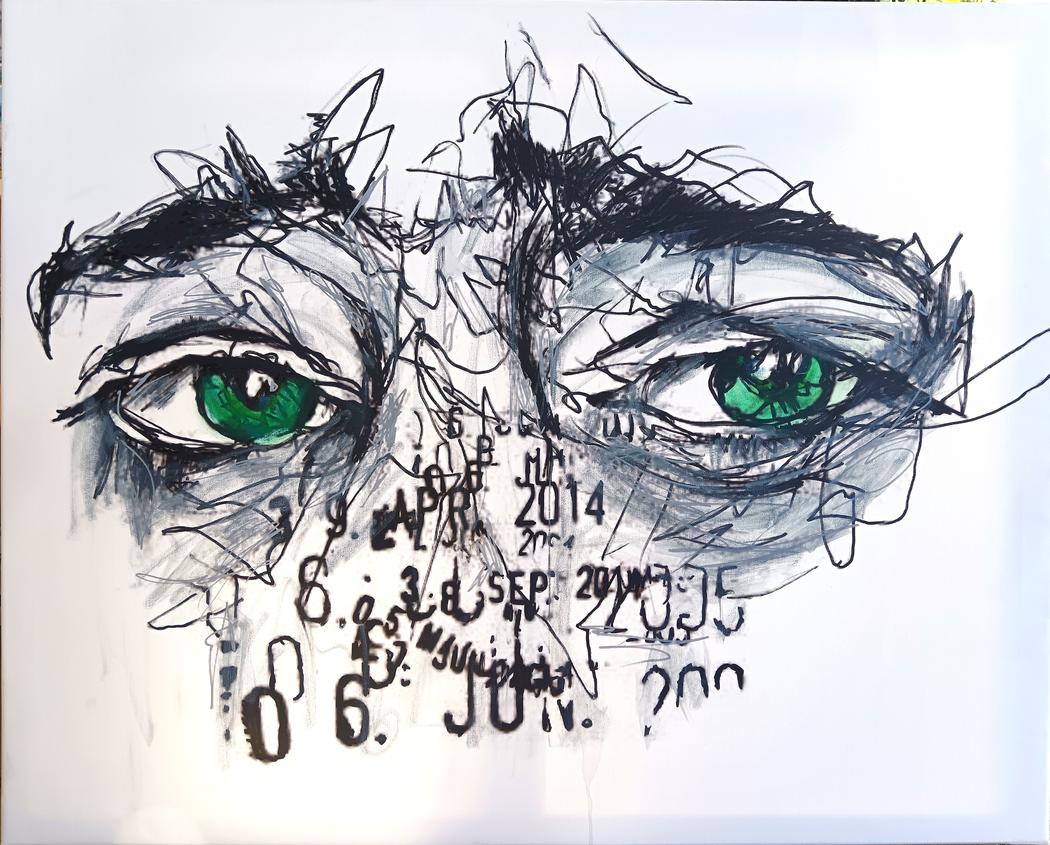 Róbert András Czirok | Gondolatok Az IdőrőL | 2024
You move between fine art, tattooing, commercial graphic design, and wine label design. Do you separate these fields, or do you see them as parts of one continuous creative practice?
I don’t separate them at all; to me, this is a single, continuous, and organic creative practice. Every field feeds on the same internal creative energy; only the means of expression and the mediums change. When I work with wine or coffee on paper, I am essentially pushing the boundaries of the monochrome watercolor technique, where organic materials (like wine pigments) live a life of their own even after drying, oxidizing and evolving until they reach their final, expressive sepia state. This kind of experimentation and search for textures is just as present on the canvas in the ARC.OK?! series as it is when I design a wine label as a graphic designer, or when I work on skin as a tattoo artist. The different mediums permeate and enrich one another: in my work, professional discipline and artistic freedom go hand in hand.
Leave a Reply
You must be logged in to post a comment.