
Maciej Wichnowski
Your series Solarizations is described as exploring “infinity and visual intensity”. How do you define these concepts in your painting practice?
Picture yourself stranded somewhere where you have all the time in the world to do whatever you want. What do you do? This is a fundamental question regarding our existence which provides us with endless distractions rather than opportunities to focus. This is infinity.
I always paint with this thought in my mind, ready to continue until I’m completely worn out. Along the way it’s the saturation of colors, their glow and gloss of the paint structure which keeps me hooked. This is intensity.
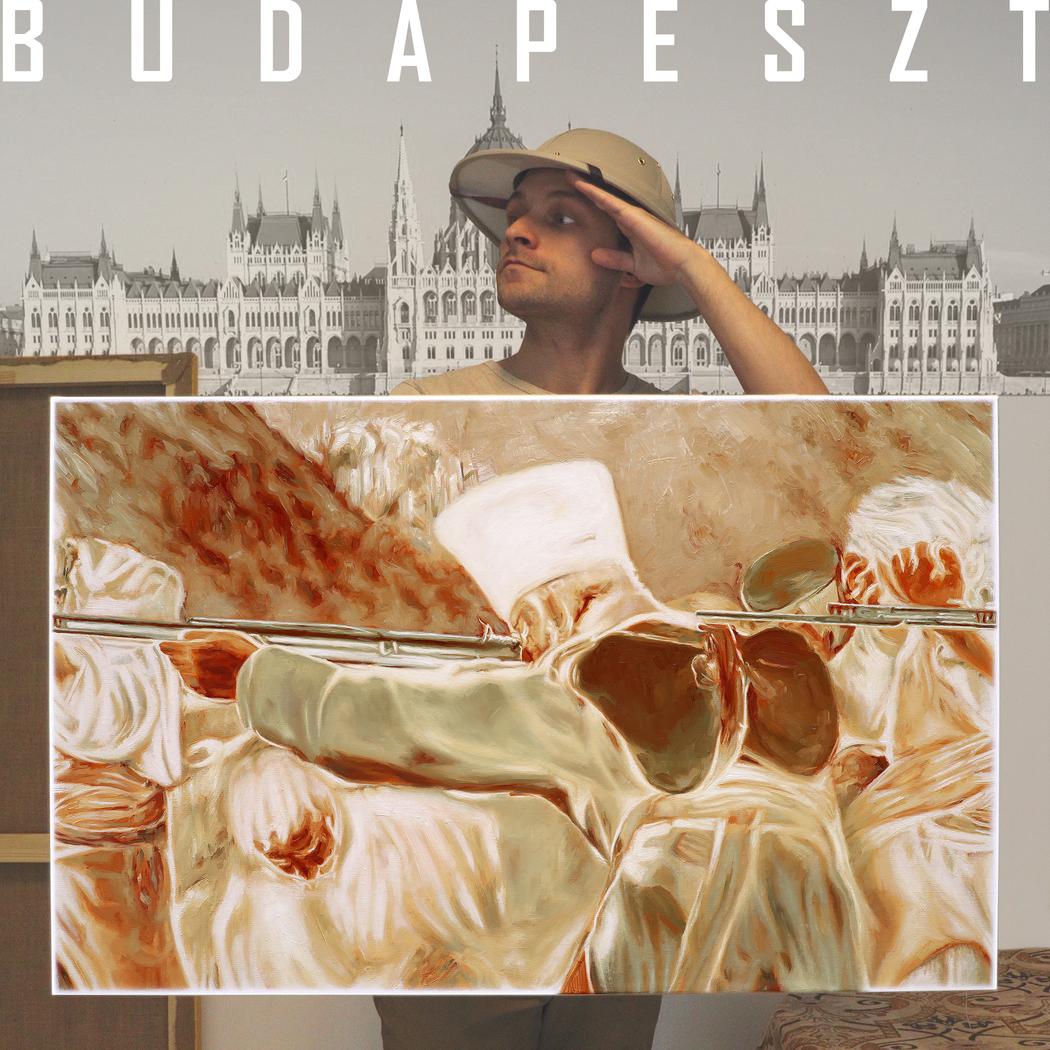 Maciej Wichnowski | Wichnowski Promoshot Goya’S El Tres De Mayo
Your works often feature highly saturated, almost glowing color palettes. What role does color play in shaping emotional or psychological impact in your work?
I’ve noticed a pattern – color dominated compositions refer to my experiences and emotions whereas the toned-down ones are much more intellectually based. Some paintings fall somewhere in between. In general, yes, the colors definitely provide a psychological setup for the story, and I tend to treat colors in a painting as nature approaches the feathers of a bird of paradise or the skin of a poisonous frog. They are primal, draw the viewer in.
You have worked across many fields – animation, murals, ghost painting, festivals. How have these diverse experiences influenced your current artistic voice?
It has helped me to look at the creative process from a distance.
First and foremost it allowed me to form boundaries of what a painting can be and what it cannot. Paintings are flat, colored objects able to carry artificial space. The question is how far and in which direction will I take one along those boundaries.
Secondly, I realized I’m not actually the hand and a brush. The medium is only a choice and a field of expertise. It’s just that painting provides me with the biggest amount of freedom and allows contact with color in its rawest form.
There are numerous other ways in which this learnt versatility comes in handy.
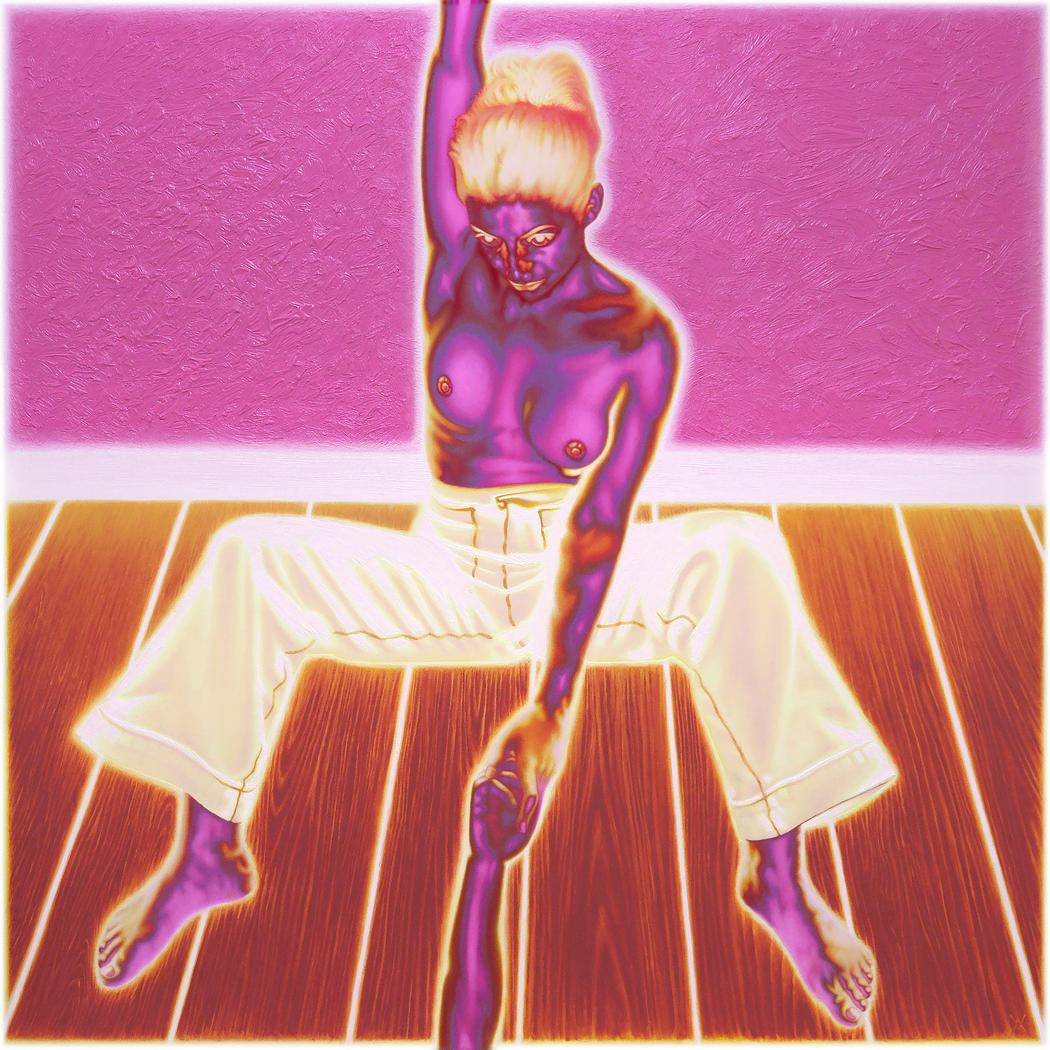 Maciej Wichnowski | On The Line | 2025
What prompted your decision in 2024 to fully dedicate yourself to your personal artistic practice? Was there a turning point?
Having ended the production of the animated movie “The Peasants”, I realized that I had just finished 5 years of consecutive daily pro painting practice and had a considerable amount of money set aside. Given the perfect circumstances I thought I’d give myself a few months to see what I’m capable of. At the same time my personal life was very tumultuous and heartbreaking. This kind of pushed me to double down on the idea since art was all I was left with at the time.
The same year I got into the final of a nationwide art competition. I also initiated and organized a successful group exhibition, and then a few months later I received a municipal art scholarship. It would have been remiss not to push further.
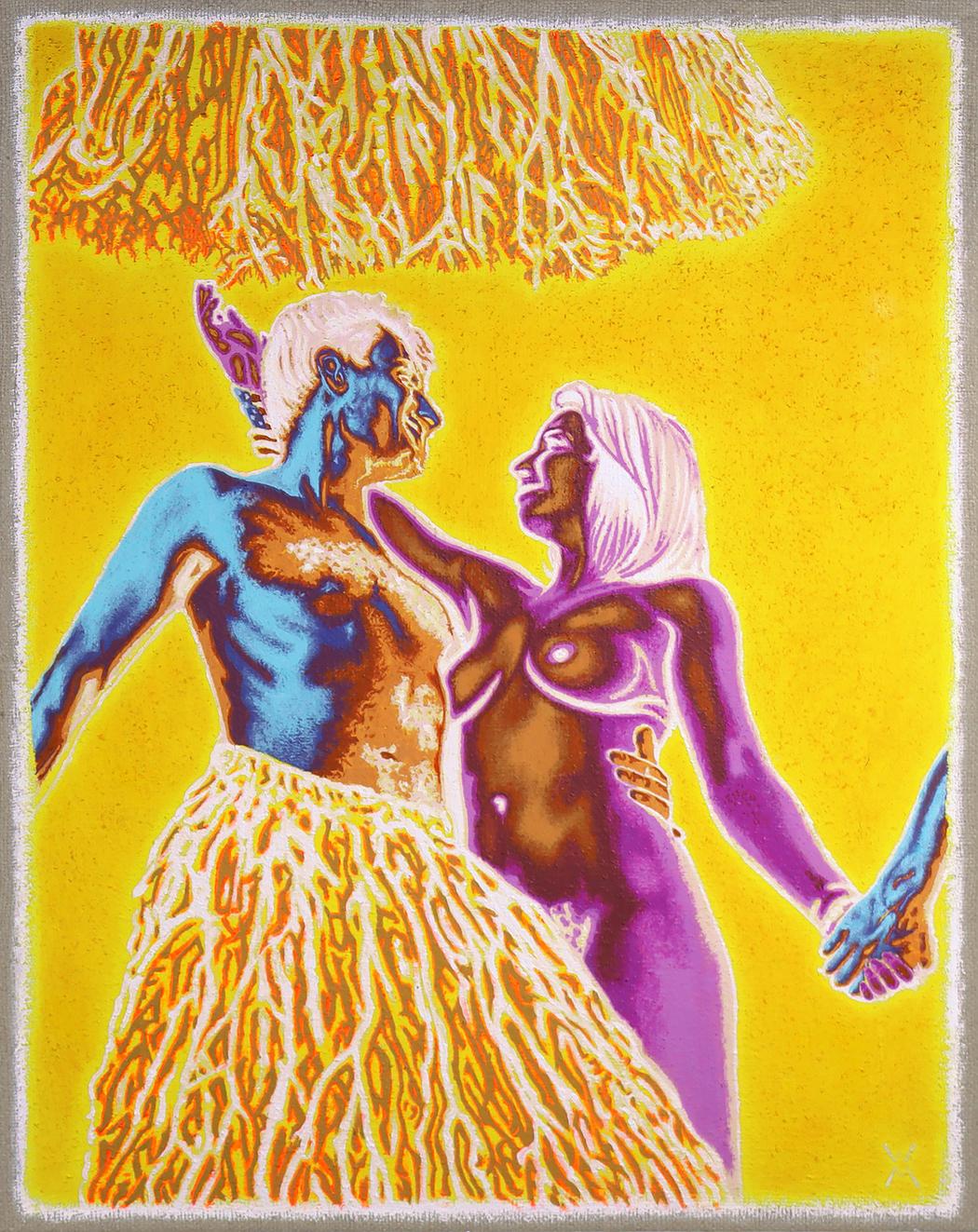 Maciej Wichnowski | Of Roots And Dreams | 2026
The human figure is central in your work, yet it often appears transformed or otherworldly. What draws you to the figure as a subject?
Primarily it’s anthropocentrism and sensitivity to the human condition. Figures as a visual language have lots of potential to be relatable and understood by the viewer. The directness of representation also allows me to arrive easier at the depth and profoundness of meaning.
What’s more, people are infinitely intriguing. Our psychology, relations, physicality – we’re an endless source of inspiration, really.
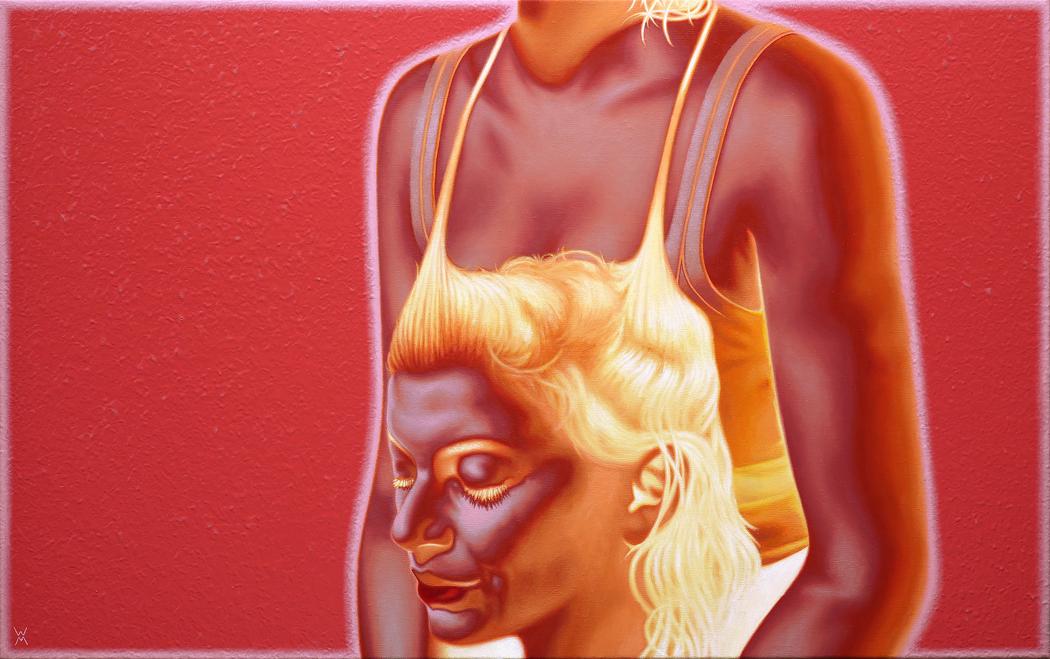 Maciej Wichnowski | Judith Without Holofernes | 2024
Having studied art across different continents and traditions, which artists or movements have had the most lasting influence on your work?
It always comes down to the Polish op-art master Wojciech Fangor. The idea of a “machine” designed only to be looked at resonates with me deeply because it provides a sensible and instinctive answer to the question of why to paint. Fangor provides me with the framework for visual, intellectual and personal voyages.
I also have a soft spot for Bollywood, in which over-the-top is the norm and it’s precisely that which keeps the audience engaged. The whole history of Indian culture is packed with intensity which might be foreign to Westerners. Same goes for the spontaneity and intensity of Latin culture. In comparison to those worlds, the traditional western art history can look almost bleak, snooty and uptight. One of the creative movements which always is at the back of my mind whether I want it or not is modernism. My city for over 30 years, Gdynia, has been wholly built and decorated in this style.
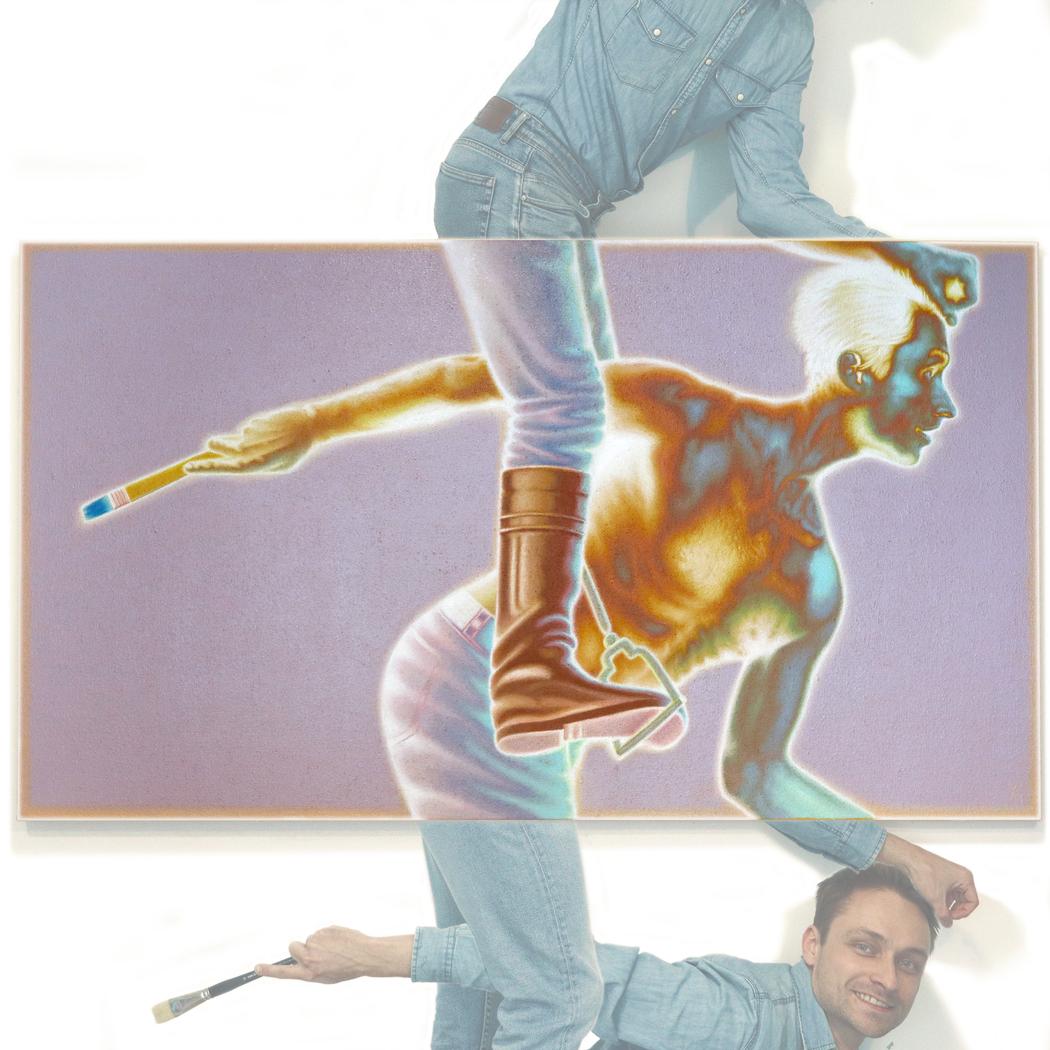 Maciej Wichnowski | Jockey
What challenges do you encounter when working with such intense visual language, and how do you maintain balance in your compositions?
I follow excitement and my own visual pleasure which can lead to situations where I can’t technically saturate a color enough at a given tone. Sometimes there also aren’t enough colors on the visible spectrum to choose from.
The compositions I preplan geometrically and then carefully balance out the given elements. The design of the figure comes first and it dictates the dimensions of the canvas needed in order to crop and assemble the figures properly.
As a result, when I commence painting, I am able to focus a 100% on the act.
Leave a Reply
You must be logged in to post a comment.