
Alexandra Astafyeva
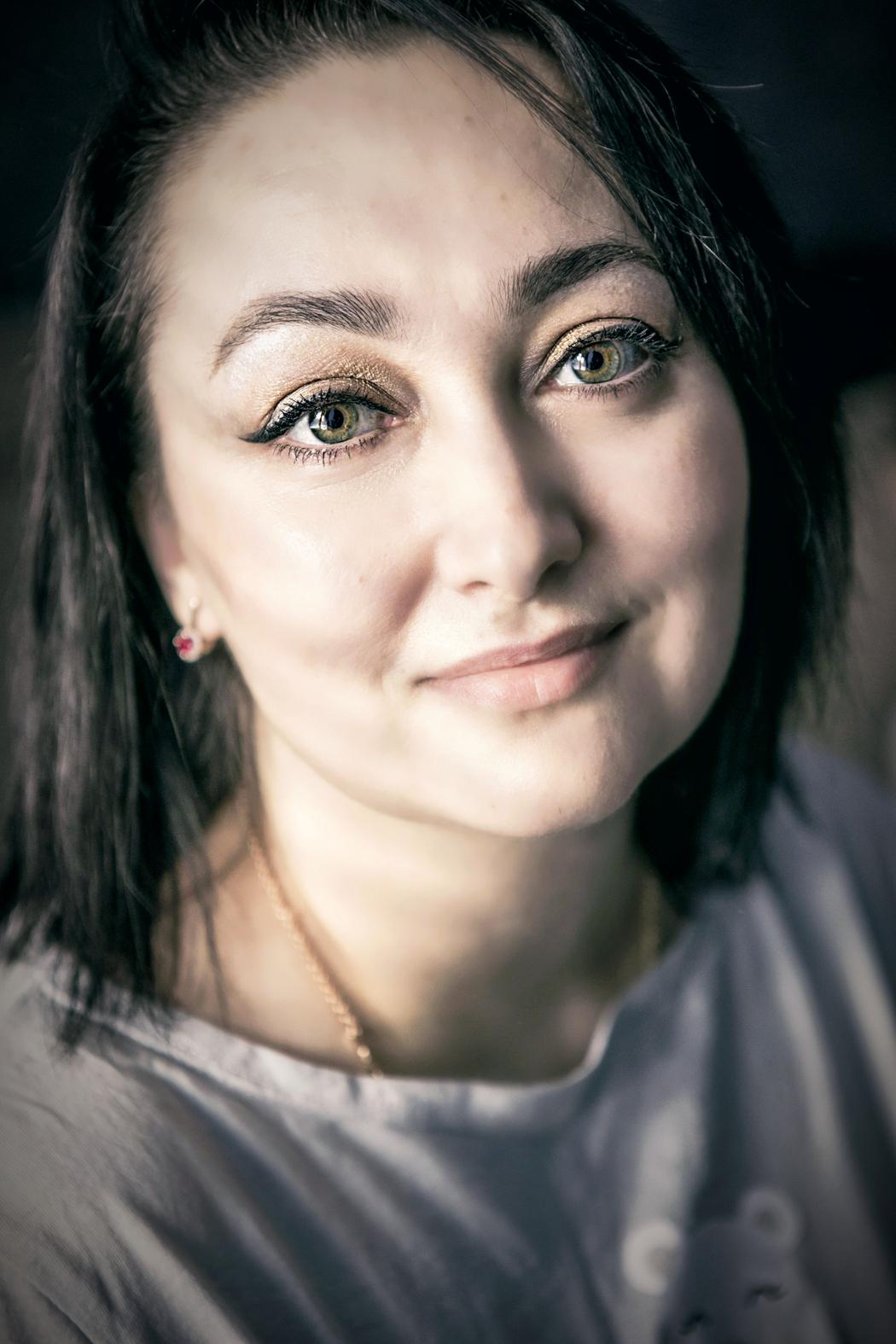
As a self-taught artist, how did you develop your distinctive visual language, and what challenges or freedoms came with learning outside of academic institutions?
My visual language emerged through intuitive experimentation and a lifelong pull toward creative expression. I’ve never had formal art training, but creativity has always been a constant in my life. My family included practicing artists, so I suspect that sensitivity to visual expression was something I absorbed early on. Even as I pursued a completely different academic path—Business and Management/Education—I never let go of that creative impulse. Instead, I found ways to weave it into my work. For years, creativity found its outlet through community and educational initiatives, such as the U.S. Embassy–funded project on social adaptation of at-risk youth through art therapy, or the British Council’s Creative Spark program. Those experiences taught me how art functions as a bridge—between people, emotions, and lived realities—and that understanding deeply informs my practice today. Being self-taught meant I had the freedom to develop without prescribed rules or academic expectations. I wasn’t confined to a particular movement, medium, or timeline, so I could explore acrylics, mixed media, and layered textures at my own pace, following what felt authentic rather than what was “correct.” I studied artists I admired not through syllabi, but through direct observation: What emotion is this conveying? How did they achieve this surface or composition?
That freedom came with its own set of challenges. Without institutional validation, I had to become my own mentor, curator, and advocate. I learned the technical, conceptual, and business aspects of art independently, and there were moments of doubt about whether my work would be taken seriously in traditional art spaces. But those uncertainties ultimately sharpened my practice. My background in education and management didn’t compete with my art—it complemented it. It taught me how to structure creative projects, articulate concepts clearly, and approach making with both discipline and emotional honesty.
In many ways, being self-taught didn’t limit my development; it shaped it. My visual language is distinctive precisely because it wasn’t filtered through a standardized art curriculum. It’s a synthesis of interdisciplinary thinking, lived experience, and an unwavering belief that art doesn’t need a classroom to be legitimate—it just needs a maker who’s willing to listen to the materials, trust the process, and keep showing up.
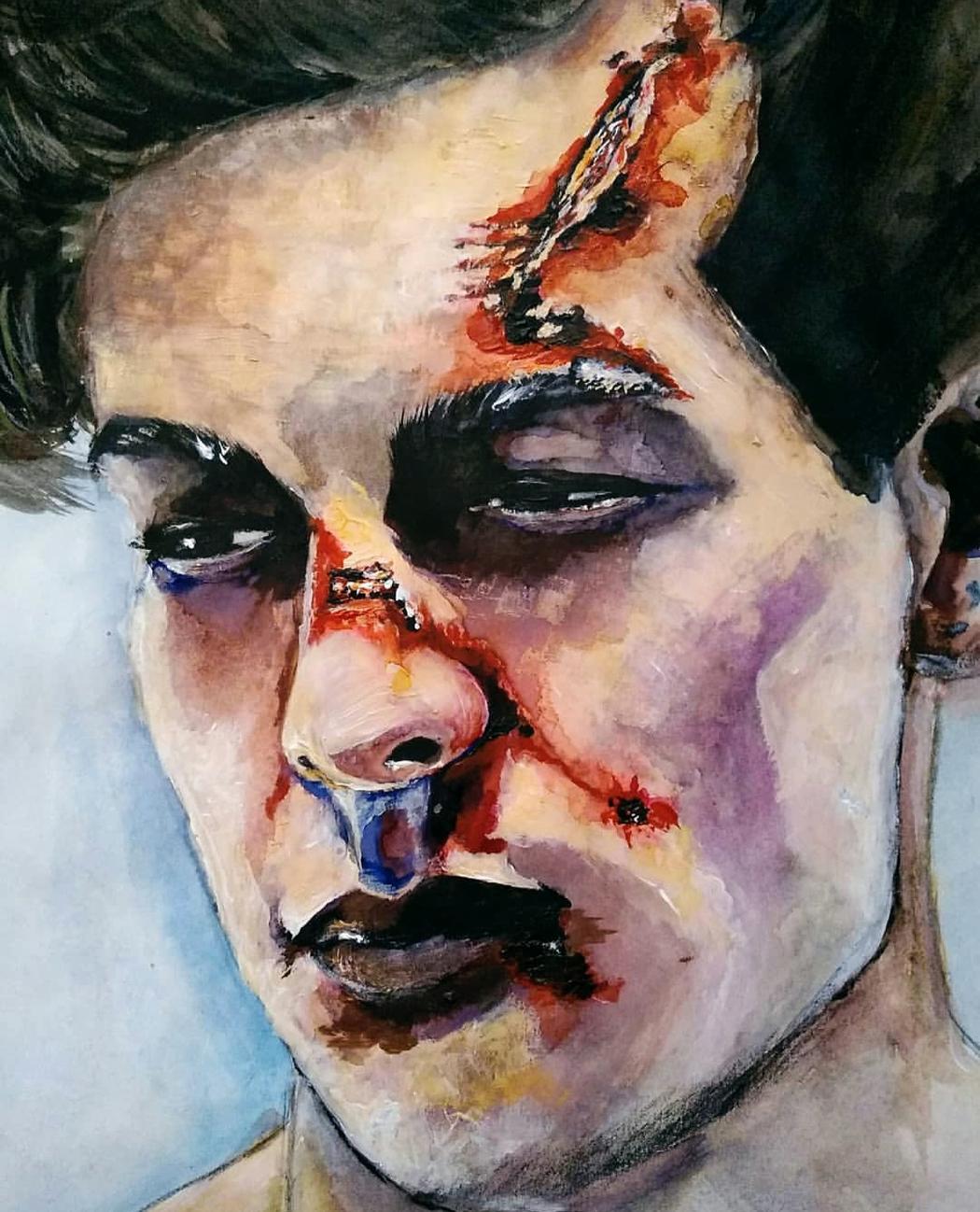 Alexandra Astafyeva | Raw Emotions | 2019
Your works combine expressive painting with graphic, almost poster-like elements. How do you balance spontaneity and structure within a single composition?
For me, that tension between spontaneity and structure isn’t something to resolve — it’s the engine of the work. I often begin with an expressive, gestural foundation: layers of acrylic applied intuitively, responding to color, texture, and emotion in the moment. That’s the “breath” of the piece — the part that feels alive and unscripted.
Once that ground is established, I shift into a more deliberate mode. The graphic, poster-like elements — bold outlines, typography-inspired marks, or simplified shapes — act as anchors. They create visual rhythm, guide the eye, and sometimes introduce a conceptual layer: a phrase, a symbol, or a structural frame that invites the viewer to pause and read the work differently.
This two-stage process mirrors how I think about creativity in other areas of my life. My background in management and education taught me that structure doesn’t suppress creativity — it gives it direction. When I work at home, I might sketch a loose compositional plan beforehand, or decide in advance where a graphic element will sit. But I leave room for the painting itself to “talk back.” If a spontaneous mark disrupts the plan in an interesting way, I follow it. The balance isn’t fixed; it’s negotiated, layer by layer.
Technically, I lean into material combinations that might seem unconventional at first glance — like mixing acrylic paint with soft pastels. On paper, they shouldn’t quite work together: one is fast-drying and polymer-based, the other is powdery and delicate. But that very tension creates texture, depth, and a visual friction I find compelling. The acrylic builds a stable, layered ground; the pastel lets me draw, smudge, or highlight with immediacy and softness. I don’t rely on rigid tools to impose structure. Instead, I let the graphic elements emerge through deliberate mark-making, layering, and the intentional use of negative space.
In many ways, I don’t believe I’ve arrived at a fixed “style” yet — and I’m intentionally resisting the pressure to. Rather than repeating a familiar formula, I let myself work in whatever visual language excites me or presents a meaningful technical or conceptual challenge at the time. One piece might lean heavily into bold, poster-like geometry, while another dissolves into loose, gestural abstraction. That restlessness isn’t a lack of direction; it’s how I stay engaged with the process. By refusing to confine myself to a single aesthetic, I keep the work open to discovery. The balance between spontaneity and structure isn’t about finding a formula — it’s about staying responsive to what each piece demands.
Conceptually, I’m drawn to this hybrid language because it reflects how we experience the world today: emotionally rich yet visually fragmented, intuitive yet mediated by design. By holding spontaneity and structure in the same frame — and materials that “shouldn’t mix” in the same composition — I hope the work feels both immediate and enduring: like a feeling you can’t quite name, framed by a thought you can’t forget.
Mixed media plays an important role in your practice. What attracts you to materials such as pastel, markers, and textile collage, and how do they expand your artistic expression?
I’m drawn to mixed media because each material carries its own voice — and when they converse, the work becomes richer, more layered, more honest. Pastel, markers, and the depiction of textile aren’t just tools for me; they’re ways of thinking with my hands.
Pastel invites immediacy. Its softness lets me blur, smudge, or sharpen a line in a single gesture — it’s responsive, almost conversational. I love how it sits on top of acrylic: the acrylic gives structure and depth, while the pastel adds breath, light, and a kind of human tremor. Markers, on the other hand, offer precision and boldness. They let me draw sharp contours, introduce graphic punctuation, or lay down flat, poster-like color that cuts through the painterly surface. They’re fast, decisive, and unapologetically direct — a counterpoint to the ambiguity of blended paint.
In my practice, I don’t embed actual fabric into the surface. Instead, I draw and paint textile structures. This approach is especially central to my Ape-Grade series, which explores fashion textiles as both cultural artifact and visual language. In fashion, textile isn’t just decoration — it’s the foundation. By rendering weaves, drapes, and pattern repeats through acrylic, pastel, and marker, I can capture the rhythm and weight of fabric while maintaining the graphic tension I’m drawn to. Painting textile rather than collaging it keeps the surface flat and controlled, allowing me to play with illusion, repetition, and surface texture without physical layering. It becomes a meditation on pattern itself — not through material accumulation, but through visual translation.
What these materials share is their ability to disrupt expectations. Acrylic and pastel “shouldn’t” mix cleanly. Markers can feel too commercial for fine art. Representing textile through drawing rather than physical fabric challenges the boundary between craft and concept. Working at home, without the pressure of a formal studio environment, gives me the freedom to experiment without judgment. I can test a marker over dried pastel, layer painted textile motifs into wet paint, or let a “mistake” become a motif.
This material openness also reflects how I approach creativity more broadly. Constraints can fuel innovation — and in my practice, the guiding question is simply: Does this material help me say what I need to say right now? If the answer is yes, I use it. That flexibility keeps the work alive. It also means I’m not tied to a single aesthetic or technique. One piece might lean into the soft haze of pastel; another might explode with marker lines and painted textile patterns. That restlessness isn’t indecision — it’s curiosity in motion.
Ultimately, mixed media expands my expression because it mirrors how I experience the world: not in one medium, one style, or one emotion, but in layers — visual, tactile, conceptual, emotional. By letting materials lead as much as I do, the work stays open, surprising, and true.
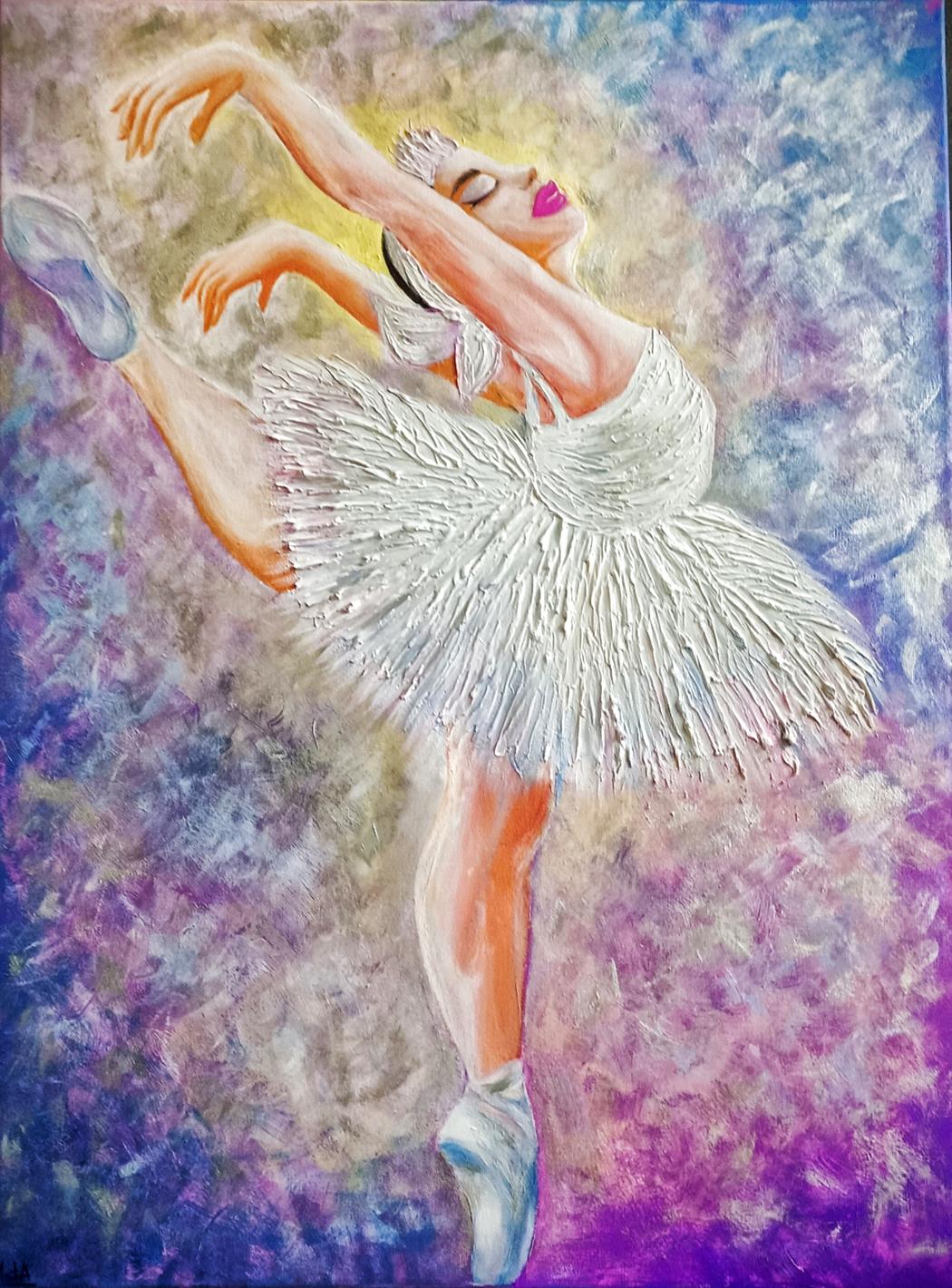 Alexandra Astafyeva | Serenity In Motion | 2023
Your series «Ape-Grade Luxury» critiques consumer culture through irony and humor. What inspired you to use monkeys as the central characters of this project?
Honestly, it started with something very simple and tender: watching my young daughter play. She loves to dress up in my shoes, drape herself in scarves, strike poses in front of the mirror — completely absorbed in the joy of transformation. There was something so pure and universal in that act: the desire to try on identities, to play with the symbols of “grown-up” worlds, to feel powerful or beautiful through costume.
That playful energy became the seed for Ape-Grade Luxury. I began to see how that innocent dress-up ritual mirrors the way we all engage with fashion and consumer culture: trying on brands, logos, and aesthetics as a way to signal who we are — or who we want to be. Monkeys felt like the natural visual extension of that idea. They’re curious, imitative, expressive — and when you place them in the context of luxury fashion, the parallel becomes both funny and revealing. The monkey isn’t mocking us; it’s joining us in the performance.
From that initial spark of playfulness, the series grew to carry deeper layers. It’s about self-expression, yes, but also about aspiration, belonging, and the stories we tell ourselves through what we wear.
Using monkeys lets me hold that tension lightly. They bring humor and approachability, which invites the viewer in — but once you’re looking, the questions start to surface: What is it within us that seeks meaning in objects — and how do those objects, in turn, shape who we believe we are?
When we acquire “luxury,” are we purchasing craftsmanship, story, belonging — or simply the promise of a different version of ourselves?
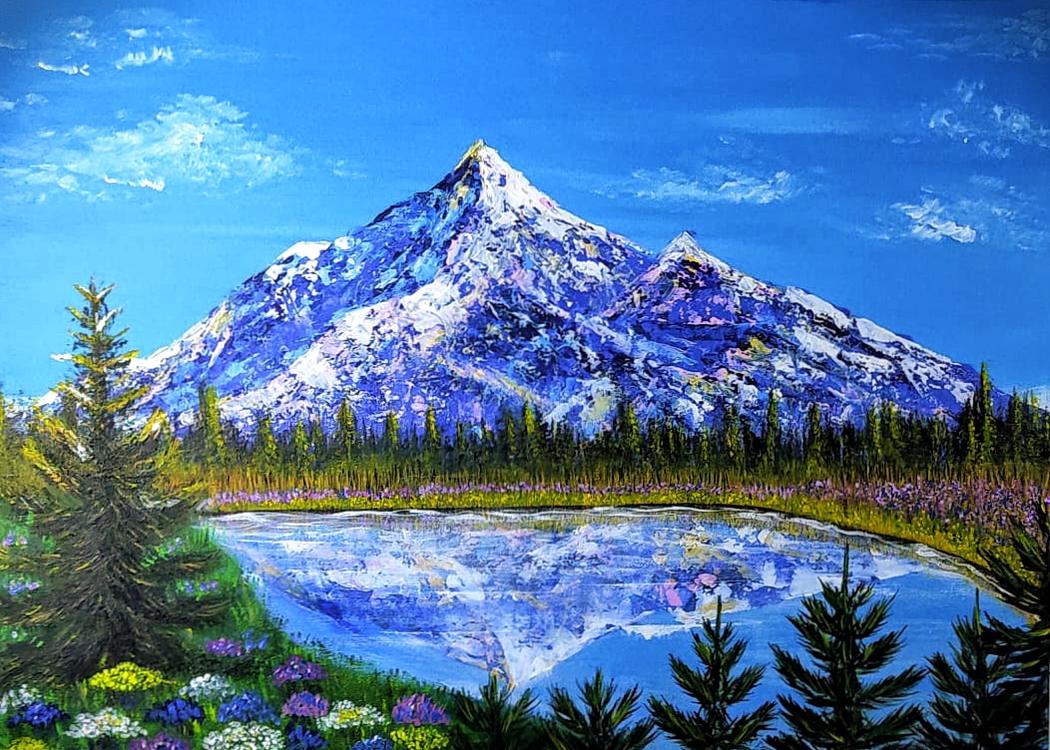 Alexandra Astafyeva | Crystal Morning | 2021
In works like the monkey with designer shoes or luxury bags, fashion symbols become almost absurd. What message are you hoping viewers take away from these images?
I don’t set out to deliver a single “message” — I prefer to create a space where recognition and questioning can happen at the same time. When a monkey wears designer shoes or clutches a rendered luxury bag, the absurdity is immediate. But I hope that initial smile opens a door to something quieter: a moment of self-recognition.
We all participate in the language of fashion. We choose symbols — a logo, a silhouette, a color — to tell stories about ourselves. Sometimes those choices are joyful, intentional, creative. Sometimes they’re driven by pressure, aspiration, or the quiet fear of not belonging. My work doesn’t judge either impulse. Instead, it asks: What if we could hold both the play and the performance at once?
But there’s another layer to the absurdity — one that feels especially urgent right now. We live in a world overflowing with real suffering: inequality, displacement, uncertainty. And yet, enormous sums are spent not on healing, but on symbols — on items that promise belonging to an imagined elite. The money poured into a single luxury accessory could fund education, shelter, art programs for young people who need them most. When I paint a monkey draped in “luxury,” I’m not just parodying fashion — I’m asking: What are we choosing to value, and at what cost?
Dressing up is, at its core, an act of imagination. Luxury marketing taps into that same impulse — the desire to transform, to feel seen, to belong. I’m not against that desire. I’m interested in what happens when we become conscious of it — especially now, when sincerity and kindness feel in short supply, and when so many young people are navigating a world where traditional values have been blurred or replaced by curated images.
The monkeys aren’t caricatures of consumers; they’re companions in the inquiry. By placing them in hyper-stylized fashion contexts, I exaggerate the theater of luxury just enough to make its mechanics visible. The absurdity isn’t meant to mock — it’s meant to reveal. When the symbol becomes slightly “off” — a monkey’s paw in a delicate shoe, a bag rendered in bold pastel strokes — it creates a gap. And in that gap, the viewer can step back and ask: Why does this feel familiar? What do I see in it? What am I really responding to?
So if there’s a “takeaway,” I hope it’s this: that we can engage with fashion, with symbols, with status — playfully, critically, creatively — without losing sight of the human impulse underneath. And perhaps, in doing so, we can begin to redirect our collective energy: from performing belonging toward cultivating real connection; from chasing signs of value toward creating value that matters. The monkey isn’t outside the system, laughing at us. It’s inside the frame, inviting us to laugh with it, then pause, then choose more intentionally what we wear, what we value, and why.
Your art often shifts between satire, portraiture, emotional expression, and landscape painting. How do these different directions coexist within your overall artistic identity?
I see my practice not as a single voice, but as a conversation — one that moves between modes depending on what needs to be said. Satire, portraiture, emotional abstraction, landscape: each is a different register of the same inquiry. They coexist because life itself doesn’t arrive in one genre. Why should my art?
Satire lets me engage with culture critically — to question, to exaggerate, to invite reflection through humor. Portraiture grounds me in the human: a face, a gesture, a moment of vulnerability. Emotional expression is where I process internally — where color, texture, and gesture carry what words can’t. And landscape? It’s my pause. A way to step back, breathe, and remember that we’re part of something larger than trends, brands, or even ourselves.
What ties these directions together isn’t a fixed style, but a consistent approach: I follow what feels urgent. Some days, the urgency is social — a symbol that needs unpacking, a system that needs questioning. Other days, it’s intimate — a feeling that needs form, a memory that needs color. Structure and flexibility aren’t opposites; they’re partners. In my practice, that means I don’t force coherence. I let it emerge through repetition, through material choices, through the act of showing up and making, again and again.
Working at home, with acrylic and pastel as my core materials, also supports this fluidity. Acrylic gives me speed and layering; pastel gives me immediacy and softness. Together, they let me shift modes without changing my entire toolkit. A satirical monkey and a quiet landscape can both begin with the same ground — the same gestures, the same trust in the process. The difference is in the intention, not the hand.
I also believe that refusing to be pinned to one genre is, in itself, a kind of integrity. If I only made satire, I’d miss the tenderness. If I only made landscapes, I’d mute my critical voice. By allowing myself to move between them, I stay honest to the full range of what I observe and feel.
So my artistic identity isn’t defined by a single aesthetic. It’s defined by curiosity, by responsiveness, and by the belief that art doesn’t have to choose between thinking and feeling — it can do both, sometimes in the same brushstroke.
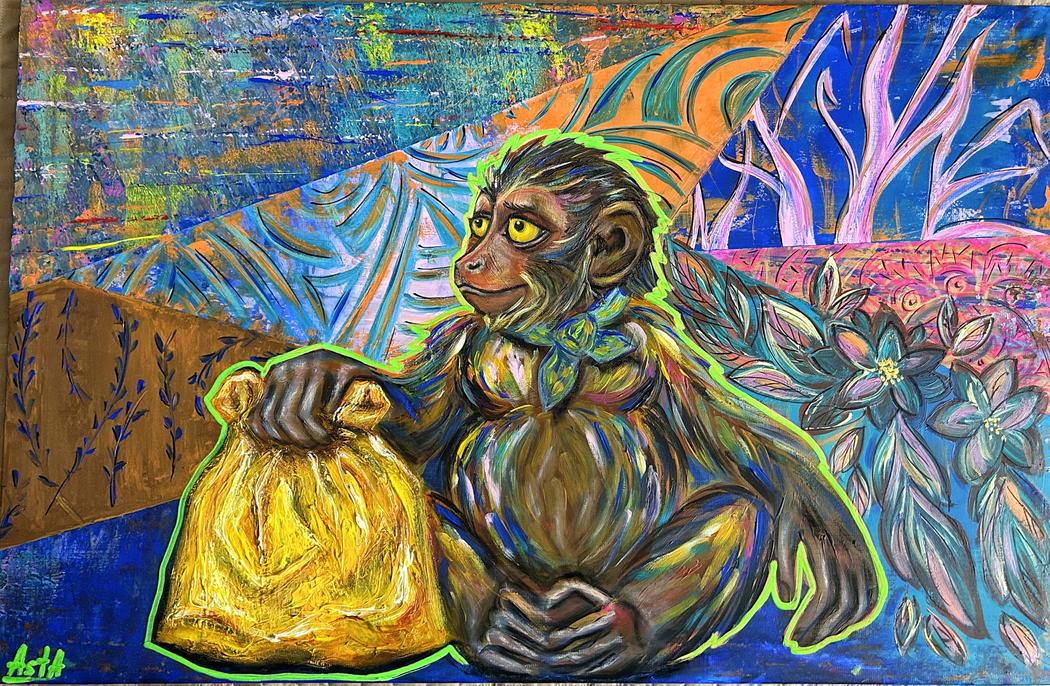 Alexandra Astafyeva | Ape Grade Luxury Balenciaga Edition | 2026
What emotions or reflections would you like viewers to experience when encountering your work for the first time?
First, I hope they feel invited — not confronted. Whether it’s a monkey in luxury shoes or a quiet landscape rendered in acrylic and pastel, I want the initial encounter to feel accessible: a spark of recognition, a smile, a moment of “Wait, what am I looking at?” That curiosity is the doorway.
From there, I hope the work creates a gentle pause. Not a lecture, not a judgment — just a space where the viewer can feel two things at once: the charm of the image, and the question underneath it. I’m trying to create room for the viewer’s own reflections to surface.
Emotionally, I want the work to hold complexity. Tenderness and irony can live in the same frame. A portrait can feel vulnerable without being sentimental; a satirical piece can be sharp without being cynical. In a world that often feels divided or exhausted, art can be a place where we remember how to feel and think at the same time.
I also hope viewers sense sincerity. Not perfection, not polish — but honesty. The visible layers of acrylic and pastel, the hand-drawn textile patterns, the slightly “off” proportions: these aren’t flaws. They’re invitations to see the process, to feel the human hand behind the image. In a time when so much of visual culture is curated, filtered, and optimized, I believe there’s power in work that says: This was made by a person, for people. It’s okay if it’s not finished. It’s okay if it raises more questions than it answers.
If I could name one lasting impression, it would be this: that after looking, the viewer feels a little more connected — to their own curiosity, to the quiet human impulses underneath the noise, and maybe, just maybe, to the possibility that we can choose differently. Not through guilt, but through awareness. Not by rejecting beauty or style, but by asking what we want that beauty to do in the world.
Art doesn’t have to change everything in one glance. Sometimes, it’s enough if it changes one breath — slows it down, opens it up, lets something new in.
Leave a Reply
You must be logged in to post a comment.