
Ülle Kuldkepp
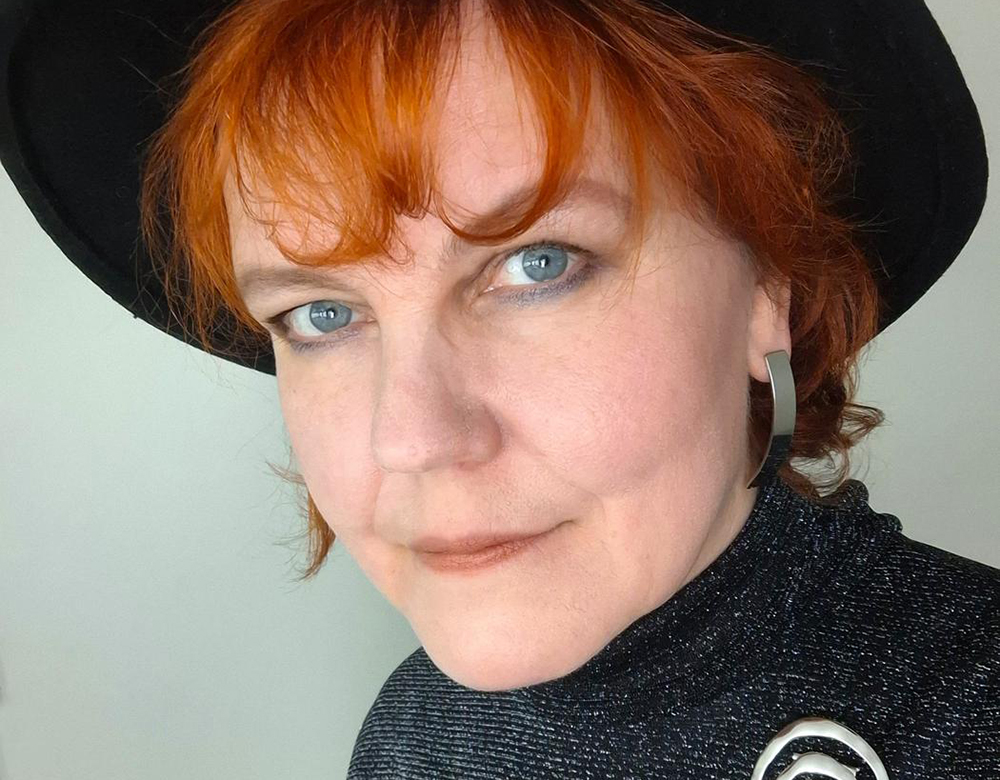
Your watercolor landscapes feel both atmospheric and abstract. How would you describe the balance between reality and imagination in your work?
The small series of paintings presented within this project was actually painted for an upcoming solo exhibition. This particular style has been rather rare in my creative journey; I enjoy experimenting with something new from time to time. For me, this was a necessary and harmonious departure from my usual habits. Reality still keeps me grounded, while imagination receives an invitation to travel.
I use familiar, seemingly safe elements—the horizon, water reflections, and celestial bodies—alongside surreal forms: giant arches cutting through the sky or columns that defy the laws of physics. This balance is like a half-dream: you recognize the ripple of the water and the colors of the sunset, but the forms surrounding them suggest inner space or even distant galaxies. I paint places I encounter during the process, playing freely with the possibilities of watercolor techniques and adding controlled abstract elements as a balance or complement to what emerges. I sought to maintain a sense of wholeness. Reality provides the structure for these works, but imagination gives them the freedom of thought.
Many of your compositions feature geometric forms interacting with natural elements. What draws you to this dialogue between structure and fluidity?
In my work, atmosphere is born through the dialogue between water and pigment. Watercolor is the ideal medium for this because it allows for “controlled randomness.” Light is what truly creates the atmosphere. It isn’t just the sun in the sky or the moon glowing under its influence, but an energy that reflects off the water or flows through vertical forms. This creates a sense of silence and anticipation.
I deliberately used color contrasts—cool, misty blues meeting the warm pinks of apricot or salmon. This creates a conflict between crispness and warmth, characteristic of those dawn or twilight hours when the air feels mysterious.
Textures: In the base layers, I use the wet-on-wet technique to create organic, almost “growing” textures (like algae, rocks, or mist). This makes the landscape feel alive and breathing, rather than a static image. For me, the atmosphere is achieved when the viewer feels the space—when there is air to breathe.
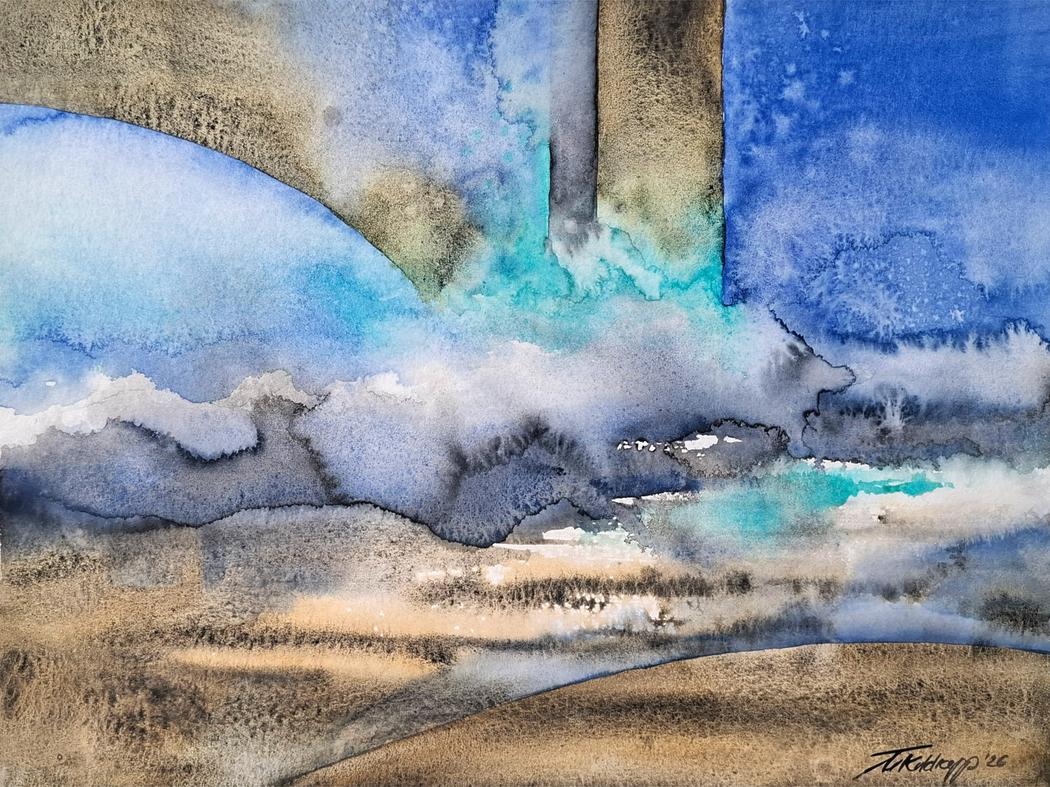 Ülle Kuldkepp | Rising Tide | 2026
Light seems to play a central role in your paintings. How do you approach capturing light and its emotional qualities in watercolor?
In watercolor, light is not a color, but the purity of the paper itself and its translucency through the pigments. When painting, one must “preserve” the light. My approach is layered: I leave white areas on the paper to act as light sources, and I build darker, more textured surfaces around them so the light can truly shine.
Emotionally, light represents hope and clarity to me. Even if a landscape is dark or stormy, there is always a central patch of light that provides the viewer with direction and peace. It is a moment where something opens up and becomes clear—it is more of a spiritual light supported by a physical phenomenon.
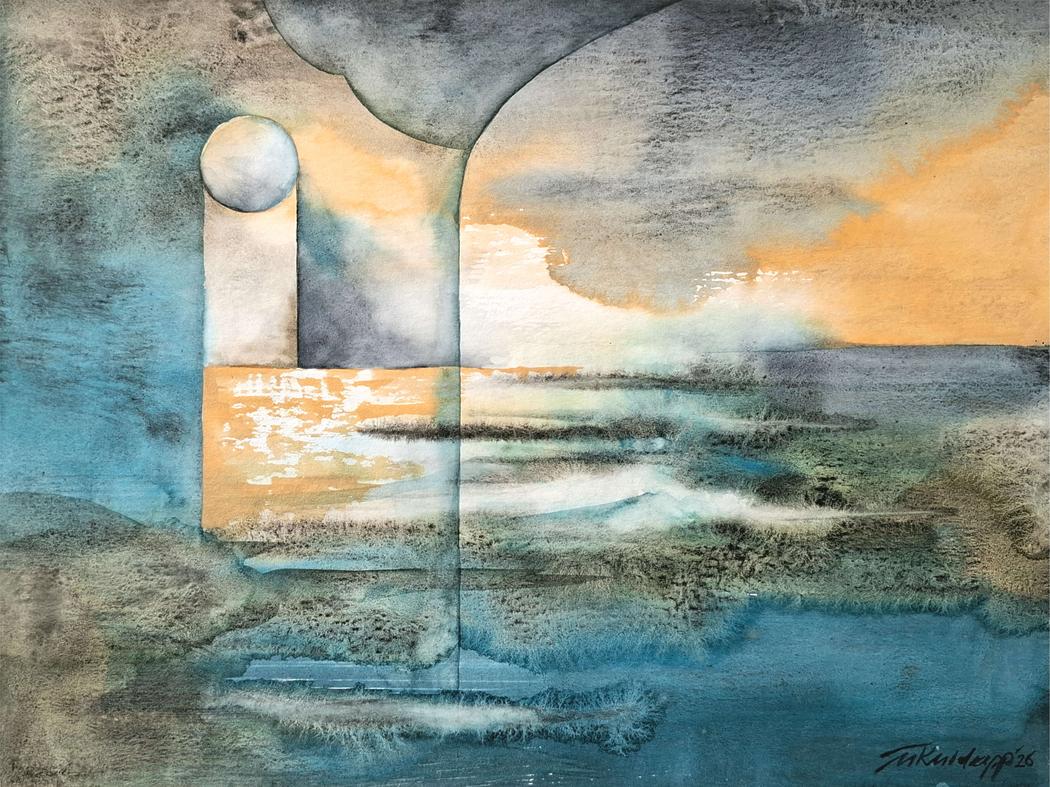 Ülle Kuldkepp | Moonset | 2026
Watercolor is known for its unpredictability. How much control do you maintain in your process, and how much do you allow chance to guide the outcome?
The mind’s habit of controlling and my innate need for clarity are occasionally stumbling blocks in my painting process. I have to consciously keep them in check when I notice myself starting to “over-work” a piece. I believe that watercolor without a touch of randomness is not true watercolor. Photorealistic watercolors tend to exhibit technical craftsmanship rather than the play of possibilities that water and pigment can create together, or the artist’s courage to enjoy that synergy.
It is difficult for me to look at a watercolor painting and not be able to tell if it is a photo or an oil painting. Why spend so much time achieving such a result with watercolor? The fact that you never know exactly how a painting might quickly change and evolve at any moment due to chance is precisely what attracts me to the medium. It is always exciting to start a new work.
I usually begin with a rough plan—I know where the compositional center might be, and I start on wet paper by fixing the general color scheme and free natural elements. I watch what begins to happen, help it along slightly, and recognize when it is time to stop. I let the water flow, creating “shores” and unexpected textures, because the authenticity of nature lies in those accidental bleeds; you have to let it be. This time, I also added spheres and horizons according to compositional necessity and intuition.
Your works often evoke a sense of calm and introspection. What kind of emotional response are you hoping to create in the viewer?
I hope to offer the viewer a “space of silence.” Our world is full of visual noise and haste; my paintings are pauses in that noise. I want the viewer to feel a sense of recognition—not of a specific place, but rather a state of mind. It is the feeling you get standing alone on a seashore or looking at a starry sky: you are simultaneously very small and yet part of something very vast. I do not wish to solve or amplify social problems; there are others appointed for that. I hope my works invite the viewer to stop for a moment, look inward, and find their own inner balance.
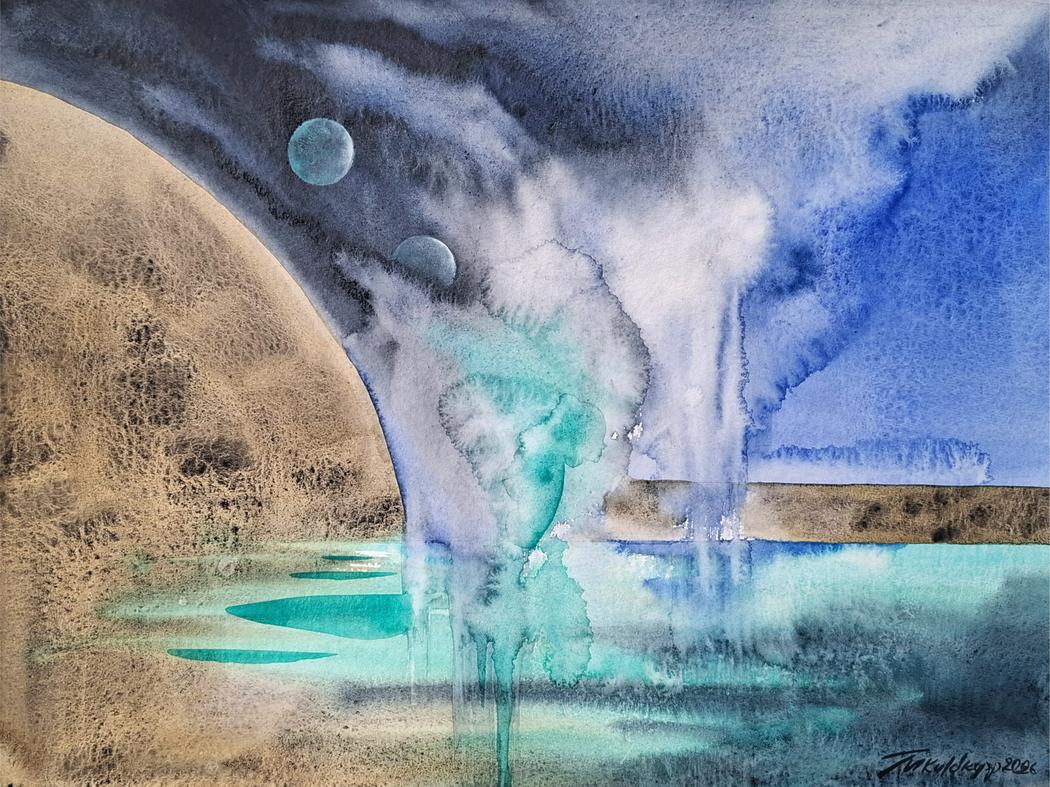 Ülle Kuldkepp | The Moonrise | 2026
The recurring motifs of spheres and horizons suggest a symbolic language. What do these forms represent for you?
Spheres and circular forms symbolize perfection, wholeness, and eternity. They are like “eyes of the soul” or unreachable distant worlds watching over the landscape. The horizon marks the boundary between the known and the unknown, earth and sky, reality and dreams. The arches and verticals that cut through the horizon are attempts to step across those boundaries. It is a kind of light, dynamic tension between stability and aspiration.
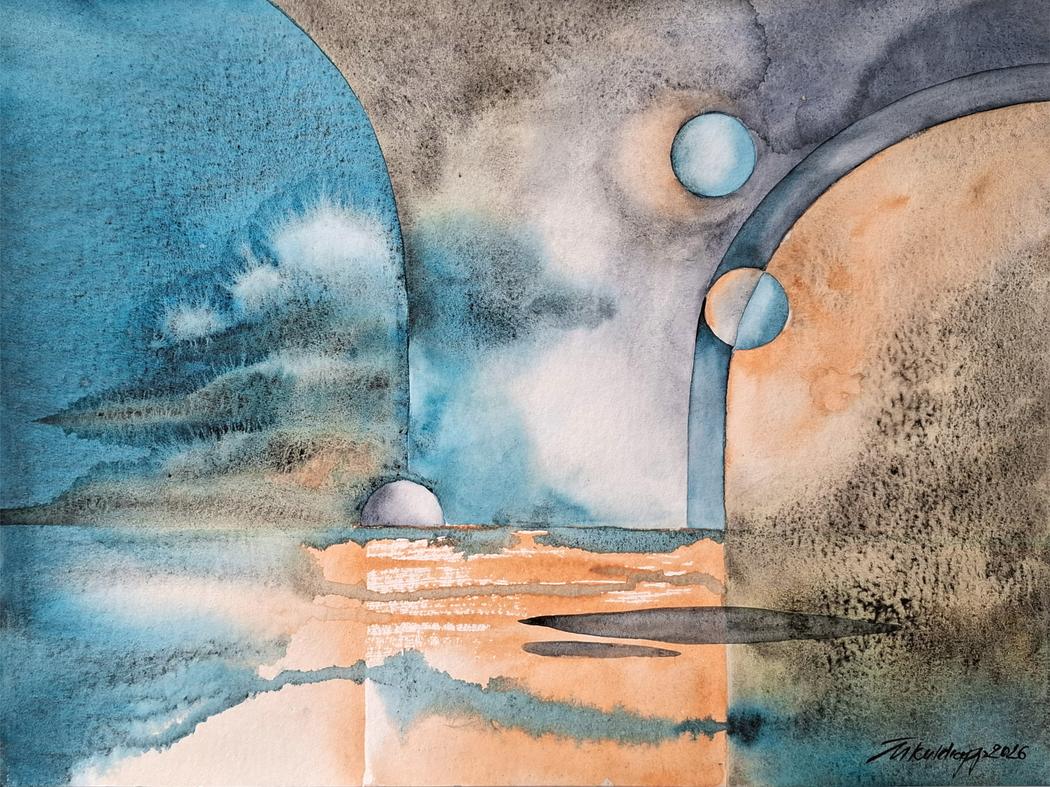 Ülle Kuldkepp | The Setting Moons | 2026
How do you decide on your color palette, especially the interplay between cool blues and warm earthy tones?
My choice of color is based on the contrast of elements: fire and water, earth and air. Cool blues and turquoises create distance, depth, and ethereality. They represent the spiritual and unreachable sphere. Warm earthy tones (ochre, browns, oranges) are earthly anchors. They bring weight, warmth, and materiality to the image.
The interplay of these two creates a “temperature” within the painting. When I place a warm golden glow next to a crisp blue, the image begins to live and vibrate. This is the magic of contrasting forces and, at the same time, a search for balance—I don’t want the image to be too cold and distant, nor too “sweet” and decorative. It must be like the crispness of the hour before dawn or the mellowness of a sunset.
Today, exciting new granulating watercolors are produced. On paper with the right texture, the rock dust or synthetic “sand” in the pigment settles into the hollows of the paper, forming structures resembling skin or flowing like a branched river. The use of these advanced pigments enriches the world of watercolor even further. As an artist, it is worth surrendering oneself to the care of the “Watercolor God”! There is only one downside to doing this: you might not be able to find your way out anymore—but the upside is that you won’t even want to.
Leave a Reply
You must be logged in to post a comment.