
Hannah Berrisford
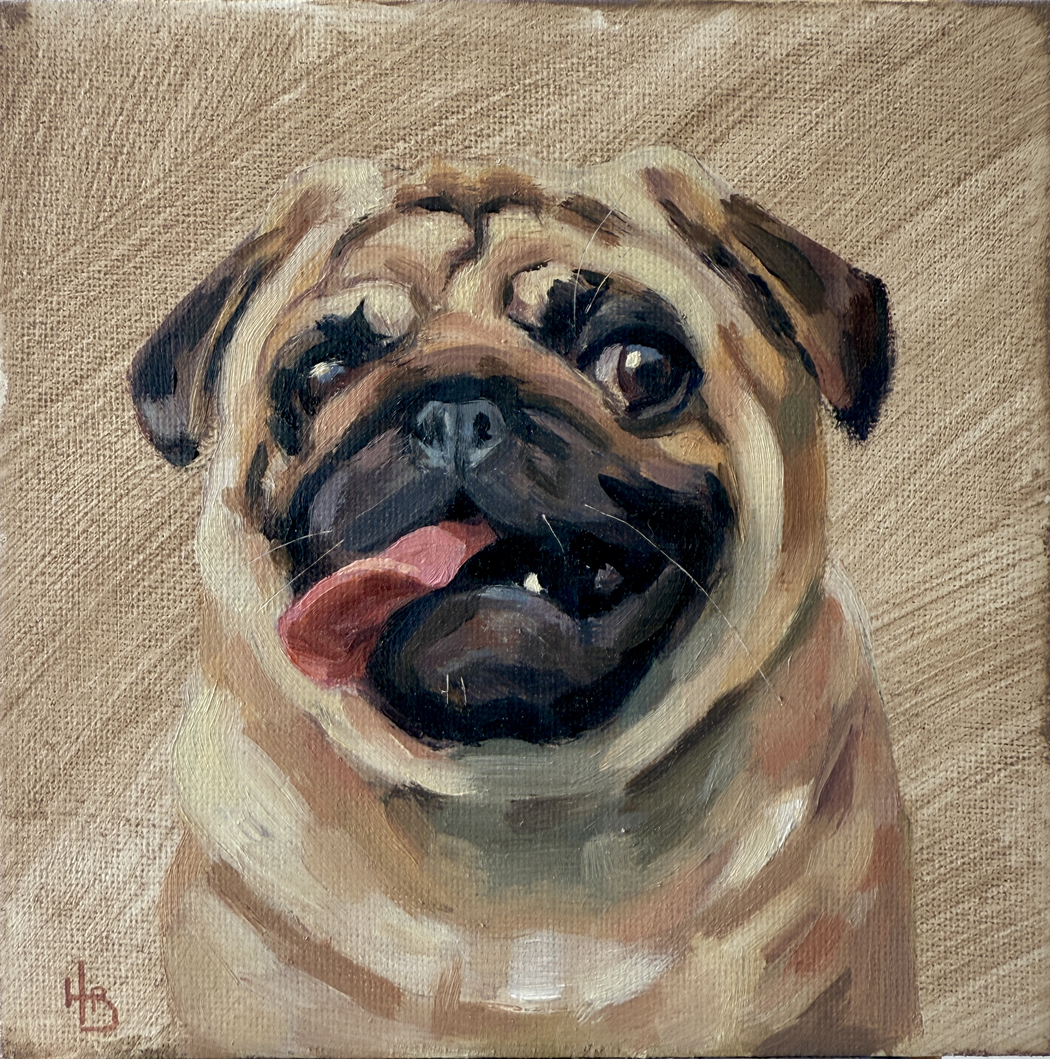 Hannah Berrisford | No Pugnacity | 2026
Your work is described as “impressionistic realism”. How did you develop this balance between expressive brushwork and recognisable form?
I love seeing visible brushwork in paintings and the evidential decision-making. I treat my oil paintings as if they emerge from the canvas and I have to “find” and “sculpt” them into being. By keeping my brushwork as economical as possible, this prevents me from overworking things and adds to the textural shaping of the animal’s form. I also value the process of simplifying form and colour, so that I can achieve recognisability and accuracy without the need for fine detail. I step back from my easel with every big decision, so I can see how it impacts the readability of the overall painting. I try to work remembering that a piece will be viewed at a distance everyday, but should be just as interesting when viewed up close.
Animals are central to your practice – what draws you specifically to pet portraiture rather than other subjects?
Out of everything I could choose to paint in this world, animals are what I gravitate to over and over again. I feel that painting pets specifically holds such value to me because my own pets have had such a significant impact on my life. Painting animals, and specifically pet portraiture, brings the most meaning to my practice – that I can provide somebody with a closeness to a loved animal is precious.
Many of your portraits capture strong personality traits in the animals. How do you approach conveying character with relatively economical mark-making?
This is a challenge I have grown to adore tackling. I’ve found that a paintings’ “spirit” is something that boils down to an overall feel rather than an amount of detail achieved. It’s become a process of decision-making – what can I hint at, what can I exaggerate? Photorealism isn’t my aim when painting – instead, I love considering the question “what is it about this particular animal that is, and isn’t, essential to paint accurately in order to achieve a likeness of their spirit”?
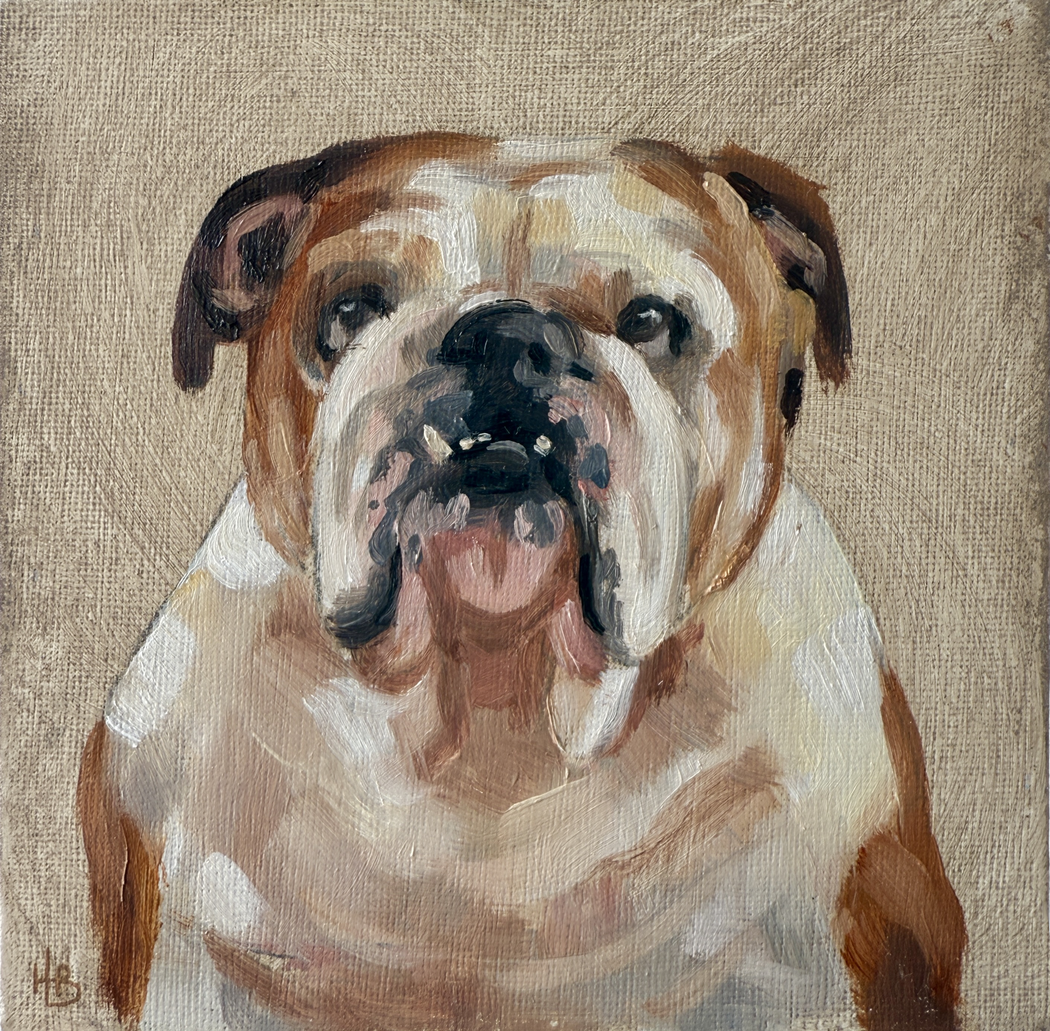 Hannah Berrisford | A Face Only A Mother Could Love | 2026
Your brushstrokes feel spontaneous yet intentional. How do you decide when a painting is finished?
A difficult decision every artist is familiar with! It’s a feeling you hone with practice – learning to trust your eye and evaluate the piece’s overall harmony by regularly stepping back. I do often ask for the feedback of contemporaries, friends and family on works that I’m particularly struggling with. A fresh pair of eyes is incredibly valuable.
How do conversations with pet owners influence the final portrait? Do their stories shape your interpretation?
They can certainly affect me when I am creating the portrait. After these conversations, I am aware that this isn’t just an unfamiliar animal – this is someone’s deeply loved family member. I think it’s a form of sonder, and whilst I rely on good reference images, I approach the actual painting process with a mindful attitude towards the soul I’m attempting to portray.
What are the biggest challenges in painting animals, particularly in capturing their expression and anatomy?
This is a more nuanced challenge, but I sometimes receive commissions from owners whose pets are no longer with us. This sometimes involves a lack of clear photos to use. In cases like these, I have to rely on my experience and on some creative license to create a painting that is not only anatomically sound, but also captures their unique fur markings and subtle expressions. However, these are some of the most memorable paintings I make; to be able to create a portrait of a loved pet for someone that has only a few images to remember them by is very special.
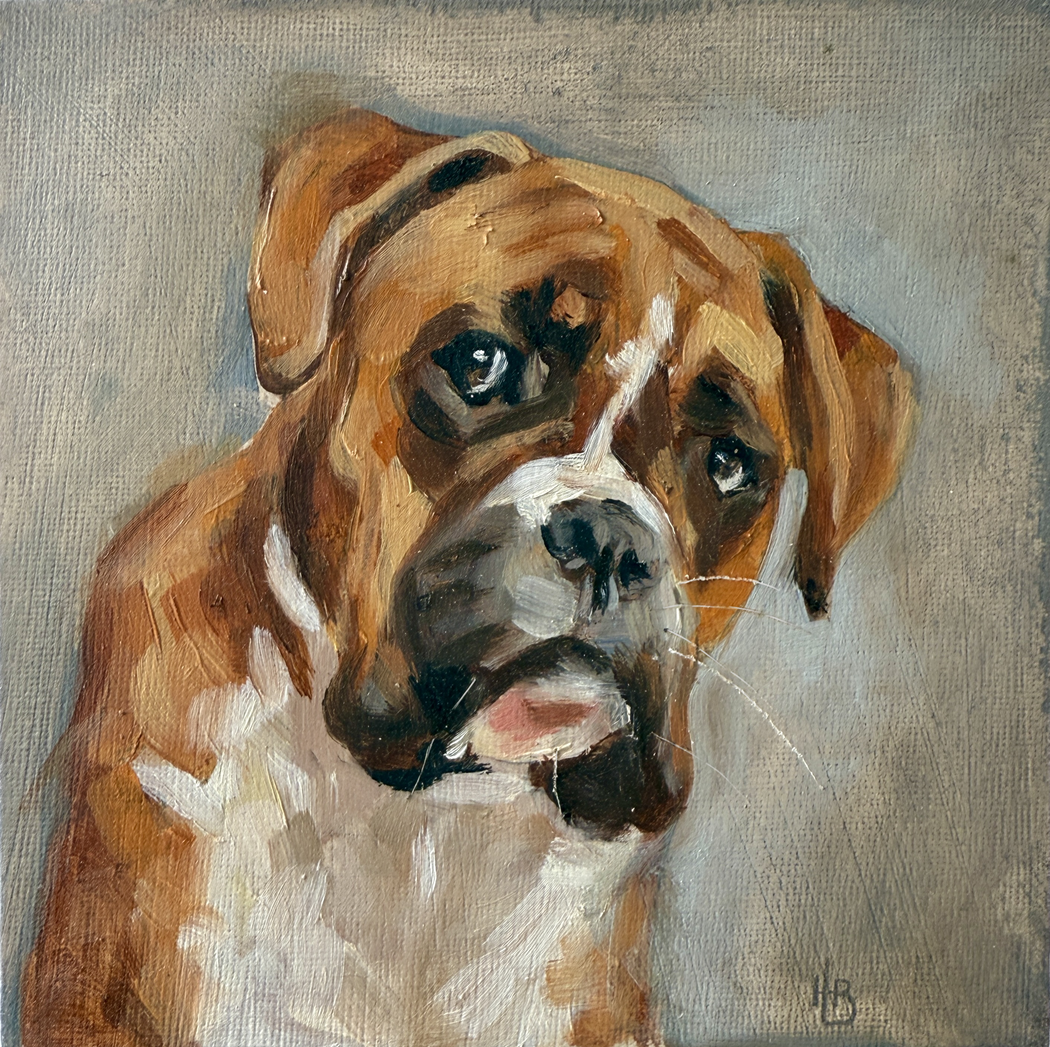 Hannah Berrisford | Waiting For My Walk | 2026
Do you see your work as more about the animal itself or about the emotional bond between the pet and the owner?
I think, in a way, it does both. Part of the depth of the bonds we form with our beloved animals is from the joy we get from simply looking at them. All of their perfections and imperfections, the shapes and marks that makes them them. I’m not sure any artwork can fully express the nuances of connections we form with our animals, but I can at least try to capture the simple happiness that comes from looking at an animal that we love.
Leave a Reply
You must be logged in to post a comment.