
Xuran Guo
Xuran Guo – “Don’t Mirror Back” (2026)
by Anna Gvozdeva
 Xuran Guo | Exulansis
Presented within the group exhibition Don’t Mirror Back at The Koppel Project in London, Xuran Guo’s works articulate a compelling investigation into the instability of communication and the fragmentation of meaning in contemporary social contexts. Situated within the exhibition’s broader curatorial framework – examining “language becoming hyper-affirmative” and trapped within recursive structures – Guo’s paintings and sculptural elements operate as visual interruptions, resisting the closure of fixed interpretation.
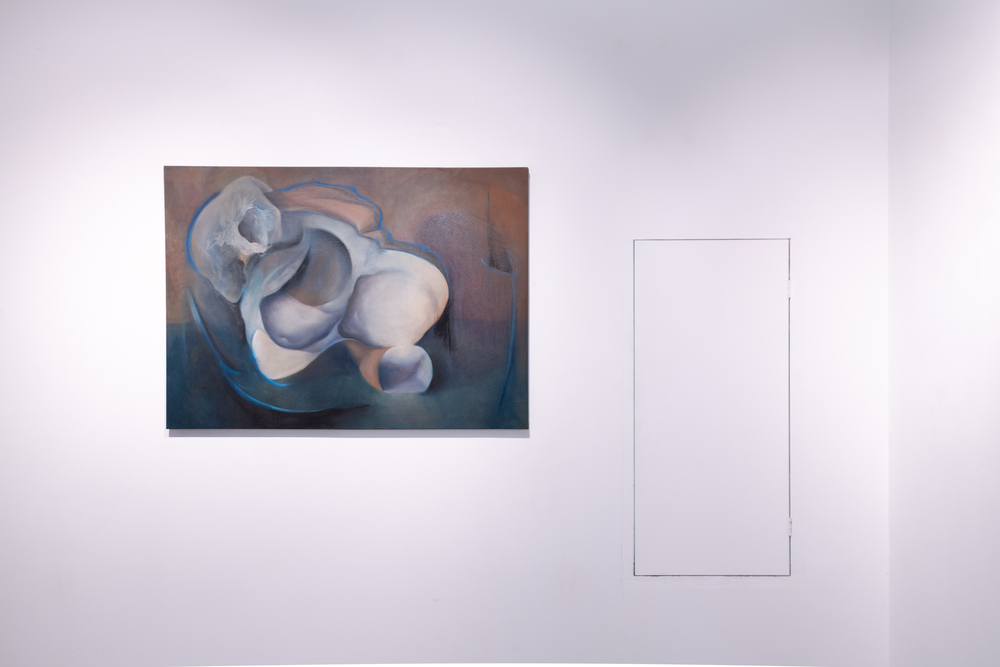
At the core of Guo’s contribution is Exulansis (2024), a large-scale painting that presents a biomorphic, almost corporeal form suspended in an ambiguous spatial field. The composition is neither fully abstract nor representational; instead, it occupies a liminal space where figuration dissolves into fluid, organic matter. The soft gradations of oil and acrylic, combined with charcoal’s subtle abrasiveness, create a tactile surface that oscillates between solidity and dissolution. The pale, almost flesh-like central mass appears both vulnerable and resistant, suggesting a body that is simultaneously emerging and disintegrating. The faint blue contour encircling the form introduces a sense of containment, yet it is unstable – more of a trace than a boundary – echoing the exhibition’s concern with the failure of language to fully enclose meaning.
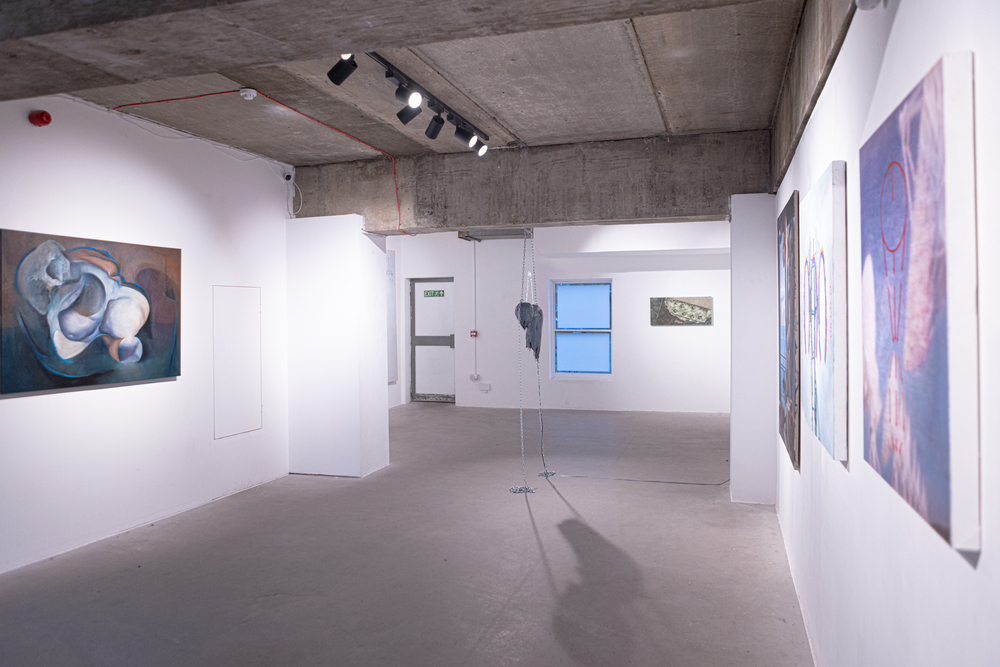
This tension between containment and rupture is further intensified through Guo’s sculptural intervention, a suspended object resembling a fragmented torso or conjoined forms. Dripping, viscous material disrupts the clean geometry of the gallery space, introducing an element of decay and temporality. The sculpture functions as a physical manifestation of breakdown – of language, of the body, of coherence itself. Its placement in dialogue with Exulansis creates a spatial conversation: the painting’s internal tension is externalized and materialized in three dimensions, reinforcing the notion that meaning is not fixed but constantly negotiated between surface and structure.
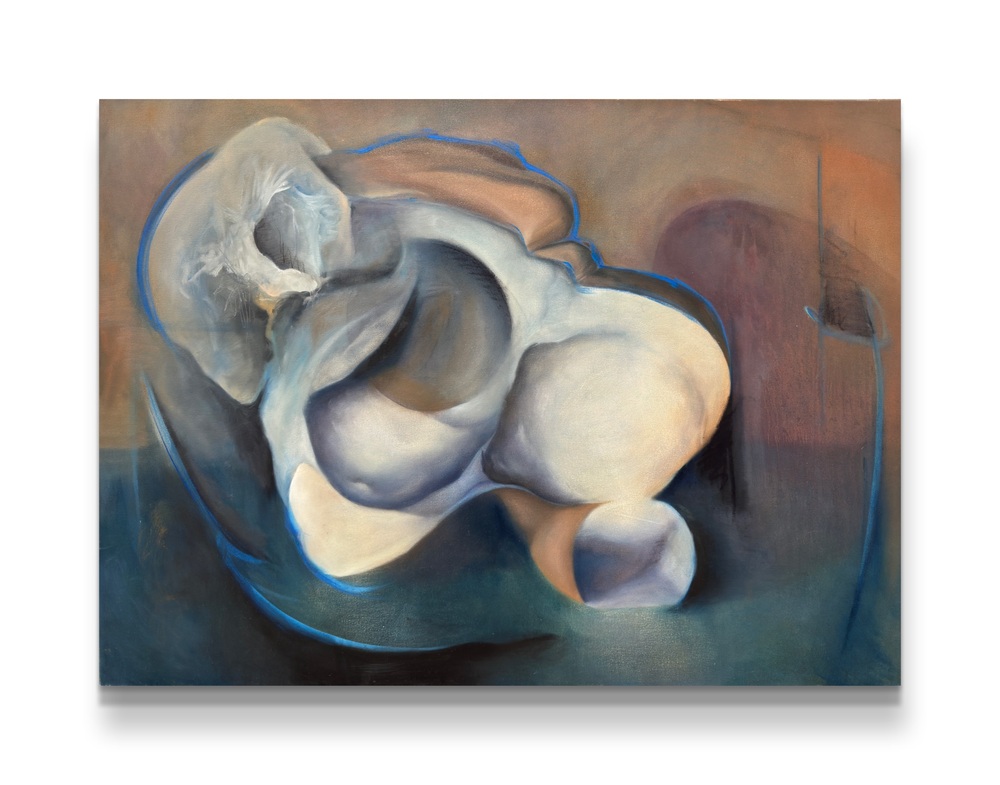
Xuran Guo | Exulansis | 2024
In contrast, The Mute Fish (2025) introduces a darker, more volatile visual language. Here, Guo shifts toward a more expressive, almost violent palette, dominated by deep reds and murky greens. The composition evokes a sense of internal eruption, with gestural marks suggesting both organic growth and destruction. Unlike the quieter ambiguity of Exulansis, this work confronts the viewer with a more immediate emotional intensity. The title itself – The Mute Fish – suggests a paradox: a creature inherently silent, yet charged with expressive potential. This tension reflects the exhibition’s thematic focus on communication that fails or refuses to articulate itself within conventional linguistic systems.
-Oil-Paint-and-Pastel-on-Canvas-2025.jpg)
Xuran Guo | The Mute Fish | 2025
Guo’s practice, informed by her academic trajectory from Pennsylvania State University to the Royal College of Art, demonstrates a sophisticated engagement with both materiality and conceptual inquiry. Her works resist the didactic tendencies often found in contemporary painting, instead embracing ambiguity as a productive space. The absence of explicit narrative allows the viewer to confront the instability of interpretation itself, aligning with the exhibition’s notion of “cracking mirrors” as moments where new meanings can emerge.
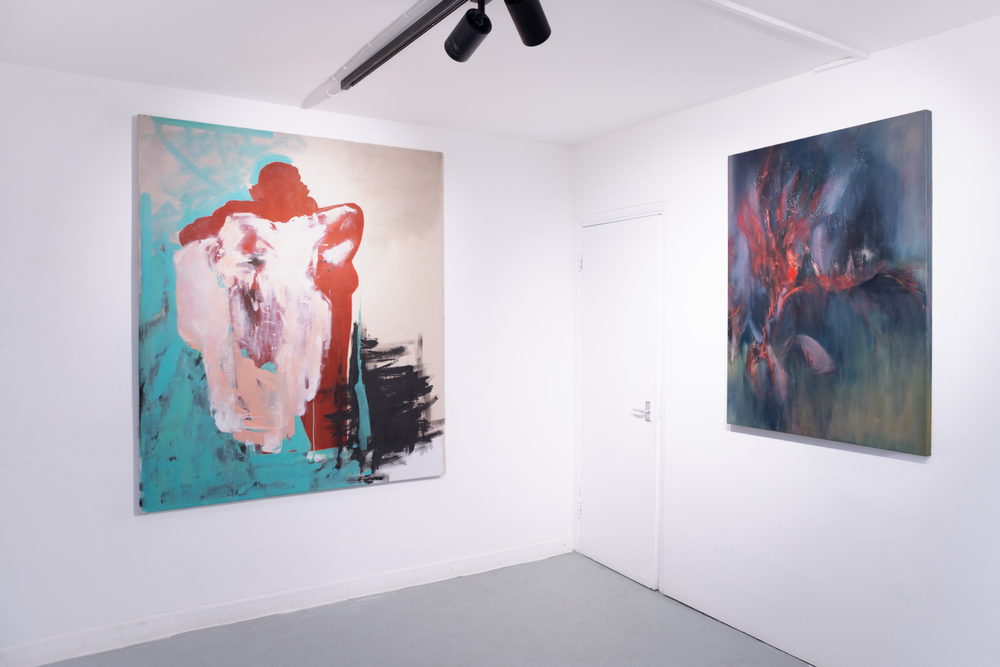
Xuran Guo | The Mute Fish (right)
However, while Guo’s works are conceptually aligned with the exhibition’s framework, there are moments where the visual language risks becoming overly internalized. The reliance on abstraction and ambiguity, though effective, occasionally limits the accessibility of the work, potentially distancing viewers unfamiliar with such visual strategies. Yet, this tension may also be understood as intentional – an extension of the very communication breakdown the exhibition seeks to explore.
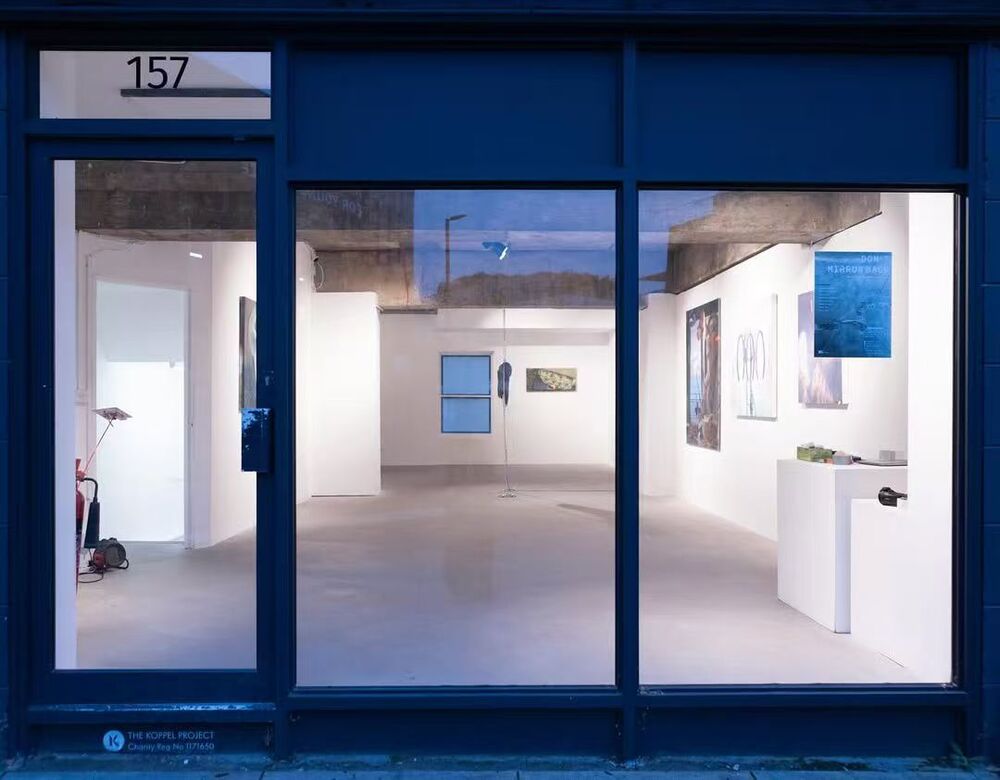
Ultimately, Xuran Guo’s contribution to Don’t Mirror Back is both visually and conceptually cohesive. Through a careful balance of painterly subtlety and material disruption, she constructs a body of work that not only reflects but actively challenges the conditions of contemporary communication. Her practice underscores the necessity of uncertainty, suggesting that meaning is not something to be mirrored back, but something to be continually reimagined.
Leave a Reply
You must be logged in to post a comment.