
Shu Wang
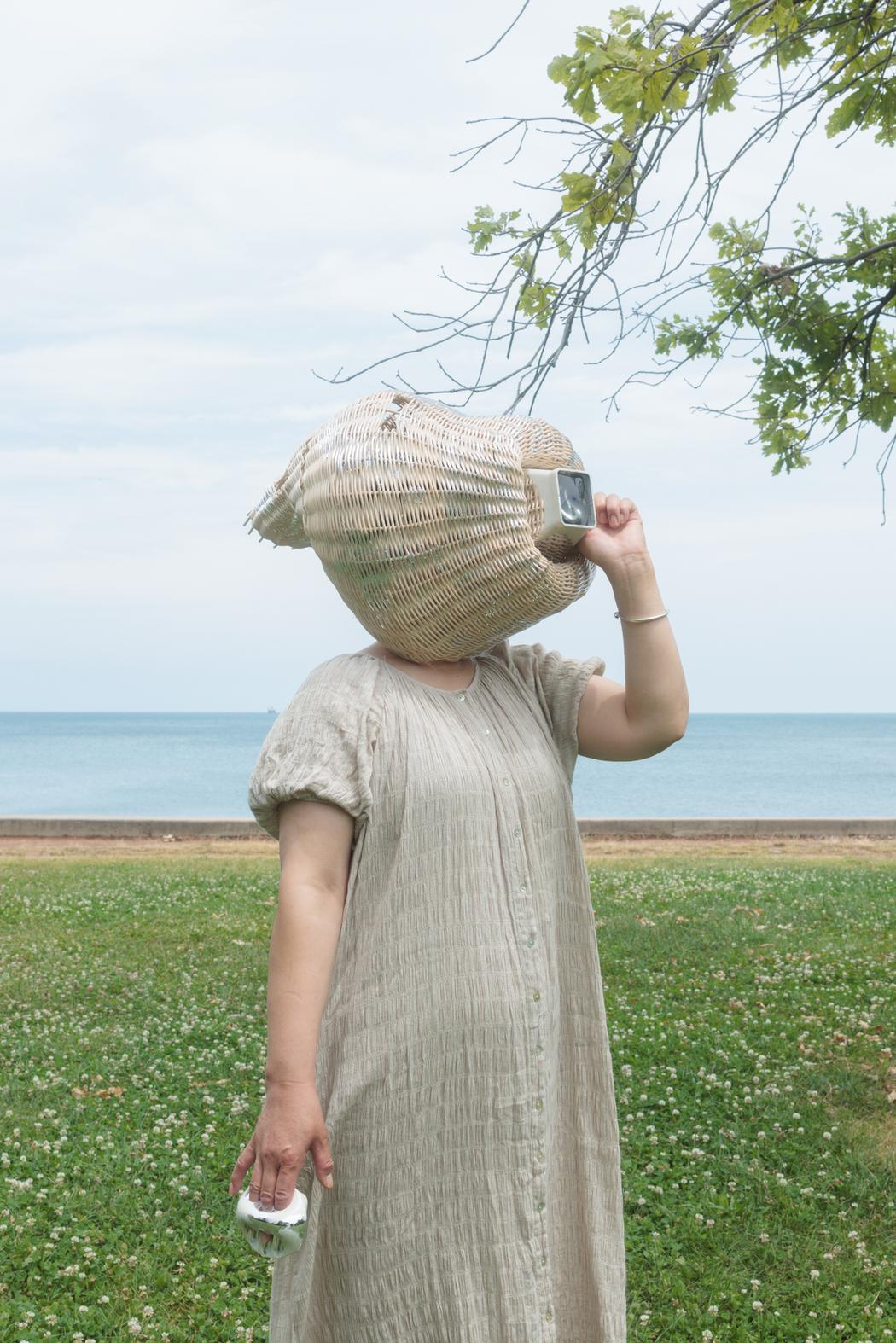 Shu Wang | Hermit | 2024
Your practice moves fluidly between large-scale wearable sculpture and intimate jewelry. How do you decide which scale a particular idea needs, and what changes when a concept shifts scale?
Scale is never predetermined for me. I begin with a situation and a tension I want to make perceptible, and I only decide on scale once I understand how the body needs to meet that tension. When a work requires posture, proximity, or spatial negotiation to shift, it naturally expands; in that expanded form, large-scale wearable sculpture can reorganize the body’s relationship to surrounding space and make social tension physically legible through the way the body moves, occupies distance, and becomes visible. When the idea calls for intimacy rather than immersion, the work contracts—jewelry sits close to the skin and functions almost like a mark or a trace carried through daily life, where the intensity doesn’t lessen so much as it concentrates. The concept stays consistent across these shifts, but the radius of impact changes: sometimes the structure surrounds the body as an environment, and sometimes it stays with the body as a close, continuous presence.
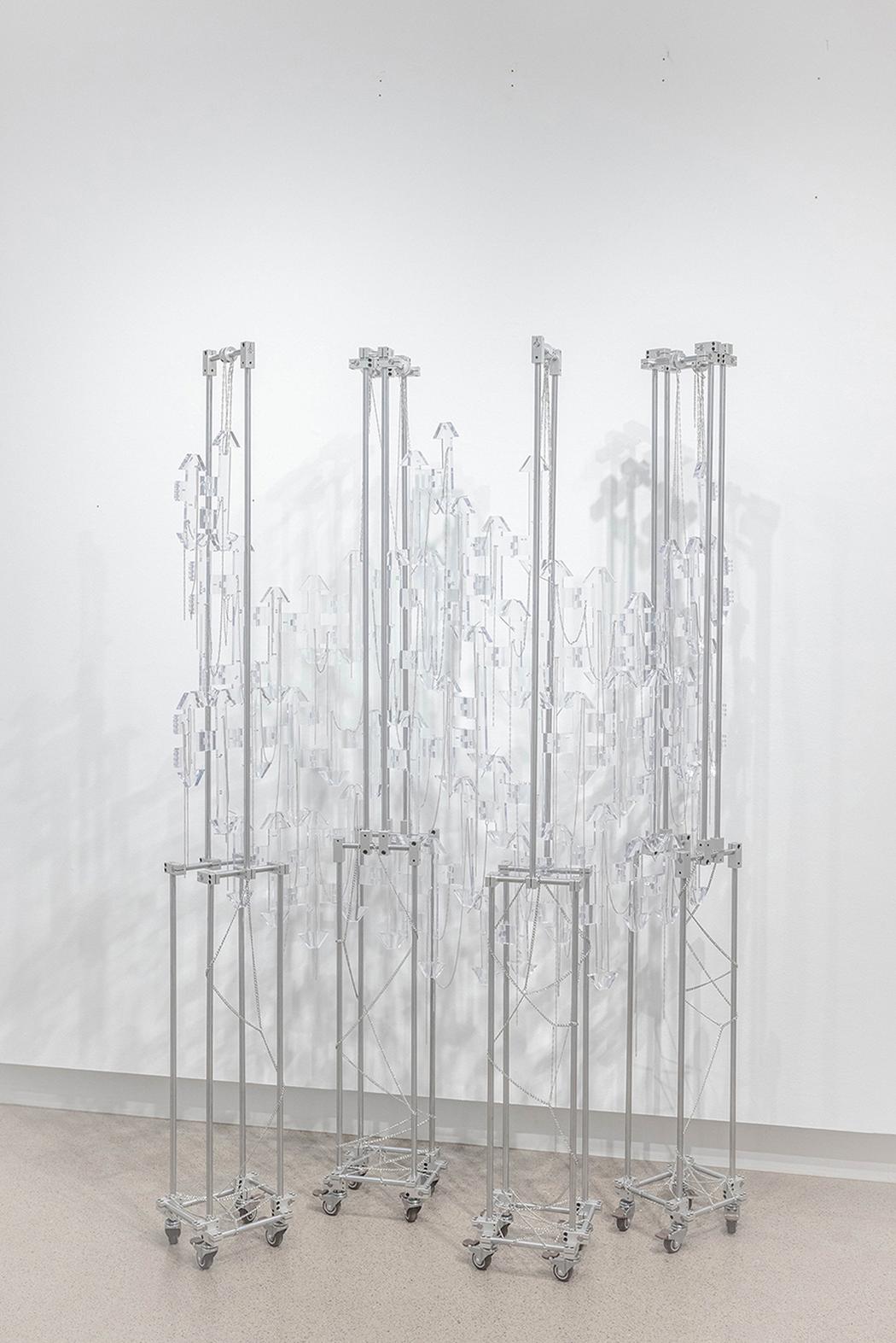 Shu Wang | Cage | 2024
You often describe the body as a site where emotion, structure, and social tension intersect. When you begin a new work, do you start from an emotional state, a bodily sensation, or a material constraint?
Emotion usually arrives before language for me, beginning as a subtle pressure—something unresolved between internal feeling and external expectation. Rather than trying to represent that emotion directly, I pay attention to how it registers physically: it might compress the chest, alter posture, or change distance, and from there I look for a structure capable of holding that condition. Material constraint tends to enter once that structural direction is clear, and at that point material becomes a collaborator rather than a neutral carrier, because it introduces resistance, limitation, and sometimes clarity; the process becomes a calibration between intuition and structure. In this approach, the body is never an abstract idea—it is the site where tension is already occurring, and the work gives that ongoing negotiation form.
Many of your works activate ideas of restriction, weight, and pressure. How important is discomfort—physical or emotional—in your creative process?
Discomfort isn’t the goal for me, but it is often the starting condition. Weight, restriction, and pressure are not metaphors in my work; they are physical conditions placed on the body, and each one changes awareness in a specific way—weight slows movement, restriction reorganizes space, and pressure sharpens attention. Because these conditions interrupt habit, they return attention to presence, and emotional discomfort operates similarly: I’m drawn to the moment before resolution, when something remains unstable, and instead of eliminating that instability I try to structure it. The work doesn’t aim to overwhelm the body; it aims to make the condition undeniable, so that within that recognition, discomfort can shift into clarity.
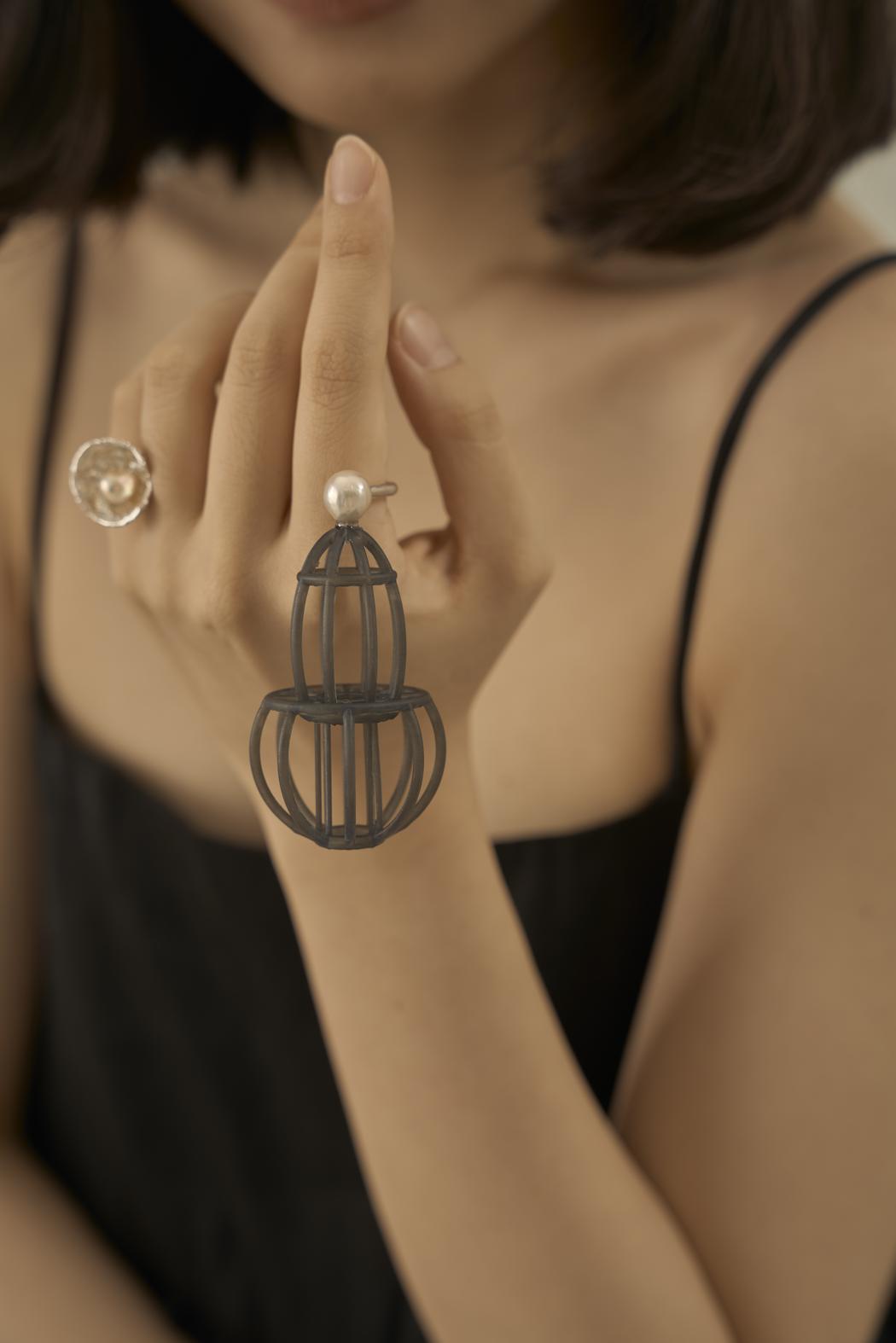 Shu Wang | Extension
Interaction plays a central role in your practice. How do you imagine the relationship between the wearer and the viewer, and what kind of shared perception do you hope to create between them?
I think of interaction as a field rather than a fixed exchange, because the wearer isn’t simply “activating” the object—the object reorganizes the wearer’s posture, gesture, and visibility, while the viewer’s perception shifts in response to how the body negotiates the structure. Shared perception emerges in that triangular relationship: the viewer doesn’t only observe, they adjust, becoming aware of distance, tension, and proximity as part of what they’re seeing. I’m not interested in prescribing interpretation; what I hope to create is a condition in which both wearer and viewer can sense the same structural pressure from different positions, so that perception becomes shared rather than singular.
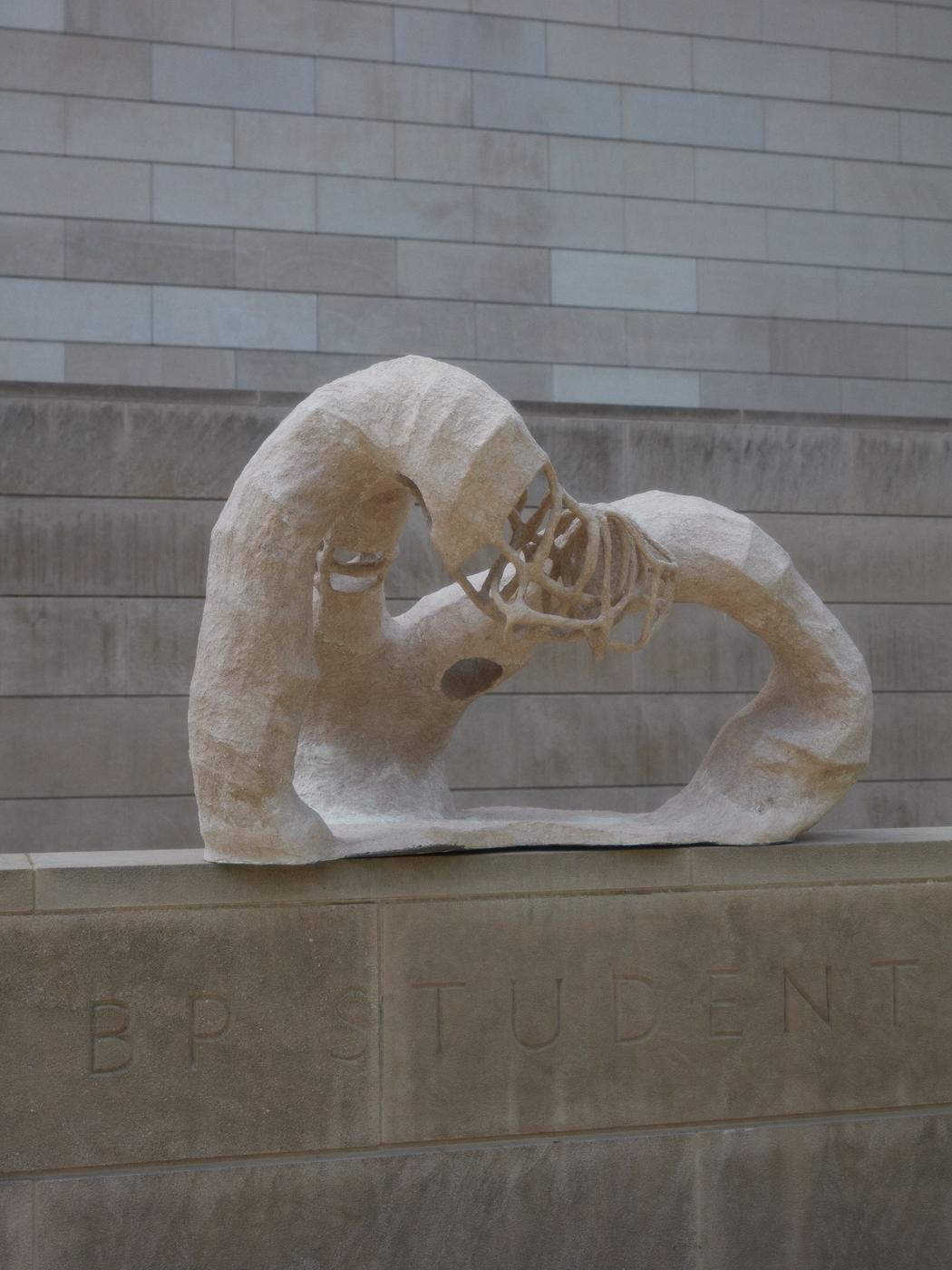 Shu Wang | Humanazation | 2023
Your background in engineering and material science is quite distinct from your later training in jewelry and sculpture. How does this technical foundation influence your approach to form, structure, and experimentation today?
Engineering trained me to think in systems, and that training still shapes how I approach form and structure. I learned how materials behave, how force distributes, and how structure stabilizes, so I rarely treat form as purely aesthetic—every line and junction has its own logic. At the same time, my work in jewelry and sculpture brought embodied inquiry into that logic, because structure is not only mechanical; it is also social and psychological. The technical foundation gives me confidence in construction and removes hesitation: if I can conceive a structure, I can test it, and that makes experimentation precise rather than accidental. For me, structure becomes a framework where vulnerability can exist without collapsing.
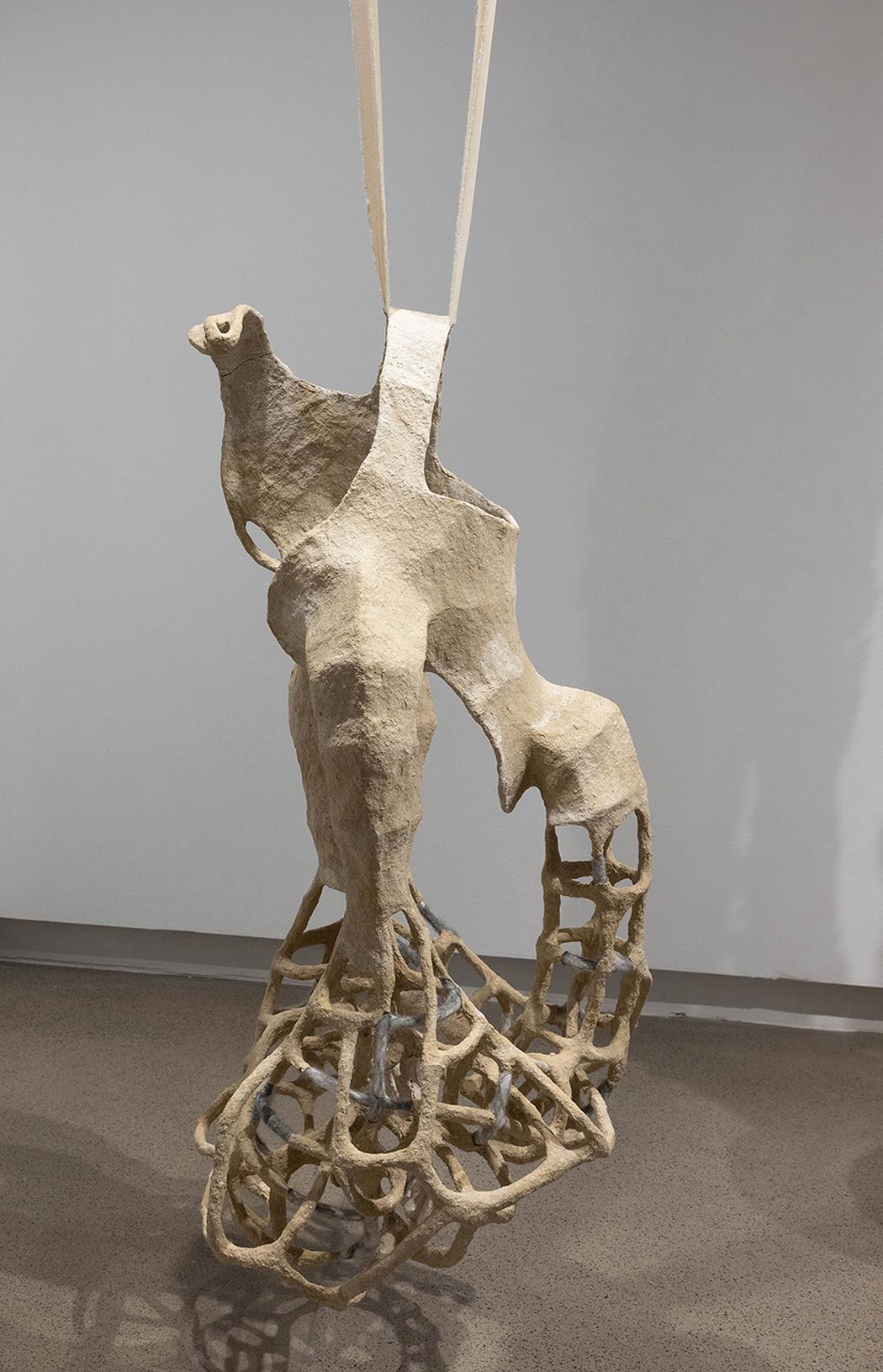 Shu Wang | Humanazation | 2023
As a woman navigating different cultural contexts between China and the United States, how have cultural norms shaped your understanding of the body and visibility?
Living between China and the United States has made me more aware of how context acts on the body. In China, I learned to anticipate atmosphere, where adjustment often happens quietly and preemptively, and the body becomes attuned to expectation; in the United States, navigating independently shifted that perception, and I encountered a different relationship to visibility and self-definition, where adjustment is no longer the only response. These experiences don’t cancel each other out—they coexist as overlapping conditions, and across both contexts, gender adds another layer because the body is often read before it speaks and expectation and scrutiny can accumulate subtly. Rather than narrating these dynamics directly, I translate them into structure: visibility can be redistributed, exposure and protection can coexist, and the body negotiates rather than retreats.
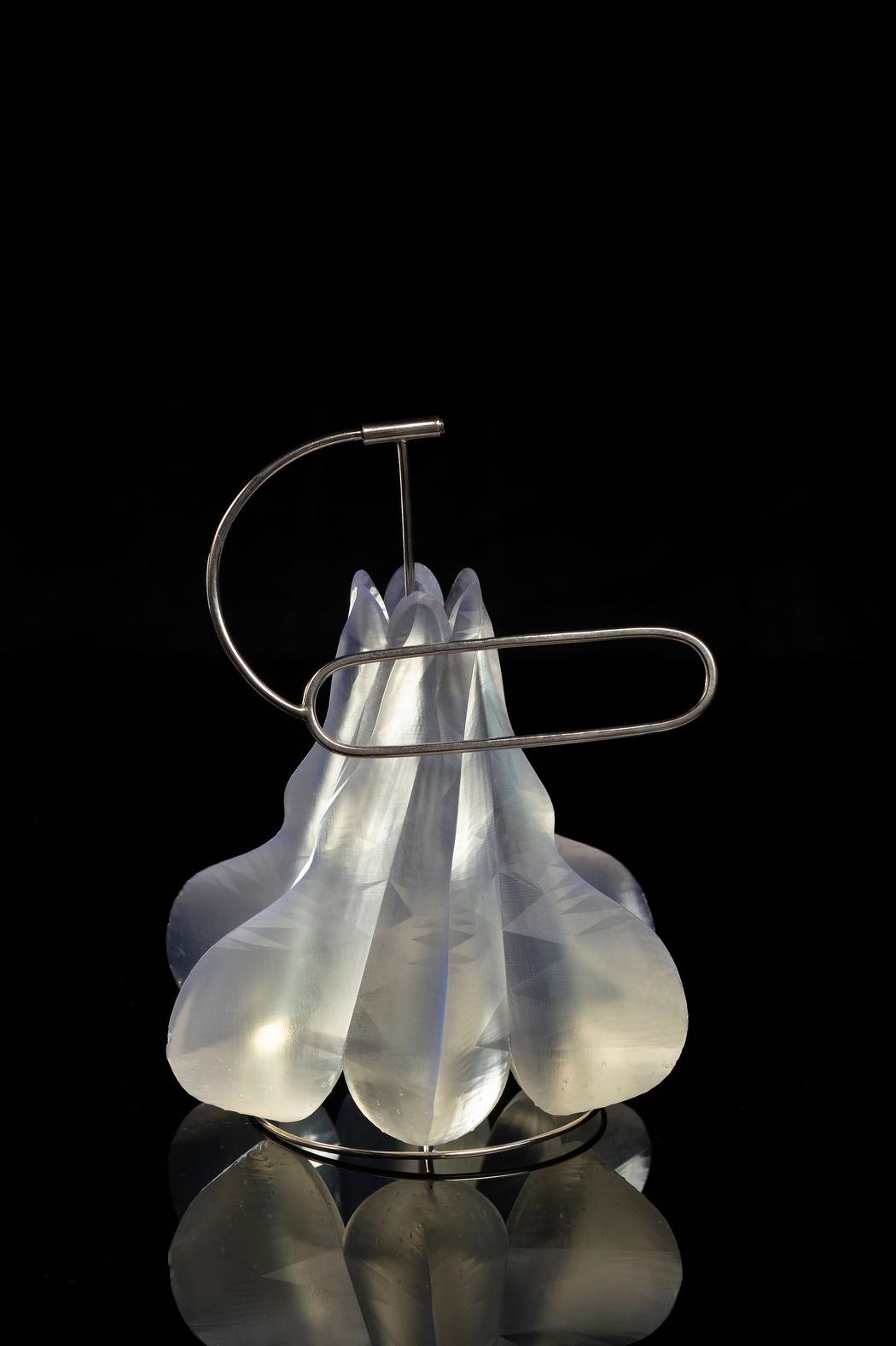 Shu Wang | Project气(QI) RISE StillLife
Wearable sculpture in your work often appears almost architectural. Do you see these pieces as environments for the body rather than objects placed on it?
Yes. I often think of these pieces as environments, because the body doesn’t simply carry the work; it enters it, and the structure can define spatial boundaries, direct movement, and alter perception, creating a temporary condition within which the body operates. In that sense, the work functions architecturally, but I’m not interested in isolating the body inside a structure; the environment remains porous, mediating between internal sensation and external visibility. These pieces are less about ornament than about constructing a situation—the body does not decorate the structure; it negotiates it.
Leave a Reply
You must be logged in to post a comment.