
Clare O’Leary
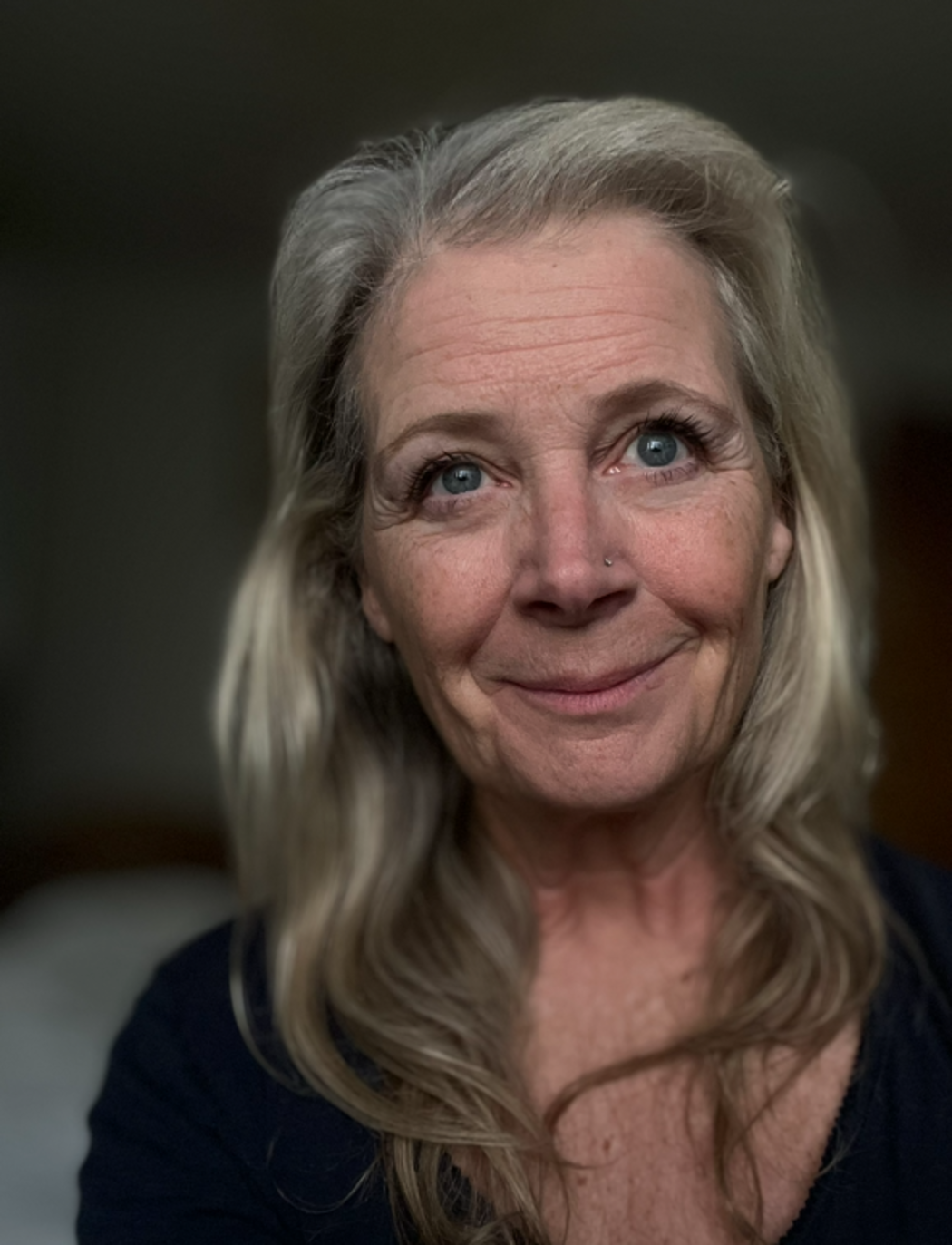
Your work is deeply inspired by nature, water, and landscape. What first draws you to a particular scene or environment before you begin a painting?
When I start a painting and I am looking and working in the environment the most important thing for me is the atmosphere created by the forms and light. I also look at the way different plants interact with each other and patterns made through this. Predominately I try to capture the place and give the viewer a sense of it, almost like they could be there with me.
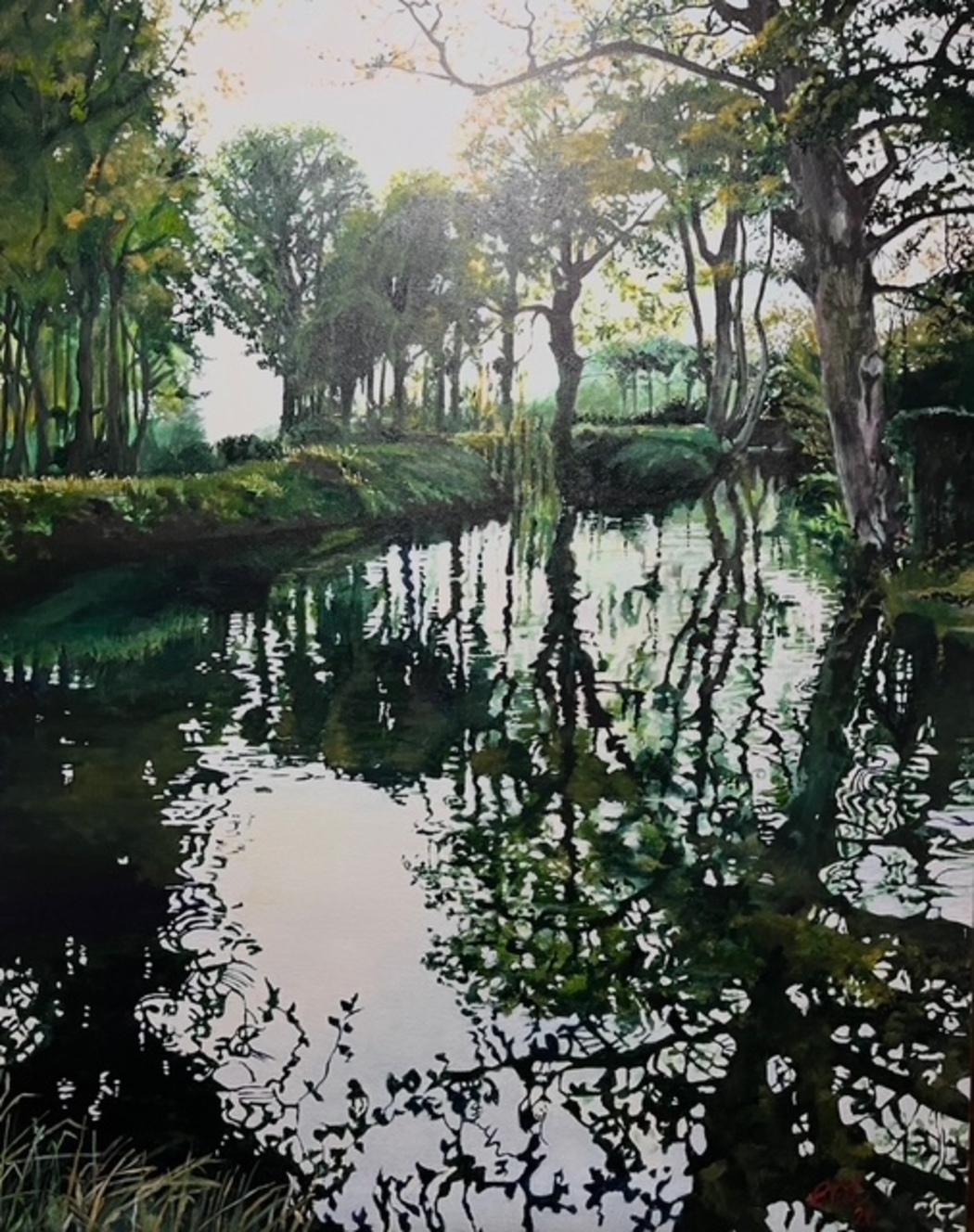
You were born in the Far East and later settled in Suffolk. How have these two very different landscapes shaped your visual language and artistic sensibility?
Living in two very different environments has made me better at looking. The completely diverse forms and colours means I tend to notice things in a more detailed manner. I am still draw to the tropical plants and seek these out in England using places like Kew and Cambridge Botanical gardens to stimulate ideas. The heat and richness of colour in the Far East are something which stay in your mind and appear that much brighter on a cold dark winter day in Suffolk. The landscape of East Anglia is beautiful and my passion for trees is realised in my visits to ancient woodlands sites. There is a magical quality to these places and capturing this is something I am keen to develop further.
Memory plays an important role in your practice. How do childhood memories influence the way you observe and paint nature today?
Childhood memories create a separation from reality, having slightly disjointed images, but predominately it is the feeling of being immersed in nature. I wanted to be part of it, being within their environment and looking up towards the light was something truly magical for me as a child. Making dens in the hills, in trees and sitting amongst the plants as the edge of water looking at reflections and shapes distorted has remained as a memory for me and continues to inspire my practice.
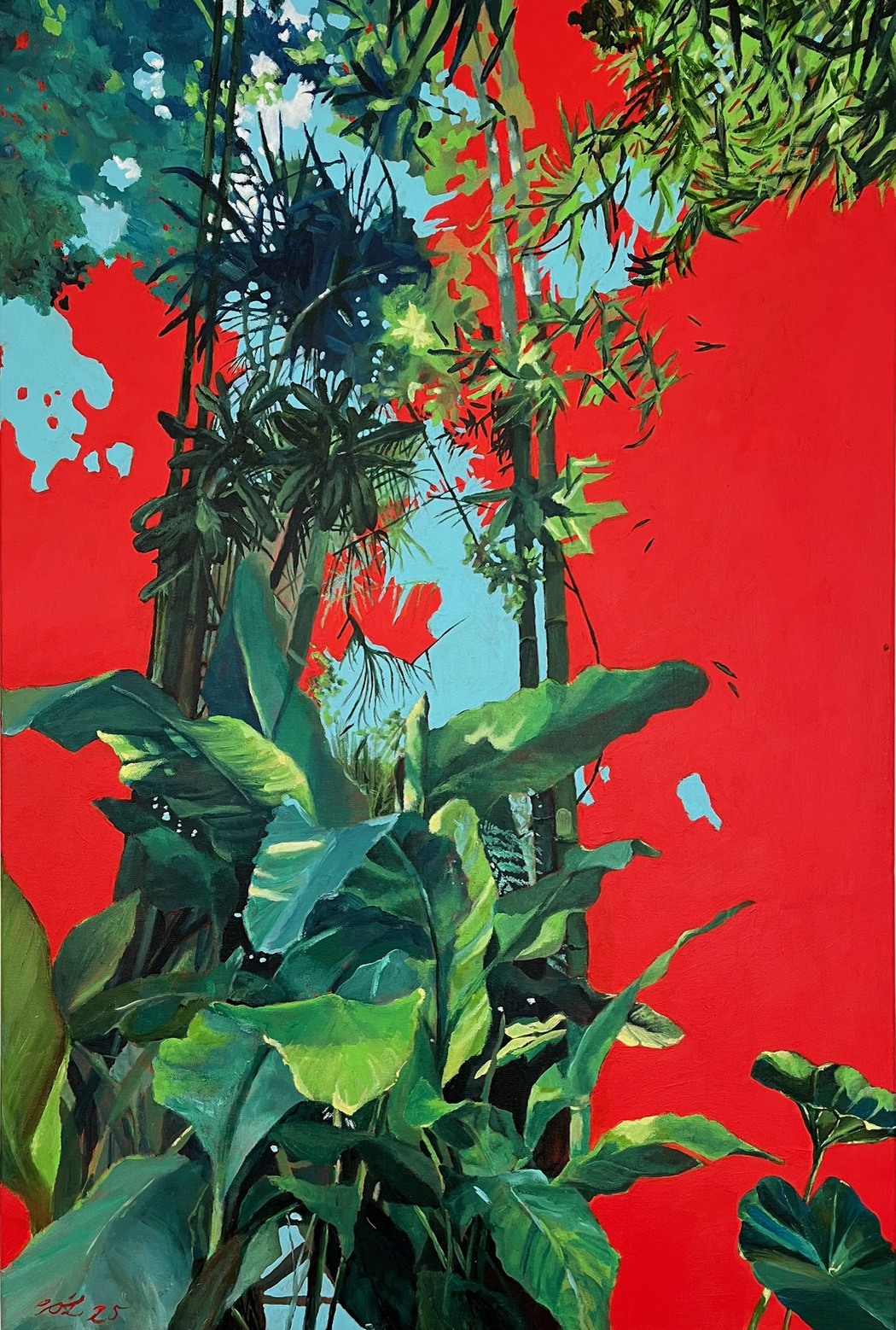
Many of your works focus on reflections, ripples, and layered surfaces. What does water represent for you, both visually and symbolically?
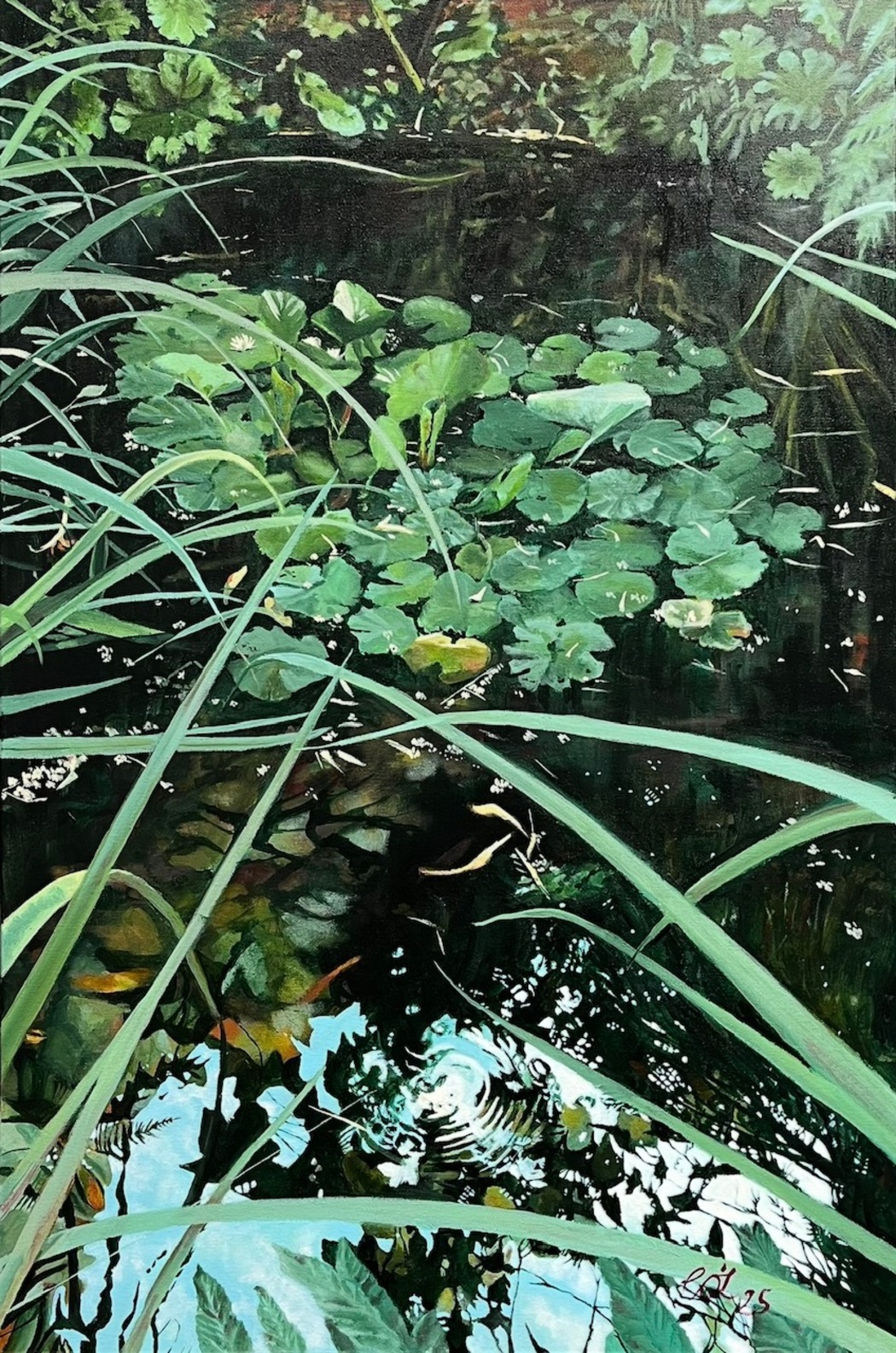
When I think of water I think of us and how we grow in liquid, are born into air but still have water within us. As a woman I feel we are drawn to nature in a particular way. The moon governing the tides which govern our menstrual cycle. So the link ties us to water. It moves and can be still, it can be shallow and have deep depths, it can reflect a truth and distort a truth through ripples and movement. These aspects symbolise for me our own nature and how we can present ourselves or hide ourselves. It is also the beauty of water and its changing nature which I can’t resist and I am constantly drawn back to it. I love the way plants grow at the edges and because of this are reflected on the surfaces become part of the water. The confusion of what is in the water and what is on the surface, what is reality what is imagined. The juxtaposition of these ideas and thoughts just as what is real and what is hidden in ourselves.
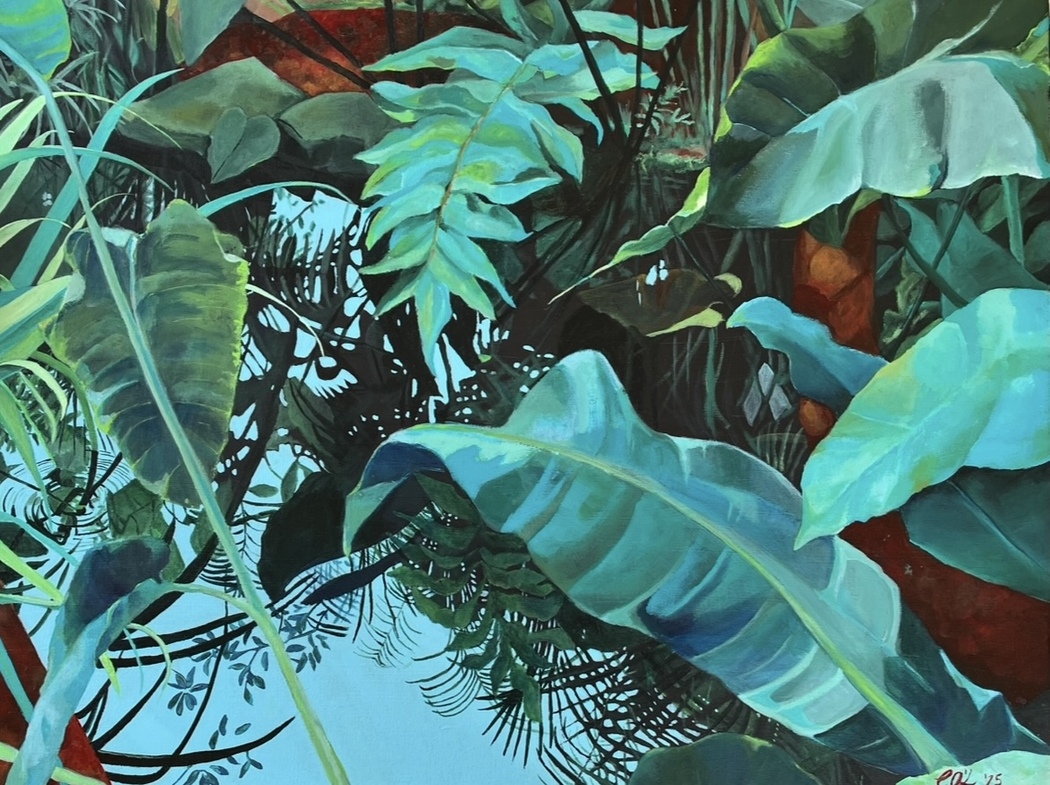
You often speak about the interconnection between plants, water, and sky. How do you translate this idea of interconnectedness into composition and color?
I think the way nature arranges itself to support and connect between species is something we can all learn from. Reading Suzanne Simbard’s work finding the Mother Tree really made me wake up to this idea and try to communicate it through my paintings. The colours flow across the composition which is densely packed with foliage, I link colours by layering them over each other and the harmony is reflected in the way the colours are repeated through the composition. Plant sit close to each other touching and sharing the resources, I leave very little background to create a composition which is brimming with colour and forms.
Living and working in Suffolk, how does your immediate environment continue to influence your current body of work?
I am very privileged to live a beautiful part of the world and count my blessings every day. The opportunity to be in nature and sit under the wide skies watching the colours play across is something I am grateful for. I am reminded of the great East Anglian artists who have come before me and feel a yearning to continue their investigation. I seek out places where I feel inspired because of the colours and light and I am currently working on images with trees as the main focus, these are my true love and I always feel my spirit lift when I am amongst them.
Your work is held in private collections worldwide. How does it feel to know that your personal reflections on nature resonate across different cultures?
It is always an honour when people collect your work. It makes you feel you are not working in isolation. A connection is formed with the person or people and I feel a little part of me now lives with them. It is a joy they appreciate the work and have made their own connection with it. It might be they see it in a very different way to me but that is ok as they have their own journey and thoughts around it. As long as they feel something that is the most important thing for me.
Leave a Reply
You must be logged in to post a comment.