
Michel Guy
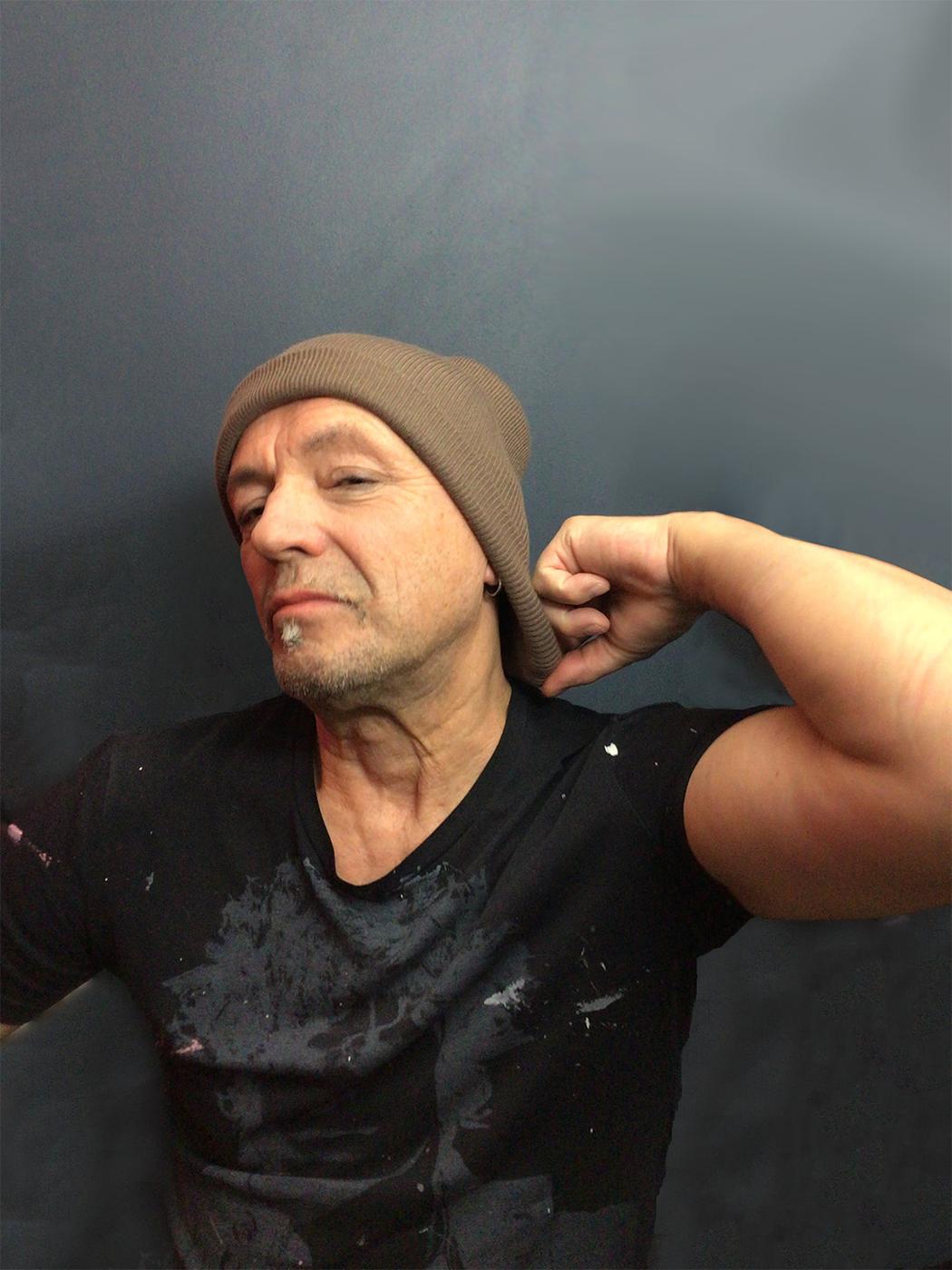
Your figures appear to exist between emergence and dissolution. How do you know when a painting has reached its “truth” and is finished?
For me, a painting is finished when it no longer demands what is essential to its existence. There comes a moment when a presence asserts itself, when the body acquires its own existence. As in an encounter, I allow this presence to appear and come toward me. Through tension, a gaze, or a posture, it affirms what it is moving toward, what it is in the process of becoming.
Throughout the process, an invisible dialogue takes place between what appears and myself: a silent exchange around what must be, what must emerge, and what must take form.
If I continue or insist beyond this point, I risk losing what is essential. A moment of disorientation is sometimes enough for the presence to dissolve, leaving behind an inert material, deprived of necessity and meaning — no longer a painting, but a surface deserted of all life.
You describe the human figure not as portrait but as a site of resistance and tension. What is this figure resisting today – socially, psychologically, or materially?
For me, the body and the face are sensitive territories, carrying the traces of life: lived experiences, deeply buried emotions, and tensions that are sometimes hidden. I do not seek resemblance or the precision of features, but what they contain, what they retain, what they carry within.
This presence resists the obligation to be immediately legible, identifiable, or acceptable. Psychologically, it opposes simplified narratives of identity and refuses to be reduced to a single interpretation. It also exists in direct confrontation with the painting itself, faced with an invasive materiality that constantly threatens to erase it, dissolve it, or cause it to disappear.
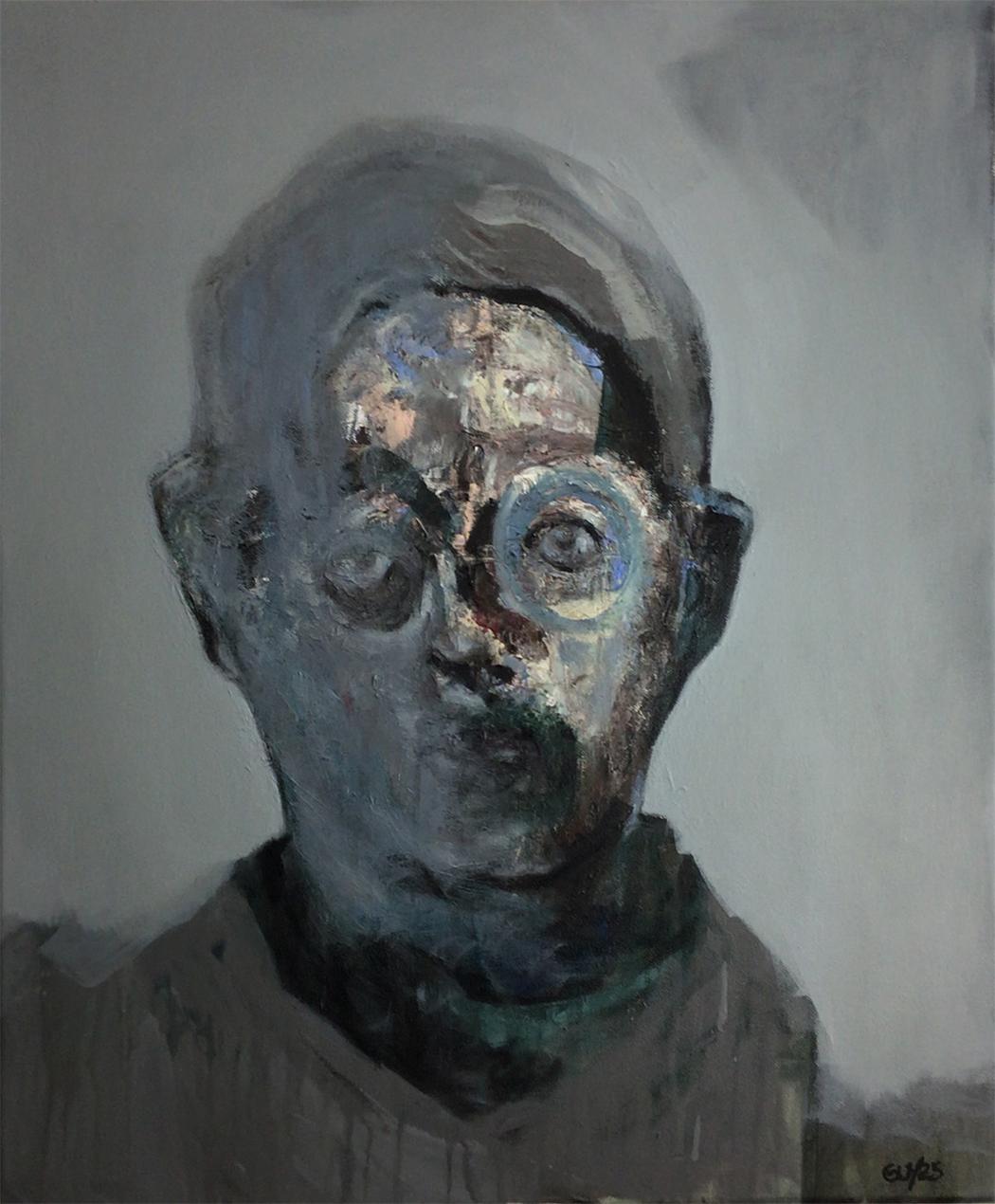
Materiality plays a central role in your practice. Can you describe how acts of scraping, erasure, and accumulation function emotionally during the painting process?
These gestures are directly linked to the emotional state of the moment.
The canvas becomes a site of confrontation, sometimes a true battleground, where I accept losing my bearings, no longer resisting, and allowing myself to be guided by what is seeking to appear.
Accumulation often manifests as a need to cover, to delay appearance, to maintain tension without resolving it too quickly. It allows the presence to be kept at a distance, not delivered immediately.
Scraping and erasure intervene at other moments, as sharper gestures. They imply a decision: to remove, to destroy, to relinquish what seemed to be working in order to allow something else to emerge.
These gestures require accepting loss, uncertainty, and sometimes the complete disappearance of what was in the process of being built.
Emotionally, the process constantly oscillates between attachment and detachment.
Painting then becomes a space where one accepts that something may transform, shift, or disappear, in order to allow what truly needs to take place to appear.
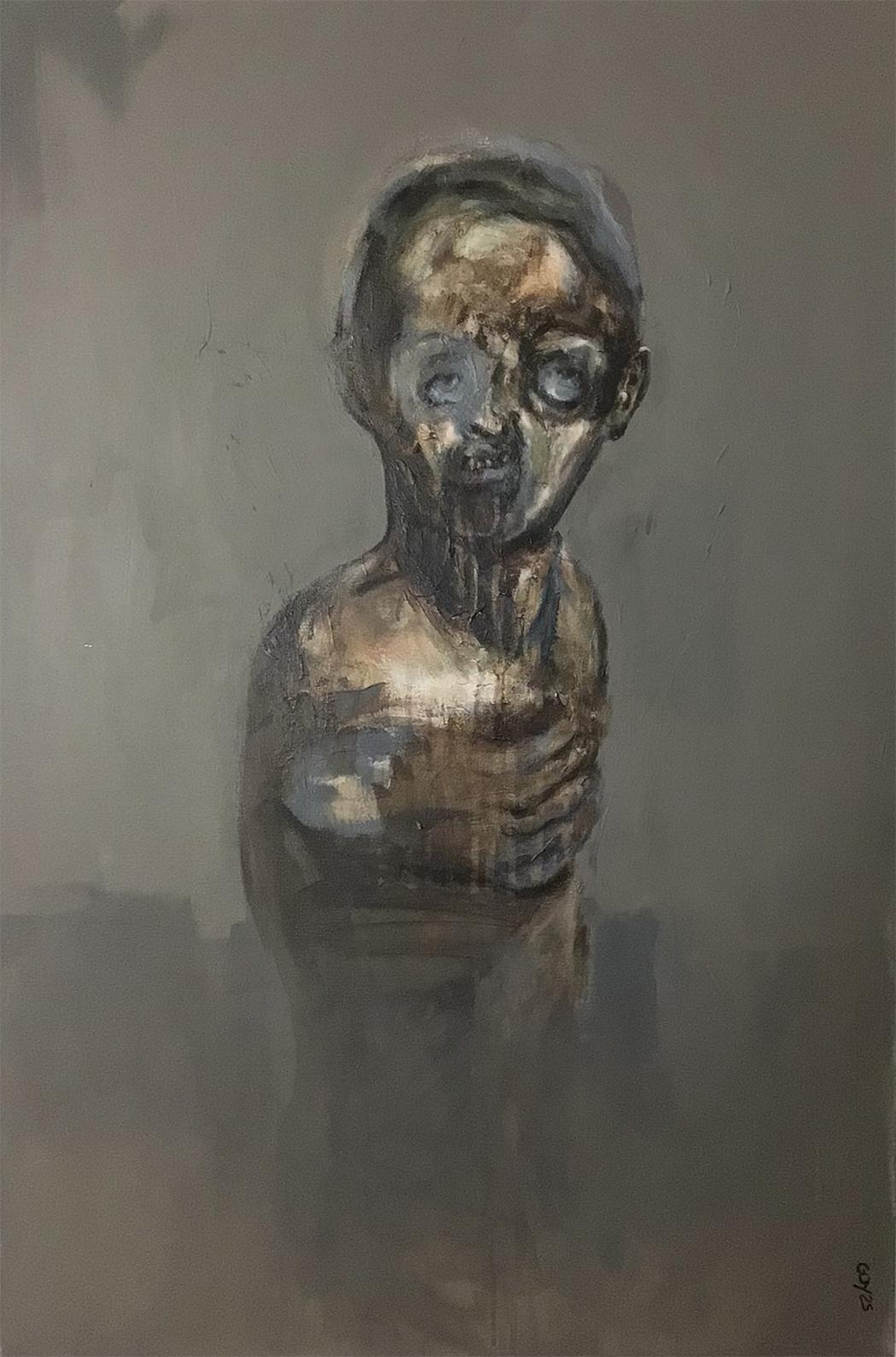 Michel Guy | Le Corps, Son Refuge | 2025
Your works often balance muted, tender backgrounds with aggressive, almost violent facial distortion. What kind of dialogue are you creating between these two forces?
The softness of the background — or what may appear as a form of neutrality or minimal space — is not meant to soothe, nor to occupy an undefined area. On the contrary, it serves to intensify the disturbance and to expose the vulnerability of what appears.
Conversely, the violence of the features brings the presence of this environment into focus, sometimes its coldness, sometimes its indifference. The face then seems to exist in relation to a space that does not protect it, does not support it, but surrounds it and reflects it silently.
This dialogue creates a tension between what appears harmless through the absence of excess and what is deeply disturbed.
It makes visible an inner contradiction, an uncomfortable coexistence that does not seek resolution.
Having worked extensively in film as a set dresser and decorator, how has your understanding of constructed space influenced your approach to pictorial composition?
Since childhood, cinema has always held an important place in my life, alongside painting. For a long time, cinema offered me a space of escape, a possibility of withdrawal from the real world. Painting, by contrast, has always required a more intense form of presence, reflection, and critical attention.
Although a dimension of staging exists in my pictorial work, it does not operate according to a narrative construction in the cinematic sense. In painting, the subject asserts itself. It is not a matter of directing or organizing a scene, but of allowing what must come into being to appear.
My experience in cinema has nonetheless taught me that every element within a space matters. In painting, this awareness translates into particular attention given to structure, to voids, and to zones of silence. Even when the painted body appears isolated, it is never out of context: it is always situated within a considered, constructed space, almost scenographic.
I consider the pictorial surface as a precise site, where a presence must be able to exist, hold, and breathe.
Many of your faces feel wounded, scarred, or fragmented. Do you see these marks as traces of trauma, survival, or transformation?
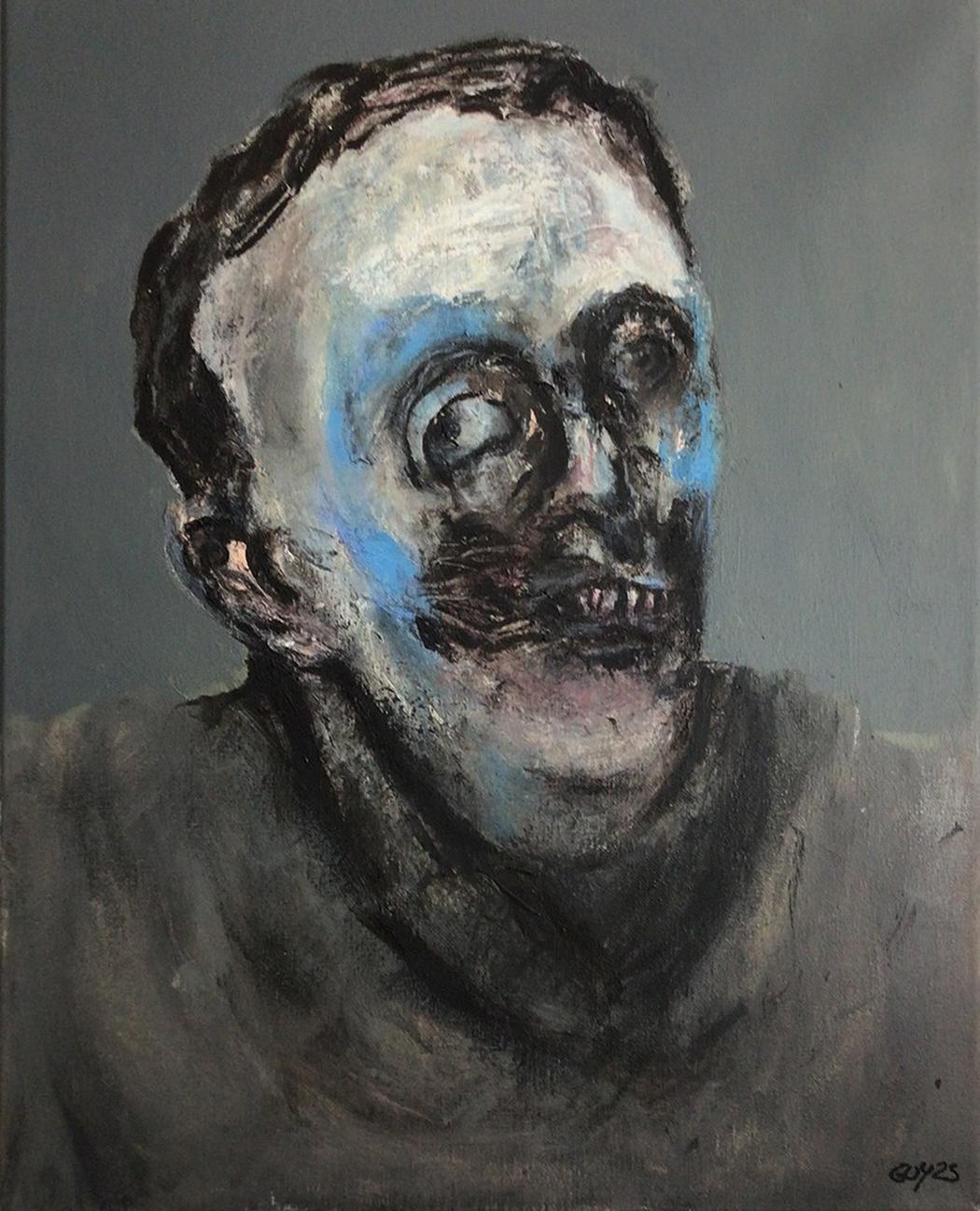
The faces do not seek to illustrate an event nor to produce an effect. They function as surfaces of manifestation, as sites where inner states are deposited without being named or explained. Painting becomes the space where something intimate—often unspoken, ignored, or marginalized—finds a form of existence without passing through narrative.
Marks, alterations, and deformations do not stem from an expressive intention in the psychological sense, but from a pictorial process. They appear as visible traces of a state in transformation, inscribed within the material. The face then acts as a sensitive surface, traversed by tensions, shifts, and resistances.
It is not a matter of producing an effect or designating a specific event. What appears in the painting is not a rupture, but a state in transformation. The painted presence does not disappear; it is altered within the material, sustained through other forms, at the very core of the pictorial process.
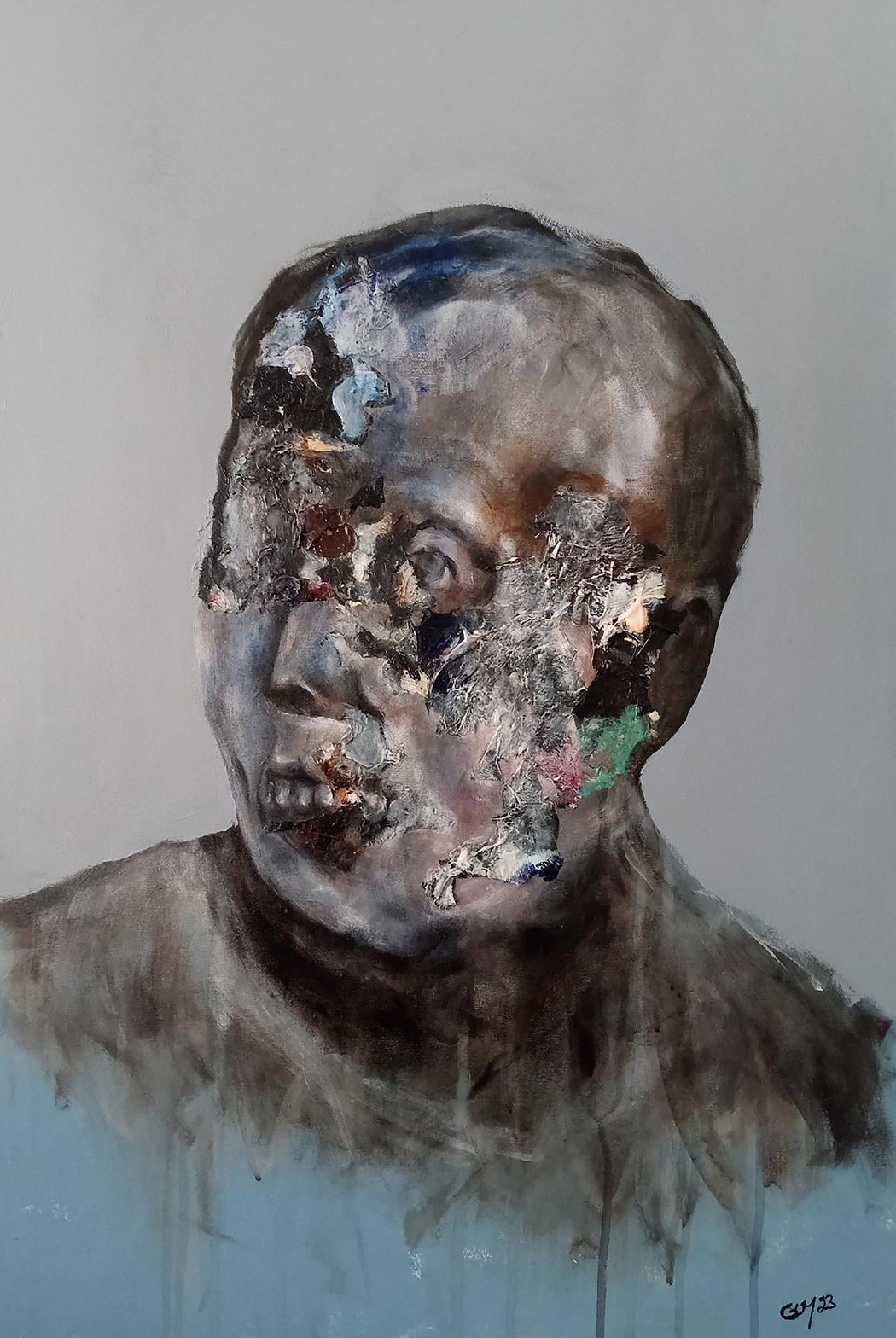 Michel GUY | Fragmented Portrait | 2023
What do you hope remains with the viewer after encountering your work – an image, a feeling, or a question?
Above all, I hope that what remains is a question, a reflection. An image can be forgotten and an emotion can fade, but a question continues to work within the one who carries it.
I hope that the painting leaves a lasting trace, not in the form of a message or an explanation, but as a presence that persists beyond the act of looking. If the viewer leaves the work with something unresolved—an indeterminate sensation that does not fully close—then the encounter has taken place.
What matters to me is not the immediate effect, but what endures over time.
Leave a Reply
You must be logged in to post a comment.