
Evaldo Bragança

Your work revisits classical myths not as historical references, but as living structures. When did you first realize that mythology could function as a contemporary language for you?
As long as I can remember, I have been fascinated by mythology. At school, especially in history classes, this fascination turned into genuine curiosity. The more I investigated, the more this interest became a true passion — not only for the myths themselves, but also for Greek philosophers and the figures of the “gods.”
There was a specific moment in high school that proved decisive: I was challenged to draw a comic strip based on the myth of Ulysses on the island of the Cyclopes, interestingly enough also in a classroom setting. That experience stayed with me. Looking back now, I realize that this was when mythology stopped being mere content and became a language. Thank you for bringing that memory back.
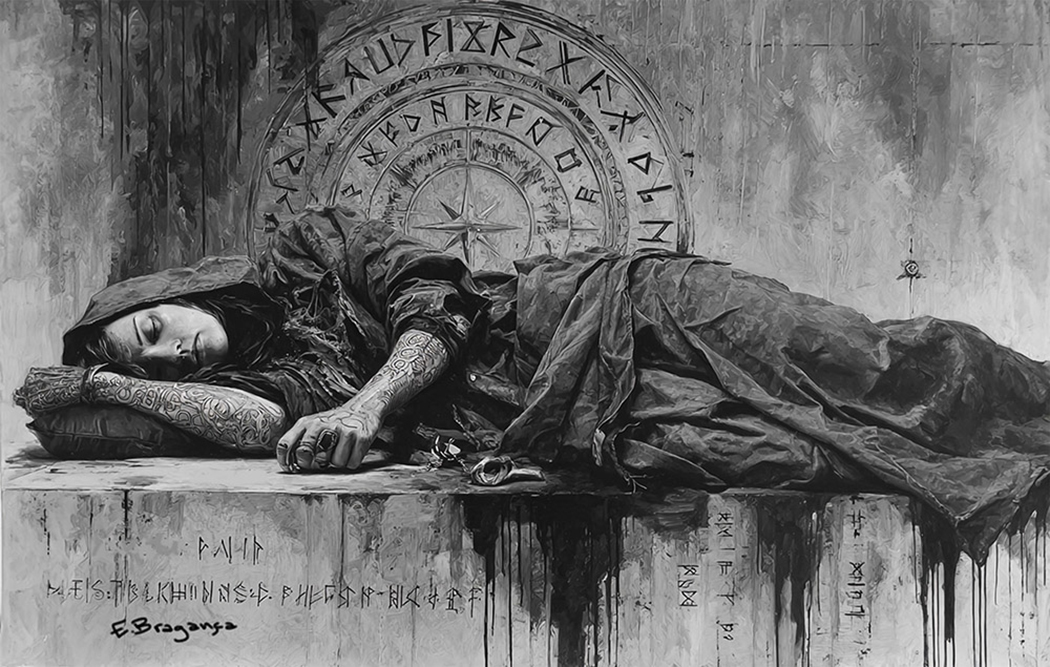 Evaldo Bragança | Contemporary Bacchae
In The Contemporary Bacchantes , the body appears as a space of ritual, excess, and transformation. What does the body allow you to express that other forms or symbols cannot?
For me, the body is what connects the divine to matter. It is the most noble thing in the world. By representing divine entities through ordinary people, I treat the human as sacred. I see the body as what shelters us, what makes us feel alive and allows us to recognize ourselves in one another. I treat humans as divinities, and the body expresses that — it expresses the ultimate sacrifice. A sacrifice that no other symbolic form can carry in the same way.
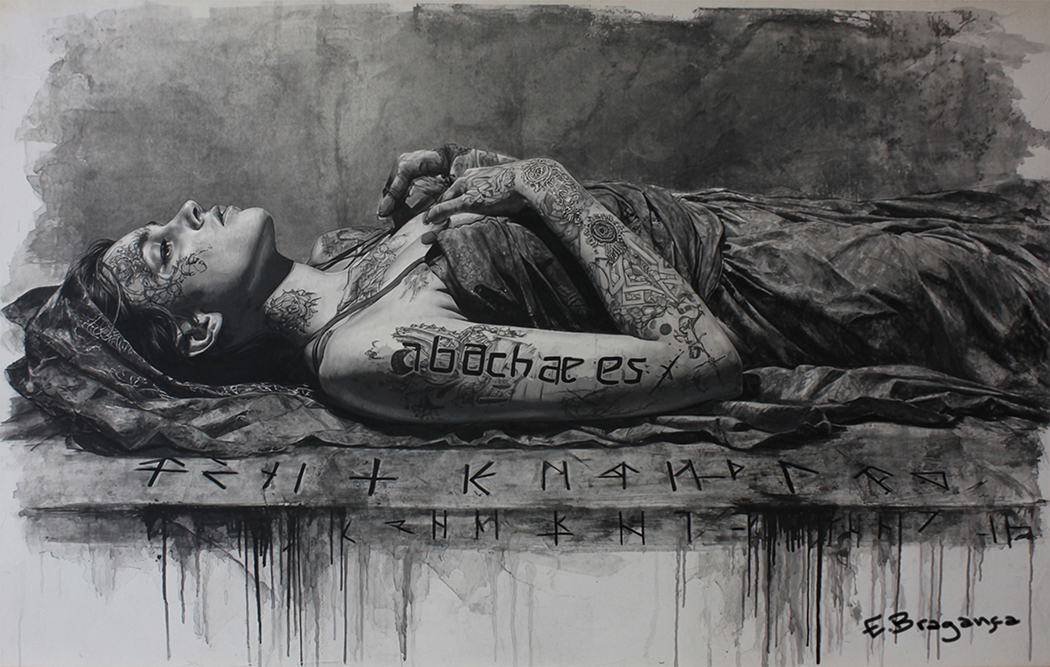 Evaldo Bragança | Contemporary Bacchae
The Bacchants in your work seem suspended between trance and consciousness, control and surrender. How do you approach this tension during the creative process?
This tension appears strongly in the imperfections of my work. I don’t take everything to completion. I leave parts unfinished — sometimes out of exhaustion, sometimes entirely by intention.
For me, surrender lies in not worrying excessively about the final result and allowing the work and the material to respond to me. At the same time, I think a lot about the sacred feminine as a form of sublime love, connected to enchantment, fascination, and the ineffable. It’s like seduction: two steps forward, one step back.
You combine painting, sculpture, and digital images within the same conceptual universe. How do you decide which medium best suits a specific idea or emotional state?
Everything begins in the mind. Before anything else, I paint with thought. Today, I am able to build, destroy, and reconstruct images internally before executing them — something that took many years of practice.
My studio has always functioned as a laboratory. After thinking, I experiment. I observe how the material responds, how the medium reacts to the idea. If it works, I continue. If not, I redo it in a different way. The process is always a dialogue.
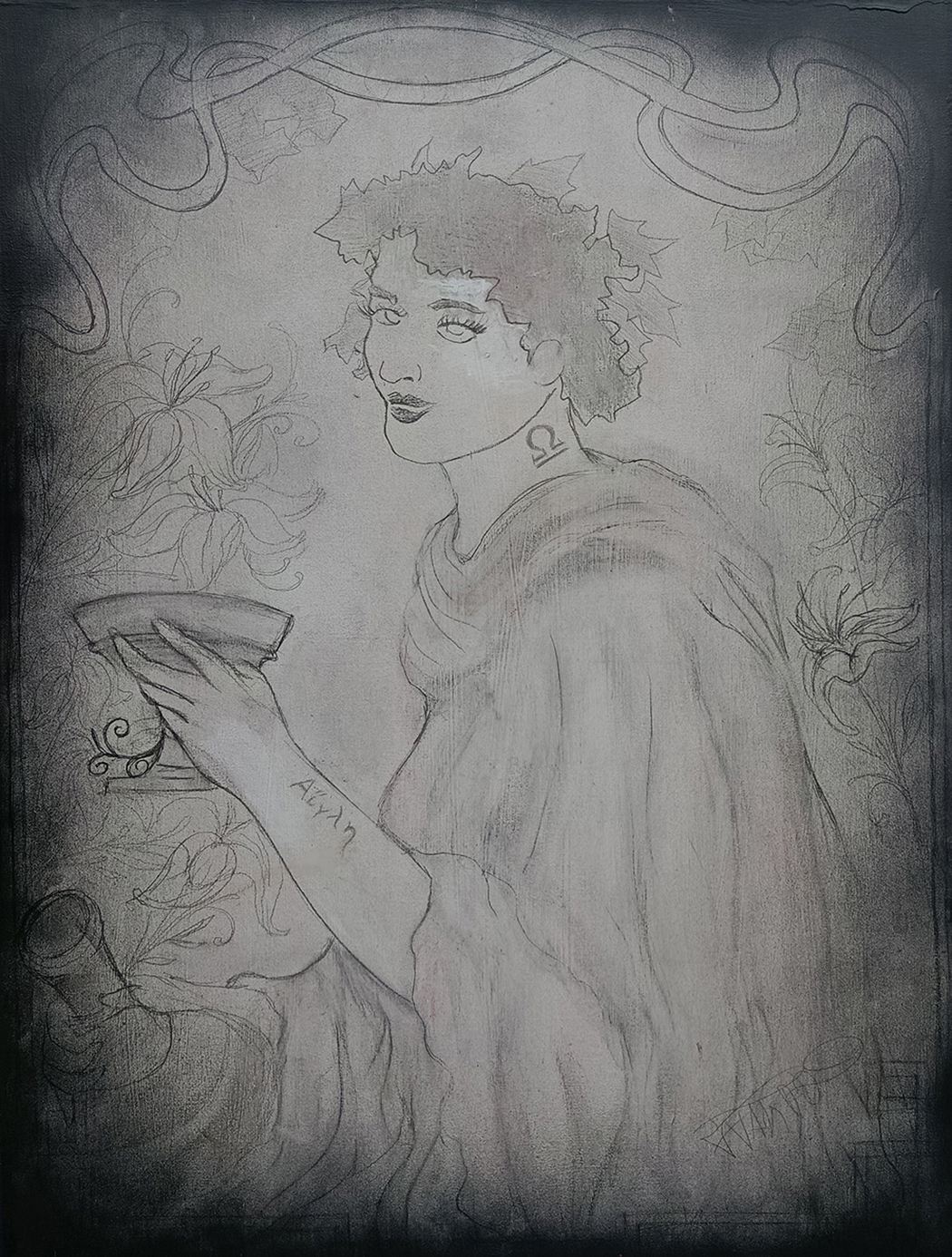 Evaldo Bragança | Contemporary Bacchae
Your works often evoke rituals without depicting a specific ceremony. What is the importance of ambiguity for you as an artistic tool?
I find this question very interesting. The absence of a specific ritual creates space for the viewer to imagine what that ritual might be.
Ambiguity allows for multiple interpretations. I invite people to imagine what happened there, to mentally complete the scene. It is a provocation to think creatively, without everything being handed over fully resolved.
How does your Brazilian cultural background influence your relationship with myth, the body, and collective experience, if at all?
My cultural and religious background directly permeates my work. I was raised Catholic, I have faith, but I have always kept a certain distance from the church — largely out of rebellion. Even so, I often walk through churches, not for worship or rules, but for the art, the architecture, and the symbolic energy these spaces carry.
This displacement led me to seek the sacred elsewhere: in Umbanda terreiros, at rock concerts, in bodies immersed in collective trance. In Brazil, where syncretism pulses as a living force, I learned to merge narratives, beliefs, and symbols. From this emerges a symbolic field of my own — hybrid, unstable, and provocative — where the sacred and the profane coexist.
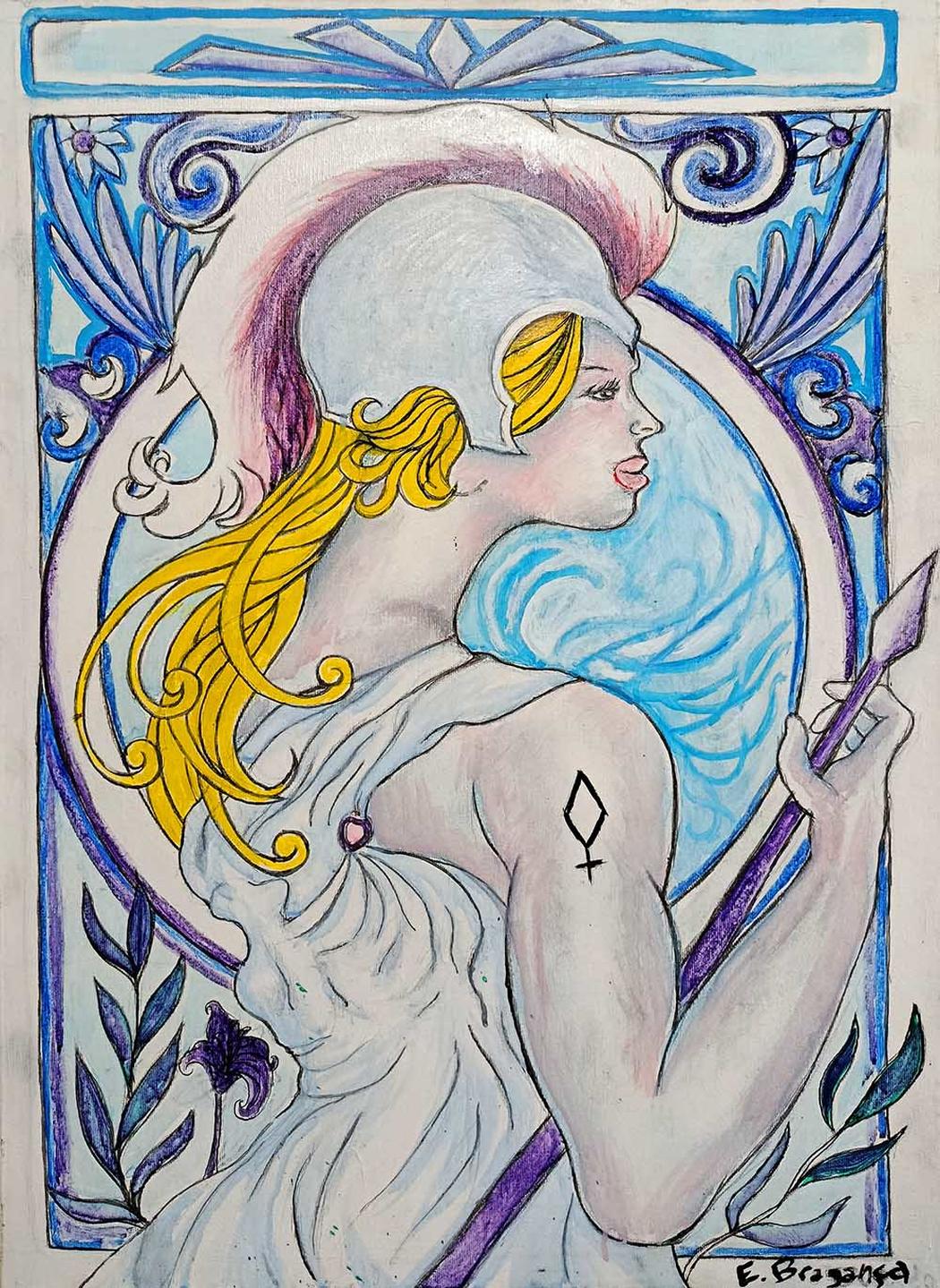 Evaldo Bragança | Contemporary Bacchae
What do you hope remains with the viewer after encountering The Contemporary Bacchantes : a question, a sensation, or a form of recognition?
I hope the viewer leaves with a sense of ecstasy and excitement. That they feel more motivated to experience worldly pleasures without guilt.
The Bacchantes reveals that people are sinners — and that perhaps there is nothing inherently wrong with that. We live in Dionysian times. The work awakens the desire to sin, always with the awareness that a greater law exists. It is possible to sin, as long as it is done with measure and consciousness.
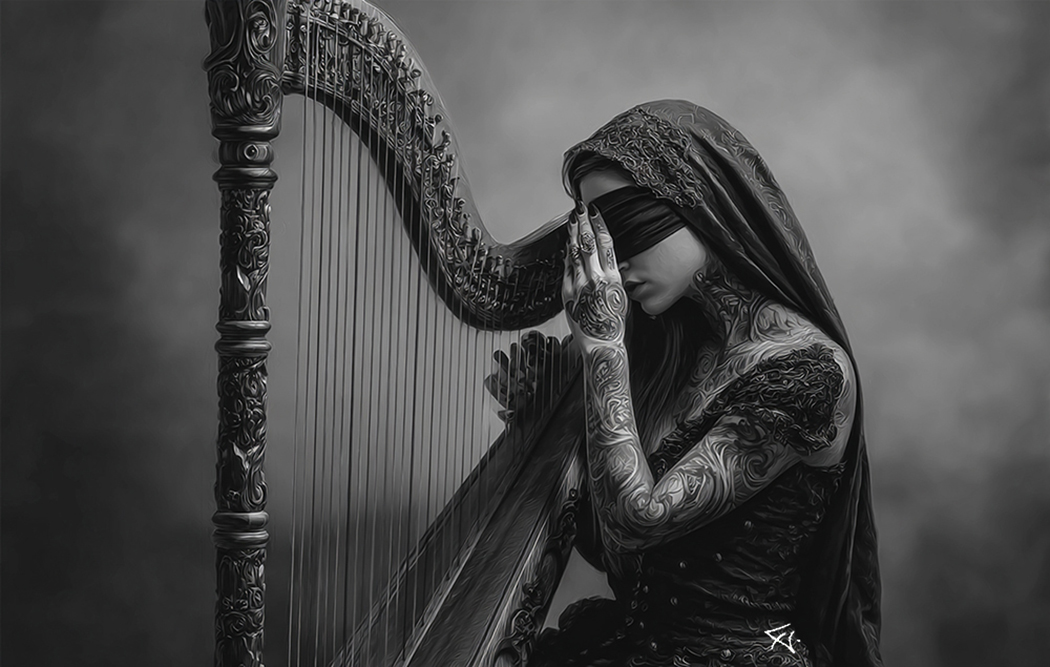 Evaldo Bragança | Contemporary Bacchae
Leave a Reply
You must be logged in to post a comment.