
Flavien Couche
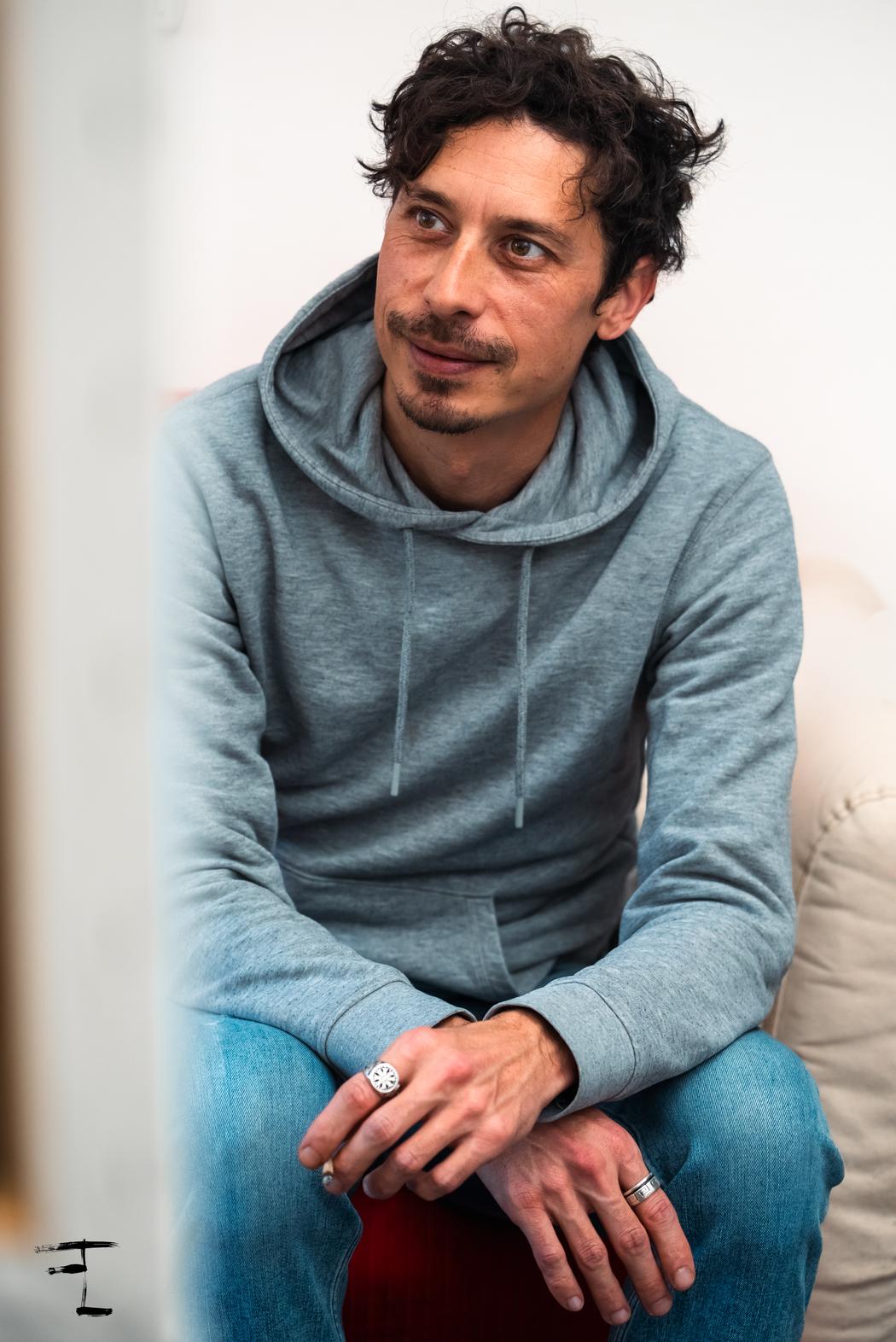
You discovered drawing and comics at a very young age. How did visual storytelling shape the way you compose your paintings today?
I began by telling stories even before I tried to create ‘finished’ images. Drawing and comic strips taught me very early on to think of images as sequences, spaces where something is happening, even in silence.
Even today, my paintings are constructed like fragments of a narrative: there are tensions, ellipses, areas of mystery. Even when there is no explicit narrative, I seek to create a flow of the gaze, an inner path for the viewer. The canvas becomes a place of projection, almost a mental stage.
You describe the Fauvist exhibition at the Grand Palais as a revelation. What did color suddenly allow you to express that line or form alone could not?
This exhibition was a shock and a revelation. I understood that colour could be a language in itself, autonomous, almost instinctive. Where lines structure and reassure, colour displaces, overflows, and sometimes even contradicts form. Also, the fact that I use only a narrow palette of colours allows for narrative linearity, which in a way imposes the appropriation of the work on the viewer.
It has also allowed me to express more complex, more ambiguous states: contradictory emotions, impulses, ruptures. Colour does not illustrate, it reveals. It acts directly on the body and memory, without passing through the filter of reasoning.
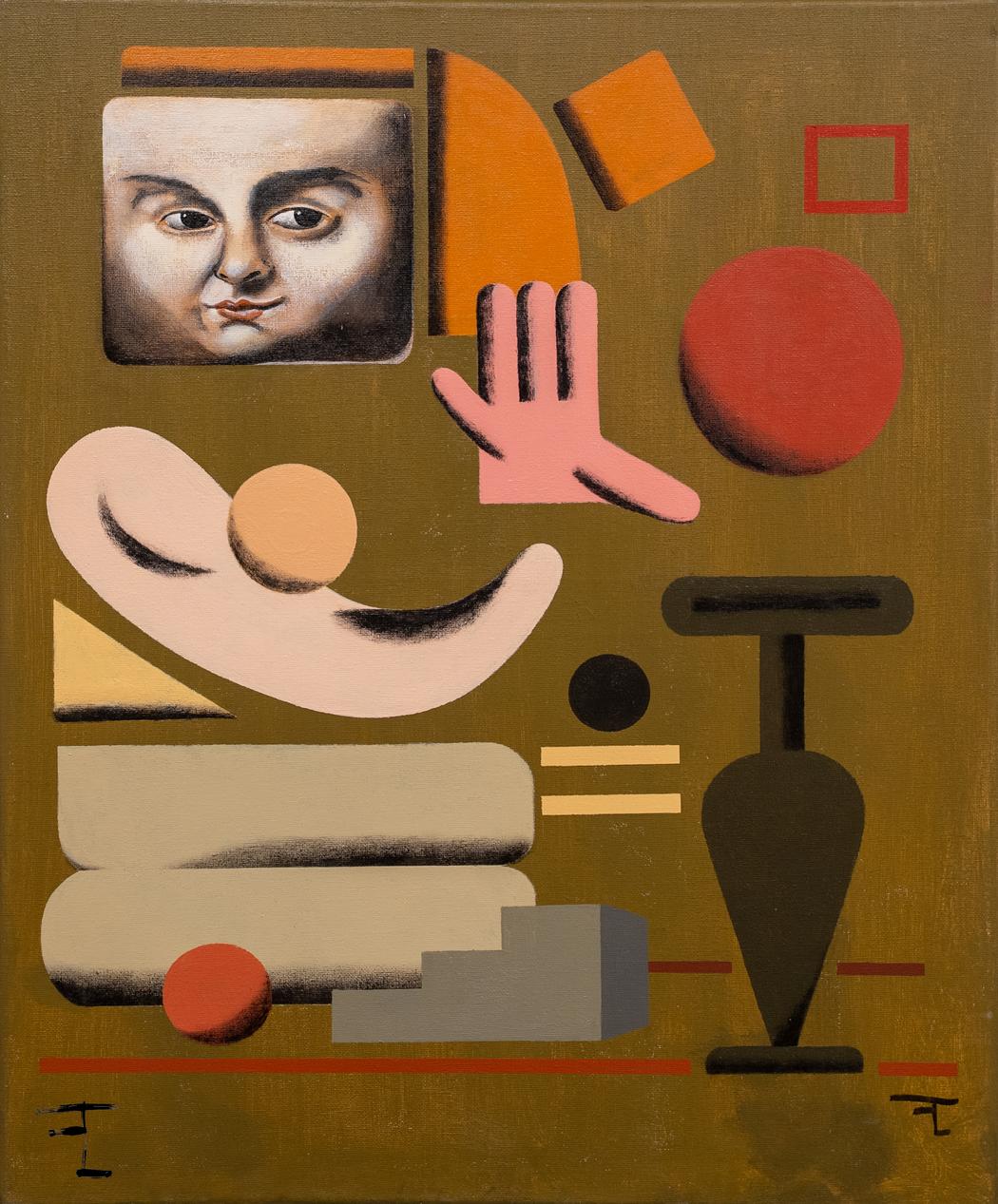 Flavien Couche | Interlude | 2025
Your work constantly moves between figuration and abstraction. What determines this balance in a painting — intuition, concept, or emotional state?
It is above all a question of intuition, of feeling, nourished by experience and the emotional state of the moment. I do not decide in advance how far figuration or abstraction will go. I also like to immerse myself in my daily life, to represent it in a raw way, without subtext. Most of the time, these elements provide both an anchor point and a loss of reference for the viewer. The painting guides me. Sometimes the figure imposes itself, sometimes it dissolves. This unstable balance reflects my way of perceiving the world: never completely legible, never completely abstract. I like this tipping point where the gaze hesitates, where nothing is fixed.
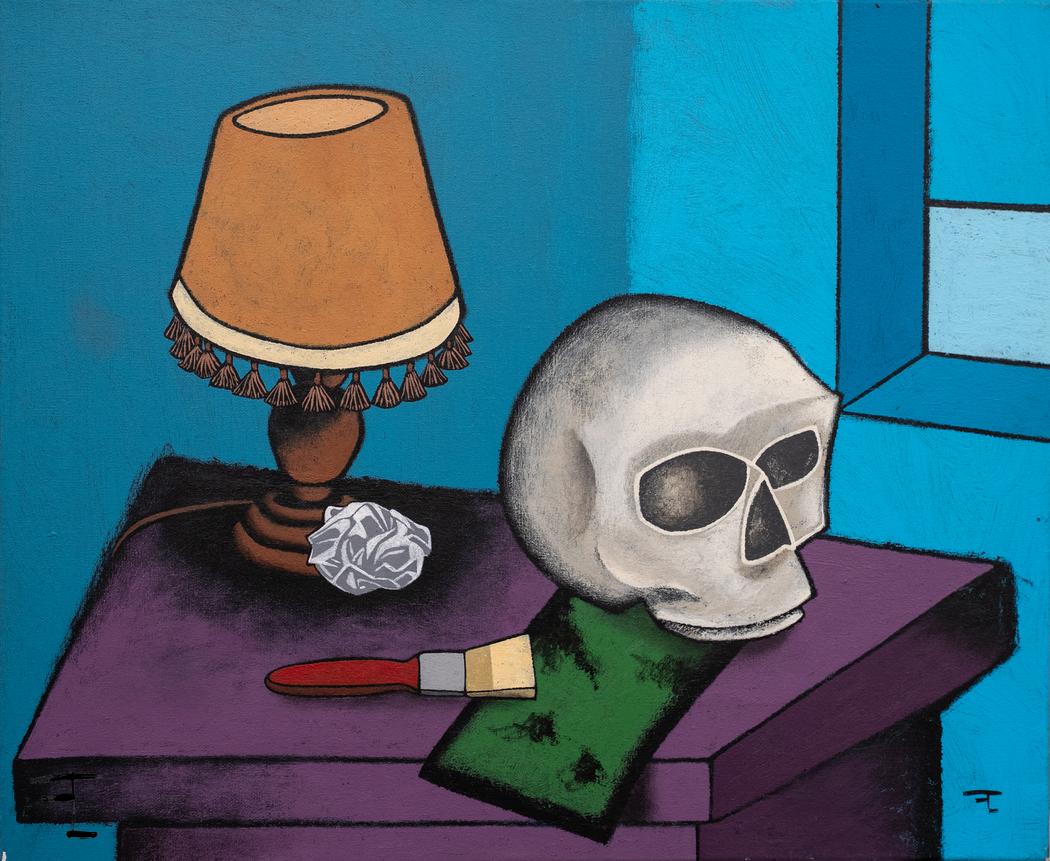 Flavien Couche | L Inspiration | 2025
The time you spent on Réunion Island marked a decisive shift in your palette. How did the landscape and atmosphere of the island transform your relationship with color and materials?
Reunion Island profoundly transformed my relationship with colour. There, the light is intense, almost physical, fragrant, and the colours are never neutral. They vibrate, they contrast, they clash.
I began to work with bolder, more saturated colours and with a freer medium. The climate, the volcanic landscapes and the lush vegetation encouraged me to let go of a certain restraint. I understood that painting could be organic, alive, in constant flux.
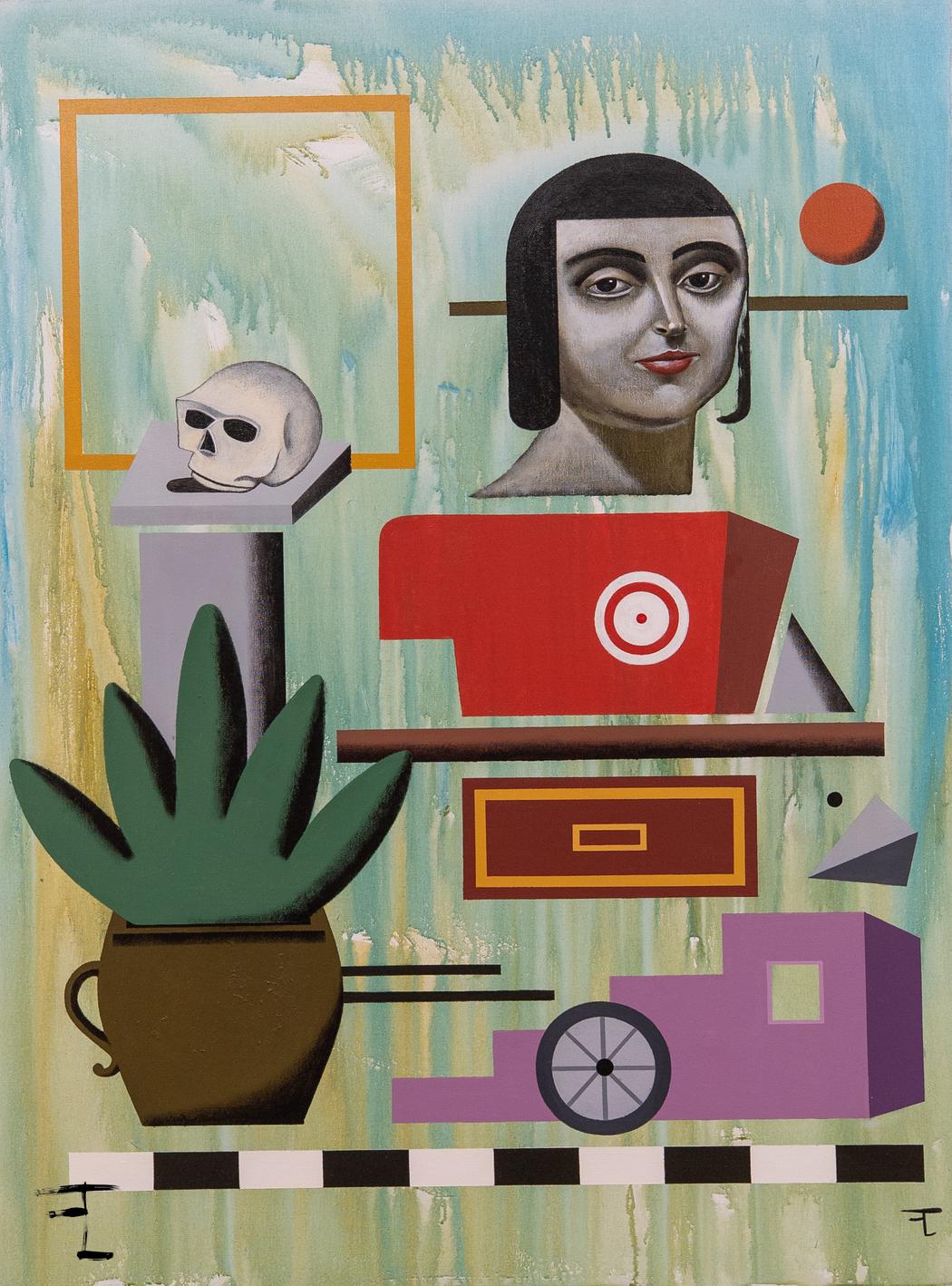 Flavien Couche | Le Carrelage | 2025
You often describe color and form as “revealers of the soul.” What kind of inner states are you most interested in revealing through your paintings?
I am interested in states of transition: doubt, fragility, momentum, the tension between calm and agitation. What matters to me are not spectacular emotions, but the often silent intermediate zones where something is transforming. This silence is fundamental to my work and its representation. My colours are deliberately chosen for their vividness, in order to energise this whispering world and create a paradox that I find interesting.
In short, painting allows me to make these inner, sometimes unconscious movements visible. It acts as a distorting but sincere mirror.
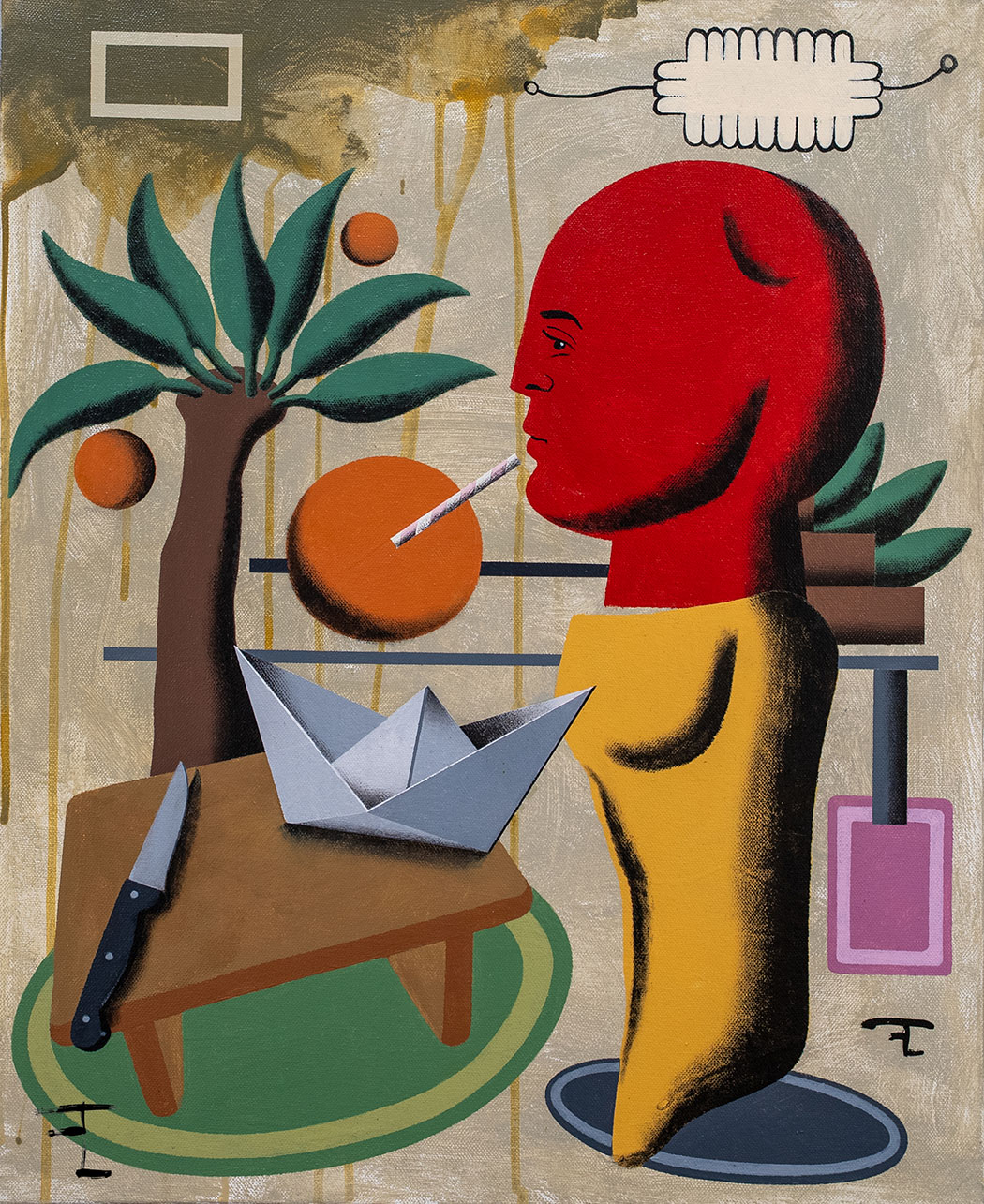 Flavien Couche | La planche et l | 2025
You cite German Expressionism, Fauvism, and Surrealism as major influences. How do these movements continue to resonate in your contemporary practice without becoming references or quotations?
For me, these movements are not models to be replicated, but sources of energy. Expressionism taught me the necessity of subjectivity and the immediate impact of representation; Fauvism, the freedom of form and colour; Surrealism, openness to the unconscious. They nourish my practice in a subterranean way. I do not seek to cite them, but to prolong their spirit: painting that is committed, instinctive, deeply human. I feel that the further I advance on my pictorial path, the more these influences become ‘watermarks’, well anchored but also less alienating.
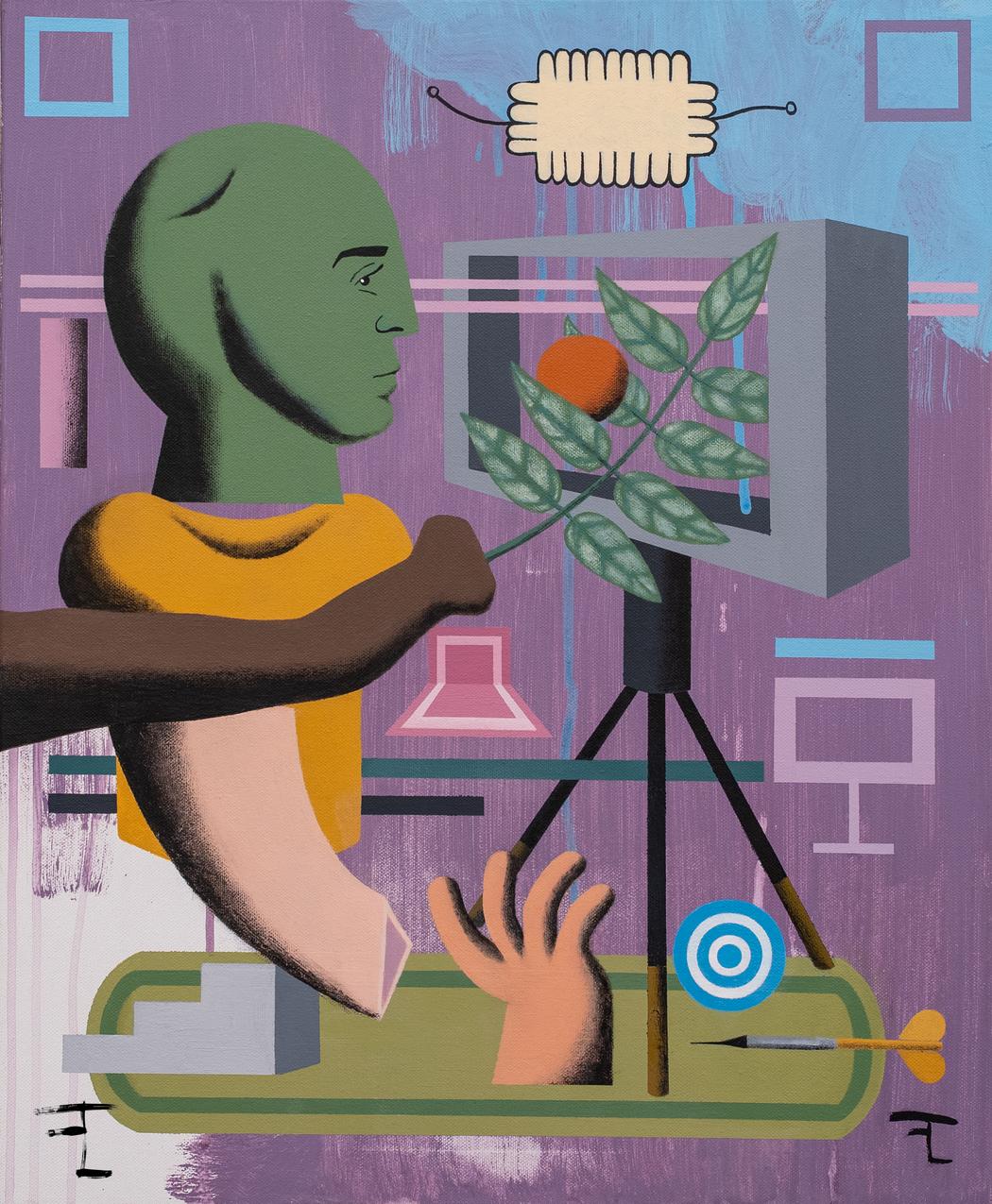 Flavien Couche | La Stratégie | 2026
Ultimately, what do you hope the viewer carries with them after encountering one of your works: an emotion, a question, or a state of mind?
Ideally, an inner state. Something difficult to put into words, but which persists.
If an emotion arises or a question pops into mind, so much the better, but above all I want the viewer to leave with a feeling, an intimate resonance. I want the work to continue to have an effect, even after it has left the viewer’s gaze. It is important to me that my creation becomes the viewer’s new playground.
Leave a Reply
You must be logged in to post a comment.