
Heidi H. Waintrub
Year of birth: 1981
Where do you live: Turin, Italy
Your education: BA in Archaeology and Art History, University of Florence (Italy); additional art and painting courses.
Describe your art in three words: Narrative, symbolic and expressionistic.
Your discipline: Multidisciplinary visual artist
Website | Instagram
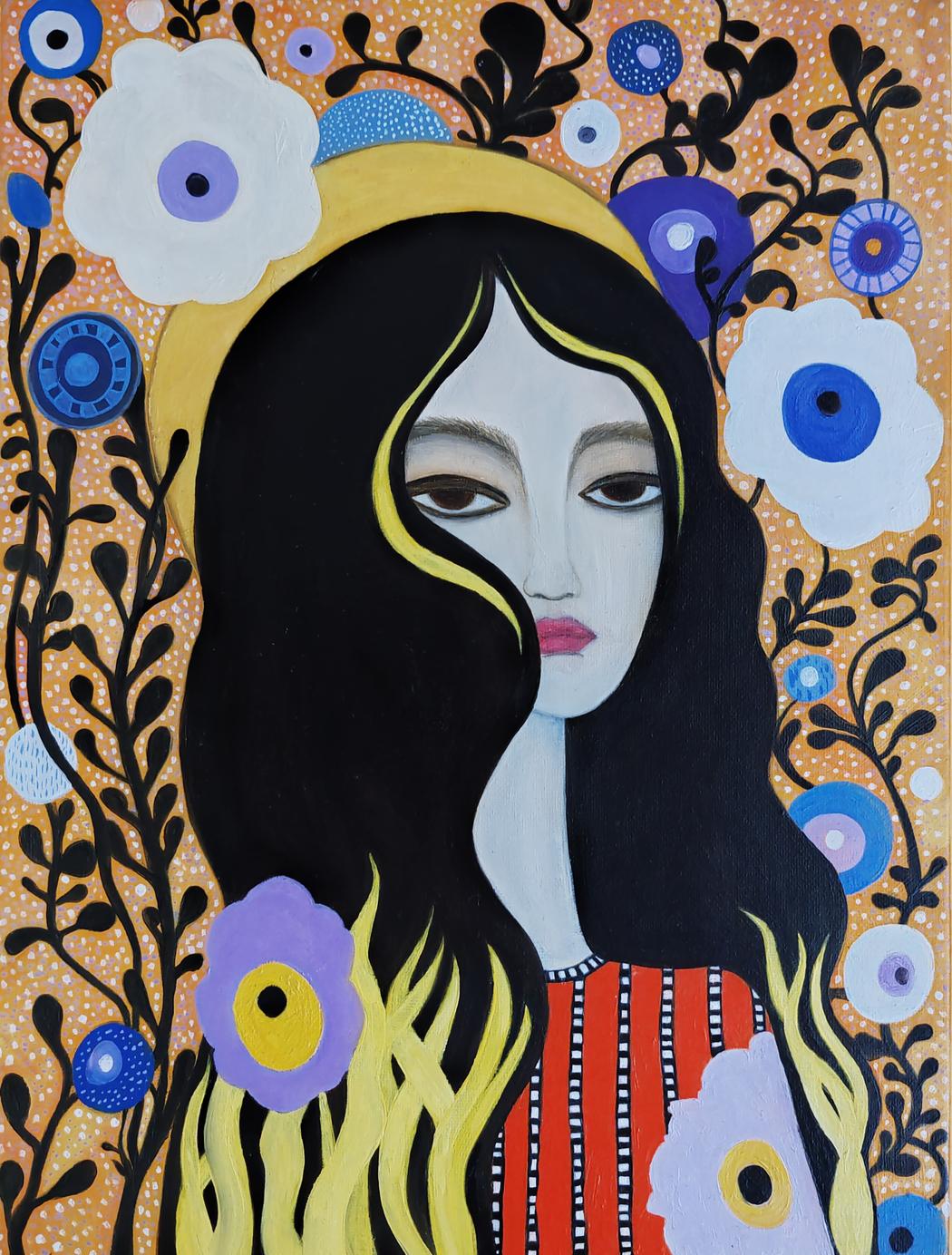 Heidi H. Waintrub | Yellow And Black Flower
Your work moves fluidly between figurative storytelling, symbolic portraiture, and abstraction. How do you decide which visual language a particular idea or emotional state requires?
My decisions are guided by a combination of concept, emotional intensity, and the practical conditions of the making such as time and space. When an idea feels urgent and I have an almost physical need to express it, I choose a faster, more direct language and smaller formats so I can capture its energy before it fades. In those moments I often work with watercolor, gouache, or digital illustration, because they allow immediacy and quick shifts.
Material also supports that decision. Watercolor allows me to achieve softness, transparency, and ambiguity, so I tend to use it for smaller works. I also use gouache and acrylic for smaller projects, but with those materials I can expand into both figurative and abstract approaches. Gouache offers opacity and graphic clarity, while acrylic lets me push contrast and make bolder, more decisive statements. For ideas that need time to unfold, I work with larger supports and more slowly in oil, allowing for layering, revision, and deeper development.
You describe your figures as emblematic rather than individual portraits. What makes a figure symbolic for you, and how does this symbolism connect to collective memory?
A figure becomes symbolic for me when it functions as an archetype rather than an individual. When it carries an interesting idea, a tension, or a psychological state that extends beyond a specific biography. I often extract the figure into a symbol through simplified features, strong gestures, and charged attributes, so the image is reshaped with meaning rather than a portrait. What interests me is not representation for its own sake, but the way a figure can hold contradictions: innocence and power, vulnerability and violence, devotion and rebellion. This is why I return frequently to what I describe as “mythic femininity”: female archetypes that appear across mythology, religion, and history. Greek myth and biblical narratives, in particular, offer complex women who have been interpreted as heroic or dangerous, sacred or transgressive. I am currently working on a series of biblical women because these stories remain culturally active; they are repeatedly retold, judged, and reimagined, and they continue to shape how femininity is understood.
The connection to collective memory comes from the fact that these figures already live in a shared cultural imagination as codes that viewers recognize even unconsciously. By reinterpreting them through my visual language and in contemporary language, I am not illustrating the past; I am using these archetypes as a framework to speak about the present and to reactivate their meanings in a way that feels immediate today.
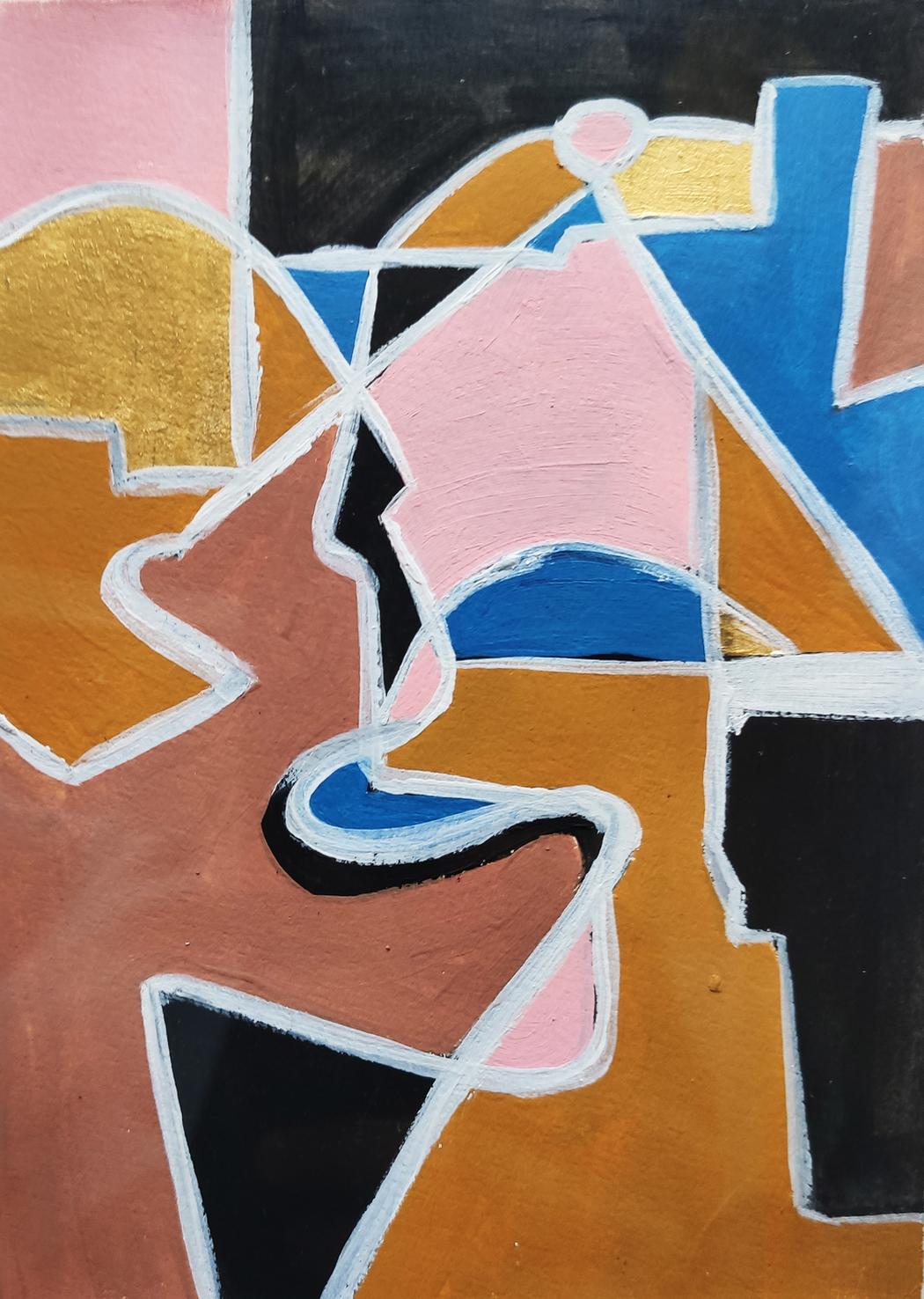 Heidi H. Waintrub | The Kiss
Ornament, patern, and repetition play a key role in your compositions. Do these decorative systems emerge intuitively, or are they conceptually planned from the beginning?
Patern, ornament, and repetition are integral to my process, and they usually begin intuitively. I approach them as a form of visual thinking: I give my hand freedom to move before I impose a fixed structure. In that sense, I feel close to the Surrealist idea of automatism: the atempt to bypass conscious control and allow unconscious material to surface. That said, once the initial impulse begins to take form and direction, the process is no longer left entirely to chance. The first stage may be spontaneous, but I then continue by composing: strengthening certain rhythms, editing others, and using repetition to build tension, balance, and emotional tone. This is especially central in my more abstract works, where paterns often emerge as an unplanned impulse. So, the answer is both: paterns, ornament and repetition are born from intuition, but they are shaped through conscious decisions as the work develops.
Many of your works reference mythic femininity and historical archetypes. How do mythology and art history influence the way you speak about contemporary identity and womanhood?
History shapes the visual and psychological vocabulary we still use to understand womanhood today. I see the past as an active force in the present: cultural narratives don’t disappear – they evolve, repeat, and continue to influence how identity is constructed. Because of that, I often return to historical and mythological figures as a way to speak about my contemporary experience.
The idea of “mythic femininity” is important in my work because it uses archetypes. In a Jungian sense, these figures function as symbolic structures within the collective unconscious: they shape perception, desire, fear, moral judgment, and social roles across time. They are often framed in extremes: pure or dangerous, sacred or transgressive – which mirrors how femininity can still be negotiated today.
In my paintings, I use these archetypes as a framework to address contemporary identity. I’m interested in the tension between projection and reality: how women have been idealized, blamed, celebrated, or controlled through inherited images, and how those images still shape modern life. This is why I repeatedly paint women in different states and roles – motherhood, strength, vulnerability, and power, and why I’m drawn to complex historical and biblical heroines. By reinterpreting them through my own visual language, I aim to shift the narrative toward greater human and psychological depth.
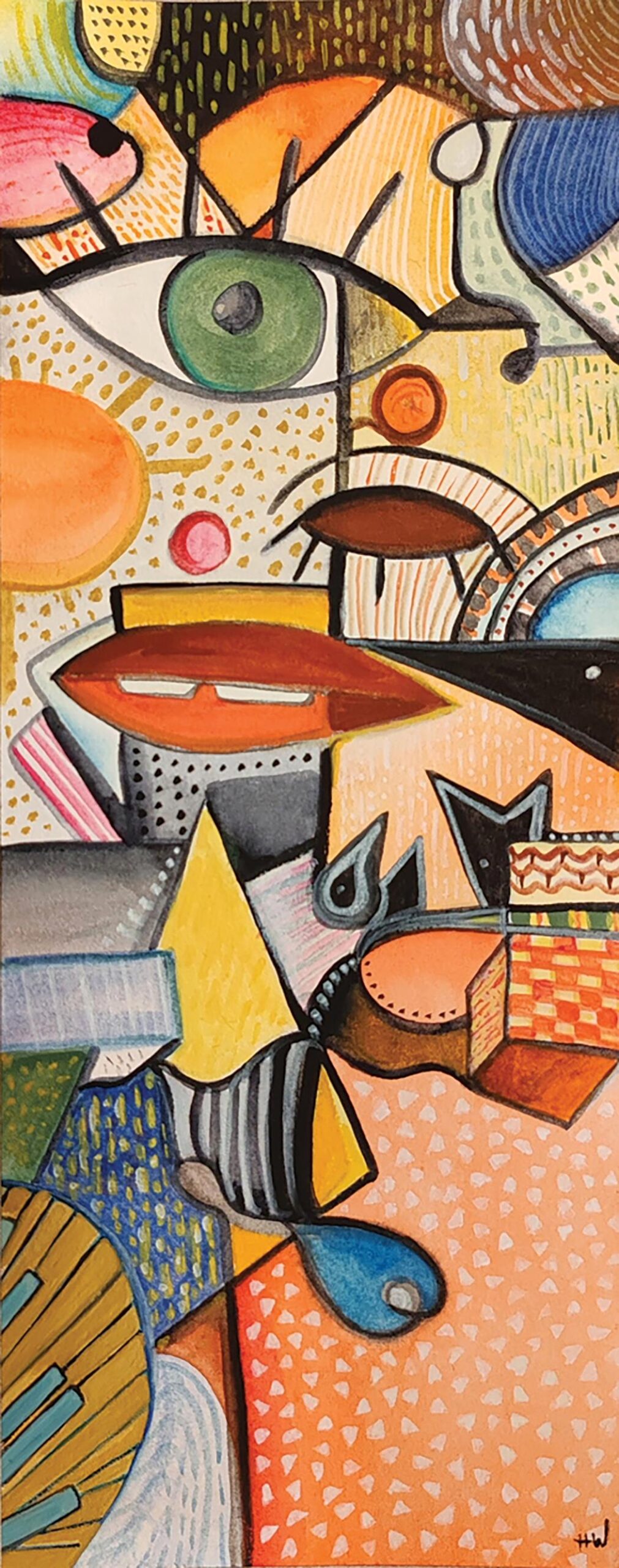 Heidi H. Waintrub | Judth
Your academic background is in archaeology and art history. How does this training shape your relationship with symbolism, fragmentation, and layered narratives in your art?
Archaeology and art history gave me a broader understanding of art as a cultural language. Archaeology is deeply connected to art because it reveals how societies lived, what they valued, and how they expressed themselves visually through objects, images, and symbols. This training made me more attentive to symbolism: how meaning can be carried through signs, archetypes, and visual codes across time. My use of fragmentation, especially in my abstract work, does not come directly from my academic studies. It comes from my artistic process and emotional approach to form. What my studies did give me is a stronger awareness of how images communicate. How symbols operate historically and how they continue to shape the way we read and understand contemporary art.
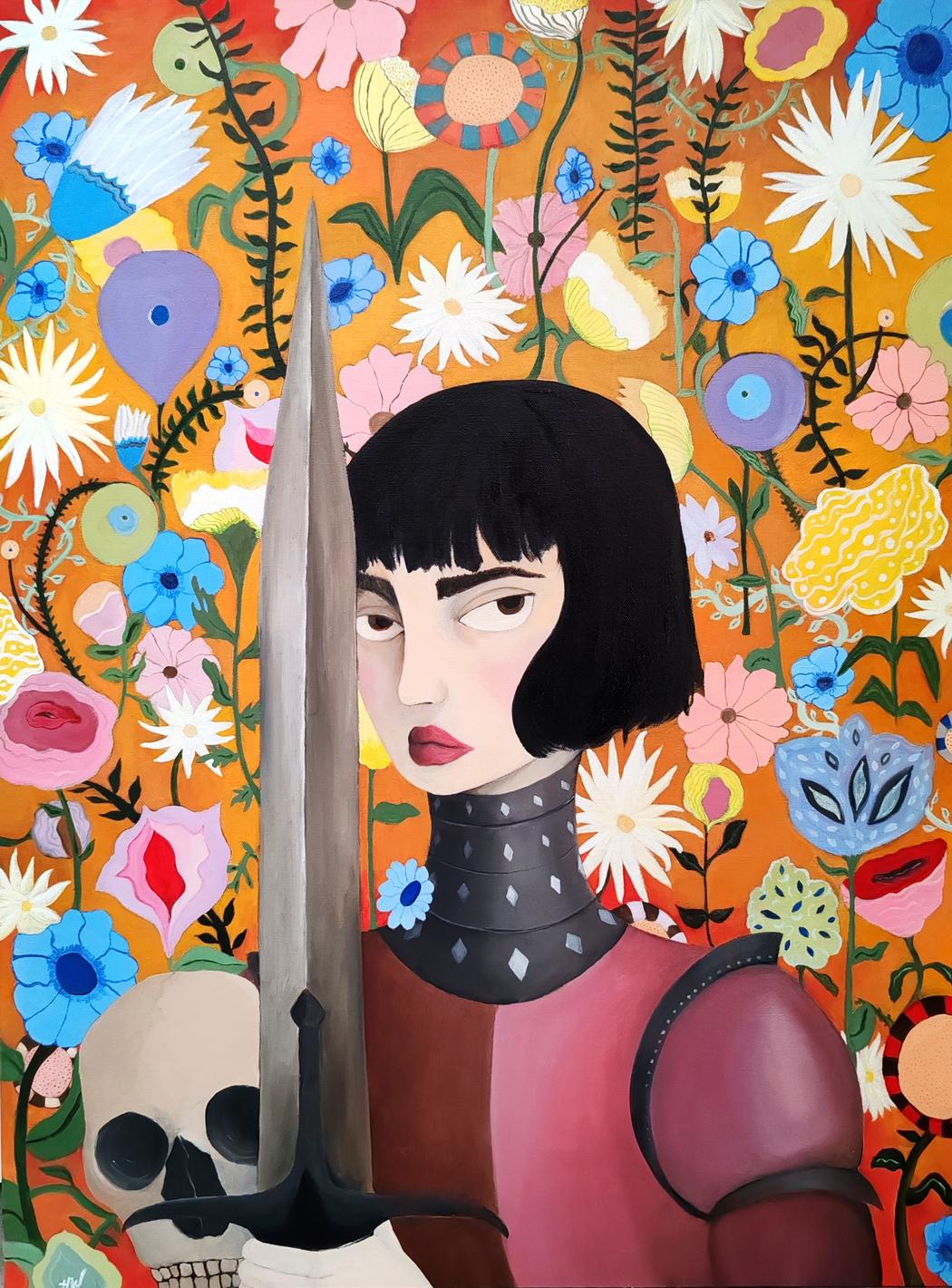 Heidi H. Waintrub | Judith And Holofernes
As both an artist and curator, how has your curatorial experience influenced the way you create and present your own work?
My curatorial experience added an important dimension to my practice and gave me an inner understanding of the contemporary art world. Early on, while working in an artist’s botega in Florence alongside my painting training, I also had organizational and management responsibilities. Over time that evolved into curating, directing exhibitions, and producing art events.
That experience shaped the way I approach my own work in practical terms. It made me more atentive to context – how a piece functions within a space, how a series communicates as a whole, and how pacing, selection, and placement affect the viewer’s reading. It also strengthened my ability to edit my work and present it professionally, from documentation and writing to installation and project planning.
I didn’t initially plan to work behind the scenes, but it became a valuable part of my development. It gave me the skills to handle the administrative and organizational realities of being an artist, and it ultimately supports my studio practice by allowing me to present the work with clarity and intention.
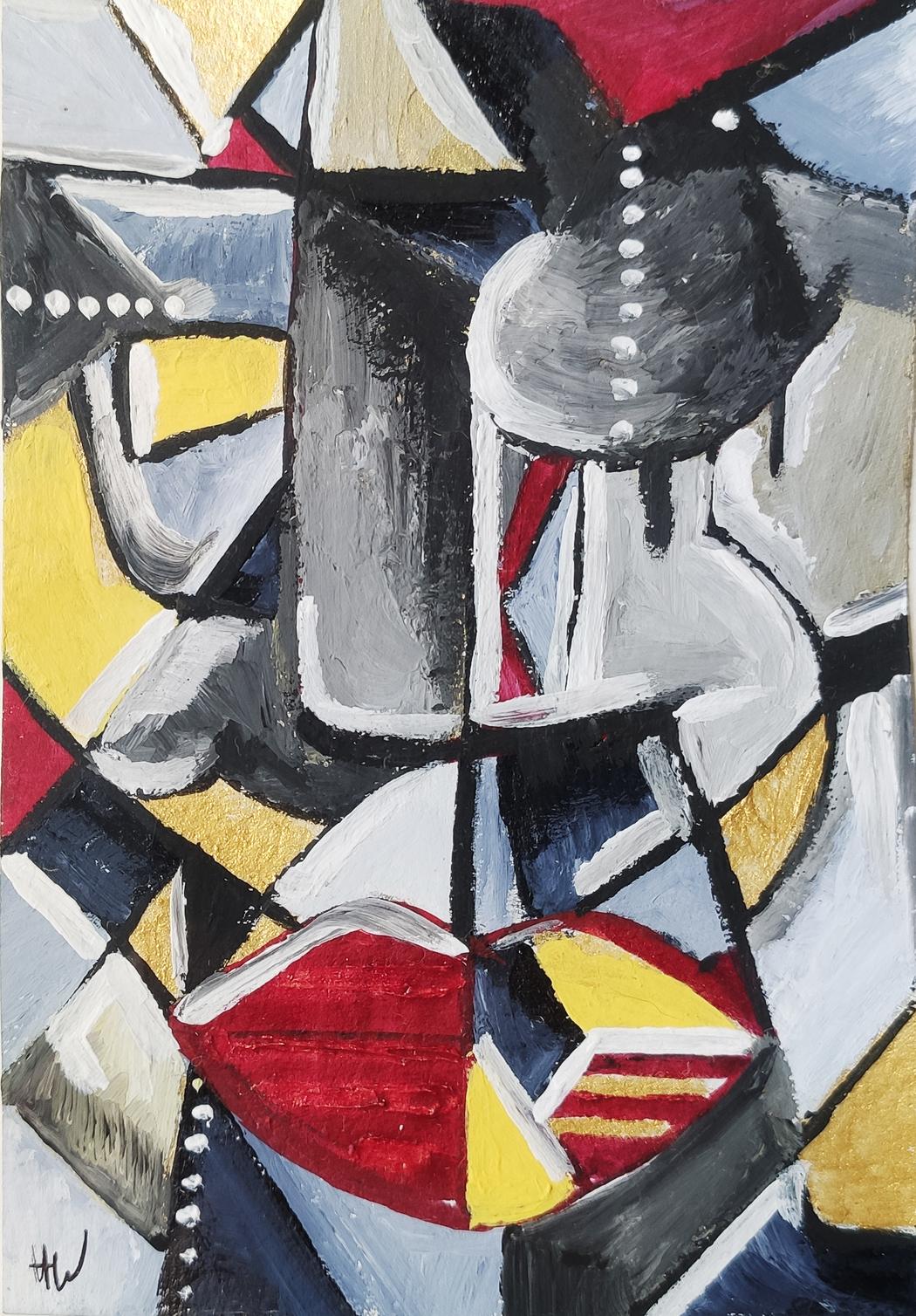 Heidi H. Waintrub | First Lady
Many of your images feel like open-ended narratives rather than resolved stories. What role do you believe the viewer plays in completing the meaning of your work?
For me, painting is a form of storytelling, but not a closed story. Each work is the beginning of an imagined conversation between my experience and the viewer’s. I build the image as a starting point with an emotional and symbolic framework, rather than a fully resolved narrative.
The viewer plays an active role in completing the meaning. I want each person to find a point of entry: a gesture, a symbol, a color, a mood that resonates with their own memory or inner life. From there, interpretation becomes personal. The work shifts from my perspective to theirs, and the image is “finished” through the associations they bring to it.
In that sense, the paintings are intentionally open-ended. They invite viewers to participate and to transform the work into a reflection of their own story and experience.
Leave a Reply
You must be logged in to post a comment.