
DOORAE LEE
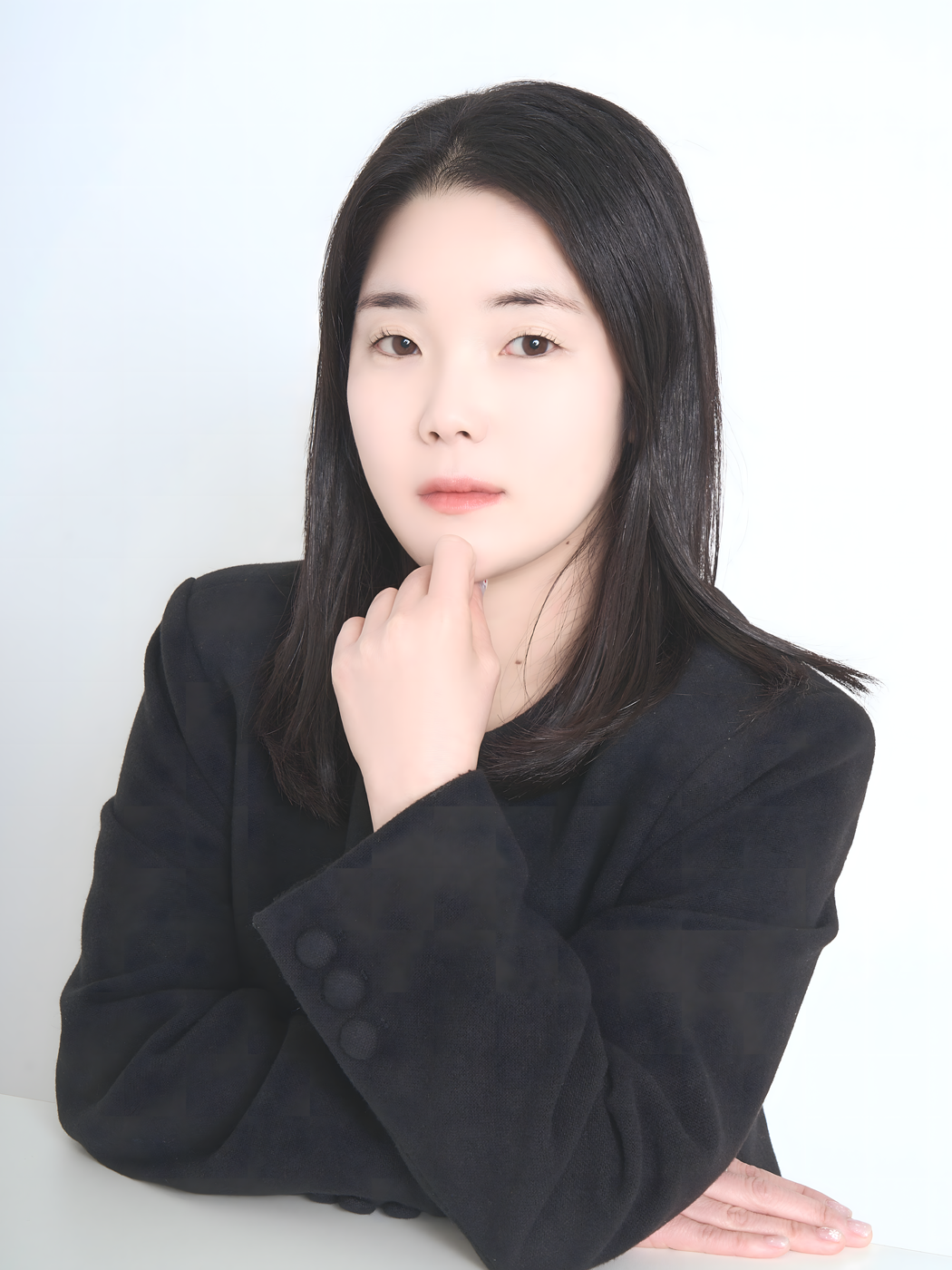
Your work often places figures inside layered, abstract environments. How do you decide where the figure belongs within these parallel systems?
I don’t think of the figure as something that needs to belong to a specific place. Instead, I position figures where multiple systems overlap — places where paths, roles, and possibilities coexist without offering a clear direction.
The figure is not meant to resolve the space, but to quietly register what it means to exist inside such an environment.
You describe technology as a means rather than a subject. How does AI function in your process without becoming the main focus of the work?
I work with AI-assisted tools such as Midjourney, but technology itself is never the focus of the work.
Depending on the piece, I may directly compose or adjust elements within the image, while in other cases I work primarily through language — defining conditions through prompts and observing what emerges.
AI produces visual material, but it does not determine meaning or direction. My artistic practice lies in setting conditions, making selective interventions, and recognizing moments when an image aligns with the state I want to record. In this sense, AI functions as an interface — a tool of translation rather than a subject of the work.
The figures in your images appear neutral and emotionally restrained. What does emotional neutrality allow you to observe that expression might obscure?
Emotional neutrality allows the surrounding environment to become more visible. When expression is minimized, attention shifts away from individual emotion and toward the systems that continue to operate — repetition, structure, and distance.
I am less interested in what the figure feels than in what keeps moving around them, often unnoticed.
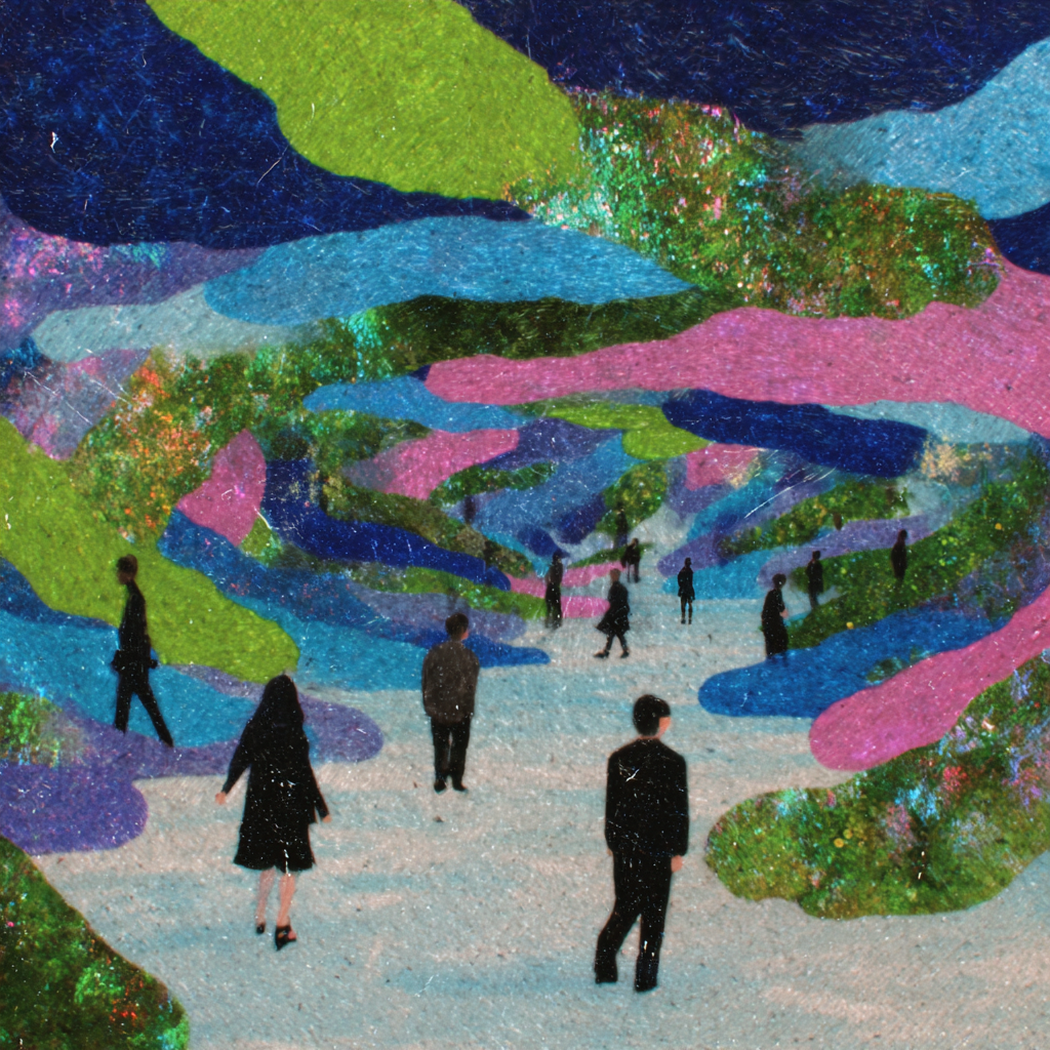 DOORAE LEE | Where We Stand | 2025
Movement is present in your work, yet you mention that meaning does not accumulate. How do you think about time and progression within your images?
Time in my work is not linear or progressive. There is movement, but there is no arrival. This reflects a condition I often observe in contemporary life — constant activity within environments full of options, where direction remains unclear and meaning does not settle.
In your statement, you describe your practice as a form of “quiet record.” What do you feel is being recorded — a moment, a condition, or a long-term shift?
What I record is a condition. I have written as a way of recording myself and the world I live in, and one form of that practice has been making picture books. After a personal experience in which language no longer felt sufficient, I began to turn toward images as another way of recording.
Image-making did not replace writing; it became an extension of the same impulse — a quieter way of leaving traces of states that could not be fully articulated in words.
In my earlier visual work, many viewers described the images as warm and emotionally moving. At a certain point, however,
I began to sense a different condition around me. The world appeared increasingly colorful and saturated,
while the people within it felt gradually emptied. This work marks an exploration of that simultaneous contrast.
It is not meant to explain or resolve, but to quietly remain. For me, this work is a record — and I hope it remains in the world as an artwork.
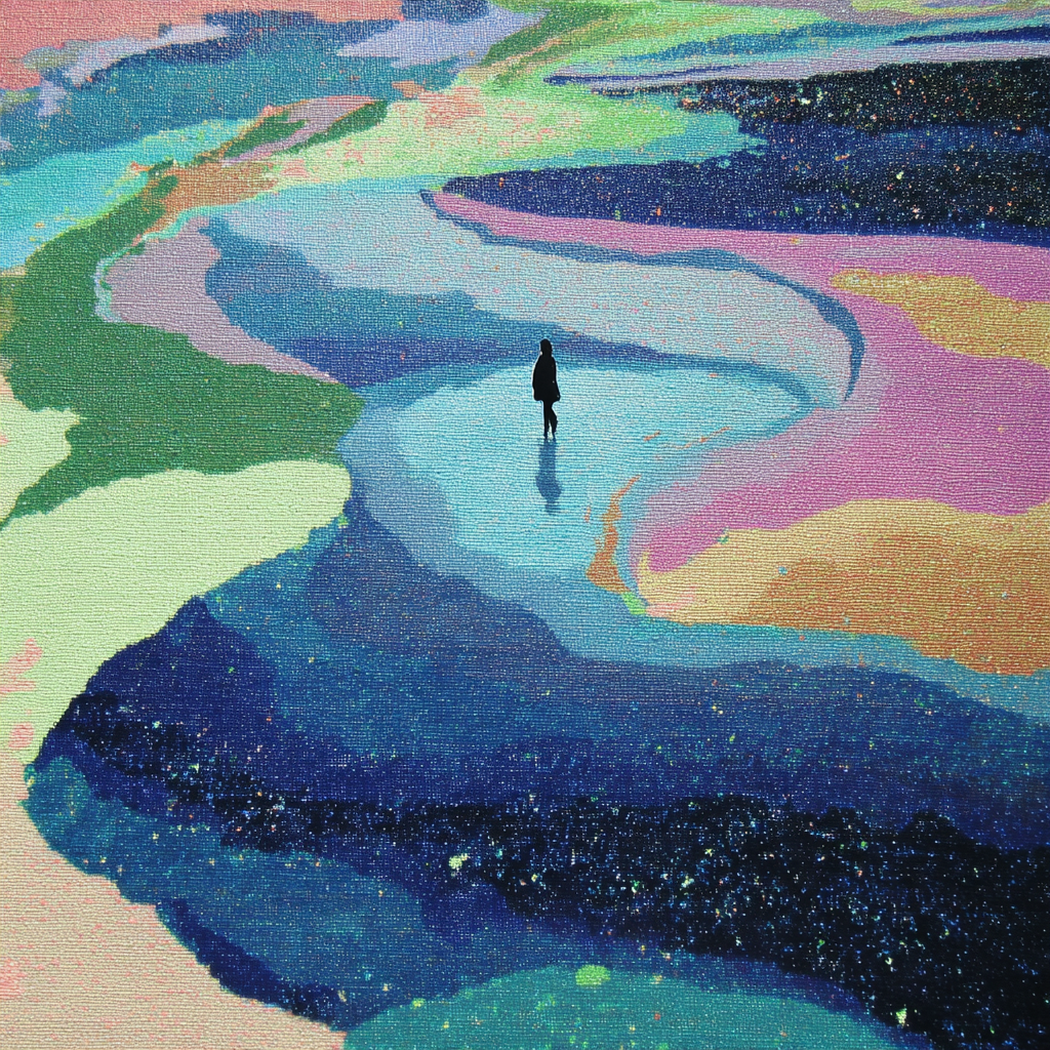 DOORAE LEE | Where We Stand | 2025
The spaces in your work feel immersive but distant at the same time. How do you balance visual richness with emotional restraint?
The environments appear visually rich and saturated because the world I observe feels that way — full of options, stimulation, and individuality. In contrast, the figures remain restrained and emotionally neutral.
This contrast creates distance, reflecting a condition in which external possibilities expand while inner orientation gradually fades.
What questions do you hope viewers ask themselves when encountering these parallel, directionless environments?
I hope viewers reflect on their own position within similar environments. Not where they are going, but what keeps them moving — and what may remain quietly unresolved beneath that movement.
Leave a Reply
You must be logged in to post a comment.