
Qinyunyi Zhang (Yuii)
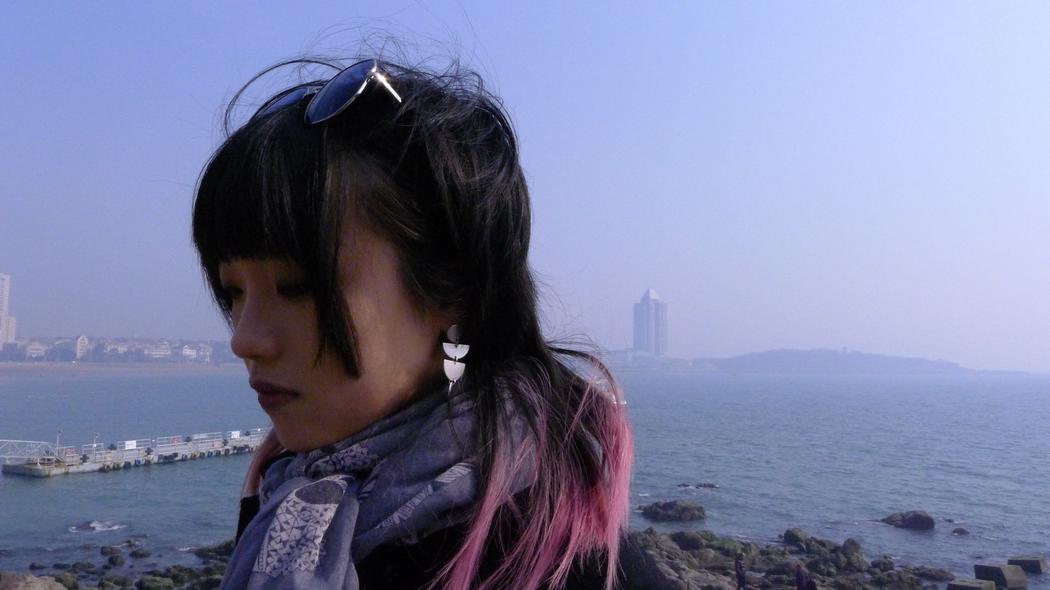
Your work merges illustration with ceramics in a very fluid, organic way. How do these two disciplines inform and transform each other in your creative process?
My exploration of these two mediums is, in essence, an investigation into the boundary between two-dimensional and three-dimensional space. In illustration, I favor maximalism, while in ceramics, I prefer bold and simplified forms. This allows them to influence and complement each other in terms of visual rhythm. Furthermore, the themes from my illustrations provide visual inspiration for my ceramic creations. Conversely, ceramics translate the flat visuals of my drawings into three-dimensional entities, even adding a layer of functionality.
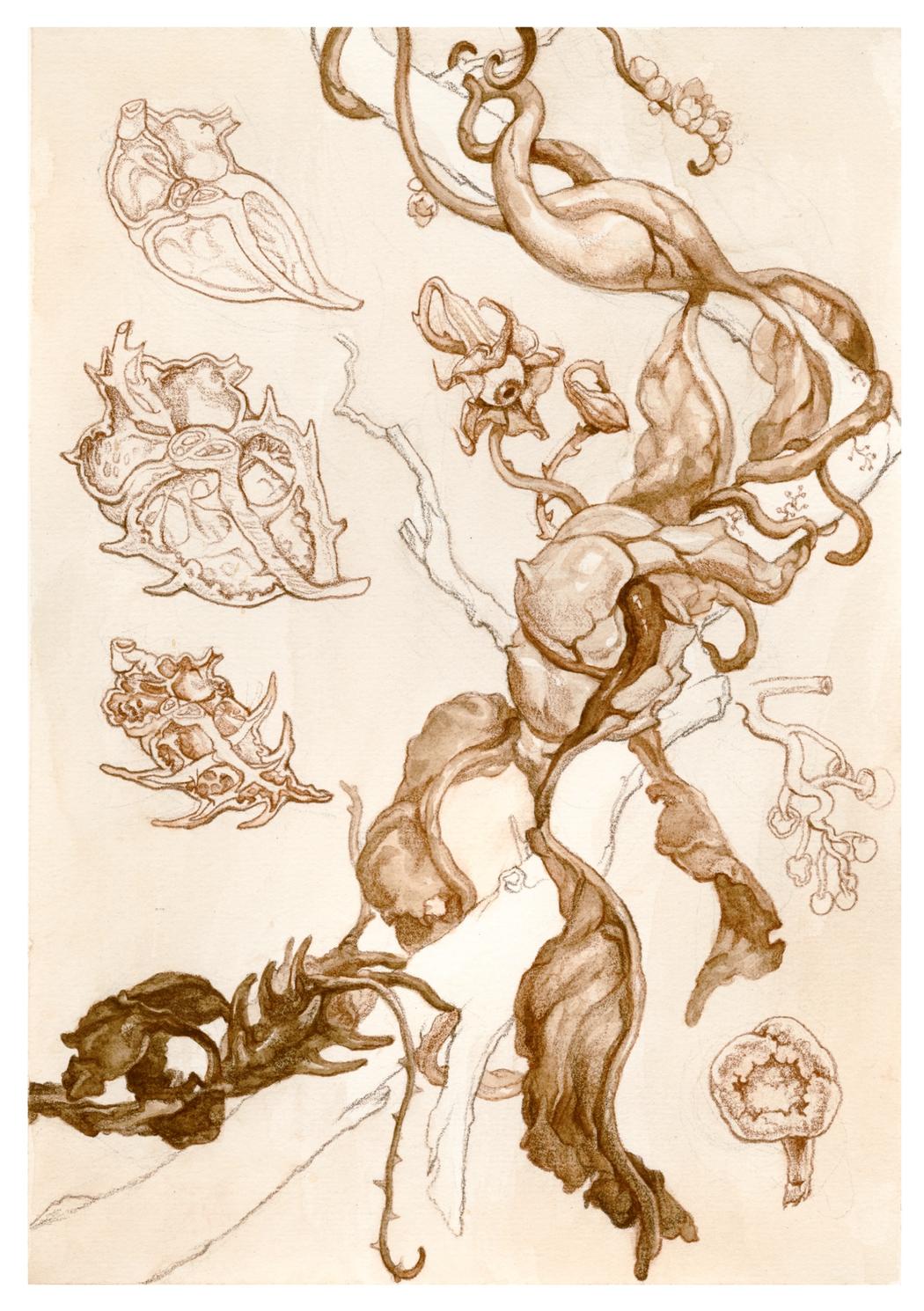 Qinyunyi Zhang (Yuii) | Amo | 2025
You often materialize abstract or difficult emotions as fantastical biological specimens. What is your internal process for translating a feeling into a creature?
I approach this translation by combining rationality and sensibility. On an intuitive level, I first select elements I am personally drawn to, such as plants, bones, or marine life. Then, through rational analysis, I deconstruct the characteristics of the emotion and match it with elements of a similar nature. For example, the prototype for AMO, which represents attachment, is the parasitic plant dodder. Its growth state is intimately tied to its host, mirroring how different patterns of attachment are closely linked to the other party in an intimate relationship.
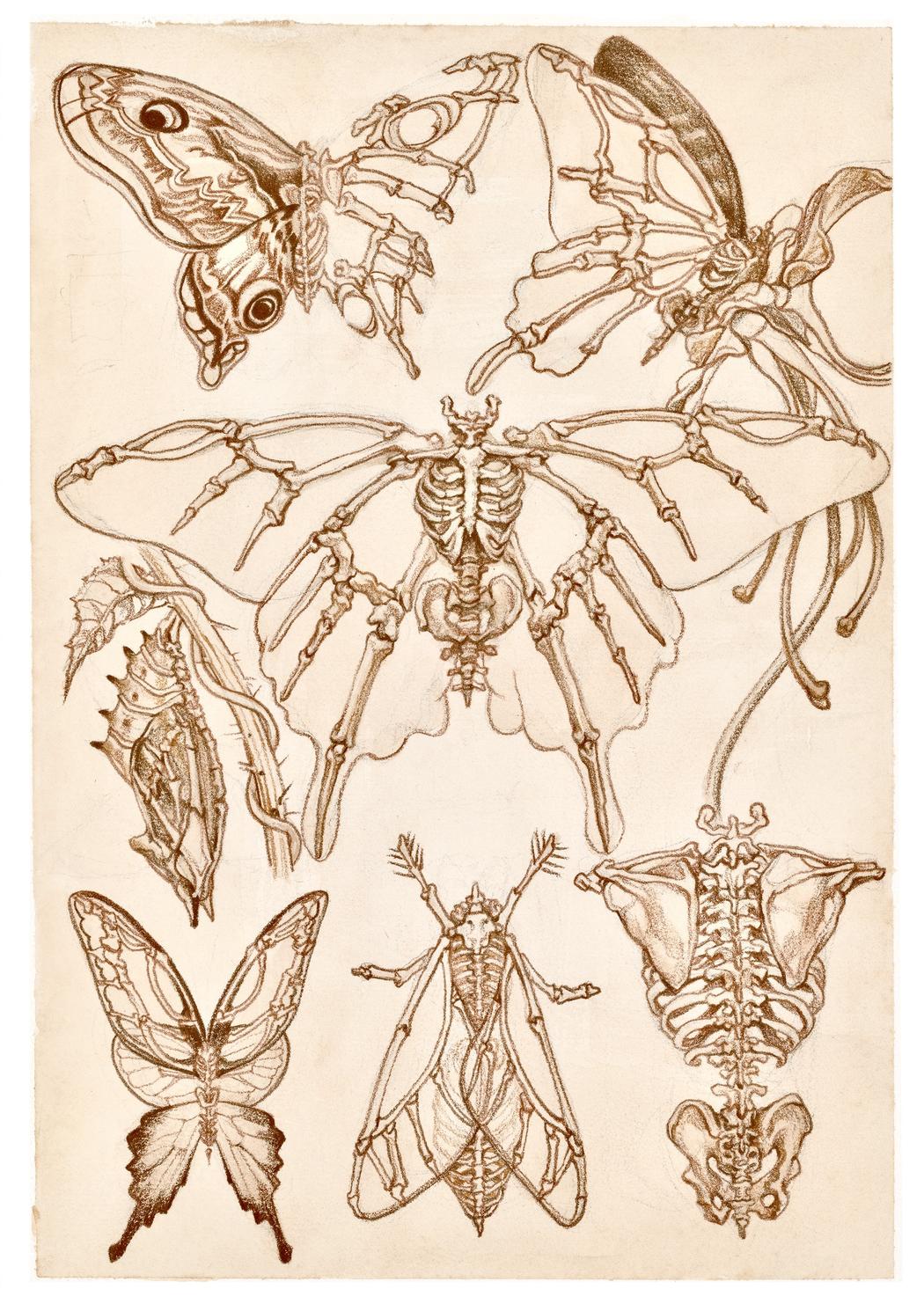 Qinyunyi Zhang (Yuii) | Bone Butterfly | 2025
The “Illustrated Guide to Fantasy Creatures” adopts the format of scientific illustration. Why did you choose this visual language, and how does the “authority” of science influence the viewer’s perception of your imaginary beings?
I am influenced by the specimen illustration style of the renowned naturalist Ernst Haeckel. I believe this hyper-rational, realistic style creates a stark contrast with the emotional origins of the work, generating a stronger sense of conflict. In my creative process, I consciously avoid a subjective emotional perspective, instead detaching myself to adopt an observer’s stance for description. The specimen illustration format symbolizes objectivity and truth, endowing the viewer with a silent, almost unquestionable sense of “factual” power.
Many of your creatures contain human skeletal or bodily elements. How do these anatomical references help you express themes of memory, vulnerability, or self-awareness?
In this illustration series, I extensively use skeletal and visceral elements. Devoid of the protection of skin, these exposed internal structures represent a sharp and resolute confession of my hidden emotions—a further exploration and articulation of the most vulnerable and ineffable depths of the inner self to the viewer. Moreover, this fusion creates a subtle link that operates on both physical and spiritual levels, allowing me to grasp the themes more acutely and personally. The bodily elements are intended to evoke empathy from the viewer as a fellow human, granting the work a sense of embodiment.
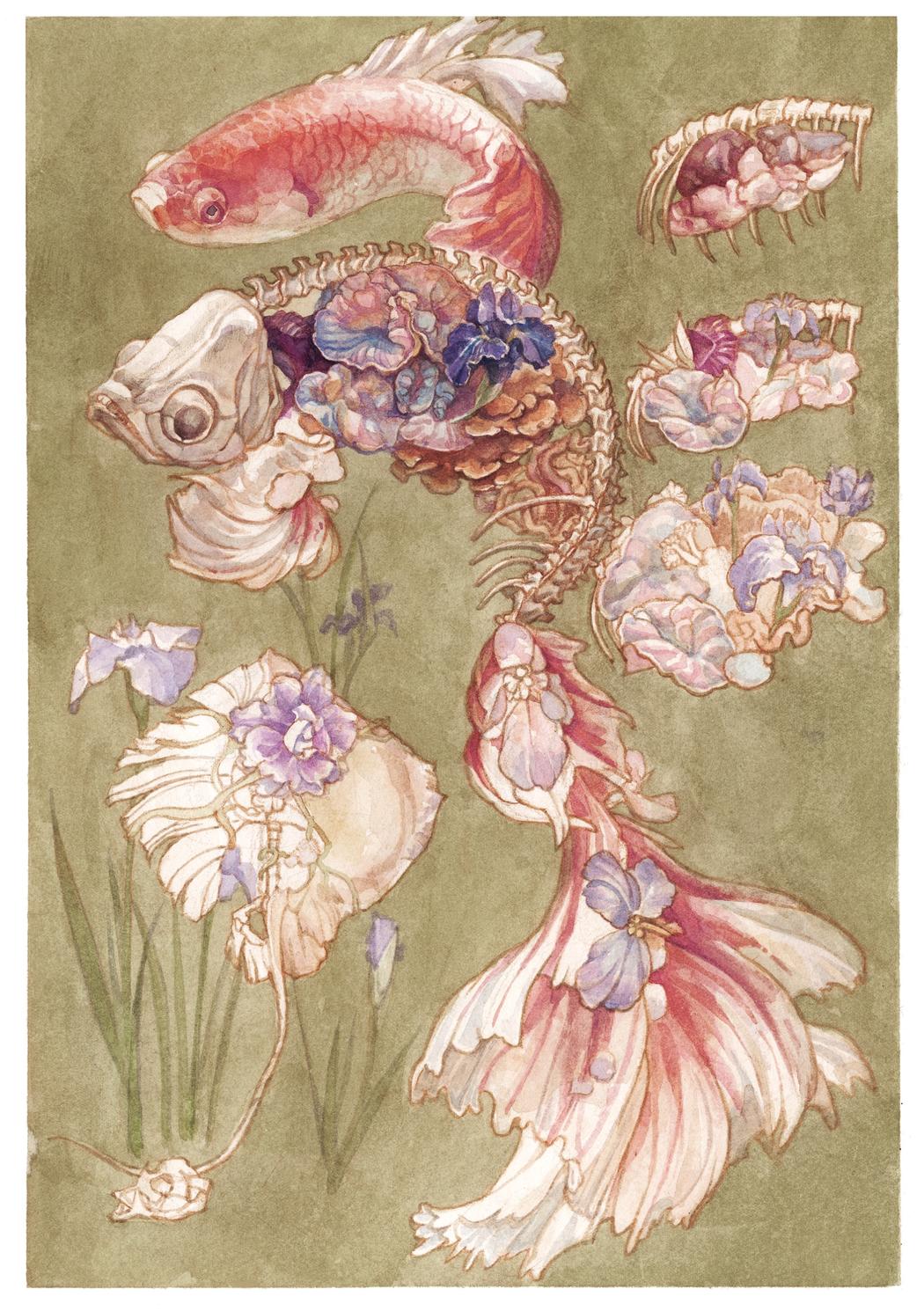 Qinyunyi Zhang (Yuii) | Coral Fish | 2025
Your works balance eeriness with beauty. What does this tension mean to you personally, and how do you navigate it aesthetically?
Eeriness and beauty are not opposites, just as I firmly believe pain and sorrow are not purely ugly. Being highly sensitive—a double-edged sword—makes me more acutely aware of pain, yet simultaneously allows me to see flowers blooming within it. Driven by a sense of mission to “show the world the fantastical realm of highly sensitive people unknown to them,” I use illustration to create imagery where the eerie and the beautiful coexist.
I deeply admire the aesthetic of mono no aware in Japanese literature, particularly the exquisite descriptions of death, blood, violence, and pain in Yukio Mishima’s writings. Visually, I am also greatly fond of Japanese ukiyo-e, especially the parts depicting monsters and spirits. Therefore, alongside the influence of Ernst Haeckel’s specimen style, these aesthetic experiences from Eastern culture serve as powerful aids in navigating this style.
You’ve studied for eight years at CAFA and are now pursuing your MA in London. How has this cross-cultural academic journey shaped your artistic identity?
My eight years at CAFA provided me with solid foundational training, which became a powerful tool for expressing my fantastical world. The rich artistic resources and vibrant, multicultural atmosphere in London, in turn, offer abundant inspiration for applying my drawing skills. Surprisingly, being independent from my homeland has intensified my desire to explore traditional Chinese cultural elements. As I continue my studies in London, I eagerly anticipate what sparks will fly from the ongoing convergence of these two experiences.
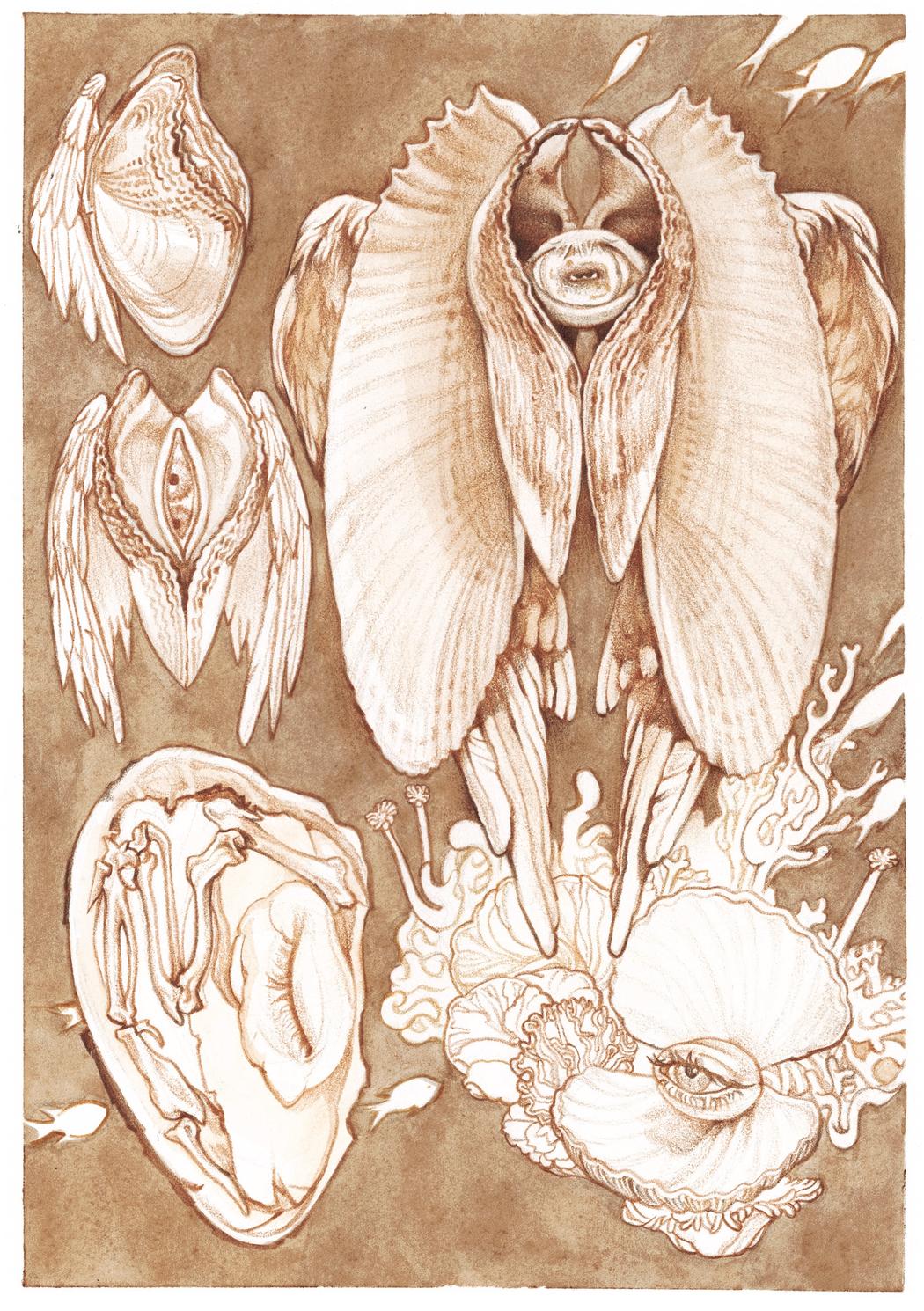 Qinyunyi Zhang (Yuii) | Sea Angel | 2025
Your personal IP “Redtide404” has gained attention on Xiaohongshu. How does sharing your process and persona online influence your artistic evolution?
Personality-wise, I am an introvert, which predisposes me to explore the world through “inward seeking.” While this can lead to intriguing results and profound themes, it also carries the risk of becoming solipsistic. Sharing my work on social media has built a channel for communication and connection with the outside world. Furthermore, the act of creating a personal IP prompts me to reflect on my work more from a macro perspective and through the lens of others. This undoubtedly serves as a strong complement to my original creative habits.
Leave a Reply
You must be logged in to post a comment.