
Loan Tran
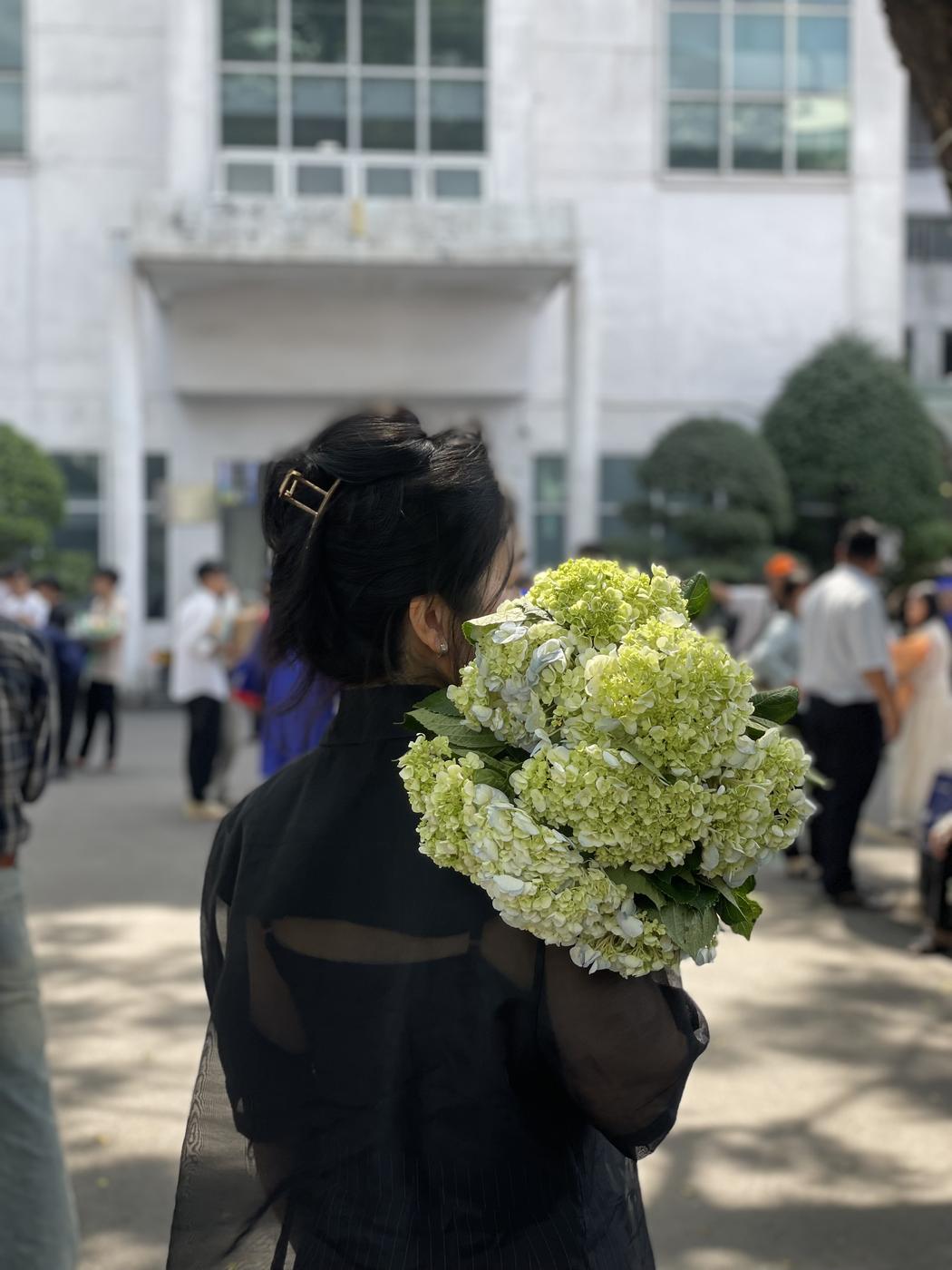
How do emotions and memories transform into gestures, colors and textures in your painting process? Could you describe this transition?
Emotion and memories can be shown through many forms, but in art they become a unique language that allows ideas and stories to be expressed in a very specific way that words sometimes can’t reach. Pablo Picasso once said “ Painting is just another way of keeping a diary” and this perspective speaks to how I understand painting. When I paint, whether I am in a state of chaos, calm or emotional intensity, each brushstroke or gesture often surprisingly display and reveal something I wasn’t fully aware of. The process usually begins with the internal feelings but it requires time, attentions and effort to translate those inner state into a visual form.
Color plays a central role for me and it is one of the most potent influencers of human psychology and mood. Through colors, shapes and textures, we can communicate feelings such as joy, anger, peace or sadness. Blue may evoke the sky, ocean, calmness; but it can also blue represents depression or justice depending on its context. Warm color like orange and yellow can carry joy and energy. Therefore, I gather these associations and shape them into the artwork through my own experience. Somehow it will depend on our perception of color from day to day. The same blue feels different under the sunny sky versus a rainy day. In this case, I will follow and move with these shift instead of resisting them
After collecting the color and grounding sensation, I begin transforming these memories and feelings on canvas into a visible gesture. I allow myself to experience as much as possible, from using different sizes of the brushes, how to shape a foam, how I can apply the amount of the pressure or also the speed of the hand, I keep moving until the painting reaches the certain time or the internal affection has been fully translated into material form. Moreover, layering and texture are essential in building depth; they help me give the sensation weight to the piece and create connection between my inner and the audiences.
For me, these steps are important parts because art is not only a way of expression but also a way of connecting. Through the visual language of gesture, colors and texture, I hope to create a refuge where others can find reflections of their own memories and emotional sensation across communities, cultures and even generations.
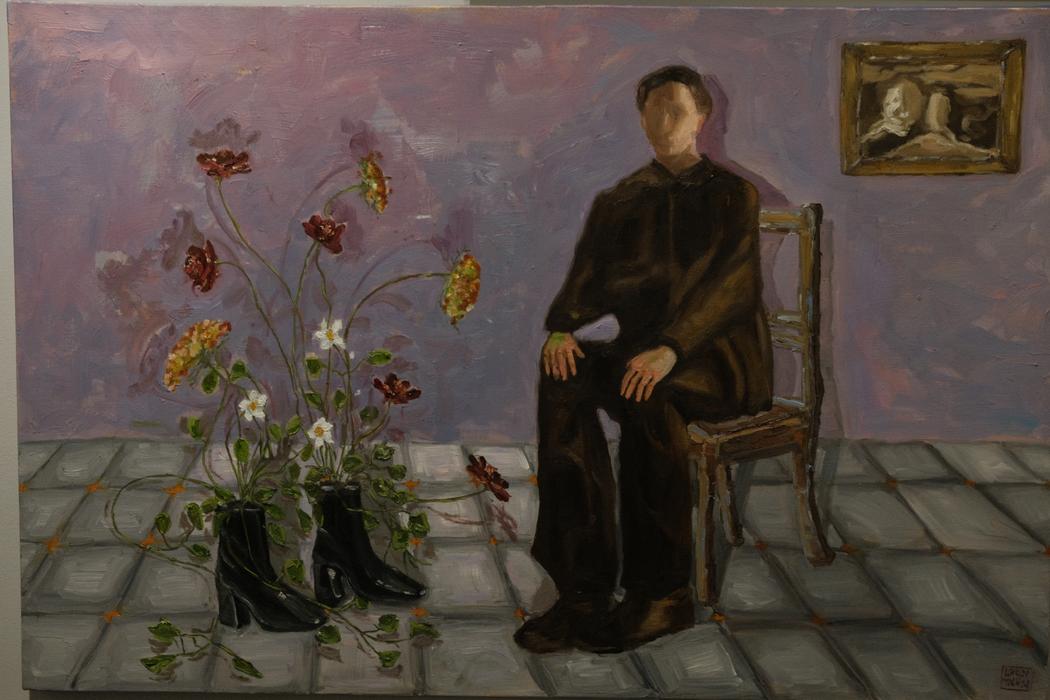 Loan Tran | A Quaver Rest
Your background in law, culinary arts, and wine studies is unconventional for an artist. How have these different disciplines shaped the way you observe human behavior and sensory detail in your work?
My background in wine study, culinary art and law has shaped how I see and feel. In wine and culinary training, I learned to read textures, color, and the materials to understand how subtle shifts can transform an entire experience. Therefore, that sensory discipline taught me to be patient, to fully focus on the presence and take a deep attention to process.
Meanwhile, attending University of Law and especially during my research on criminal psychology for my graduation essay encouraged me improve the ability to observe details, notice human behavior, body language, examine motives, hidden narratives. I developed a habit of looking beneath the surface, questioning what is visible; reading the tension between appearance and intention; noticing what is shown and what is hidden.
Together, these fields guided me to look at the world through two lenses at once: one sensory and one psychological. My practice is an exploration of perception: how emotion, memory and the unseen layers of our psyche can be translated into gesture, texture and visual form. I don’t just paint what the body looks like, I try to paint what it feels like.
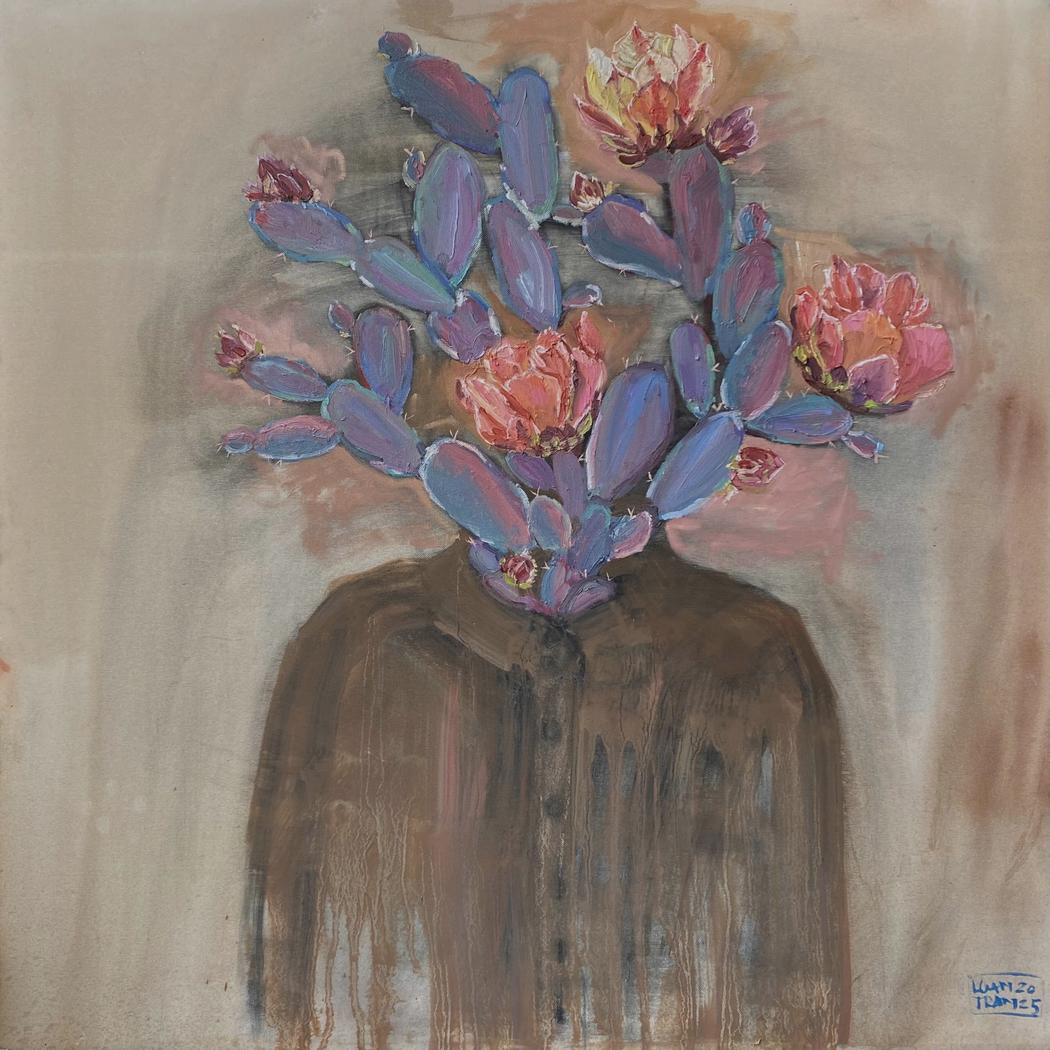 Loan Tran | Bloom
Nature seems to have a symbolic, almost intimate presence in your works. How does the natural world help you express the inner emotional landscape?
We are loved and blessed by nature. This relationship is so deep that humans depend on nature not only for survival, physical but also mental health and even psychological affection. This connection is embedded in our histories, cultures and our everyday rituals.
I can sense a strong link between nature and human emotion. Theories like Stress Reduction or Attention Restoration explain how natural environments can calm the mind, restore focus and ease internal tension. And I experience this in a very personal moment. Some days ago, I noticed that my ginger plant had grown taller, and the small tree by my door had a new branch. They are living and enjoying their life quietly which remind me that each day carries its owns possibility and we all can start something wonderful, growth can be slow but still deeply meaningful These plants struggles too in their own way with the chaos, the cold weather or the big storm out there. Their resilience mirrors the emotional journey many of us go through
A flower bouquet can change your mood.
The ocean under the moonlight can soothe you instantly.
A bowl of warm vegetable soup can comfort you after a long day.
For me, I feel like being held by these gentle encounters. They remind me of the beauty in small things – the moments we often overlook while searching for something grand. In my work, nature becomes a way to express that quiet emotional landscape: the tenderness, the transformation, the fragility and the resilience that shape our inner world.
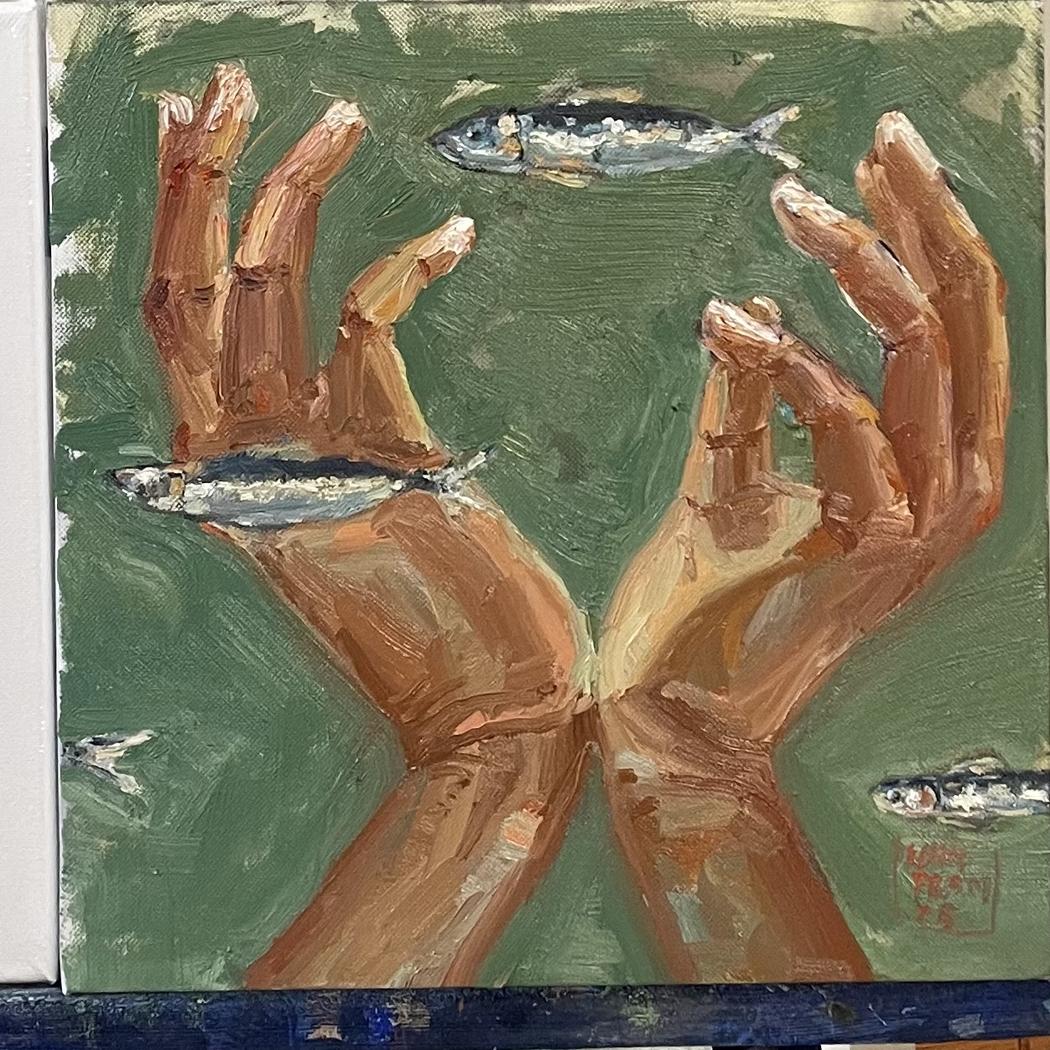 Loan Tran | Inhaling
You write about intimacy, distance, and presence as emotional imprints. How do these themes manifest visually in your paintings?
The painting has a life of its own and I try to let that life come through. It fascinates me how a canvas can hold the depth of one’s inner world and express it visually. We all connect to people and moment, and yet we can lose them, miss them and watch them turn into memory. What we hold today becomes yesterday when we look back. It is beautiful that art is one of the way to keep those fleeting moments alive.
Painting is an attempt to come to terms with life when I start a painting, somehow it is outside but at the end, I find myself moving inward. In my practice, I explore the silent dialogue that unfolds within; the quiet negotiations between closeness and distance, intimacy and boundaries – how emotion and memory inhabit a body.
Intimacy, for me, is not confined to relationship with others but appears from the internal fragile and conflicting conversations. Art is powerful enough to connect with the past, understand the present and dream about future. I love to capture intimate moments from everyday life and express through small subjects. Some details such as fabric, a red thread or floating fish can bring me to a quiet confession with my own, they invite me to sense the closeness, the private moment when I can have a private space where I can speak to my inner voice and translate them visually by the texture, brushstroke and colors. Moreover, through using the personal reflection and narrative, I can create a direct connection with the viewers and somehow it can relate to a part of their story as well.
Alongside the warmth and tenderness, there is also distance. In “Thread of Intimacy”, I brought in an emotional boundary. We can see the closeness that remains slightly apart, the space between touch and distance, also the attachment and independence. These gaps create the psychological pause. I’d like to put both type of emotion in the painting so as describing the quiet conflict deep inside our soul, the inconsistency between internal thinking and the outside reactions. I often leave the empty space, blurred area or the slight transition between forms. This creates a feeling of stepping back, of something that can be sensed but can’t be fully reached There are moments I allow myself to detach from the external world, give my mind space to observe and experience the internal emotions deeply to turn them into the “image”. And for me, stepping back is not avoidance; this process provide the ideal area for me to refresh the perspective and see the whole. Besides that, I also set a painting or a project aside for a period of time. . The important thing, for me is how I can connect deeply with the art, how I can make it happen. Distance allows me to return with clarity, and understand more of my work. I’ve realized that it often takes more time than expected. But actually it is meaningful that remoteness in time can change the expectation and appreciation of the artwork.
Presence becomes visible between those two states. Presence appears as the tension between closeness and detachment, it causes the state that emotion has solidified and became visible. Through the floating fish, two hands, a blooming flower, or a small piece of fabric, I purposely let them act like the elements and these elements play the role as the signature, mark the point where memory and emotion turn tactile. We can choose the way we want the artwork to be seen and how the story can be revealed. So through the brushstroke, the layers and colors, I shape this state of presence and allows the inner voice to be translated emotionally.
Overall, the visual language is built from fragments, surreal objects, shifting moments. The way intimacy can pull you in, distance push you back and the presence get you close to a specific emotional moment. Together, they guide the viewer toward a specific emotional moment.
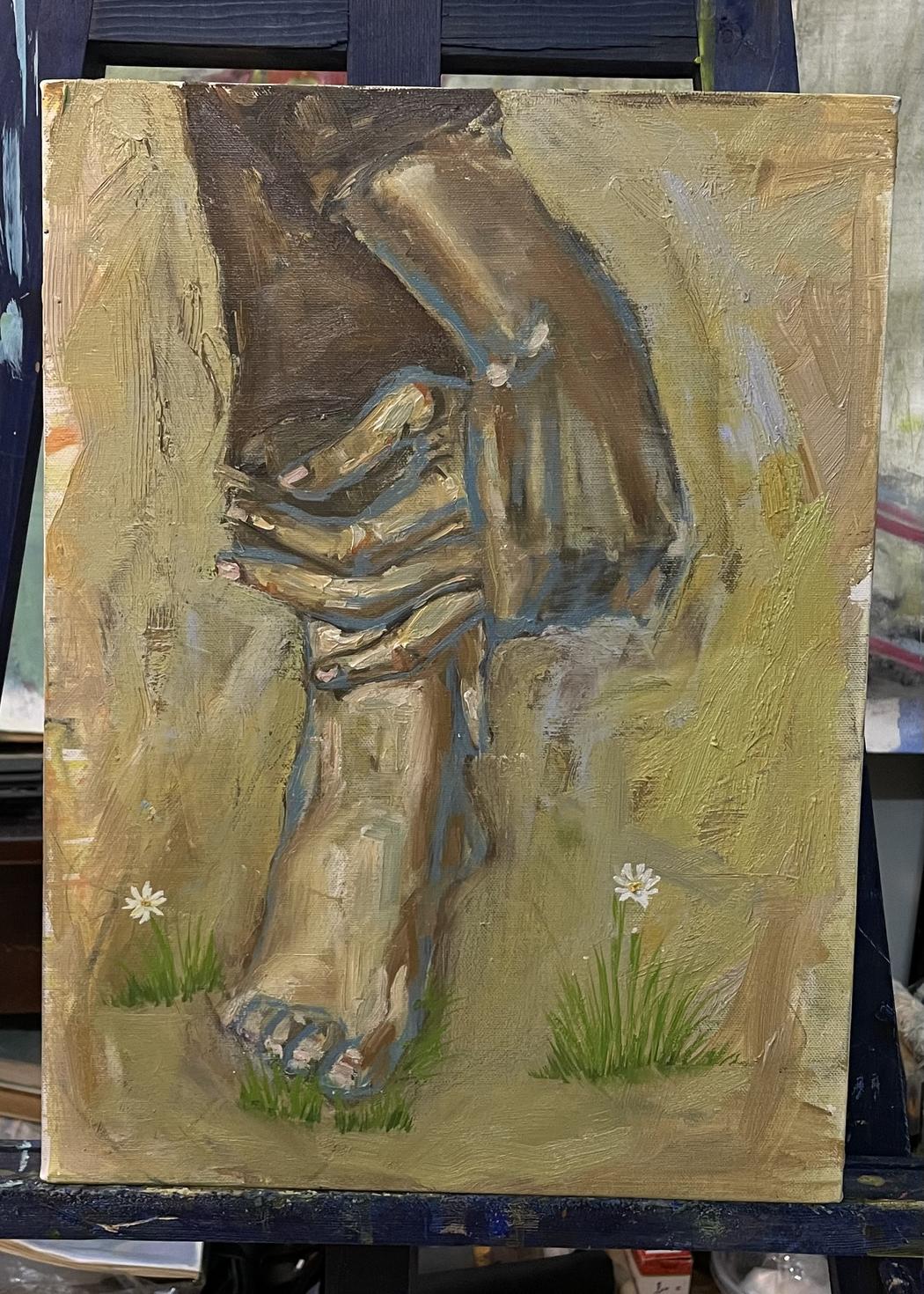 Loan Tran | Soft Grip
Was there a specific moment when painting shifted from personal therapy into a dedicated artistic practice?
Five years ago, I made a very conscious decision to reconnect with art. At that time, painting wasn’t a full time pursuit but I committed to giving it real time and effort. From that moment, I began with gratitude and appreciation for every sketch, every small canvas and even imperfections. I found a class, went back to the basics, adapted my schedule and set a discipline around it. It felt like an opportunity I shouldn’t miss again, and something inside kept telling me to listen.
There was also a very intimate moment of realization. One evening, while sitting in my room, I noticed the brushes, the box of colors and paper that I had always kept but never touched. They had always been there – beside me for the whole time but I was the one who had abandoned them. That night, I pulled out the acrylics and painted a simple “Still life” on a piece of Canson paper. It was the first time in years. The next day I was exhausted but I felt alive. I loved the color I put down, the shapes I formed and the effort I poured into it. After that I recognized it helped me lower stress level and softened the depression. I didn’t pressure myself, I simply painted with my heart and sincerity, letting emotions turn into shapes and colors. That was the positive attempt and I admitted painting can shift focus from negative thoughts to the creative process and for me it became a quiet form of meditation.
I have always loved looking at art, and later I learned that looking at a beautiful piece of art can increase blood flow to the brain by up to 10 percent. It has been found that when we see something beautiful, a tiny dose of pleasure hormone accompanies the feeling of falling in love. In real life, when I engage deeply with an artwork, it is like a process that workouts for the brain and affects mental changes.
Gradually, through this practice of seeing and making, my connection with art became more stronger and meaningful. Step by step, that personal refuge transformed into a serious artistic practice. I built discipline, followed schedule and kept showing up for the work. Painting still is not my full time job but I am proud of how intensely and consistently I’ve maintained it.
In the beginning, I never planned or prepare for the exhibition or any kind of public. It felt like a distant dream. But at the end of last year, my teacher encouraged me to join in the first exhibition and although I was terrified, I trusted myself and followed her guidance. The first show at the Fine Art Museum was surreal. It was insane for me that time and I still feel grateful for my family and my teacher who always believed in my work before I fully believed in it myself.
Looking back now, everything came from the intense practice and the decision to keep going, keep looking forward and trust the direction I am moving in.
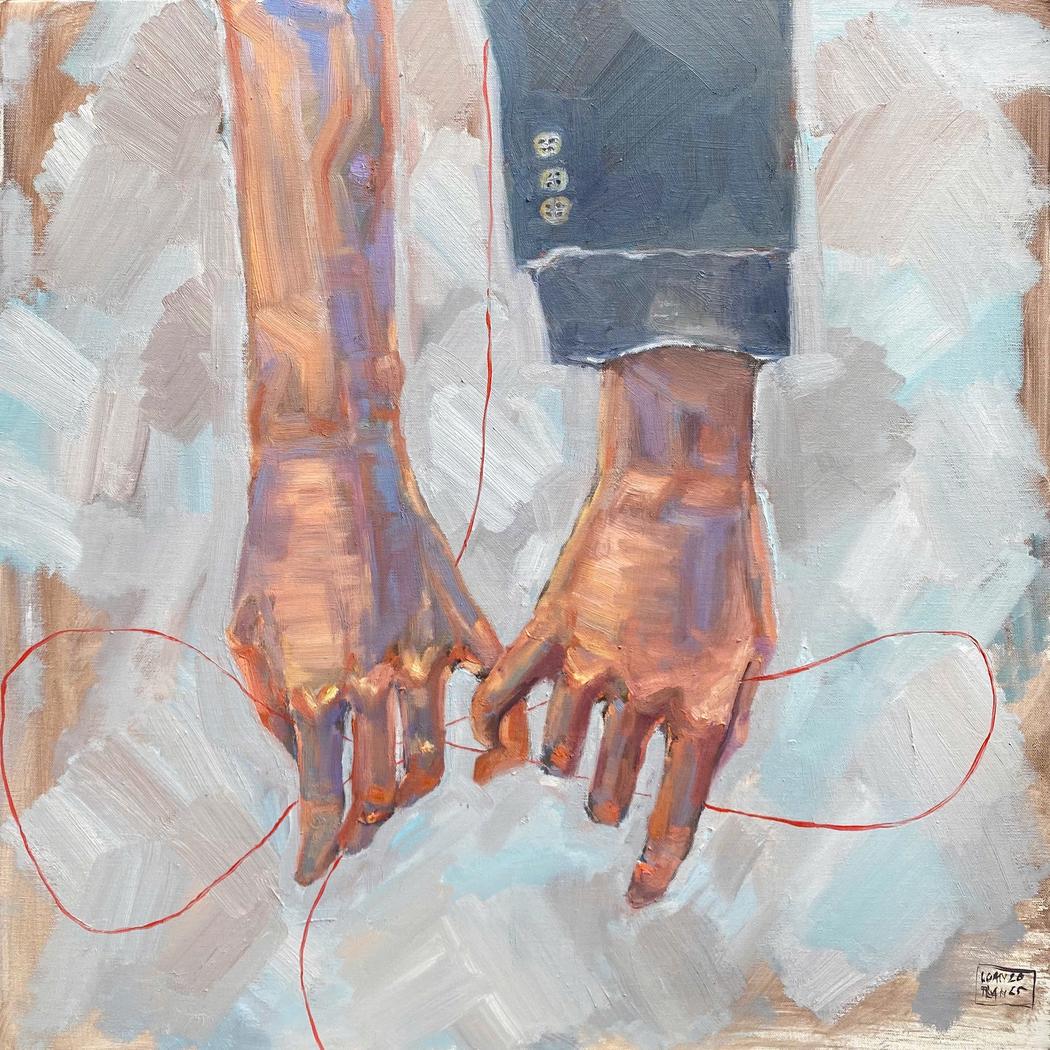 Loan Tran | Thread Of Intimacy
Your figures often appear fragmented or intertwined with natural elements. What draws you to this interplay between the human body and nature?
We are part of a whole. The human body and nature share a deep connection, reflect in stiking visual and structural similarities. Just as rivers and streams bring water across lands and into the ocean, humans have veins and vessels transporting blood throughout our bodies. The branching of the lungs mirrors the structure of tree branches, serve the essential purpose of sustaining life. The rings of a tree stump tell of its age and history, much like the unique swirls of a human fingerprint narrate our individuality. Or the veins a leaf align with the folds of a human hand. These reminds me that humanity and nature are deeply intertwined, reflecting a unique relationship that has existed for centuries
I am drawn to specific fragments of the body such as texture of skin, hair, hands or even scars. Despite the imperfections, they carry a quiet beauty of their own.
Nature enters my painting such as blooming flowers, floating fish or soft green leaves,… These elements make it alive and deepen the emotional layers. By placing natural elements beside them, I want to oppose the contrast: fragility against growth, heaviness against hope. Nature become the counterpoint, softening the emotional weight and sometimes reflecting the hidden thoughts within one self.
In the end, this interplay between human body and nature is my way of reminding myself and hopefully also the viewers that no matter how fragmented we feel, we are always connecting to something larger and alive.
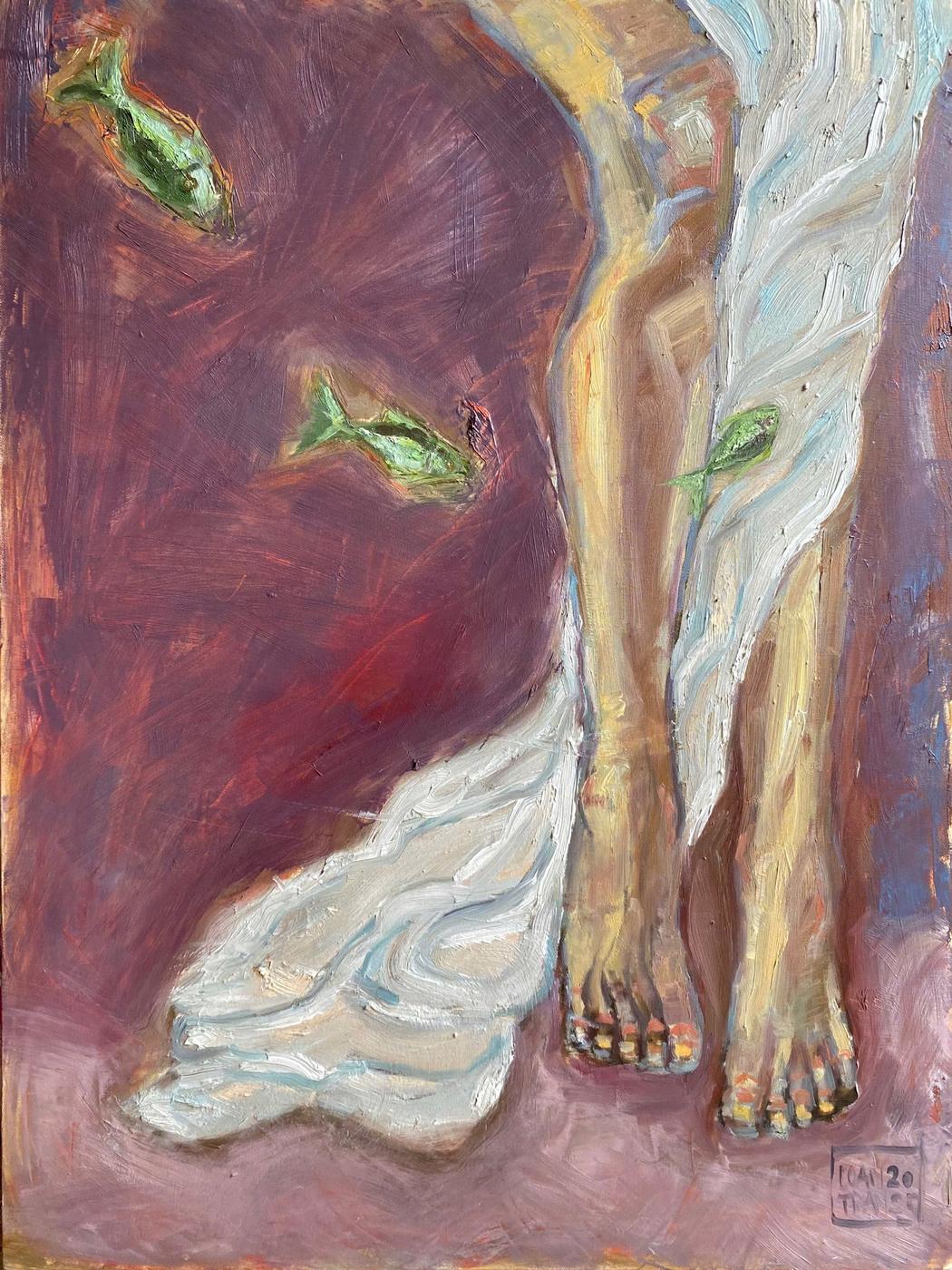 Loan Tran | Vein Of Time
Your work has been shown internationally. Do you notice cultural differences in how audiences interpret your imagery and emotional themes?
Yes , I do notice the differences, though they appear often in subtle way. Each culture brings own language and emotional habit, so I can see people focus on different aspects – some read the natural elements symbolically while other pay attention to gestures or psychological tension.
What remains is the core emotional response. Even if the symbolism is different, viewers still connect the feelings like softness, longing or loneliness. I think it is because emotions are not limited by geography; they are all human experiences. Depending on the different regions and cultures, some people will ask about concept, technique or narrative structure, meanwhile the others tend to focus on sensation, mood or quiet emotional change between the image. I really appreciate all the approaches, they simply reveal different cultural habits of seeing.
For me, the most meaningful part is witnessing how the same work speaks differently to everyone and each viewer can unlock a different layers. I can see that these cultural differences don’t separate reading, they can add depth to them. And they remind me that while arts may travel through different cultures, emotion can remain a shared language.
Leave a Reply
You must be logged in to post a comment.