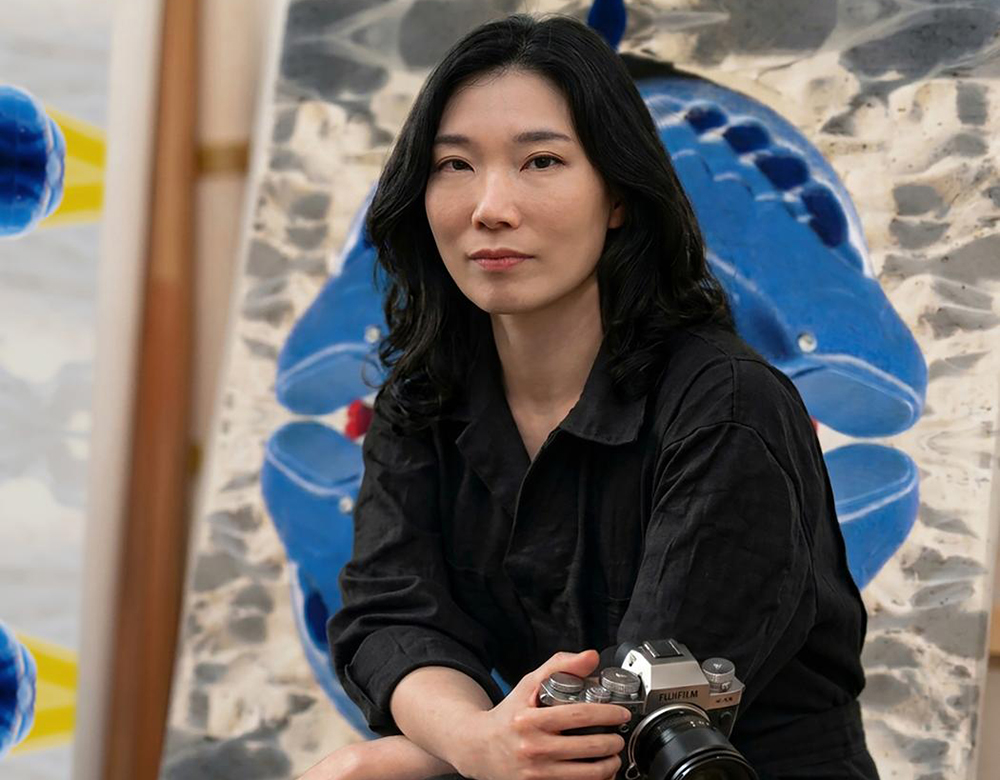
illi Jung Piccato
After more than a decade in visual merchandising for luxury fashion houses, how has your understanding of what makes an image compelling changed through your artistic practice?
In luxury visual merchandising, an image is compelling because it is thoughtfully crafted to capture attention, communicate a brand’s identity, and serve a clear commercial purpose.
Transitioning into fine art shifted my definition of what makes an image meaningful. Today, an image is compelling not because it is commercially curated, but because it embraces fragility, spontaneity, and raw emotion. I shifted my focus to listening closely to nature, humanity, and the fragile harmony between them. Across photography, digital collage, sculpture and installation, I reconstruct these observations into a new visual dialogue.
If I previously worked in a high-paced commercial environment, today I see myself as a farmer—working in tandem with rain, sunlight, soil, seeds, and human care to cultivate an image that is organic, living, and enduring.
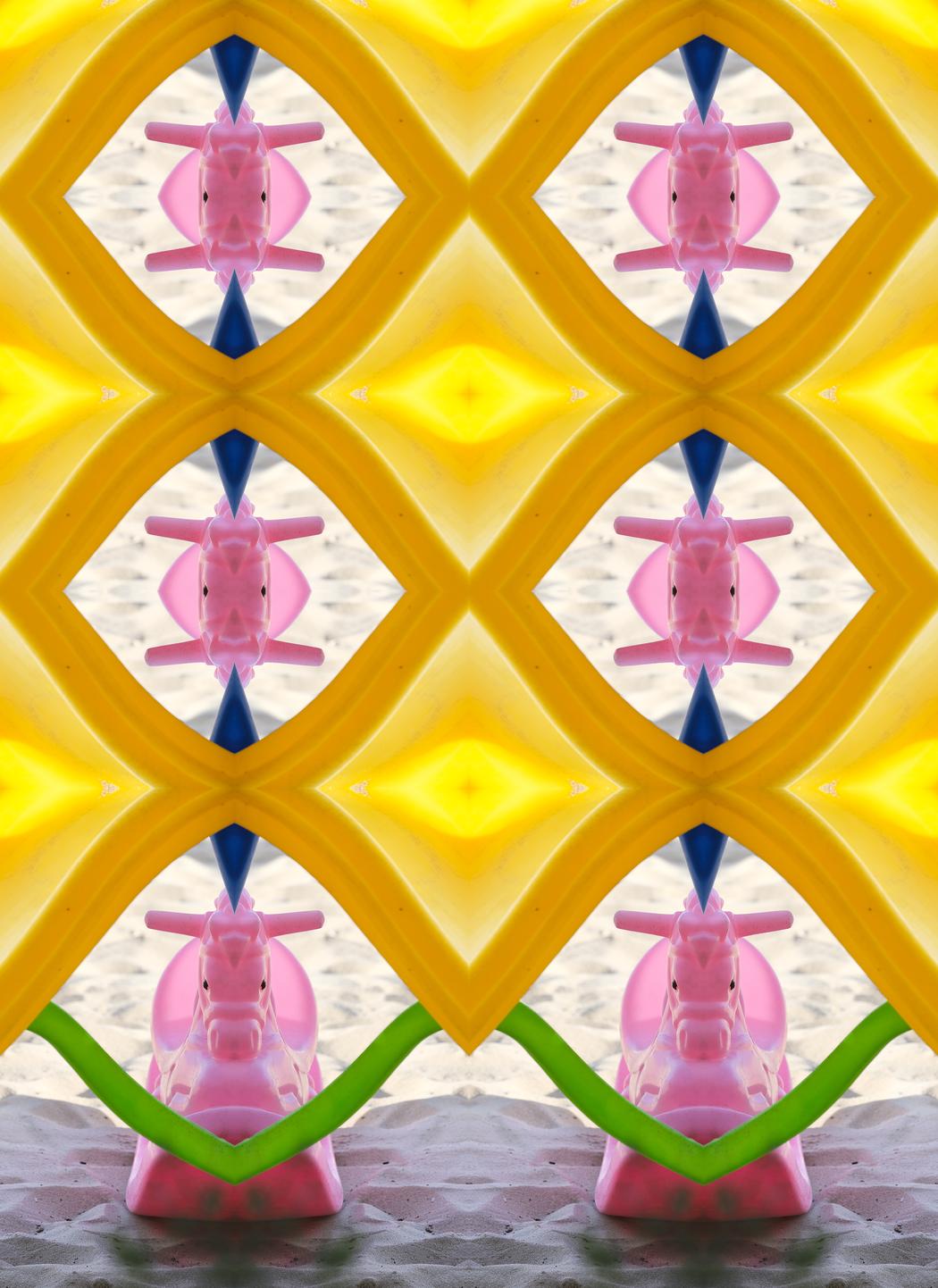 illi Jung Piccato | Wow | 2025
You describe an “ethic of care” as central to your work. How does this idea influence what you photograph and how you transform those images?
I believe humanity cannot exist without nature, and we carry a fundamental responsibility to protect this vital resource for future generations. This belief forms the heart of my “ethic of care”—a commitment to giving deep attention to essential aspects of life easily overlooked in a fast-moving society.
This philosophy shapes what I photograph. For seven years across Europe, South Korea, and Brazil, I documented the sky awaiting rain and observed subtle transformations in Echoes of Rain, Echoes of Snow Dance, and Echoes of the Choir. In JOY, this care expands toward safeguarding the laughter of childhood.
In terms of how I transform those images, an “ethic of care” serves as my compass. Rather than manipulating a frame to control the subject, I embrace spontaneity. After capturing raw moments, I reconstruct select photographs through mirroring—much like a symmetrical butterfly painting—to uncover the subtle visual story suspended between human presence and the natural world.
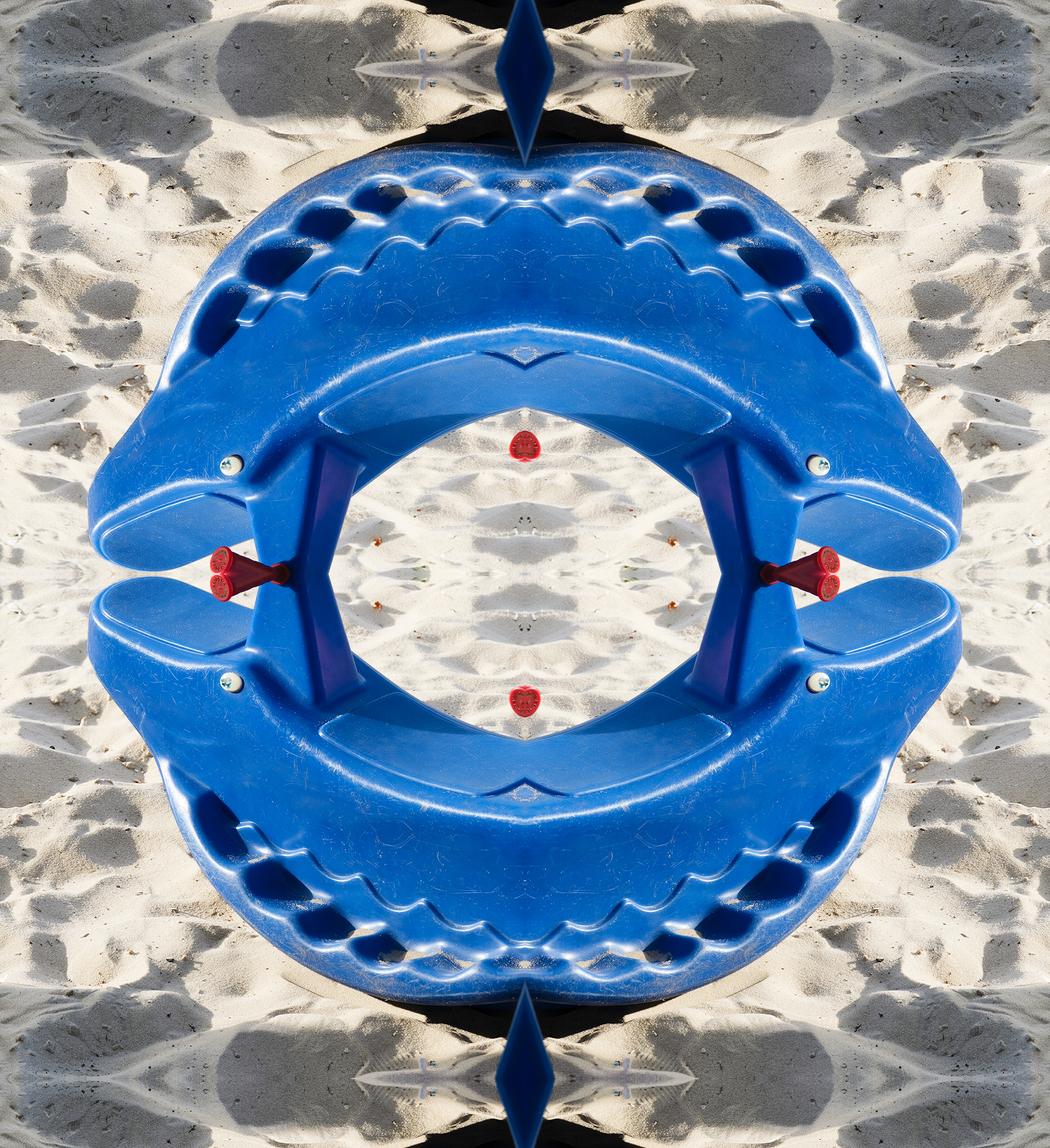 illi Jung Piccato | 360 Degrees, 365 Days | 2025
What first drew you to the makeshift beachside playgrounds of Brazil, and when did your observations begin to take shape as the JOY series?
When I moved to Rio de Janeiro with my family, watching my children play on the beach shifted my lens from the vast sky down to the sand, the sea, and the children themselves. I noticed how beautifully their laughter blended with the sound of the crashing waves.
Following the sound of their play one afternoon, I came across a temporary playground set up along the shoreline at Leme Beach. In that space, I discovered a profound convergence: the sunlight, the vivid colours of the play structures, the shadows, the footprints left in the sand, the blue sky, and the ocean seemed to be sharing in the laughter together. JOY crystallized in that moment.
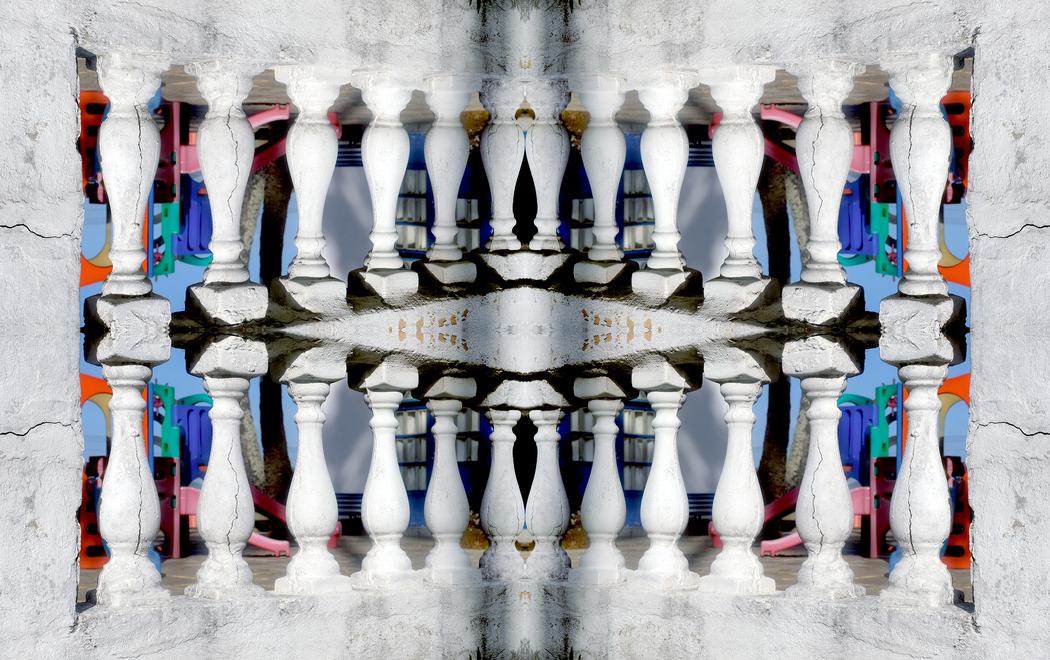 illi Jung Piccato | Big Smile | 2025
In your statement, you describe children returning to a slide “once, twice, and a thousand times.” How do you translate the rhythm of repeated play into a visual language?
Children play dynamically and rhythmically, yet each repetition builds a private, imaginative universe. To one child, the playground is an escape from a shark; to another, a royal castle or a hero’s battleground.
To translate this tireless, repetitive rhythm into a tangible visual language, I approach my photographs through a temporal lens. By cutting, duplicating, and reassembling images of these playground structures—mirroring the repetitive nature of children’s play—I map the hidden architecture of their play. The collage process reconstructs the temporal flow of movement, capturing how a colourful playground structure transforms into a site of infinite wonder through a child’s imagination.
The playground structures and the footprints in the sand hold distinct traces of play. What do these marks reveal to you about the relationship between the playground and the children who inhabit it?
Playgrounds exist for play, yet the difference between adults and children is revealed in these spaces. Children run directly toward play; adults instinctively search for shade and a place to sit. But as you observe longer, a shift happens—parents begin running and playing alongside their children, reawakened by the raw vitality of their laughter.
The physical traces left in the sand prove that this joyful world—where play exists regardless of age or social status—is not merely an abstract idea, but a real, tangible presence. Footprints of various sizes become physical evidence of a fleeting territory where imagination temporarily reshapes physical reality.
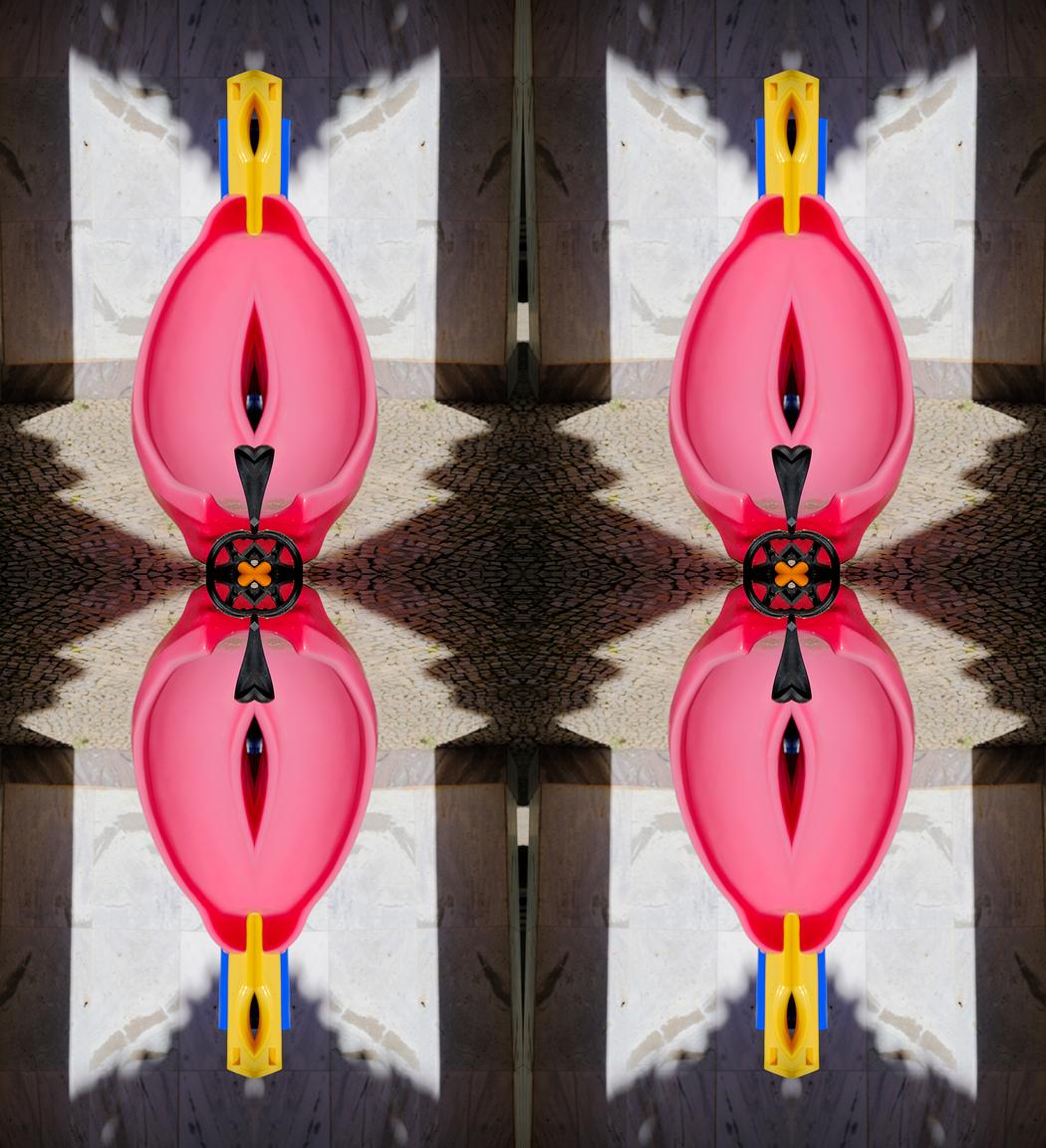 illi Jung Piccato | Encore Une Fois, S’Il Te PlaîT | 2025
Having lived across several countries, what has Rio de Janeiro brought to your practice that you had not encountered elsewhere?
Having lived in New York, Seoul, Canada, Italy, and France, I was accustomed to distinct boundaries between urban infrastructure and nature, or between private emotion and public life. Rio de Janeiro gently dissolved those boundaries for me.
Rio de Janeiro offers an intense, unfiltered vitality where rainforests, mountains, and the ocean meet directly with urban space. The city taught me to embrace fluidity, warmth, and the beauty of temporary shelters—from beach umbrellas to seaside playgrounds. It brought a warm, organic, colourful lightness and a spatial openness that has profoundly transformed my visual language.
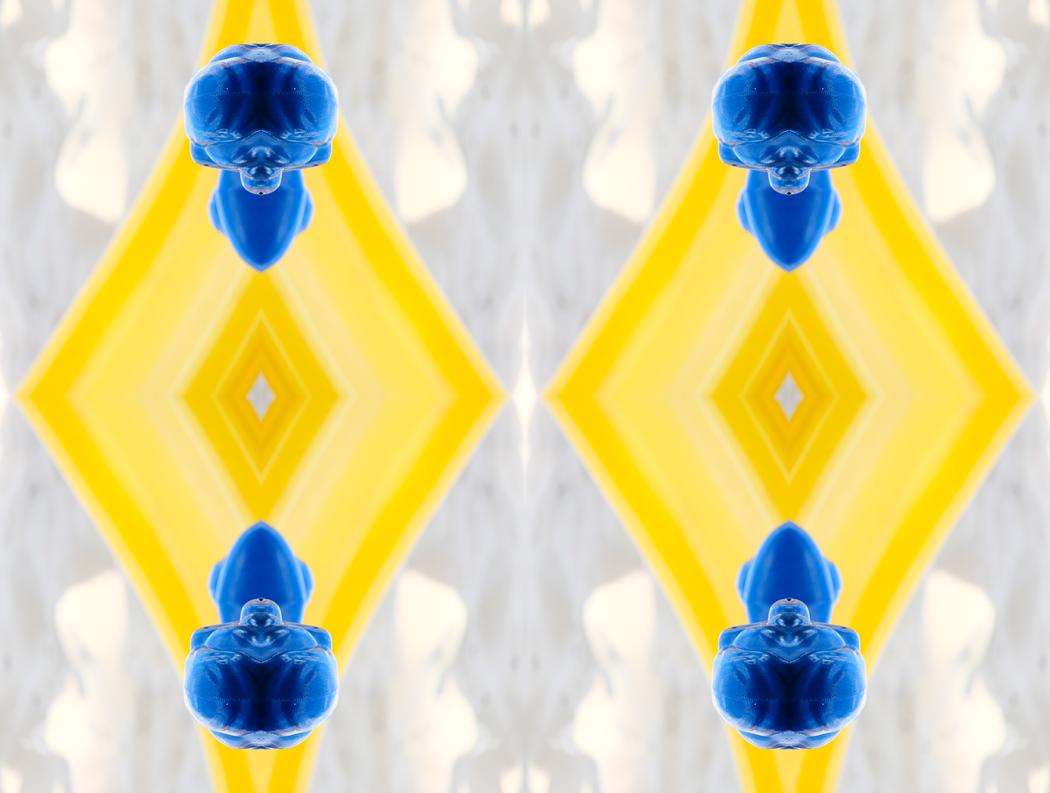 illi Jung Piccato | Joy | 2025
You describe JOY as a reminder of the laughter we are tasked to protect. What would you like viewers to carry from these images into their everyday lives?
I hope viewers reconnect with their own innate sense of wonder and lightness. Through these images, I want them to recall what it felt like to build imaginary worlds in a playground, entirely lost in play until sunset.
In a world increasingly shaped by environmental anxiety and social stress, joy is often dismissed as something trivial. I view joy as a resilient, life-giving resource that we must consciously protect. I hope viewers carry away joyful memories from their youth — a quiet reminder of the abundance that exists when we safeguard childlike wonder.