
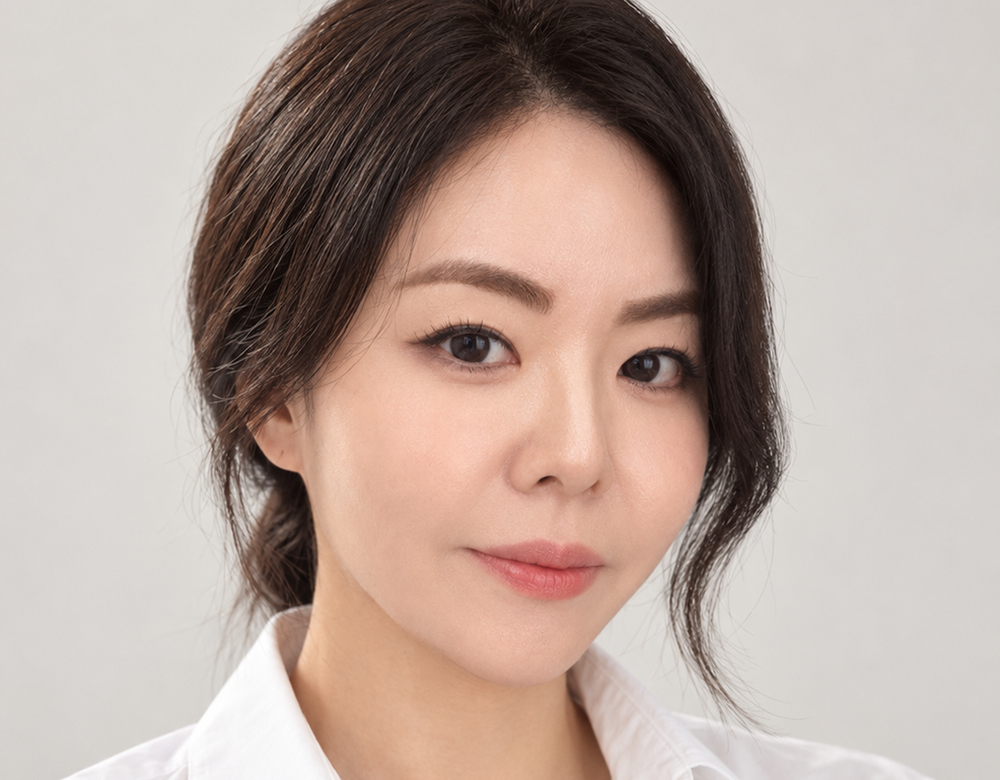
Jen Pak
Your recent work marks a shift from the city to the home. What prompted this change, and how has it transformed your approach to painting?
My earlier Legoscape paintings explored the city as a place of structure and belonging. Built largely from straight lines and geometric forms, that architecture conveyed a sense of order, but one that could also feel cold and isolating. Over time, I became more interested in what happens within those structures — the everyday experiences that give a place its personal meaning.
Between Meals, 130x194cm, acrylic on linen, 2025
This shift toward interiors coincided with a deeply personal period, when my father was ill and bedridden. I wanted to create rooms of a different kind of beauty, spaces where I could imagine him feeling uplifted. Painting became a way of conjuring places for him beyond the room to which he was confined — places that could offer warmth, comfort, and possibility.
This opened up a new visual language: more organic shapes, softer forms, and living elements like flowers, which brought warmth and a sense of passing time into the work. I still think carefully about color, pattern, and architectural form, but I now also consider what a room might mean to the person inhabiting it. A table, a vase of flowers, an empty chair — each can carry a story without fully revealing it. My approach has grown more attentive to that emotional atmosphere, to how a room can feel alive while holding both presence and absence.
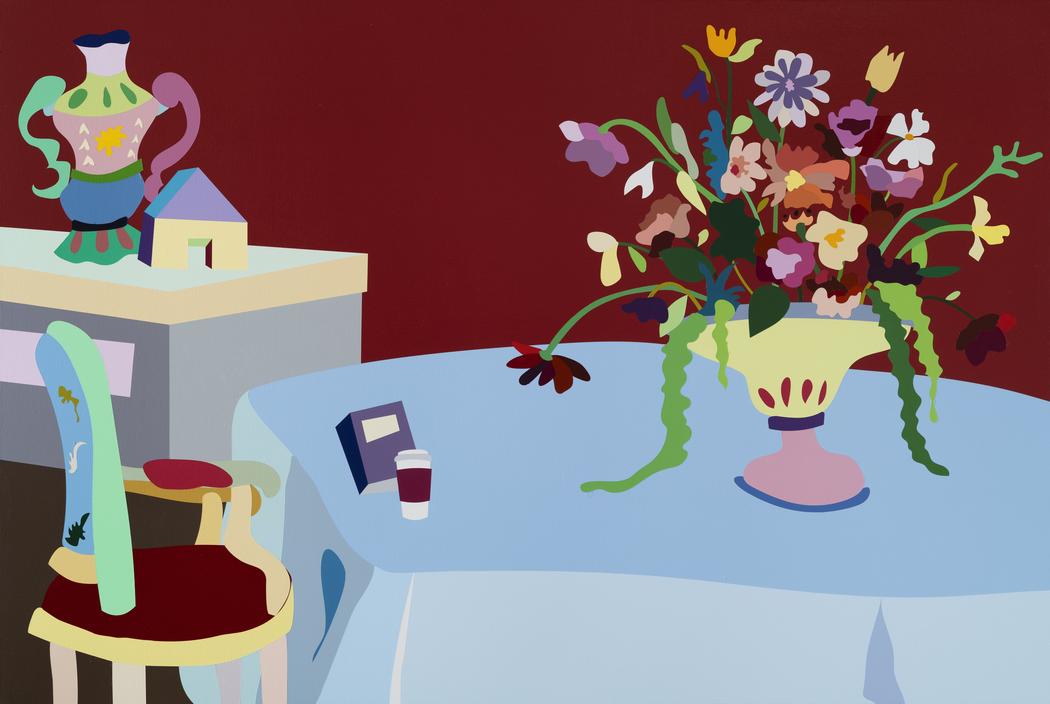 Jen Pak | Between Meals | 2025
You were born in New York and are now based in Seoul. How has your experience of these two places shaped your understanding of home and belonging?
Being Korean-American, I think of home as something that can exist across more than one place. New York connects me to my beginnings and education, while Seoul is where I have built my practice. Each holds a different part of my experience.
That has made me interested in belonging as something we gradually create through relationships, routines, and familiar surroundings. In my paintings, a room can bring together elements that come from different places and moments. It doesn’t need to belong to a single geographical location to feel like home. That sense of familiarity, even when you cannot quite identify its source, is something I hope the work conveys.
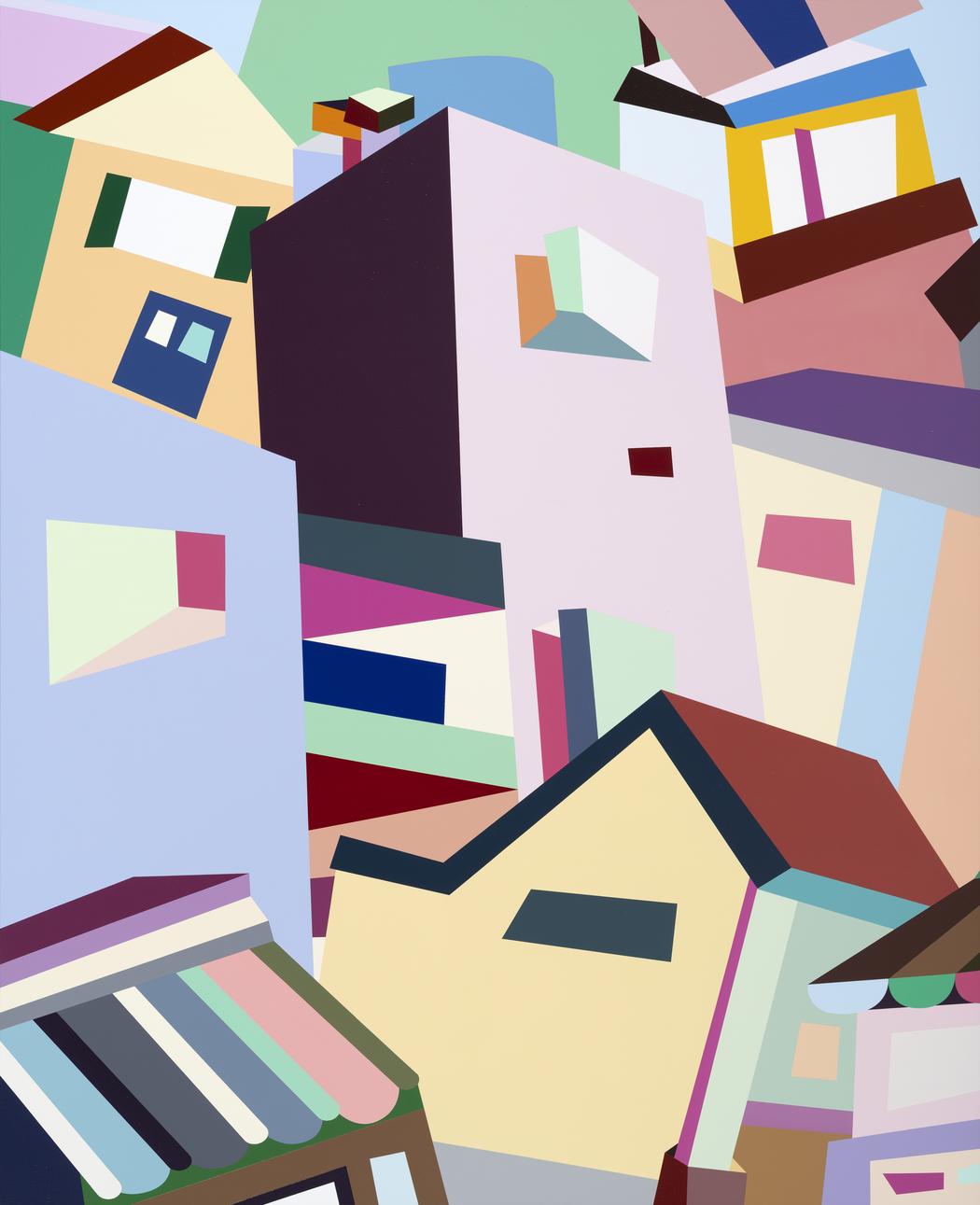 Jen Pak | Legoscape ( Ing) Seoul | 2023
Your interiors combine observation, recollection, and imagination. Could you walk us through how a particular room began and developed into a finished painting?
Sanctuary began with a long-overdue vacation with my sister. The bathroom was finished in beautiful black-and-white marble—it felt like my dream bathroom, so I photographed it. After the trip, I made a pencil sketch from the photograph, leaving color aside to focus on the shapes and composition.
I then photographed the sketch and redrew it in Adobe Illustrator. At that stage, I began adding and subtracting elements, allowing the room to move away from the original photograph. I introduced striped wallpaper, flowers, and a rug, and changed the palette to something more playful.
By the time I brought the composition onto canvas, it had become a space of its own. It still held the memory of that trip with my sister, but the colors and imagined details transformed its atmosphere. That is often how observation, recollection, and imagination come together in my work: a real room provides the starting point, and painting allows me to explore what else it might become.
As I work, perspective, pattern, and color become ways of shaping the room’s atmosphere. I build the acrylic paint through many layers to achieve the flatness and clarity I want. Although the surface can appear quite direct, it develops slowly. The finished room needs to hold together visually while leaving enough openness for a viewer to imagine a life within it.
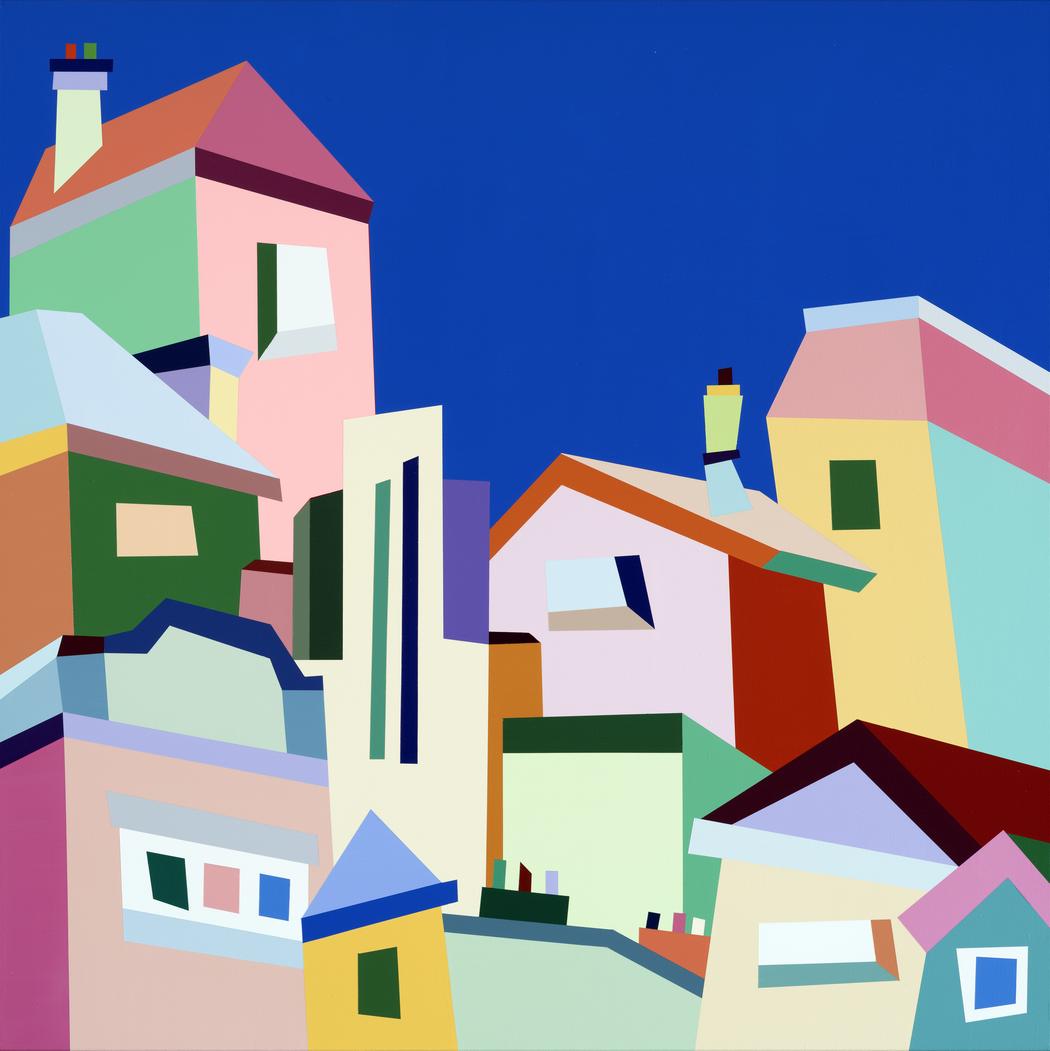 Jen Pak | Legoscape (Nyc+Nj) | 2023
Is there a space from your childhood that continues to find its way into your work, even in an altered or unrecognizable form?
Not a space from my childhood, exactly — but I always carry something from my earlier architectural series into the new interior paintings. A building or a structural fragment tends to reappear, sometimes tucked into the background, like a small house resting on a bookshelf, and sometimes placed more centrally in the room, taking the form of a column or another architectural element. It’s less a memory of a specific place than a recurring motif — a way of keeping that earlier body of work quietly present within the new one.
Your paintings use flattened perspectives and layered patterns. What possibilities do these choices open up that a more realistic depiction of space might not?
Flattening perspective allows me to bring different parts of a room into closer conversation. A pattern on a wall can become as prominent as a table or a window, and the eye can move between them without following a single, fixed viewpoint.
This feels appropriate to the way memory works. We don’t necessarily remember a room with accurate proportions; certain objects or colors become very vivid, while other details disappear. Pattern also gives the painting a rhythm and influences how long you spend looking at different areas. I’m interested in a space that feels recognizable but remains slightly unsettled, so that looking becomes an active process of discovering connections.
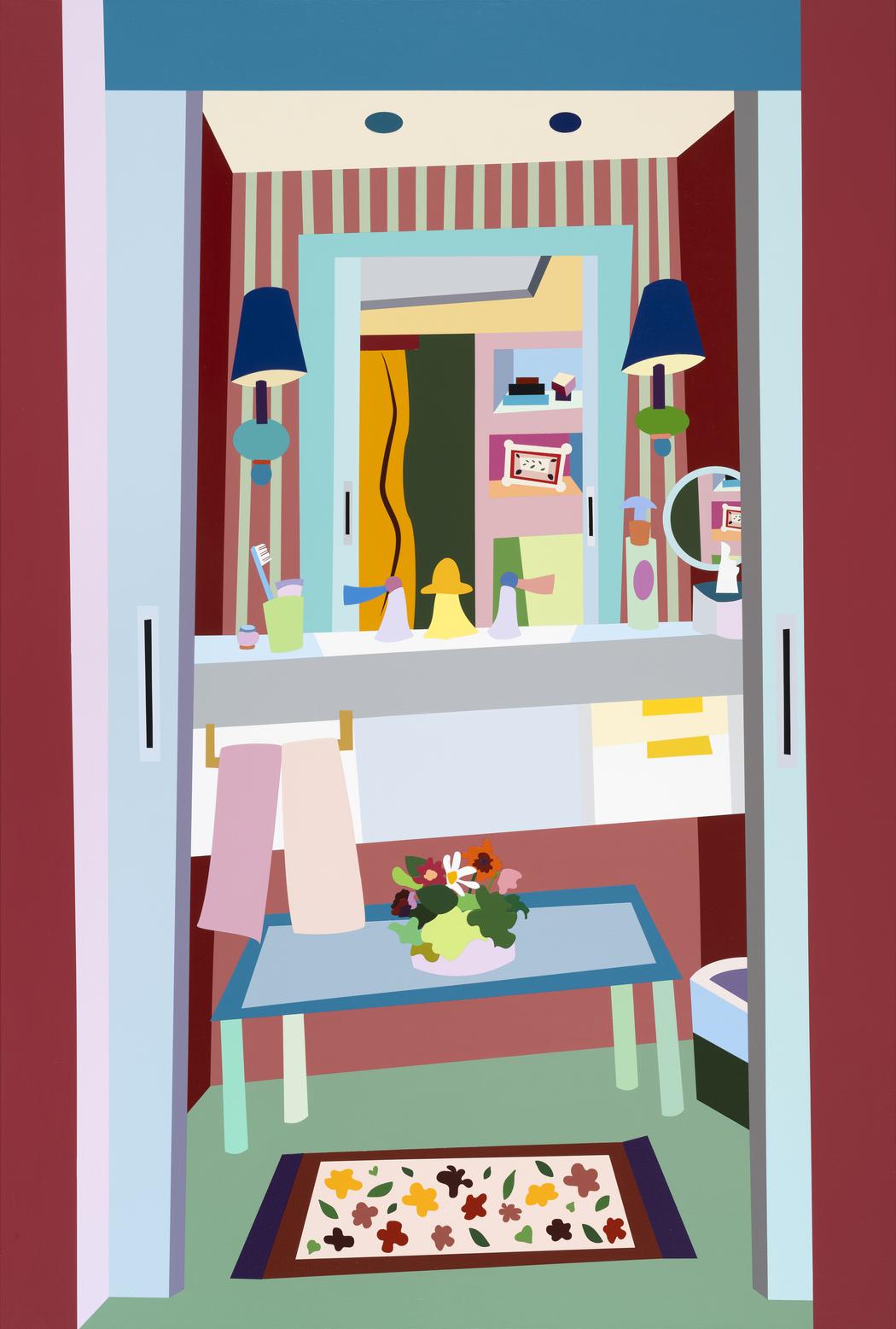 Jen Pak | Sanctuary | 2025
You studied both painting and contemporary art. How has the relationship between making art and studying it shaped your practice, and have you ever had to set that knowledge aside to follow an intuition?
Studying painting gave me a practical understanding of materials, color, and composition, while studying contemporary art helped me think about how a work participates in a larger conversation. My background in fashion design also informs my attention to surfaces, textiles, and the relationships between patterns.
Those experiences support my practice, but I don’t want to resolve every idea intellectually before I begin painting. Sometimes a color or an arrangement feels compelling before I can explain why. I try to give those decisions time to develop. There is a point when I need to stop analyzing and respond to what is happening on the canvas. The understanding often comes through making the work.
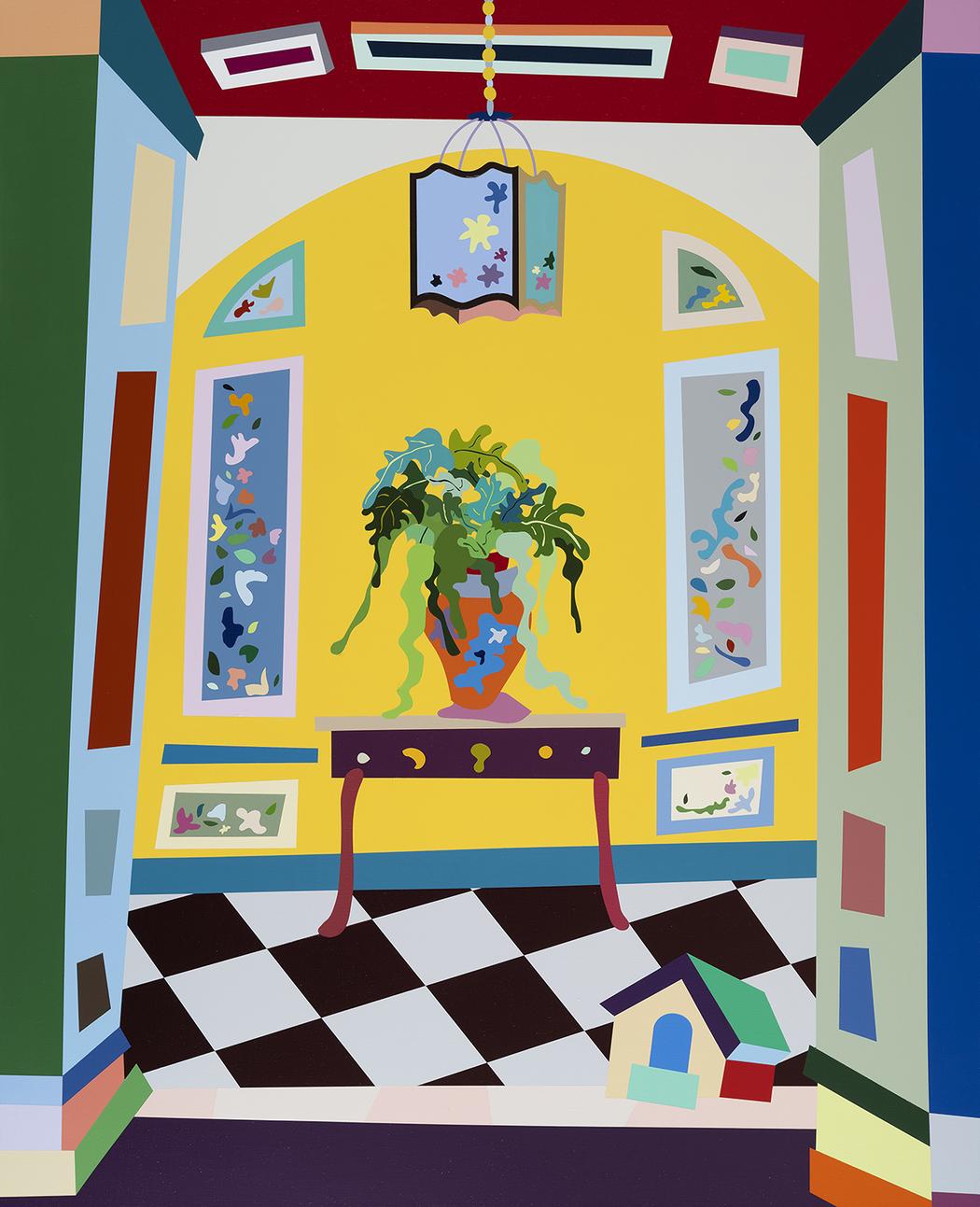 Jen Pak | Welcome Home | 2026
When viewers encounter your imagined rooms, how much of your own story do you want them to sense, and how much space do you hope to leave for their memories?
My own experiences shape the paintings, but I don’t feel that viewers need to know my biography to connect with them. I hope they sense an emotional presence—a feeling of familiarity, longing, comfort, or perhaps absence—without being given a single explanation.
The rooms leave space for someone else’s associations. A table might remind one person of a family gathering and another of a quiet moment alone. I’m interested in how the same image can hold those different experiences. My story provides a starting point, but the encounter becomes more meaningful when viewers bring something of their own to it.