
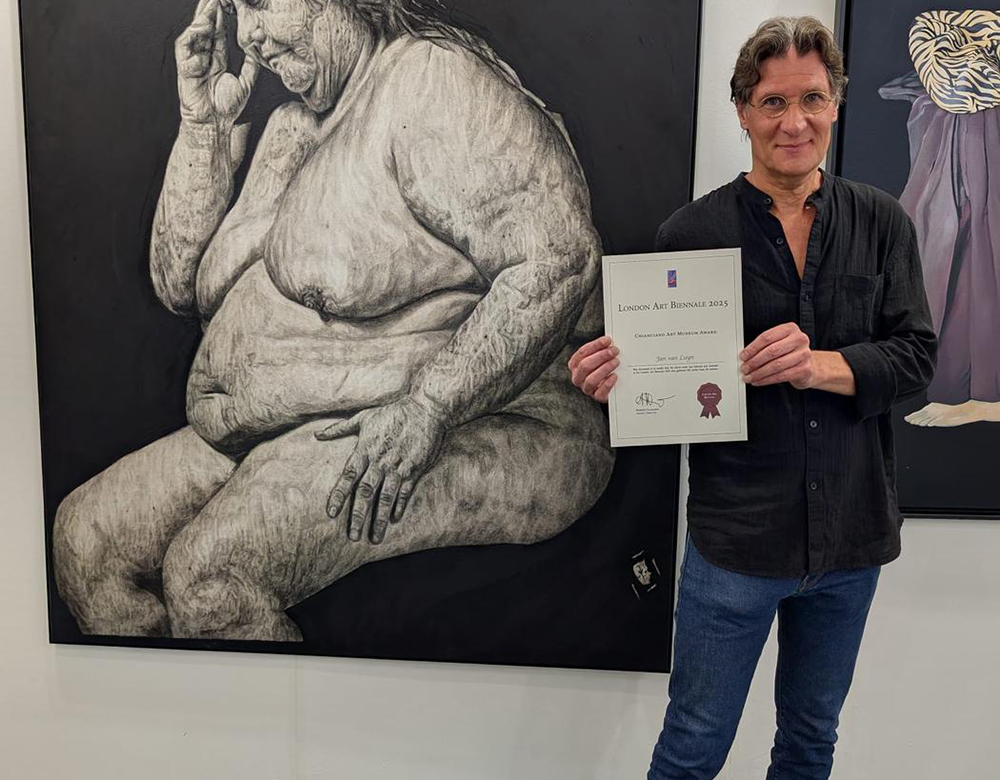
Jan van Luyn
You began making art in 2014 after a long illness. What drew you to painting at that moment, and how has its meaning in your life evolved?
Actually, I was already writing poetry. And classical music became a big part of my life. But art in the form of painting came as a surprise. I had never thought about it, but one day I saw a piece of paper, a pencil and a marker and felt the urge to draw. I am very intuitive, so I just followed this need and started to draw. No masterpieces, haha, just some sketches; it was not even close to great art. But I enjoyed it so much that I started to draw every day. Painting was not possible, as my health needed to improve more before I could leave my bed. I was in a wheelchair for 14 years and ill for 17 years, from top to toe.
My art developed as my health did. Not hand in hand, but it seemed that my new health searched for an alternative way of life. As if the winter of my life had ended and spring had created new life inside of me. The urge to express myself was really strong. Almost like a basic need in life. For the first 5–6 years of my creative life, I was not able to draw or paint for more than 45 minutes to an hour on a daily basis. From 2020 to 2022, my health improved a lot due to therapy, and also, I had time on my hands. Around 2019, I started using colour (paint); before that, I did everything in black and white. It was almost unbelievable, as I started to realize that using colour was so logical and as if I had always known how to use it. (One of my first paintings was “Woman with Pipe”, 140 cm by 200 cm.)
Now I can paint for several hours on a daily basis. Art has become an inner need, and creating art feels like a big gift from life to me.
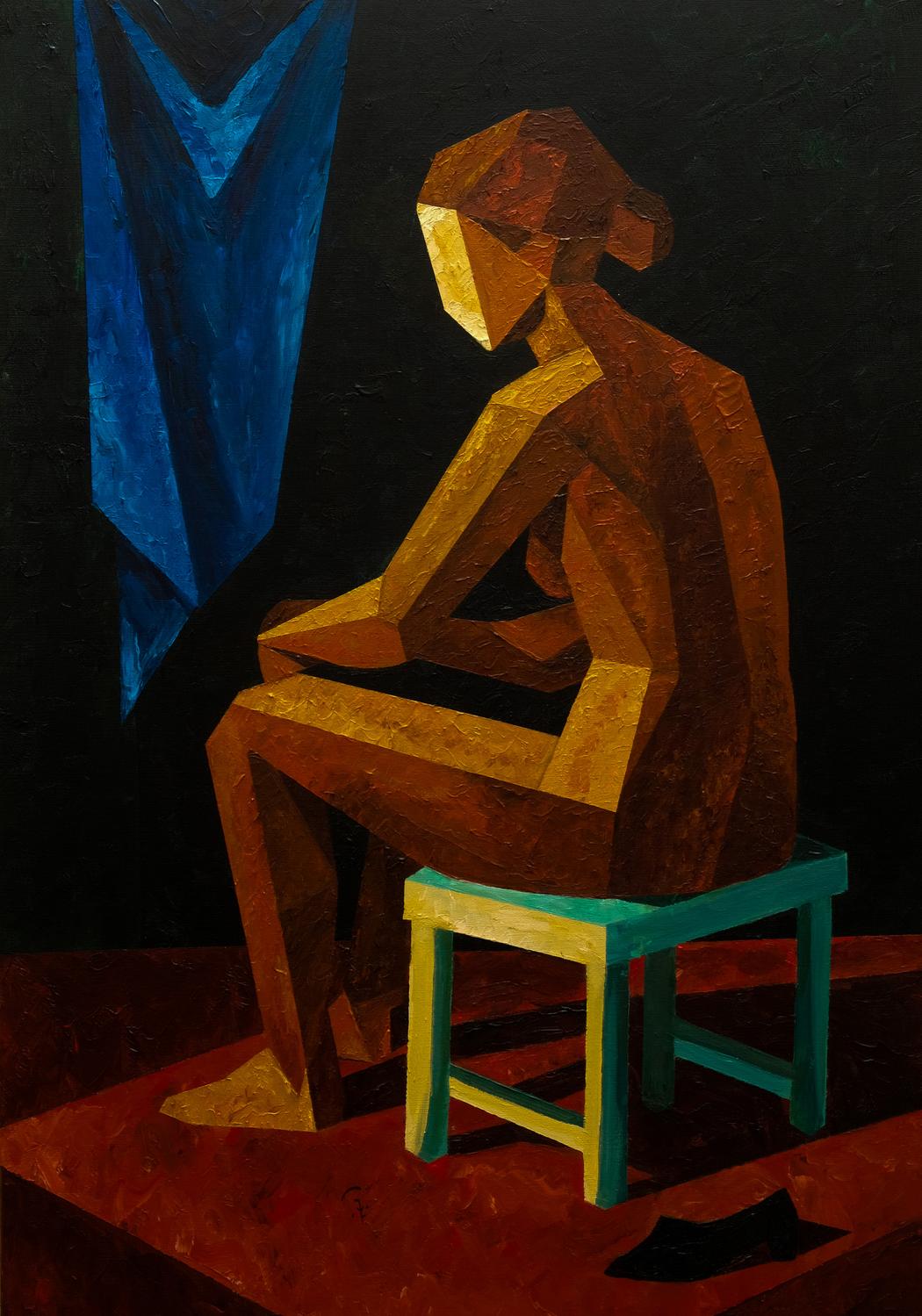 Jan van Luyn | After Bath | 2025
Since 2022, you have been able to create art every day. How has this continuity changed your confidence, your experimentation, and your relationship with the creative process?
My confidence has not changed a lot. I have never experienced fear when I started to create. I follow my instinct. Like any other artist, I walk the road of doubt, searching and questioning my art and myself. I see those things as a need. One needs those elements to create art. It is a voyage of discovery. And this voyage has developed a stronger confidence, for sure. I believe that one is learning from each painting and drawing. I find my own ways of using techniques, structures and textures. And every painting that I have finished is another step on the mountain that I am climbing as an artist. Creativity has become a way of life. Like one needs to breathe, I need to create.
You call your new artistic language “Resonism”. How did this idea emerge, and what do you hope will resonate between a painting and its viewer?
I think Resonism is, in fact, what I tried to achieve from the beginning. It just did not have a “name”. Resonism is, for me, the constant dialogue I have with the canvas. In this dialogue, ideas come to me: how to move on, what textures and structures to use, colours, details, balances (!). Yes, all in life, as in art, is about balances, and I try to make my paintings alive and moving. They balance the life in the paint, as I express myself completely in the image that is created. So, this “tension”, this “lifeness”, is not an ending; no, it is a journey, creating, as I hope, an atmosphere that will last. It is also my hope that the viewer experiences this atmosphere and has emotions that keep on going, resonating in the energy called life.
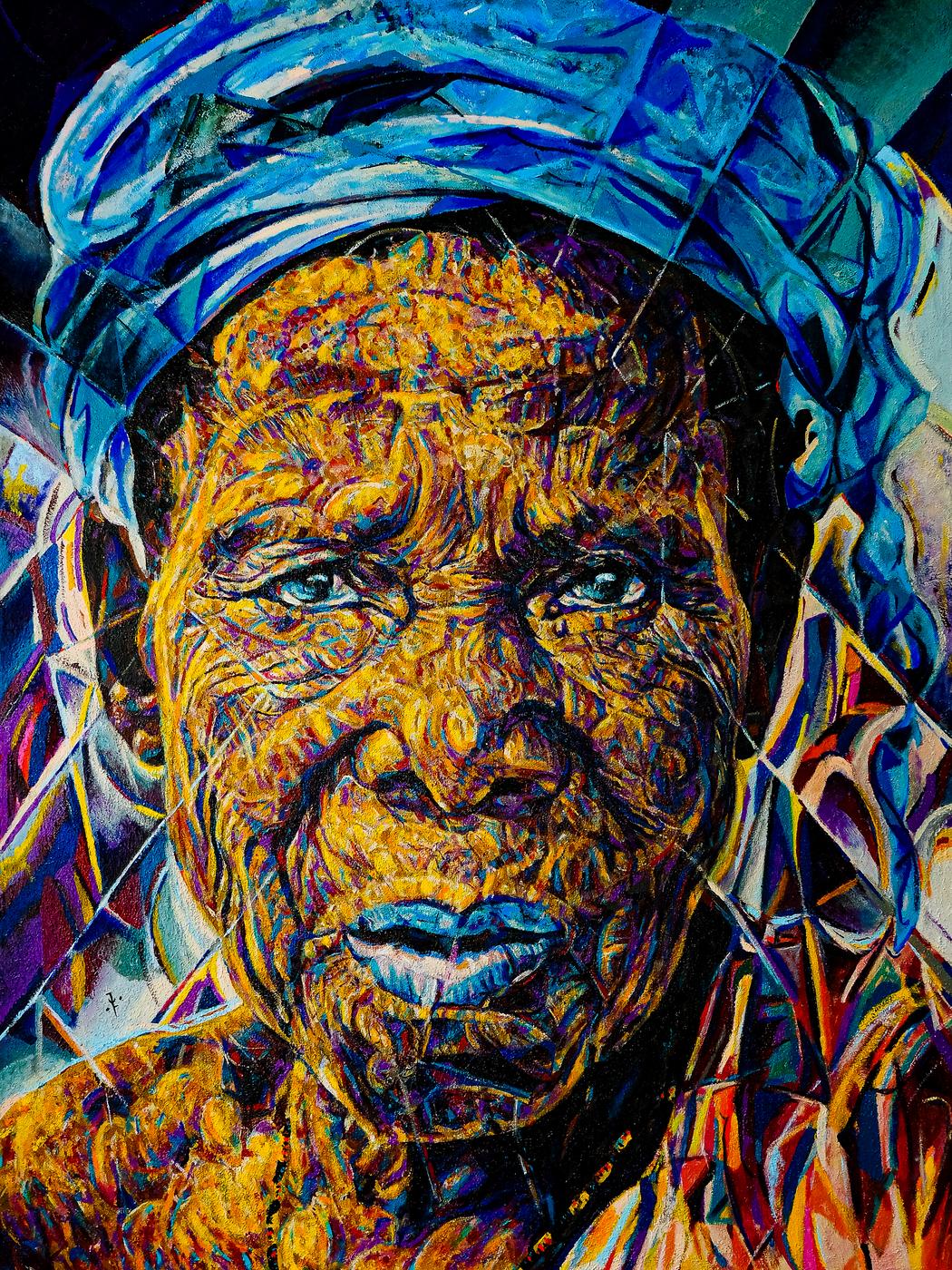 Jan van Luyn | Asha | 2022
You describe your practice as an exploration of your inner life. How does an emotion or a memory begin to take shape on the canvas?
I am not an artist who needs or wants to express direct emotions (or memories) in my paintings. I have become the person that I am today through the history of my past, my present and the future. I believe that every brushstroke has my energy. So, my inner life does not have to be expressed through a direct confrontation with emotions. I am not like this, as we humans are a complex combination of many things; emotions and memories are just a part of this energy. Every painting needs a new beginning, new energy, and I use my instinct/intuition to guide me towards a new creation. I put all of my life into the energy that is required, and every artwork demands a part of my inner life. So, it is not something we can see, hear or understand. At least, I cannot understand it. It is just there; I can feel it and use it without asking myself which elements of my life are being used, as creative energy is, as I see it, a mysterious and complex use of the energy one is made of.
Your compositions often transform figures and their surroundings into angular planes. What attracts you to this structure, and how have you developed it into your own visual language?
Haha. Honestly? I don’t know. But I will try to answer your question anyhow. The way I come to my compositions is almost as elusive as it is real. It is not a process of many hours of thinking or sketching. The ideas and compositions, as well as the way I use structures, textures, etc., come to me while I am creating a piece. Walking in nature is a perfect way for me to bring creativity to life, solve the “puzzles” and find answers as well. For I believe that making art is a way of finding answers to the questions we are asking ourselves, and nature is a helpful source and accompanist in this process. I start with an idea, but this is just the beginning. Many times, the process of creating leads me towards new compositions. Yes, I can say for sure that I love geometry. I don’t know why. It is just there. It comes naturally. I feel close to the kind of structures and textures I use and the ways that I feel are helping to make the painting alive, in tension, balancing. I know this kind of “thinking” came to me with the first sketches that I made 12–13 years ago. And this beautiful, elusive way of creating is, as I believe, our inner strength and need to express ourselves. We try, sometimes too much, in my opinion, to understand everything. And yet, the greatest things in life are a mystery. I like it when we are able to leave some things in life unspoken, unexplained. For life is bigger than us. Art is a wonder of this life. We are, we may be, a part of this wonder, and I am grateful for that.
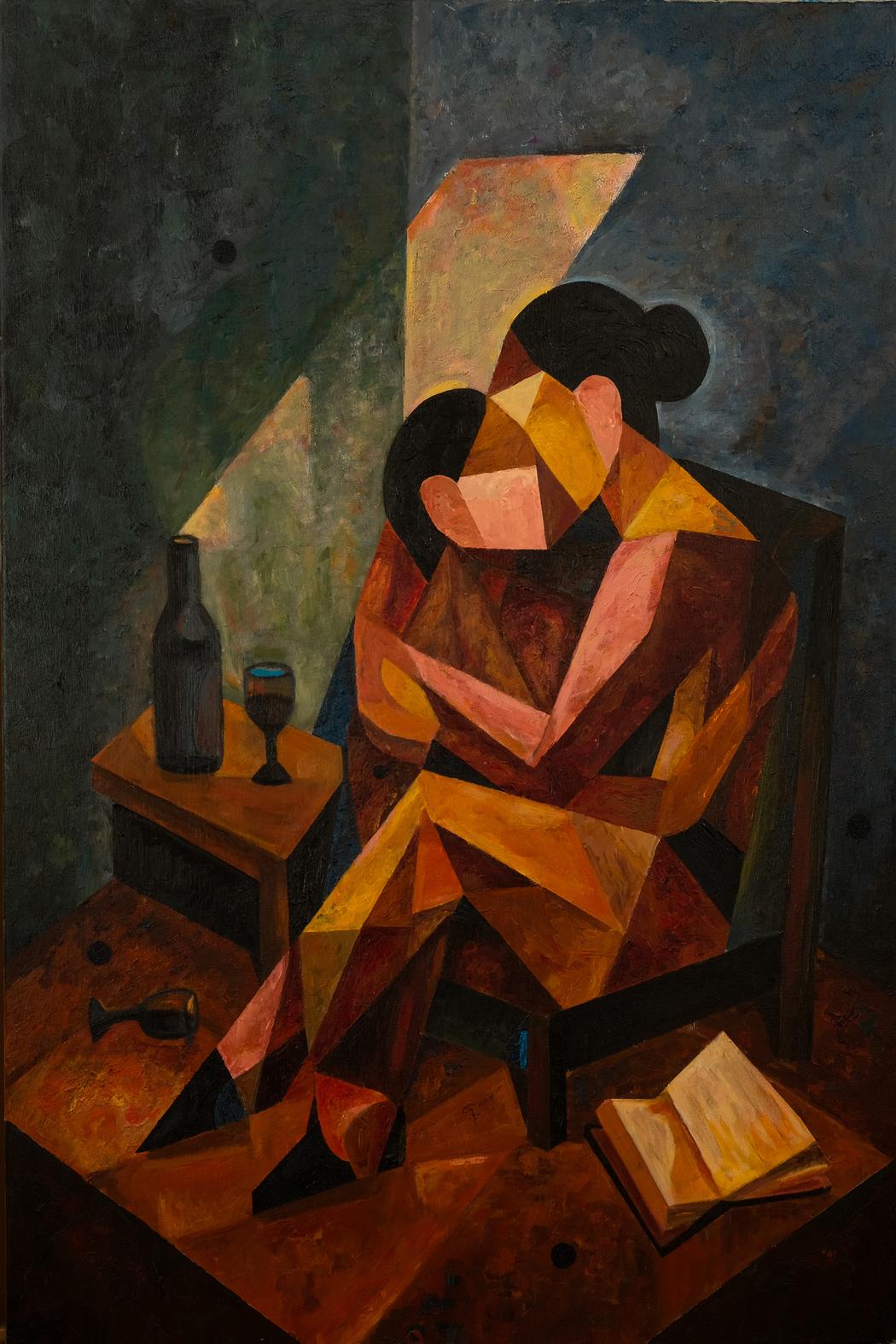 Jan van Luyn | Embrace | 2025
Your work has been exhibited in several countries. Has an encounter with a viewer from a different cultural background changed your understanding of one of your own works?
This answer can be short. No, it hasn’t.
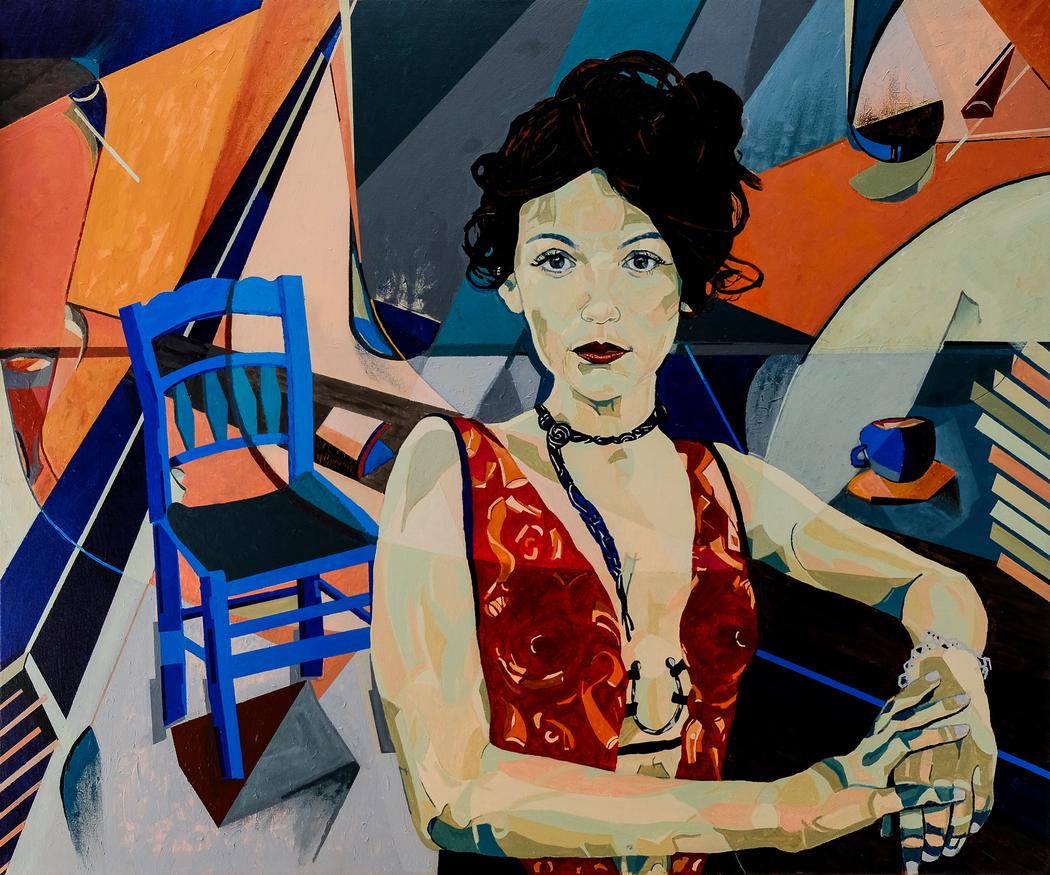 Jan van Luyn | Salon De The | 2021
You describe art as “the voice of beauty and hope”. How do you give hope a visual form while leaving room for the more difficult aspects of human experience?
Hope is not directly transferred into a visual form. For me, that sounds as if one can look at my paintings and see clear parts that express hope. No, for me, it is different. It feels a bit like I have to express myself in a different language to make clear what I mean by that. Hope lies in the fact that, for me, art is a visual form in general. As humans, we all have different DNA, characters and backgrounds. In art, we are able to express this unique voice in a way that allows us to reach out and see, hear and feel the energy of the composer. THAT is hope, that is beauty! So, it is not a concrete form, but an energetic way of showing ourselves in art and in life. It is communicating with everyone.
My dad always taught me that we, as human beings, cannot live on the nastiness and misery that life presents us with. We can try to take off the sharp edges, but we cannot remove them from our lives. We have to accept that life has a downside. So, what can we do? To hope? To live? We can—we must—focus on the beauty and good things in life. We must not only seek them but also create them! For in this energy, hope lies within us. It is an active way of creating perspective in our lives. We can only truly live when we have this beauty and hope—as guidance, but also as a horizon.
I would like to give an example from my own life that meant a lot to me. It concerns the art of music. Classical music. When I was ill, terribly ill, the lonely mornings, afternoons, evenings and nights did not feel like a killing field, as I had my music! No matter how bad I felt physically, no matter how bad I looked, how tired I was or how the pain tried to cut me off from all of life, the music was there. My radio “sang” this music for me just as beautifully and wonderfully as it did for everyone else. It made no distinction between me and healthy people. Music is a form that is bigger than our DNA, characters and backgrounds. Art, in general, is able to speak to us when words are not enough; it does not need a translator, for art is a common language. In this lies the voice of beauty and hope for me.
This is symbolic of my life and my relationship with art. When everything seemed lost and I was living in Dante’s Inferno, I still looked for, found and spread beauty. Every day, I hoped for some relief from the pain and for some good things: hearing music, seeing the beauty of nature, enjoying the company of a friend and feeling close to my deep longing for life. Finding art. Or, better said, art found me. And I embraced this gift.
But art does not exist without our effort, search, struggle and, yes, hope. We start with nothing—just a white canvas staring at us. We can easily walk away from it. I find it challenging and somehow reassuring to begin this journey of creating art. This path is the path of hope, and I try to create beauty. For myself, for the world, for life. It feels like a responsibility towards life because life has given me a second chance. So, together with art, I try to live up to the words my dad taught me and honour his memory.
