
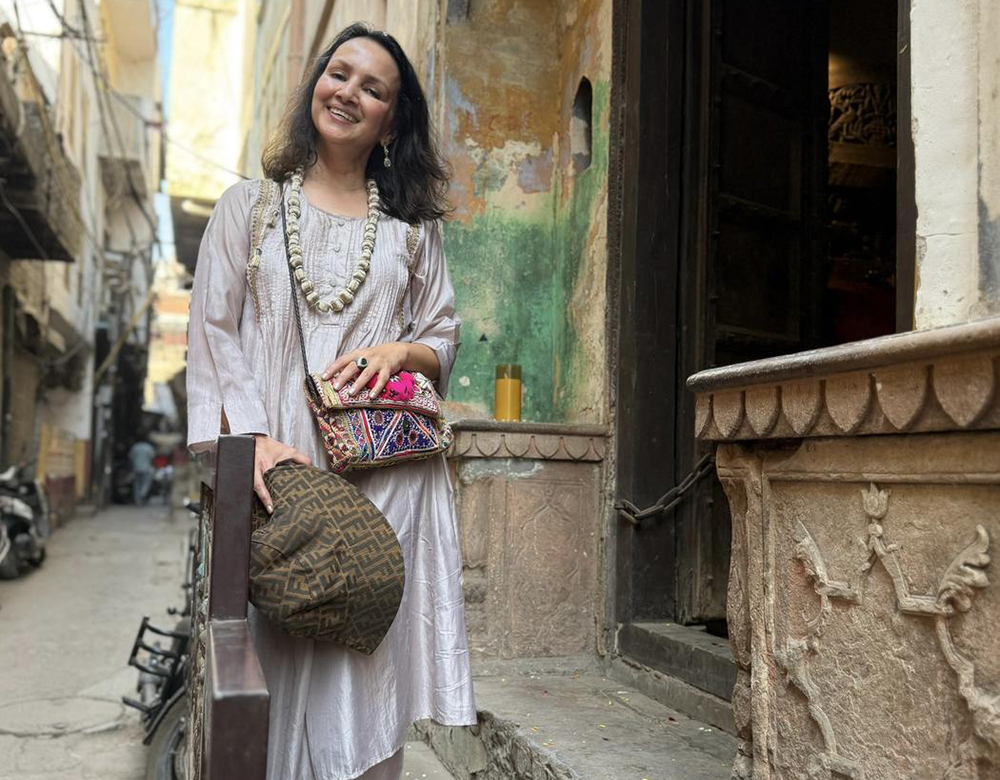
Promila Bahri
Your practice moves between social documentation and fine art. How do you balance the authenticity of lived experience with your own artistic interpretation?
I do not see documentation and artistic interpretation as opposing impulses. My practice begins with observation—of people, places, rituals and everyday situations—and an attempt to look beyond the immediate image towards the depth of an underlying or subtle truth. I retain the authenticity of lived experience while using the visual language of fine art—composition, symbolism, colour, juxtaposition and constructed imagery—to explore what may remain unseen. The photograph therefore becomes not merely a record of reality, but a space where observation and interpretation coexist.
Women and their worlds occupy a central place in your work. What first led you to focus on the feminine experience, and how has your perspective evolved over time?
My engagement with women and their worlds has been shaped by my own life experiences and by observing the women closest to me—my mother, sisters, friends, and the many women I have encountered at different stages of my life. My Buddhist practice, with its emphasis on humanism, has also deeply influenced this perspective. Through these encounters, I have witnessed an extraordinary spirit: the ability to adapt, endure, nurture, and continue.
I have long been drawn to the complex identities women inhabit simultaneously—as daughters, mothers, wives, sisters, caregivers, workers, and individuals. I am particularly interested in the tensions between these roles: the negotiations, silences, contradictions, and acts of self-preservation that often remain unseen.
Over time, what began as an intimate observation of the women around me has developed into a sustained exploration of femininity, identity, resilience, agency, and social conditioning. My work has moved beyond portraying women’s lives to questioning the structures that shape how women are perceived and remembered, as well as how they are permitted to define themselves.
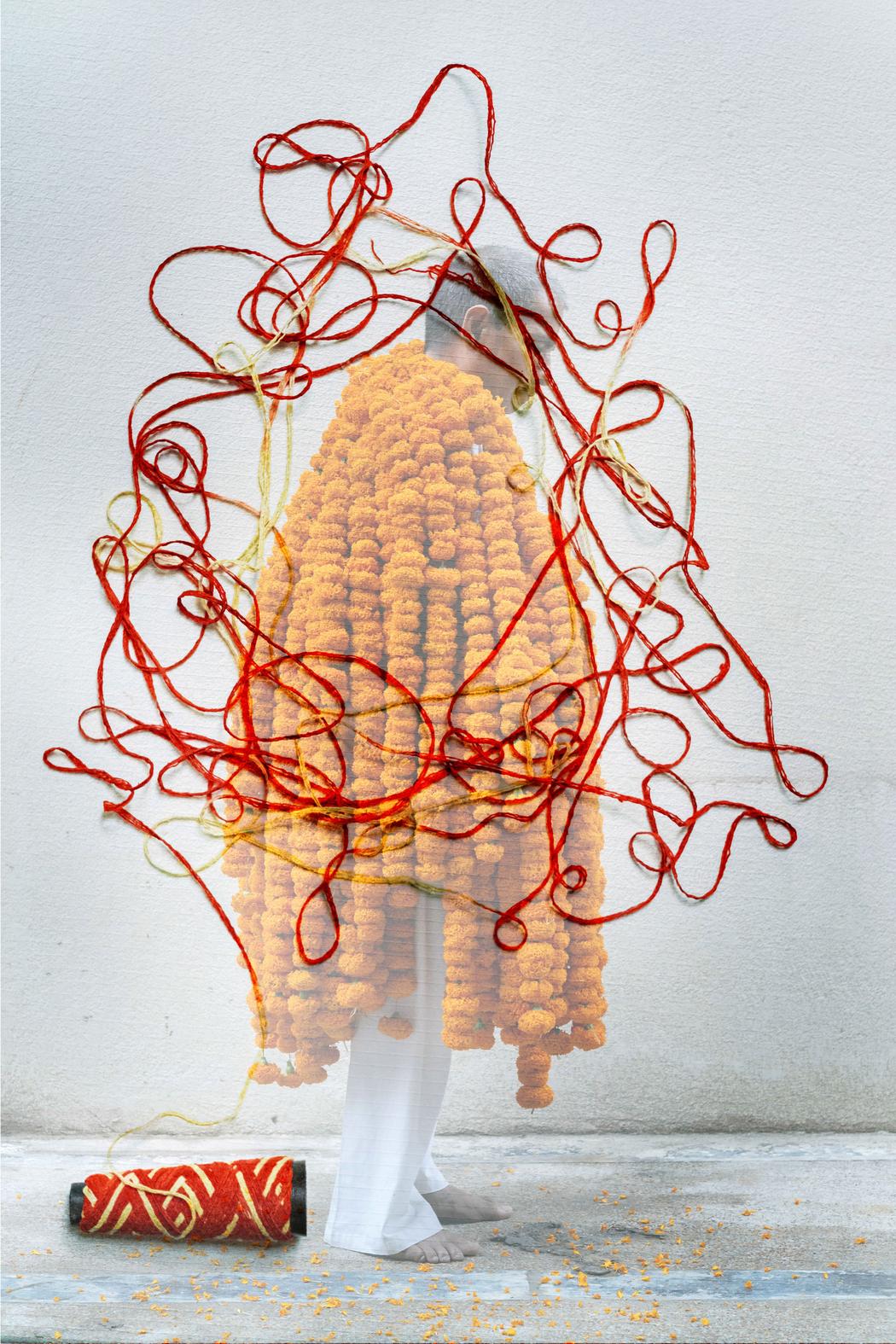 Promila Bahri | Marigold | 2025
Your current long-term project, Chapter Marigold, explores how identity is shaped and reshaped through time. What does the marigold symbolize within this project?
The Marigold embodies a productive contradiction: it is delicate, yet remarkably enduring. It is woven into the fabric of Indian life, appearing in festivals, rituals, temples, weddings, acts of remembrance and mourning. Within Chapter Marigold, it becomes a metaphor for identity—continually altered by circumstance, culture and time, yet never entirely stripped of its essential character. The flower also carries the imprint of my childhood, giving the project a personal and mnemonic dimension. Through it, I consider femininity, transformation, inheritance and the persistence of memory.
Memory, culture, faith and identity frequently intersect in your images. How do you translate these complex and often intangible ideas into a visual language?
I begin with forms that already carry cultural and emotional resonance: flowers, rituals, architecture, clothing, gestures and domestic objects. Rather than presenting them literally, I shift their context or place them in unexpected relationships, allowing new meanings to emerge. Metaphor gives photography a way to approach what cannot be directly photographed—the residue of memory, the pressure of belief, the instability of identity. I am not interested in illustrating an idea conclusively. I want to construct an image with enough ambiguity for the viewer’s own memories and associations to enter it.
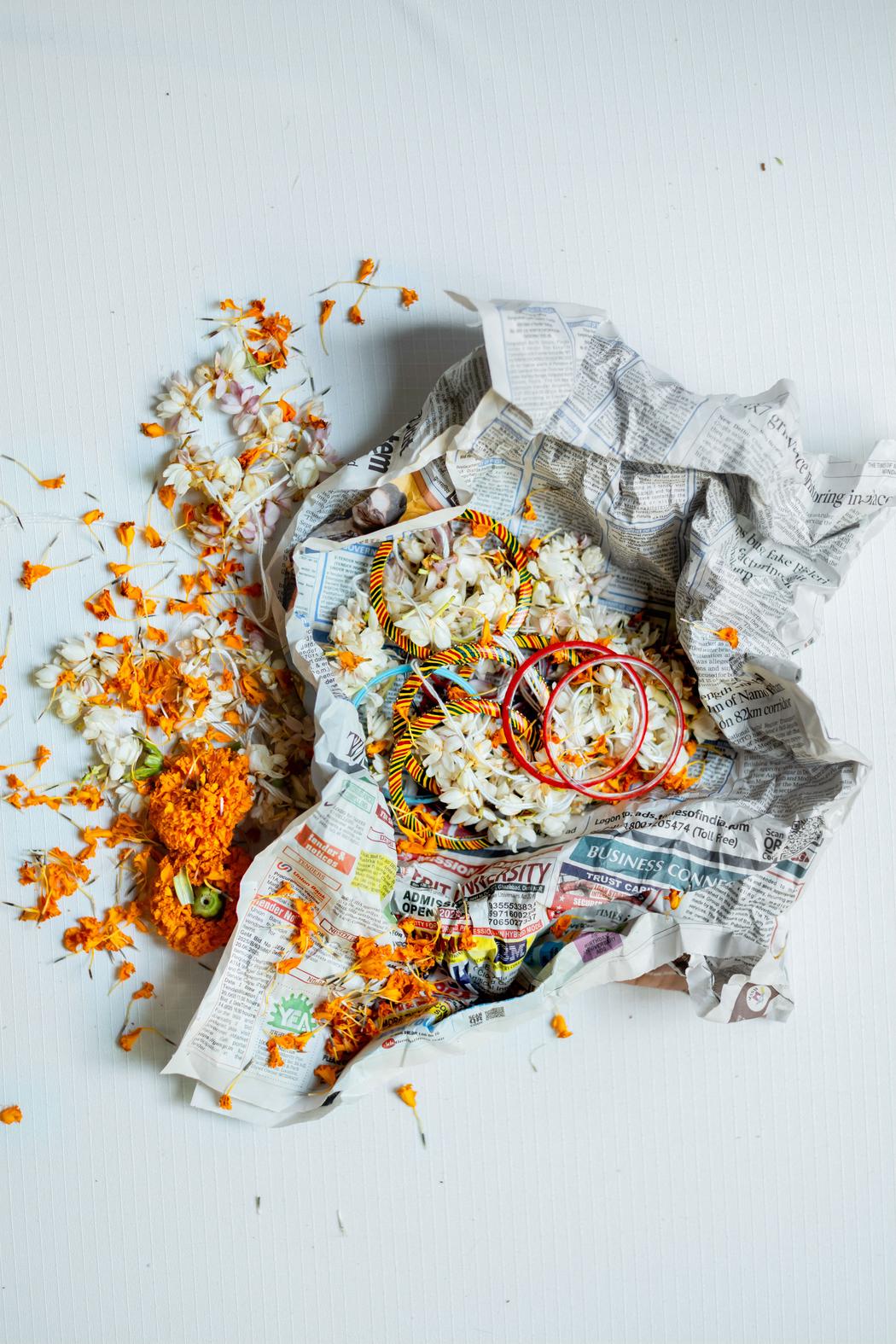 Promila Bahri | Marigold | 2025
Your photographs often reveal quiet tensions and unspoken struggles within everyday life. How do you approach subjects that may be emotionally sensitive or deeply personal?
I approach them with attentiveness, restraint and respect. A photographer must remain alert to the ethical difference between witnessing and taking. I spend time observing before I make an image, allowing trust and context to develop rather than forcing a moment into visibility. I am often drawn to what happens around the obvious event: a withheld gesture, a pause, averted eyes or a body carrying the evidence of an unspoken experience. These quiet details can hold more emotional force than spectacle.
You have worked both as an artist and as a curator of major exhibitions. How has curating other artists’ work changed the way you evaluate and present your own?
Curating has taught me to examine my own images beyond their personal origins and to understand them as participants in a broader visual and intellectual dialogue. It has sharpened my attention to sequence, rhythm, scale, spatial relationships and context. It has also made me aware that meaning is not fixed within an individual photograph; it shifts according to what surrounds it, how it is encountered and the associations a viewer brings to it. That awareness has made my own editing more rigorous and my installations more deliberate.
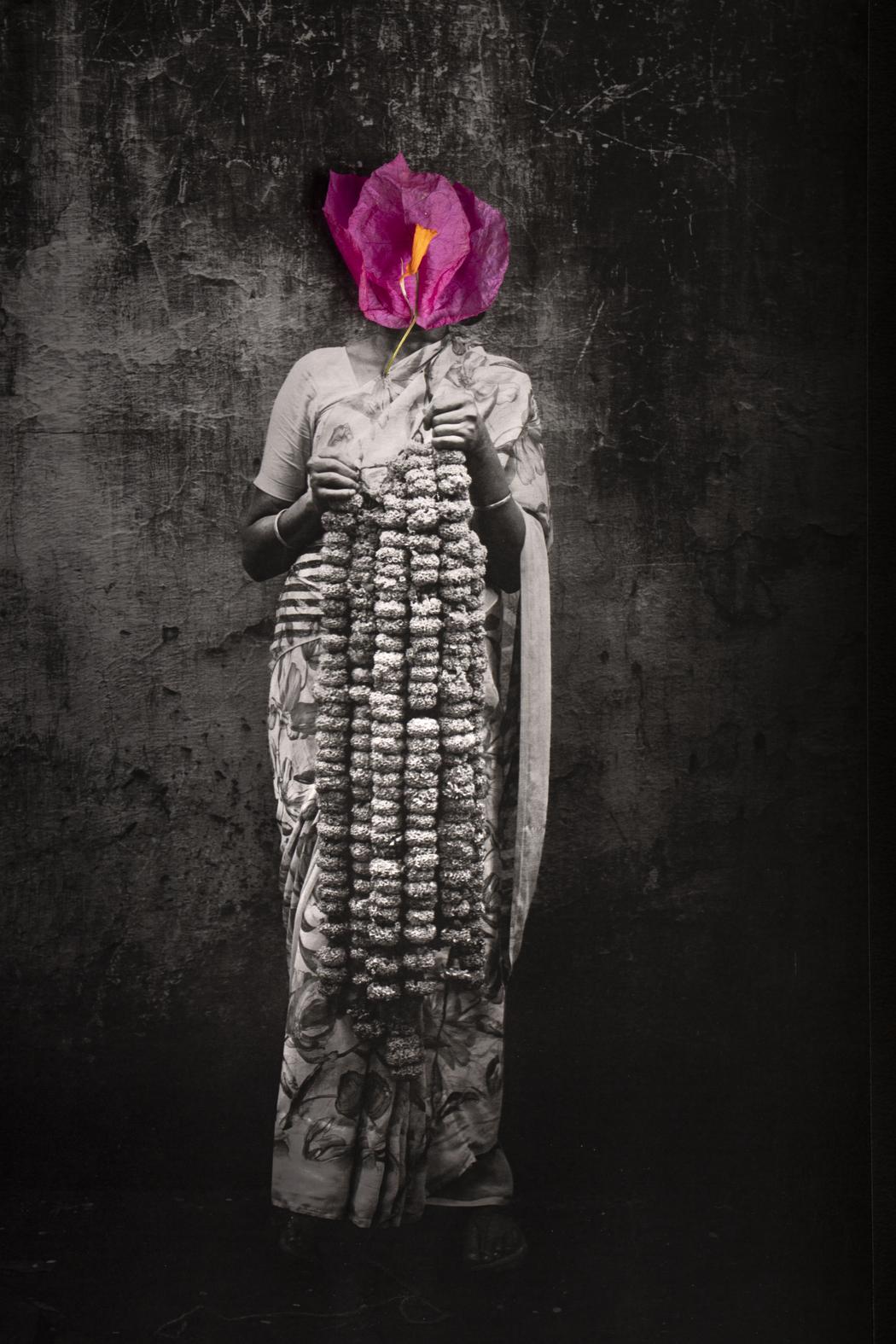 Promila Bahri | The Veil | 2026
What do you hope viewers will question—or recognize within themselves—after encountering your work?
I hope the work interrupts certainty. I want viewers to reconsider what they regard as familiar—particularly their assumptions about women, tradition, belonging and identity. At the same time, I hope the images create a space for recognition: a private encounter with something remembered, suppressed or intuitively understood. A photograph remains alive when it continues to work on the viewer after the immediate encounter has ended.
