
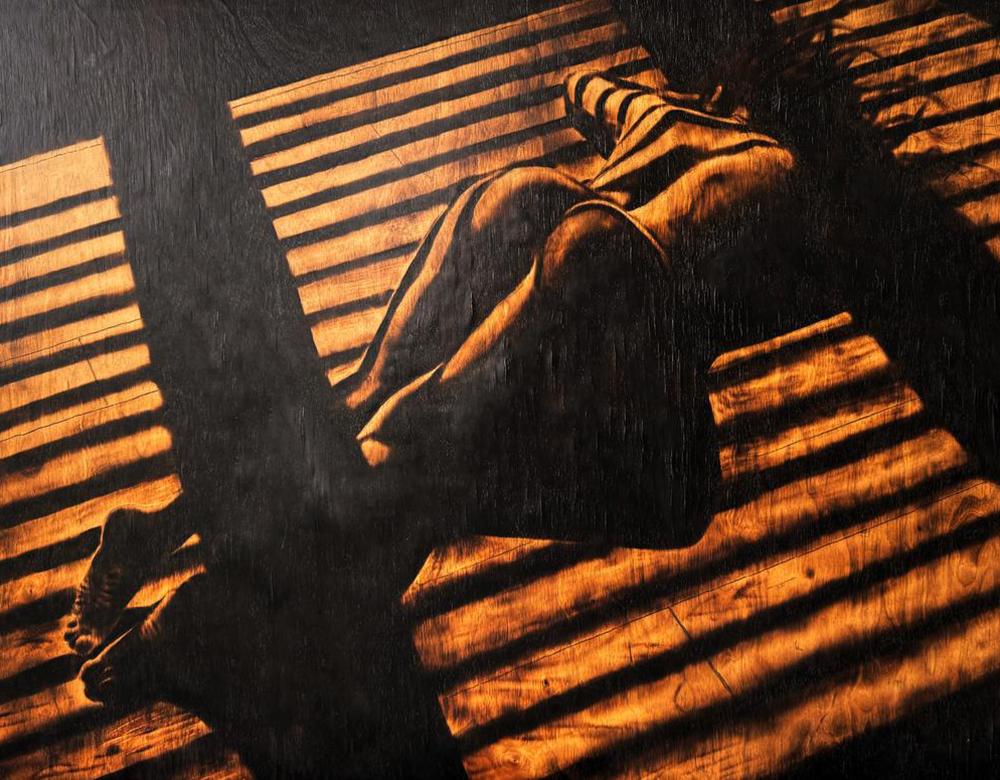
Daniel Ramalan – Flameousart
Your artistic practice is built around fire, wood, and portraiture. How did you first discover that these three elements could become your own visual language?
I think these three elements found me rather than the other way around.
I have been drawing for as long as I can remember. As a child, I was always creating something, drawing, experimenting with different materials, and especially trying to capture people and faces. Realistic drawing and portraiture always felt very natural to me.
My connection with wood also began at a very young age. We had a woodworking workshop at home, so I grew up surrounded by wood. I still remember the smell of wood and smoke from those days. Later, when I discovered pyrography, something immediately clicked. It brought together two elements that already felt very close to me — wood and fire — with something that had always been a part of me: drawing.
I initially started with traditional pyrography, using a heated wire. But I soon became curious about what I could achieve with an open flame. I began experimenting with different burners, temperatures, distances and movements. Through years of practice, mistakes and experimentation, I gradually developed my own technique and way of working.
So I never consciously decided that these three elements would become my artistic language. It happened naturally. They are connected to my childhood, my experiences, my creativity and my personal story.
Today, fire is my brush, wood is my canvas and portraiture is the way I tell stories through them.
You describe fire as your brush and wood as your canvas. What can fire express for you that you feel would be impossible to achieve with pencil, paint, or other traditional media?
Fire has something that no other medium can truly replace. It is alive, unpredictable and permanent. When I work with a pencil or paint, I can always erase, repaint or make changes. With fire, every movement matters. Once the flame touches the wood, the mark is there to stay. That gives the creative process a completely different intensity. I have to be fully present and completely focused. There is no real room for hesitation, and a single mistake can change an entire portrait. In a way, the fire forces me to trust my instincts and commit to every line.
But for me, fire is much more than a technical tool. It carries a very personal meaning. As a child, I experienced a house fire that took away our home and many of our belongings. For many years, fire was something I associated with fear and loss. Today, I use that same element to create something beautiful.
That transformation is at the heart of my art. Fire once took something from me; today, it gives me a way to create, express myself and connect with other people.
So when I say that fire is my brush, I really mean it. It gives my work not only a unique visual character, but also emotion, unpredictability, warmth and a sense of transformation that I could never achieve in quite the same way with a traditional medium.
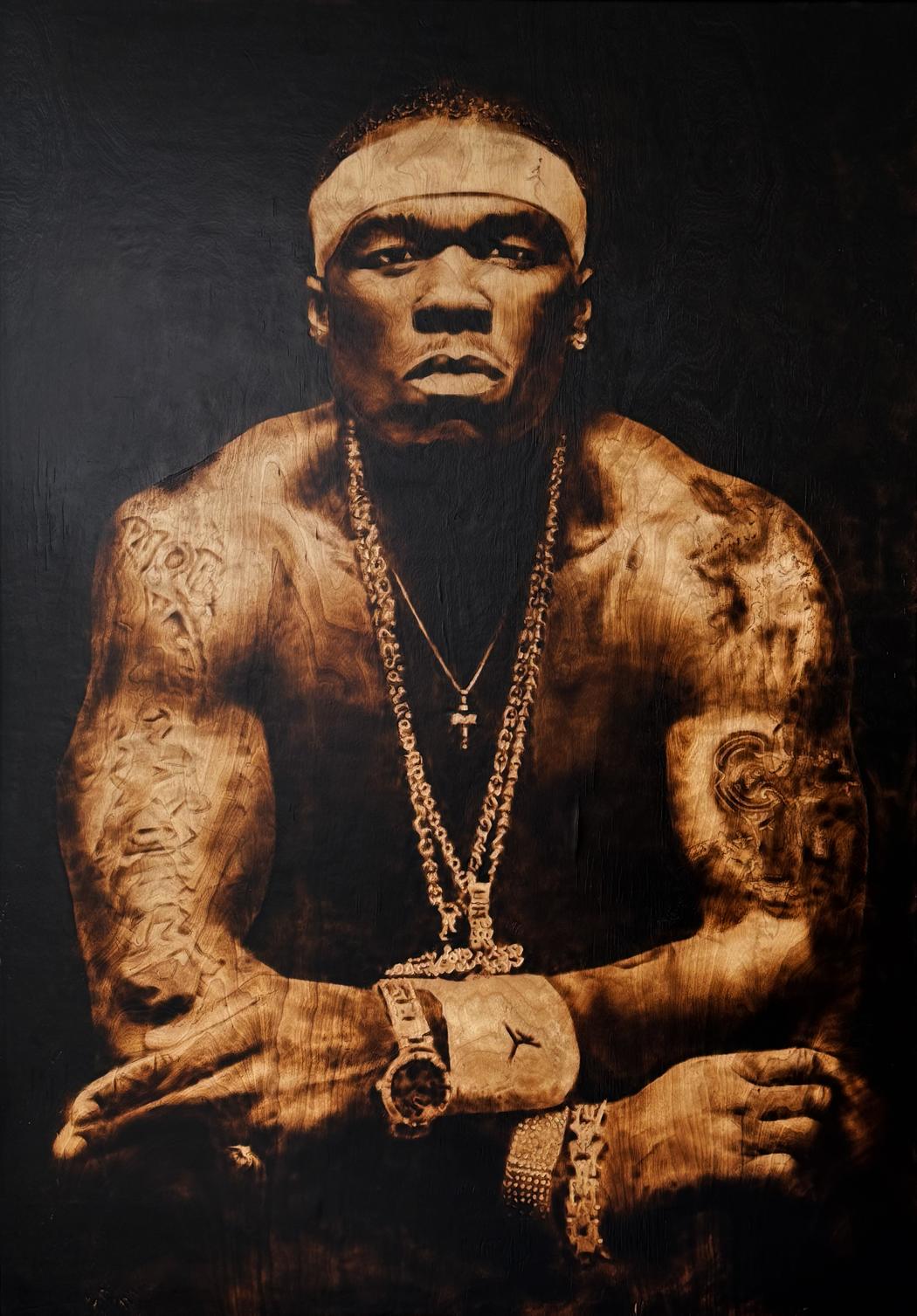 Daniel Ramalan – Flameousart | King Of New York Underground | 2021
Fire is naturally unpredictable, while your portraits require extraordinary precision. How do you balance control and unpredictability during the creation of a work?
That balance is probably one of the most challenging and fascinating parts of working with fire. I can control many things; the temperature, the distance of the flame from the wood, the speed of my movement and the pressure I use, but I can never control the fire completely. And I think that is exactly what makes the process so special.
It took me many years of practice to understand how the flame behaves and how different types of wood react to heat. I learned to read the fire almost instinctively. I know when to bring the flame closer, when to pull it away, when to move quickly and when to slow down.
At the same time, I have learned not to fight the unpredictability. I leave a little space for the fire to do what it naturally does. Sometimes it creates a line, texture or shadow that I could never have planned myself, and those unexpected details can become an important part of the final piece.
So I would say I don’t try to completely control the fire. I guide it, but I also listen to it. The precision comes from my experience and concentration, while the unpredictability comes from the fire itself. The final artwork is created somewhere between the two.
The natural grain, knots, and imperfections of wood remain visible in many of your portraits. How much does the character of each wooden surface influence the final image?
The character of the wood has a very important influence on the final image. For me, wood is never just a blank surface or a simple canvas. Every piece has its own grain, texture, knots, colour and imperfections, and I try to work with those natural characteristics rather than hide them. Sometimes the grain almost becomes part of the portrait. It can add movement, depth or texture, and occasionally it creates an effect that I could never have planned myself. Other times, I have to adapt my technique because every piece of wood reacts differently to the heat of the flame.
That is also one of the reasons why no two of my portraits can ever be exactly the same. Even if I used the same reference photograph and followed the same process, the result would still be different because the wood itself is different.
I actually see those imperfections as part of the beauty. They remind us that the material is natural and alive. I don’t want to completely erase the character of the wood. I want the portrait and the wood to become one piece, so that the natural story of the material remains visible within the image.
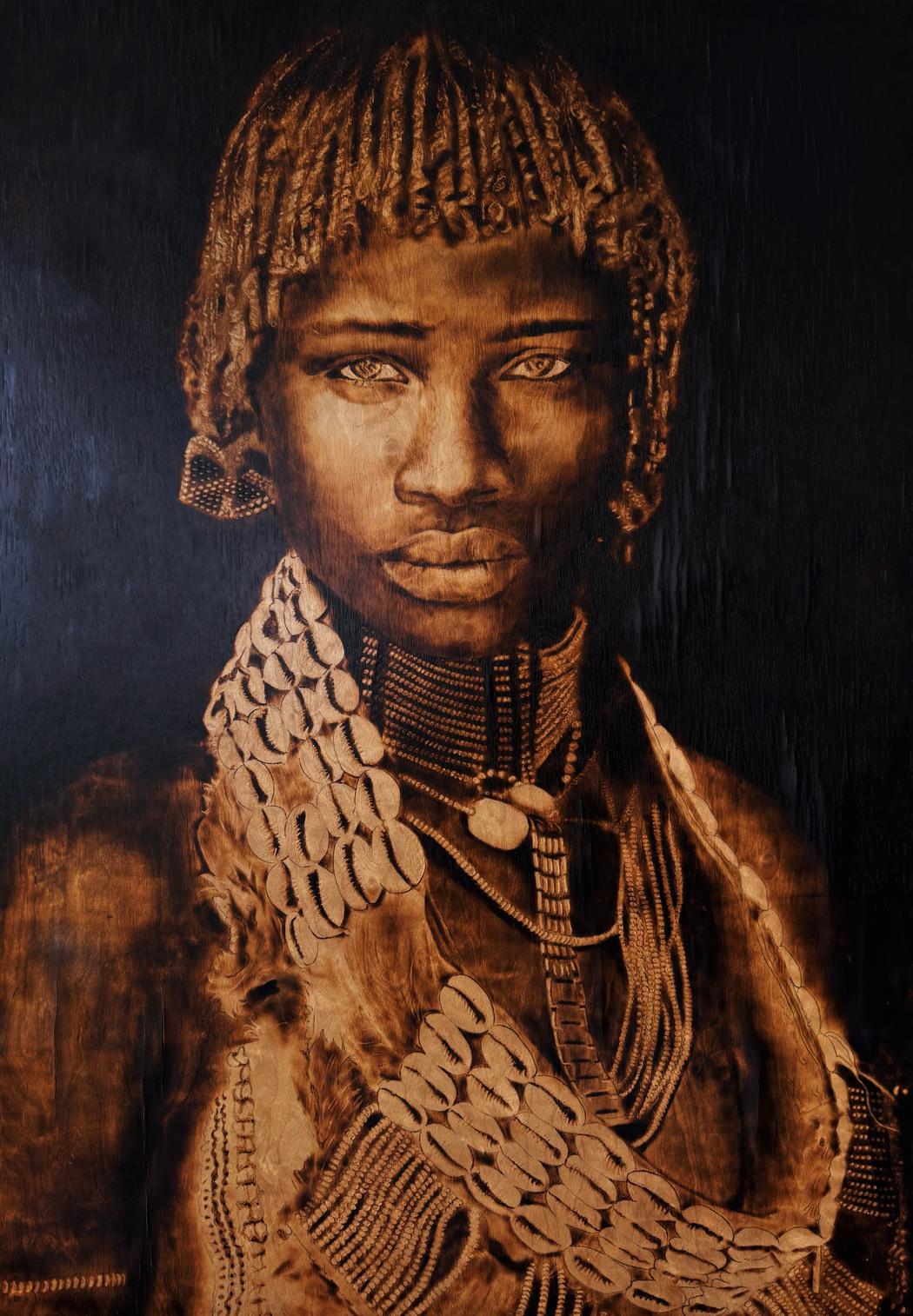 Daniel Ramalan – Flameousart | Soul Of Africa | 2017
Portraiture is central to your practice, and you frequently depict musicians, athletes, actors, and other cultural figures. What qualities make you decide that a particular person should become the subject of one of your fire portraits?
For me, it is rarely just about how famous someone is. I choose people who have inspired me in some way or whose story, character, talent or journey means something to me.
Many of the people I portray are musicians, athletes, actors or other cultural figures who have been part of my life for years. Some inspired me when I was growing up, while others continue to inspire me today. As a former basketball player and a lifelong lover of music, I naturally feel a strong connection to artists and athletes who have dedicated their lives to what they love.
When I look at a face, I am not only interested in the physical features. I look for character and emotion, something behind the eyes, a certain energy or presence that tells a story. A portrait becomes much more meaningful to me when I feel that there is a story behind the person.
Creating a portrait is also my way of showing respect. I am trying to capture not only what someone looks like, but what they represent to me; their strength, passion, resilience, creativity or influence.
And of course, there is something incredibly special when the person who inspired the portrait eventually sees it. When someone like Sean Paul, the members of Black Eyed Peas, or other people I admire connects with a piece I created, it feels like a very personal exchange between the artist and the person who inspired the work.
The making-of videos on your social media have become an important part of your practice and have reached millions of viewers. Do you consider these videos simply documentation, or have they become a separate extension of the artwork itself?
At the beginning, I saw the videos mainly as a way of documenting my work. I wanted people to see what actually happens behind the finished portrait, how many hours go into it, how carefully every movement has to be made, and how the image slowly emerges from a blank piece of wood through fire. But over time, the videos have become much more than documentation. In a way, they have become an extension of the artwork itself. The finished portrait shows the result, while the video tells the story of how that result came to life.
There is something very powerful about watching a face gradually appear through fire. You can see the transformation taking place in real time, and I think that creates a completely different emotional connection with the artwork. People can also understand that this is genuinely handmade and that every line has been created by me, rather than simply seeing a finished image on a piece of wood.
The response has been incredible. One of my YouTube videos featuring legendary American rappers has reached more than 15 million views, while my Cypress Hill portrait video has passed 2.6 million views. A video of my Michael Jackson portrait on my Flameousart Facebook page has also reached 7.9 million views.
The work has also been noticed and shared by people and organisations connected to the artists I portray. The members of Black Eyed Peas shared my videos on their social media, the official Dutty Rock Productions account connected to Sean Paul shared videos of his portrait, and the Dallas Mavericks have also shared some of my work, including the process of creating a portrait of Luka Dončić.
So today, I see the videos as a second layer of my art. The physical portrait is the final object, but the video captures the movement, the fire, the time, the tension and the transformation behind it. In that sense, the process itself has become part of the artwork and sometimes the video reaches millions of people who may never have had the chance to see the physical piece in person.
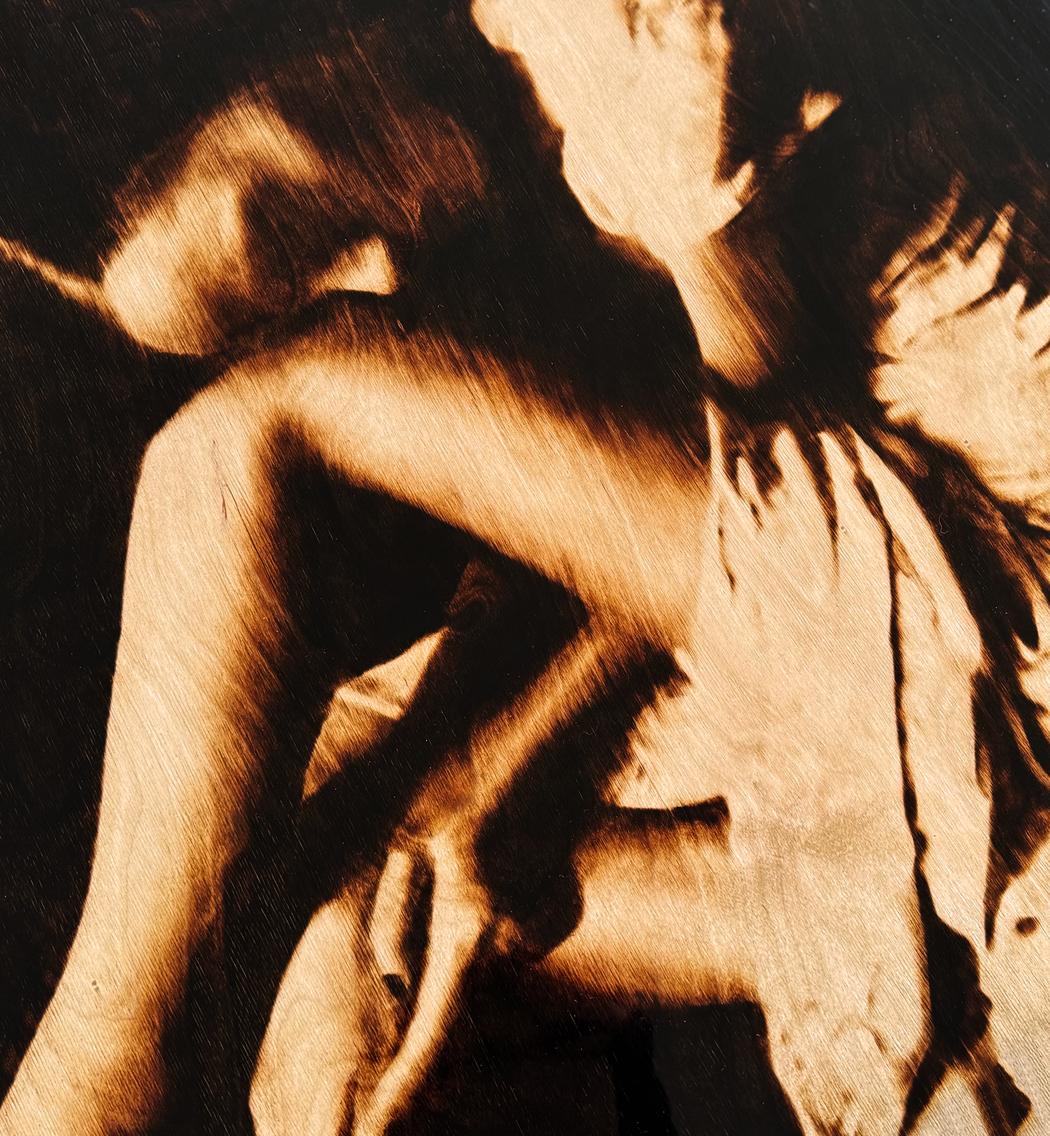 Daniel Ramalan – Flameousart | White Agony | 2024
You have had the opportunity to present works directly to some of the cultural figures you portray. How does meeting the subject of a portrait change your perception of the artwork after it has been completed?
Meeting the person I have portrayed can be an incredibly powerful and emotional experience. When I create a portrait, I spend many hours looking at that person’s face, studying every detail and thinking about their story and what they represent to me. In a way, I get to know the person through the process of creating the portrait, even though we have never met. Then suddenly, you are standing in front of the real person, holding something you created with your own hands specifically for them. That changes the meaning of the artwork completely.
I experienced this when I had the opportunity to personally give my portraits to Sean Paul and the members of Black Eyed Peas. Seeing their genuine reactions was something I will never forget. With the Black Eyed Peas, for example, they had already seen the videos online, so when we met backstage in Zagreb, they immediately recognised me and the artwork. Will.i.am even said, “I saw that video… Man, that was you?” Moments like that are incredibly special.
What makes these encounters meaningful to me is not simply meeting famous people. It is seeing that something I created has genuinely touched the person who inspired it. When they look at the portrait and recognise the time, emotion and passion behind it, the artwork suddenly becomes more than an image on wood.
It also reminds me why I create in the first place. Behind every famous face is a real person with their own story, struggles and emotions. Meeting them brings that human connection into the artwork, and sometimes that is the most valuable part of the entire journey.
For me, the portrait starts as my interpretation of someone, but once I place it in their hands, it becomes part of their story too. And that is a beautiful feeling.