
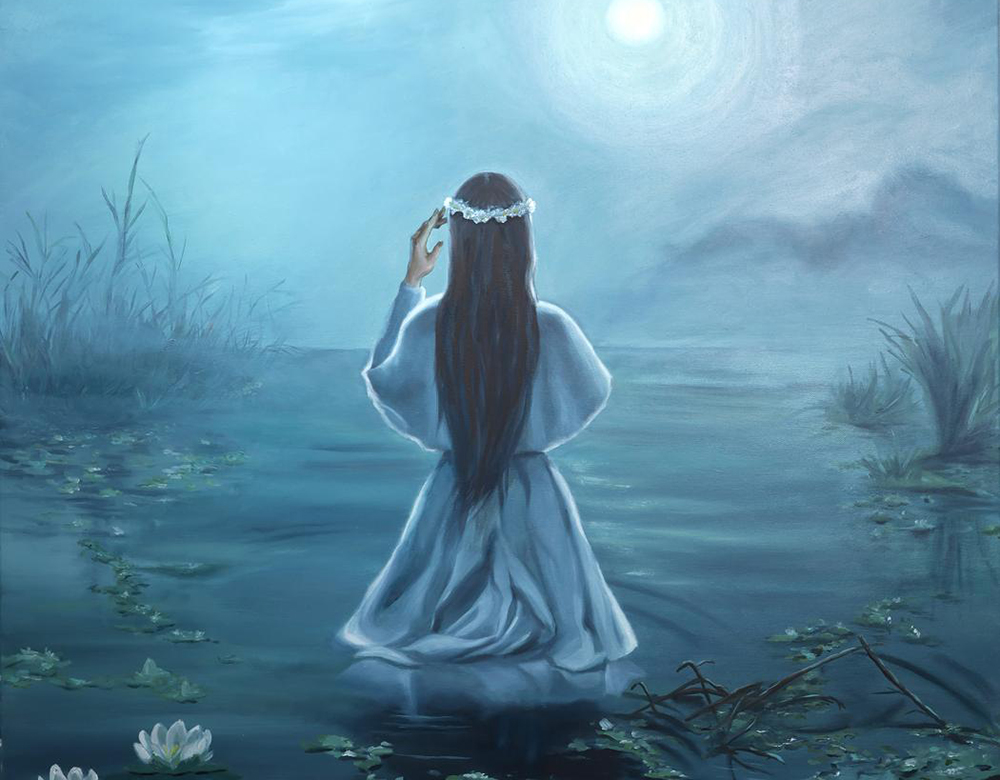
Natali Timakova
You describe your artistic language as ethno-folk symbolism. How did you arrive at this definition, and which cultural or visual traditions have had the strongest influence on its development?
This definition did not emerge immediately. Over time, I simply realized that it was the most accurate way to describe what I do.
I was born and raised in the Soviet Union. I still remember a large encyclopedia with an illustration showing representatives of all the peoples of the Soviet Union dressed in their traditional national costumes. As a child, I could spend a long time looking at that image. I was fascinated by how differently people expressed themselves and their sense of beauty through color, ornament, jewellery, and the forms of their clothing.
Perhaps that was when my love for traditional costumes and decorative details first began. One of my favorite activities was inventing and drawing clothes. Later, this passion even led me into fashion design and to Central Saint Martins in London.
Today, I am still inspired by traditional ornaments, mythology, symbols, and the distinctive character of different cultures. But I am not interested in simply copying them. I want to preserve this cultural code while reinterpreting it through contemporary art.
For this reason, the ethnic motifs in my work are not a reconstruction of the past, but rather an environment in which my heroines exist. Through this context, I tell stories about contemporary people, their emotions, and their search for themselves.
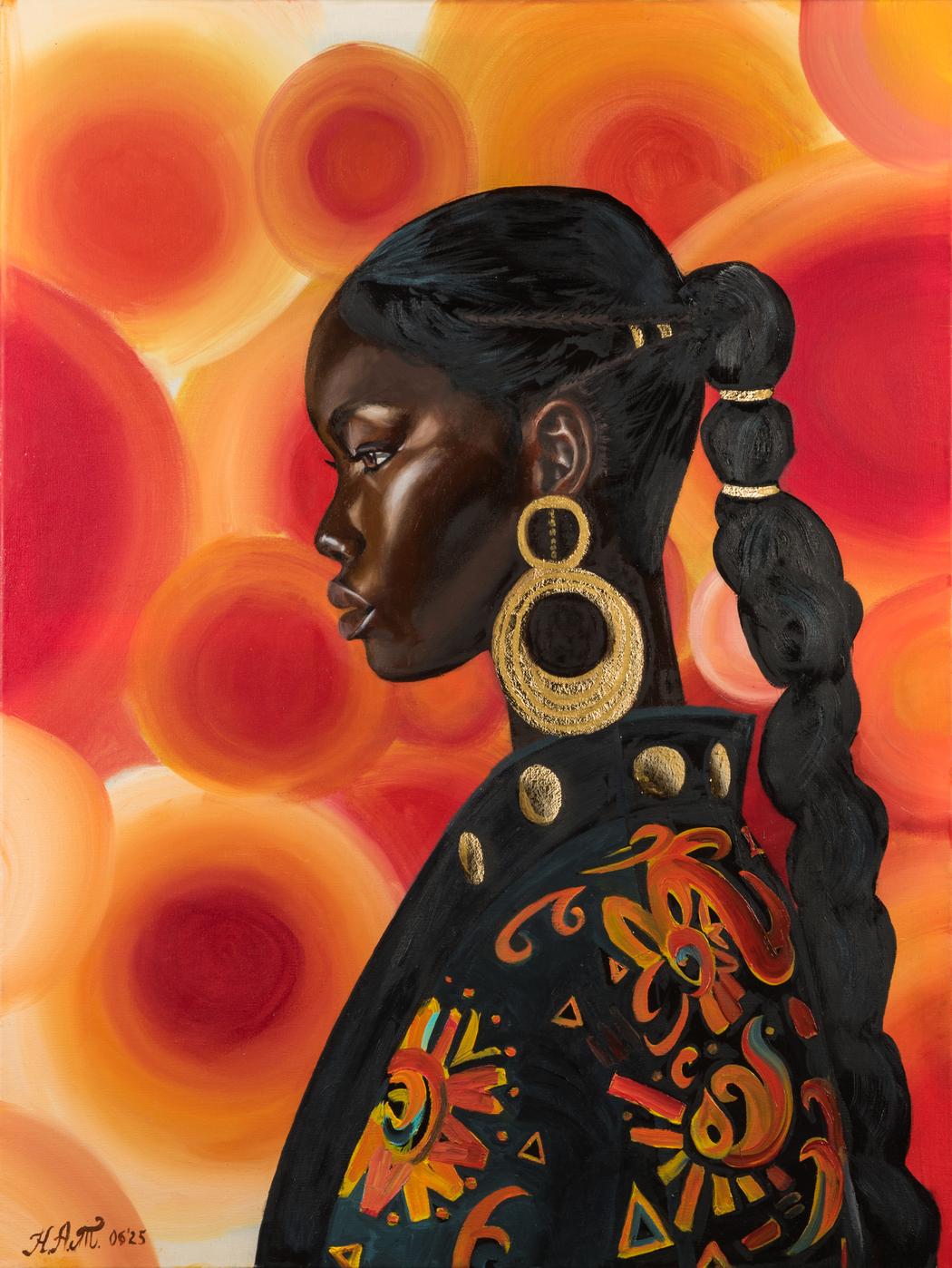 Natali Timakova | Queen Of The Tribe | 2025
Your first professional background is in analytics, corporate governance, finance, and marketing. How does this experience shape the way you structure a composition, develop a concept, or approach the creative process?
Many people are surprised by this combination, but I have never separated analytical thinking from artistic intuition. They have always coexisted peacefully and complemented one another.
Most of my paintings begin with an idea — a specific thought or feeling that I want to explore with the viewer. After that comes what is probably the most analytical part of the process: I search for symbols, develop the composition, and consider which image can communicate the idea most precisely. Some of my paintings are very carefully constructed; they function almost like complex systems of interconnected elements. Rational thinking helps me build the structure of the work.
But sometimes the process is completely different.
Occasionally, an image arrives unexpectedly. I can wake up in the morning and already see the future painting clearly and in its entirety. Then all that remains is to transfer it onto the canvas before the vision disappears.
Perhaps this is why my creative process always exists somewhere between logic and intuition. First, I think like an analyst, and then I try to trust the artist within me.
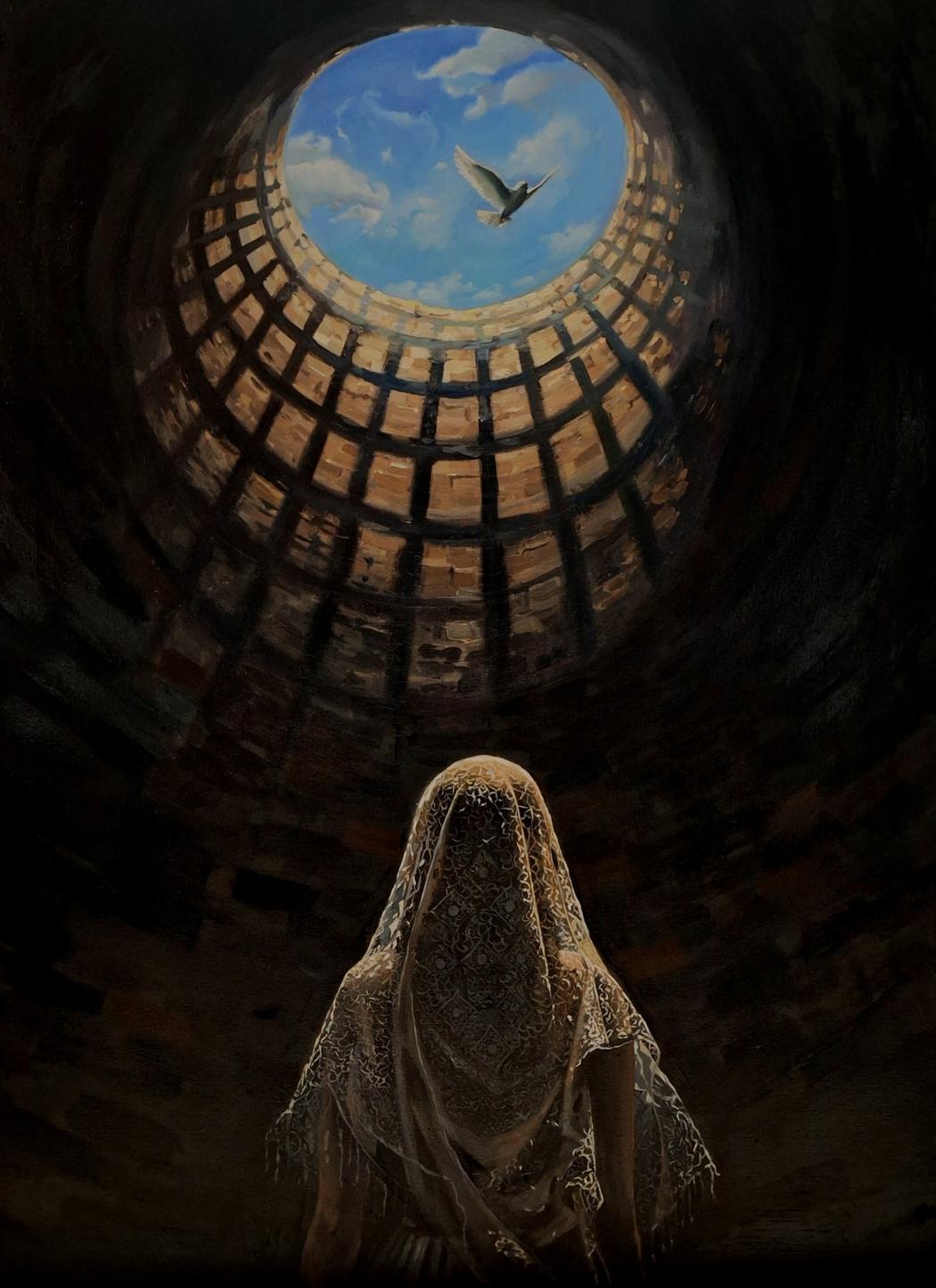 Natali Timakova | Echoes Of Disappearance | 2026
You often use the female figure not as a portrait of a specific person, but as a symbolic embodiment of emotions, archetypes, and natural forces. What does this recurring image allow you to express?
I am interested not in a particular woman, but in her inner state.
Through the female figure, I explore strength and vulnerability, fear and freedom, love, memory, growing up, and self-acceptance. I feel that the female form allows me to speak very delicately about experiences that are difficult to express in words.
At the moment, I am working on a series devoted to a woman’s journey toward her authentic nature. For me, it is a story about how a person gradually returns to their true self, passes through different stages of life, accepts both their strengths and weaknesses, and ultimately finds inner wholeness.
This is why my heroines are not different women. Rather, they are different states of the same soul. Each figure becomes a channel for a particular energy. Sometimes it is water, sometimes fire, sometimes ancestral memory, sometimes inner balance, or the strength that emerges after overcoming hardship.
Perhaps this is why many viewers tell me that they recognize themselves in my heroines, even though none of them represents a specific person.
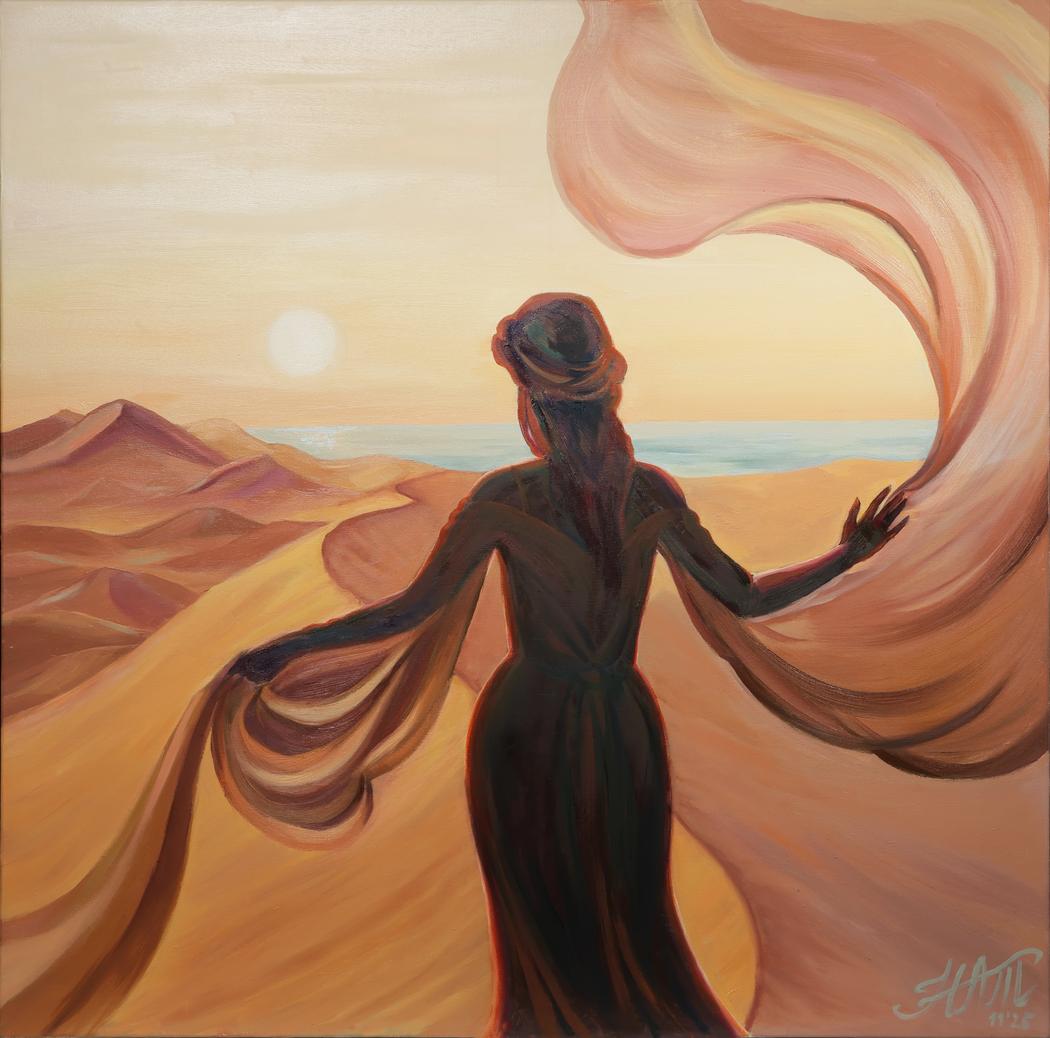 Natali Timakova | Life Energy | 2025
Many of the women in your paintings appear as queens, princesses, priestesses, or mythical guardians. Who are these figures for you, and do they belong to a single visual mythology?
Yes, I feel that they all belong to the same world.
I never deliberately created rules for this world. But with every new painting, I increasingly understand that all of my heroines seem to exist within the same universe.
A queen, a priestess, a guardian, a woman connected to one of the elements — these are not separate characters. They are different archetypes and different stages of an inner journey toward one’s authentic nature.
Perhaps this is why my paintings can be perceived both individually and as chapters in one larger story.
Your experience in fashion, graphic, and jewellery design is clearly reflected in your attention to texture, decoration, and materiality. How has your transition from design to painting changed your understanding of form and beauty?
Design taught me discipline in relation to form. When working with graphics, clothing, and jewellery, it is impossible to treat details superficially. Every millimeter affects how the whole is perceived.
Painting, however, gave me true freedom. In design, there is almost always a specific task, function, and set of limitations. In art, you can allow yourself to search not for the perfect form, but for an honest emotional experience.
Beauty is no longer a goal for me. It has become a way of holding the viewer’s attention long enough for a dialogue to emerge between them and the work. This is why decorative elements never exist in my paintings for their own sake. Ornaments, gold, textures, relief — none of these are simply embellishments; they are all part of the narrative. Beauty becomes the entrance into the work. The meaning lies deeper.
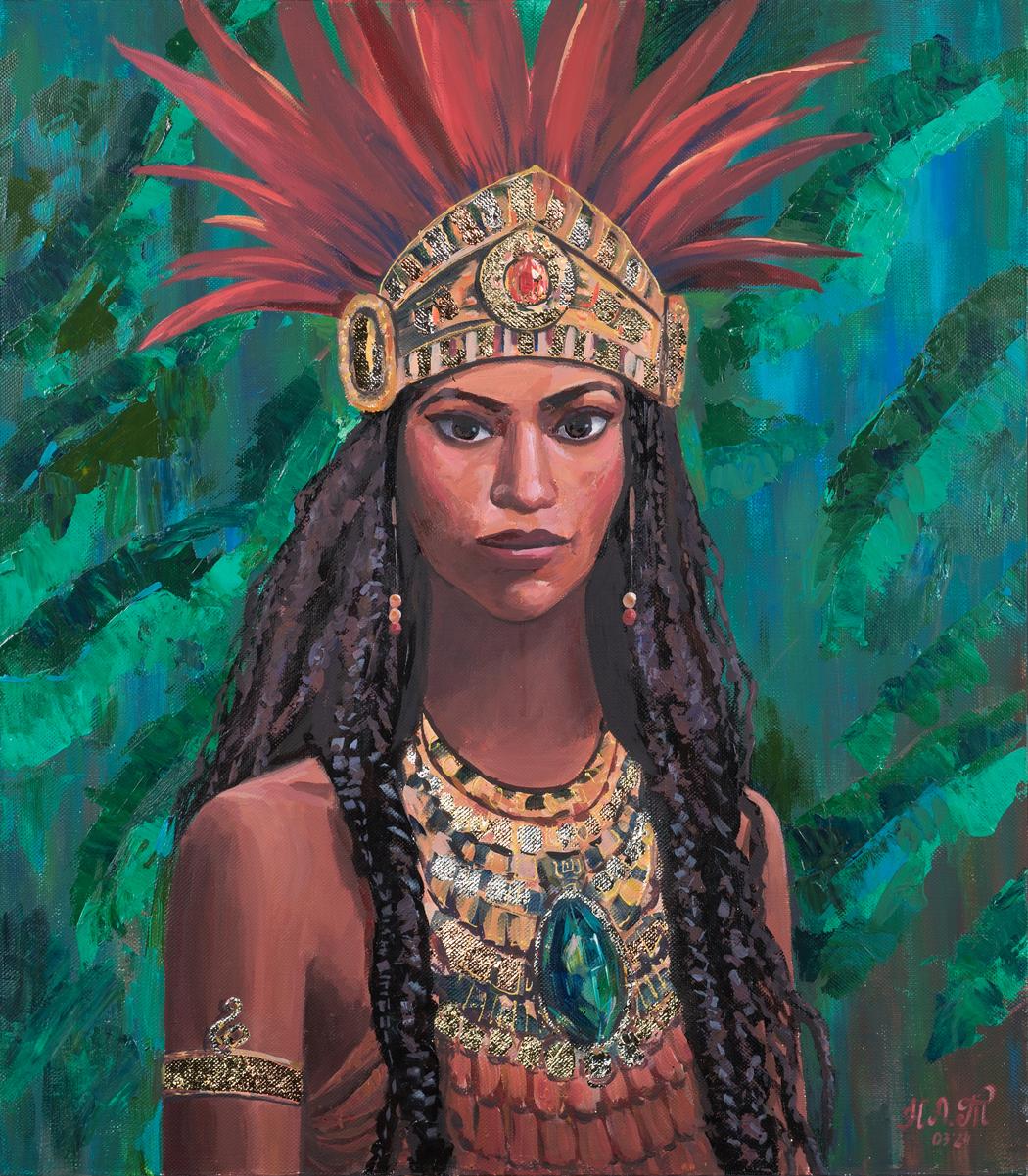 Natali Timakova | Princess Of The Amazons | 2024
Your works move between dream and reality, while combining figurative imagery with decorative and symbolic elements. How do you maintain a balance between a readable narrative and a sense of mystery?
I like it when a painting does not provide ready-made answers.
I think contemporary people are very rarely allowed not to understand everything immediately. We have become accustomed to receiving instant explanations. Art can afford the luxury of silence.
This is why my paintings always contain a recognizable story — a human figure, elements of nature, an emotional atmosphere. This becomes the point of entry.
Beyond that lies a space of symbols, where each viewer becomes a co-author of the work. I like the idea of someone returning to the same painting years later and discovering a new meaning within it.
I think the same is true of the process of getting to know ourselves. We do not discover our inner nature all at once either.
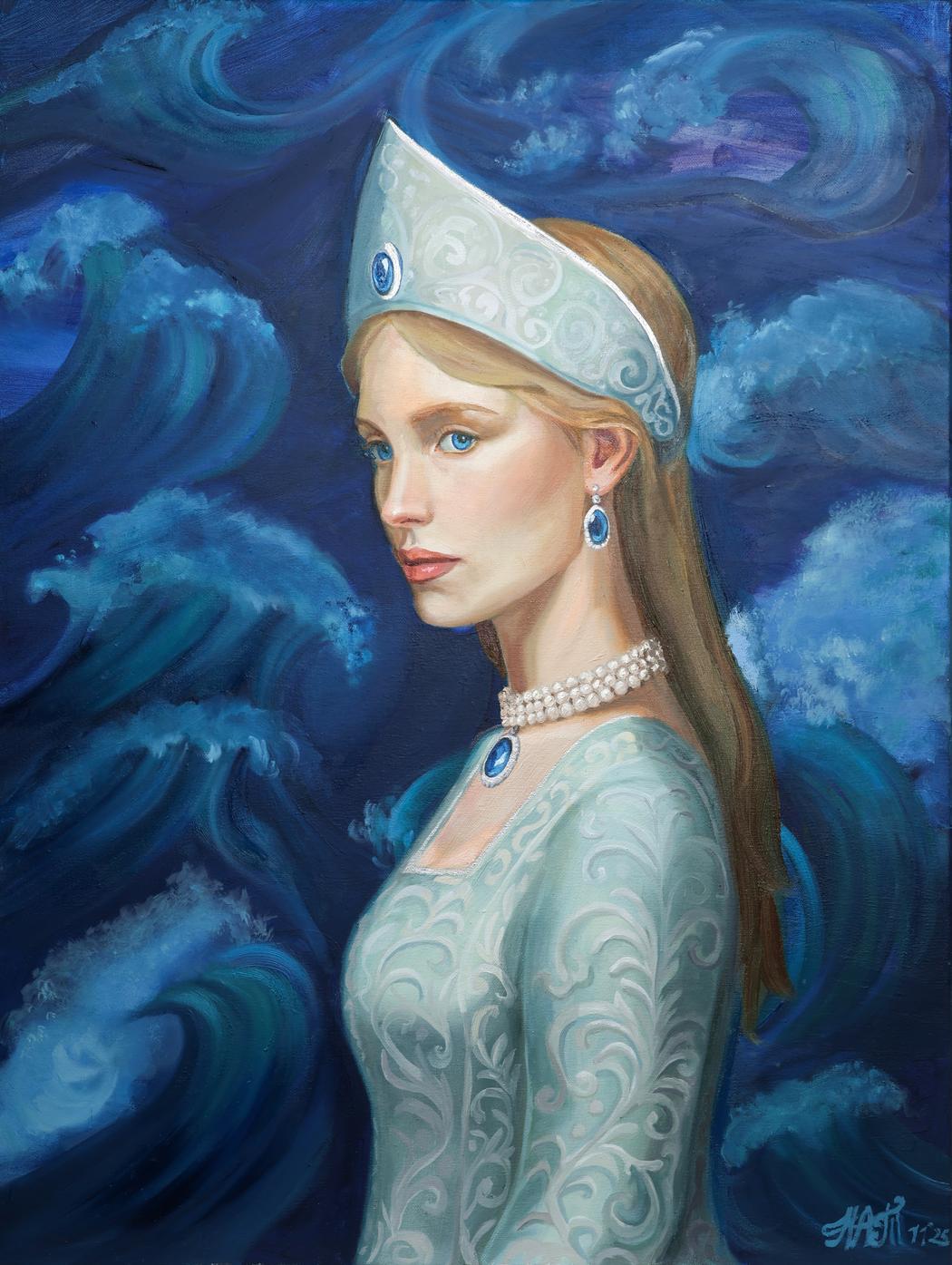 Natali Timakova | Queen Of The Sea | 2025
Gold, precious stones, intricate patterns, and layered surfaces give your paintings an almost sculptural presence. What role do materials and tactile effects play in communicating the emotional meaning of a work?
For me, material is as much an artistic language as color or composition.
Gold can speak about a person’s inner light; volume can convey the depth of an emotional experience; layers can suggest that behind every state of being lies an entire story.
I like it when a painting invites you not simply to look at it, but to explore it — to come closer, notice new details, and discover new meanings. I want the work to be experienced not only through the eyes. I want it to evoke an almost physical desire to touch the surface and feel its rhythm.
We live in a world of digital images, where everything becomes flat. Painting restores the experience of genuine presence to the viewer. The surface of a painting preserves the memory of every movement of the artist’s hand. It is this materiality that makes a work truly alive. In every painting, I always leave a small piece of my heart.