
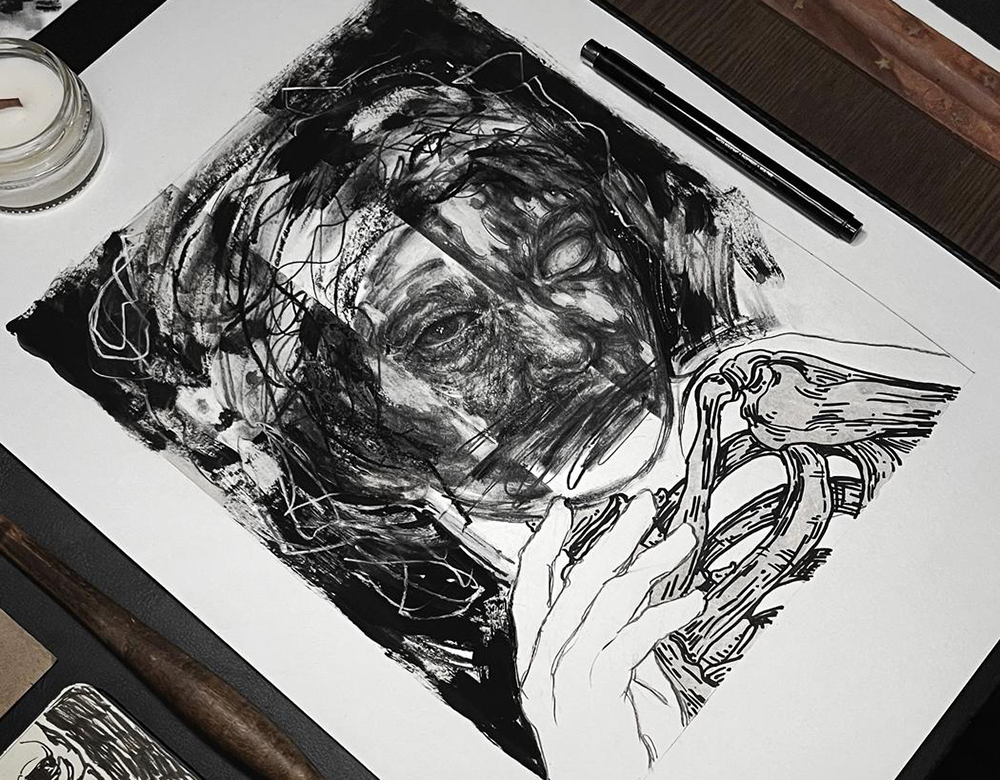
Natasha Svirikhina
Natalia, you became interested in drawing as a child and attended art school. How has your relationship with art evolved over time, and when did you decide to pursue a career as an independent artist?
Although I had been drawing since childhood, I consider the turning point to be when I was sixteen. During one of my classes at school, while absentmindedly sketching, a classmate unexpectedly asked me to draw her portrait. Her enthusiastic reaction to the finished drawing was the first moment I realized that drawing was more than just a hobby. It was a strength of mine that could genuinely resonate with other people.
After graduating from school, I decided to dedicate my life to creativity and enrolled in an interior design program. However, my studies pushed my personal desire to draw into the background for several years. Academic drawing and university projects almost completely replaced my independent artistic practice.
A few years after graduation, while working as an interior designer, I realized that I still wanted to grow as an independent artist. I began sharing my work on social media, where originality and the search for a personal visual language are truly valued.
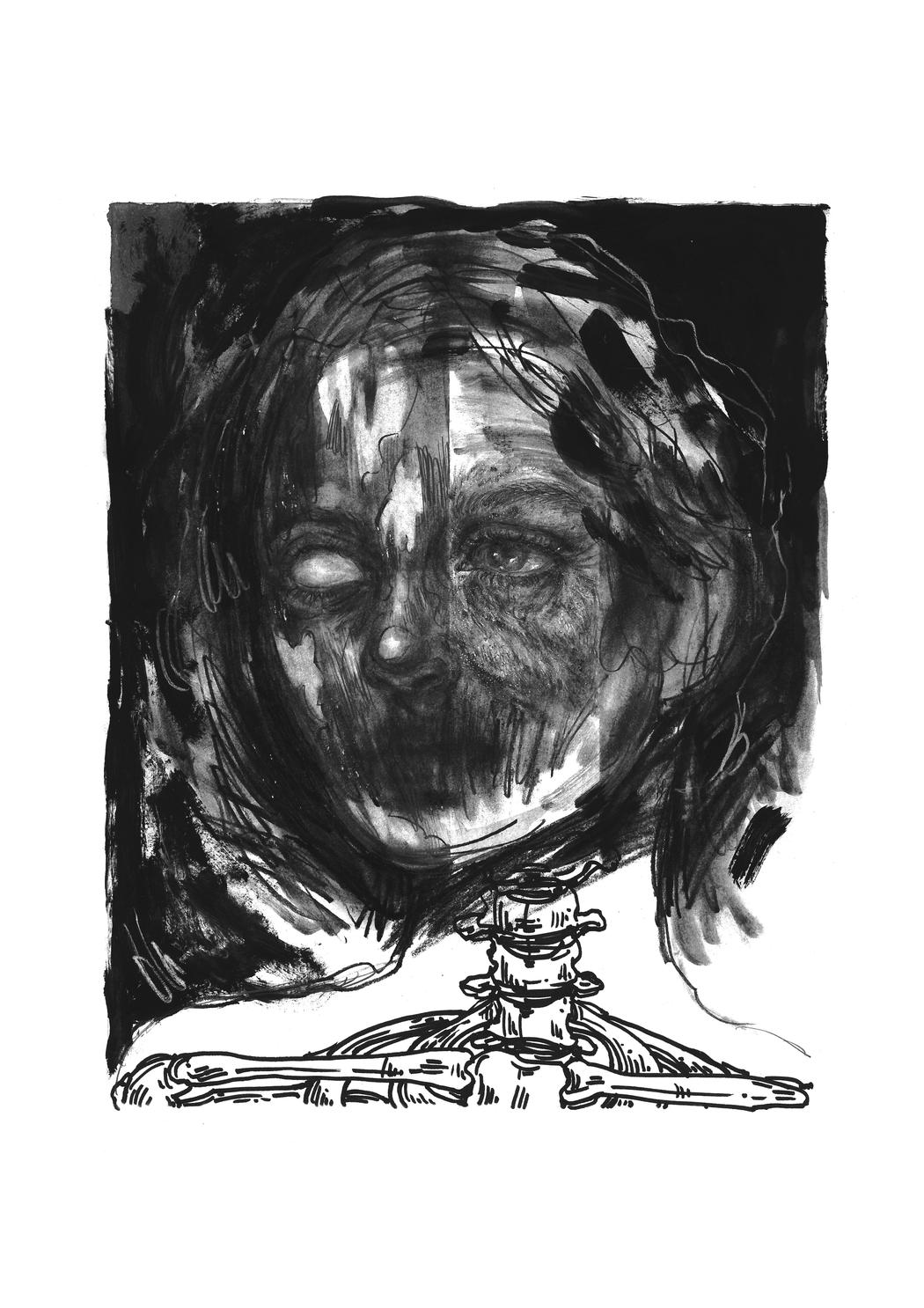 Natasha Svirikhina | Shadows | 2026
You studied environmental design and continue to work as an interior designer. How does your experience in designing spaces influence the composition, rhythm, and structure of your artworks?
Design taught me how to build a strong visual structure, and it helps me think in terms of form. At the same time, in my artistic practice I often feel the need to step away from a strict, analytical approach and keep only the essential principles of composition. In design, every decision has to be logically justified. In drawing, I find freedom from those rigid boundaries. While working, I try to let go of control and not allow professional habits to limit the creative process.
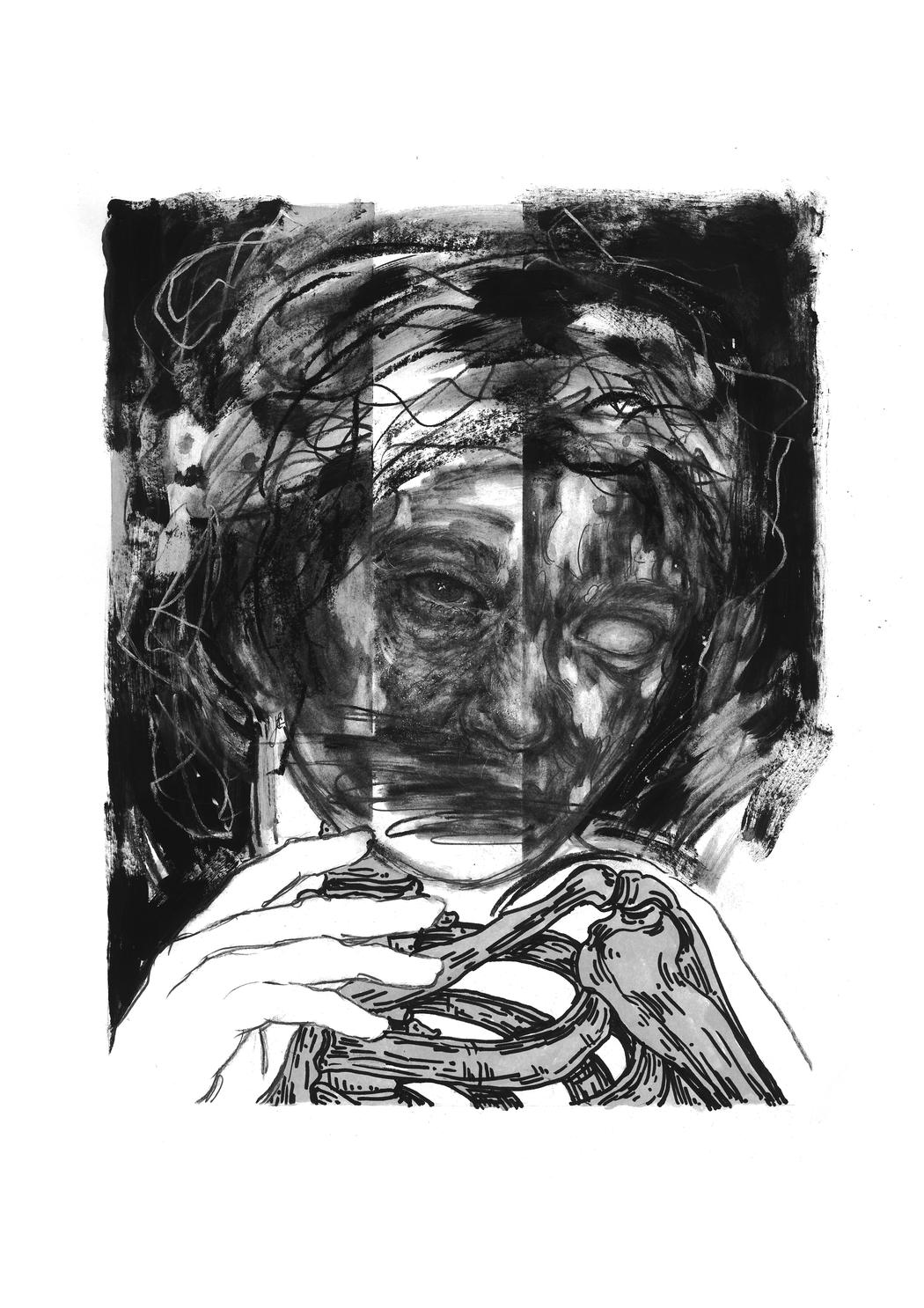 Natasha Svirikhina | Shadows | 2026
Your artistic practice is primarily focused on portraits that combine realistic and abstract techniques. How did you develop this visual language, and what does this combination allow you to express?
From my very first works, I was drawn to realism. I loved the process itself and the careful attention to every detail. A defining moment came when I entered university and showed my photo-based drawings to one of my professors. He acknowledged my technical skills but pointed out that the works offered nothing new. They were simply reproductions of existing images. I remember how painful it was to hear those words, but he was right.
I decided to move away from detailed realism, and for some time my work shifted toward abstraction. Then one day, while working on one of those abstract portraits, I realized that I was missing the emotional depth that broad expressive brushstrokes could not convey. That was when a small fragment of a realistic, sorrowful face appeared within the portrait.
This visual solution felt new to me. It brought together the two artistic approaches I loved and allowed me to express exactly what I wanted to say. That is how the idea of combining two contrasting techniques was born.
In the Shadows series, the human face appears to be divided into several states and images. What does this fragmentation represent for you: inner conflict, hidden identities, the passage of time, or something else?
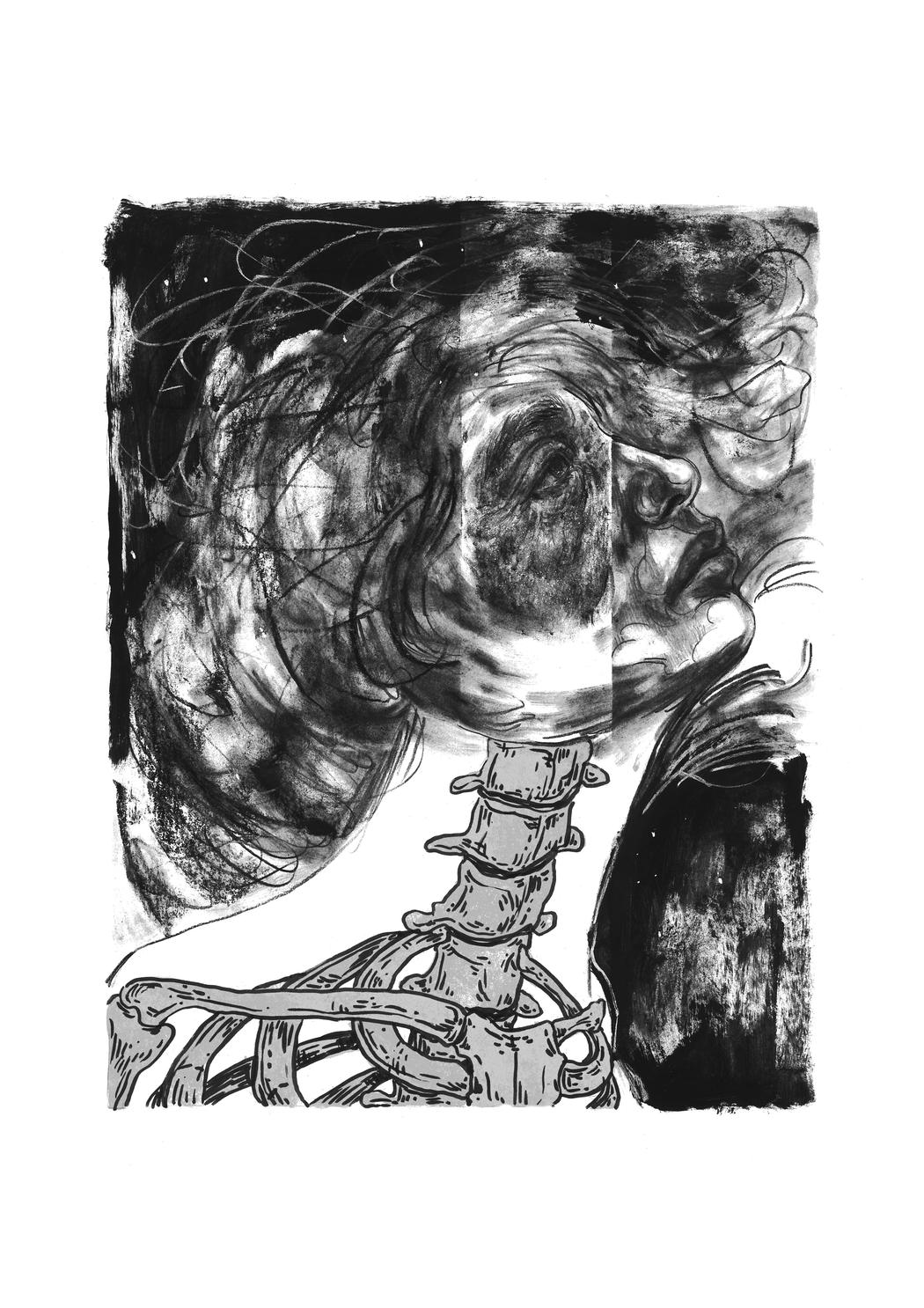
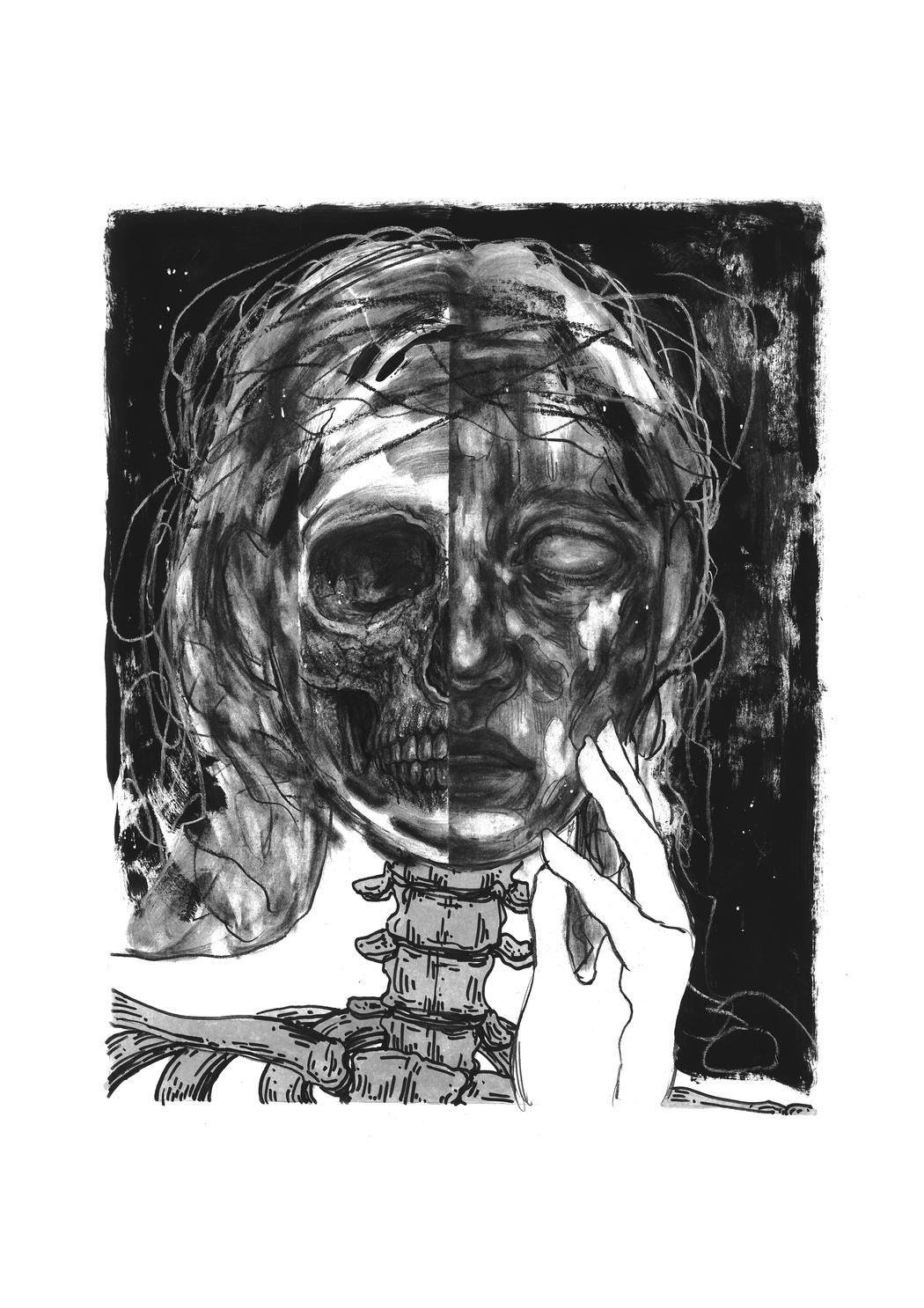
In Shadows, the fragmented image represents the hidden past that exists in constant contrast with the way a person is seen by others. The detailed part of each portrait is the face presented to the world, the image of someone who has lived a life. Each portrait is like a reflection in a mirror. Yet the reflection does not reveal a complete outward appearance. Instead, it shows blurred traces of pain, fear, and loss. A person can no longer see themselves without these experiences. These invisible inner shadows become their true reflection, even though they remain unseen by everyone else. With this series, I wanted every viewer to notice not only the face itself but also what lies behind it.
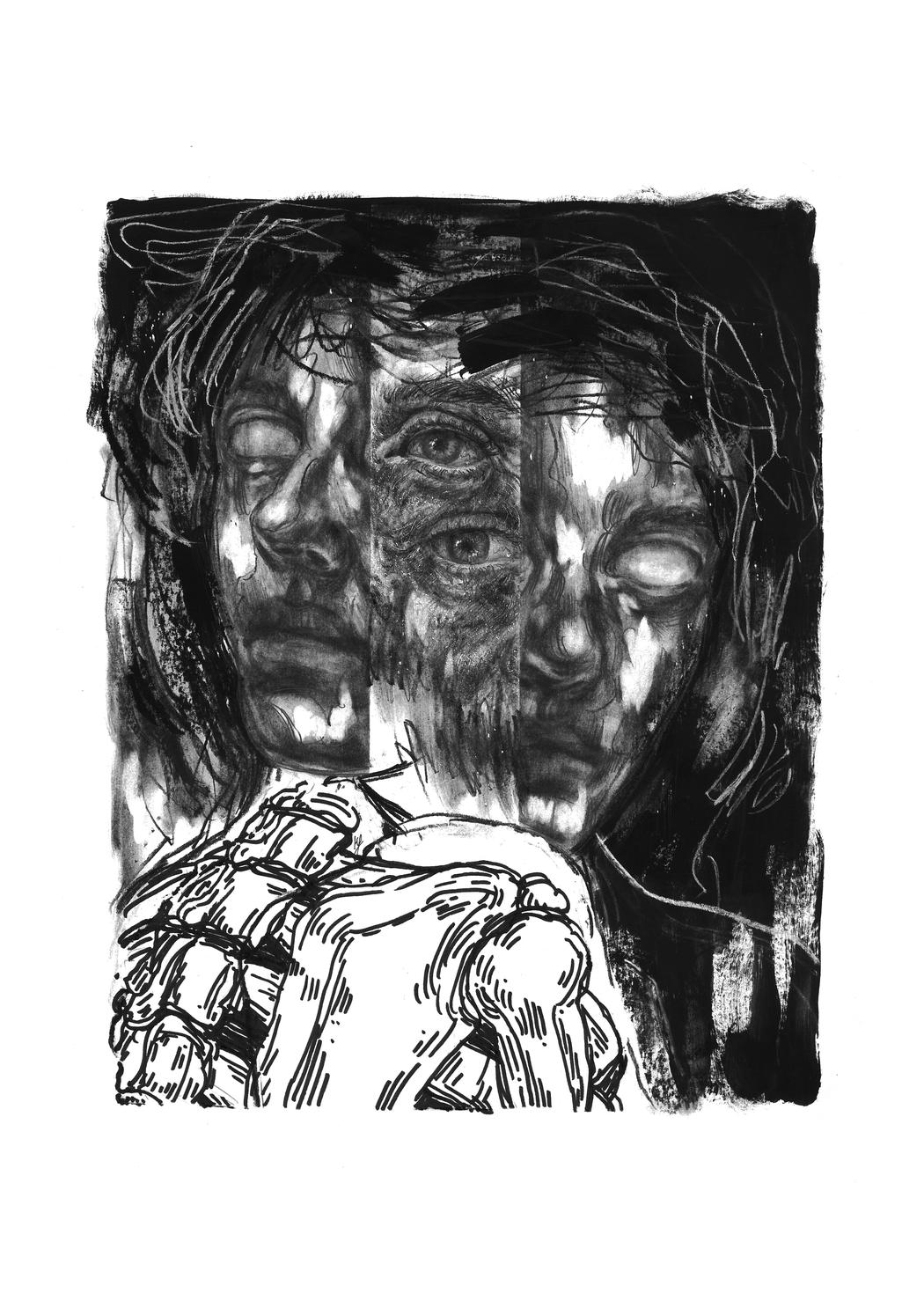 Natasha Svirikhina | Shadows | 2026
You write that a person can see themselves “down to the bone”, confronting their own fears, bitterness, and anger. To what extent was the creation of this series connected to your own personal self-exploration?
Once I came across the idea that sadness contains more truth than happiness. That thought stayed with me, and I wanted to express it through my portraits. Rather than simply conveying a mood, I hoped to encourage viewers to pause, look deeper within themselves, and perhaps accept the parts they usually keep hidden. To begin an honest inner dialogue. I believe that every new work in this series gave me a few more answers while also leading me to new questions.
 Natasha Svirikhina | Shadows | 2026
You have a twin sister who has built her career in architecture. Did growing up alongside someone who looks like you influence your perception of identity, reflection, and duality?
I think that when you grow up alongside someone who has been with you for as long as you can remember and who looks almost exactly like you, you come to understand better than anyone that identity is not defined by appearance. Despite our physical resemblance, each of us has always remained our own person, with our own character, perspectives, and way of thinking. Perhaps that is why, in my work, I am less interested in depicting a person’s outward appearance than in revealing what makes them unique—the qualities that lie beneath the surface and cannot be seen at first glance.
 Natasha Svirikhina | Shadows | 2026
Today, you present your work to an English-speaking audience on social media. How does the international response to your art affect you, and in what direction would you like to develop your practice in the future?
It is incredibly rewarding to see that my work resonates with people in the international creative community. It feels as though artists speak a universal language that goes beyond words. I often notice similar interpretations from artists who explore themes close to my own. It reminds me of a line of dominoes, where each artwork inspires the next. One idea can spark an entire chain of new creative responses, with every artist reinterpreting it in their own unique way.
At the moment, I am actively building my portfolio with the goal of exhibiting my work in galleries in the future. Social media remains an important part of my artistic journey, but I feel that the time has come to bring my work into physical exhibition spaces as well.