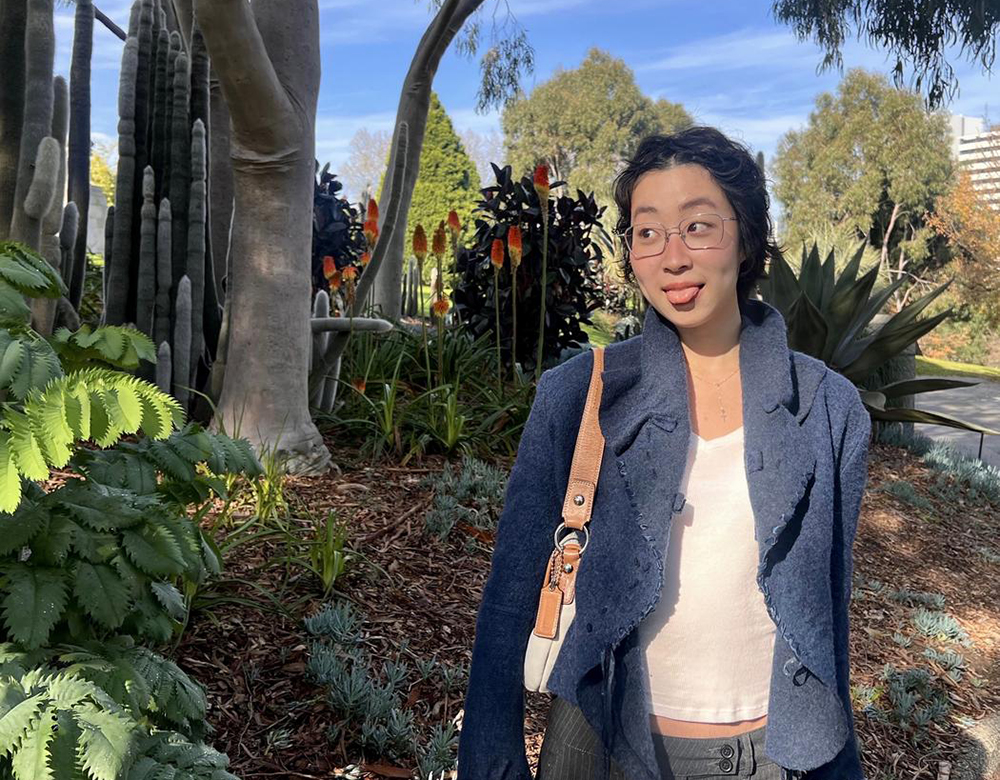
Chaehyun Min
Your paintings transform personal memories into symbolic visual worlds rather than representing them literally. What draws you to this indirect way of working with autobiographical material?
For me, indirectness is not a way of concealing personal memories, but a way of caring for them. Some experiences are too overwhelming to be translated literally. I often think of them like water held behind a dam—if released all at once, they lose their shape and become destructive. Instead, I let them emerge gradually through color and forms. Whether positive or painful, I believe autobiographical experiences contain far more possibilities than they initially reveal. Because of that, I try to approach them with great care rather than translating them directly. When I take the time to work with them patiently, they gradually stop circling around my own personal experience and begin to open themselves to broader interpretations.
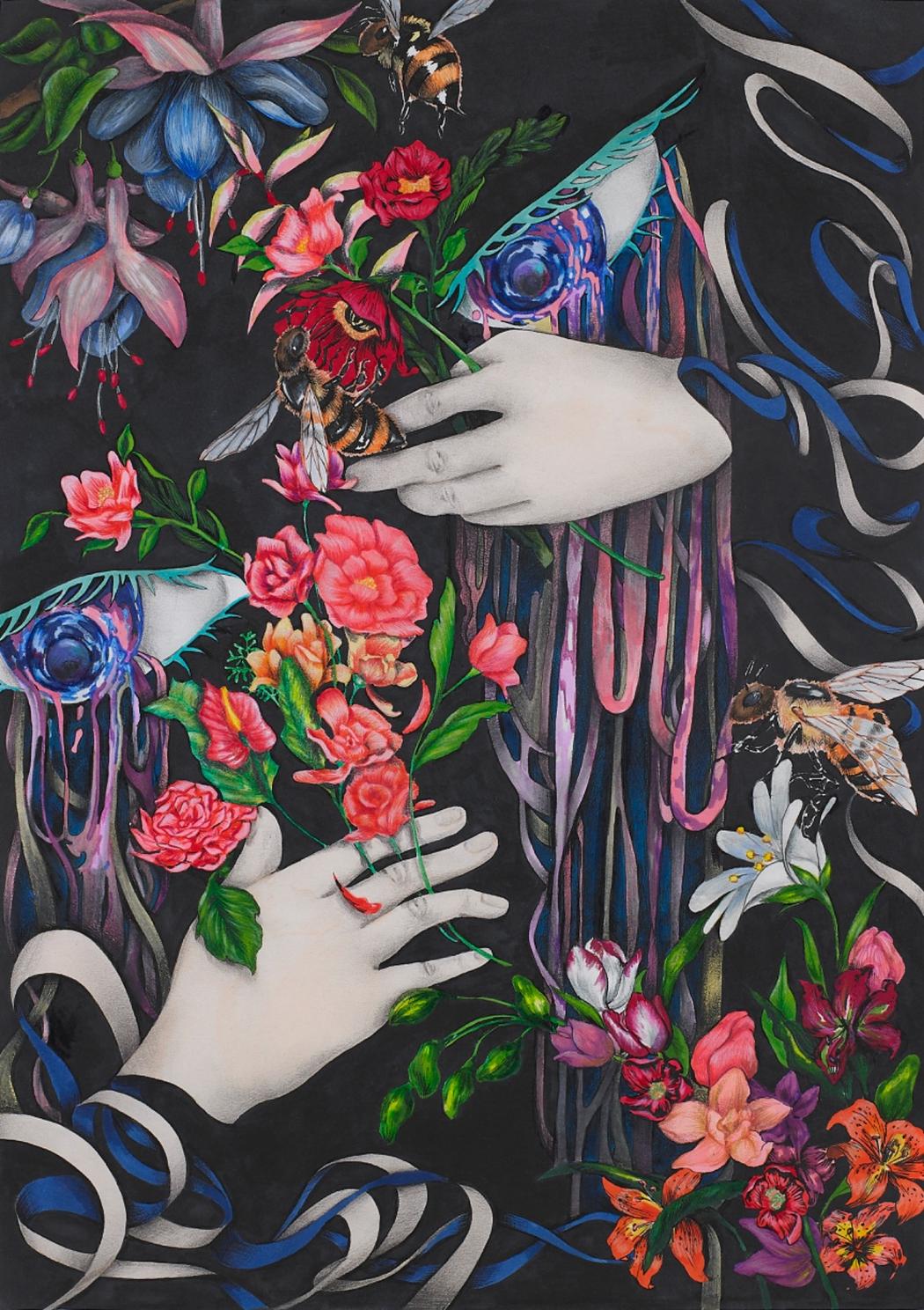 Chaehyun Min | Disillusionment | 2025
Childhood photographs and domestic spaces are important sources of inspiration for you. How do you decide which memories or visual details are ready to become part of a painting?
I don’t consciously choose memories because they are important. The memories that become paintings are usually the ones that continue to return to me over time. Often, it isn’t a specific event but a small visual fragment—a corner of a room, a pattern, or a particular quality of light—that stays with me. I also find myself drawn to photographs with vivid colors and distinctive patterns. Rather than feeling accidental, they seem to hold the atmosphere and emotional truth of that moment in the most honest way. They become a starting point for experimentation, and as these fragments begin to connect with other memories and emotions, they gradually find their place within a painting.
You describe your compositions as collage-based patterns in which separate elements become parts of a single living organism. How does this idea influence the way you construct an image?
The absence of rigidity is probably the most important part of my process. I don’t try to make separate elements fit together according to a fixed plan. Instead, I keep asking myself what feels important to the question I’m exploring at that moment. The process is intuitive, almost like sewing, where one fragment is slowly connected to another. Sometimes this leads to unexpected compositions that feel surprisingly alive. At the same time, I have to be careful not to impose meaning onto every connection. That balance between intuition and restraint requires a great deal of concentration and ultimately shapes the way I construct my images.
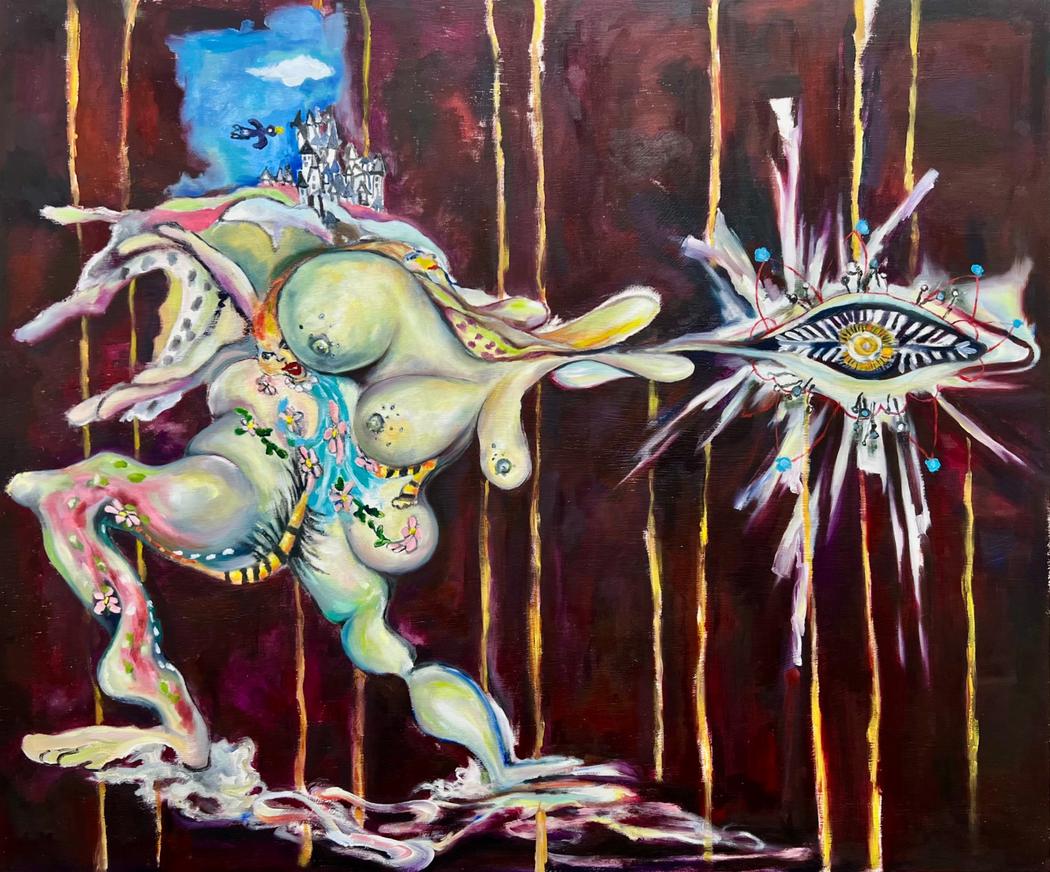 Chaehyun Min | An Uncontainable Body | 2026
Your works often combine tenderness and unease, using vivid colors alongside darker or psychologically charged imagery. How do you create and maintain this emotional tension?
I’m really glad people noticed that. It might even be something I wasn’t fully aware of myself. I think most people, not just me, are constantly trying to maintain a sense of psychological balance, especially in today’s world. I’m interested in observing that fragile state rather than deliberately creating emotional tension. As I work, I think it naturally finds its way into the paintings. The coexistence of tenderness and unease isn’t something I consciously construct; it simply emerges from the way I experience and observe people, including myself.
Could you describe your working process? Do you begin with photographs, sketches, fragments of patterns, or an intuitive response to the canvas?
Although it may seem unexpected from looking at my work, I actually dislike reaching a point where I can no longer explain the internal logic of a painting, even to myself. My process often begins by making collages from photographs, patterns, and visual fragments that inspire me, and I’m quite particular about those references coming from my own experience. Whenever possible, I photograph them myself. Once those elements come together, I try to articulate the work by writing a clear and coherent sentence.
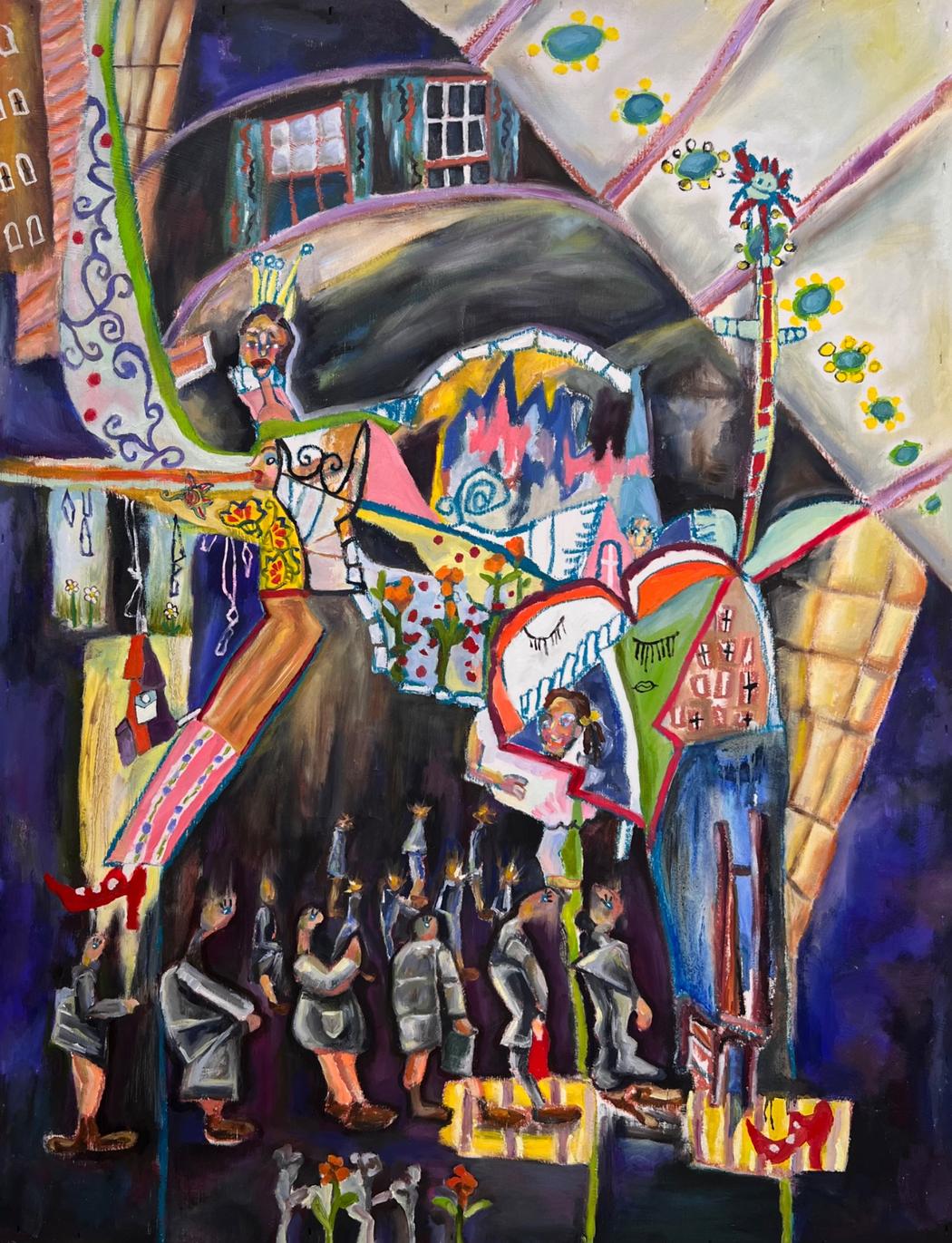 Chaehyun Min | After Childhood | 2026
After holding your first solo exhibition in Seoul in 2025, did your relationship with your work change? What artistic questions are you currently interested in exploring?
I think I have become more interested in finding a balance between objectivity and personal experience. I’m currently thinking about how much of myself should exist within my work without allowing my brain to define it completely. I think it can be dangerous to believe that, simply because someone is an artist, they have to be a certain kind of person or constantly perform a particular identity. Rather than searching for a fixed image of what an artist should be, I want to remain open to change and let my work evolve naturally alongside me.