
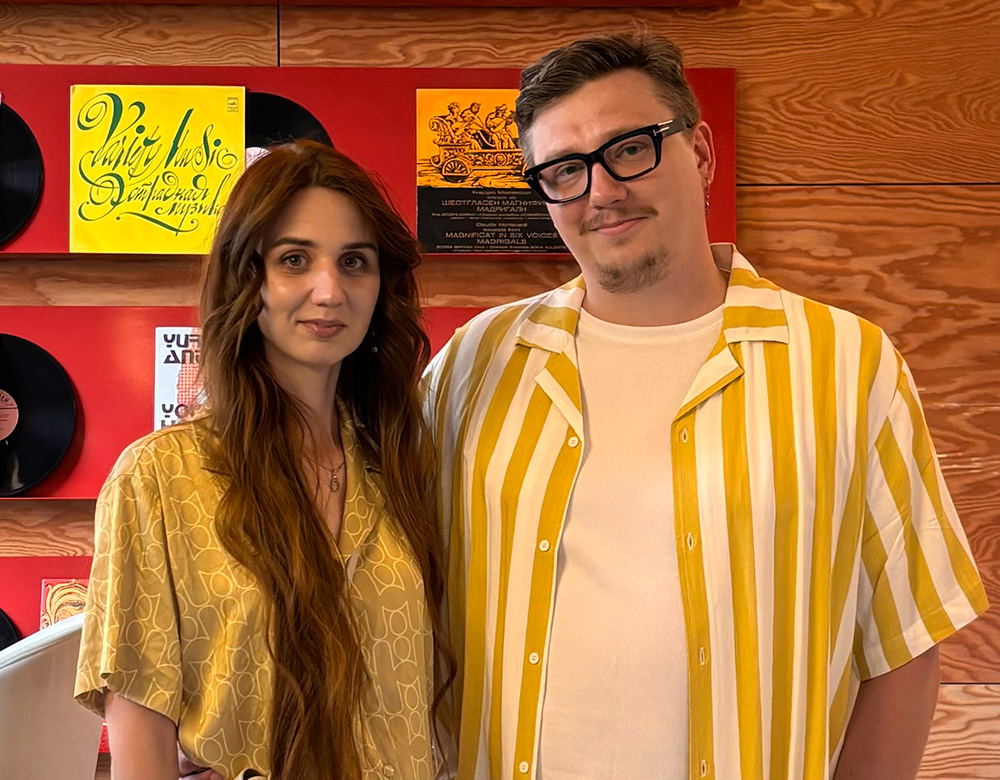
Lorrrem (Denis & Julia Zelenykh)
How did Lorrrem begin, and what led you to build a shared creative practice as a duo?
Lorrrem started in 2020 in Donbass as a joint practice by Denis and Julia Zelenykh. At first it was ordinary design work: local brands, organizations, identities. Then CGI came along, and the layouts started to feel cramped. We wanted to make objects that live a life of their own — on social media, in the city, in the viewer’s phone.
The duo format came out of practice, not strategy. We were discussing every frame together anyway, so it was easier to admit that the author here isn’t a person but a conversation between two.
Our best-known work turned out to be the augmented reality postcards devoted to memorial sites — we made them together with Alina Abramchuk. The postcards were shown at the local history museum and on television; today they’re held in the museum’s collection.
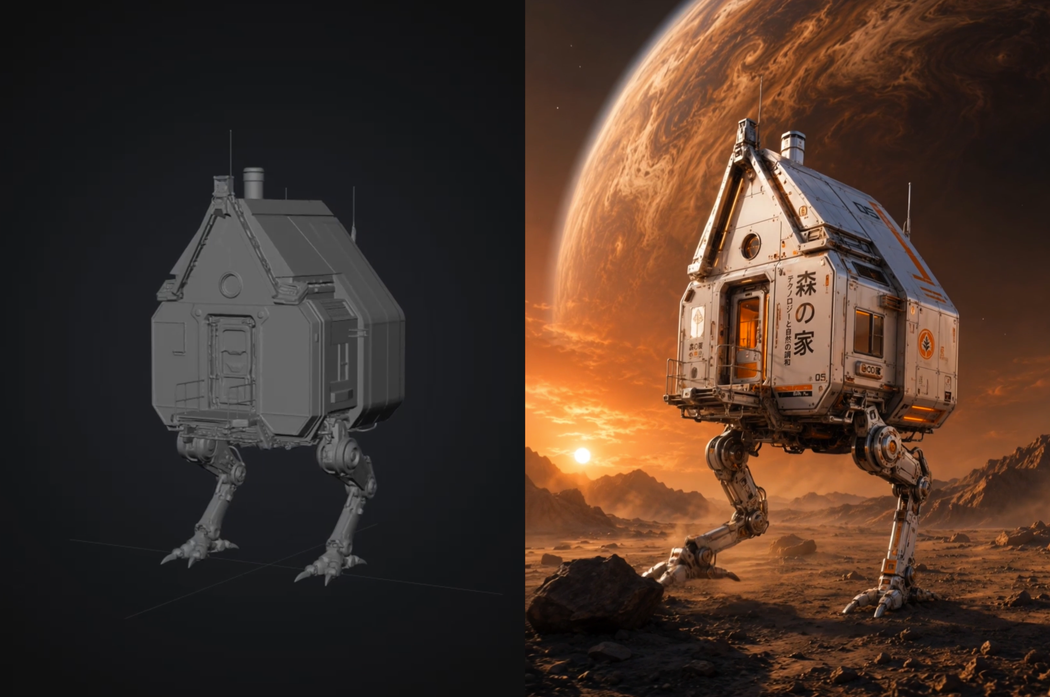 Lorrrem (Denis & Julia Zelenykh) | Izba
How do you divide responsibilities between you, and how does the dialogue between two artists influence the final work?
Julia does CGI. Denis does AR, animation, 3D and digital graphics. The admin work we split down the middle — no romance there.
The dialogue, though, works as a filter. If a scene only appeals to one of us, it’s usually just unfinished. If we argue about it, there’s something alive in it worth holding onto. We rarely divide tasks by layers, in the spirit of “you do this part, I do that one” — the same scene goes around the loop several times and comes back changed every time.
The practice is shifting now. Julia has started painting on canvas — we want to bring more physicality into the digital work: texture, the trace of a hand, accident. Alongside that we’re experimenting with material objects. AR is already a meeting between the digital and the real, so it makes sense for that meeting to have a proper second half.
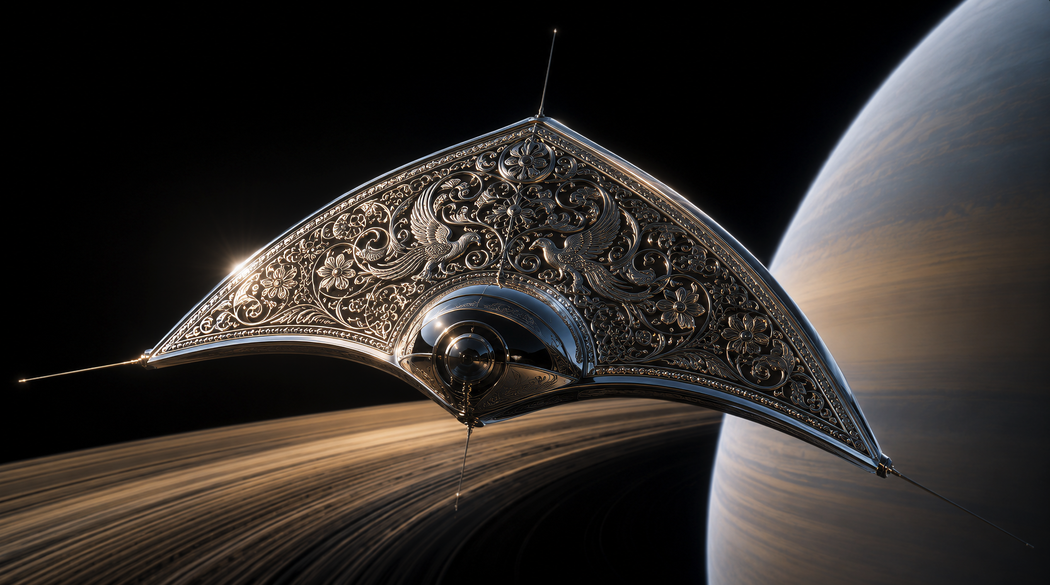 Lorrrem (Denis & Julia Zelenykh) | Kokoshnic
Your works often place human figures, animals, flowers, and cultural symbols in surreal or cosmic environments. What attracts you to these unexpected combinations?
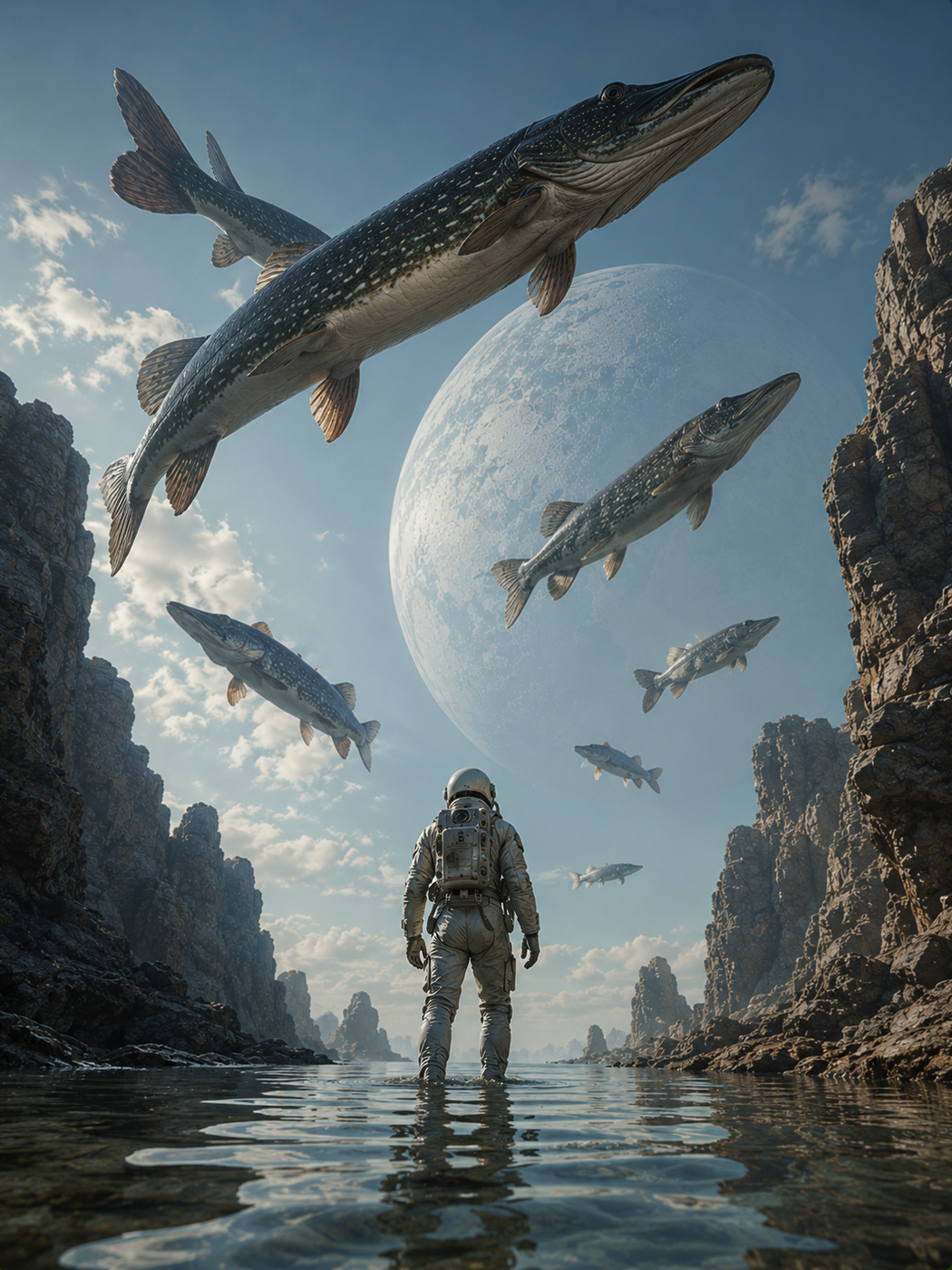
For us space isn’t a decoration or a genre — it’s a way of stripping away context. On Earth a flower is a flower in a vase, a dog is a dog in a yard. Move them into emptiness and they stop being household items: what they actually mean becomes visible.
At that scale, objects are also levelled with one another. A person, an animal, a flower, an ornament from an old postcard — against a black background they all have equal rights. We like that equality; it says that the human being isn’t the owner of the picture, just one of its elements.
And the third reason, the most honest one. We live in a world that’s been explored by a few percent. Everything else is darkness you can only look into and imagine. Surrealism, for us, isn’t an escape from reality but a working hypothesis about the part of it we haven’t reached.
Space appears as both a physical setting and a metaphor in your work. What does the universe represent to you in relation to human identity and existence?
The environment shapes us and we shape the environment — for us that isn’t an aphorism, it’s something visible in our own work: the place where you live creeps into the frame on its own, even when nobody invited it.
The universe, in that sense, is simply the largest environment there is. It sets a scale in which personal dramas take on their true proportions. Not devalued — precisely made visible. A human being is small, but we’re the only known point where the universe gets a look at itself.
So identity, for us, isn’t about “who am I among people” but “where am I in this volume.” The answer comes out provisional every time. That’s probably why we keep wanting to make the next piece.
 Lorrrem (Denis & Julia Zelenykh) | Shuka
In one of your works, a human face is replaced by an abundant bouquet of flowers. What ideas about identity, transformation, or inner life does this image express?
People get read by their covers: by appearance, by profession, by how they present themselves. Half of all conflicts come from that — people argue with each other’s covers and never reach the contents.
A bouquet instead of a face is an attempt to put things back in order. We removed what people usually judge by and put in its place what a person actually carries inside. Everyone is made by nature to create something beautiful: some through their work, some through how they treat others, some without ever noticing it.
A bouquet is also alive: it blooms, it wilts, it depends on care. So it’s really a question addressed to the viewer — what’s growing in you, and are you watering it?
How does augmented reality change the way viewers experience your work compared with encountering a conventional still image?
A still image is read in a second. With AR the viewer has to do something: take out a phone, point it, walk around the object, find the angle. That effort changes the relationship — the work stops being a picture in a feed and becomes a place the person came to on their own.
AR also gives you time. In augmented reality a story can unfold: first the viewer sees one thing, then notices a detail, then realizes the detail is looking back. A still frame can’t do that — it shows everything at once.
With the postcards this was most obvious. A paper postcard of a memorial site and the same postcard through a camera are two different experiences, and the difference appears in about a second.
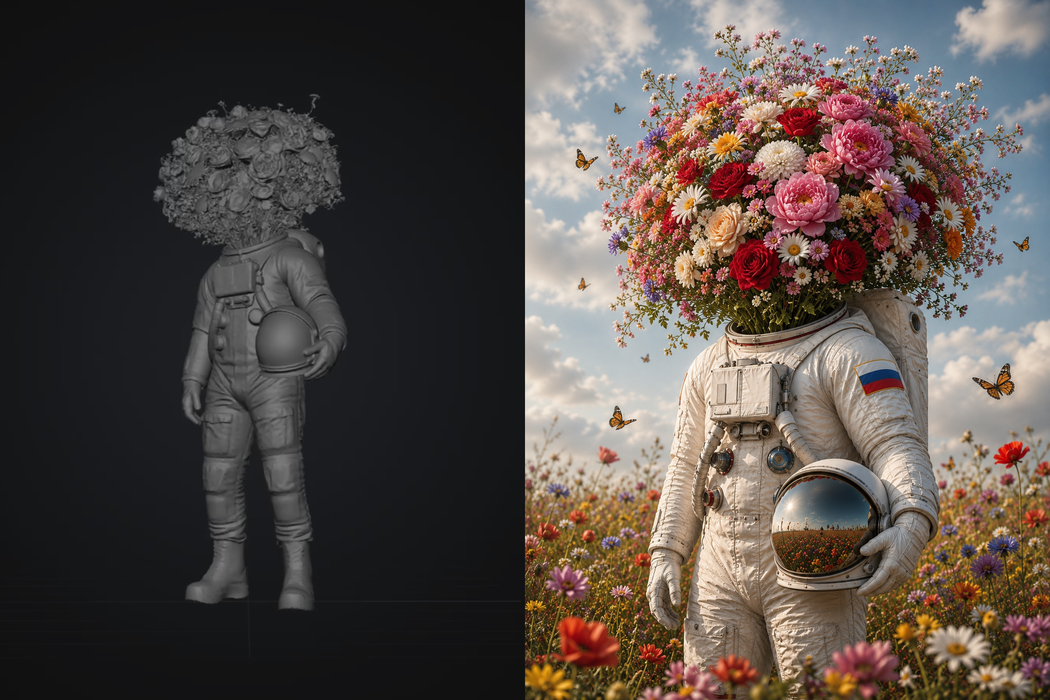 Lorrrem (Denis & Julia Zelenykh) | Space Man
At what stage of your creative process do technology and concept meet: does an idea determine the tools, or can experimentation with CGI and AR generate the idea itself?
For us it’s almost always AR first, everything else after. We’re not inventing a picture but a scene: what the viewer sees at first glance, what they find on the second, and what stays hidden for the most persistent.
That’s why a still frame isn’t the work for us — it’s an invitation. A cover, with the real story lying behind it: easter eggs, hidden characters, unexpected turns. Anyone who stops at the picture in the feed has honestly seen about a third of it.
Sometimes the tool suggests the idea: you catch a glitch in the tracking, it turns out more beautiful than what you’d planned, you keep it. But more often the idea pulls the technology along behind it — we decide what should happen to the viewer, then work out what it takes to make it happen.