

Tamara-Leigh Jacobs
You describe your art as a diary that reflects different stages of your life. When did painting first become a way for you to record personal experiences and emotions?
Painting became my diary when life asked me to carry more than I thought I could. I was born on 1 July 1976 in Vryheid, a small town in KwaZulu Natal, and creativity was always part of my world because my mother was a self taught artist. I can still see her with her red nails, always busy creating something beautiful. After she passed away, my spiritual alarm clock went off. I went through a divorce and found myself raising two small children on my own. In those years, I painted to survive physically, but eventually painting became something much deeper. I painted to survive spiritually. Every canvas began to hold my grief, my healing, my hope, and my journey back to myself.
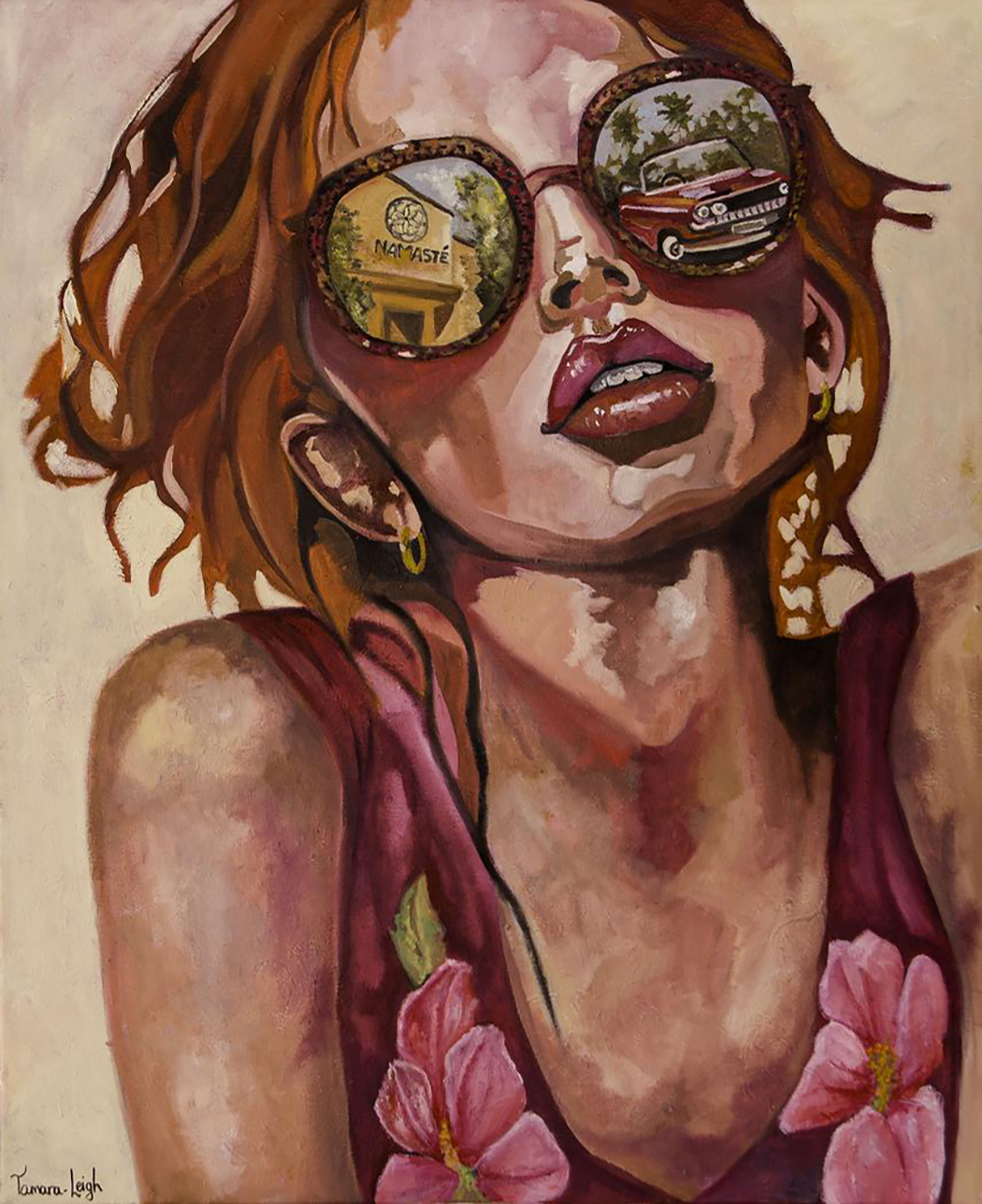 Tamara-Leigh Jacobs | Namaste
How has growing up and living in South Africa influenced your visual language, choice of colours, and the stories you explore?
South Africa lives in every brushstroke I make. Growing up in KwaZulu Natal exposed me to vibrant landscapes, diverse cultures, and people whose strength and resilience are woven into everyday life. As the principal of a pre primary school, I work closely with Zulu children, and their innocence, energy, and colourful smiles inspire me deeply. They remind me to see the world with wonder again. My palette is often bold and expressive because South Africa itself is bold and expressive, full of contrast, beauty, struggle, and joy.
You say that you paint what moves you spiritually. How do you recognise the moment when an emotion, image, or experience should become a painting?
I recognise that moment when something will not leave me alone. It may be a feeling, a dream, a symbol, or an encounter with another human being. It begins as a quiet stirring inside me and grows louder until I know I must paint it. My spiritual journey has taken me from being very Christian to slowly building my own identity as a spiritual person. The universe has stretched me in ways I never expected, and painting has become the language through which I understand those experiences. I cannot imagine life without paint because it is where my spirit speaks most clearly.
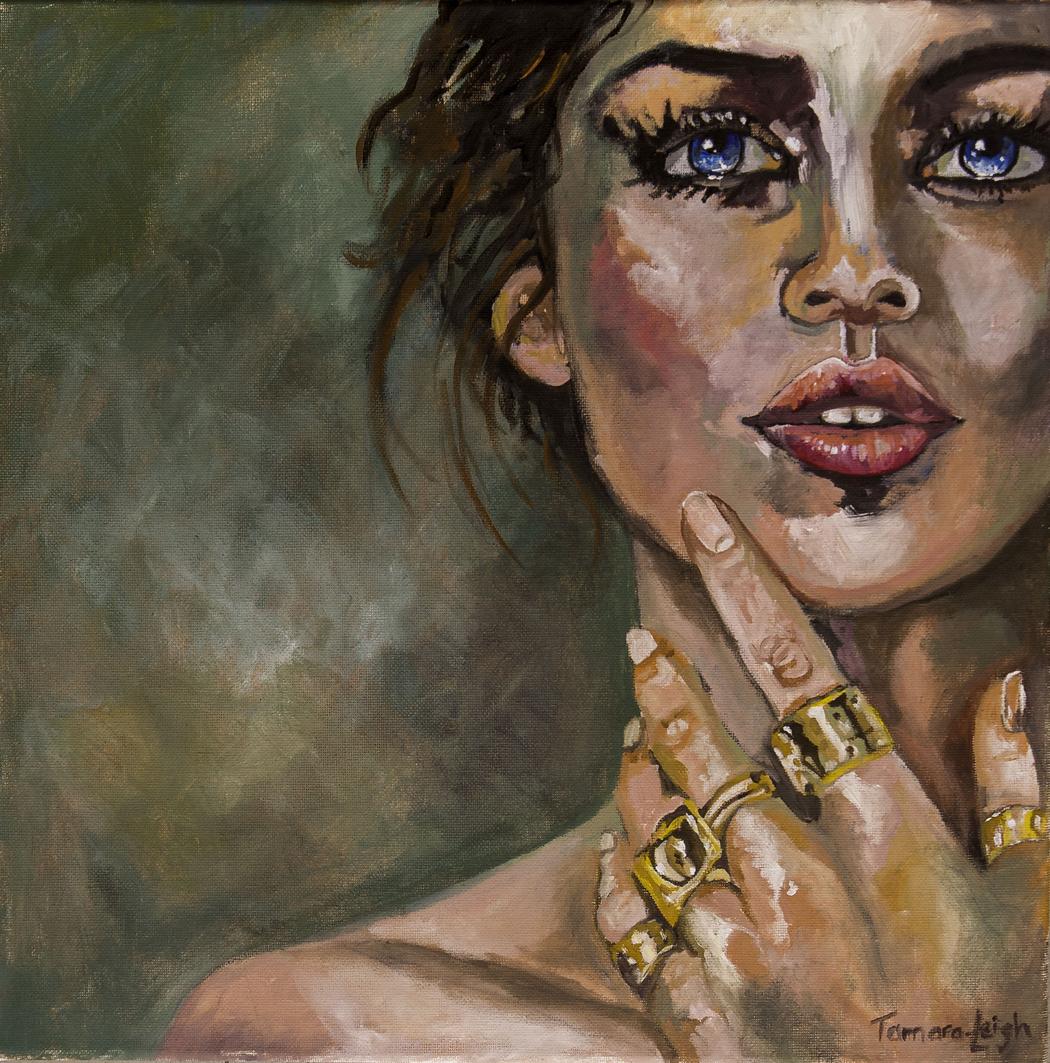 Tamara-Leigh Jacobs | Contemplation
The women in your portraits appear confident, expressive, and introspective. What aspects of femininity and personal identity are you interested in exploring through these figures?
I paint women as mirrors of strength, vulnerability, resilience, and transformation. I am interested in the layers women carry, the parts of ourselves we show to the world and the parts we protect quietly. My figures are not only portraits of women. They are reflections of the feminine spirit, of survival, and of becoming. Through them, I explore my own identity as a woman who has been broken, rebuilt, and forged through fire.
Eyes and facial expressions play a particularly important role in your work. What do you hope the viewer will discover through the gaze of your subjects?
I paint faces not simply to create portraits, but to find beauty in people when people were not beautiful to me once upon a time. The eyes are where I search for truth. I want viewers to feel seen, to recognise their own humanity in the gaze of my subjects, and to remember that every person carries a story beneath the surface. Sometimes I add details such as the word “Namaste” in reflections, to remind people that we are spirits having a human experience, not the other way around.
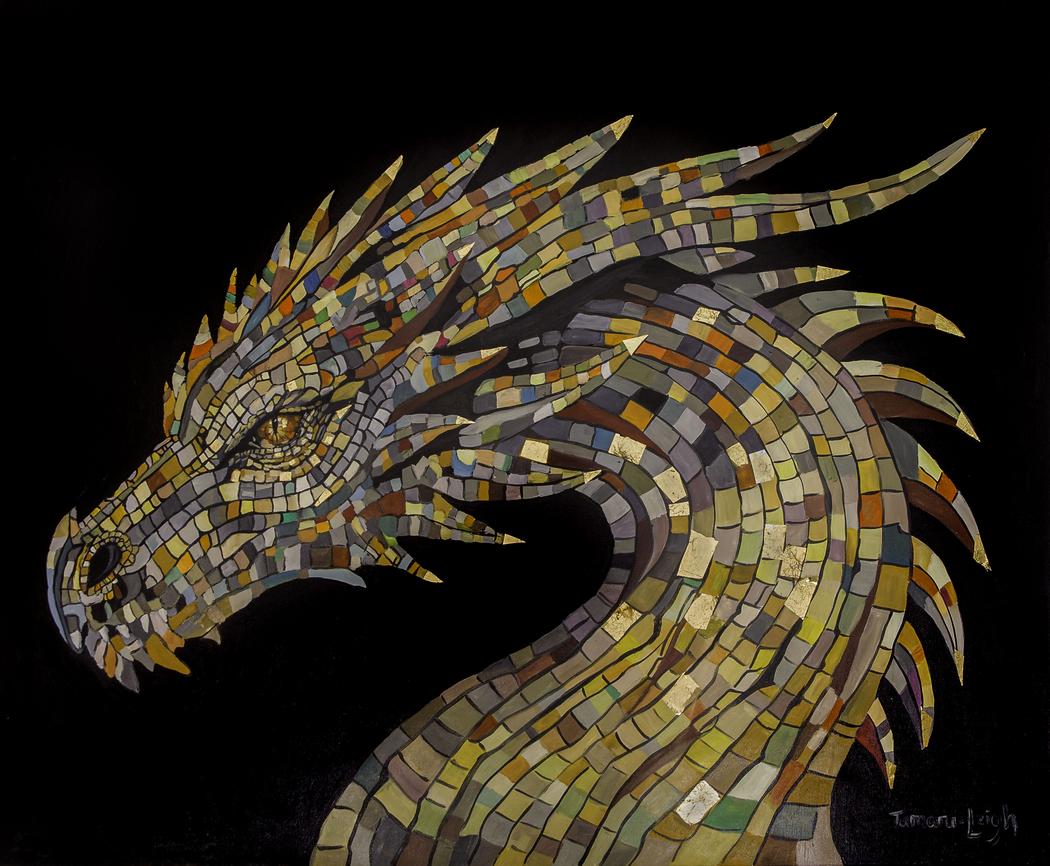 Tamara-Leigh Jacobs | Fire Dragon
Your works combine controlled figurative details with spontaneous and expressive brushwork. How do you balance careful planning with intuition during the painting process?
I begin with an idea or an emotion, but I do not force the painting to follow a rigid plan. I allow intuition to guide me, trusting that the canvas knows where it wants to go. My controlled details give structure, while my spontaneous brushwork gives the painting life and breath. I work in both acrylic and oil, and each medium allows me to express different parts of my emotional landscape. The balance comes from listening, listening to the painting, to my spirit, and to the story that wants to be told.
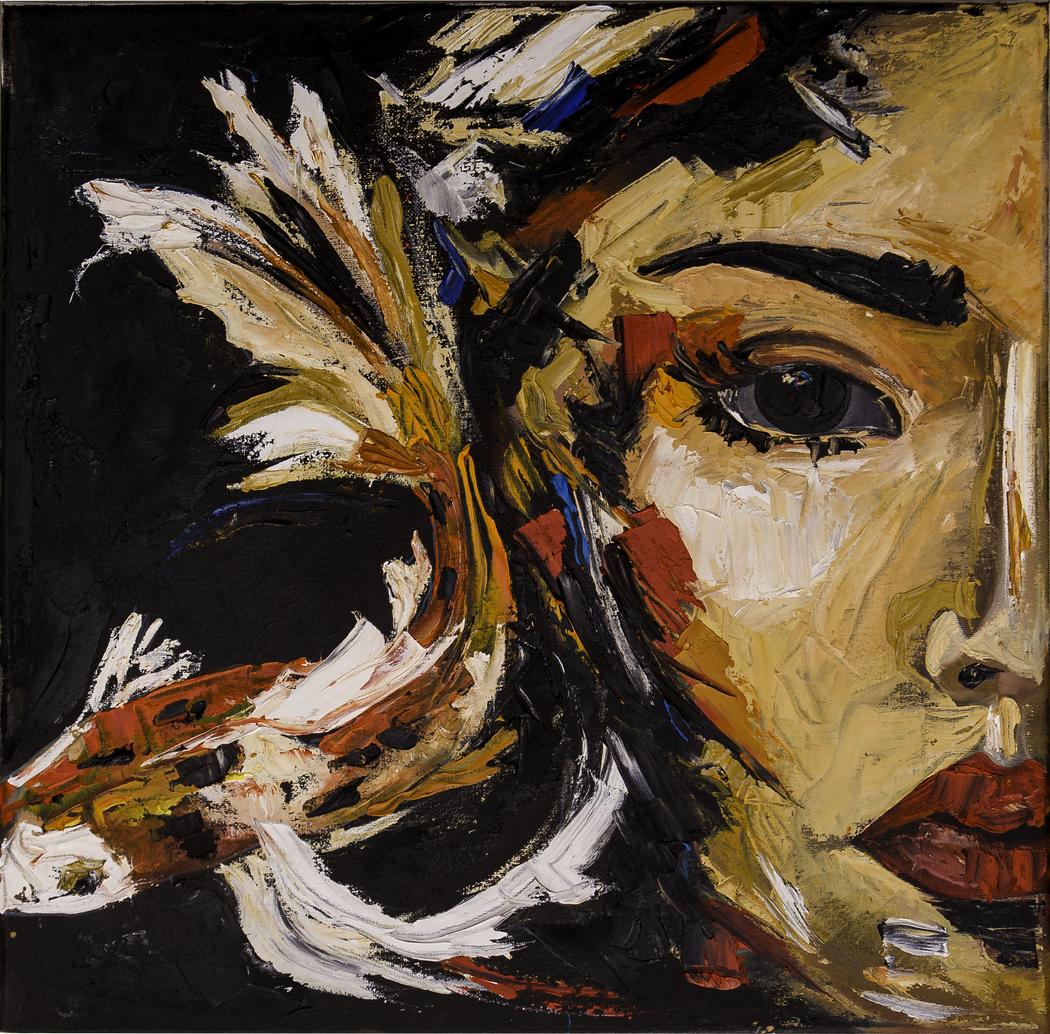 Tamara-Leigh Jacobs | Koi
Looking back at the stages of your life already recorded through painting, what new chapter are you currently beginning to explore in your work?
I am currently exploring a chapter of spiritual awakening, transformation, and inner freedom. I incorporate esoteric symbols and zodiac imagery into my work, including the Fire Dragon, because it represents who I am and how I have been forged. Fire has not destroyed me. It has refined me. This new chapter is about embracing my full spiritual identity, celebrating the beauty of human connection, and creating art that reminds people of their own light, even after darkness.