
Luna Naseh
Your work often explores identity as something “built”. How do you personally define the architecture of identity in your practice?
I think identity is something constantly under construction. We build ourselves slowly through memory, grief, love, migration, survival, culture, and all the people we meet along the way. In my work, I often think of the self almost like a mapped out geometry, something with hidden sides, cracks, foundations, and histories layered into every aspect.
A lot of my portraits explore the idea that we carry entire landscapes within us. The geometric elements in my work are less about perfection and more about trying to give shape to emotions that are difficult to explain out loud. I think I’m always trying to understand how a person can feel fragmented and whole at the same time, and that identity is built slowly over time through both what we inherit and what we choose to become.
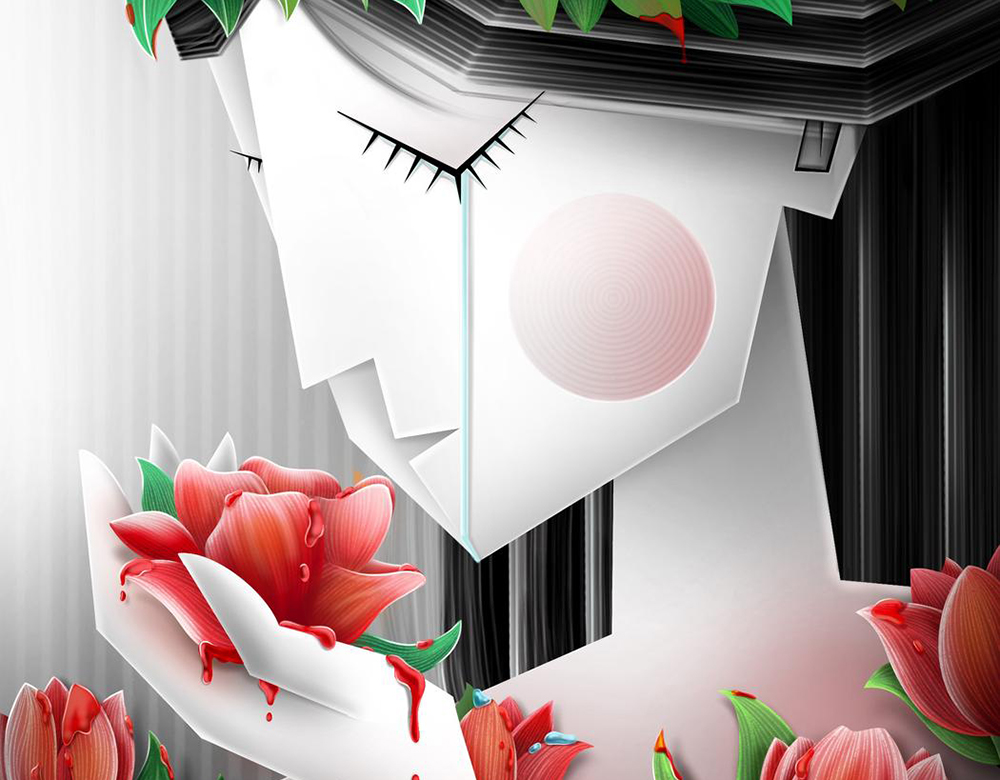
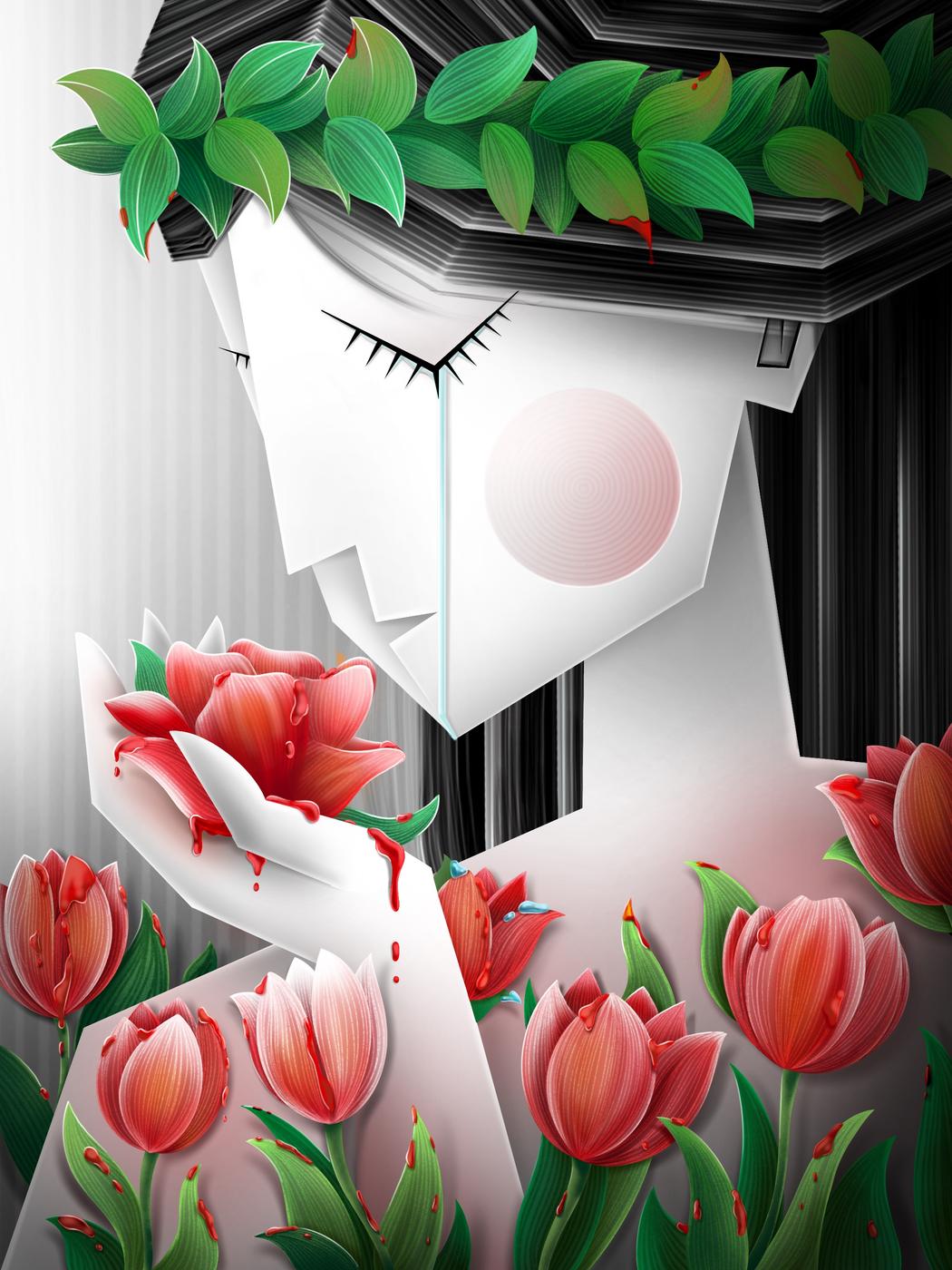 Luna Naseh | Still She Blooms
Growing up between cultures, how has this experience shaped your visual language and the emotional tone of your work?
Growing up between cultures shaped almost everything about the way I see the world. There’s a strange beauty in constantly existing between places, but also a quiet loneliness to it. You learn very early on how to adapt, how to translate yourself, and sometimes how to rebuild parts of your identity depending on where you are.
Visually, I’m drawn to contrasts: softness and structure, familiarity and distance, nostalgia and reinvention. Emotionally, I think my work carries a quiet longing to reconcile different parts of the self. A lot of my pieces explore themes of displacement, memory, resilience, and the search for home, both physically and internally. Even when the imagery is calm, there’s usually an underlying tension between feeling rooted and feeling untethered.
You have a background in industrial design — how does this influence your approach to composition and form in illustration?
Industrial design taught me how to think structurally, but also emotionally. Good design isn’t only about functionality, it’s about how something makes a person feel when they interact with it. I carry that mindset into my illustrations.
When I build a composition, I think a lot about rhythm, balance, negative space, texture, and movement through the image. But underneath all of that, I’m usually thinking emotionally first. How certain combinations of shape and color can carry completely different emotions. The structure exists to support the feeling. I think my background in design gave me a sensitivity to form, while illustration became the place where I allowed myself to become more vulnerable and intuitive.
 Luna Naseh | Mother Moon
Your portraits feel both structured and deeply emotional. How do you balance geometry with intimacy?
For me, geometry is not separate from emotion, it’s a way of containing it. The structured elements in my work often act like emotional architecture, giving shape to feelings that are otherwise difficult to articulate. The intimacy comes from the human feeling and concept in each piece. Underneath all that structure— the textures, the expressions, the quiet details, the emotional weight carried by the figures themselves. I’m interested in that balance between control and vulnerability. I think many people, especially women, learn to appear composed while carrying entire emotional worlds internally. My work often lives in that tension.
The female figures in your work appear calm yet powerful. What does feminine strength mean to you today?
To me, feminine strength is not always loud. Sometimes it is quiet, tired, grieving, soft, or still learning how to stand again— but persistent. Feminine strength is the ability to hold complex emotional worlds inside of you while still showing up for others. I’m very interested in the kind of strength that doesn’t announce itself, but survives anyway, in kindness and connection.
The women in my work often appear calm. But that calm is layered with memory, endurance, softness, inner movement, and sometimes grief. I think feminine strength, to me, is the ability to remain open and feeling in a world that often asks women to harden themselves. It is the ability to keep rebuilding without losing tenderness.
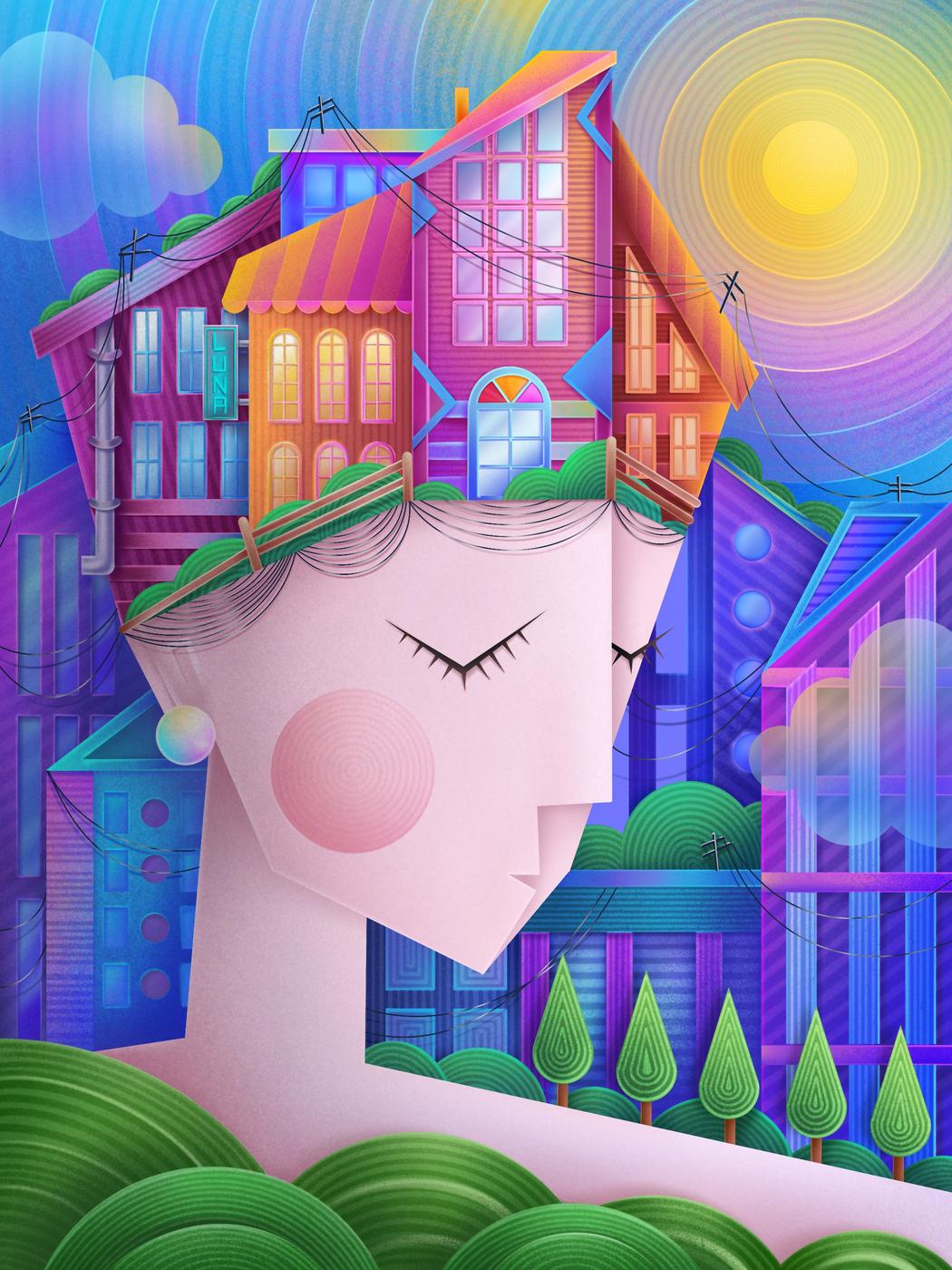 Luna Naseh | Geography Of Being
How does your experience in production design influence the narrative aspect of your illustrations?
Production design taught me that a space can tell a story before a character ever says a word. A room, an object, a color, or a texture can hold memory. It can reveal who someone is, what they have lost, what they are hiding, or what they are trying to become.
I think that way of seeing has deeply influenced my illustrations. Even when I’m making a portrait, I’m thinking about the world around and inside the figure. I want the image to feel like a still from a larger emotional story, as if the viewer has arrived in the middle of a moment, and something has happened before and will continue after. But that one singular moment can hold the weight of the story.
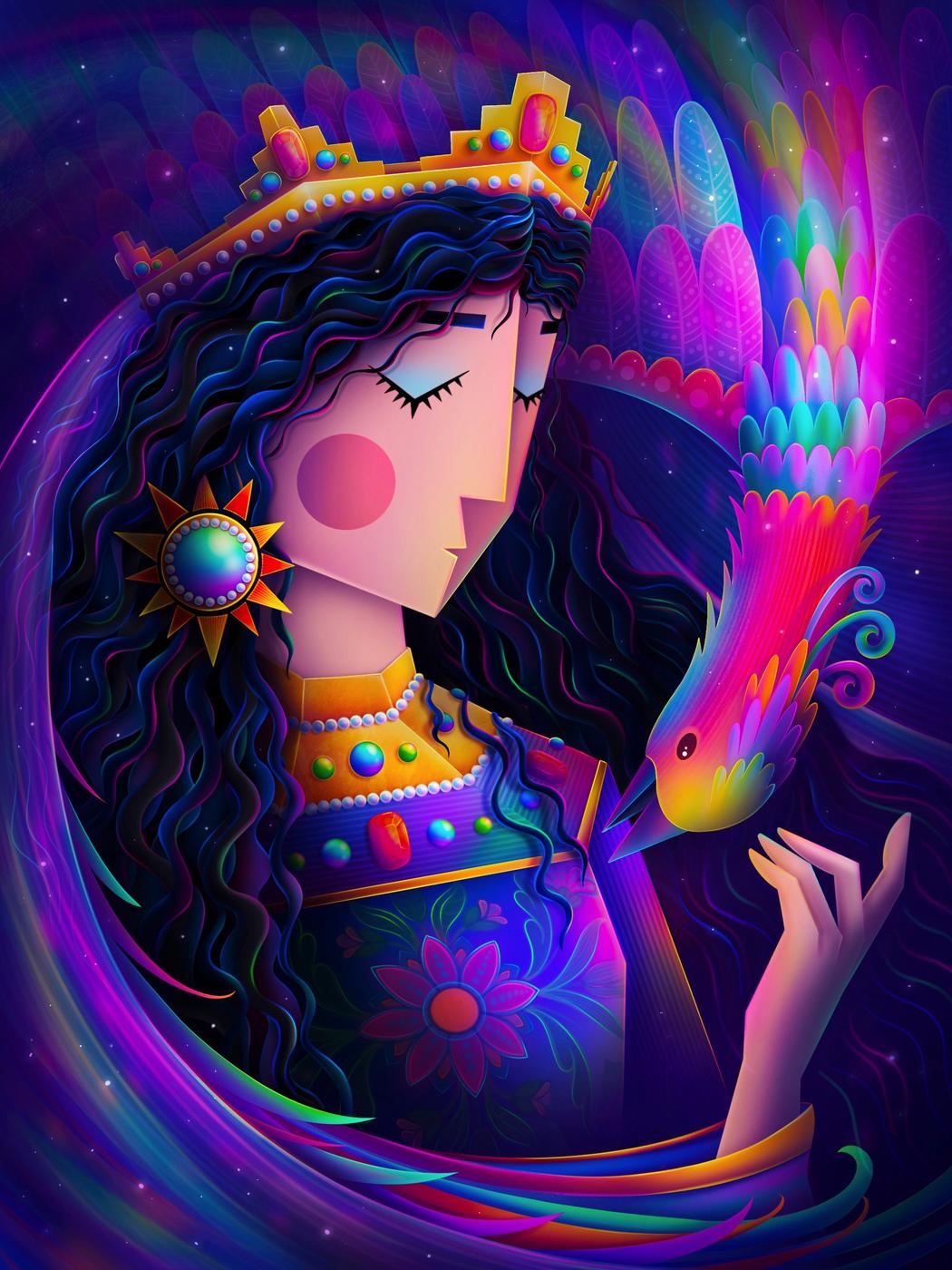 Luna Naseh | Atouryast
What do you hope viewers feel or discover about themselves when they engage with your work?
I hope viewers feel invited to pause for a moment and look inward. My work comes from very personal places, but I never want it to feel closed off. I want people to find their own memories, contradictions, grief, softness, or resilience inside it.
More than anything, I hope the work makes people feel less alone in their complexity. We all carry so many versions of ourselves — the person we were, the person we are becoming, the person we had to leave behind. If someone sees my work and feels even briefly understood, or reminded of their own inner world, that means a lot to me.