
Between Impulse and Permanence: Mylene Costa
by Anna Gvozdeva
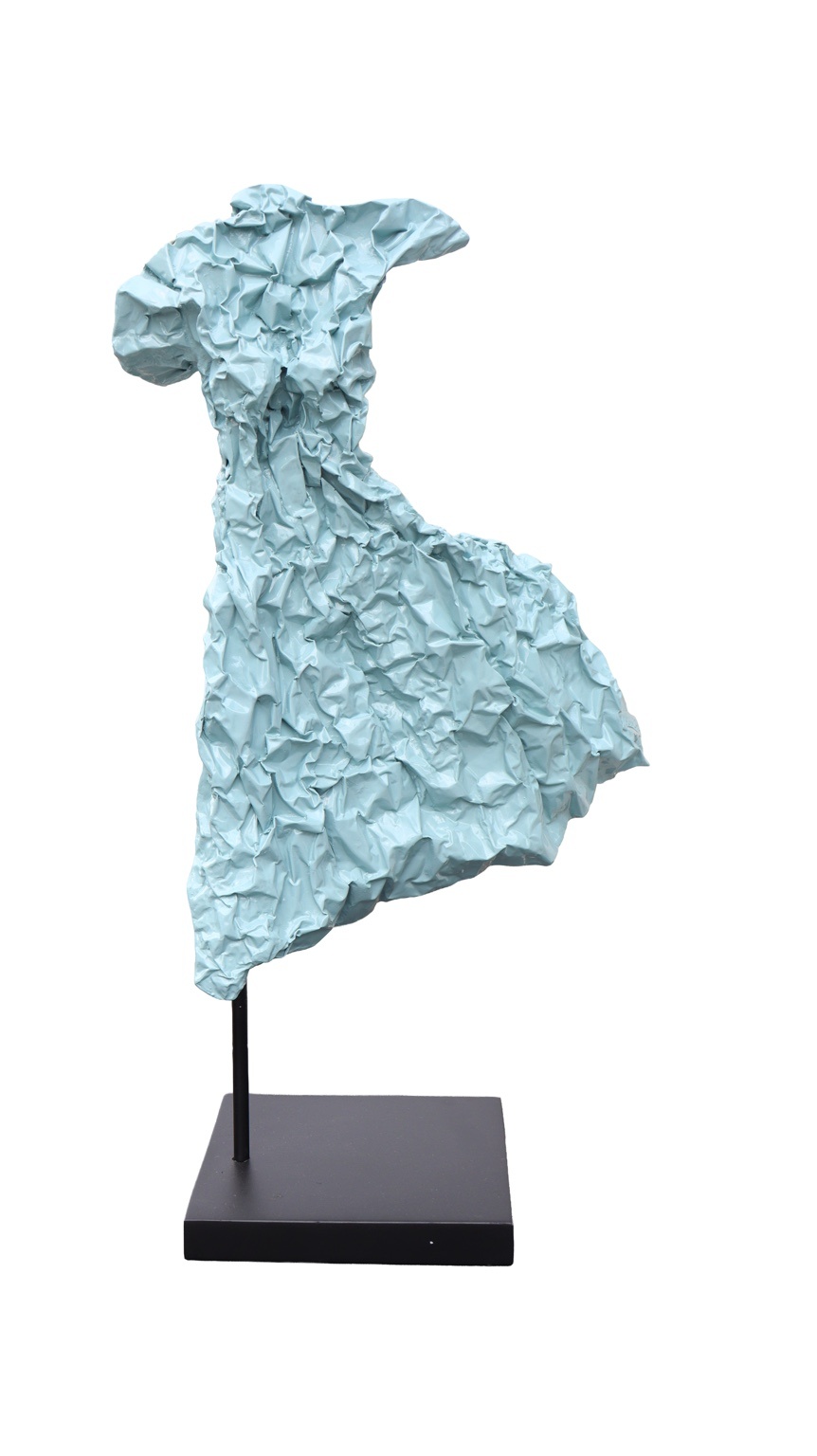 Mylene Costa | Nebra 1999 | 2025
Mylene Costa’s recent sculptural work presents an artist in full command of her formal vocabulary — and one acutely aware of its limitations. Working primarily in pigmented automotive resin and marble powder, Costa constructs objects that resist easy categorization: they are neither figurative nor fully abstract, neither finished nor deliberately raw. This productive ambiguity is at the core of her practice, and it is both her greatest strength and, at times, her most demanding challenge.
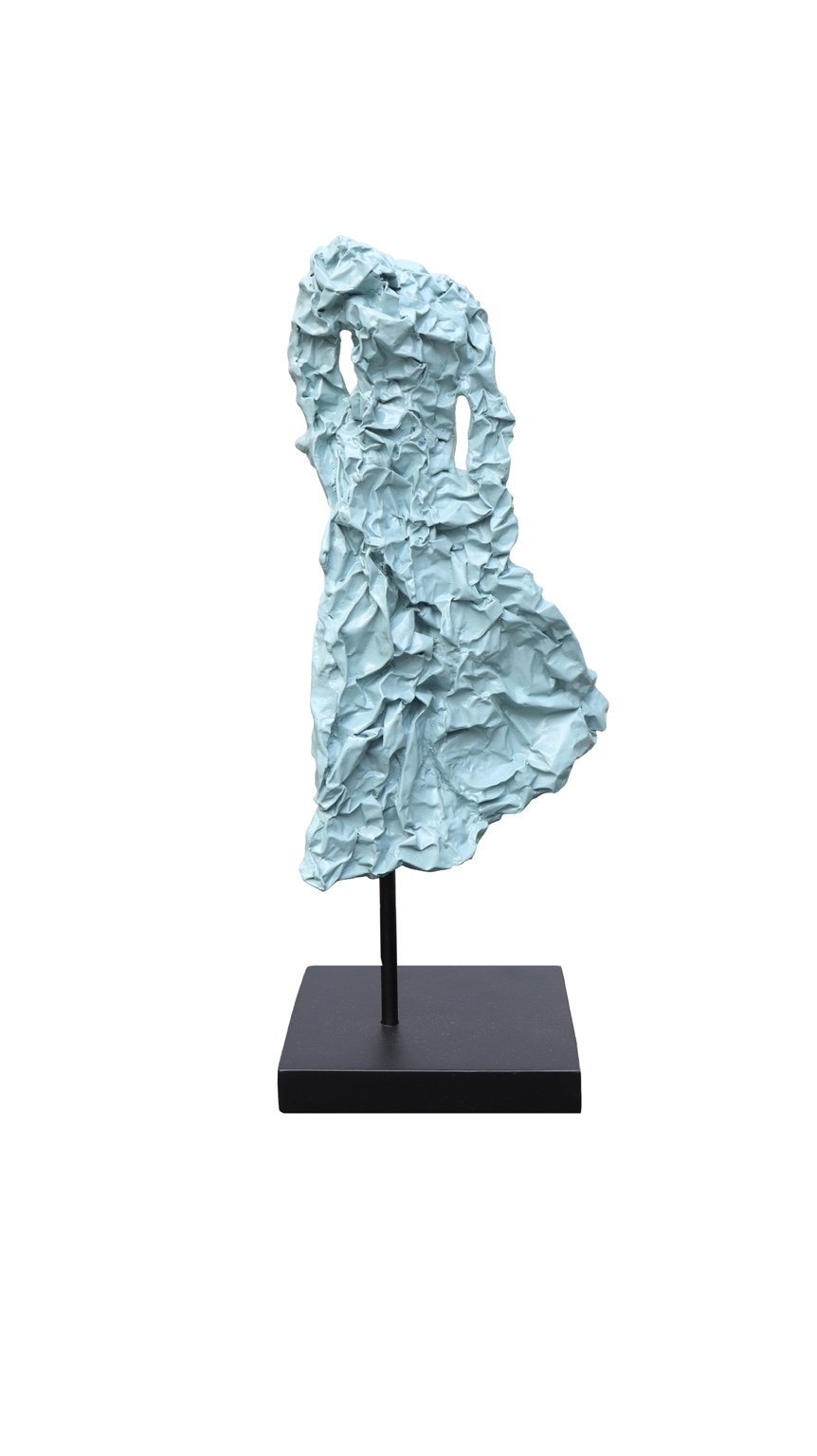 Mylene Costa | Nebra I | 2026
The works in the Nebra series — spanning Nebra 1999 (2025) and Nebra I (2026) — are among the most conceptually layered in the selection. By invoking the Nebra sky disc, an artifact discovered in Germany that encodes Bronze Age astronomical knowledge, Costa positions crumpled automotive resin as the contemporary heir to ancient mnemonic objects. The conceit is compelling: matter that absorbs time, holds gesture, and refuses to unfold. Yet the work succeeds less through explicit reference than through formal conviction. The fragmented, upright forms are genuinely tense: they appear arrested mid-collapse, and the small perforations punctuating the surface of Nebra I introduce a welcome porosity, a breath within the compression. The pale aquamarine pigmentation, consistent across both pieces, evokes patinated bronze without mimicking it — a subtle and effective choice.
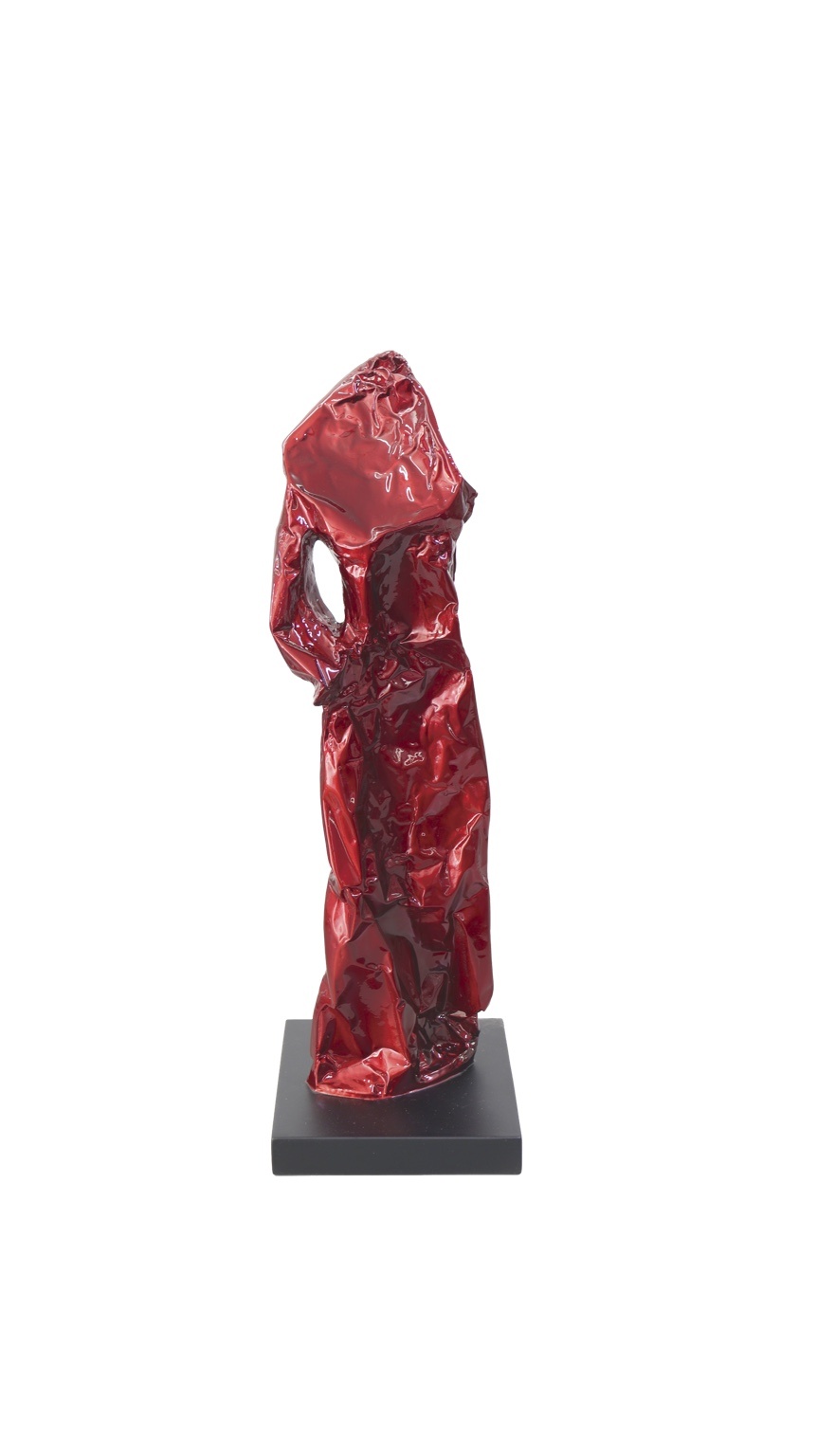 Mylene Costa | Rubra | 2025
Where Rubra (2025) operates through confrontation. Cast in deep crimson automotive resin with a high-gloss finish, the sculpture reads as both body and wound, garment and wreckage. The lacquered surface amplifies every dent and compression, turning the industrial material against itself. It is the most visceral work in the selection, and arguably the most immediate. The glossy red creates an unsettling seduction: the eye is drawn in before the mind has time to resist. One might question whether this directness risks becoming decorative — the drama of the color absorbing the complexity of the form — but Costa’s attention to the internal structure of the piece holds. The hollow passage at mid-torso grounds what might otherwise tip into spectacle.
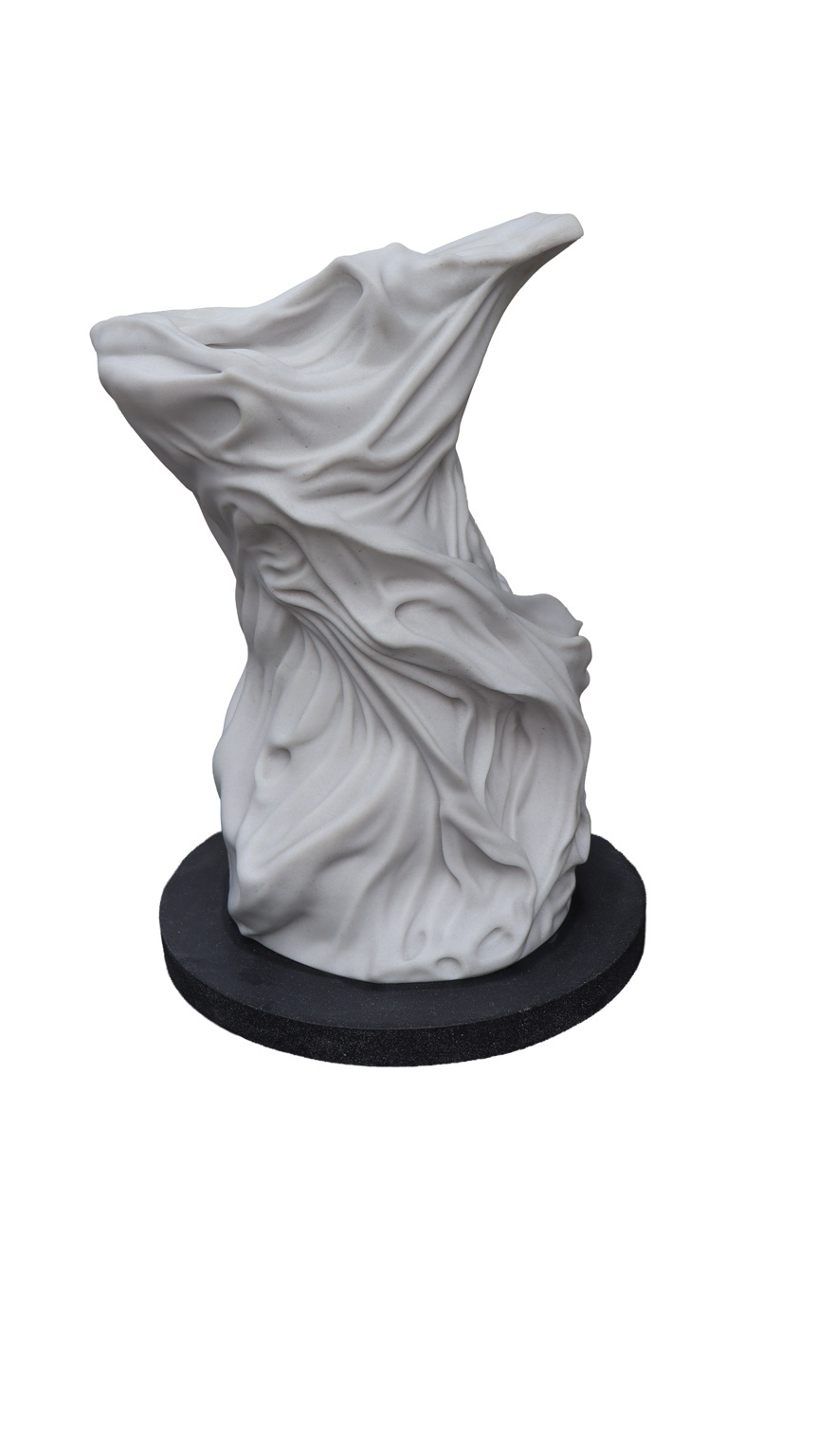 Mylene Costa | Vértice | 2026
The two marble powder works, Vertice and Crust (both 2026), represent a significant material shift and, in many ways, the most mature statement in the body of work presented. The matte white surface removes all the seduction of color and gloss, demanding that the viewer engage with form alone. In Vertice, the swirling drapery is genuinely architectural: the upward spiral reads as both rising force and contained collapse, a form that concentrates rather than expands. The material’s relationship to classical marble sculpture is intelligently handled — the work does not imitate antiquity but rhymes with it. Crust is more earth-bound, its compressed and folded mass evoking geological rather than bodily time. Set on its circular black base, it reads as a small monument to accumulated pressure — a core sample of force.
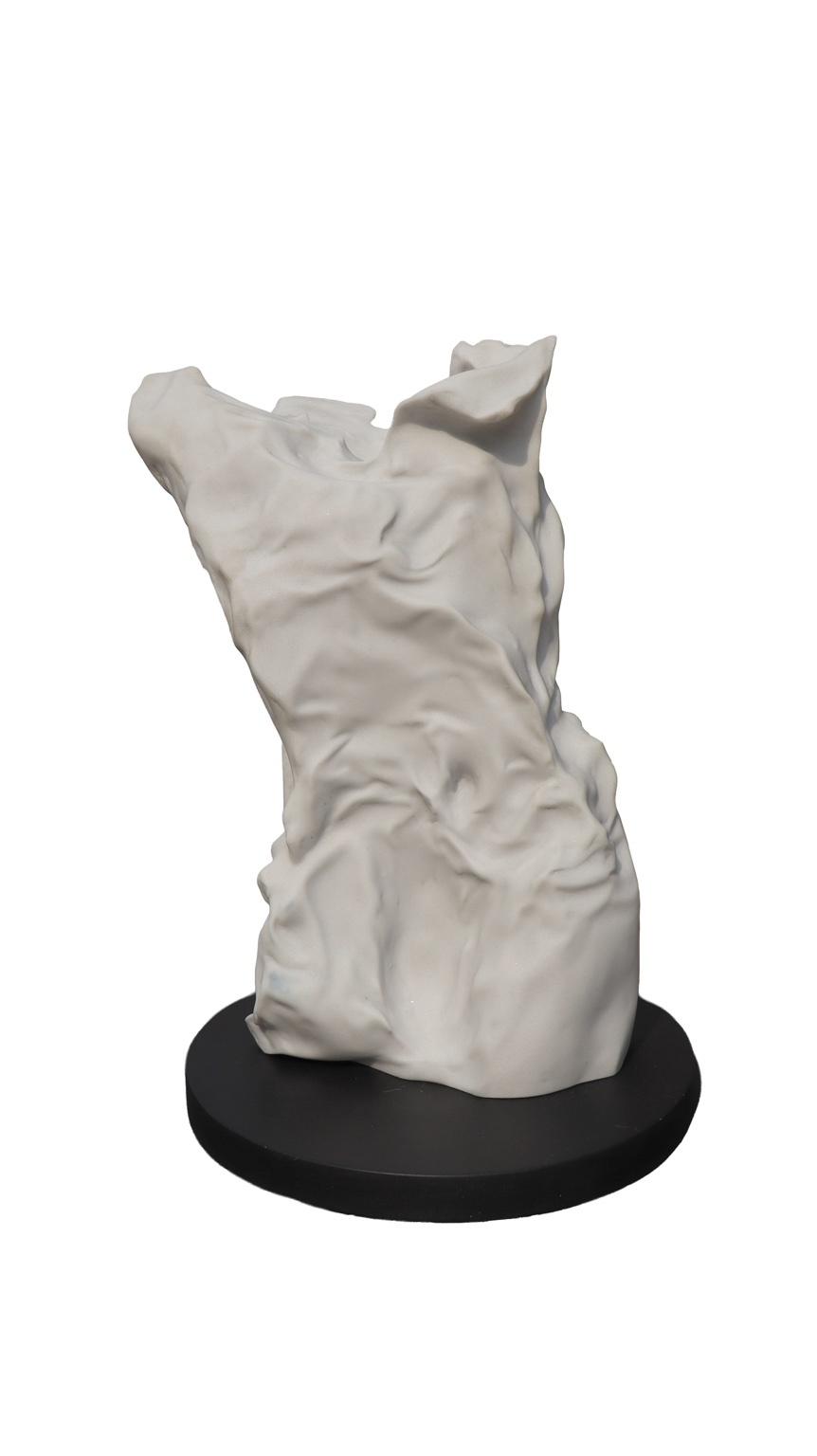 Mylene Costa | Crust | 2026
Taken together, this body of work reveals an artist navigating a productive tension between process and concept, gesture and structure, eruption and permanence. The recurring black steel bases — square for the resin pieces, circular for the marble — are understated but considered: they stabilize forms that appear on the verge of movement without domesticating them. Costa’s greatest formal risk — the deliberate rejection of the body as legible subject — is also her most rewarding. The works do not represent presence; they enact it. Whether the artist can sustain this rigor as the series expands, resisting the pull toward formula, remains the central question. But on the evidence presented here, the sculptural language is genuinely hers: disciplined, taut, and alive.


Leave a Reply
You must be logged in to post a comment.