
Yucen Liu
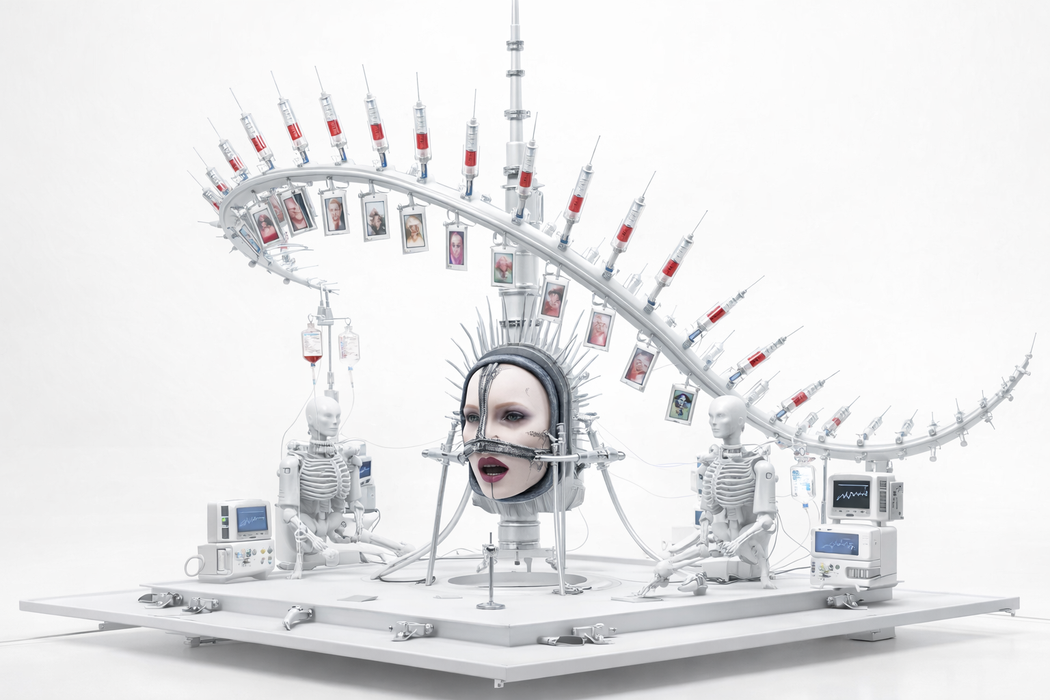 Yucen Liu | Gothitic
Your practice often describes survival as a “protocolized” and “executable” process. What first led you to approach life through the lens of systems and infrastructures rather than individual narratives?
I wouldn’t say my work is purely macro or systemic. Rather, I use a series of works to conduct thought experiments — to explore what might happen if the world we inhabit operated under entirely different conditions. In those speculative environments, how would the stories, individuals, and spiritual questions explored by literary traditions and contemporary cultural practitioners transform? To stage such experiments, I need to construct a framework — a scenario, a world-view — within which these possibilities can unfold. My works often function as fragments of that exploration. Some propositions may feel unstable or even unresolved, but they represent stages in the development of these imagined systems. Through this process, I aim to open alternative perspectives rather than to fix a singular narrative.
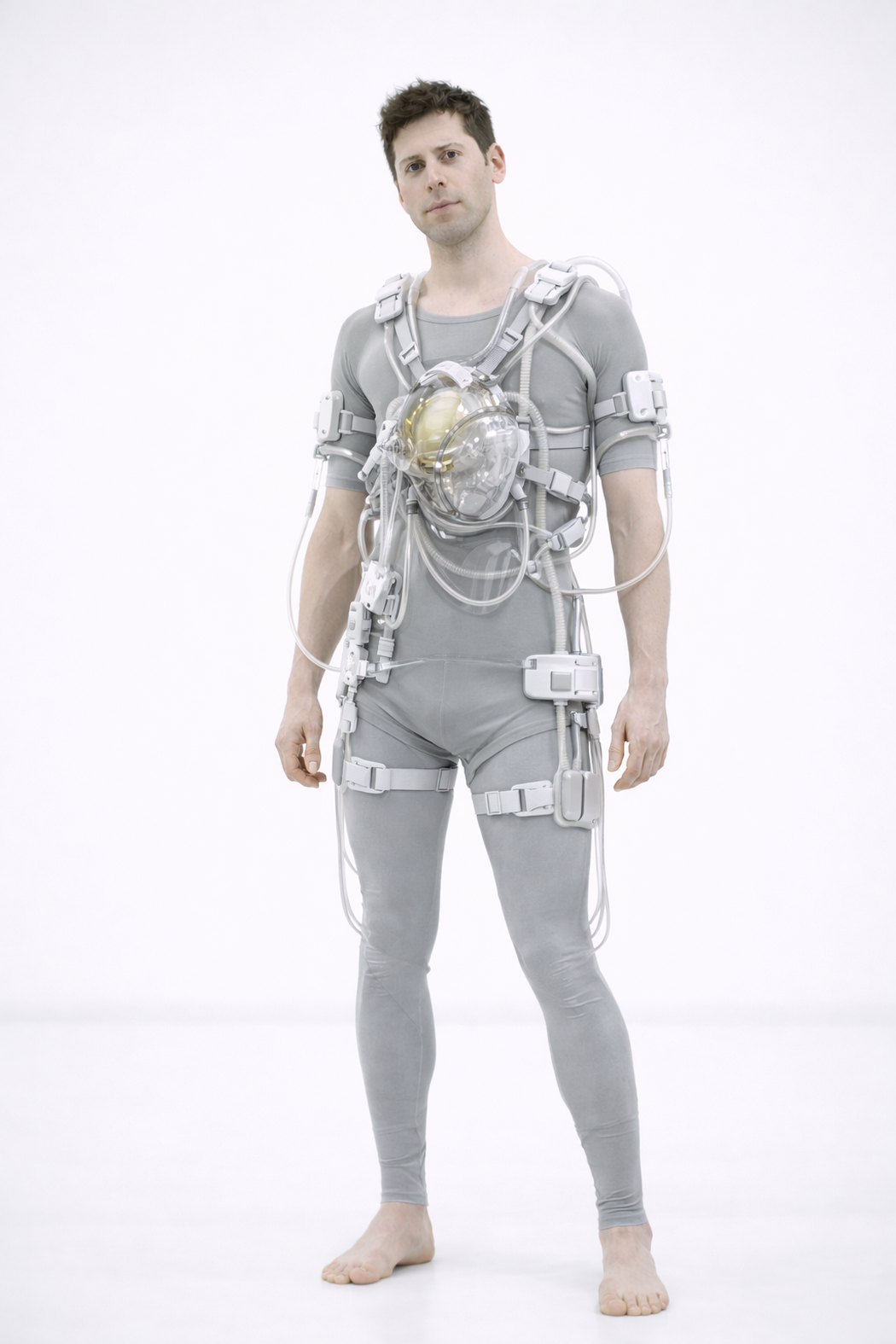 Yucen Liu | Assertized Life
In your statement, you mention weakening individual subjectivity while foregrounding systems as agents of judgment and maintenance. Do you see this as a critique, a reflection, or an inevitable condition of contemporary life?
As I mentioned earlier, my intention is not to impose a critique, but to explore possibilities that extend beyond immediate reality. I prefer to leave the authority of judgment to the viewer. My role is to construct and present a condition — one that may reflect aspects of contemporary life to varying degrees. Whether it functions as critique, reflection, or inevitability depends on how the audience connects the presented system to their own lived experience.
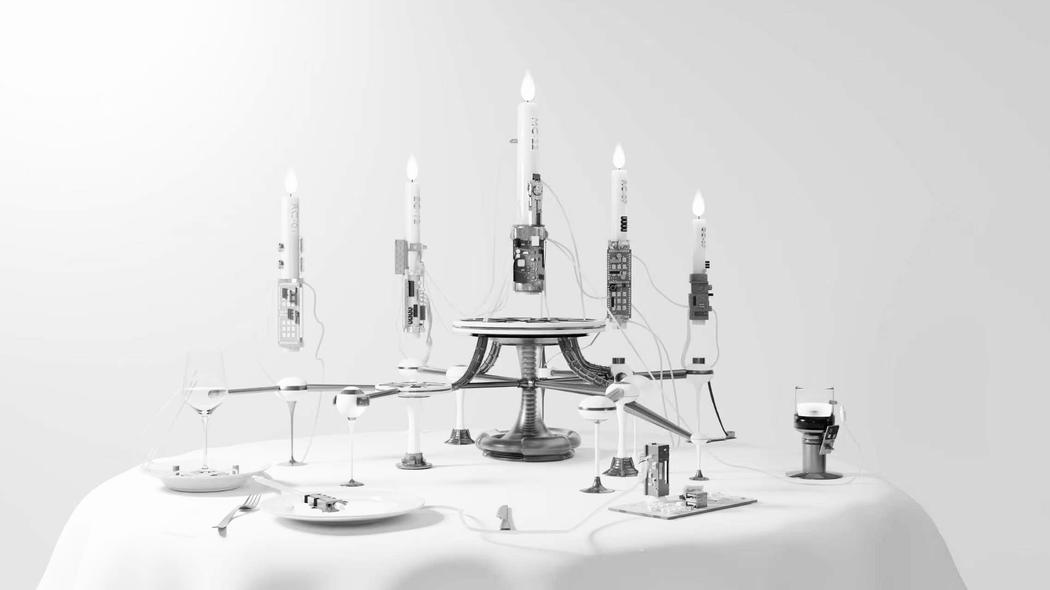 Yucen Liu | Candle system
Medical technologies and life-support devices appear repeatedly in your work. Is your engagement with these systems primarily conceptual, personal, or both?
My engagement with medical technologies operates on both conceptual and personal levels. Conceptually, these systems represent structured mechanisms of care, control, and survival — frameworks that regulate bodies and define thresholds of life. At the same time, my interest is shaped by lived observations and experiences, both within my immediate surroundings and in broader social contexts. These encounters inevitably inform the way I approach such materials, allowing the work to move between abstraction and embodied reality.
In Meterial (2023), you combine Western medical equipment with residues of traditional Chinese medicine that entered your own body. How does this merging of personal bodily history and institutional apparatus shape the meaning of the work?
In Meterial, the merging of Western medical apparatus with residues of traditional Chinese medicine that once entered my own body collapses the distance between the institutional and the intimate. The work turns medical systems into something deeply personal—no longer abstract structures of authority, but materials that have physically passed through me.
By solidifying over 1,000 doses of herbal residues into a geological base, I treat my body as an archive. The institutional apparatus becomes a vertical, almost surgical presence, while the sedimented medicine below acts as a record of lived vulnerability. The sculpture therefore stages a tension: between control and submission, visibility and internal experience, system and memory. In this way, the work is not only about medical anxiety, but about reclaiming agency—transforming the clinical gaze into a material language rooted in my own bodily history.
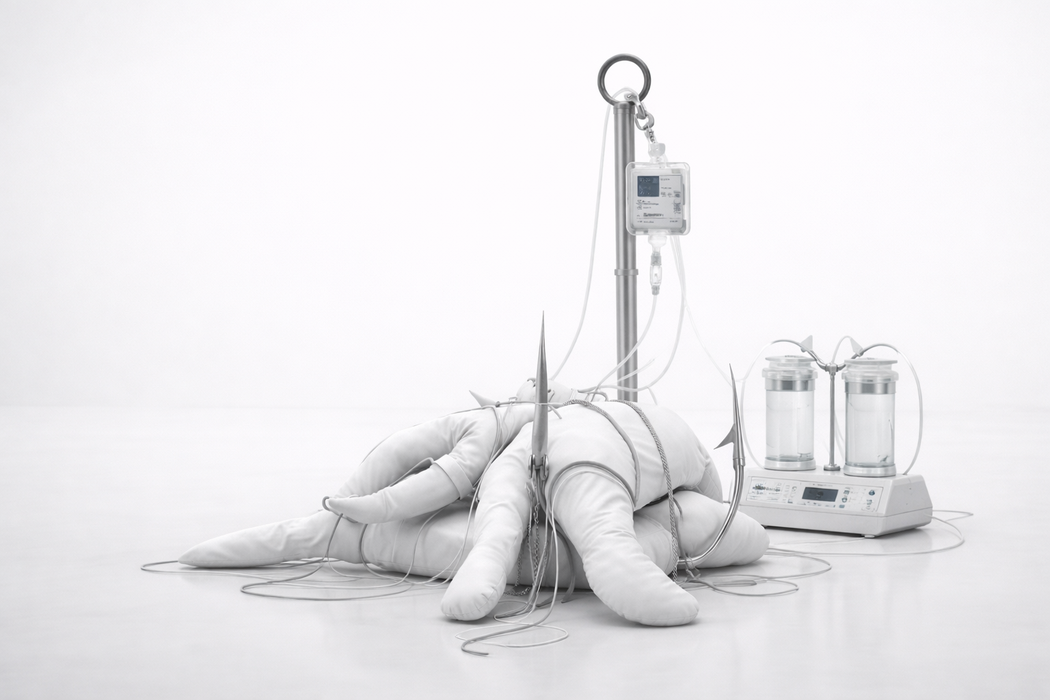 Yucen Liu | Claw
Many of your works resemble prototypes or research devices. Do you see yourself more as an artist, a researcher, or an engineer of critical systems?
I see myself primarily as an artist and a researcher.
The works may resemble prototypes or research devices, but they are not designed to solve problems in a technical sense. Instead, they function as speculative structures — ways of testing ideas, questioning systems, and examining how bodies, memories, and institutions interact.My practice is research-driven in the sense that it involves investigation, material experimentation, and conceptual framing. However, the outcome is not data or efficiency, but experience and reflection. I’m interested in constructing situations where critical thinking can be felt physically and emotionally.So while there is a structural or systemic logic in the work, it ultimately remains grounded in artistic inquiry rather than engineering.
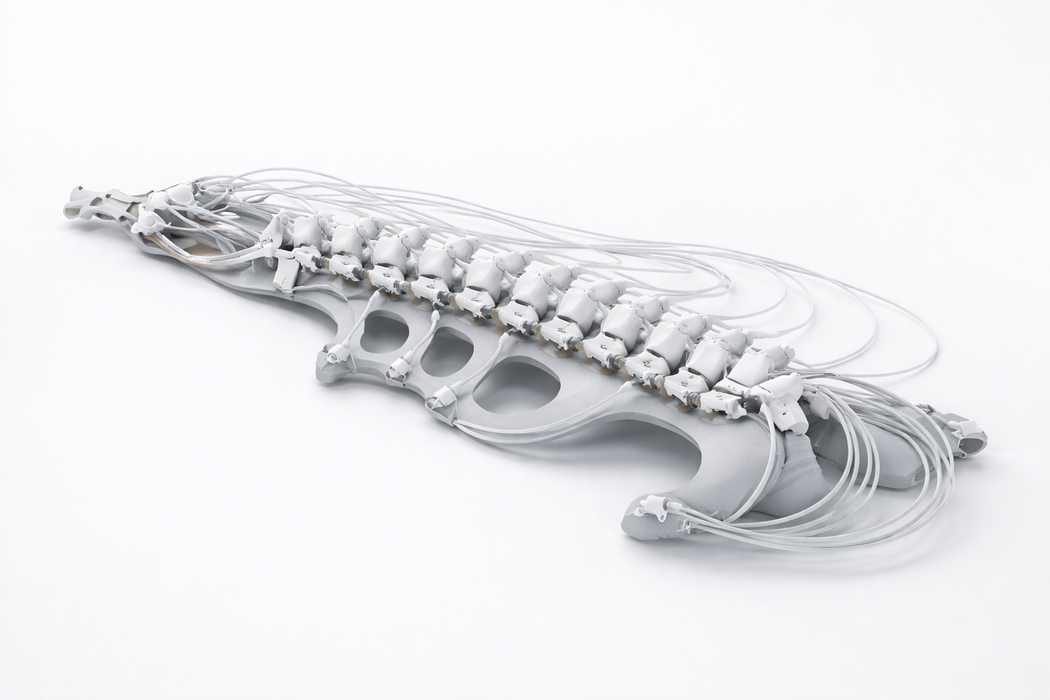 Yucen Liu | Medibone
How does studying at University of the Arts London influence your research-based methodology and system-oriented thinking?
In my journey, the influence was not only from UAL as an institution, but also from the city and the broader social environment in which it exists. Before coming to UAL, my training was rooted in relatively traditional approaches to form and visual construction. At UAL, although my course was largely design-based, it encouraged me to move beyond formal concerns and instead ground my practice in questions and systematic thinking. What shifted most significantly was not simply how to propose a question, but why I should propose it in the first place — and what kind of question is truly worth asking. That emphasis on critical positioning and structural inquiry played an important role in shaping my research-oriented and system-based methodology.
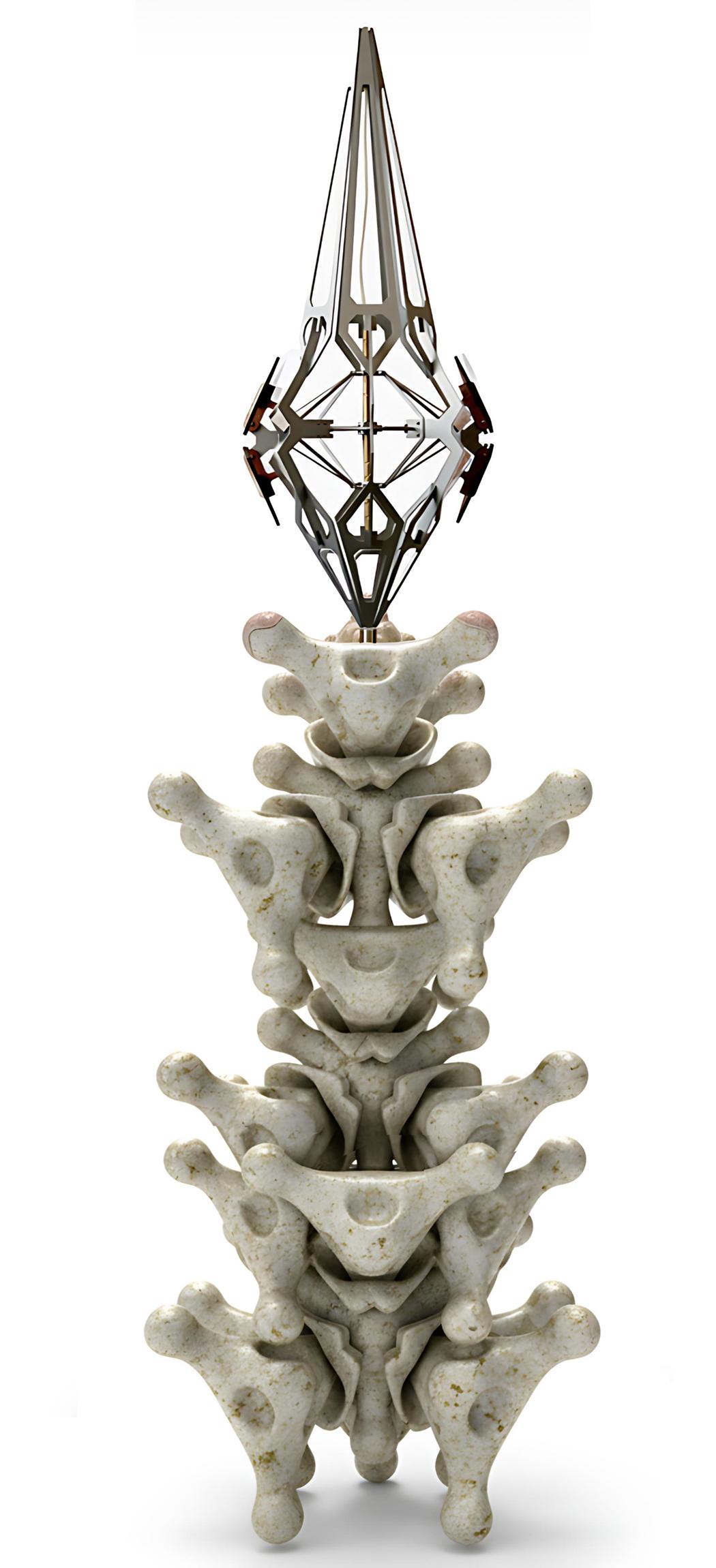 Yucen Liu | Meterial
Your work often evokes anxiety, control, and vulnerability. Do you aim for an emotional response from viewers, or are you more interested in cognitive reflection?
I don’t deny that emotion is present in the work. Many of the forms and materials I choose inevitably carry a certain intensity, which can trigger visceral responses. However, at the origin of each project, my motivation tends to be conceptual and investigative rather than emotional. I am interested in constructing frameworks of inquiry. That said, I increasingly see emotional resonance as an extension of the work — a way for it to unfold beyond its conceptual structure. Moving forward, I would like to explore more deliberately how emotional response can coexist with, and even deepen, cognitive reflection within my practice.
Leave a Reply
You must be logged in to post a comment.