
Suylen Guellati
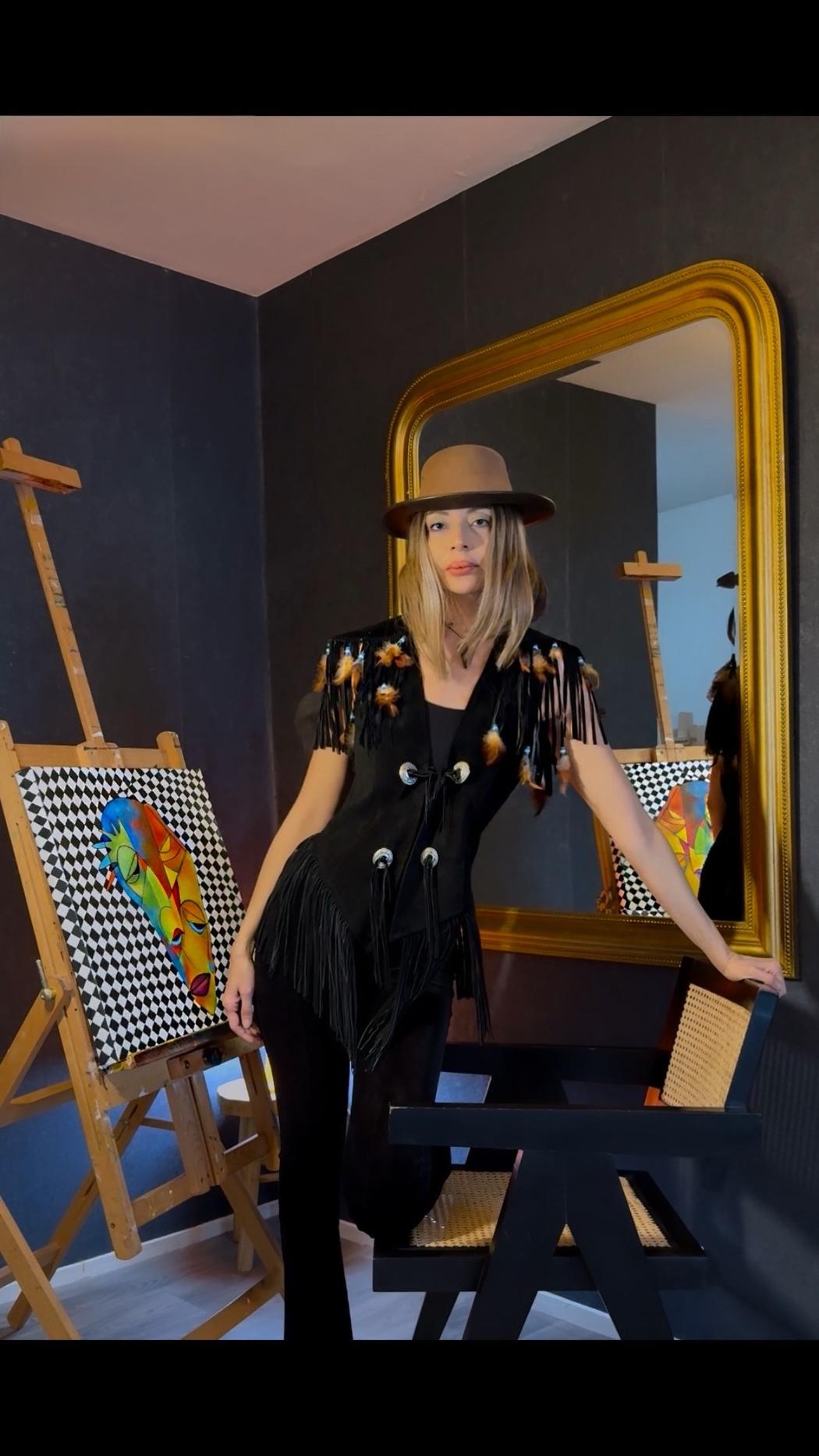
In your biography, you say: “I don’t write about the world, I write from what I live through.” At what point does personal experience, for you, become a universal image that can be understood by the viewer?
Yes, that is exactly it: my personal life is intimately connected to my painting.
The starting point is my solitude. But it is a chosen solitude, almost a necessary one. It is within this silent space that I am able to enter myself, to move beneath the visible layers, and to touch something more essential. At times, this inner life becomes more intense than what unfolds externally.
Ruptures with the world, spiritual impulses, moments of doubt or clarity — all of this forms the raw material of my work. Yet on the canvas, the event does not remain a narrative. It transforms.
What I paint is not the lived scene itself, but the inner state it opened within me. The emotion is passed through, deepened, sometimes even distilled, until it becomes form.
An experience becomes universal the moment it has been worked deeply enough to no longer belong solely to me.
It retains its intimate truth, yet it reaches a symbolic dimension.
In Metaphysics of the Heart, the central red axis was born from a deeply personal sensation — a need for alignment, an inner quest. But once placed on the canvas, that axis ceases to be “mine.” It becomes a vertical presence that anyone can recognize within themselves.
You work extensively with oppositions: love and despair, vulnerability and strength, light and pain. What matters more to you in the process – capturing the conflict or revealing the possibility of its transformation?
The two are inseparable. We live constantly moved by opposing forces: love and absence, light and darkness, strength and fragility. These states coexist. They create an inner tension that is almost vibrational. At times, that tension is difficult to sustain. But it is alive.
In a vision that is deeply personal to me, suffering and trial are not detours or mistakes. They are places of revelation. What we call “conflict” is often a moment of stripping away — something breaks so that something more essential can emerge.
I do not seek to beautify pain, nor to resolve it too quickly. I seek to move through it. To inhabit it fully. Because it is only by accepting to descend into the shadow that we discover the light.
To immortalize conflict is necessary, because it is a threshold.
To show transformation is essential, because it reveals what the conflict was silently carrying within it.
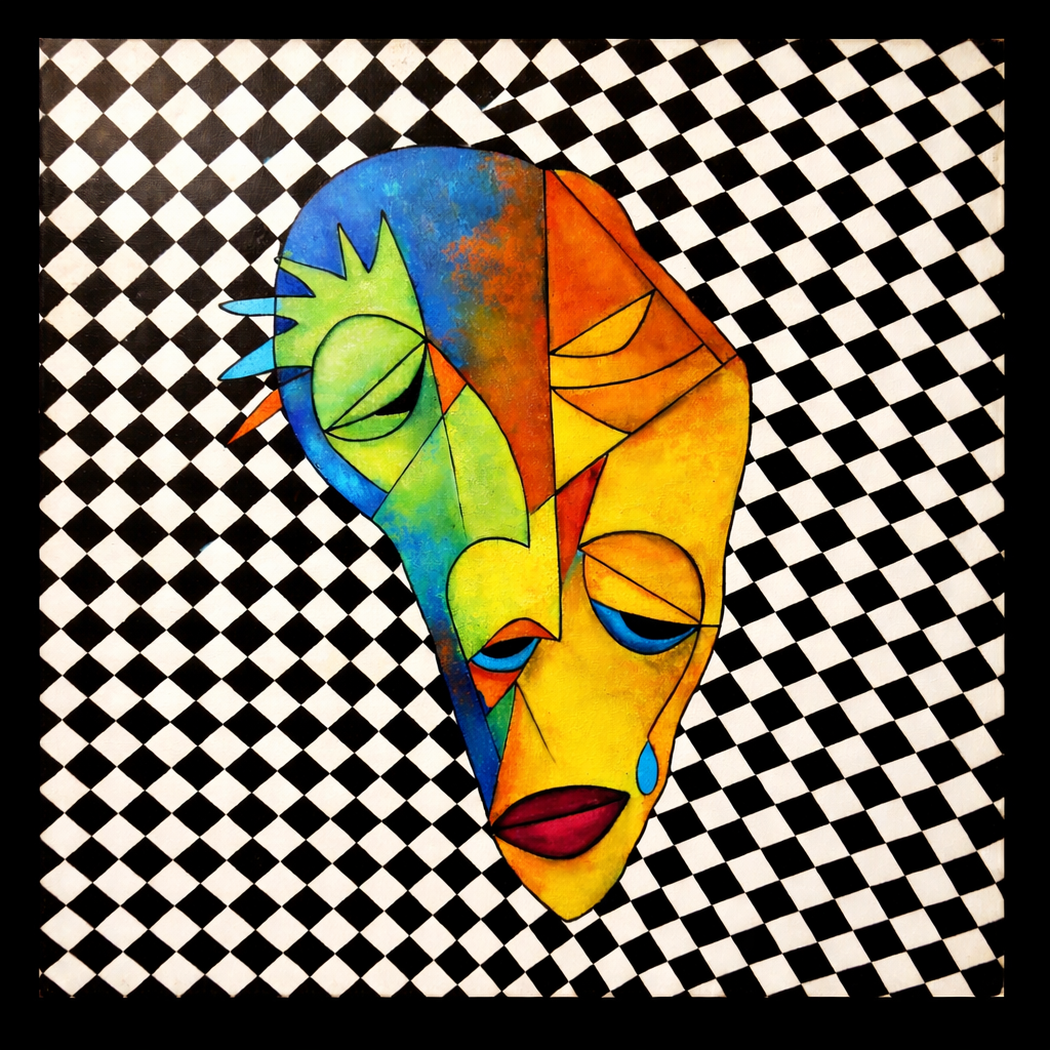 Suylen Guellati | Fragment d’humanité | 2025
In your new collection, you speak of a more “stripped-down and legible” visual language. Was it difficult to arrive at this simplification, and what did you have to let go of along the way?
It emerged naturally. This collection arrived at a moment of inner maturity.
Technically, I worked more with breathing within the space. I accepted emptiness. I allowed certain areas to remain unlayered, so that tension could circulate. The line became more direct, sometimes more raw. There is less layering, but more decision.
In Electric Night, the composition is reduced to essential tension: a few black axes, a vertical red mark, bursts of light. Nothing decorative. Everything is energy.
On a more interior level, this simplification reflects a personal stripping away. Like in certain spiritual traditions where one removes in order to reach the essential, I stopped adding what was not absolutely necessary.
This collection made me happy. It also made me cry deeply. But I held nothing back.
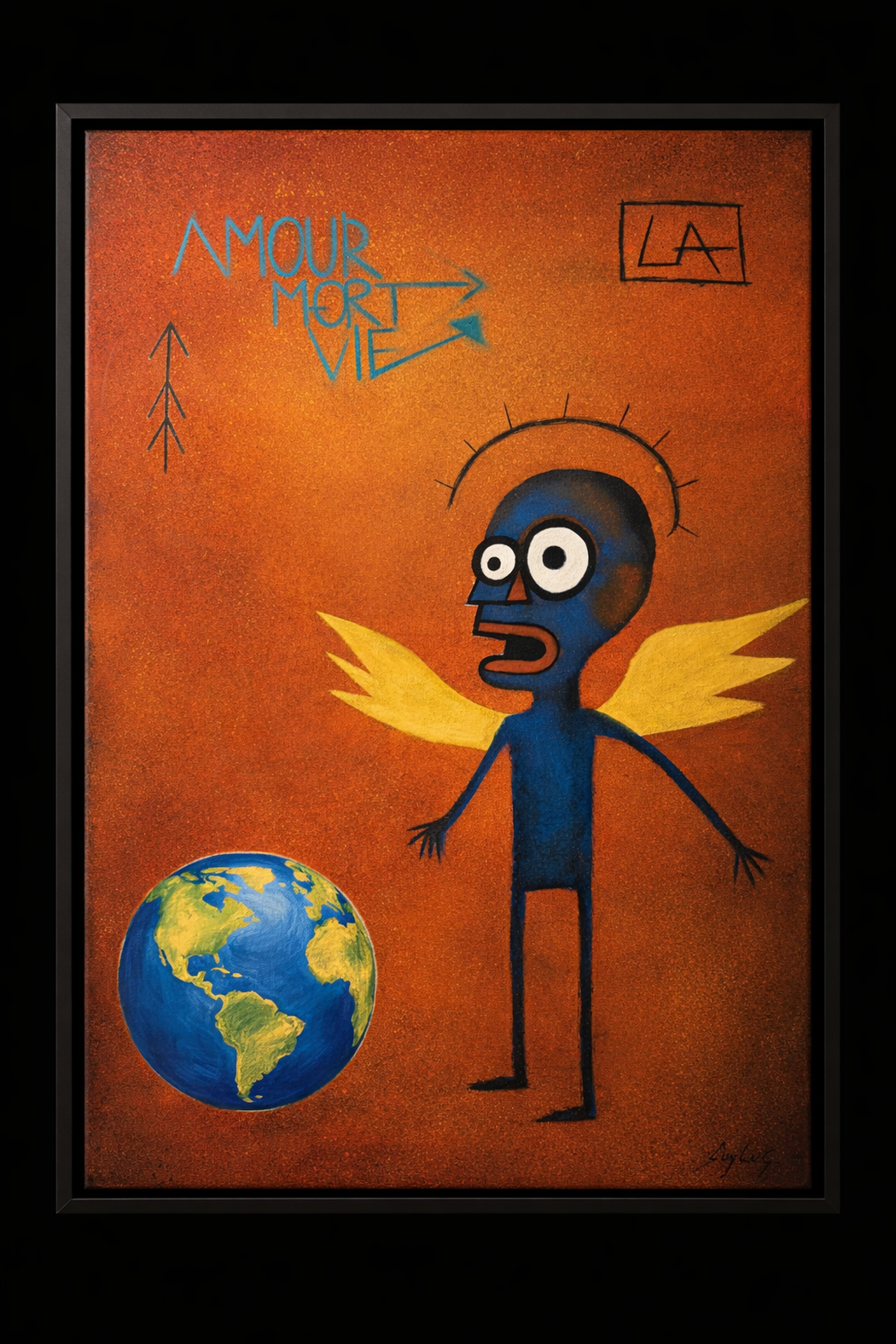 Suylen Guellati | La Terre en sursis | 2025
Texts and words in your works play an almost poetic role. Do you think first in images or in words? What comes first – the phrase or the visual sign?
In words, always in words !
My relationship to writing is as intimate as my relationship to painting. At a very young age, I understood that one could make diamonds out of words — that they could condense an emotion, a thought, a wound, into just a few syllables. It was almost a shock. Since then, I have never separated these two languages.
In The Ruins, the calligraphed text acts almost like a confession. It does not describe the painting — it extends it. It creates a second depth.
I love the idea of bringing together two immensely powerful forces — image and language — within the same space. Painting touches through immediate sensation. Words touch through inner resonance. Together, they create a denser vibration.
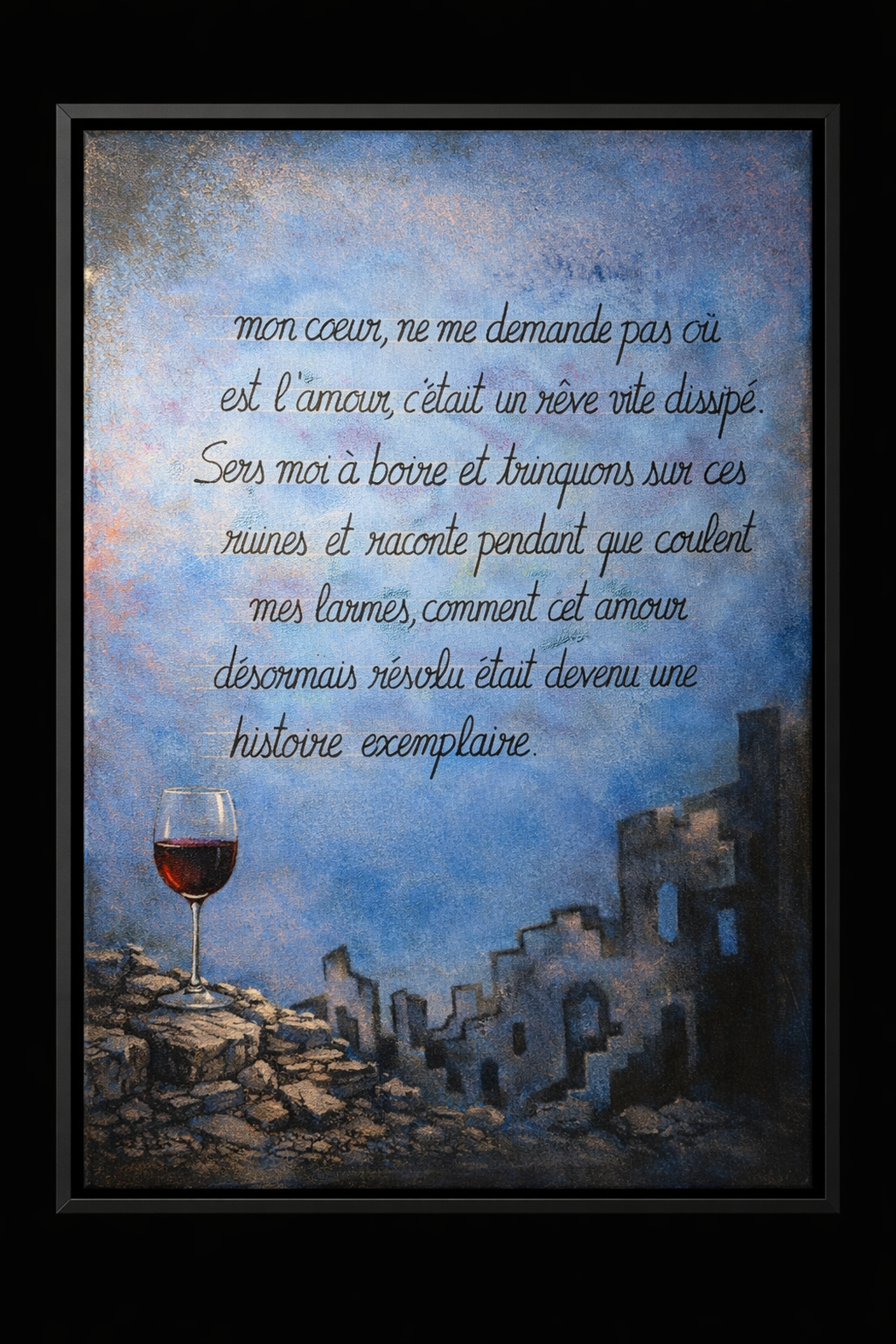 Suylen Guellati | Les Ruines | 2025
If your painting were not an image but a gesture or an action, what would it be: resistance, prayer, confession, or an invitation to dialogue?
Definitely a prayer ! Two hundred percent !
If my painting were no longer an image, it would be an inner movement directed toward something greater than myself.
For me, prayer is a state of stripping away. A moment when one leaves the turbulence of the world and enters a silent verticality — where the ego recedes, where something within aligns.
Painting is very close to that state. When I work, I withdraw from the noise. There is a precise moment, almost imperceptible, when the gesture no longer comes from will, but from surrender.
Prayer, in its most universal sense, is a movement of love and awareness. It does not ask — it elevates. It transforms the one who becomes it.
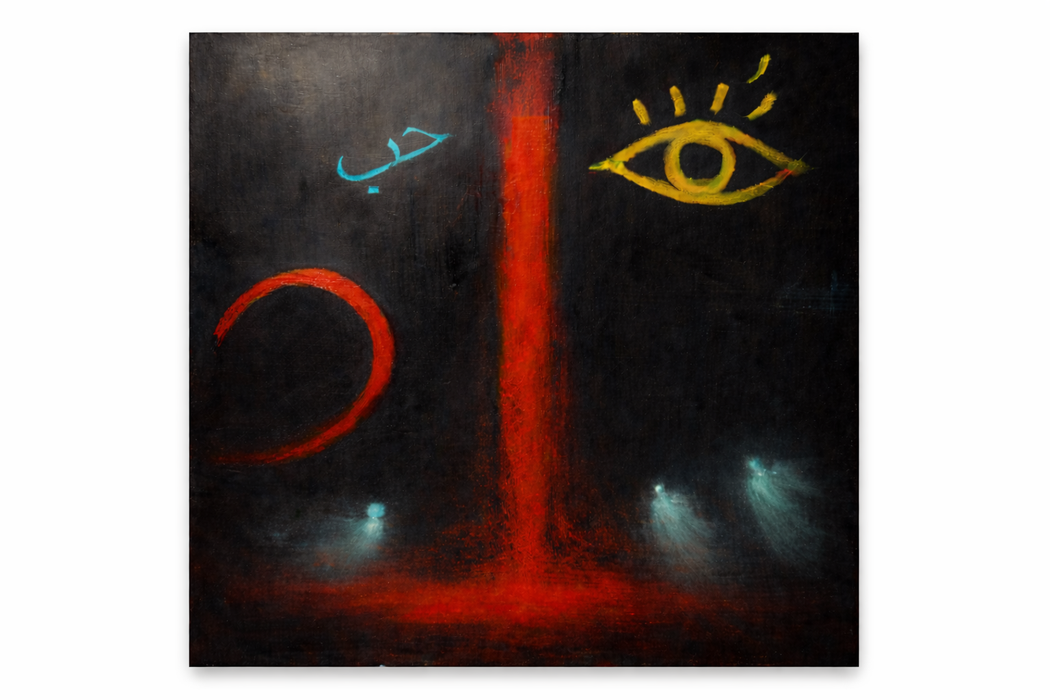 Suylen Guellati | Métaphysique du Cœur | 2026
Paris is a city of art, philosophy, and history. Does the city you live in influence the rhythm, pace, and content of your painting?
Yes, Paris is my city. I was born there. I grew up there. It shaped my eye before I even knew I was looking.
Paris is not simply a capital — it is a crucible of modern art. A city of avant-gardes, studios, manifestos, and intellectual fire. Here, art is not decoration. It is necessity. One grows up surrounded by history, museums, philosophy, literature. That density creates rigor. It demands position.
Paris taught me discipline. It taught me how to look. It taught me how to enter into dialogue with art history.
But my work does not belong to a geography.
I come from Paris but I paint for the world.
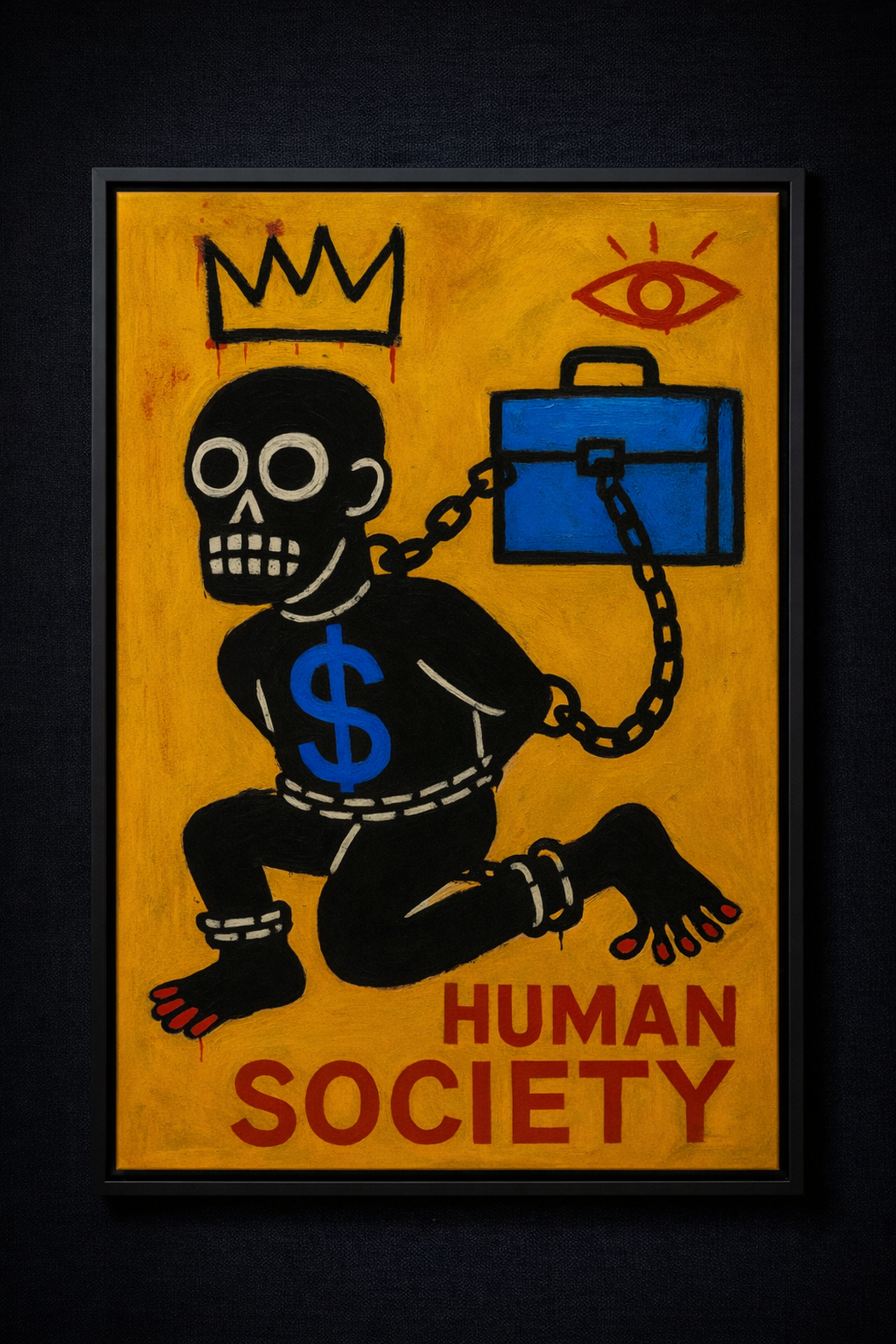 Suylen Guellati | Chained Society | 2025
This series is presented as a turning point in your practice. If a viewer were encountering your work for the first time at this moment, what question would you like them to take away with them?
What is the true meaning of our existence?
Leave a Reply
You must be logged in to post a comment.