
Martin Blanco
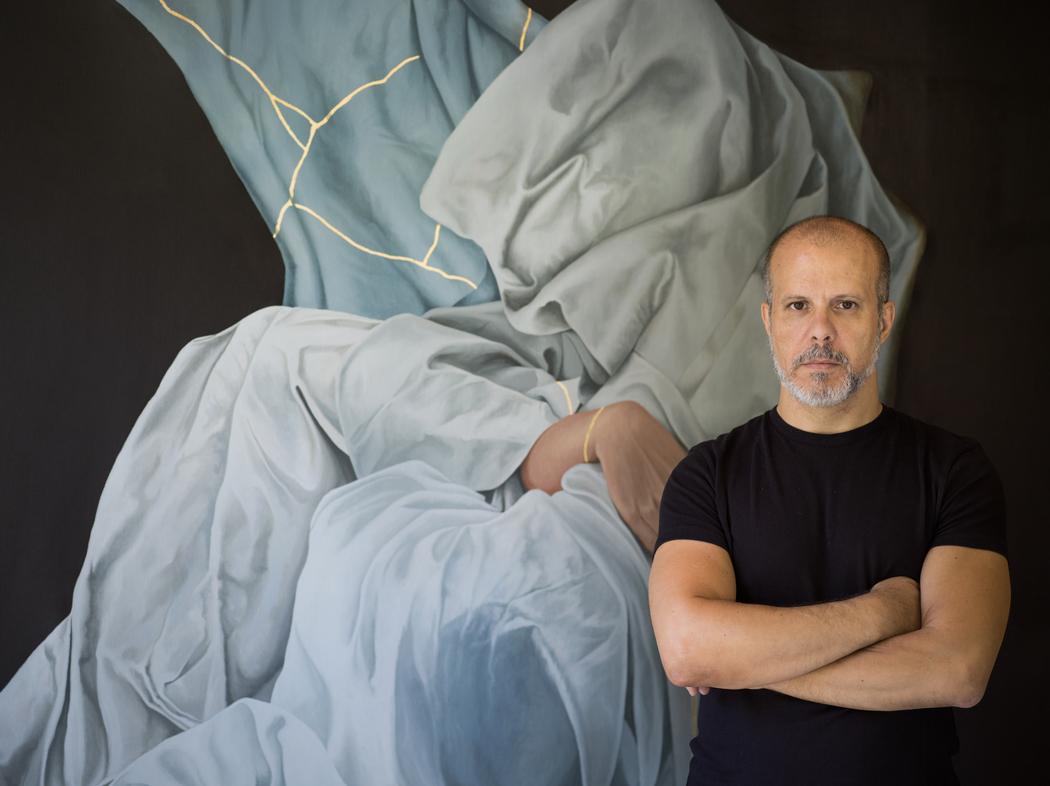
Your works often balance beauty and discomfort. At what point did you consciously decide to soften the darker aspects of your early aesthetic, and why was that shift important to you?
I believe my style is highly influenced by the kind of culture I’ve been exposed to since my teenage years. In addition to Renaissance and Baroque art, this includes horror in all its forms —movies, comics, and books— as well as heavy metal. All of this ultimately creates a certain aesthetic and, I suppose, ways of thinking that feel comfortable within those dense and oppressive atmospheres. Over the years, I’ve softened that aesthetic a bit, incorporating beauty as another characteristic of those characters and environments, in order to prevent the viewer’s gaze from feeling uneasy in front of one of my works —which, I must admit, were much darker in my early years. And in this way, I enable the viewer to access the work and connect with the message, which, in the end, is what truly matters.
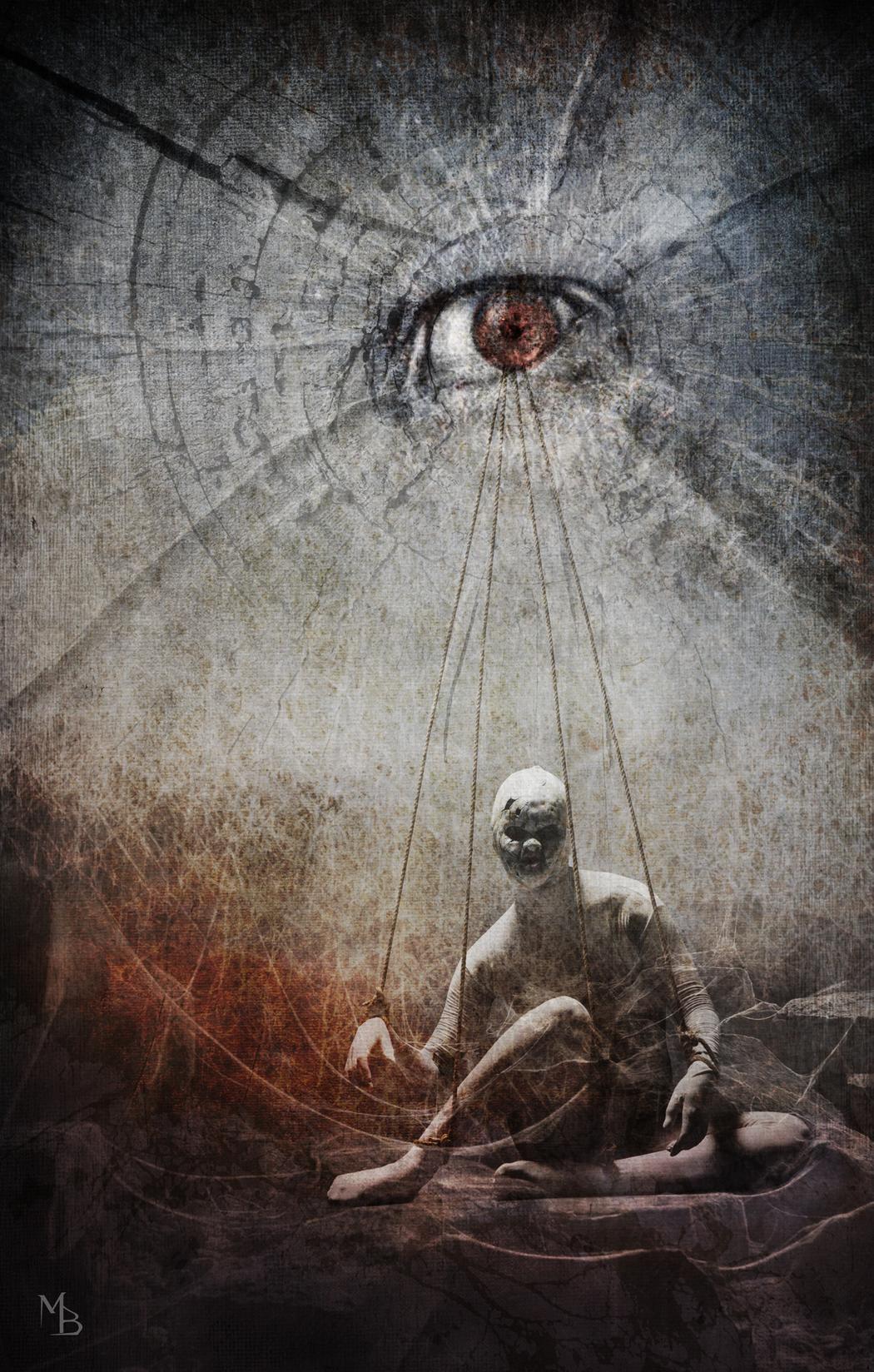 Martin Blanco | Place me among your flock
Horror culture has played a significant role in shaping your visual language. What does horror allow you to express that other genres or traditions do not?
I think Horror once served as a way for me to connect more naturally with the feelings of anguish, oppression, and vulnerability experienced by the characters I portrayed, since we tend to associate that genre with the fear and anxiety provoked by the unknown. And to a great extent, the unknown is connected to what cannot be clearly seen — which is why dark and oppressive atmospheres work so effectively.
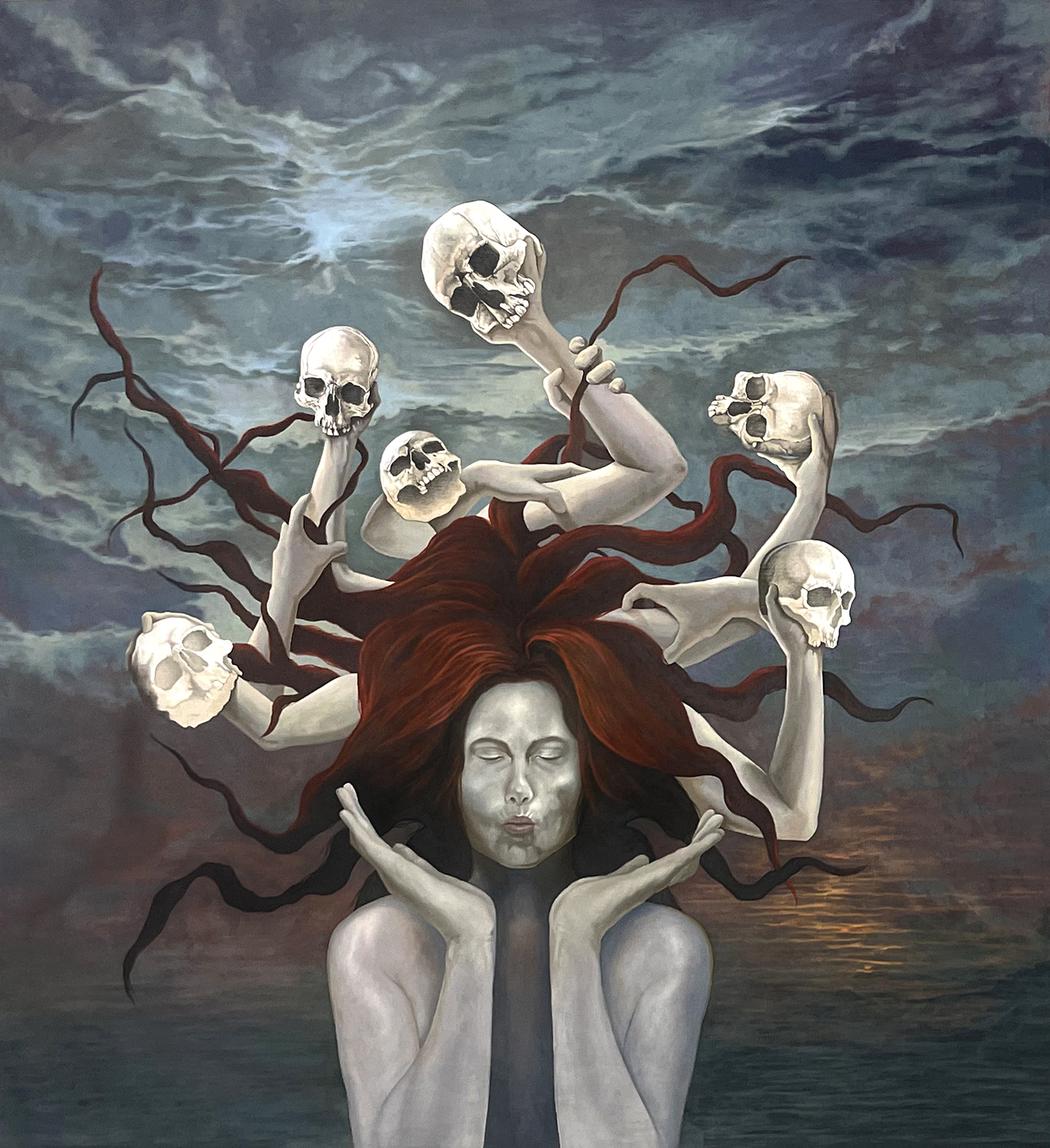 Martin Blanco | The capital stigma
You reference Michelangelo, Caravaggio, and Dalí as key influences. How do these very different artistic minds coexist in your creative process today?
The truth is that I consider all three of them major influences, especially on a technical and aesthetic level. I would say that the dialogue with them —if I may dare to call it that— lies in the fact that my way of understanding art, particularly in my relationship with the creative process, is very close to Michelangelo’s, whose approach was not playful but rather tortuous.
Caravaggio has given me that somber atmosphere of extreme contrasts that I’ve tried to capture not only in the scenery but also in the mood of the characters. And Dalí, along with surrealism, has opened a door to exploring different universes that allow me to play with the rules —especially those of composition— without losing a realistic aesthetic.
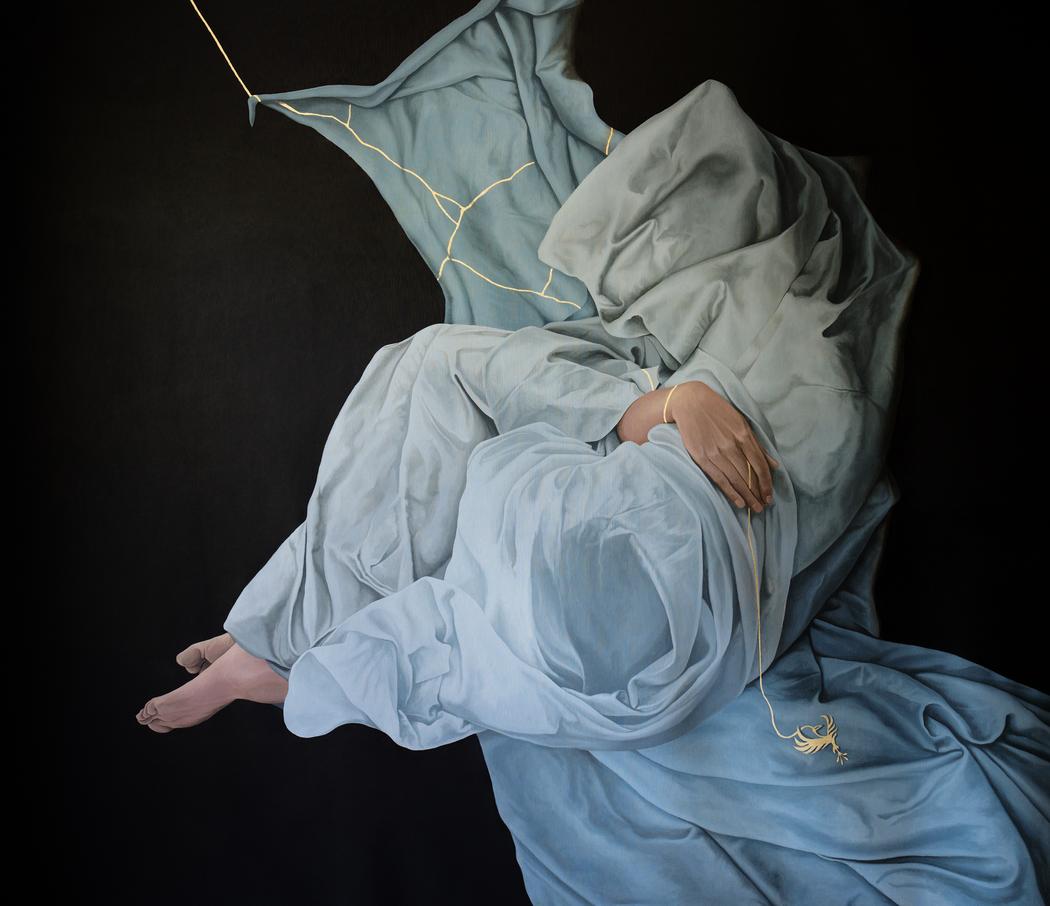 Martin Blanco | The thin line
Light and shadow play a central role in your compositions. Do you approach lighting intuitively, or do you construct it deliberately as part of the narrative?
From a strictly aesthetic point of view, the way I use light and shadow is directly connected to the artistic influences that inspire me — particularly the Renaissance and the Baroque. For me, the most important thing is that the artwork develops through a message, and that all visual elements —such as composition, color, and the contrast of light and shadow— are subordinated to the way that message is conveyed.
Many of your characters appear suspended – emotionally, physically, or psychologically. What draws you to this sense of liminality and transition?
In some cases, it responds to a desire to represent the volatile nature we possess as human beings, where everything is subjective — not only from one person to another, but also across different circumstances, even within the same individual. In other cases, it is simply the use of purely aesthetic solutions and resources.
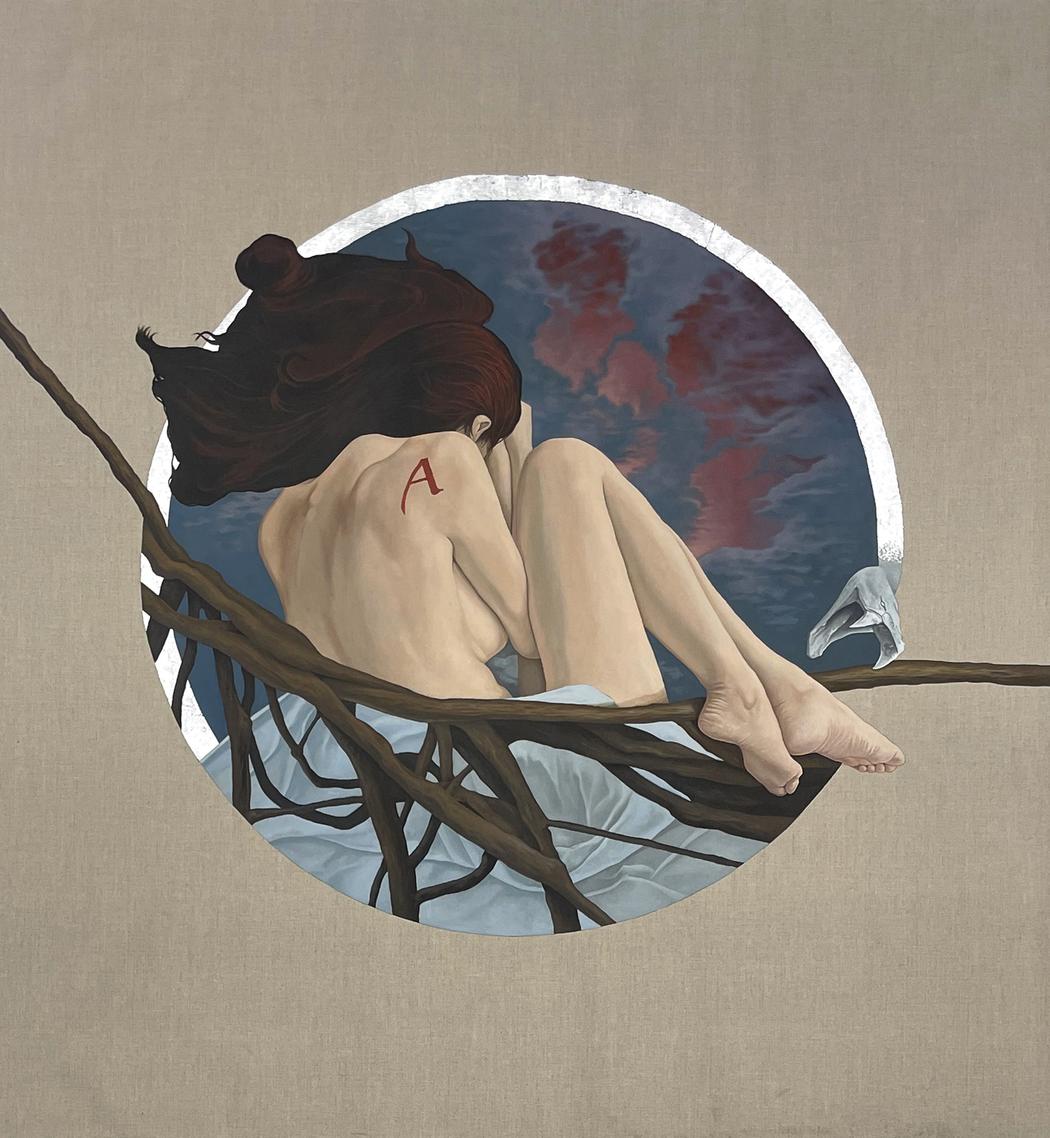 Martin Blanco | The witches of Modernitem
You have exhibited in both classical art spaces and contemporary, multimedia contexts. Does the exhibition environment change how you think about the viewer’s experience?
Different exhibition spaces can create distinct visual experiences, but I try not to think too much about that when I’m creating my work. Ultimately, the perception of art depends on many personal and subjective circumstances unique to each viewer, so it is not solely determined by the space in which the works are displayed.
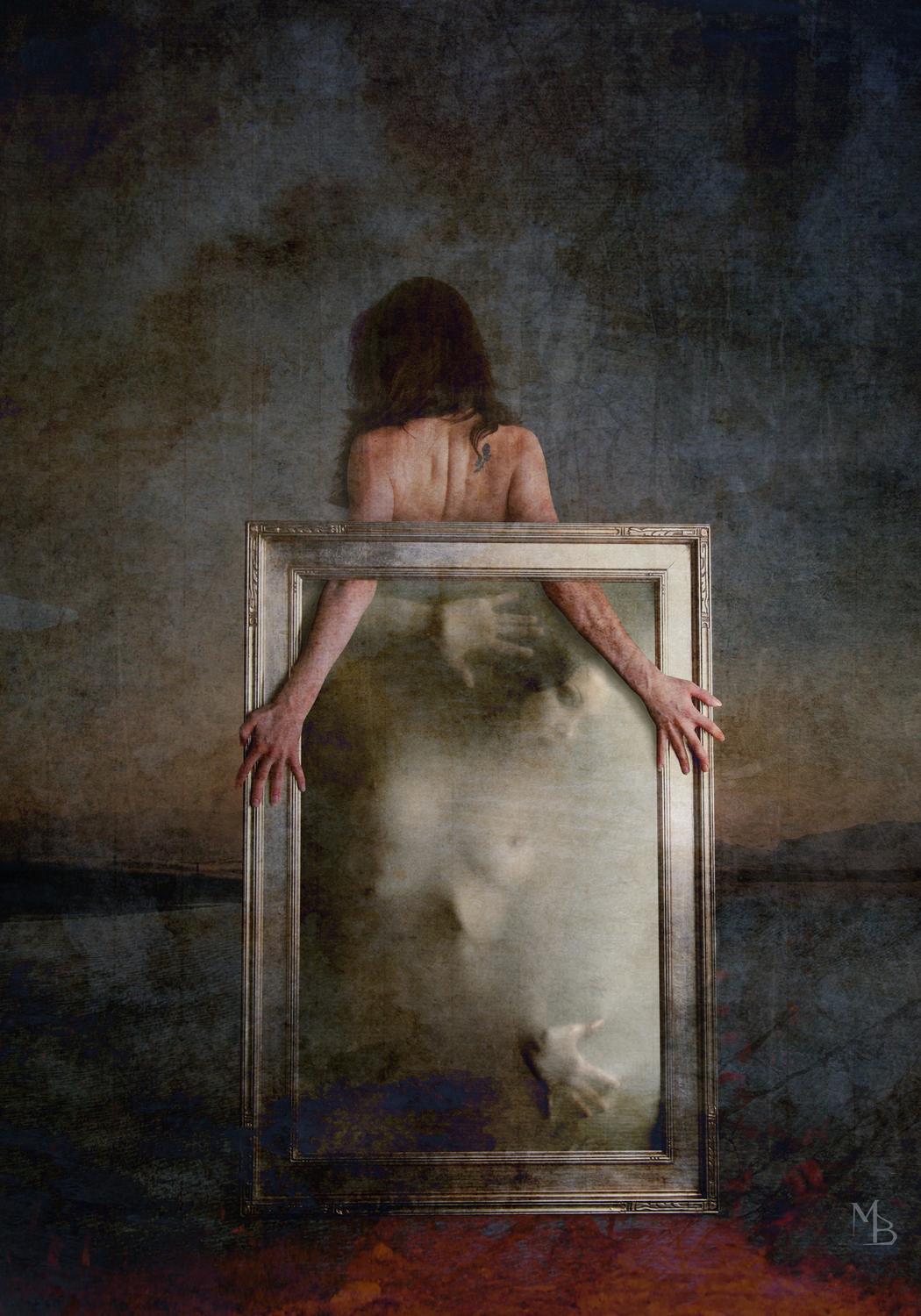 Martin Blanco | With dreams in tow
What kind of emotional or intellectual response do you hope stays with the viewer after encountering your work?
I hope viewers can connect with my work and that the message moves them, makes them think, and —if in the end the piece is well executed and I’ve managed to convey everything I originally intended— that their dialogue with what they’ve seen offers them a new perspective.
Leave a Reply
You must be logged in to post a comment.