
Henry Jentzsch (HenJen)
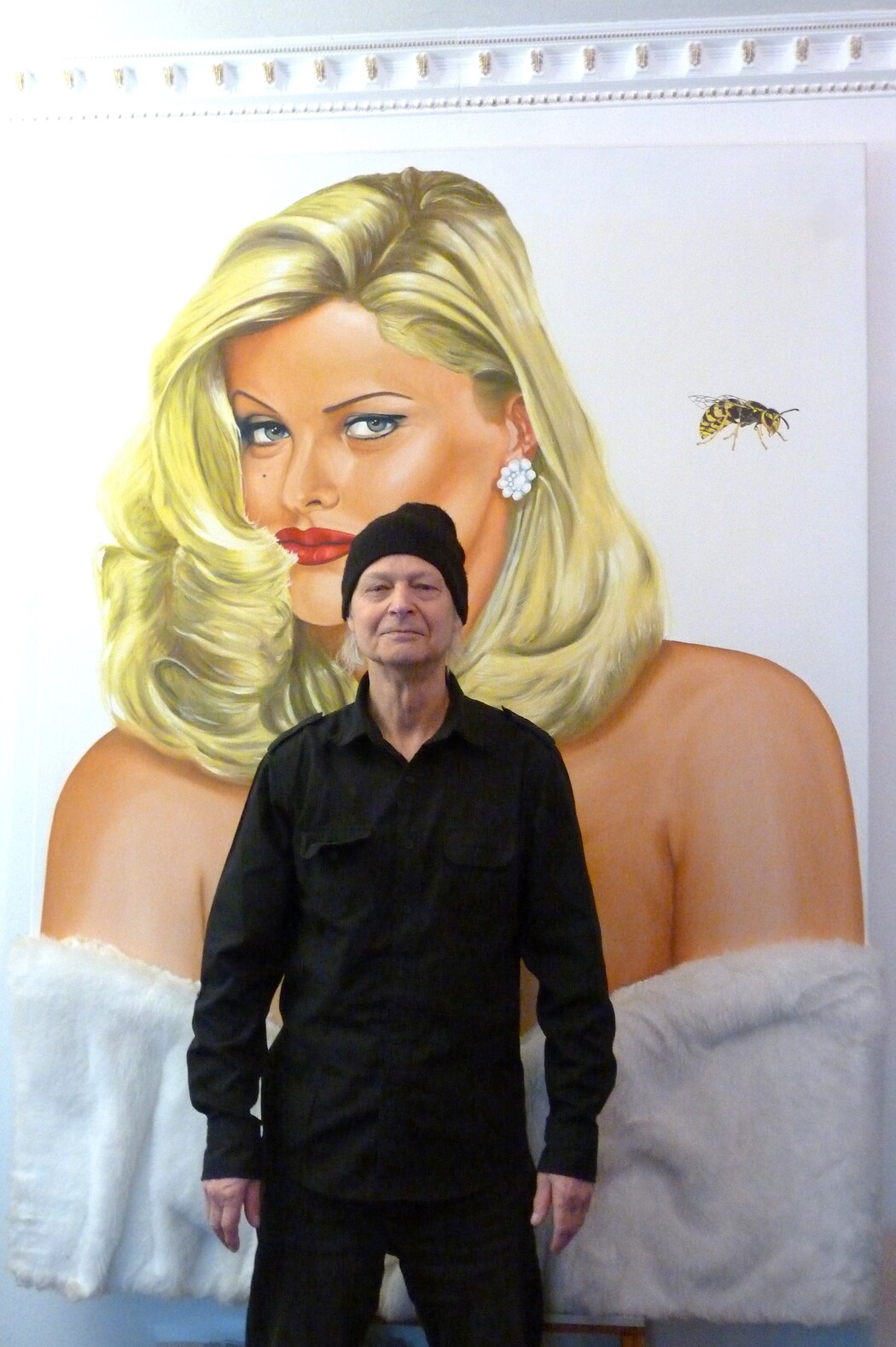
You describe your practice as “painting without ifs and buts”. What does absolute freedom in painting mean to you today?
“Painting without ifs and buts” means making no compromises—neither in the choice of subject nor in the manner of technical execution.
All of this must be my own decision; commercial and other considerations must play no role in the process.
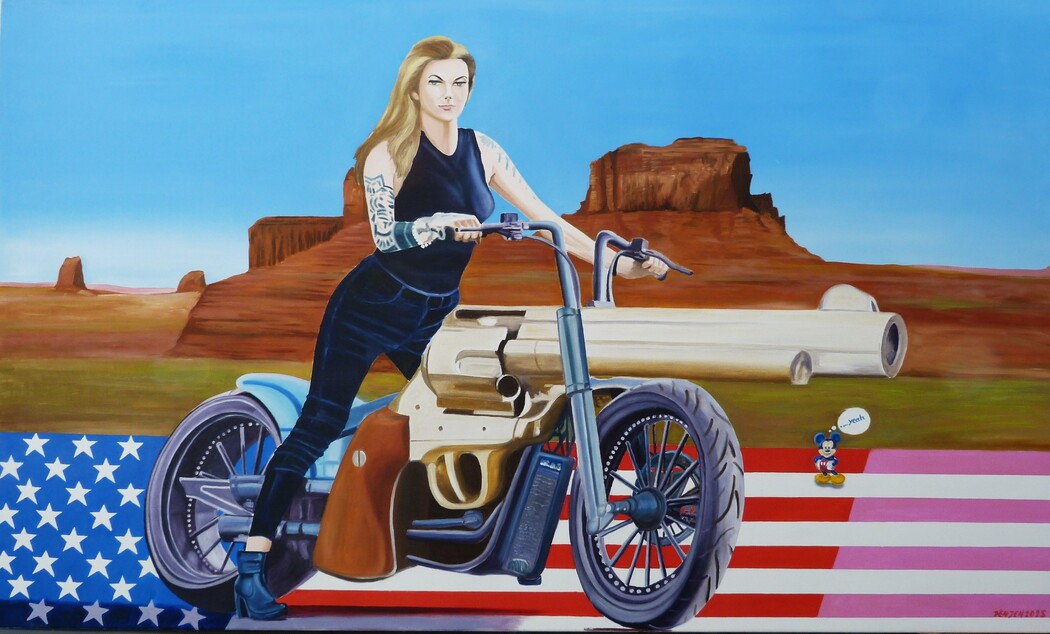 Henry Jentzsch | On the Road | 2025
You deliberately avoid committing to a single style, technique, or theme. How do you decide when a painting is finished?
Fixing myself to a particular painting style, technique, or theme is not an option for me.
The choice of an image often arises spontaneously. An impulse for it can crystallize out of many different “stimuli.” This then condenses into an idea that continues to develop further and further until its execution.
A painting never really feels finished. Yet if one cannot find a point of completion, there is a danger of “overpainting” the work — and then its quality gradually deteriorates.
Your works often combine pop-cultural symbols, irony, and painterly precision. What role does humor play in your artistic thinking?
My works draw on Pop Art, that is true. I am drawn to the clarity and directness of color. The symbols are immediately understandable to everyone. Painterly precision further emphasizes the overall composition.
In a world where the constant confrontation of pros and cons, in all its forms, shapes everyday life, responding with irony and humor becomes a way to view life more positively. After all, it is still worth living this earthly existence.
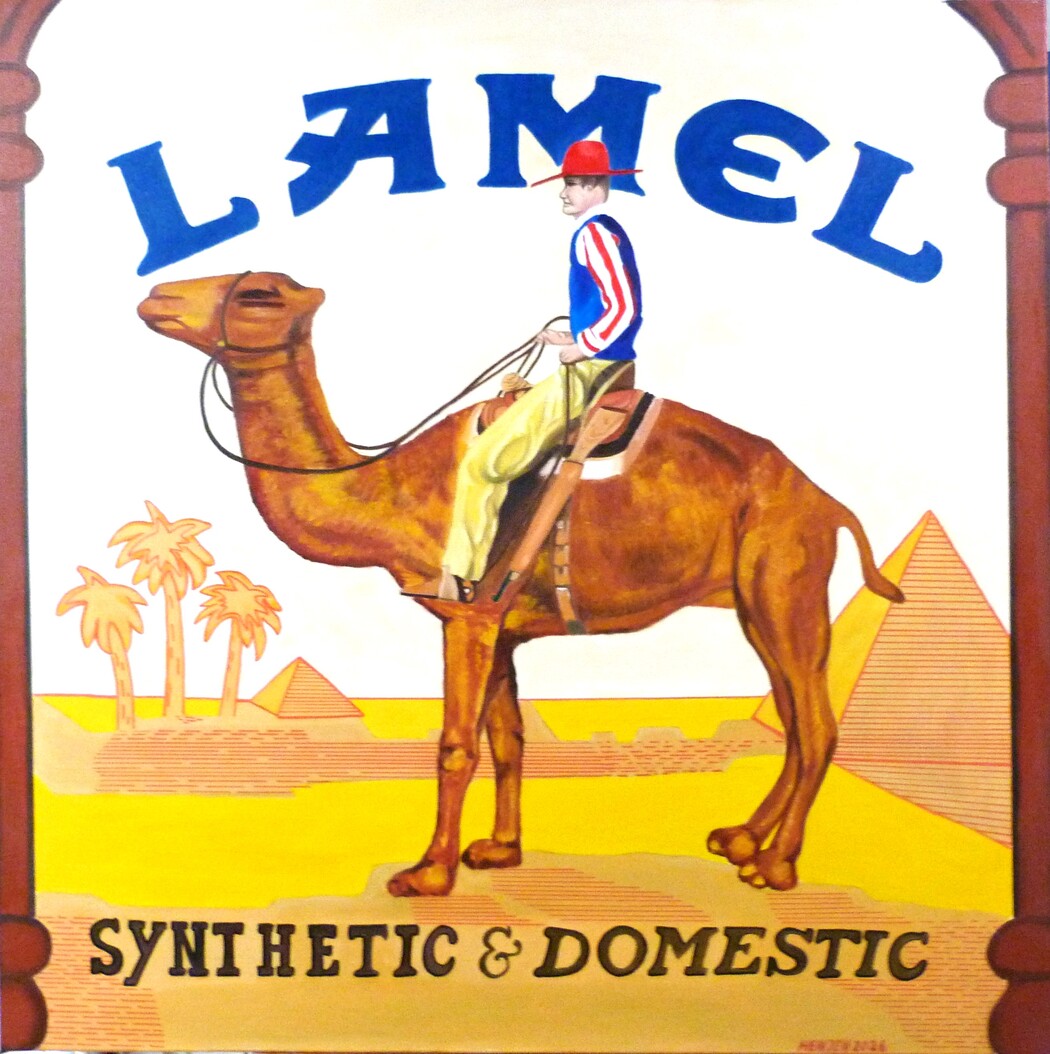 Henry Jentzsch | Lamel | 2026
How did growing up and being educated in East Germany shape your visual language and worldview as an artist?
Grown up in East Germany, my talent for painting was already recognized at school, and I was allowed to create works depicting Lenin, doves of peace, and similar subjects. These works were then exhibited at school and occasionally beyond it.
Then came the summer of 1968. I returned home from fishing to find my father sitting by the radio—Woodstock was playing, with Jimi Hendrix. I was struck like lightning. From that moment on, rock ’n’ roll became the embodiment of freedom for me. Pop Art, Andy Warhol, and many others naturally became part of this world as well.
Artistically, in the late 1970s, I was given the opportunity to complete a three-year painting and drawing course with Prof. Ullrich Bewersdorff (Martin Luther University Halle-Wittenberg). There I learned to work in a disciplined and precise manner.
This was followed by training as a metalworker, then once again rock ’n’ roll—this time as a sound engineer for a band. In 1986, the state had had enough of me, and I of it: I moved to West Germany and completed new training as an environmental technician, after which I worked in the public sector. A few years ago, I returned to Halle (Saale).
All of these experiences, consciously or unconsciously, certainly play a role in my visual world.
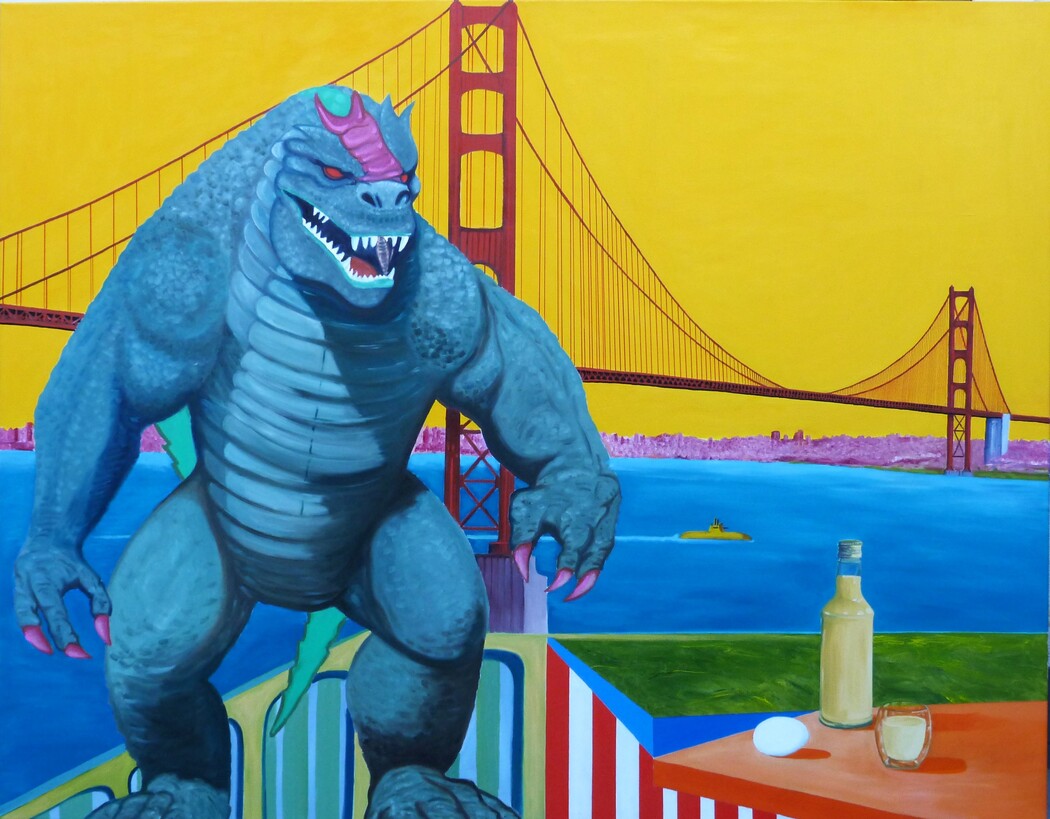 Henry Jentzsch | Gozilla möchte einen Eierlikör | 2025
American symbols appear frequently in your work. What attracts you to this imagery, and how do you approach it from a European perspective?
During a road trip through the United States, my wife and I noticed that the U.S. flag was almost always present. This has since been reflected as a recurring motif in many of my images. The country remains fascinating to me despite its problems — though America is not the only place that has them.
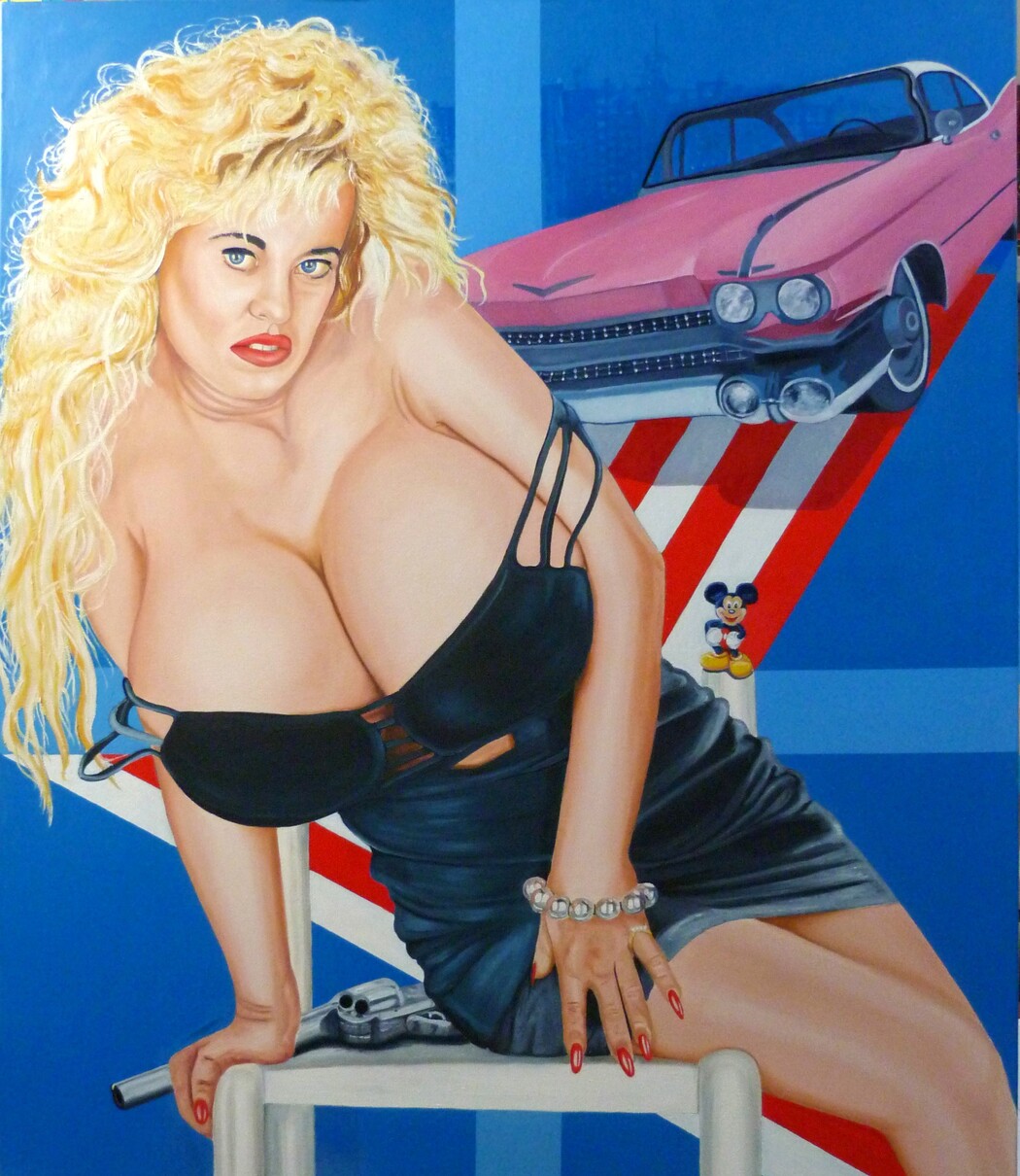 Henry Jentzsch | Amerika II
Is there a message you consciously want to communicate through your work, or do you prefer leaving interpretation entirely to the viewer?
I largely refrain from interpreting my own images. If a work needs to be extensively explained, I believe that something is not right with the image itself. The viewer is free to form their own interpretation.
Art in any form is always a positive response.
Leave a Reply
You must be logged in to post a comment.