
Alessandra Russo
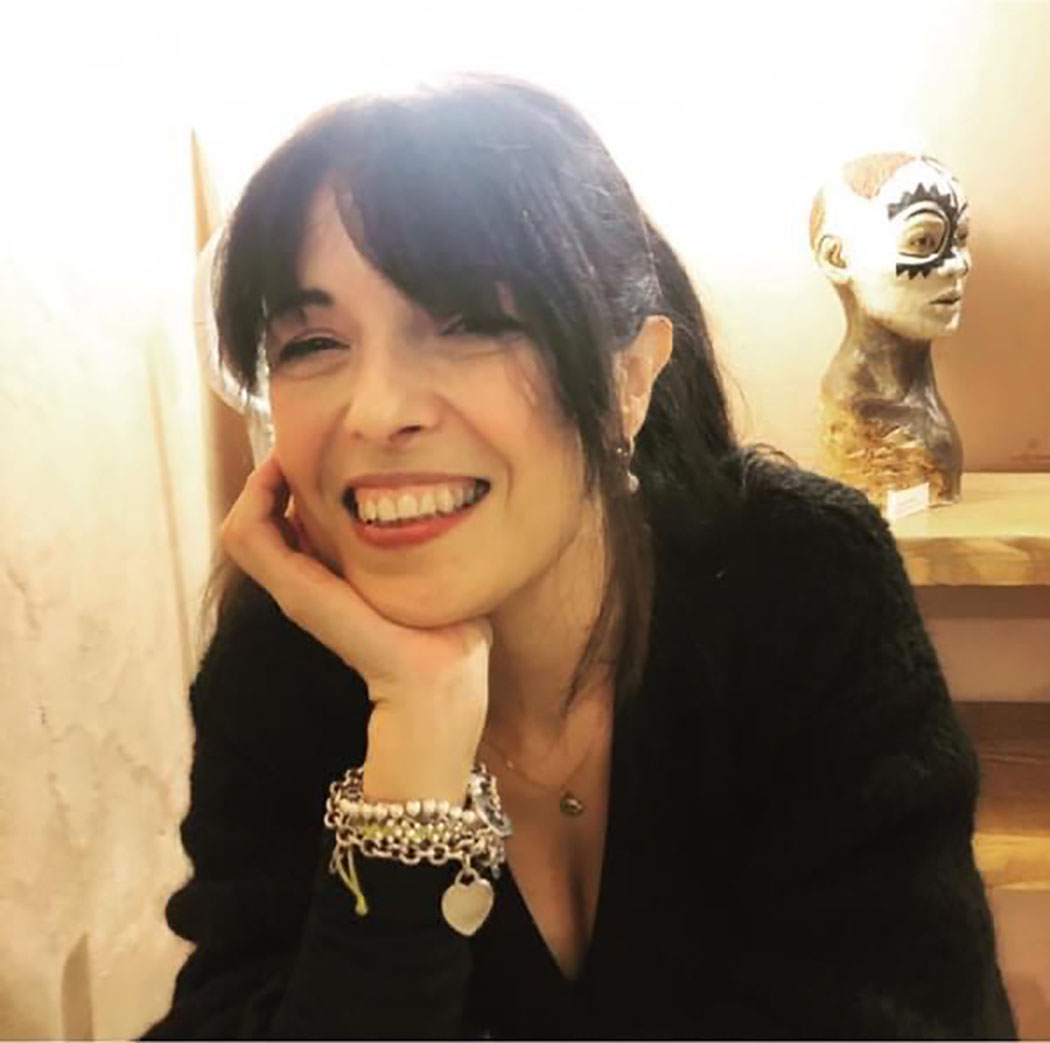
Can you tell us about your transition from architecture to visual art? What inspired you to take that step?
I worked for many years in architectural design, with satisfaction and passion. I consider architecture to be art, nourished by the same sources that lead to the creation of paintings, music or literary texts: passion, inspiration and technique.
However, the transition from this to painting and illustration was not so immediate, even though I had continued to nurture my love for the visual arts.
When I moved from my hometown of Milan to Ferrara, I recalibrated my needs and realised that, in addition to architecture, what really made me happy was creating. I started picking up pencils and brushes again and decided to follow my inner flame.
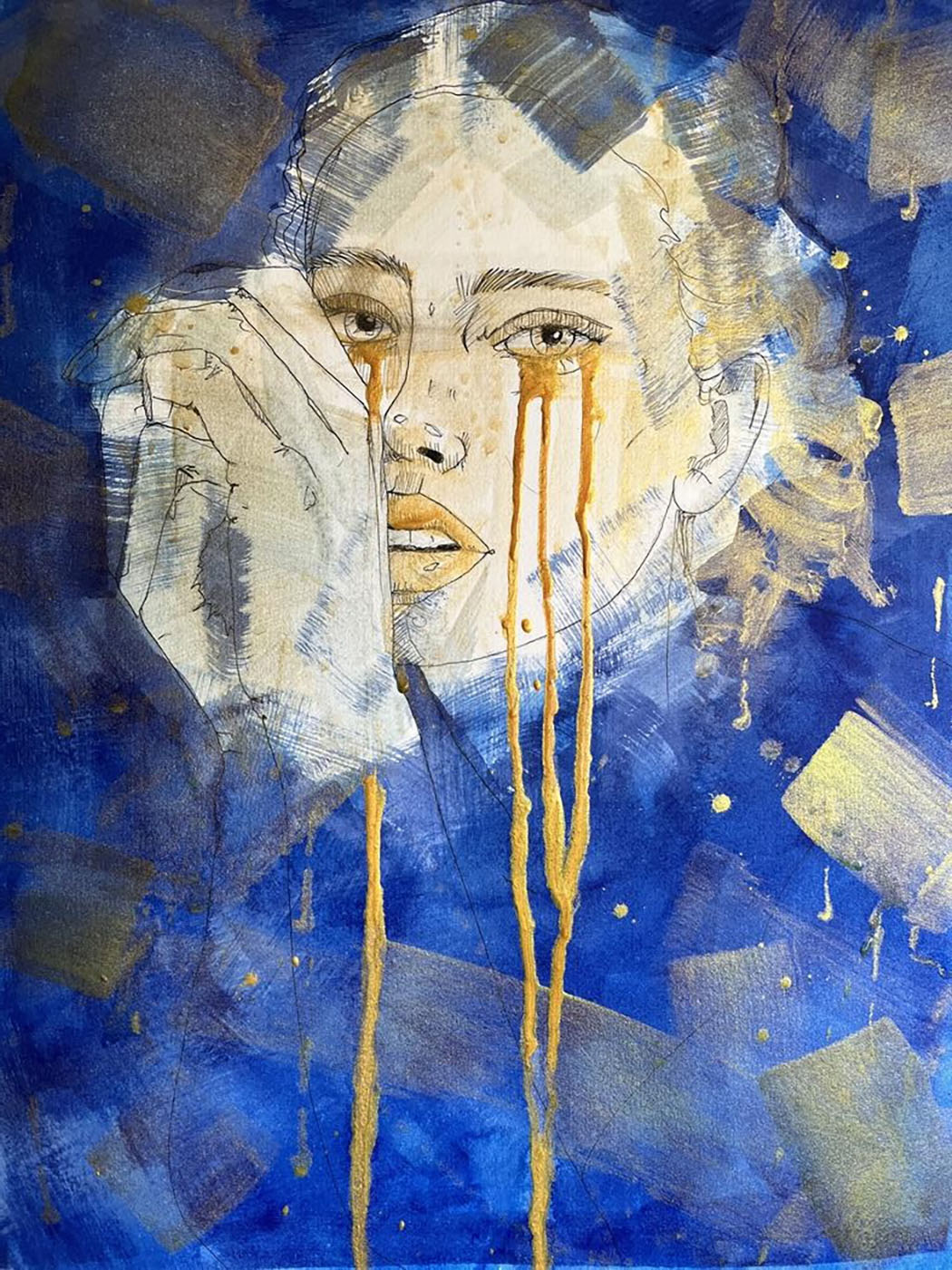 Alessandra Russo | Perdita
How did you background in architecture influence your current artistic pratice?
The design greatly influenced my initial choice of materials with which to express myself.
I initially chose to use ink, a legacy of my previous occupation, creating portraits and characters inspired by both references and my imagination, using lines, hatching and smudges.
I still love both drawing and painting with ink, although since I devoted myself to visual art, landscapes and architecture have not been my primary focus.
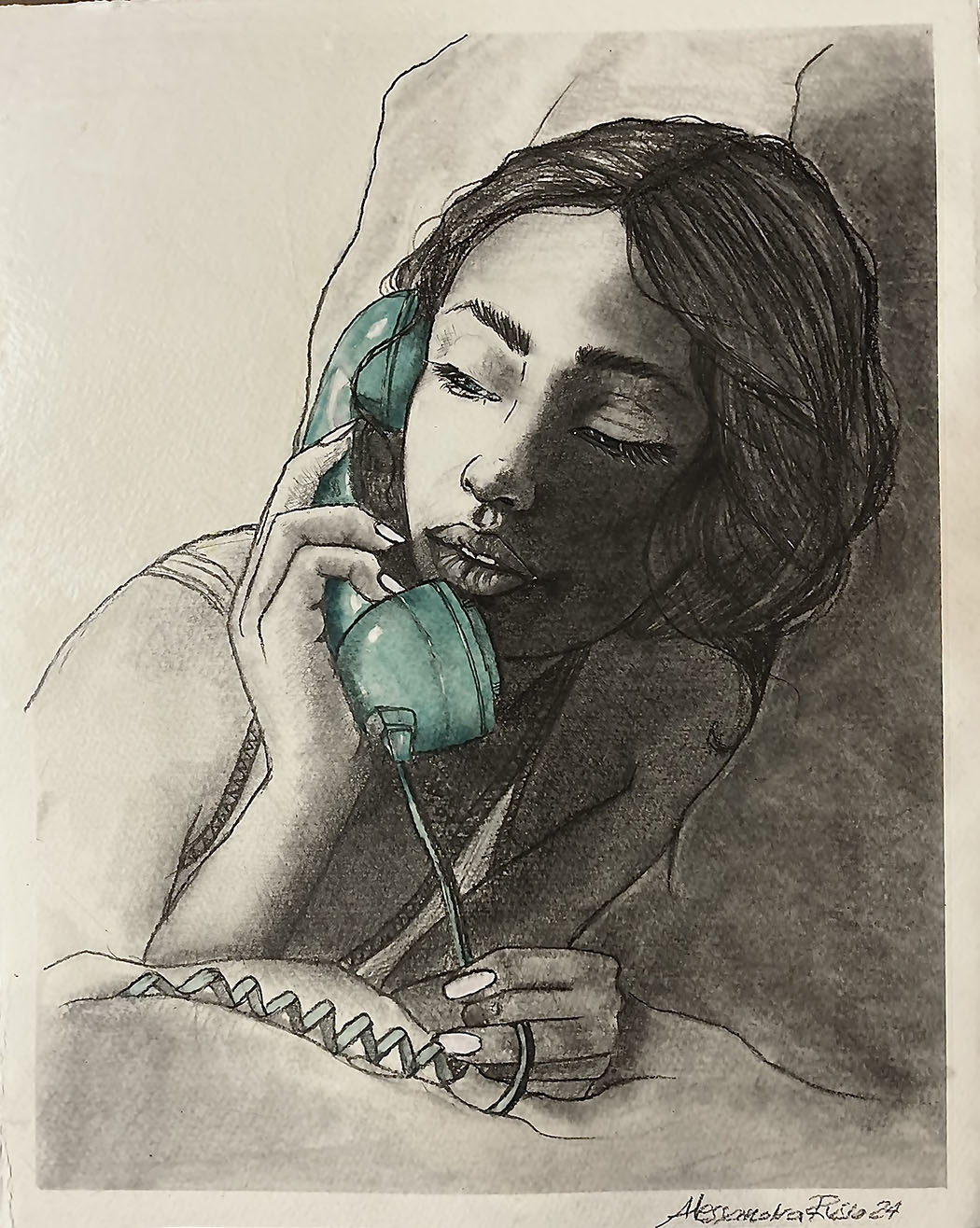 Alessandra Russo | Analogica
You often work with watercolor, ink and soft pastels. What draws you to these materials, and how do you choose which to use for a given piece?
During art school, before choosing which university to attend, I came into contact with some of these techniques. When I decided to make art my profession, the first technique I used was ink, which was most familiar to me.
Since I am basically self-taught, I was intrigued by watercolour and its many uses, so I started watching tutorials and videos, and finally enrolled in a short course where I became familiar with the technique and tools.
Dry pastels were an approach I felt I had to try because of the highly pictorial results, similar to oil paintings.
I took several courses with Luce Tedde, a distinguished artist and teacher, who generously shared her knowledge of this magnificent painting method.
If I have to choose between the different styles, my first choice is watercolour, because after years of study, it is the one I know best, even technically; but if I want more realistic results, I cannot ignore soft pastels. Of course, in the case of a commission, it is the person who wants my painting who decides which technique appeals to them most.
Your art seems to fa us heavily on portraiture. What is it about faces and people captivates you?
It’s true. Portraits have always fascinated me greatly. I’ve always enjoyed observing people, in an artistic and even somewhat sociological sense. I find them fascinating and complex. I didn’t deliberately choose to paint portraits, but doing so gives me a lot of motivation and peace.
I have a boundless passion for anatomy and its study applied to art. I follow online sessions of live poses with professional models, but it is the face that fascinates me the most.
The different expressions, the asymmetrical features, the colour of the complexion and, above all, the eyes lead me to wonder about the person’s life. Their emotions and attitudes are a puzzle to be deciphered, and I love trying to do so.
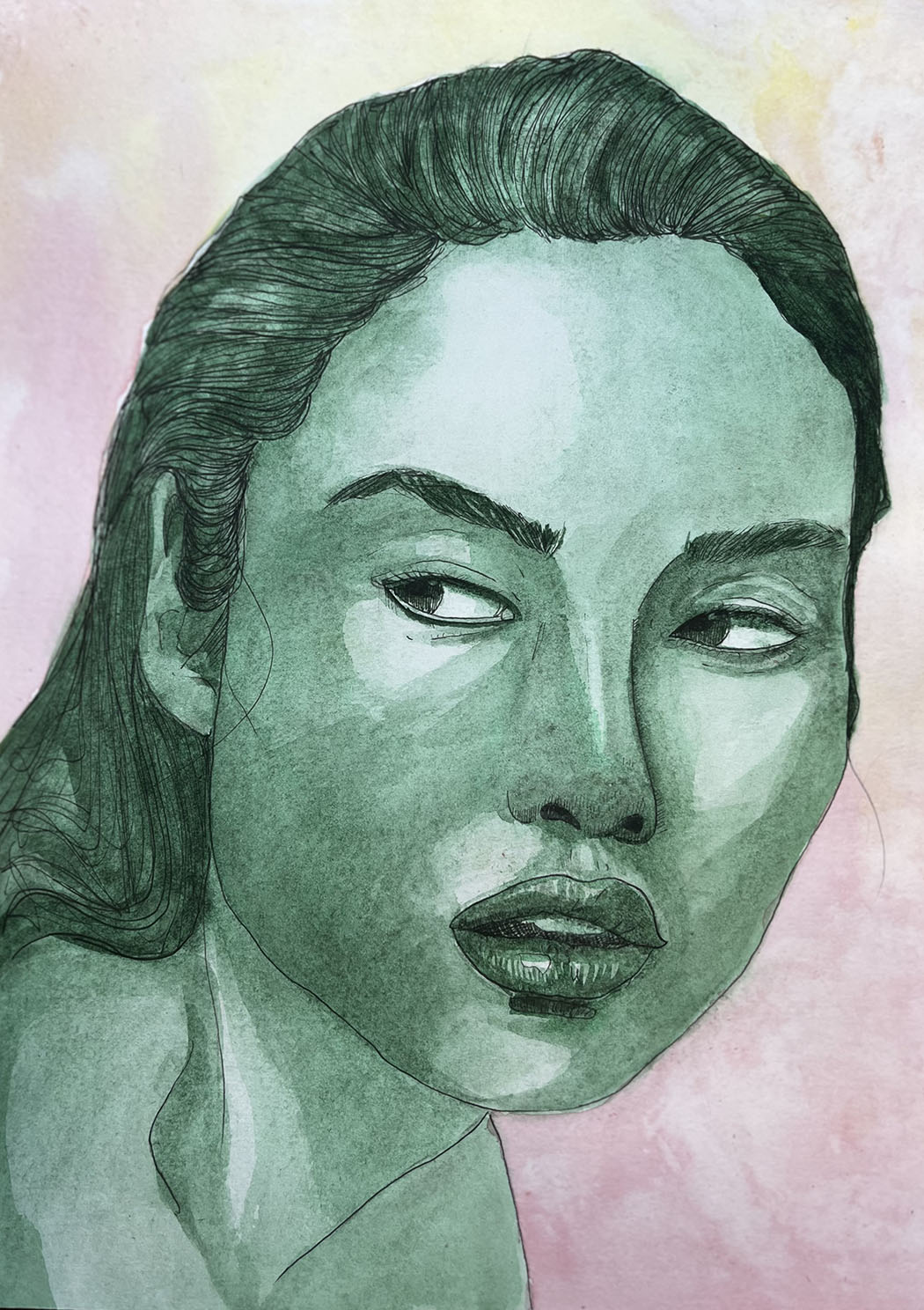 Alessandra Russo | Green
You mentioned the realism is not your goal-can you tell more about your artistic philosophy and what you try express in your portraits?
Realism is too often used as a “lanterna per le lucciole” (lantern for fireflies), an Italian phrase that means showing off the best to attract without having enough to offer.
This type of realism does not interest me. If a portrait has to be overly realistic, then I believe that the art of photography can offer much more heart and feeling.
I have done realistic portraits in charcoal and, sometimes, in watercolour, but it is more of an exercise in style, sometimes required.
With watercolour and ink, but also with soft pastels, you can touch and capture the essence of a person, even if the portrait will always differ from the original, the artist is less constrained in expressing themselves freely. I try to express how I see and perceive the subject, nothing more. I do not seek exact morphological correspondence but rather what a face or body expresses, what comes to me from it, which I translate with water and colours.
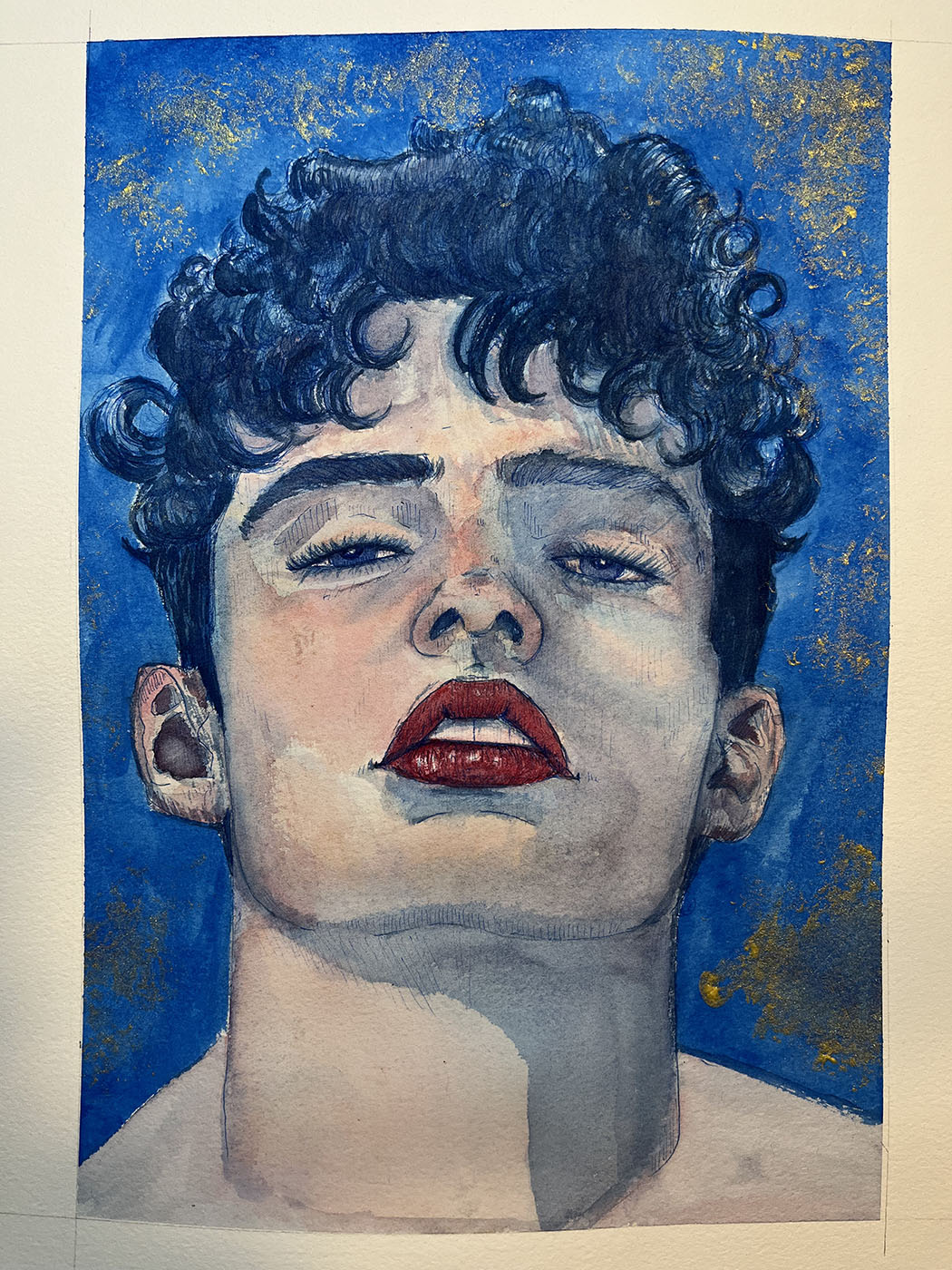 Alessandra Russo | J
How do you self-paints differ in approach or feeling from portraits of others?
I have never portrayed myself. I don’t know if it’s because I’m shy, because I don’t see the need to, or because I still feel too immature to do so.
I am more interested in other people’s faces, perhaps simply because I already know my own! Joking aside, I am a very introspective person and I find myself debating about myself and how I am now compared to the past, the experiences I have chosen compared to those I would have liked. I think it may be because I’m not interested in it right now, I feel that I’m still changing and, although many artists portray themselves on several occasions, I find a little bit of myself – even physically – in the portraits that come from my imagination.
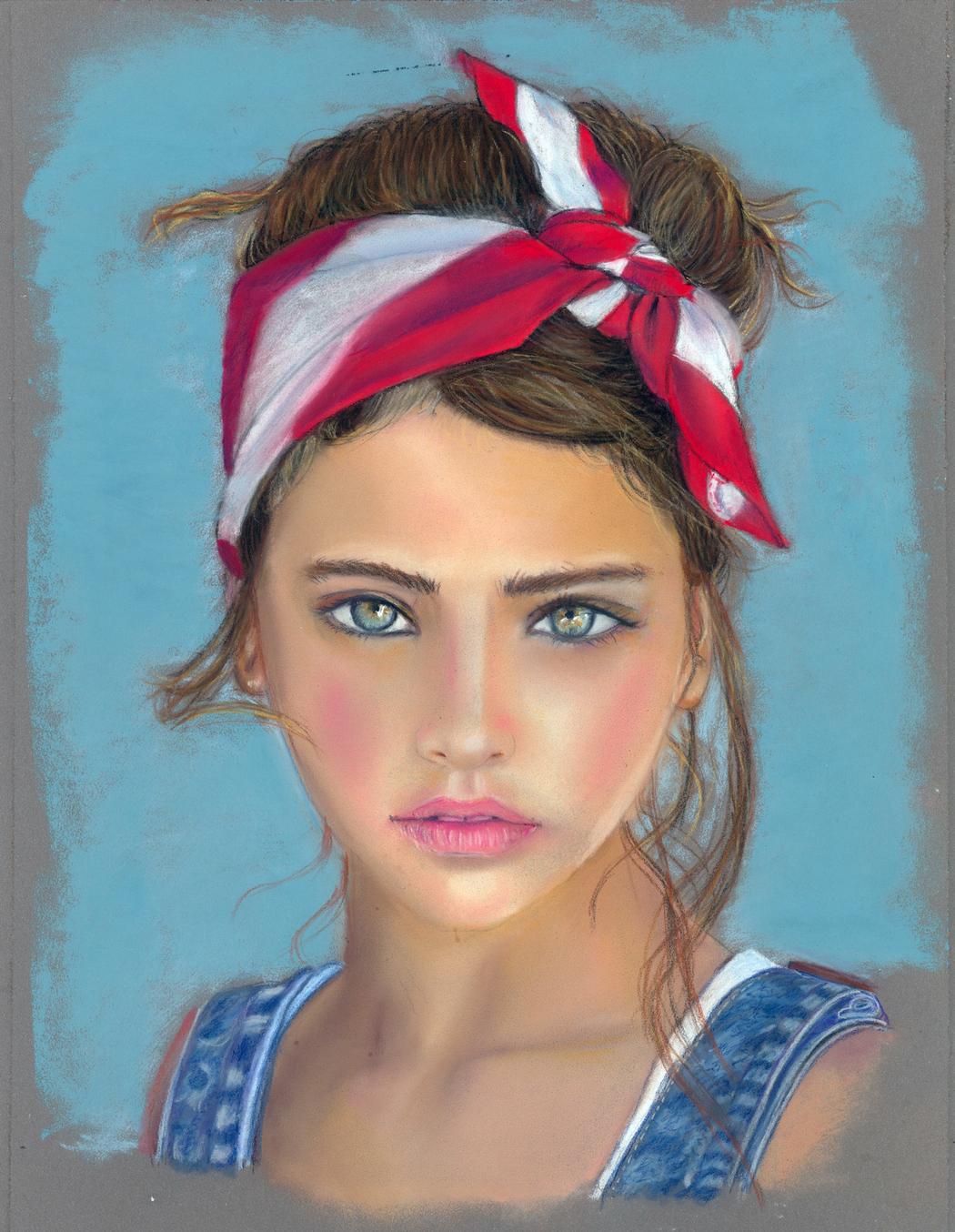 Alessandra Russo | Baby
What role does imagination play in your work, especially when creating characters from your mind?
When you create characters from scratch, imagination is one of the forces that catalyses all other characteristics.
I also draw on other people’s aesthetics, especially from people I admire as artists, from all eras and fields.
I really enjoy combining different aspects of my personality. For example, I might be interested in painting with a single colour, so I have to try to create something that is not too complicated, because I am practising understanding that colour.
I love cinema and literature, so sometimes quotes inspire my paintings.. I am also very interested in dark fantasy: I love Stephen King’s novels and short stories, the Gothic style and creatures of the night. Without imagination, all my passions would remain merely exercises in fair copying, but by reinventing and introducing what I am interested in communicating at that moment, I am able to create a character with a story, even without being a comic or an illustrated book.
Leave a Reply
You must be logged in to post a comment.