
Jennifer McGee & Zoey Qu
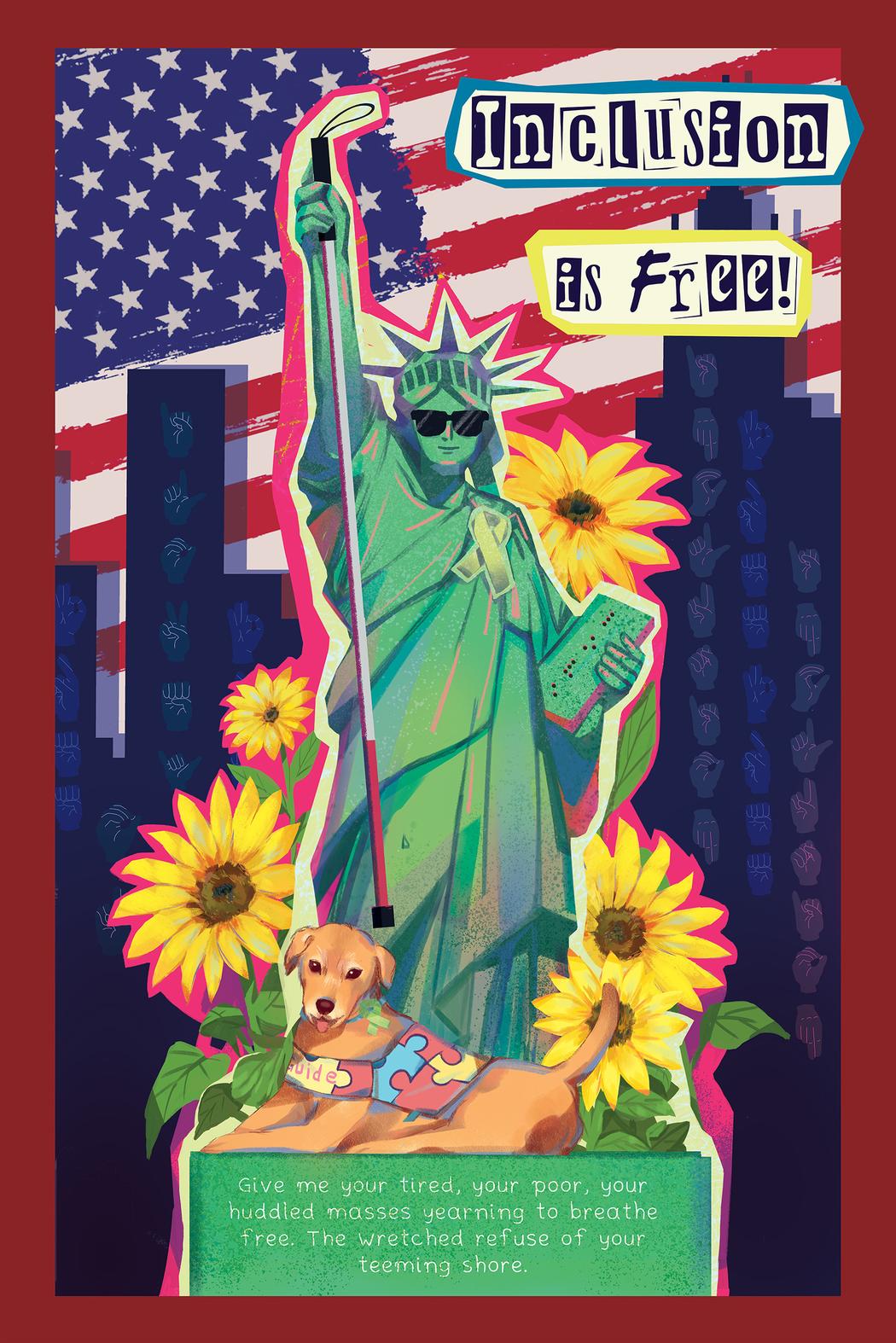 Jennifer McGee & Zoey Qu | Inclusion Is Free | 2024
Your work is deeply rooted in personal experience. How did your relationship with Isahiah reshape your understanding of inclusion and advocacy?
We adopted Isahiah just before the pandemic. In searching for answers for him we learned that resources were inconsistent and vague. He is an older, non speaking teen with profound autism, the group that falls between the cracks. Everything I thought I knew about Inclusion and accessibility were redefined. He is unable to engage in his daily living without help and supports. This changed my understanding of how little society accepts and supports those with high needs.
“Inclusion is Free” carries a powerful message. What moment or realization became the starting point for this project?
Zoey Qu and I had already created a few pieces of art centered around inclusion and self worth for disabled persons before creating Inclusion is Free. I was preparing for a trip to NYC when I felt compelled to center a piece around Freedom as it relates to inclusion and self worth. NYC embodies many different people and cultures so it felt right to create a piece that is representative of the disabled community as a whole, both physical and mental, and visible and invisible disabilities.
The Statue of Liberty is a central symbol in this work. What does freedom mean to you today, especially in the context of disability and visibility?
The Statue of Liberty here represents Freedom, the quintessential trait of American Identity, but true freedom is a broken and jagged reality for many individuals with disabilities because of a lack of accessible resources in the community, and a lack of social understanding and connection. Often the individual is fighting an internal battle to seek support and inclusion. There can be a sense of brokenness, or emptiness that can bring about feelings of being unworthy or less than “normal.” In turn, these self proclaimed untruths can lead to self exclusion and isolation. This piece aims to speak to both the external and internal obstacles of inclusion. Only by embracing our whole self can we be free to live our best life, and by authentically accepting others are we fully living the ideals of Freedom.
You describe inclusion as a choice rather than a privilege. Why do you think society still struggles to fully embrace this idea?
I think that too many people wait for the perfect conditions or situations before they can enjoy the moment. But actually we can both seek to improve the injustices of the world while simultaneously being content with ourselves today. We continue to navigate the community with Isahiah even though it is time consuming and difficult. Some days we have to leave early or just sit in the car, but we keep trying little by little because Isahiah needs to live and be able to go into the community. He is human, not a monster. This choice is part of my advocacy, creating a space for him in society. I want society to see him, and hopefully by choosing to show up and create opportunities for him to travel we are building compassion and acceptance for him. I think that society continues to be complacent to creating space and opportunities because that is the easiest thing to do. It is hard for many to see past their own to do list.
How does your role as a parent of a special needs child influence the way you approach storytelling, both visually and narratively?
I think because I adopted Isahiah and had to learn so much in a short time i have a unique perspective that can really help the general population understand the simple ways we as a society can do better in acceptance and accessibility for the disabled community. It is like having a dual perspective from being well meaning but unknowing to knowing but feeling overwhelmed and sometimes powerless. I really enjoy creating children’s stories because I am forced to simplify the message into small nuggets. These nuggets are great conversation starters, hopefully leading to more questions and opportunities for family and class discussions.
This project is a collaboration. How did your partnership with illustrator Zoey Qu shape the final visual language of Inclusion is Free?
Zoey and I worked for months on this piece to ensure the complex visual composition was right, and the various symbols of supports were properly placed. From the texture of the sunflowers (symbol of invisible disabilities) to the gradient of the mental health ribbon adorned on Lady Liberty’s robe, every stroke is in careful balance with our purpose for this piece. Zoey and I are a great team because she is able to bring my visions to life while contributing her unique style to each piece we create.
What reactions or conversations do you hope this piece sparks among viewers who may not have direct experience with disability or inclusion?
I want people to see persons with disabilities as equal and deserving of all the good and bad life has to offer. Disabled persons need different types of support to be able to access their unique selves and their own independence..This can look different for everyone with a disability but the attitude In providing these supports should not even be a question. By providing access,and community supports we are not heroes, we are just humans doing what humans are supposed to do. By embracing our wholeness despite our disability we are choosing to belong instead of waiting for permission.
Leave a Reply
You must be logged in to post a comment.