
Sharon Harms
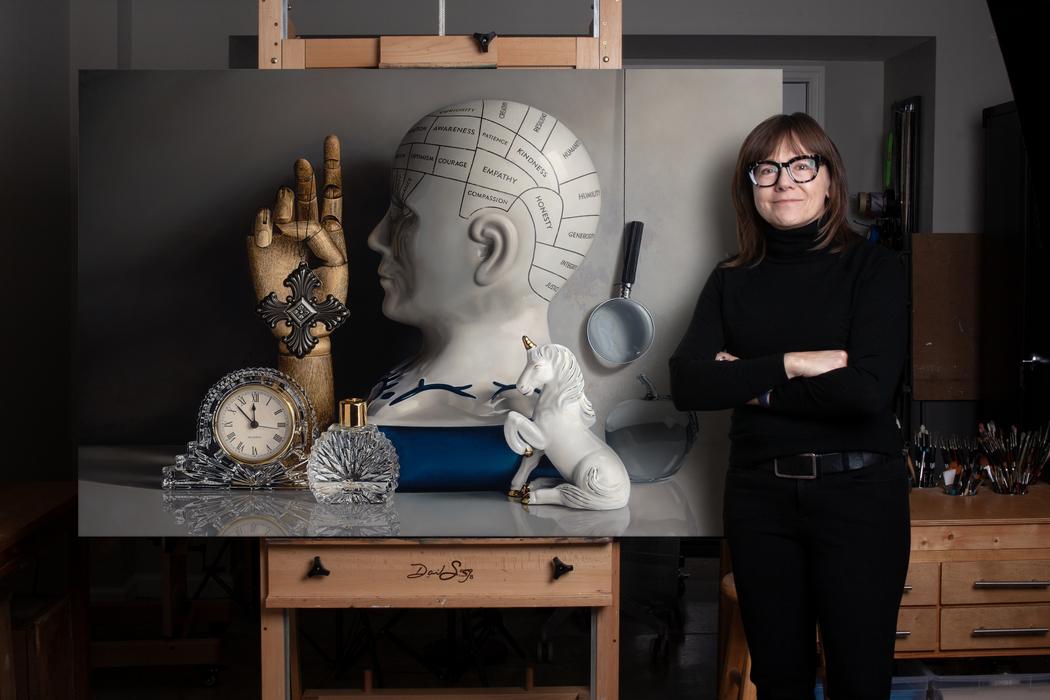
You spent decades working as an advertising art director before turning fully to painting. How did that background shape the way you think about visual storytelling today?
Advertising showed me just how powerful visuals can be. Everything that goes into the design of an ad matters when it comes to articulating a brand’s story and shaping how it’s perceived. It’s a deliberate process, one that involves the careful crafting of every detail.
I learned that stories aren’t shaped only by what is shown, but by how it’s presented. Hierarchy, scale, pattern, and color all influence what a viewer takes away. After so many years honing those art-direction skills, creating compositions for my still lifes has become very instinctive. In a way, using objects as visual language in my paintings feels like a natural extension of that experience.
You’ve said that each painting often begins with a single object that captures your curiosity. Can you describe a recent object that sparked an unexpected narrative for you?
I became fixated on the small ceramic unicorn figurine featured in my latest painting, The quest. The unicorn carries a lot of mystery and symbolism, and once I began placing other objects alongside it, I sensed that the story could unfold in many directions.
Rather than forcing a narrative, I let the objects guide me and looked for connections that resonated beneath the surface. I initially saw the unicorn as whimsical, but over time it revealed deeper spiritual connotations. In relation to the other objects in the painting, it became a symbol of the elusiveness of spiritual enlightenment. And the very human desire to pursue it.
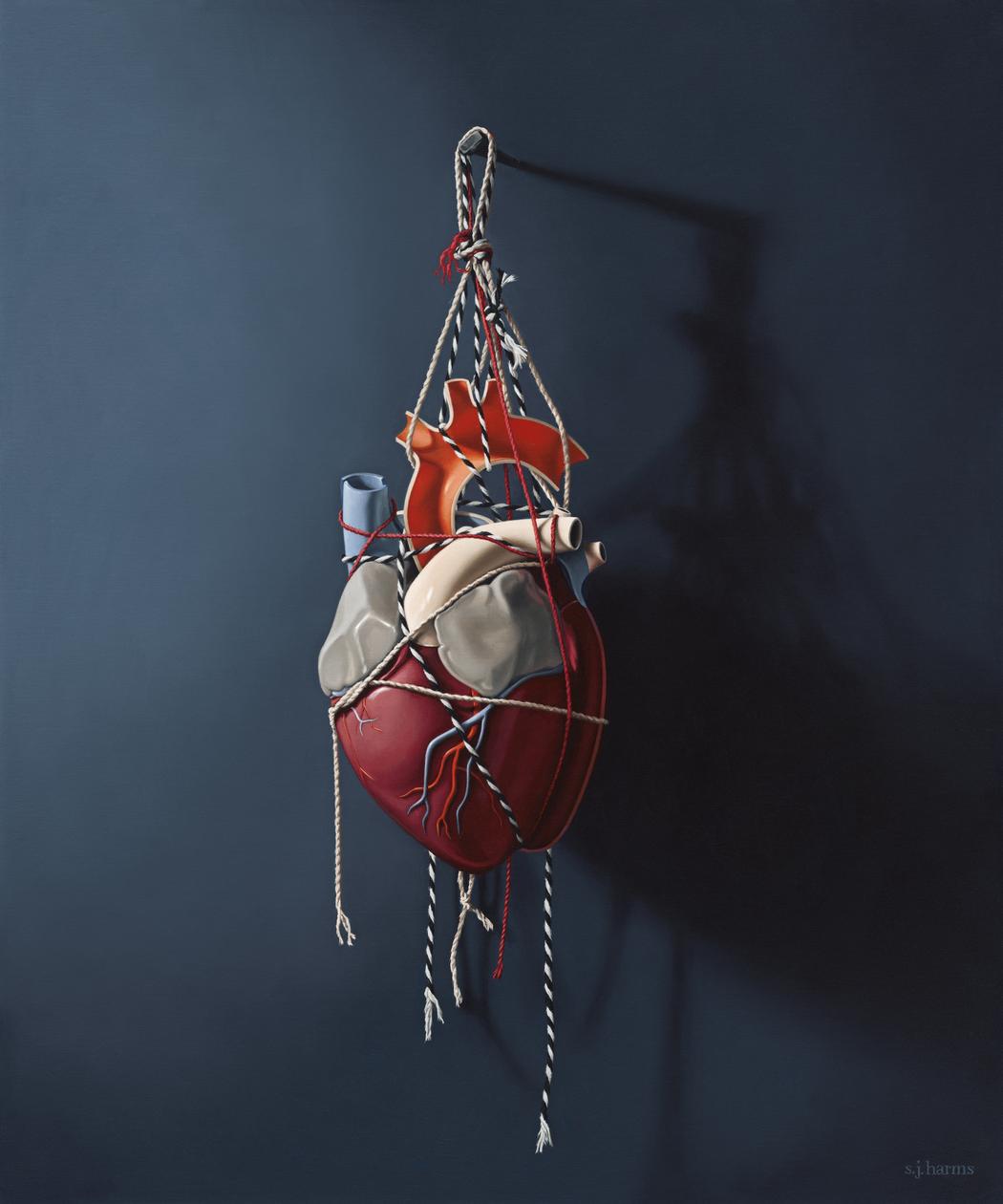 Sharon Harms | Still Holding On | 2024
Many of your works combine hyper-realism with surreal or symbolic juxtapositions. What draws you to still life as a vehicle for psychological or philosophical ideas?
My work is about searching, sifting, and examining the things people collect as a way to uncover insights about the world we create. Objects carry personal histories, cultural echoes, and subtle associations that reveal themselves over time as I develop a still life and paint it.
The narratives that emerge can be fleeting, but once a still life is set, it doesn’t change. The solidity of hyperrealism has a grounding effect. It creates a space for reflection, a place where clarity can emerge through sustained attention.
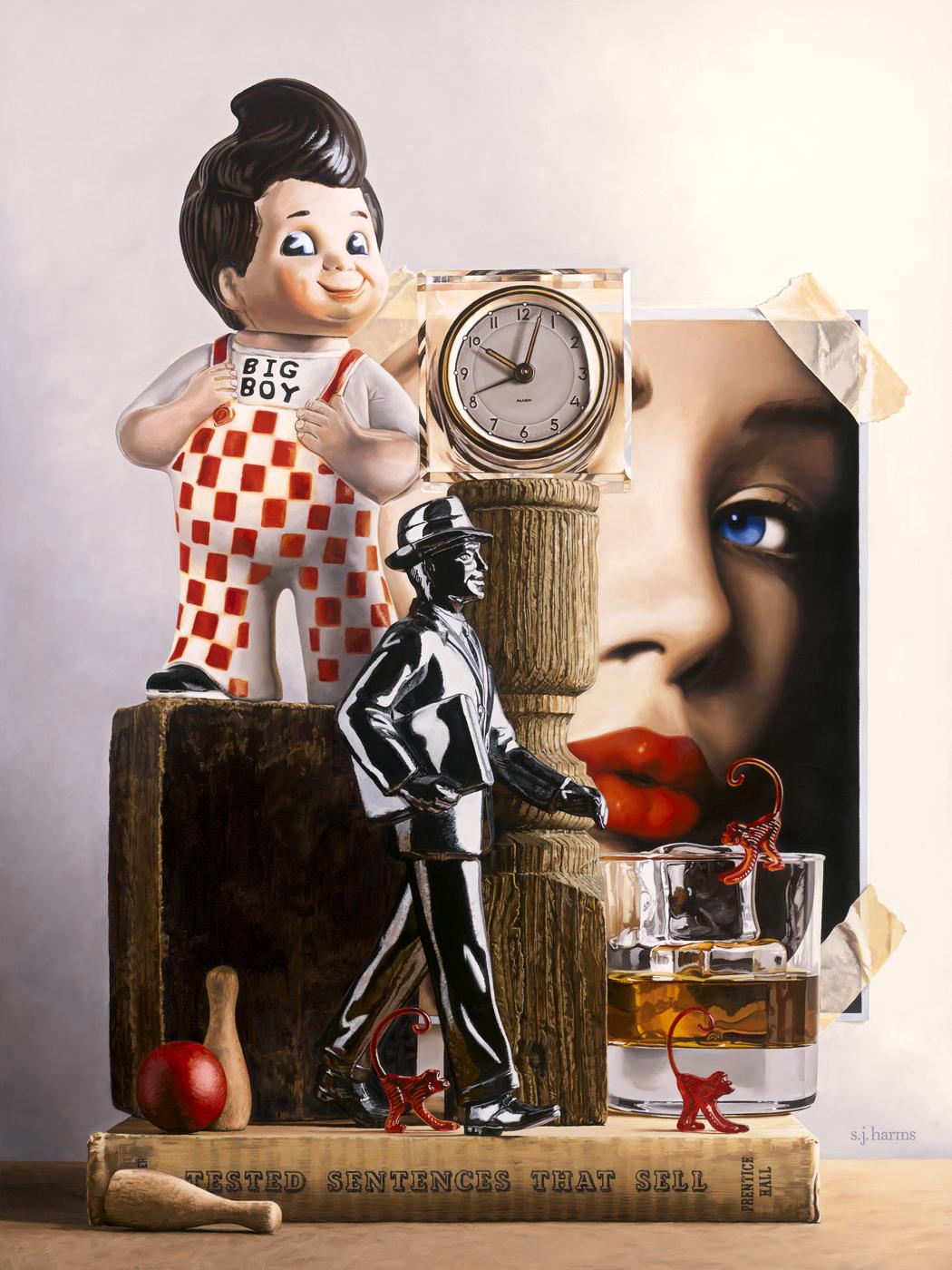 Sharon Harms | Everyone Thought Frank Was A Company Man | 2022
Coming to painting full-time later in life, did your sense of artistic freedom change compared to your earlier creative work in advertising?
Yes, there’s a freedom I didn’t have in the commercial world, but paradoxically, the process can be more difficult when there are endless possibilities. As an art director, my work was shaped by my clients’ marketing needs, which were always defined at the outset of a project. I was always telling a story with a specific goal in mind. I knew the endpoint before I began.
As an artist, I’m looking for meaning that isn’t tied to a predetermined outcome. I’ve realized I often created more easily when parameters narrowed the field of possibility. Now it takes a leap of faith every time I start a painting.
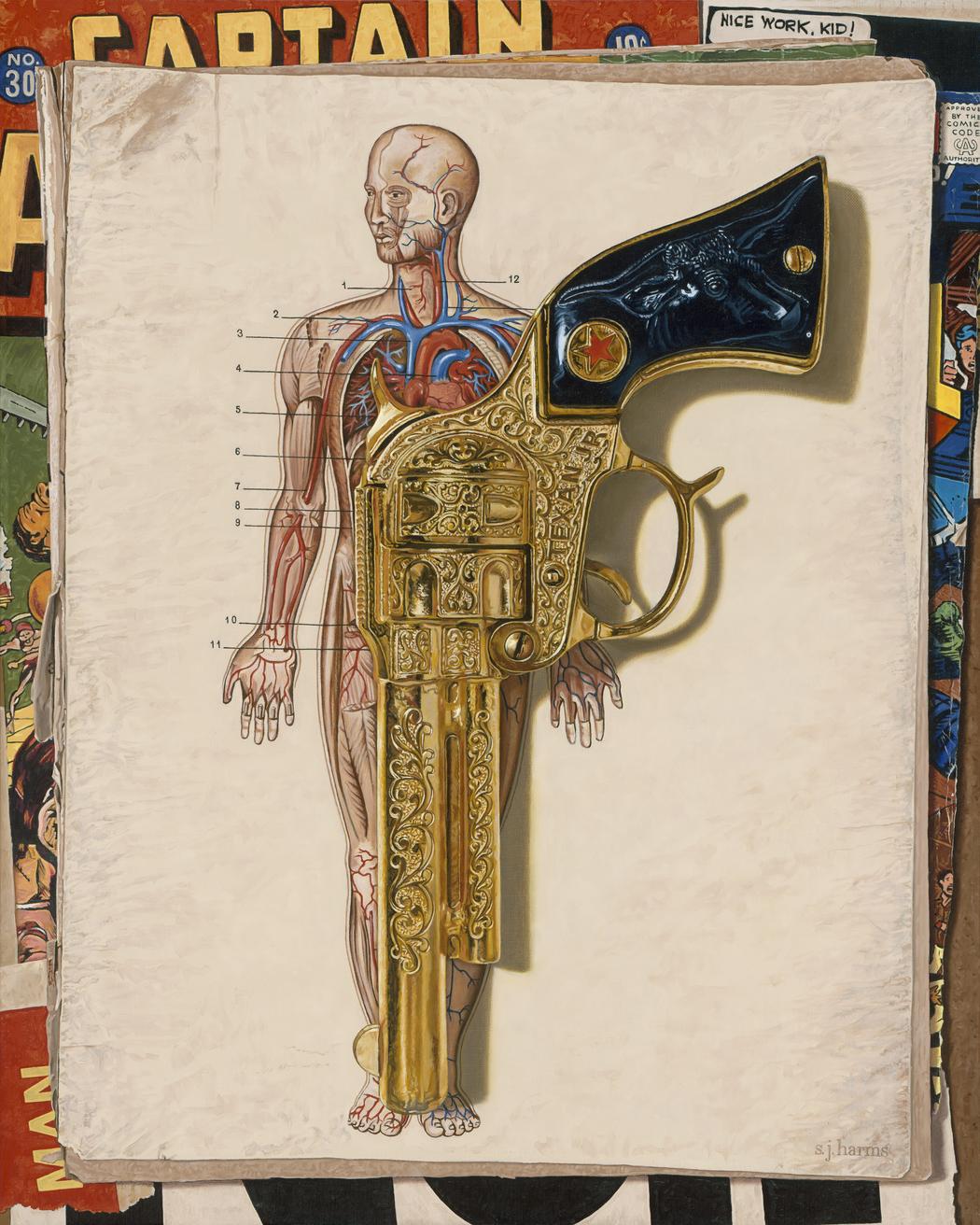 Sharon Harms | Anatomy Lesson | 2021
Your paintings often invite the viewer to “read” them slowly, noticing subtle details and connections. How important is viewer interpretation in completing the work?
My painting style is precise, but the visual language I use is intentionally open. The individual histories and experiences viewers bring to the work expand it and reinforce the idea that our physical world isn’t fixed or singular.
I didn’t anticipate how interactive this aspect of the work would become when I first began painting these still lifes. Each piece is an invitation for the viewer to look, to notice, to think, and ultimately to complete the story for themselves.
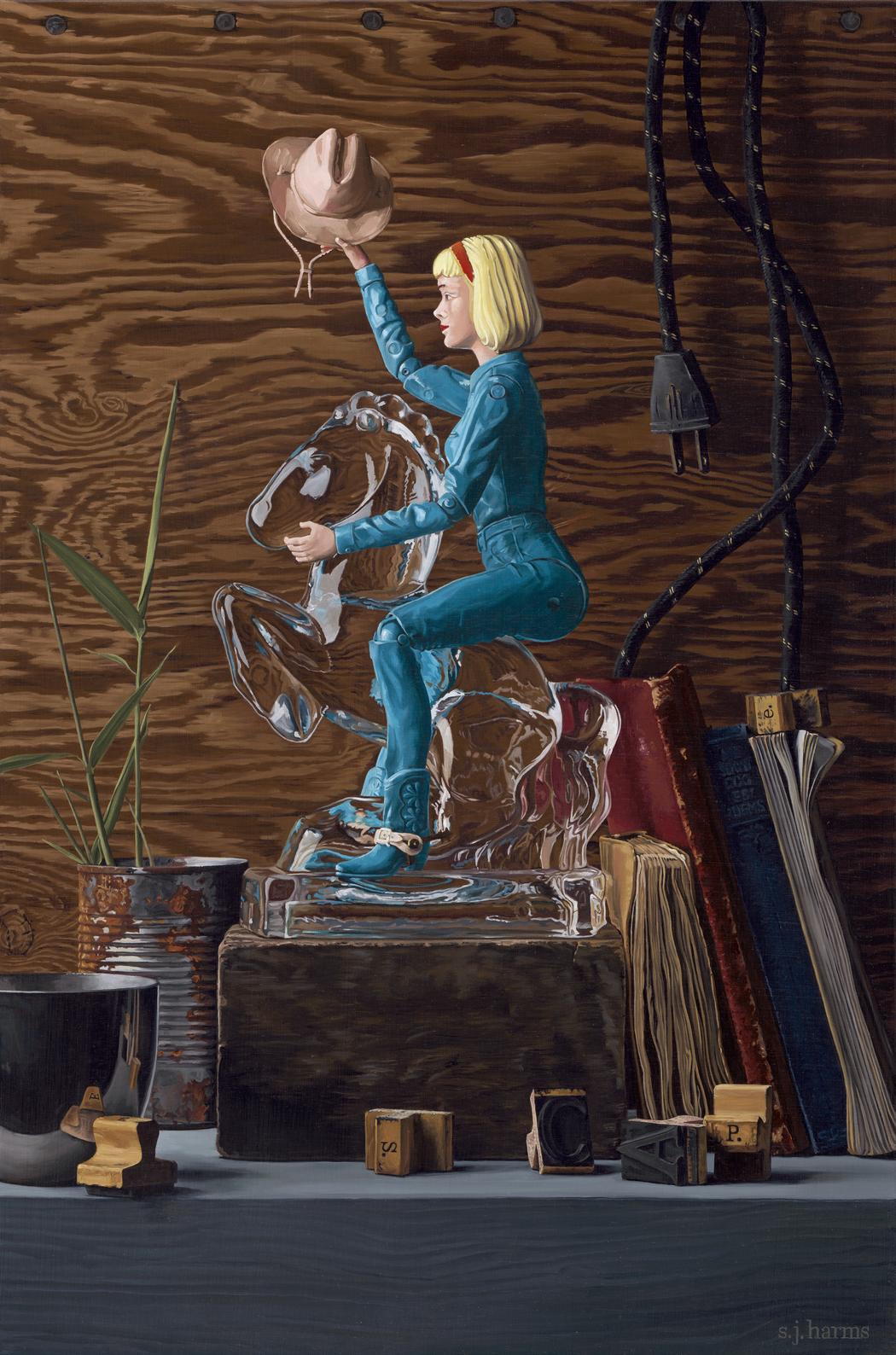 Sharon Harms | Escape | 2020
Hyperrealism is frequently associated with technical mastery. What role does discipline play in your studio practice, and where do you allow space for uncertainty?
From an early age, I was drawn to details. I had a natural ability to draw and paint realistically, and that inclination stayed with me. Over the years, I experimented with many techniques, materials, and styles, but nothing has felt as satisfying as completing a successful hyperrealistic painting.
Creating a sense of presence on a two-dimensional surface is challenging, but deeply rewarding when I get it right. The vulnerability lies in not knowing whether what I’m committing to the canvas will hold up to the intense scrutiny that the genre demands.
Living and working in Nashville now, does your current environment influence your choice of objects, mood, or color palette?
At this stage of my life, I value Nashville’s slower pace and ease of living. It gives me the space to examine details, something I’ve never lost interest in. I’m able to observe what people keep in their homes, what they care about, and what they hold onto.
Nashville is also quirky and a bit kitschy, and I’m continually inspired by the oddities I discover in junk stores and flea markets. I let those found objects guide the work.
Leave a Reply
You must be logged in to post a comment.