
Huan Zhou
Between Sensitivity and Structure: A Critical Review of Huan Zhou’s Curatorial Practice
by Anna Gvozdeva
Huan Zhou has positioned herself within the contemporary curatorial landscape as a facilitator of cross-cultural dialogue, with a particular focus on materiality, diasporic identity, and transcultural narratives. Based in London and operating through ArtFlow Studio and PA Art, her practice reflects a generation of emerging curators who approach exhibition-making as a relational and research-driven process rather than a purely formal exercise. While Zhou’s curatorial projects demonstrate conceptual coherence and sensitivity toward artists’ practices, they also reveal certain limitations that merit closer critical examination.
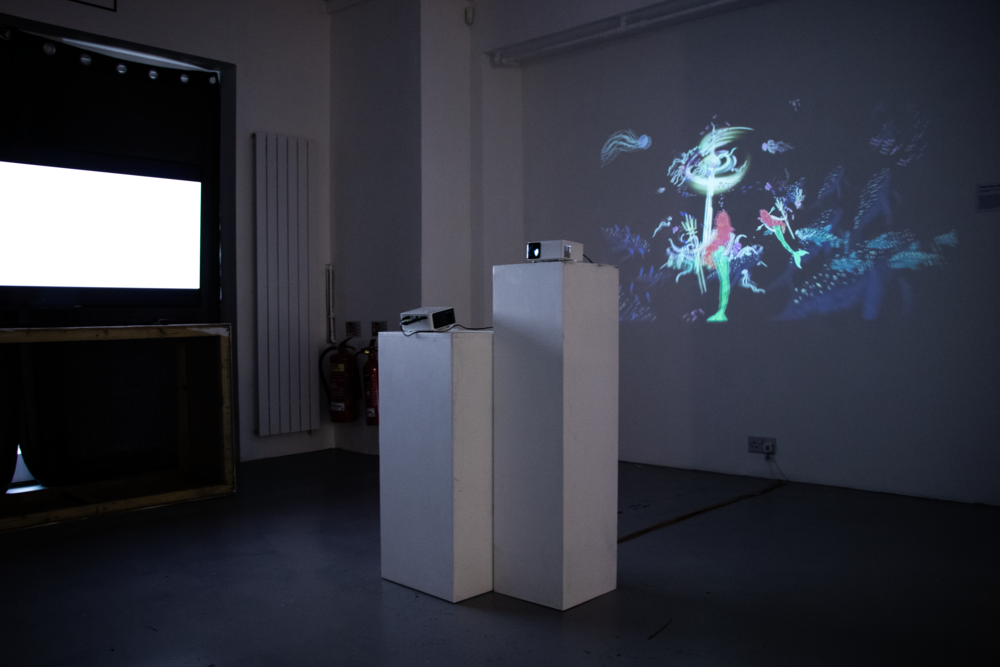
Zhou’s strength lies in her attentiveness to material processes and affective atmospheres. Exhibitions such as Weaving Light, Dreaming Form articulate a clear interest in liminality—between light and matter, digital and physical, memory and imagination. Her curatorial voice privileges softness, tactility, and poetic transition, allowing artists’ works to unfold slowly within space. This approach resonates with current tendencies in contemporary exhibition-making that favor experiential immersion over didactic framing. However, this emphasis on subtlety occasionally risks aestheticizing ambiguity to the point where critical tension becomes muted.
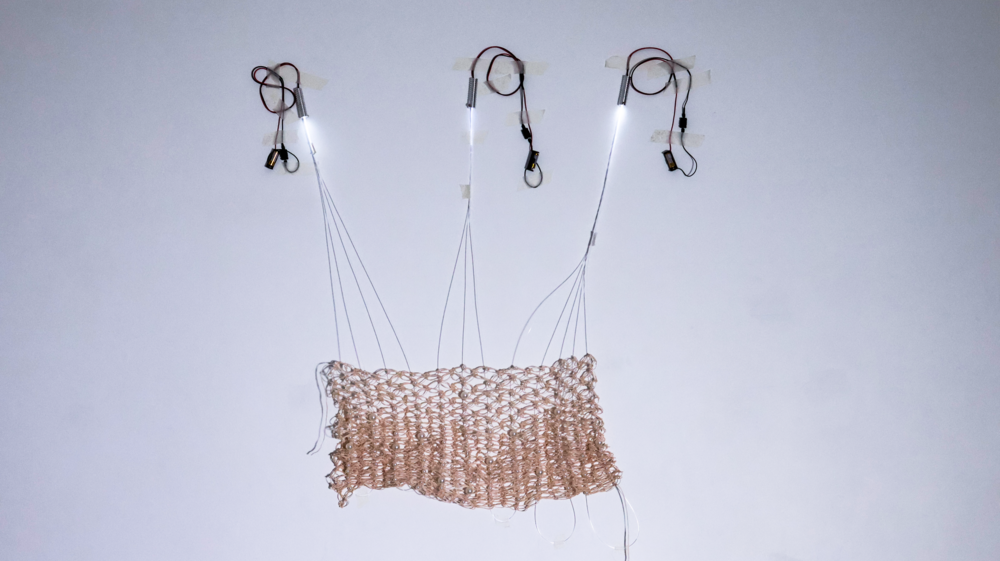
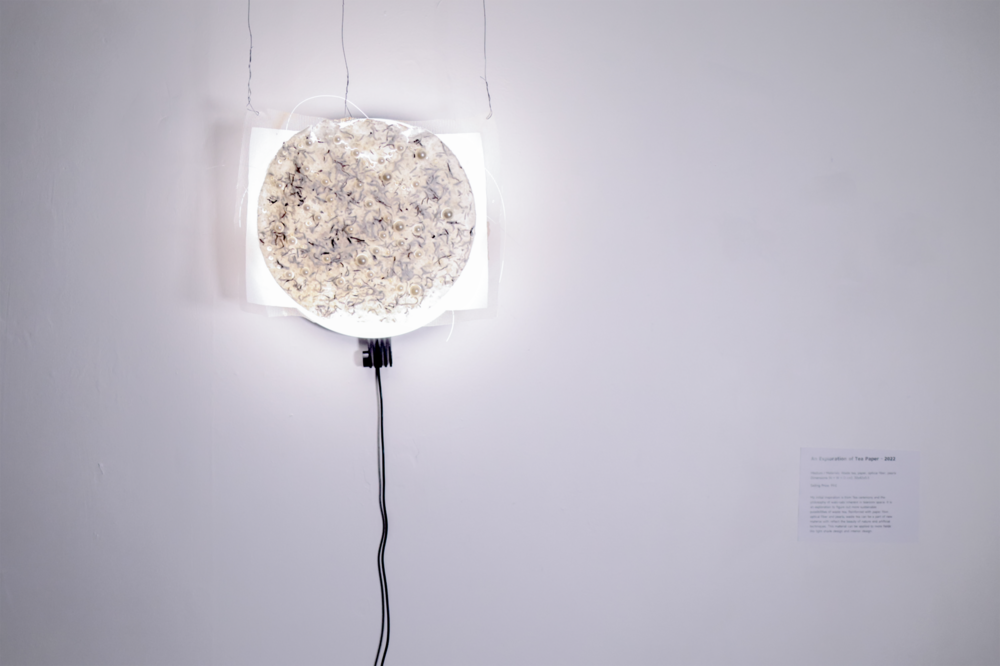
In Weaving Light, Dreaming Form, the pairing of Ketong Xing’s textile-based, light-infused installations with Junying Jiang’s digital illustrations demonstrates Zhou’s aptitude for identifying conceptual affinities across divergent media. The exhibition succeeds in establishing a shared vocabulary of “in-betweenness,” where both practices operate within transitional states. Yet, the curatorial framework relies heavily on poetic language—light “drifting,” narratives “breathing,” perception “softening”—without sufficiently interrogating the structural or socio-political implications of these metaphors. While diasporic identity and cultural displacement are frequently invoked, they often remain implicit rather than critically unpacked.
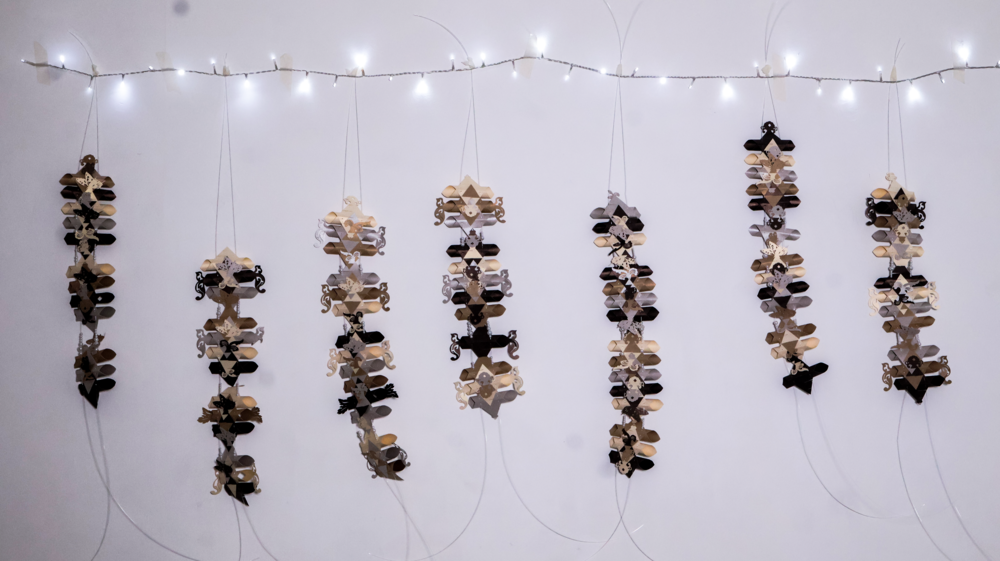
This tendency points to a broader characteristic of Zhou’s practice: a preference for emotional resonance over analytical friction. Her exhibitions prioritize care, intimacy, and collaboration, which is commendable, particularly in working with emerging Chinese and East Asian artists navigating international contexts. At the same time, this ethos can result in a cautious curatorial stance that avoids confrontation. Questions surrounding power dynamics, institutional visibility, and the complexities of cultural translation are acknowledged but rarely foregrounded as sites of productive tension within the exhibition space.
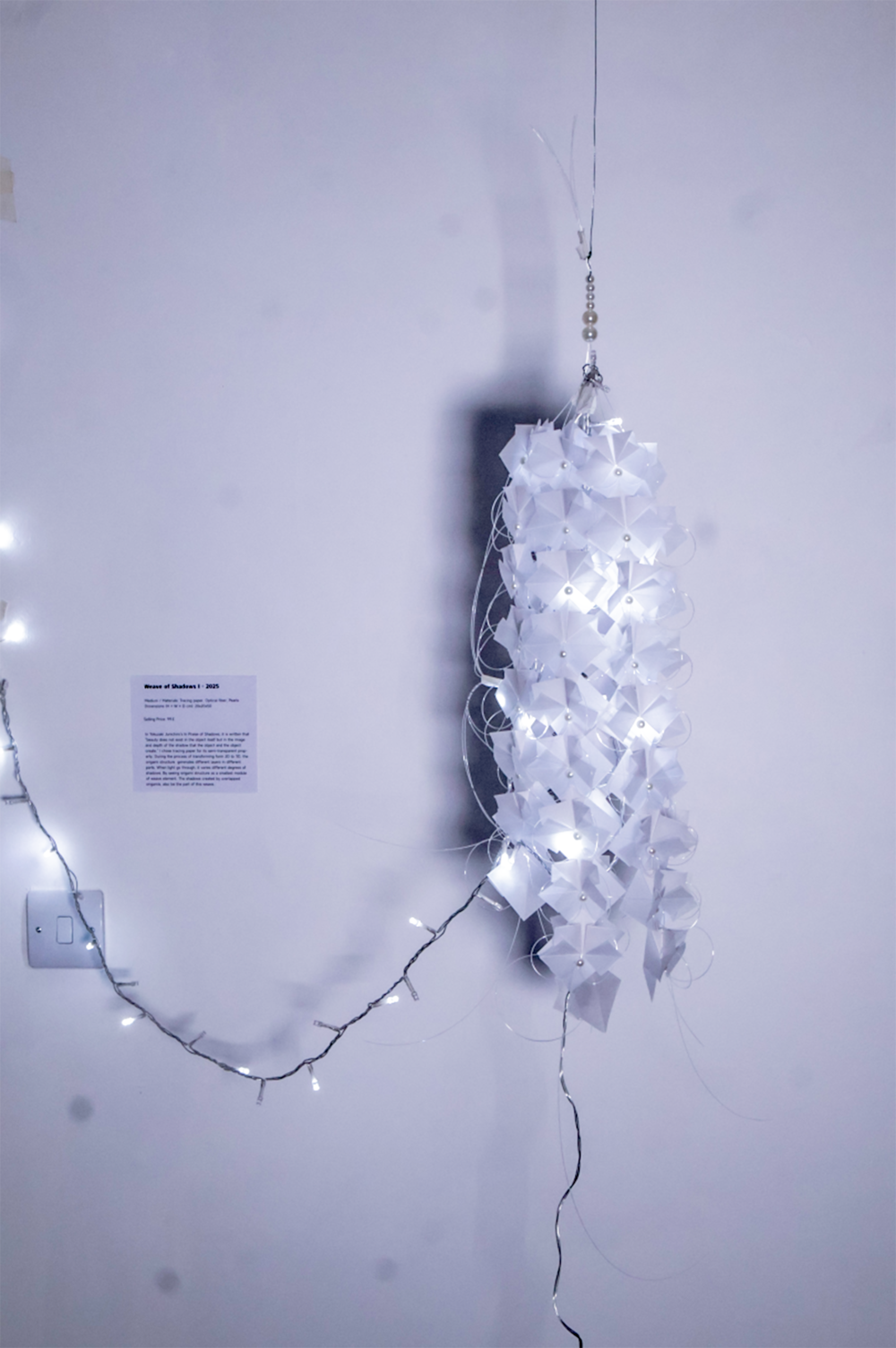
Zhou’s commitment to bridging Eastern and Western artistic methodologies is central to her curatorial identity. However, this positioning occasionally risks reinforcing a binary framework that contemporary transnational practices increasingly seek to dismantle. Rather than fully destabilizing these categories, some projects appear to operate within them, presenting “dialogue” as a harmonious exchange rather than a contested process shaped by asymmetries of access, representation, and discourse.
That said, Zhou’s curatorial practice demonstrates a clear trajectory toward refinement. Her sensitivity to artists’ processes, combined with her investment in long-term engagement, suggests a foundation capable of supporting more critically rigorous projects. As her practice evolves, a deeper engagement with curatorial authorship—particularly in articulating sharper critical stakes—could strengthen the conceptual impact of her exhibitions.
In sum, Huan Zhou emerges as a curator whose work is marked by care, poetic coherence, and an acute sensitivity to material and affective experience. The challenge ahead lies in balancing this softness with greater critical assertiveness, allowing ambiguity not only to soothe but also to question, disrupt, and provoke. Such a shift would not negate the strengths of her approach, but rather expand its intellectual and political resonance within contemporary curatorial discourse.
Leave a Reply
You must be logged in to post a comment.