

Sevtap Yılmaz
How did your fine art education and your early experience working in other artists’ studios shape the painter you are today?
My artistic journey, which began during my childhood in a workshop for gifted children at Mimar Sinan University and was later grounded in an academic foundation through fine arts education at Trakya University, directly shaped my formal discipline. Furthermore, my hands-on studio experiences facilitated the transformation of theoretical knowledge into practical application, ultimately maturing the technical framework of my photorealistic approach.
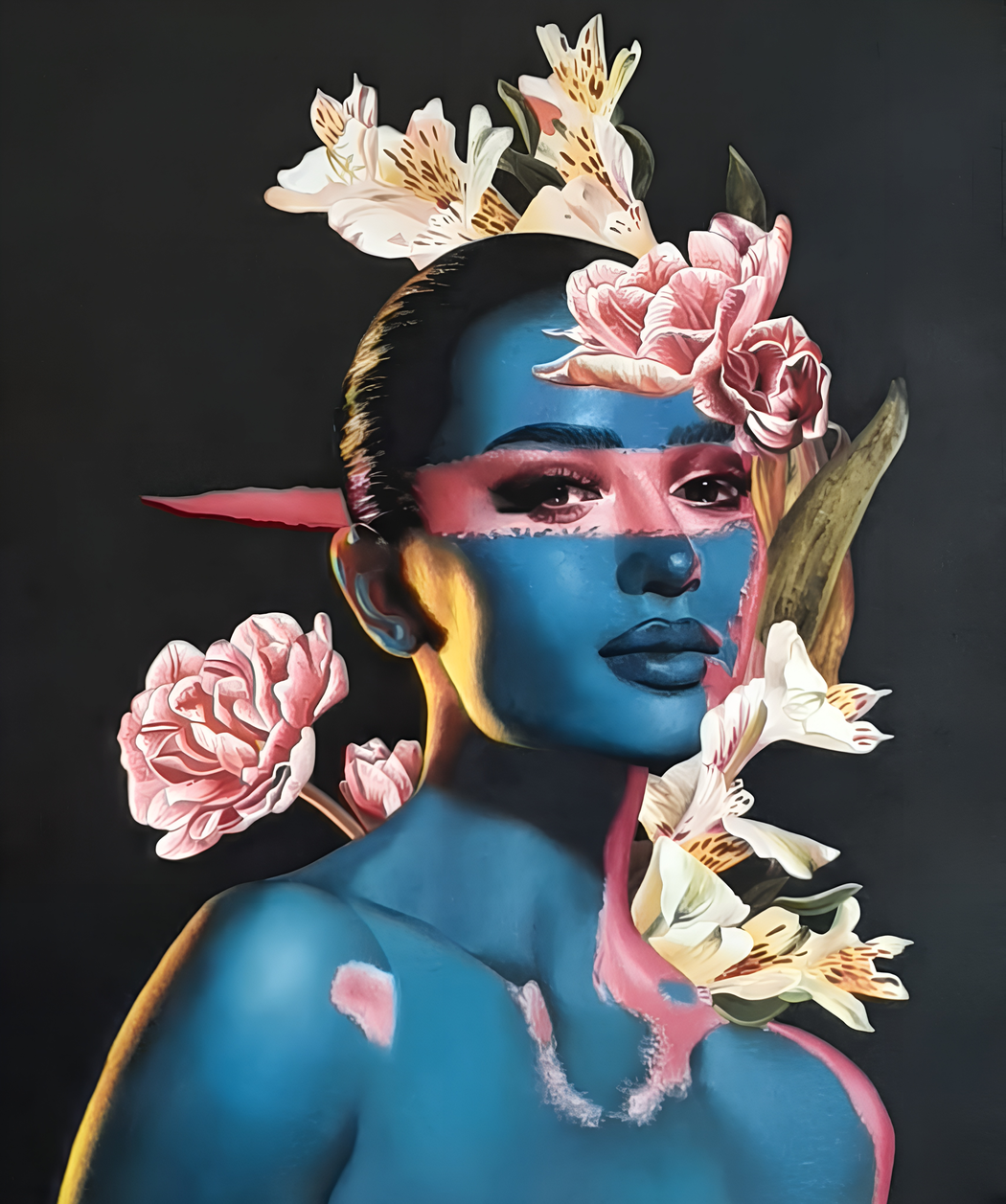
Sevtap Yılmaz | Portrait 1 | 2024
You describe painting as a way to slow down in a world driven by speed and consumption. How does the process of working in photorealism help you create this sense of attention?
Photorealism demands a high level of focus and meticulous, time-intensive craftsmanship. For me, this rigorous production process creates a space for deliberate slowing down, suspension, and profound observation, a contrast to the shallowness imposed by the contemporary culture of speed and consumption.
Your Portraits series begins with the question, “What is a “reasonable” woman?” What first prompted this question, and whose expectations are you challenging?
This problematic arises from the pressure exerted by the impositions and stereotypical expectations that social roles place upon female identity. My work adopts a critical stance toward the definitions of what is considered “reasonable” definitions constructed by a masculine perspective and patriarchal norms.
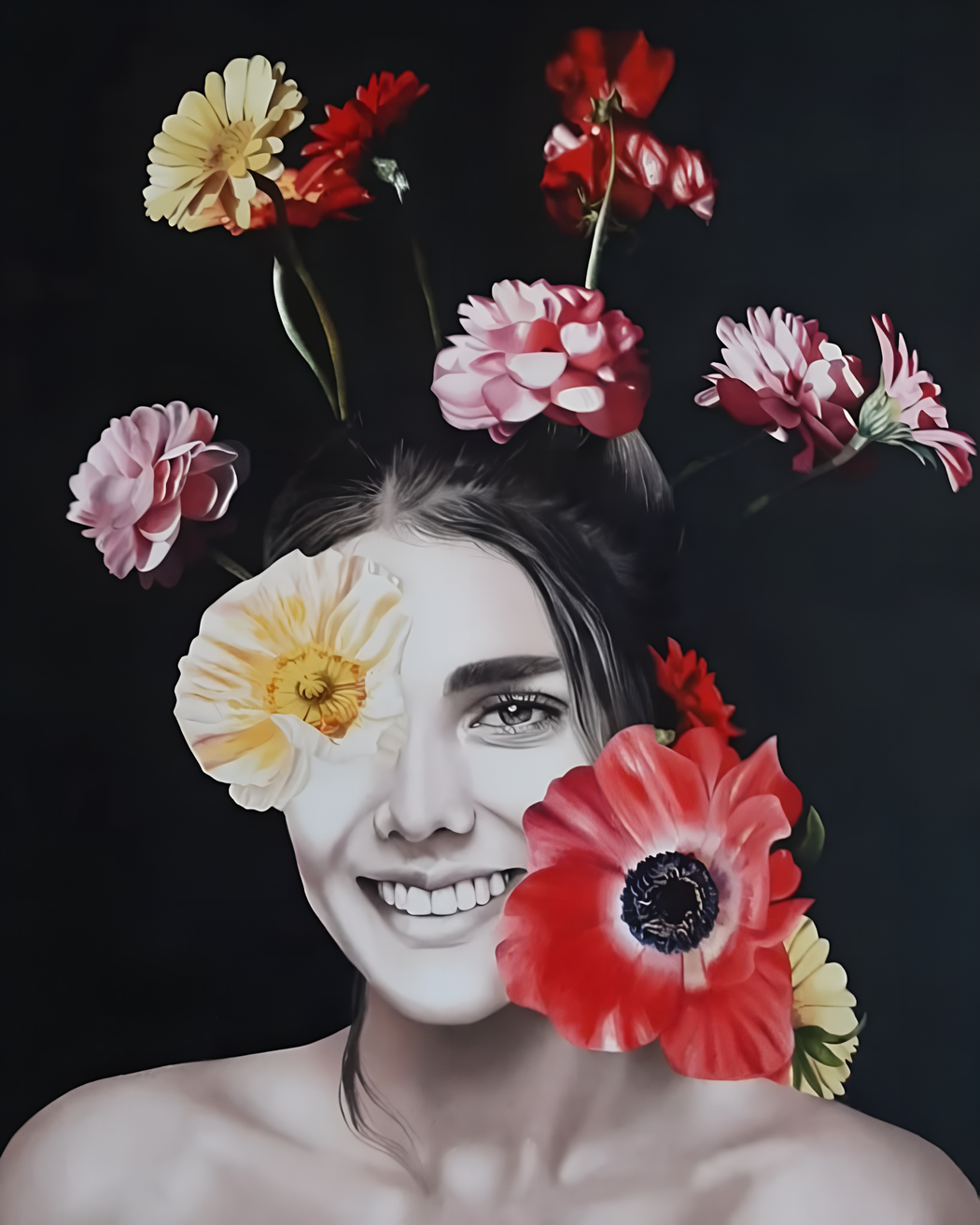
Sevtap Yılmaz | Portrait 6 | 2025
How do you develop the identities of the women in Portraits, and how much of your own experience enters these figures?
Rather than serving as individual portraits, these figures function as layered representations of female identity within the collective memory. My subjective experiences are not translated onto the canvas as a direct autobiography; instead, they are channeled through the aesthetic expression of the collective subconscious.
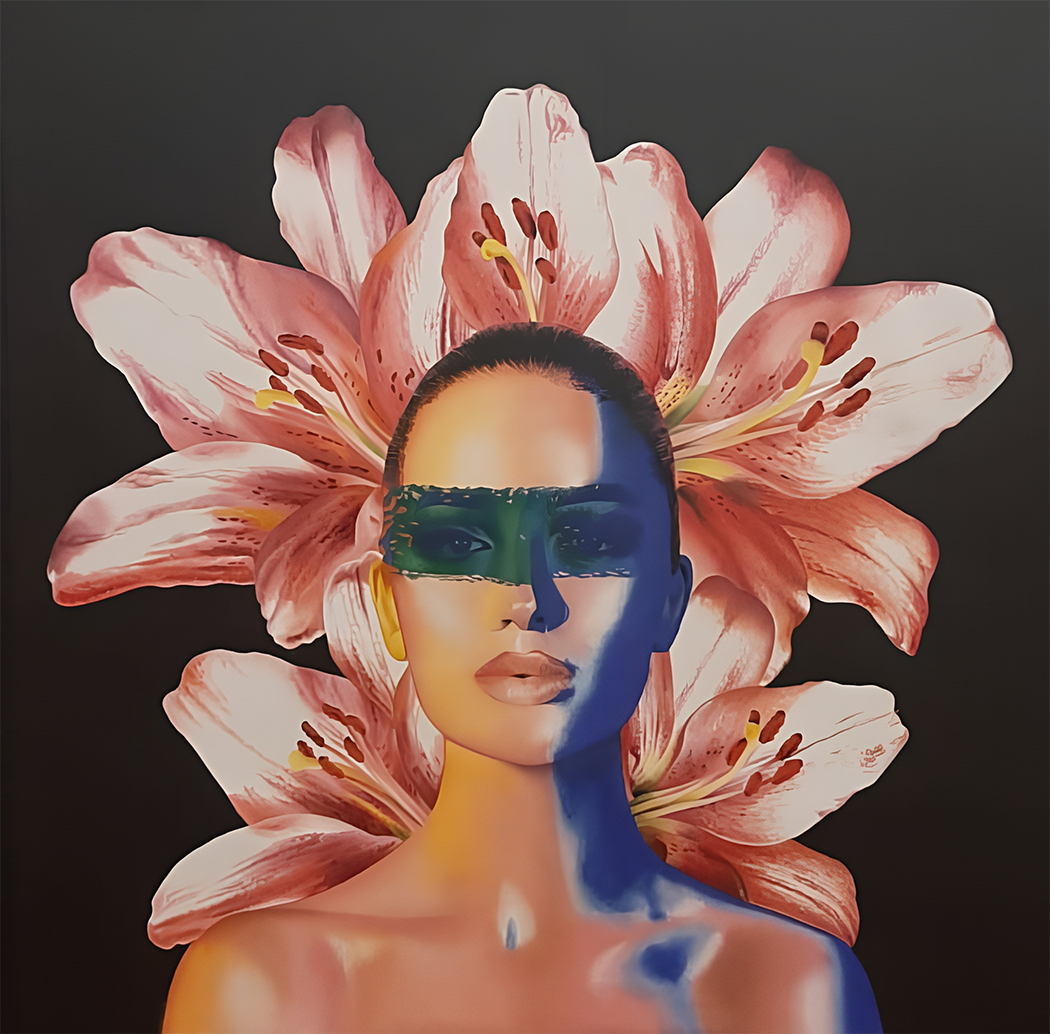
Sevtap Yılmaz | Portrait 2 | 2024
How do you use facial expression and gaze to suggest a woman’s inner life while leaving room for viewers to form their own interpretations?
The inner world is encoded not through direct narrative, but via controlled expression and steady gazes. By leaving meaning fluid and multi-layered rather than fixed, my work creates a deliberate space of ambiguity that allows the viewer to engage with it through their minds’ filter.
How do you choose the flowers, birds, and other natural elements that accompany your figures? Do their meanings change depending on the woman you are portraying?
When selecting the natural elements and living creatures to include in a portrait, I focus entirely on the subject’s posture, the depth of her expression, and the emotional layer I wish to capture on the canvas at that moment. These choices vary depending on the woman I am portraying, as every face carries its own unique story and energy. Sometimes, I incorporate a bird that complements the strength and vibrancy in her gaze; at other times, I include a delicate flower that reveals the quiet grace and vulnerability within her.
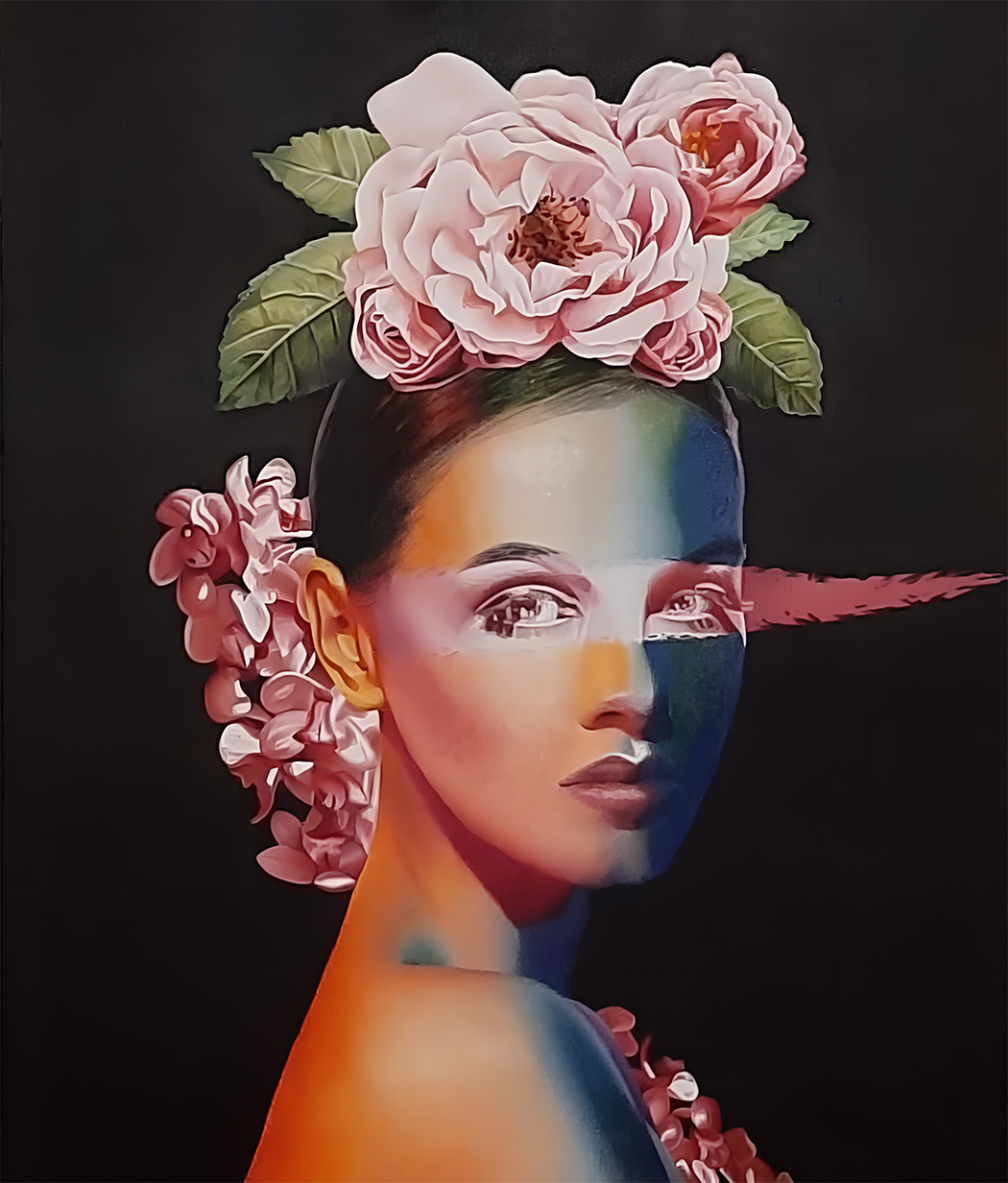
Sevtap Yılmaz | Portrait 3 | 2024
Have conversations with viewers ever revealed a meaning in one of your paintings that you had not consciously intended? Could you share an example?
I don’t have any specific memory that stands out, but from the moment an artwork is completed, it becomes an independent object; consequently, the viewer’s perception can sometimes imbue the work with sociological readings or layers that I had not anticipated.