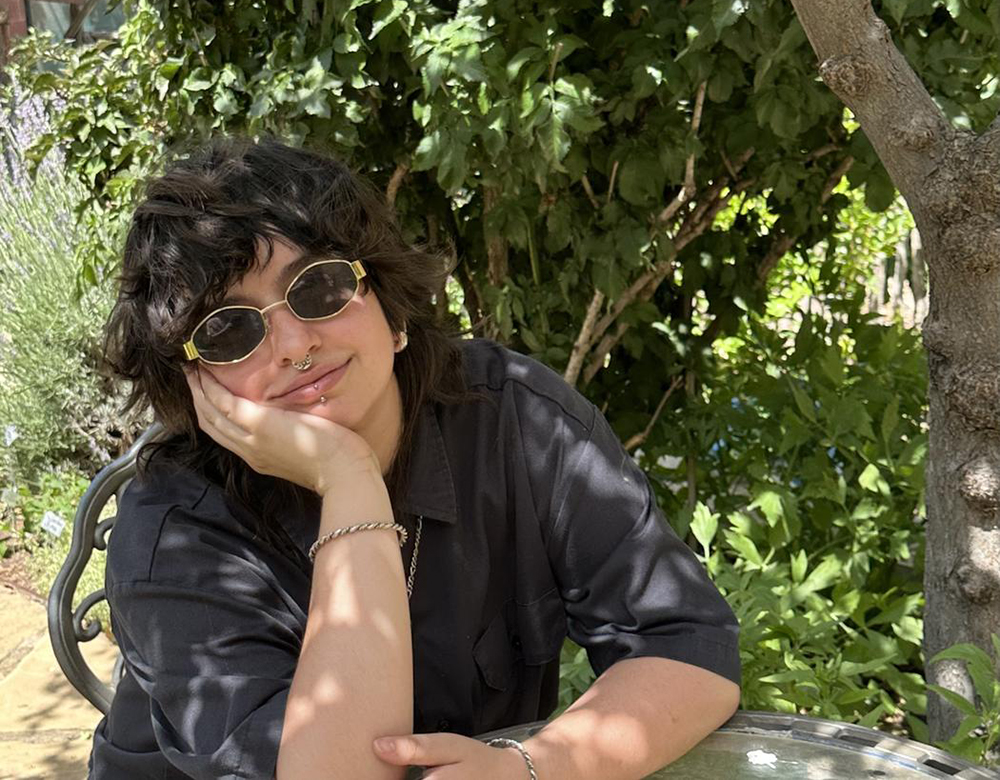
S. Sanchez
Could you tell us about your background and the experiences that first led you toward metalsmithing and visual art?
While growing up in Houston, I would visit the Museum of Natural Science and the Museum of Fine Arts annually. I would find myself in front of the same symbols of power confined behind smudged vitrines. I would study these remnants of ancient metalsmithing, glittering stones, and personal ornaments and think,“I want to touch it; I want to know how it is used.” That glass denied me access to touch and examination but opened an avenue of self-reflection.
The actual reflection of myself appeared on the glass barriers. I would perfectly align myself with the objects trapped in time. Looking through the reflection, I would adorn myself, visualizing how those objects would function in tandem with my body. Those moments of reflected adornment led me to ask new questions that continue to fuel my practice today. How can I make my own symbols of power that may last centuries buried in the earth, observing the wisdom and the mud and the worms?
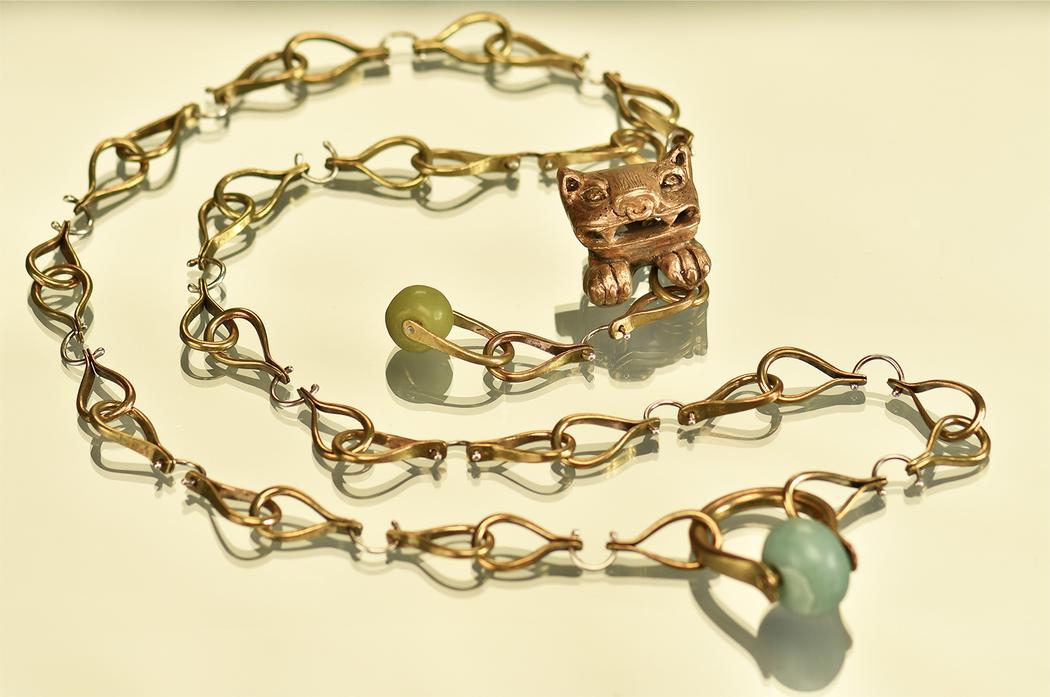 S Sanchez | €Aguar And Jade | 2025
When did you begin working with jewelry and sculptural objects, and what attracted you to metal as your primary material?
I began working with metal as my primary media in 2019. I was attracted to jewelry and sculptures’ ability to withstand time. The longevity of metals like copper, bronze, and silver allocates my work a longer life. Each of these materials will change and transform over time. Given the proper circumstances, they will survive and long outlast me. The natural aging and patination of a piece can inform pieces as much as the hands that made it.
Manipulating metals requires complete involvement in technique. In jewelry, there is a devotion to intricate step-by-step processes. You need flames, hammers, and the will to move materials that have the tendency to fight back. The physical exchange between body and metals brings me closer to my materials, and forces me to think critically about every aspect of creation. Small and meticulous junctions of detail build up a piece. Often these intimate aspects of my work are only able to be seen in close examination of the object. The aspect of handling and discovery in the metalsmithing process keeps me completely invested.
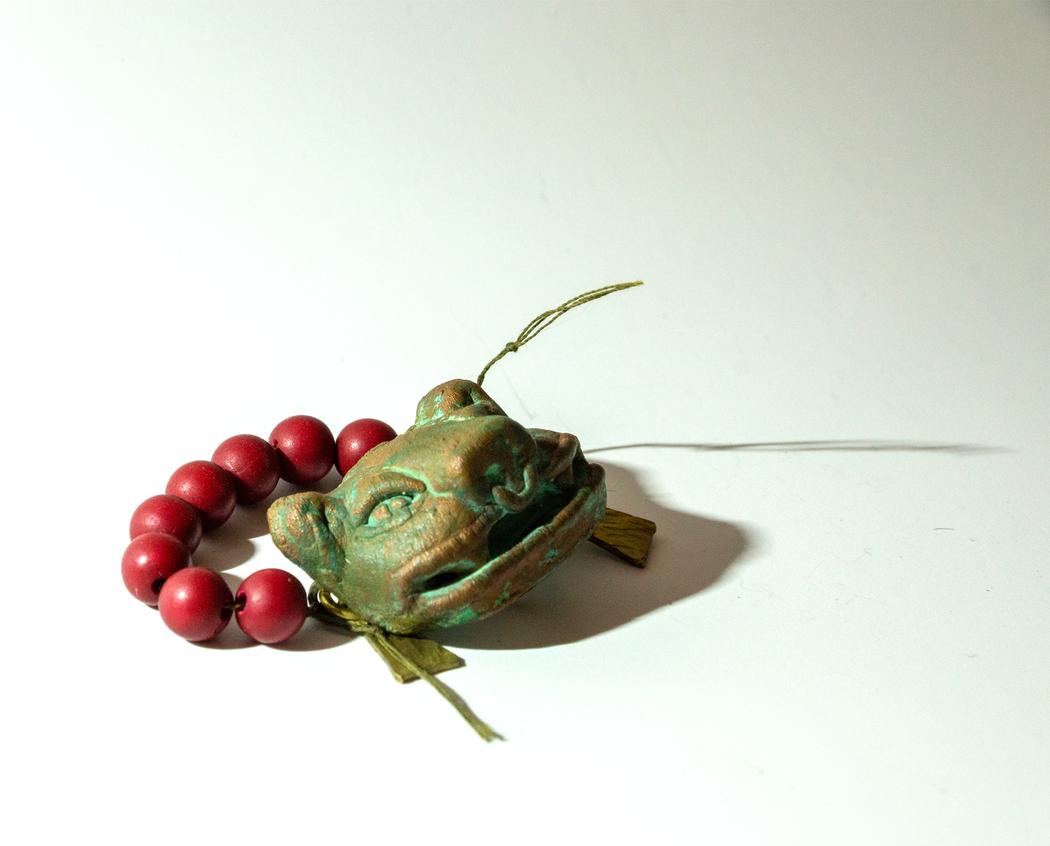 S Sanchez | €Aguar Mask | 2026
Your work frequently incorporates the jaguar as a central figure. What does this animal represent to you personally and culturally?
I grew up with many sculptures of carved jaguar heads adorning the house. The jaguar represented strength, ferocity, and danger. As a kid, I would stare at the pulled back growling face of these sculptures and try to capture their ferocity for myself. The way I see the jaguar in my own work is a creature of strength and power.
I am reinterpreting the story and significance of the jaguar. This symbol has reflected power, strength, and danger across countless cultures and millennia. In my practice, €aguar’s name and face have been Queered through suggestive title censorship and an adorned septum.€aguar extends the jaguar’s historical contexts and assigns these honorifics to a marginalized community. While I wanted to use the symbol of the jaguar to represent Queerness as undeniable strength, I wanted to subvert the ‘danger’ that some assign to Queer people. The lack of aggression in €aguar facial expression counters the villainous and aggressively negative stigmas surrounding Queer existence and confrontation.
I am still aiming to capture the ferocity and strength of the jaguar I’ve known my whole life, just as I did as a child making faces at sculptures on a mantel.
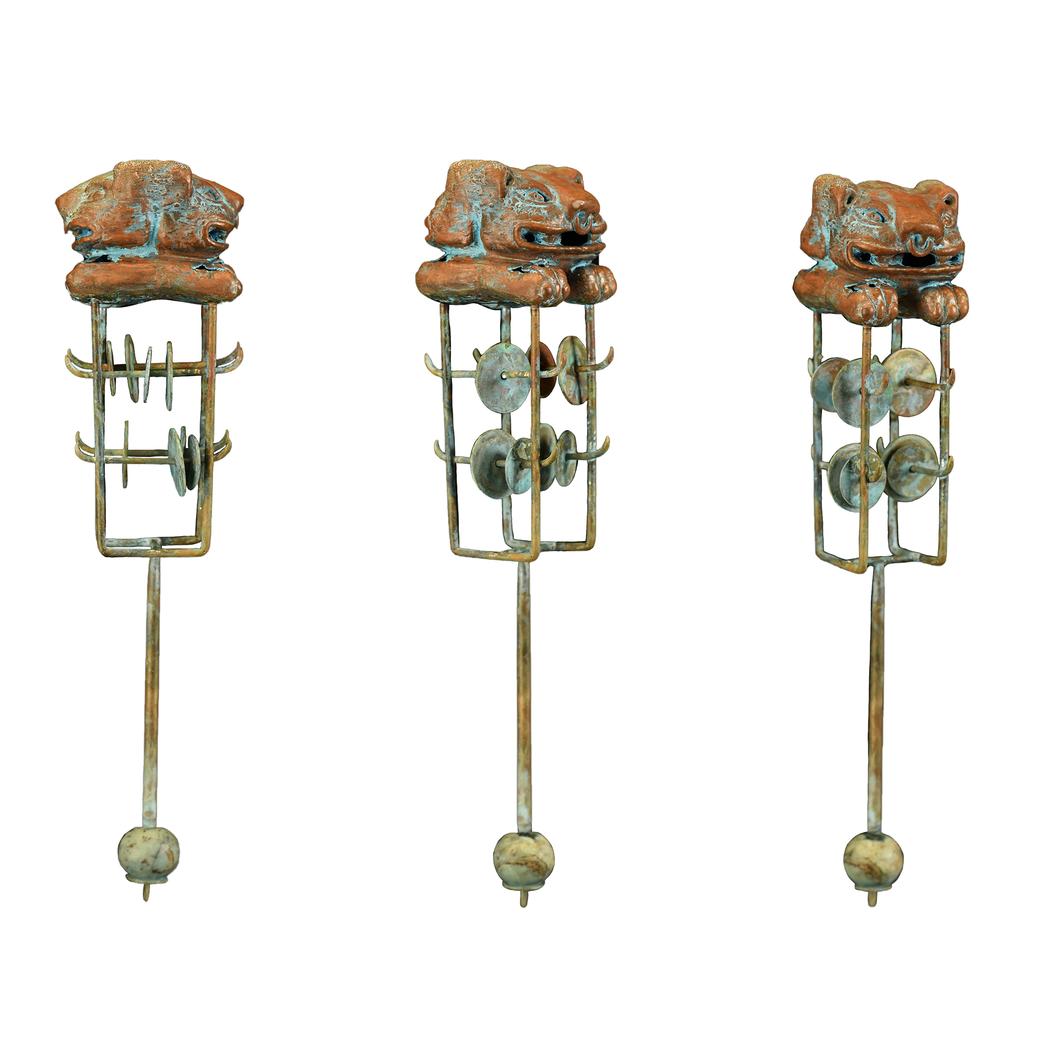 S Sanchez | Double €Aguar Rattle | 2025
How do you approach the relationship between traditional cultural symbols and contemporary artistic interpretation in your practice?
When starting this body of work, my inspiration stemmed from Pre-Hispanic Mesoamerican visual language. In many of the pre-Hispanic cultures of MesoAmerica and South America, jewelry and body ornaments were used to assign divine power to people of high rank and nobility. Nose ornaments, narigueras, were used to attain and assign magical power and divine status to the wearer. Icons of power, like the jaguar, were also intertwined within the visual language of my own Tejano household. While I am inspired by tradition, I also understand that traditions continue to grow with the people and the culture.
Tradition meets contemporary inspiration with the Queer cultures of body modification and “flagging” through adornment. Another significant influence is the Punk countercultural use of body modifications as radical resistance. I did not invent nor am I the only person to continue these practices. My inspirations have led me to this path, and they inform my artistic practice. Ultimately, my works are visual interpretations of my own lived experiences of being a Queer Chicano in the here and now.
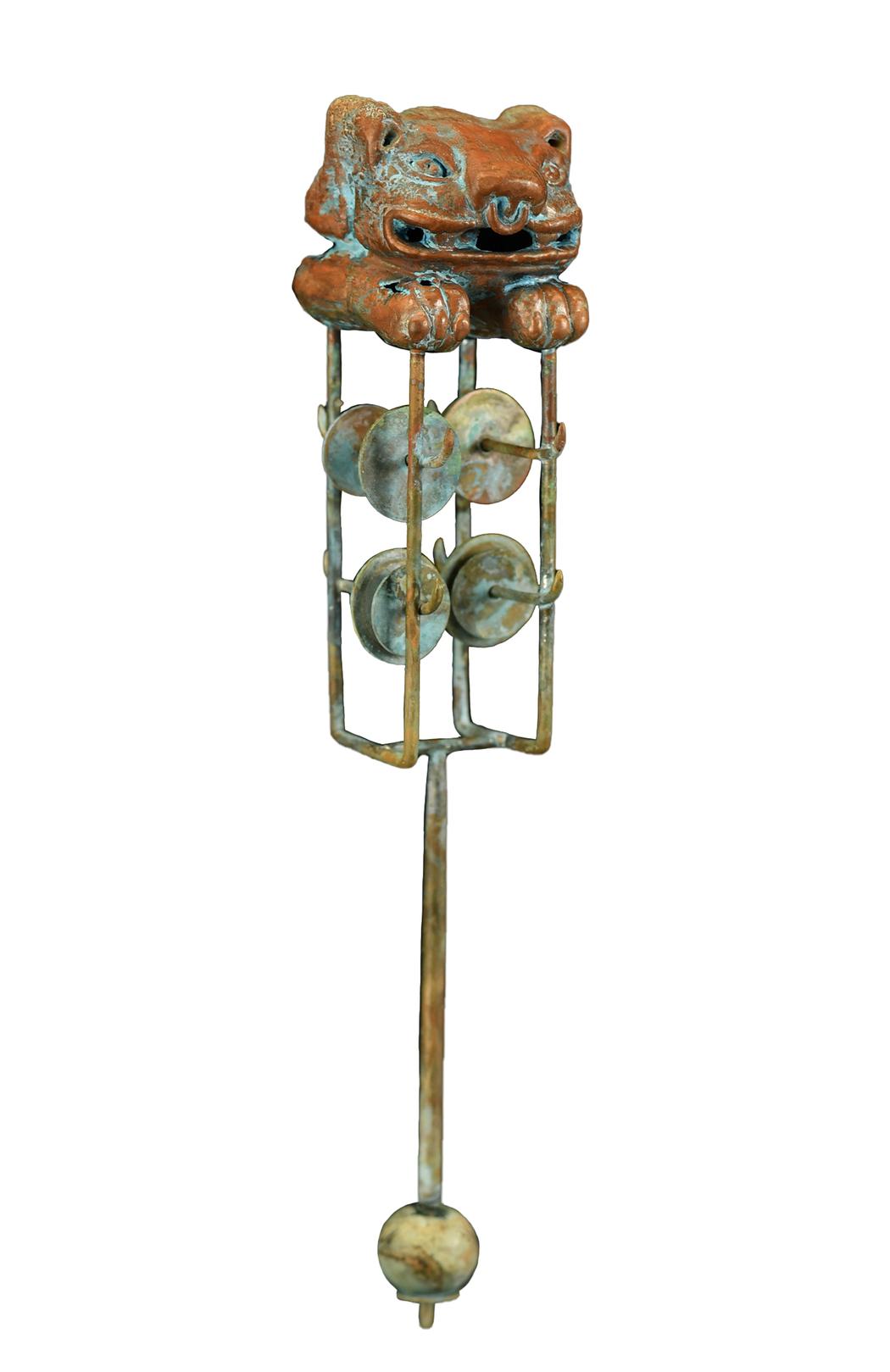 S Sanchez | Double €Aguar Rattle Detail | 2025
Adornment plays an important role in your work. What interests you about jewelry as a form of communication beyond its decorative function?
The practice of body modification for Queer ritual self adornment fascinates me. Many types of piercings, tattoos, and fashion function as self affirmations, flagging, and empowerment of Queer identifiers.
Jewelry and adornment offers information about the wearer without speaking a word. Adornment acts as an undeniable declaration of self. The material, size, and placement of jewelry can communicate different statuses and ways of being in the world. Personal adornment has the capacity to empower and articulate our identifiers; this practice has existed for millennia and will always continue to flux and evolve. I am simply lucky enough to participate in this practice of adornment.
As I am making, I ask myself how I can create the work that I am already envisioning as artifacts of our time. When I create, I situate myself within a long line of makers. I call upon traditions of those who came before me, and see myself being quickly buried and indoctrinated into an archaeological temporality.