Eleonora Molfino
You describe your figurative and abstract work as two modes in which “the hand is the same”. What connects them beyond your use of colour and materials?
The same question drives both. Whether there is a figure or not, I am painting how a woman is looked at, remembered, or expected to be. The hand is the same because the decision is the same: what stays on the surface, and what gets covered, until the painting can stand on its own.
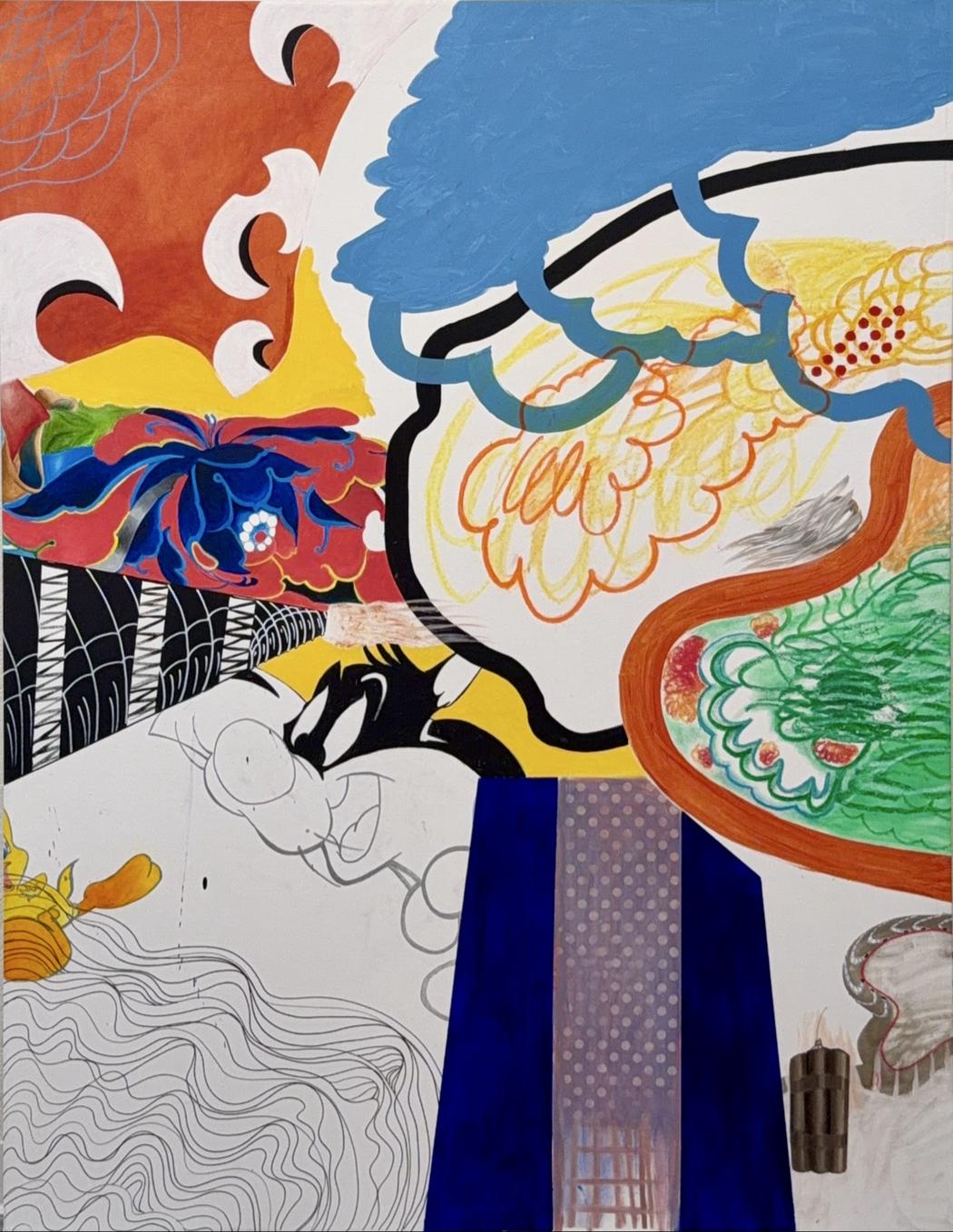 Eleonora Molfino | Catch Me If You Can | 2023
When you begin a painting, what leads you towards a recognizable figure, and what leads you towards abstraction?
A figure comes when the story needs a body to carry it, a face, a posture, a recognizable pressure. Abstraction comes when the feeling does not have a face yet, or when a face would narrow it too much. I do not choose the mode first; I notice which one the painting is asking for.
What draws you to a particular woman, cartoon character, or face from an old painting, and when does that borrowed image begin to feel like your own?
They already carry an expectation: beauty, innocence, devotion, perfection. That expectation is useful, because I can bend it. The image becomes mine when I change its scale, its color, or its company, until the original reference stops giving orders and starts taking part in my composition.
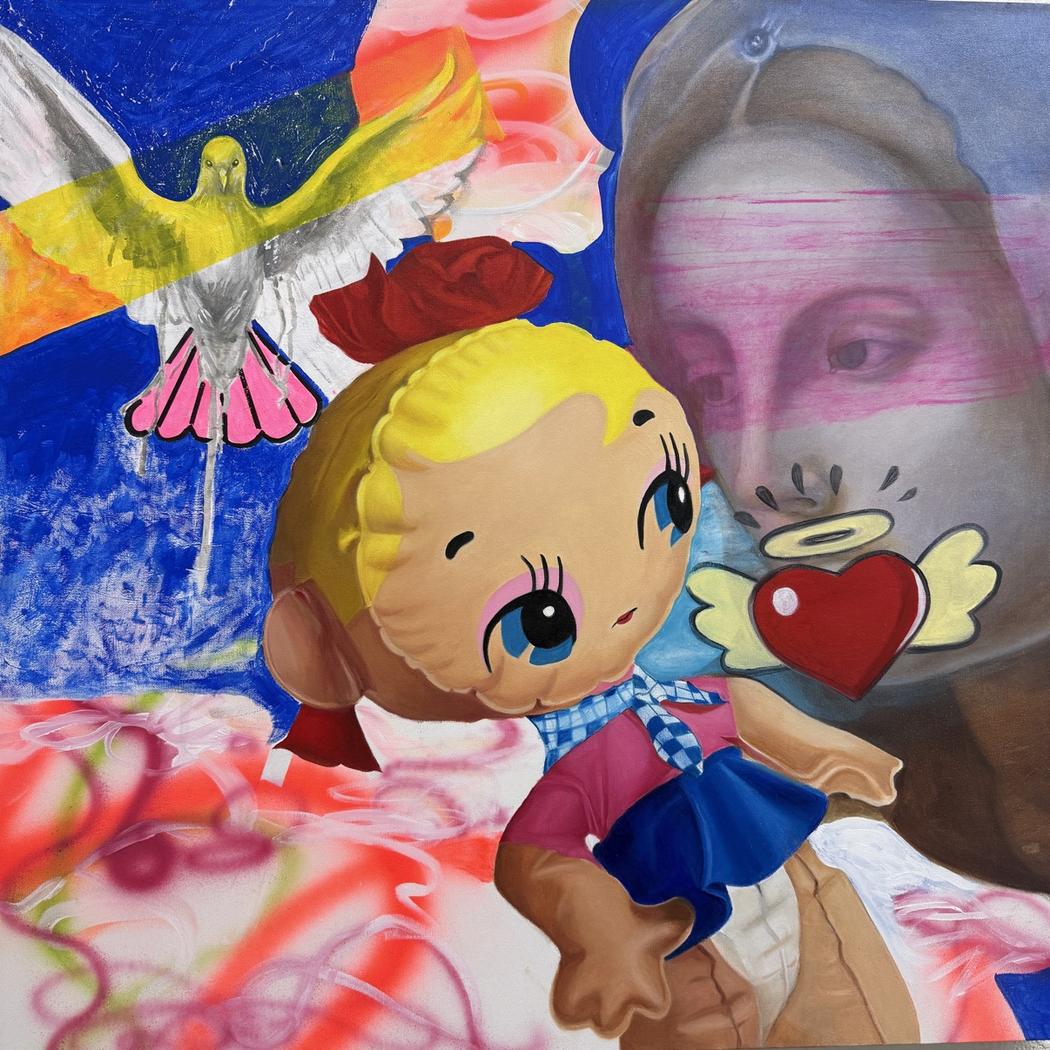 Eleonora Molfino | Idealized Motherhood | 2026
You embed feminist messages within your compositions. How do you decide how much to reveal and how much to leave for the viewer to uncover?
I test it by looking without words. If the message is still there when I stop explaining it to myself, I leave it. If it only works as a sentence, I take it out or push it further into the image. The viewer should feel something is at stake before they can name it.
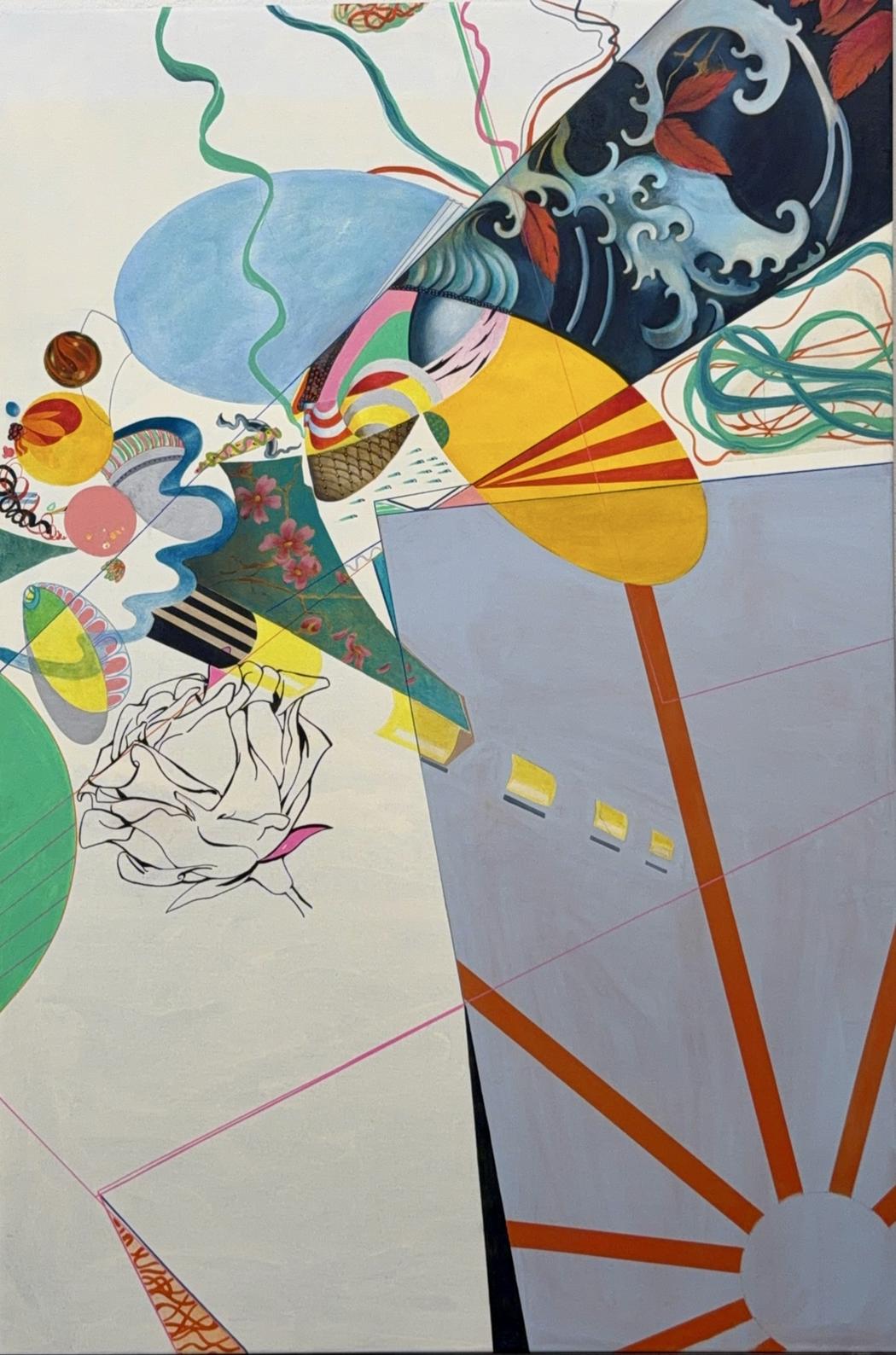 Eleonora Molfino | Not Always In My Skin | 2023
Familiar characters bring their own stories and cultural associations. How do you work with those associations when they conflict with the message you want to convey?
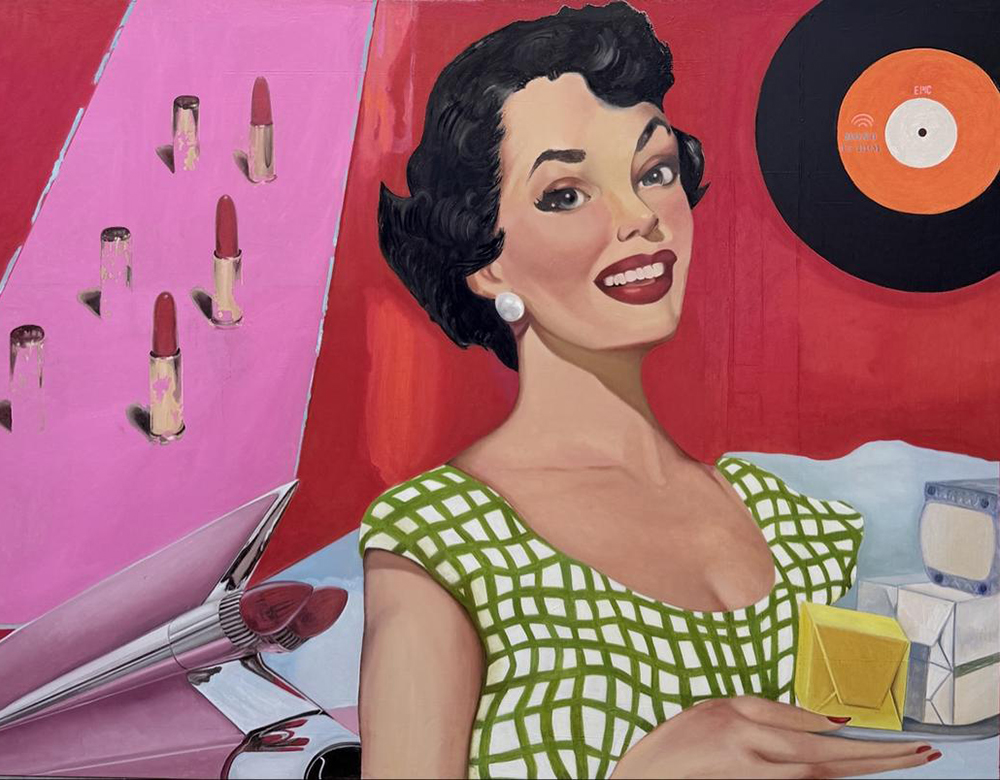
I do not erase the association; I use the friction. A doll in an adult situation, a sacred face beside a plastic toy, a smiling woman surrounded by products: the conflict is the material. The painting does not resolve it, it holds both sides in the same frame.
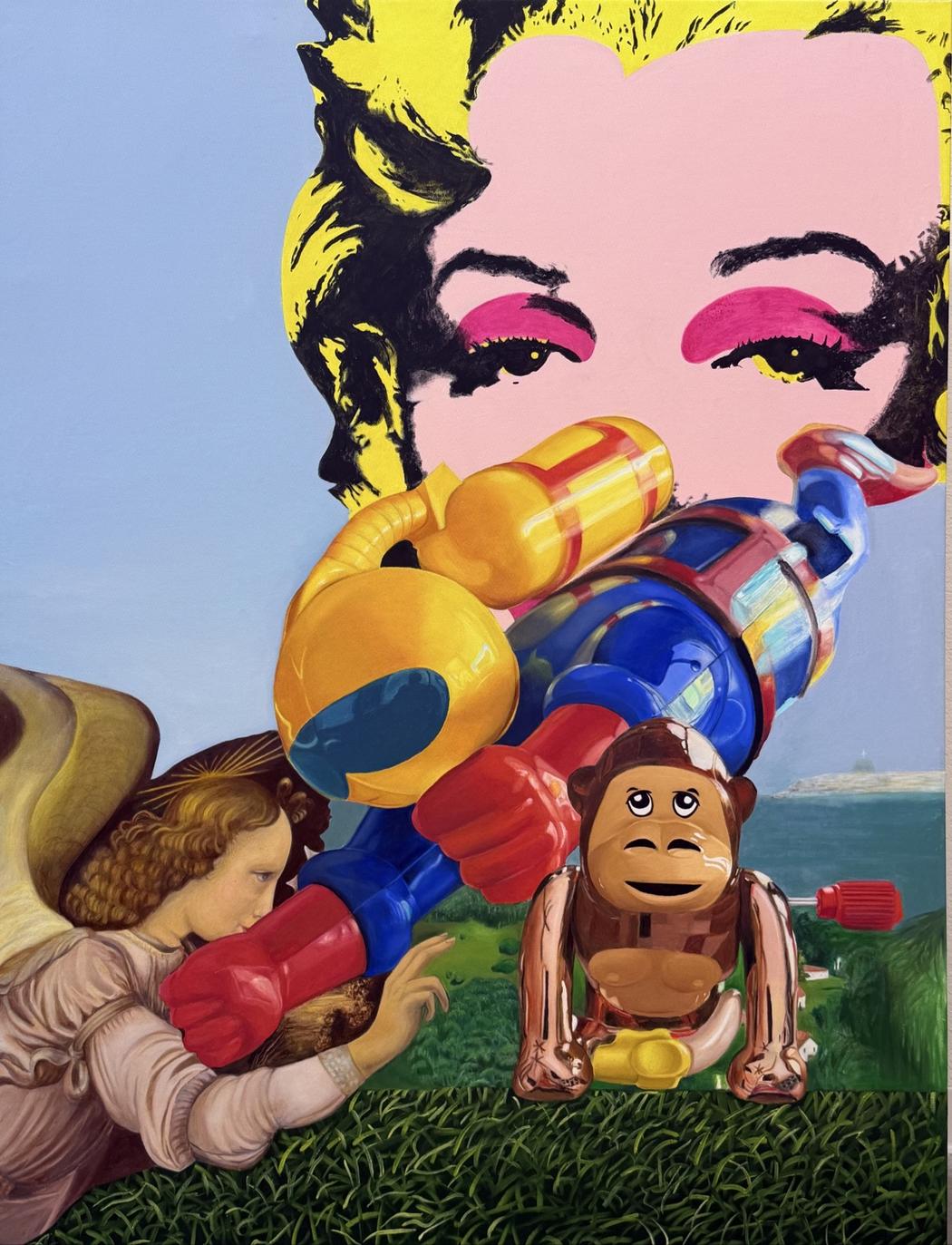 Eleonora Molfino | She Doesnt Need Angels Or Heroes | 2023
You want your paintings to have a physical presence. How does working on a large scale affect both your bodily involvement in painting and the viewer’s encounter with the finished work?
Painting large moves my whole body, not just my wrist. I step back, I walk around it, I paint standing up, and the surface answers at that size. For the viewer it works the same way in reverse: the painting cannot be taken in at a glance, so the body has to stay in front of it for a while.
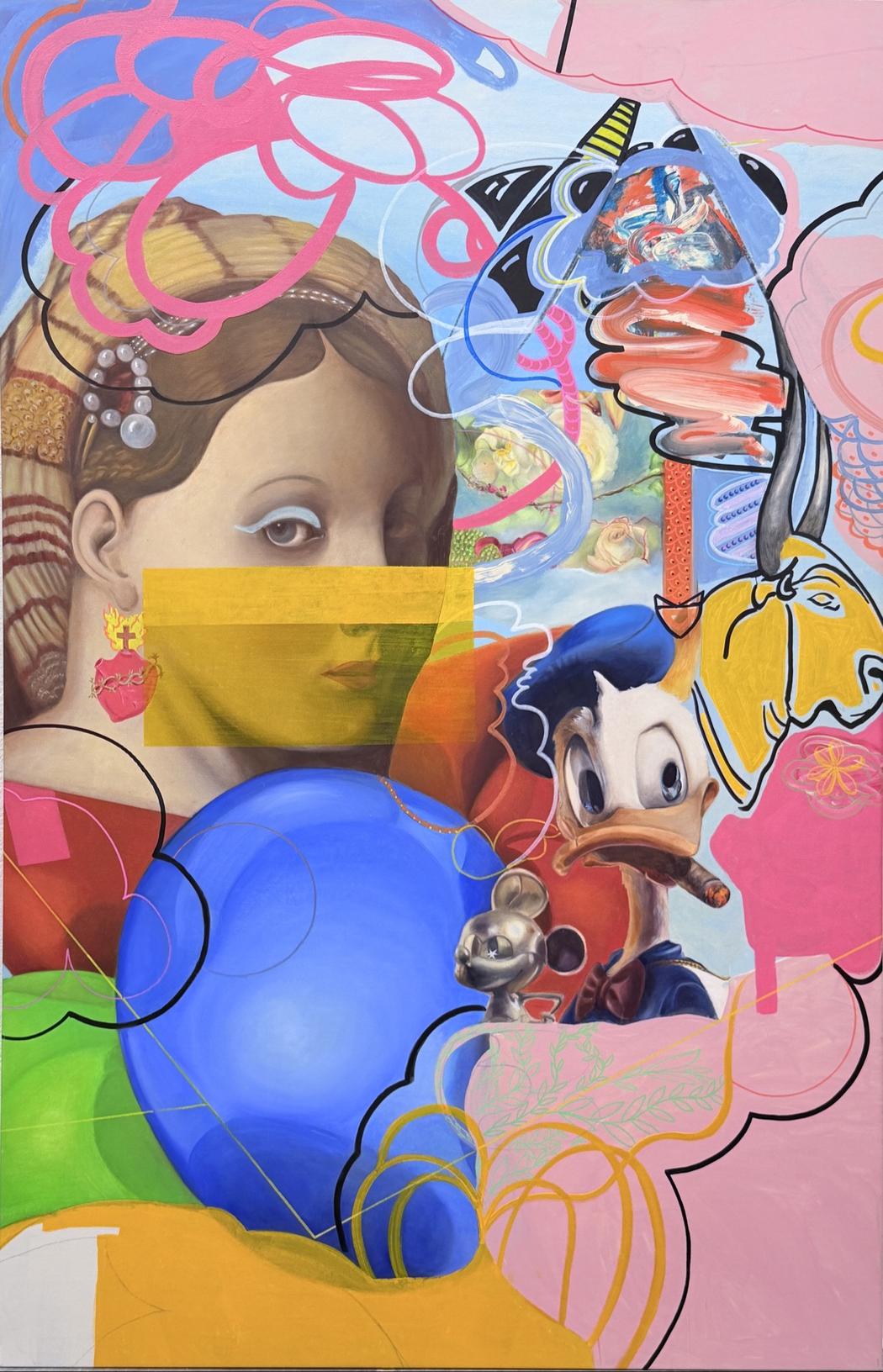 Eleonora Molfino | The Past Does Not Repeat Itself | 2023
With a process built around repeated changes, how do you recognize the moment when a painting is finished?
When the next change would be habit instead of a decision. I leave the studio, I come back the next day, and if the painting does not call me back to fix something, it is done. If it still asks for attention, it is not finished yet, even if it looks complete.