Sahaanaa Hariharan
You describe yourself as being “on a quest for softer ambitions”. What does this mean to you, and how does it influence your understanding of success as an artist?
To me, ambition has always had a certain hustle. the bigger the ideas, the more consuming they’ll be, waiting to be experimented and explored with. Sometimes, they’re restless, sometimes they have a driven sense of purpose. While this creative process has served me well the past two-three years, especially, as someone who dapples with different mediums (from risographs to ceramics, fabrics and moving image + sound), I’ve discovered that I haven’t paused to let creativity breathe. Although, I am grateful to be consistently inspired by the stories life has to offer, I started to become curious on whether I could savor, take my time with the ideas that reach out to me, rather than immediately diving into them.
For example, I was exploring staging possibilities for “A Moonlit Rebirth” which explores the re-discovery of my South Indian heritage with a pink and golden bordered dupatta, and white earthenware ceramics staged with a crescent moon LED light. The initial plan was to simply place the dupatta on the floor, like a river, then, position the dancer-like ceramics in a circle. But, which specific ones out of the sixteen I made? and how can I explore with lighting?
The answer for the first question was purely out of experimentation and revisiting them. I positioned the ceramics in a wider circle, before eliminating one by one that doesn’t suit the narrative of fluidity, transformation, and homecoming. This decision was made out of instinct, and letting the documentation of each experiment sit for a bit before re-visiting. As for the second question, shout out to a senior of mine during my undergrad, who was working on a piece that involved laser cutting, and suggested I explore that space. What started as saying yes to a suggestion solely out of curiosity, germinated into a full blown idea of inserting a laser-cut stencil of a crescent moon inside the LED light, thus illuminating only a part of the piece. This enhances the inquisitive yet uncertain mood of the home-coming to my South Indian heritage: savoring what’s already here, whilst knowing that there’s so much more to learn.
With both of these questions: their answers involved taking my time with each experimentation, acknowledging that inspirations need time and space to grow, germinate and guide me on how they’d like to share their respective stories. Moreover, understanding this, and note how I sometimes still go back to the old habit of hustling through ideas, it’s the constant reminder that I’ve got time to bask, explore, and savor each idea. Followed by being content with how I won’t be birthing every single idea that is in my idea bank. That, is success to me: where I am growing content with the art I’ve been creating, looking forward to the art that will come through in their own space and time.
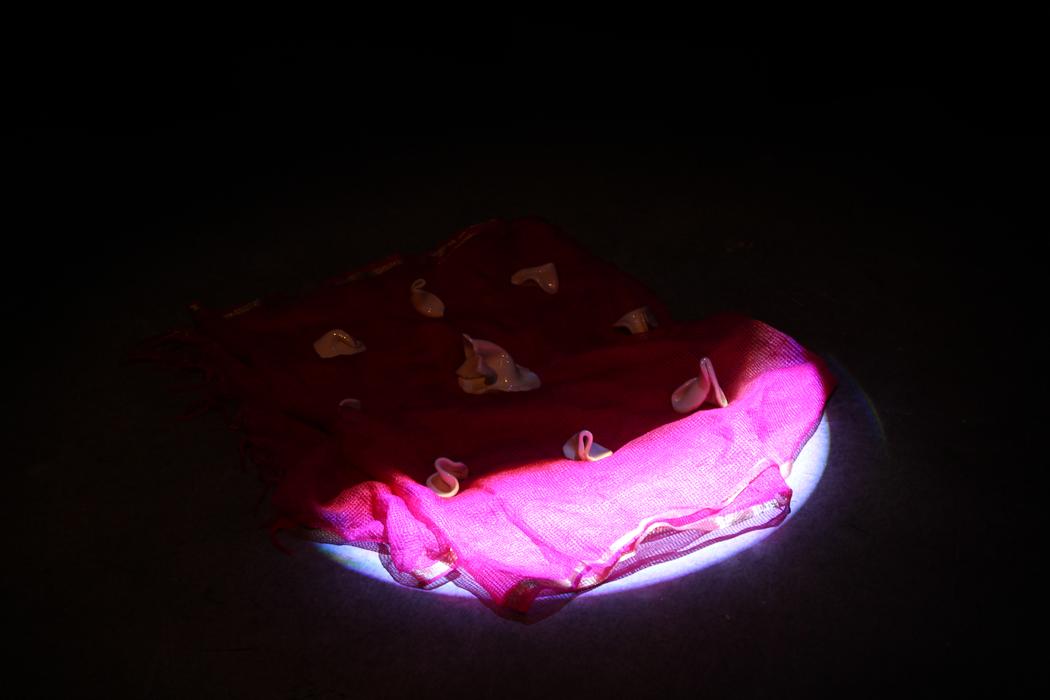 Sahaanaa Hariharan | A Moonlit Rebirth | 2025
You were born in Chennai and grew up in Dubai. How have these places shaped your sense of belonging, and where do their influences meet in your work?
It’s interesting, because I’ve always considered my upbringing as a confluence of rivers. Born in Chennai and visiting India annually is one river, the second being my upbringing in Dubai, and now, a third. Studying in Nottingham is the third one, wherein, I’ve been experiencing sweet pockets of home: my friends, and creative pursuits, the liveliness of the place. With that being said, my sense of belonging has been rejuvenating quite consistently because of the people, rather than the places themselves. For example, our annual visits to India would be like time capsules of growing old together, despite video calls and/or texts. My paternal grandparents, they were storytellers and writers in their own way, and they loved bringing people together because they knew that’s what stories did and still do. They revived my curiosity for my heritage, and a hunger for the Indian myths and legends. My maternal side of the family, they remind me of change, and how we’re always going to be in this together no matter what.
My friends, both new and old, ensure my creative spirit is rejuvenated, and with them we’re embracing adulthood for all that they are and could be. Amma and Appa, they knew they’ll be hearing me yap about art for as long as the practice will have me. Altogether, this support system is what drives the creative pursuits, their influences creating a meeting place to remember, to un-learn/re-learn, and keep telling stories in any shape, way or form. All of it, together, but in our own pace.
Childhood memories form the foundation of your practice. Could you share a particular memory that became the starting point for an artwork, and explain how it changed during the creative process?
Here’s an anecdote: one morning, in early 2025, an expansive sunlit shadow cosplayed as windows on the living room wall behind the sofa. I haven’t seen something so sublime like these sunlit shadows at home before, and it reminded me of change. This luminous home we’re currently living in, has been company since childhood, and yet I am discovering new things about the place. This memory evolved into a black and white photograph of the sunlit shadow in the living room, titled “The Artern (A Glimpse – 1).”
Moreover, this memory expanded with Amma’s observation on how the shadowy figure on the right of the photograph looked like a person due to the playful nature of the leaves. Thus, not only does this photograph capture what was (the transient sunlit shadow on the living room) and what will be (the growth of human connections amidst change).
I think that’s also childhood: a threshold for outgrowing but naturally curious on who you’ll become.
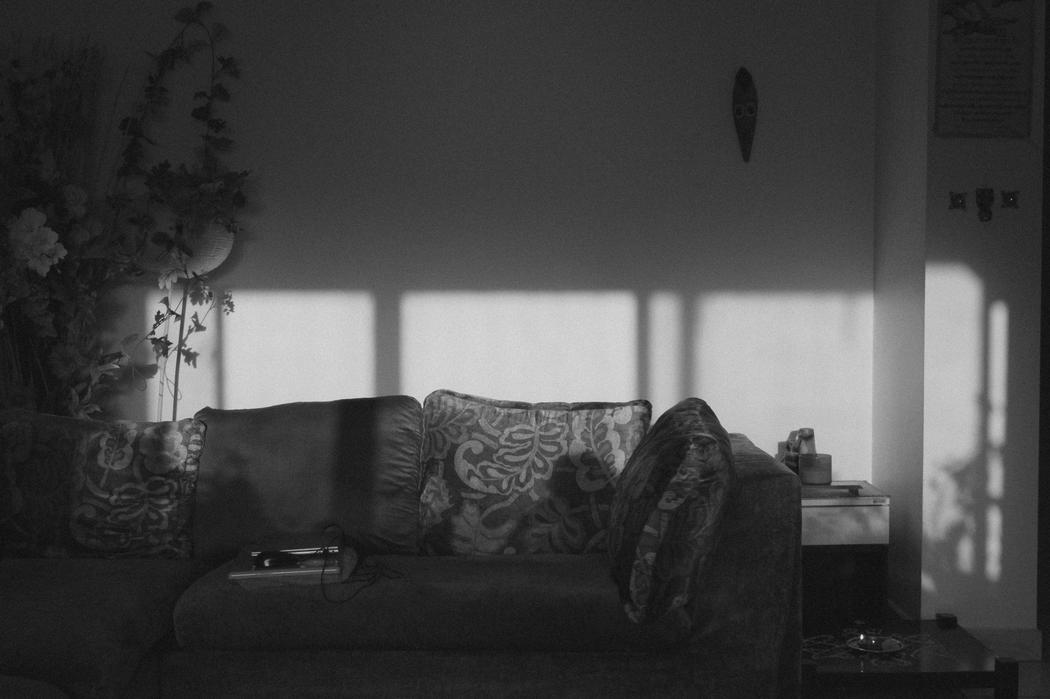 Sahaanaa Hariharan | The Artern (A Glimpse 1) | 2025
You are exploring whether your mother tongue, Thamizh, has its own atmosphere. What qualities of the language are you trying to convey through images and materials rather than words?
(smiles wide) aaaa I love this question 🙂
Okay, so some qualities of the language I am trying to convey through images and materials rather than words are: the taste and sounds of the word, and what does it remind one of, with or without its English translation. For example, I am currently working on a piece called “Alaigal,” but before I share, or come across its translation, I want to taste the syllables, hear their sounds. In the case of ‘alaigal’ – it starts off softly (a), and rolls of the tongue with the lai and then, a gentle pressure glides (ga) in ‘gal.’ Thus, three syllables, a-lai-gal.
Meanwhile, ‘alaigal’ means ‘waves’ in Thamizh.
Since, I’m already aware of the translation, I can’t un-hear the waves in this word. The more one says the word, the more it sounds like the lap of the waves against the shore, the waters nipping at the ankles, the fragrance of sea-salt and the horizon line reminding me of how big this cosmos is. Both internally, and externally.
Therefore, with for each creative pursuit that releases from here on now, is accompanied with a Thamizh title, and the essence is whether the tastes and sounds of the word support, expand the English translation. Whether one can solely experience, have that as knowledge rather than contain it with words just yet.
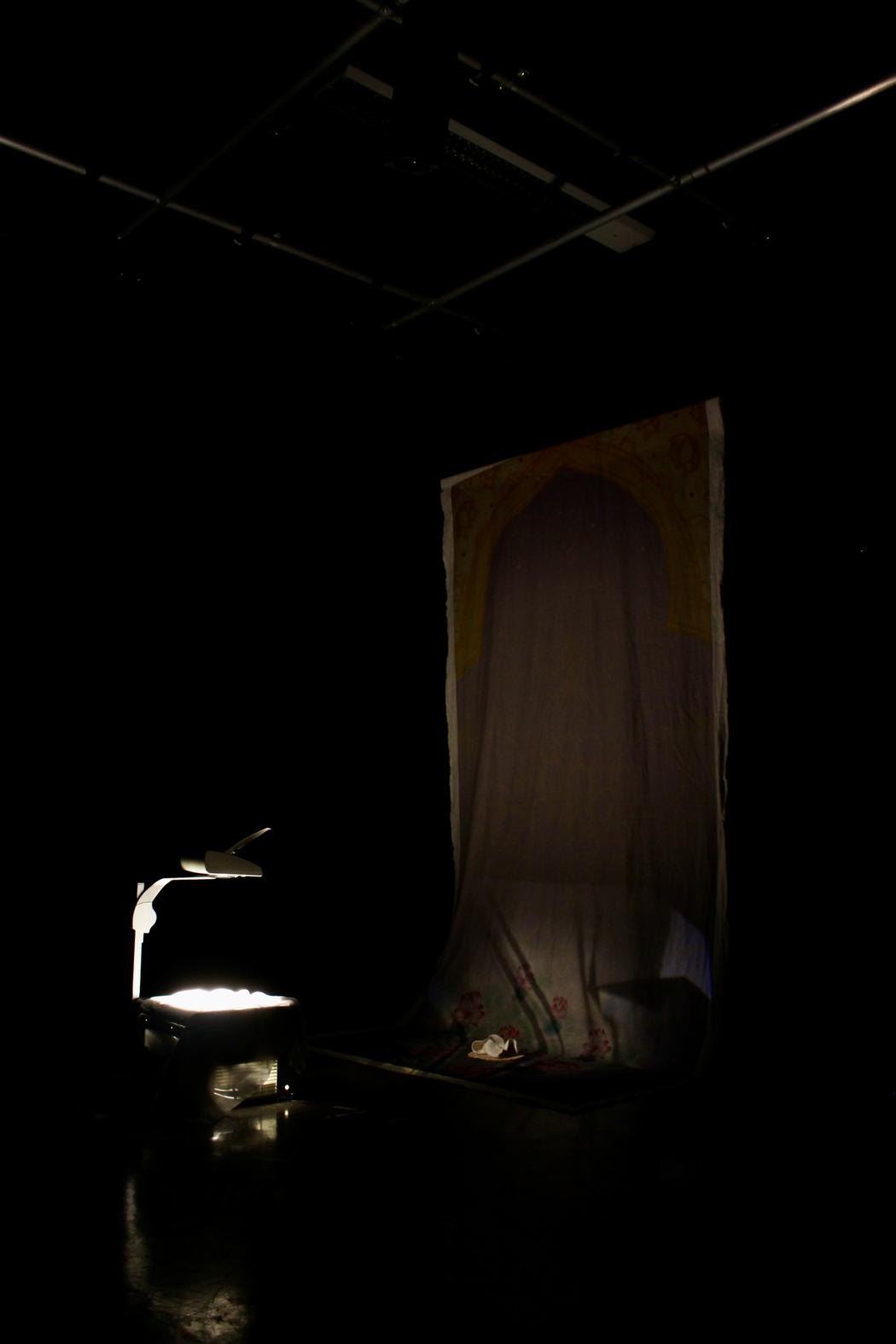 Sahaanaa Hariharan | Say Yes To Heaven | 2026
Indian mythology, mystic saints, celestial dancers, and family anecdotes inform your recent practice. Can you describe how a particular story from these sources found its way into one of your works?
Oh yes! This one’s for Mirabai, a mystic saint, who wore her heart on her sleeve for Lord Krishna. She loved Him since the age of five, and tucked Him in her songs, in her travels, till her hair became silver. I encountered her story when I was younger, snuggling in Amar Chitra Katha comics (highly recommend checking them out, they’re amazing!), and her story had been a dormant one within, only to gush during the summer of 2025. Since then, her story had been in my idea bank, which then found their way onto “Beloved.” This is the sequel to “Say Yes to Heaven” because she was one, among many radiant souls who wholeheartedly said yes to divinity.
“Say Yes to Heaven” explores the importance of trust in creative pursuits, especially when inspiration, for me, comes from divinity. This was constructed with digital fabric of lotuses and a threshold printed on cotton calico, and the over-head projector spotlighting biscuit fired white-earthenware ceramics that has an uncanny resemblance to Lord Vishnu’ s Ananthasayanam (a divine posture He takes when He’s in yoga nidra).
As for “Beloved,” it asks: “where does entering the doorway lead?” Moreover, they say, if one wants to get closer to divinity, one must get to know their devotees. and for Lord Krishna, Mirabai was one such extolled devotee.
“Beloved” is a drawing of Mirabai playing and singing to the idol of Lord Krishna playing the flute, printed and constructed like a cuboid, then placed on a mahogany box. Suspended using twine. Behind them are two digitally printed cotton calicos. They are of lotuses with yellow and pink backgrounds respectively (from entryway to further into the room). This was more of an experimental piece, answering smaller curiosities of staging (ie. suspending an object using twine, and treating fabrics as wallpapers of a home), and working with wood.
You work across photography, risograph printing, ceramics, moving image, and sound. How do you decide which medium a story needs, and what have collaborations taught you about combining them?
Now that I am thinking about it, I think the decision of which medium a story needs has been quite instinctive. For example, every time I explore a story that involves fluidity, and dancers (celestial dancers, or dance in general), I find myself naturally gravitating towards ceramics, because of the ease in folding them like the twirls of a skirt. On another note, if I am exploring stories that involve exploration in terms of a journey, then it would be moving image and sound. So, I’d like to believe that the story naturally chooses what medium they’re called to, provided I let the idea breathe over time.
As for collaborations, they’ve primarily been with moving image and sound (shout out to Arya Nair, one of my best friends from high school, who’s studying music now, and her friends). The first time we worked together was in 2024, for “Rhythm is Life, Life is Rhythm,” which you are more than welcome to find on the bio of my Instagram @saganaskadhai. It was more of a space for me to learn how to delegate and allow my creative process to loosen rather than think I need to do this all on my own. We then, collaborated once again, for “Jeeva Odu Kadhai” (‘The Story of the Soul’ in Sanskrit and Tamil). My best friend has a phenomenal passion for music, and it mirrors my own for the fine arts, so learning how to capture sounds purely based on visuals, and breaking down components of the narrative into instrumentals (the cello and the flute, with waves for instance). These aspects of learning together, brought us closer as well.
Now, I’m currently working on “Alaigal” a moving image and sound piece, but this time, she’s a sampler sound designer. This reveals that collaborations expand creative pursuits, indulging in more dimensions than just one. Moreover, they’ve also helped me be bold in my ideas. Sharing gratitude to another awesome collaborator, Alex Jacobs (‘Bringing Sounds to Life’ on YouTube. Highly recommend checking him out on https://yourmusicforhealing.com/drone), for allowing me to use the shruti box recording, for “Alaigal.” I am rooting for us all!
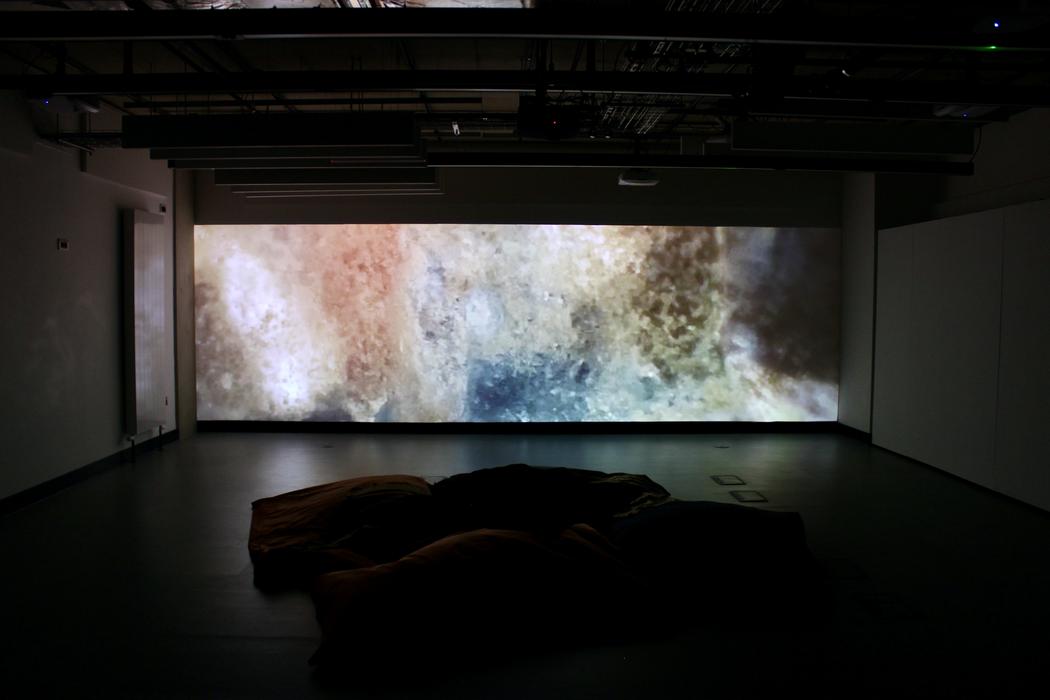 Sahaanaa Hariharan | Jeeva Odu Kadhai (Angle 2) | 2026
During your residency at Riba Rocks, you discovered the importance of rejuvenating your creative spirit. What changed in your working habits after that experience, and how are those changes shaping your next projects?
Oh woah, I am loving these questions 🙂
So, for context: Riba Rocks are a phenomenal team that create opportunities (like art residencies, music and art festivals). They encapsulate culture, art and sustainability. Sharing gratitude to NTU and Riba Rocks for the art residency during Spring 2025. Highly recommend checking the Riba Rocks website out, in your own space and time 🙂
Back to the question: one of the primary working habits that changed, for me, was making a clear boundary between work and life. For instance, I’d make the best of the university/art practice work in university, and when I am back home, it’s primarily to recharge. Catch up with my family and friends, soak in the mundane. However, it’s an ongoing process for me, and I felt it most whilst printing “Sandhya.”
“Sandhya” is a series of risographs, which unveil what a threshold might look like in the mundane, through sunlit shadows. In Hinduism, Sandhya Devi is the goddess of dusk. She’s all about cusps, thresholds, the in-between. While printing risographs closest to the colors of their photographs (these were teal, yellow and fluorescent pink) was the main essence, the title and the narrative for them emerged naturally. Timeline wise, the idea had been floating since September 2025 and became fulfilled on May 2026. Before the residency, I’d have already ticked off the idea, working even at home. After the residency, even when I’d have lightbulb moments at home, I’d write them down (such was the case with “Sandhya”) and develop them as much as I can in university.
All in all, developing a work-life balance has helped me trust the creative process, welcome ideas that naturally reach out. When a flow arises, I’d make the best of it.