Nai Turner
How has your understanding of strength changed through your experiences as both a U.S. Army veteran and an artist?
For a long time, I understood strength as being able to push through. My experience in the Army reinforced discipline, endurance, and figuring out how to keep going even when something is difficult. Those qualities still serve me, especially as a full-time artist, but my understanding of strength has expanded.
Now, strength also means being honest about where I am. Sometimes it means resting, asking for help, or allowing myself to feel something without immediately trying to fix it. Painting gives me room to practice that. I can bring uncertainty into the studio and work with it. I don’t have to have everything figured out to create something meaningful.
What feels most important to you when portraying Black identity through moments of tenderness, rest, and uncertainty?
I want the people in my paintings to have room to simply be. Black people are often expected to be strong, productive, resilient, or able to carry whatever comes our way. I’m interested in what happens when we put some of that down.
A quiet moment can hold so much: someone sitting with their thoughts, allowing themselves to rest, or feeling something they don’t yet have words for. I want to give those experiences the same attention and presence that a more dramatic moment might receive. Our tenderness deserves to be seen. So does our uncertainty. Neither takes away from our strength or the fullness of who we are.
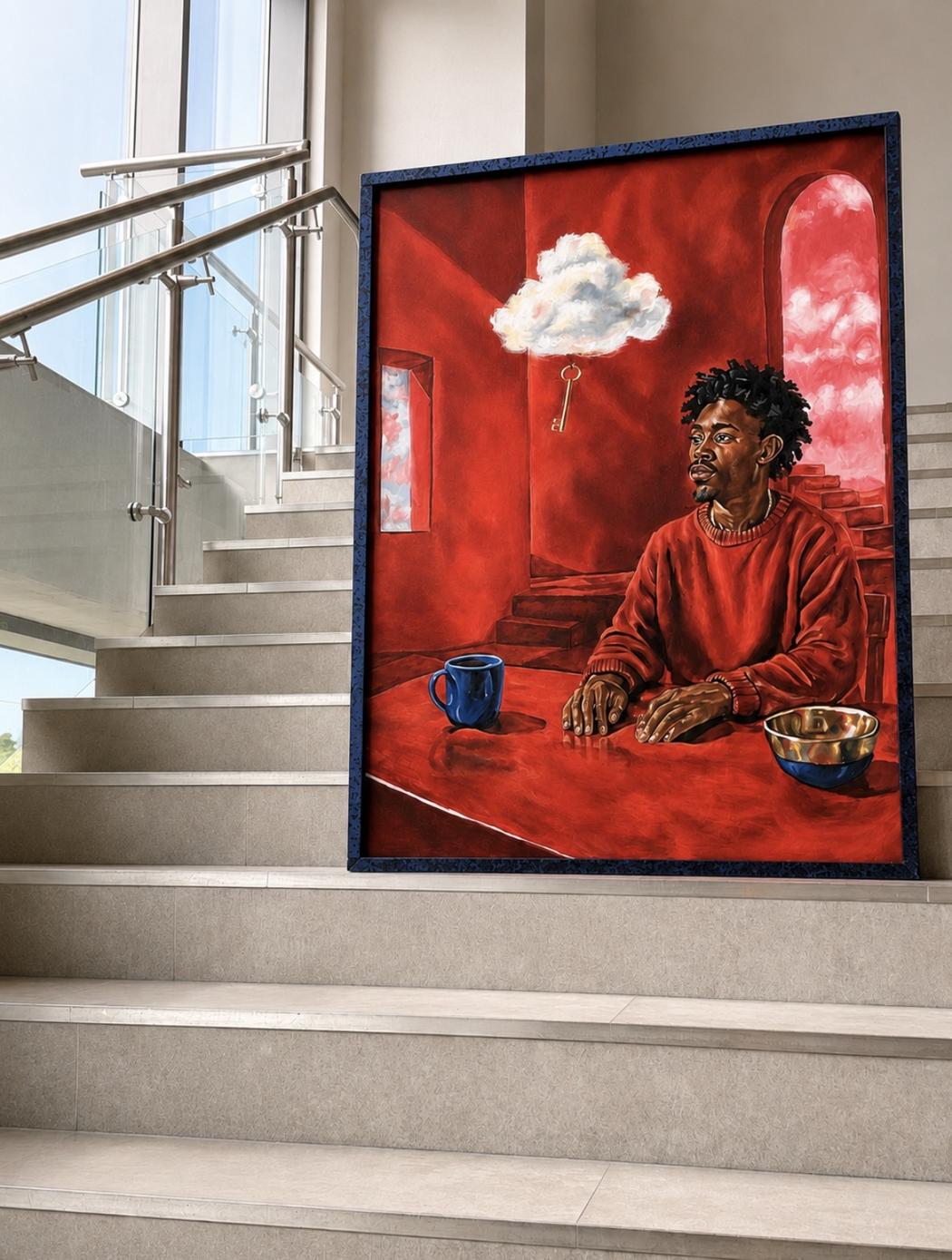 Nai Turner | Nothing Is Wrong Right Now
The In-Between explores the space between healing and being healed. How do you recognize when a painting about an unresolved experience is complete?
I separate finishing the painting from resolving the experience. I can still be living through something after I’ve said what I need to say about it on canvas.
A painting feels complete when the emotion is there and the visual decisions support it. The posture, the space, the color, and the details have to feel honest together. Sometimes I have to ask myself whether another change will help the painting communicate or whether I’m trying to paint my way into an answer I don’t have yet.
With The In-Between, I’m learning to let the work end with an open question. That’s part of being truthful about where I am.
In Nothing Is Wrong Right Now, a seated figure occupies an intensely red interior. How does this color relate to the reassurance expressed in the title?
I like the tension between the intensity of the red and the reassurance of the title. Red can feel charged, warm, or overwhelming, and I wanted the room to have that presence while the figure has permission to be still.
For me, the title is a reminder to return to the present. When you’re used to anticipating what could go wrong, a quiet moment can take some getting used to. The red allows that intensity to remain in the painting without determining what happens next. The figure can exist within it and still experience a moment of peace. The words “right now” matter because that moment doesn’t have to promise anything beyond itself.
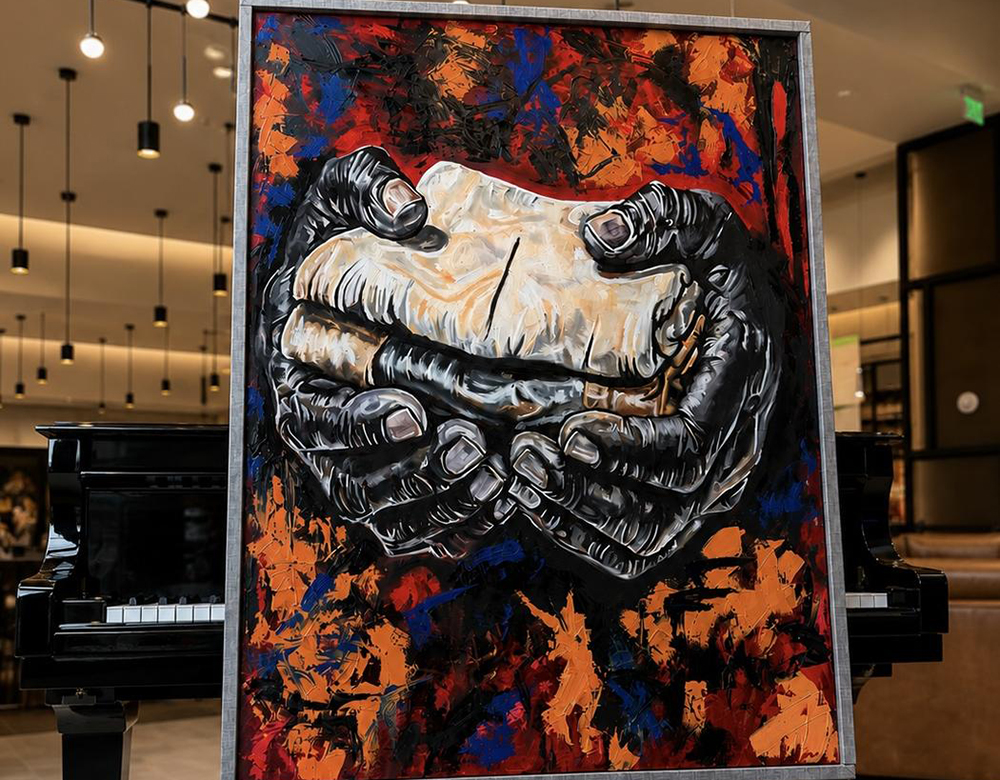
In Holding What I Can, the hands become the central focus. What did you want their gesture to communicate about the experience of holding on?
I wanted the gesture to communicate care, effort, and limits. Hands can say so much about what someone is carrying without us ever seeing their face.
The folded fabric gives that act of holding something familiar and intimate. I was thinking about the things we try to keep together: memories, responsibilities, relationships, and parts of ourselves. There is tenderness in holding something carefully, but there is also a point where we have to recognize our capacity.
The title, Holding What I Can, gives permission to acknowledge that limit. There is value in what we’re able to hold, even when we can’t carry everything.
How does working on murals influence the way you approach the intimate scenes in your oil paintings?
Murals have taught me to think about how a painting meets someone in a space. I have to consider what a person notices from a distance, how their eye moves, and what makes them want to come closer. That awareness carries into my oil paintings through composition, color, and the presence of the figure.
With an intimate scene, I want something to draw you in before you notice the smaller details. Then the posture, the hands, or an object in the room can give you a reason to stay. Working at different scales has helped me understand how much a quiet gesture can communicate when I give it enough space.
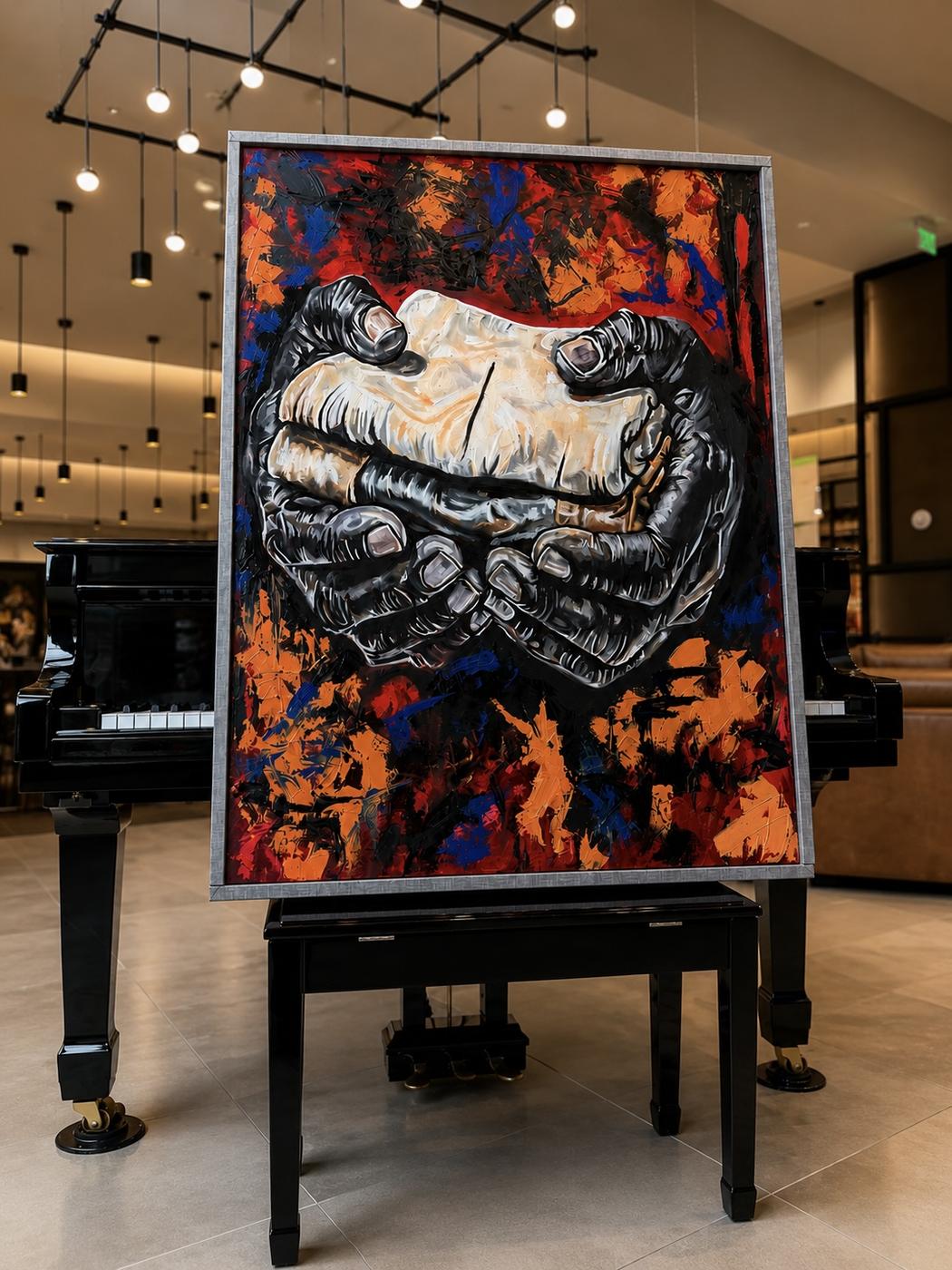 Nai Turner | Holding What I Can
Through Live or Exist Foundation, you address food insecurity and housing instability. How has this community work shaped your understanding of care and dignity within your artistic practice?
Through Live or Exist Foundation, I’ve learned that how you offer support matters as much as what you offer. Someone receiving a meal or basic necessities deserves choice, respect, and a human connection. Their circumstances are only one part of their life.
That understanding carries into how I paint people. I want the figures to have an inner life that belongs to them. Viewers can connect with what they see without being given every detail of someone’s story.
Both my community work and my art come from paying attention to people. Care means taking the time to see someone, listen, and recognize their humanity without requiring them to prove that they deserve it.