Alice Chan
You describe making art every day as one of the main ways you connect with art. How does this daily practice influence the way you observe ordinary moments and your surroundings?
I become very conscious to tiny things in life and minor changes in surroundings and find art everywhere. Art can also be found easily in my routine activities because they make me to focus on forms and patterns due to their repetitiveness in nature. Many imaginary scenes could pop up from my mind, once I start thinking “what if those forms and patterns are rearranged or even diminished?” at the time I am engaging in these activities. “Am I formed by the repetitions of these forms and patterns?. My art usually hides philosophical question(s) for viewer to think about. To me, making art is a journey of self-discovery.
Your work is inspired not only by people but also by other living creatures and their interactions with the environment. What kinds of behaviours or natural processes have been particularly meaningful to you?
I am particularly interested in observing and studying how human beings and other living creatures react differently to the pressures from their surroundings. How different are they? Do our behaviours share some similarities with other living creatures? If so, what are they? Why those happen? And how they happen? Such observation and on-going study of actions and behaviours always encourage me to present my artwork in a way which I have never thought of.
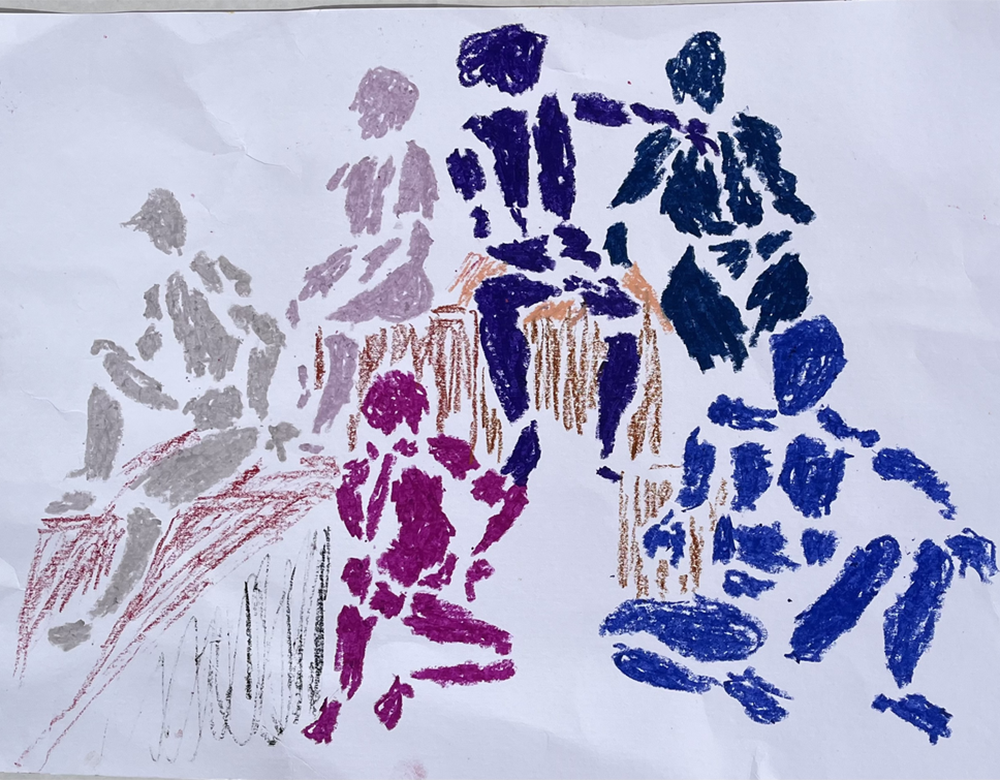
In Day and Night and Secret Garden Is Not Secret, individual marks come together to suggest groups of figures, movement, and social interaction. What inspired these densely populated compositions?
These paintings are actually from a festive live drawing session “Crystallsed Self” and models are requested to pose in a certain way. I do not have any control and idea on the way they pose. But from them, I see the specific vibe of isolation in human interactions. That is, everyone seems to be connected in one way or the other but with the attitude of avoidance and to be alone.
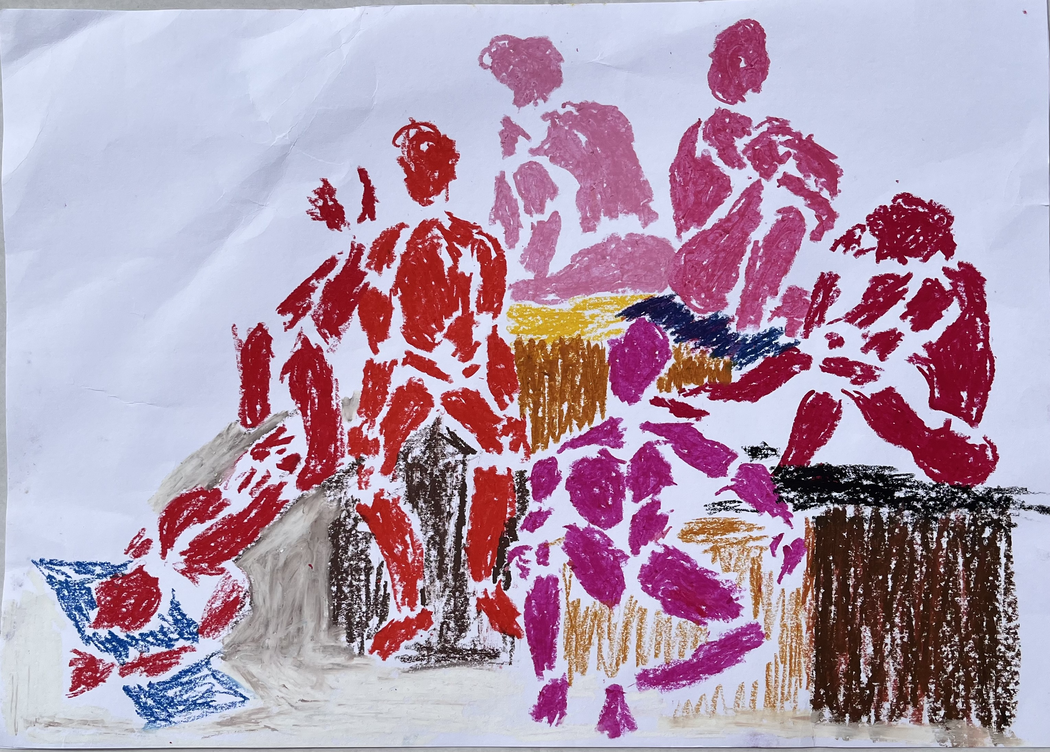 Alice Chan | Secret Garden Is Not Secret | 2026
Many of the figures in these works are created without detailed facial features. How important is individuality in these compositions, and what do you hope the viewer understands through posture, colour, and proximity instead?
To me, no matter what the objects are, they are a conglomeration of shapes and forms. In these paintings, I would consider all models are just part of the drawing subject. Viewers are free to interpret the paintings in the way they want. I do not want to limit their imaginations and/ or creativities. That’s why I do not draw or paint any facial features. Rather, I hope my viewer to enjoy the liveness and energies of the overall subject, brought by the different postures and colour and shape compositions.
Your works move between abstraction, observation, and portraiture. How do you decide whether an experience should be expressed through a recognisable figure or through more fragmented and abstract forms?
It really depends on the what I want to share with my audiences at the time of creation and the philosophical question(s) behind my work. If I want to invite the viewer to explore more on the relationships among elements, energy and formation, recognisable object or figure will not be my intent. But if I want the viewer to think about the philosophical question(s) directly, I may figure out the drawing subjects with more detail and recognisable traits.
As both an art lover and a collector, how has living with other artists’ work influenced your own visual language and your understanding of what an artwork can communicate?
My art work collection always reflects “my hunger” of particular artistic knowledge or skills at certain stage. These wonderful artworks from different artists do provide answers to me in the different stages of my artistic journey. From them, I can see the possibilities of raising question(s) in a creative and funny way, without failing logics.
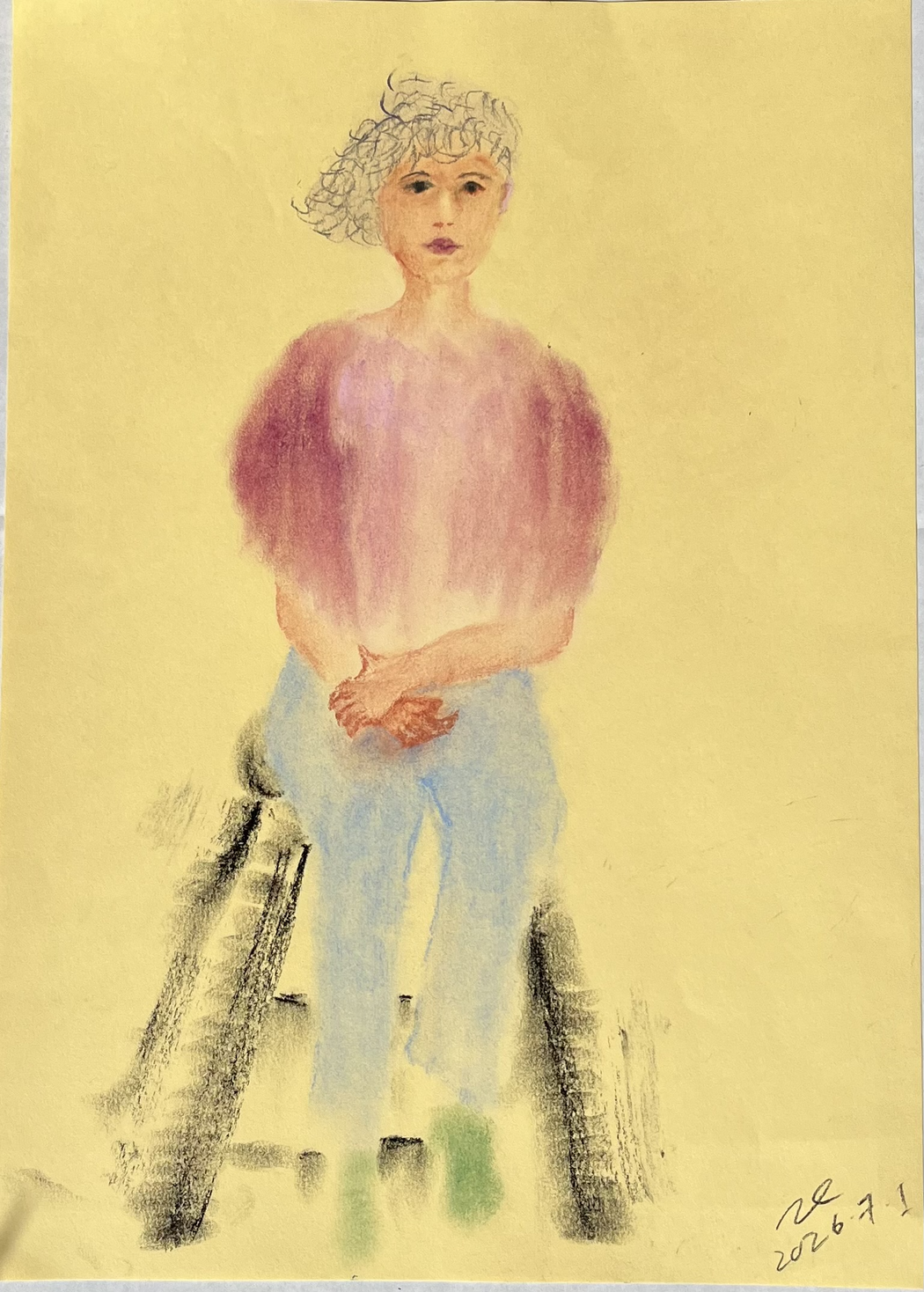 Alice Chan | Take | 2026
How does living in Hong Kong – with its density, movement, architecture, and relationship between urban life and nature – shape the subjects and visual rhythms of your art?
The present architecture and urban design of Hong Kong brings up a vibe of tension and demolition, which seasons my works in different way. Hong Kong has been changed a lot and unexpectedly fast since the year 1997. The boundaries between many things in daily life become blurred. Many memorable buildings and landmarks, together with memories have been fading out from life, which makes people struggling to preserving what they have and become unsettling. My art, therefore, is trying to make people feel alive by refreshing their mind or “resetting” their brain to observe in an intuitive way, like a child. I hope my art can remind people about their original selves. People can still remember who they are despite they are rushing to adapt for life. So the subjects I put on the paper or canvas usually from the fragments of my childhood memories, which are the feeling of energies of the heritage and local cultures I have had experienced. The visual rhythms are direct and diverse. Viewers can feel differently and see different things when their mood differ.